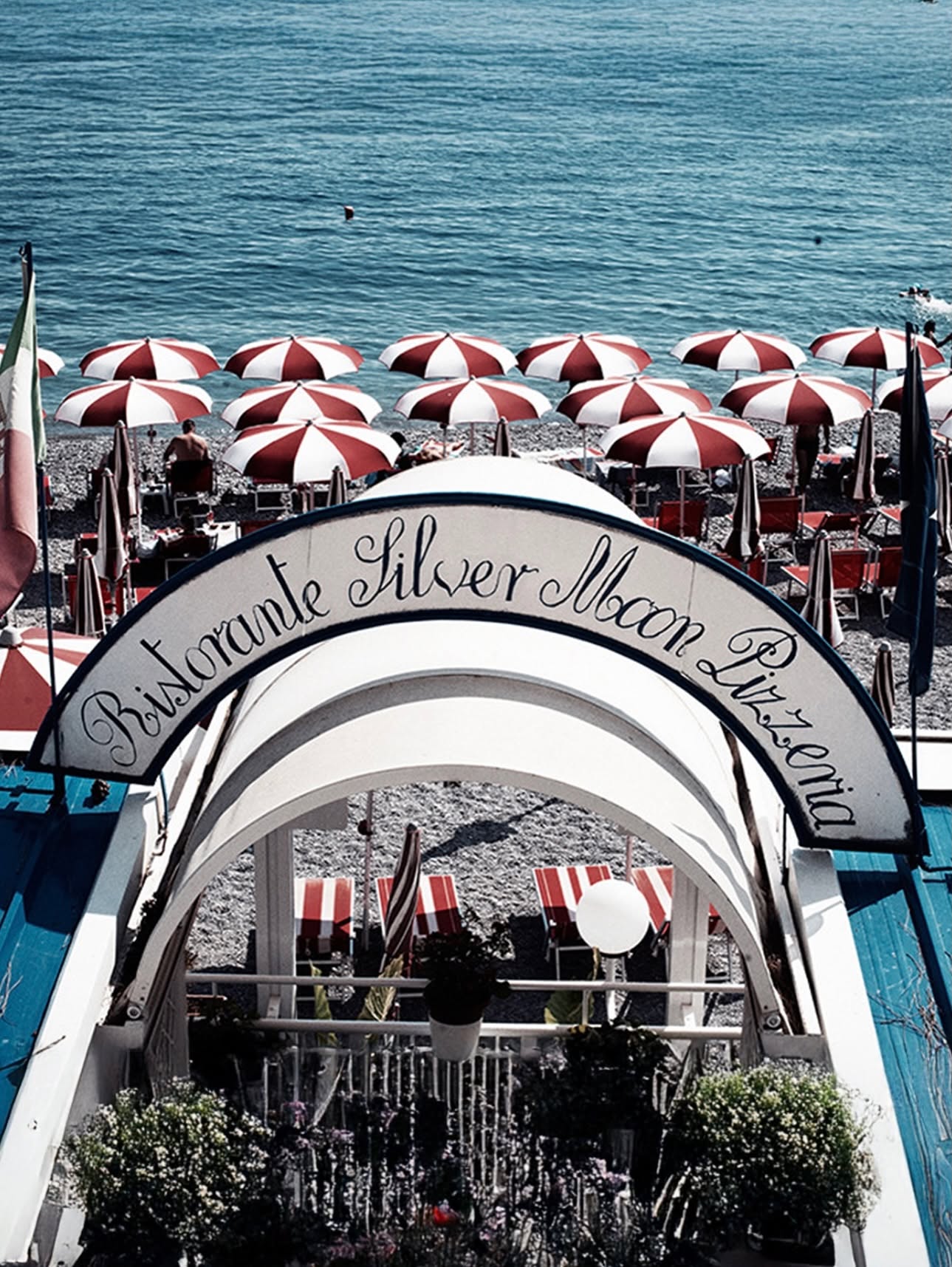
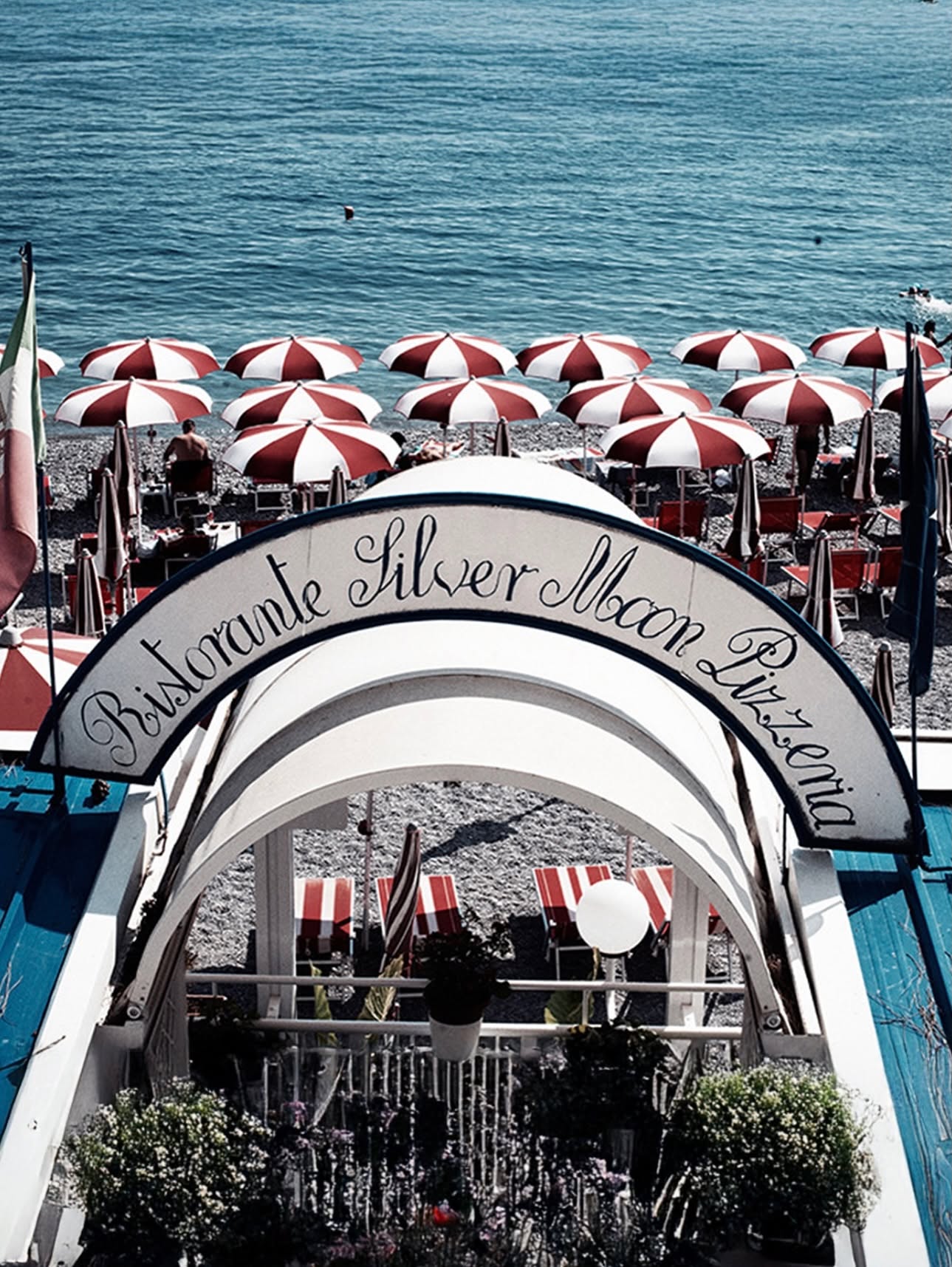
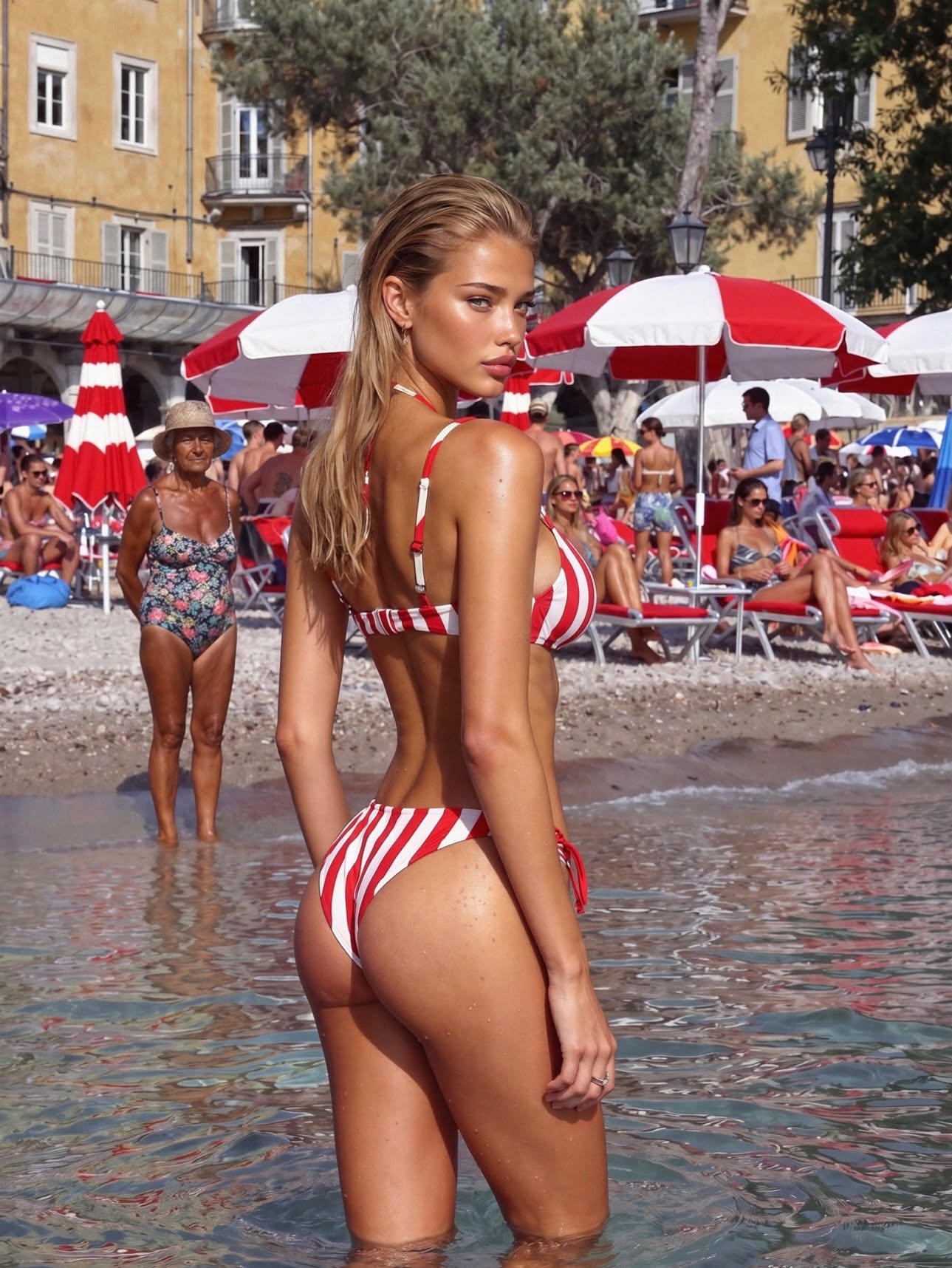
The colors are the first thing. You see them from the road above before you have descended to the beach, the red and white cutting through the blue of the water in a way that makes the whole scene look like something staged for a film about summer. Down at the waterline, inside it, the effect is different: warmer, more specific, more Italian in the particular sense that things here have been done this particular way for long enough that the style has stopped being a choice and become simply the way the thing is.
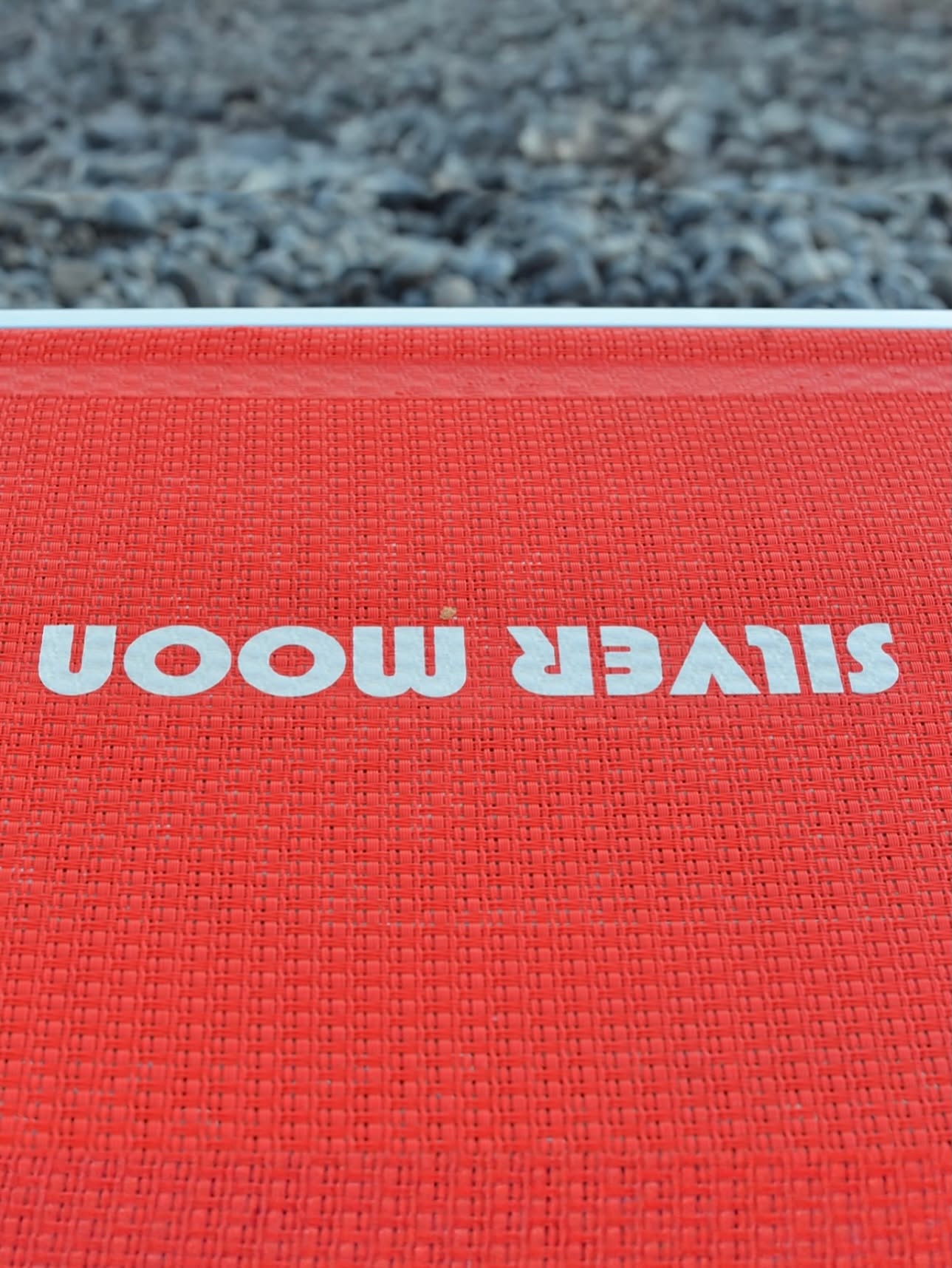
Silver Moon sits at the center of the main beach in Amalfi town, Marina Grande, and has sat there since 1987. The Esposito family has run it from the beginning: Mamma Rita first, then her daughters Nunzia and Mata, carrying forward a recipe for pizza dough and a philosophy about fresh ingredients that has not required revision. The red and white stripes predate even that history. The original Flavio Gioia resort opened here in the 1960s, built by a man who had returned from America and been inspired by its flag: red and white for the umbrellas and beach huts, a blue roof. Silver Moon inherited the central and best part of the beach when the resort was divided. It kept the colors. It was the correct decision.

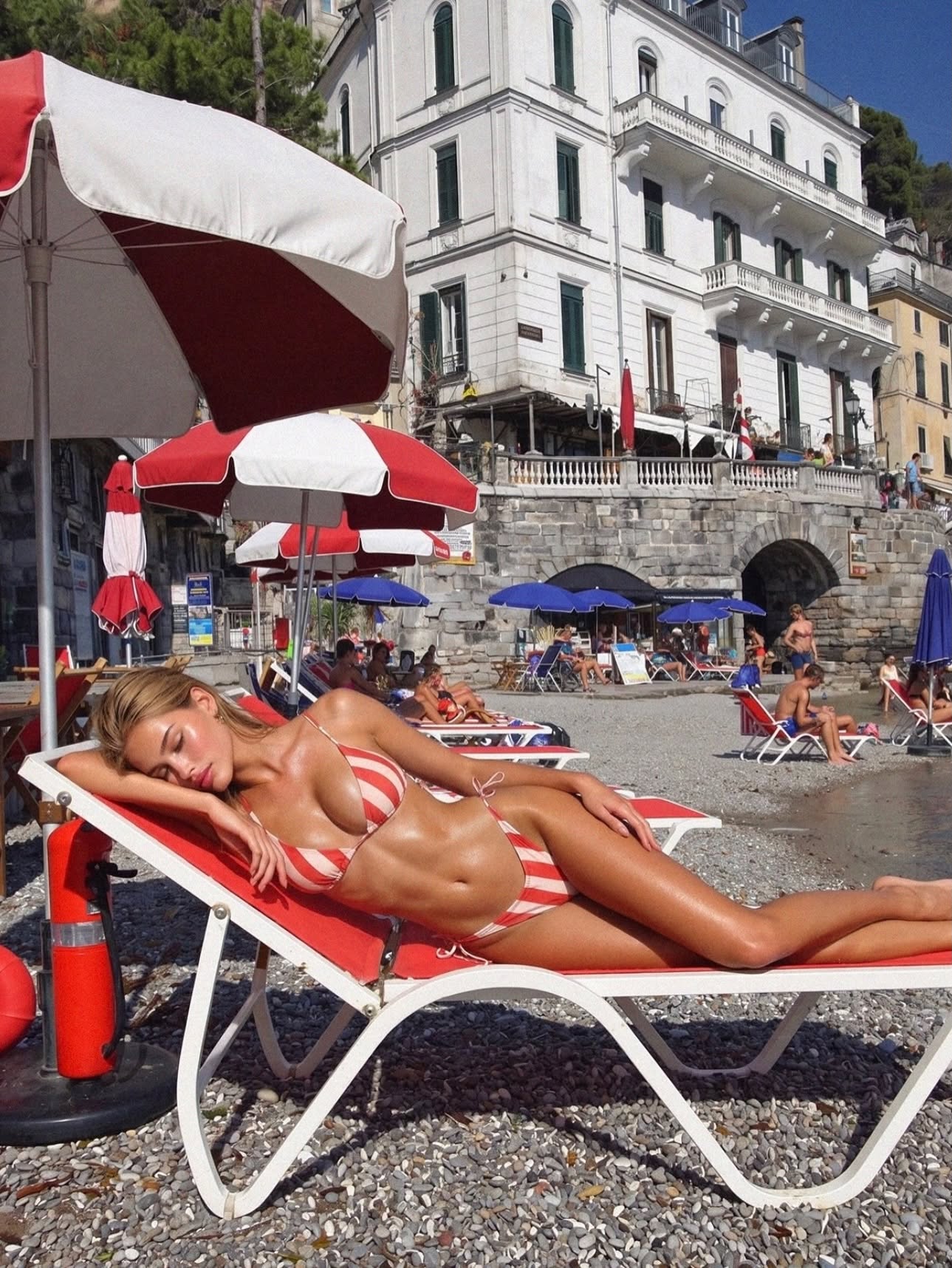
The beach is pebbly. This is worth stating before you arrive rather than after, because the first step onto it in bare feet constitutes an adjustment that no one warned me about the first time. The stones at Marina Grande are smooth and grey and relentless, and navigating them with anything less than full attention produces exactly the kind of small undignified shuffle that the Amalfi Coast otherwise conspires to prevent. You accept this as part of the contract. Once you are on the lounger, under the umbrella, with the sea eight meters in front of you and a coffee coming, you accept it completely.
I arrived at nine. This is the correct hour. The beach attendants were already positioned, the loungers arranged in their rows, the first umbrellas open against a sky that had not yet decided what it intended to be. By nine, it had decided: blue and full and unapologetic. The sea at that hour was the color of old glass where it was shallow and something deeper where it was not, and the surface had a stillness to it that would not survive past ten.
I ordered a coffee at the bar near the entrance and took it to the lounger and sat with it and watched the water and the boats and the town behind me, climbing the mountain the way this coast’s towns always climb, as though the land had been folded rather than built. Amalfi’s cathedral was somewhere above me and to the left. At nine in the morning, the piazza near the waterfront was already moving. By midday, it would be full.
The pebbles are the price of admission. The sea is what you paid for.

Swimming at Silver Moon is swimming in the Tyrrhenian with the town behind you and the cathedral somewhere above and the red and white umbrellas receding as you go further from the shore. I swam out far enough that the beach became a line of color rather than a place, and then farther, and floated on my back and looked at the sky and thought about nothing in particular, which is what salt water and sufficient distance from the shore tends to produce. The water here is cold when you enter and then not cold at all, and then, if you stay long enough, you begin to understand why people return to the same patch of sea year after year as though something specific is located there.
The morning passed in the way mornings at Italian beach clubs pass: slowly and without waste, organized around the rhythm of the water and the sun moving across the umbrella and a second coffee at some point before noon. The beach is filled. By eleven, Silver Moon was operating at full capacity, every lounger taken, every umbrella a small shade-territory. The red and white above the water from any angle looked precise and intentional, the way things that have been doing what they do for a long time look.

Families occupied the rows closest to the water. Two men argued about something near the bar and then seemed to forget what it was. A child ran directly into the sea without pausing, which is the only correct approach.
Lunch happens at the restaurant, under a gazebo with a glass ceiling that catches the light and distributes it across the room in a way that makes everything inside look slightly more beautiful than it would in ordinary light. There is also a platform directly on the beach that extends the dining into the open air, and in summer, with the sea immediately below, this is where you want to be.
I ordered the linguine alla Silver Moon. There is a dish on every menu in every restaurant along this coast that exists primarily to tell you what the kitchen understands about local ingredients, and this is Silver Moon’s version: pasta made by the family, combined with whatever the sea delivered that morning, finished with the lemons that grow on the terraces above the road and have a fragrance no lemon from anywhere else quite replicates. The fish changes daily. The lemon does not. The dish is the thing you should order.
The pizza dough is Mamma Rita’s recipe, passed to Nunzia, who has kept it. It is light in the way good Neapolitan pizza is light, the kind where the dough is the argument rather than just the vehicle. The tomatoes are local cherry tomatoes. The mozzarella is fior di latte from Tramonti, a few kilometers up into the mountains. The oil is from Sorrento. The supply chain is entirely coherent with the coast it sits on, which is not always the case and is worth noting when it is.
Dessert is made in-house. I had something involving lemon and cream that I have since spent time attempting to remember precisely, and cannot.
The afternoon at Silver Moon has a different quality from the morning. The sun has moved, the shadows of the umbrellas have shifted, and the sea, which was still at nine, is now moving with the small chop that develops by three o’clock. The crowd has thinned slightly, the loudest hour having passed, the people who came only for lunch having gone back up through the town and left the beach to those of us for whom leaving does not yet feel necessary.

I swam again at four. The water was warmer by then, holding the heat of the day in its upper layer, and the light on the surface had turned from white to something closer to gold. The pebbles on the return still required the same careful negotiation they had required that morning. This did not feel like a diminishment. By the end of the day, I had developed a relationship with them.
Silver Moon is not the quietest beach on the Amalfi Coast, nor the most hidden, nor the most exclusive. It is the best beach club in the town of Amalfi itself: the one with the longest history, the most coherent identity, the food that can justify a full day rather than an afternoon stop. The red and white umbrellas are visible from the road above. The food is made from things that came from the land and the sea nearby. The family has been running it since 1987 and intends, apparently, to continue.
The pebbles are worth it. Everything here is worth it.
V.








Amalfi is one of the thirteen towns on the Amalfi Coast. For the complete guide to the region, including planning, beaches, food, and itineraries, see Victoria’s Guide to the Amalfi Coast.
Read also: Amalfi Heat