Ischia is bigger than people expect. You can drive the ring road in an hour, but it is big enough that the town you sleep in decides what your week actually feels like. Six comuni, each with its own character, its own beach, its own opinion of itself. Choose the wrong one and you will spend your holiday on buses.
Which is why on Ischia you pick a coast first, then a village, then a hotel. Everything else follows.
Ischia Porto and Ischia Ponte
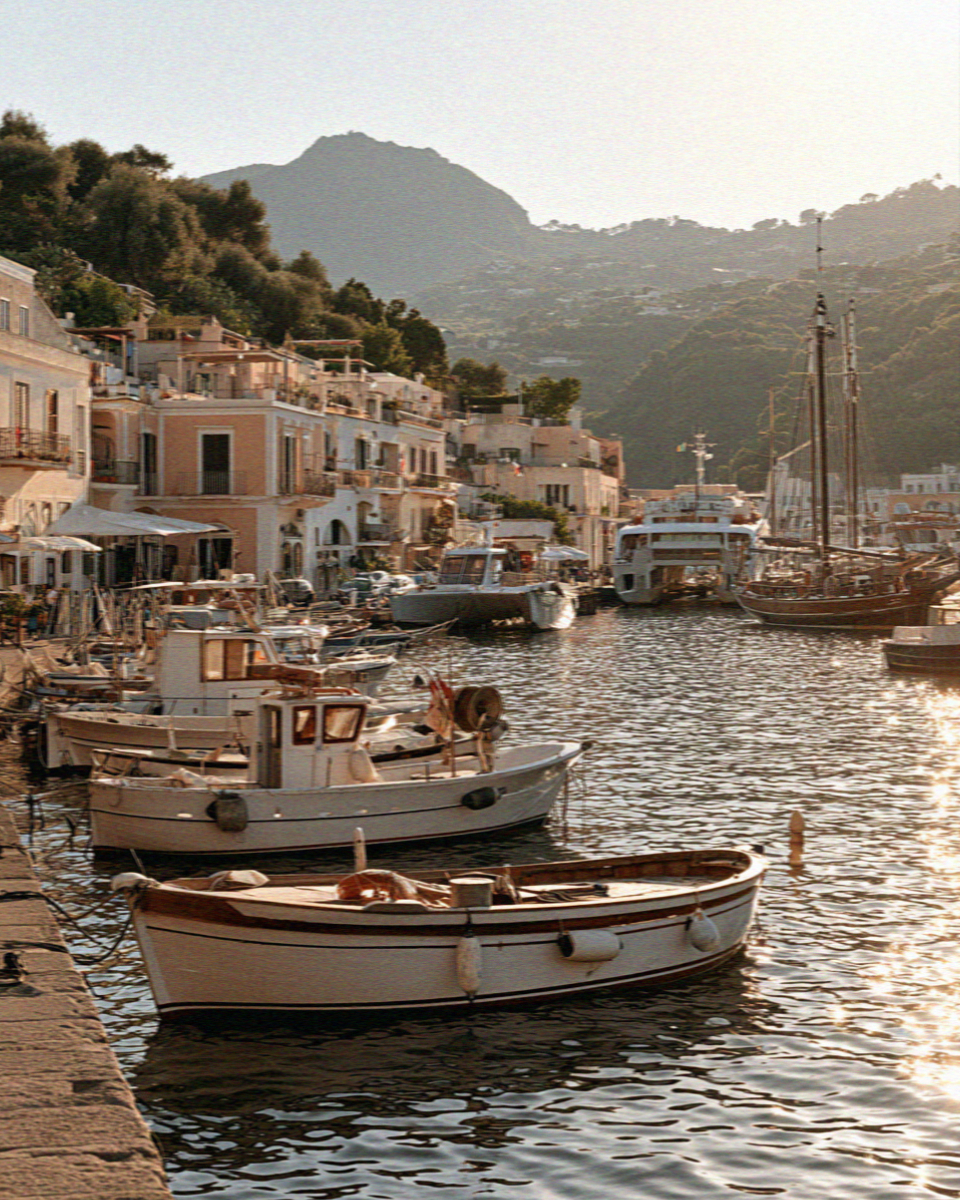
This is the practical choice, and I mean that as a compliment. The ferries land at Ischia Porto, which sits in a flooded volcanic crater, so the harbour is an almost perfect circle. You step off the boat and you are already where you are sleeping.
Porto is the busiest part of the island. Corso Vittoria Colonna runs behind the harbour with shops and gelaterie and noise until late. If you want quiet, this is not it. If you want to eat somewhere different every night and walk home, it is the best base on Ischia.
Ischia Ponte, twenty minutes east along the seafront, is the prettier half: the old fishing quarter, stone houses running down to the causeway that carries you across to the Castello Aragonese on its rock. I would stay here over Porto, and walk into town in the evening.
Where to stay. Grand Hotel Il Moresco is the grand old five star in the Lido district, with thermal pools at different temperatures (one in an artificial grotto) and a private jetty, roughly 300 to 500 euros a night in season. Albergo Il Monastero is the one I find hardest to resist: thirteen rooms inside the Castello Aragonese itself, in the old convent, reached by the castle lift. Around 200 to 350 euros, and worth it for the hour after the day visitors leave. Hotel Villa Ireos is the sensible option, a small three star with a garden and a thermal pool, usually 100 to 160 euros with breakfast.
Forio and Citara
Forio is the west coast, which means sunsets, and Ischia takes its sunsets seriously. The little white church of Santa Maria del Soccorso stands on a spur above the water and people gather there before dusk the way they might gather for a performance. Not a secret, and still lovely.
The town is bigger and scruffier than Sant’Angelo or Lacco Ameno, a real working place with a proper market. Just south of it, Citara bay holds a long stretch of sand and the Giardini Poseidon, the biggest of the thermal parks. La Mortella gardens are just north.
The trade off is distance: about forty minutes by bus from the port, so arrivals and departures need planning.
Where to stay. Mezzatorre Hotel and Thermal Spa sits alone on a pine covered headland in a sixteenth century watchtower, and it is the most beautiful hotel on Ischia. Rates start around 450 to 600 euros and climb hard in August. Sorriso Thermae Resort and Spa is on the hill above Citara with several thermal pools and a shuttle to the beach, generally 130 to 220 euros, often quoted half board. Hotel Villa Melodie, adults only, is the calm mid-range choice at around 120 to 190 euros.
Sant’Angelo
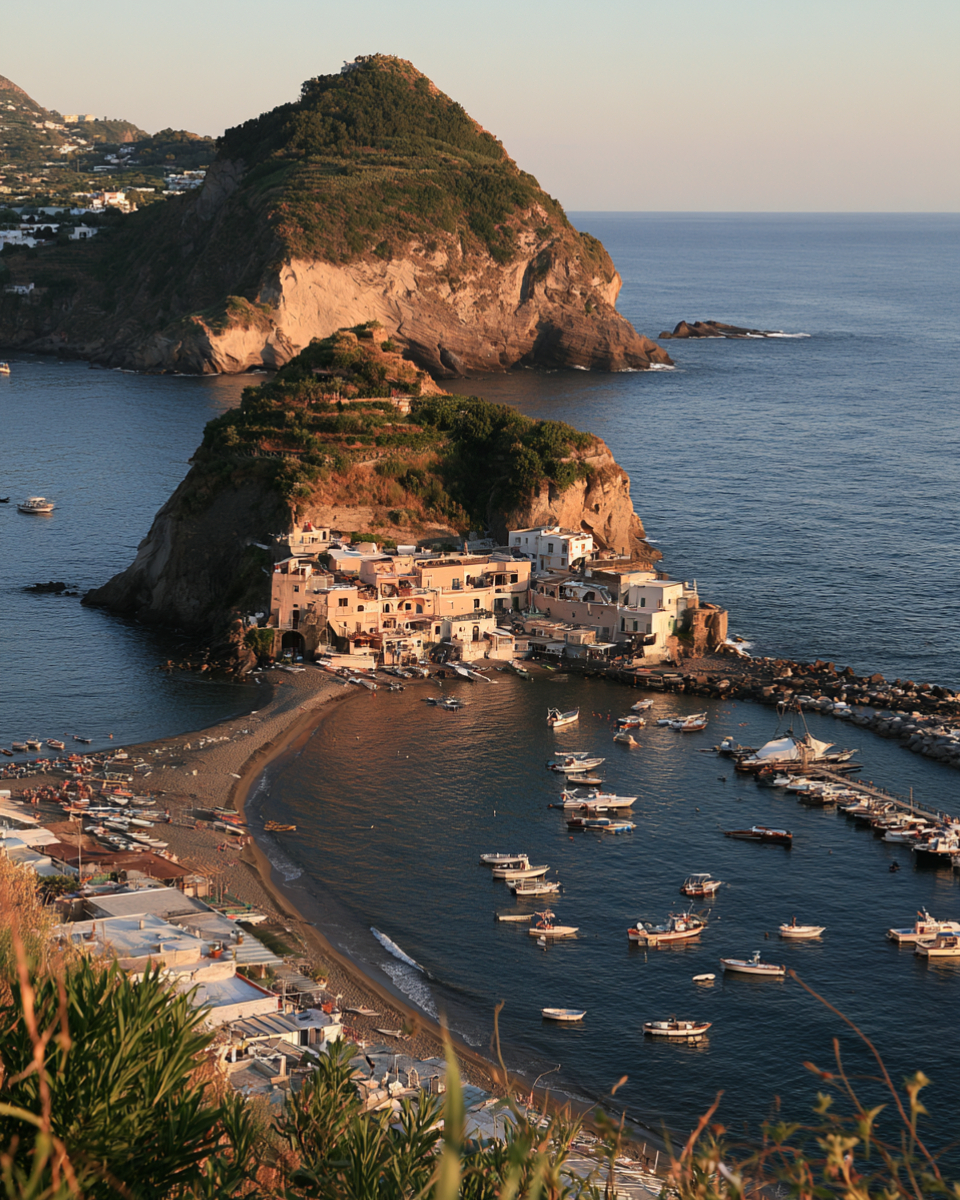
The prettiest place on the island, and the one that will make you swear at your luggage.
A former fishing village on the southern tip, tucked against a rock promontory joined to the shore by a thin isthmus of sand. Cars are not allowed in. The road stops above the village and the last stretch is on foot, downhill going in, which is delightful, and uphill coming out, which is not.
What you get for the inconvenience is no traffic noise at all. A tiny harbour, boats running along to Maronti and the Sorgeto cove, a few restaurants around the piazzetta, and by ten a silence you can hear.
It suits couples and irritates families with restless teenagers. It is also expensive for what it is.
Where to stay. Miramare Sea Resort and Spa is built into the cliff east of the village, terraced thermal pools stepping down to the sea, around 300 to 500 euros. Casa Celestino is the whitewashed one everybody photographs, twenty rooms, each with a sea-facing terrace, roughly 250 to 400 euros. Hotel Loreley, higher up with a thermal pool and a view over Maronti, is the value pick at 110 to 180 euros.
Lacco Ameno
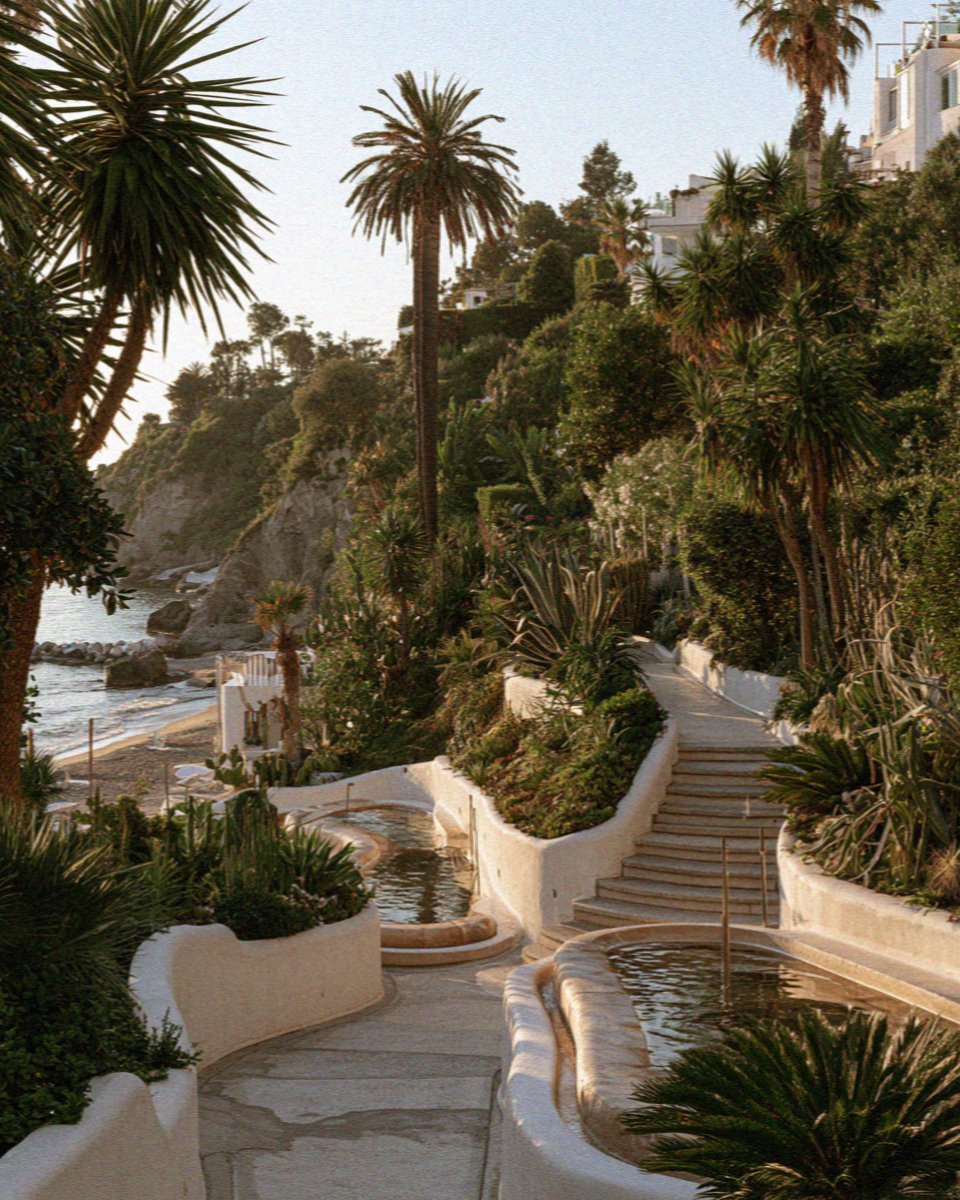
Small, smart, and rather pleased with itself. Lacco Ameno is where the island’s post-war glamour settled, and it still has the tidiest piazza on Ischia, a seafront promenade, and the Fungo, a mushroom-shaped rock sitting just offshore.
Two things make it worth the money. Negombo, the thermal park in the bay of San Montano, is the one I would choose over Poseidon every time: a botanical garden with pools in it rather than pools with plants around them. And San Montano is the best swimming beach on the island, a sheltered horseshoe of pale sand with calm water.
The village is tiny, so evenings are limited. Two or three good restaurants and then bed.
Where to stay. Regina Isabella is the island’s landmark hotel, built on Roman ruins on the seafront, with a serious spa and the Michelin-starred Indaco, from roughly 500 euros a night. San Montano Resort and Spa sits on the ridge above the bay with pools looking out toward Procida, around 350 to 550 euros. If neither is in budget, unfussy family-run three stars a street back from the water run 110 to 170 euros, still ten minutes from Negombo.
Casamicciola Terme
The island’s thermal history starts here. Casamicciola had Europe’s first proper spa establishment, and the whole town sits over hot springs, which is also why an earthquake flattened it in 1883.
It is the least postcard-pretty of the northern towns and consequently the best value on Ischia. The lower town is a working port with the island’s second ferry terminal; the upper town climbs toward Monte Epomeo, with real views and real quiet. The Castiglione thermal park, terraced pools cut into the cliff, is a short bus ride away.
Where to stay. Terme Manzi Hotel and Spa (some booking sites now list it as Palazzo Manzi) is the five star in the middle of town, built over the Gurgitiello spring and open since 1863, roughly 300 to 450 euros. Elma Park Terme is the big, comfortable four star on the hillside, large balconies and a medical spa attached, around 150 to 250 euros half board. There are also dozens of smaller pensioni well under 100 euros, which is why families come back here.
Barano and Maronti
Barano d’Ischia is the agricultural interior on the south side, and its coastline is Maronti, the longest beach on the island. Dark volcanic sand, nearly two kilometres of it, with warm springs bubbling up at the Fumarole end where people once buried food to cook it.
This is the beach-first choice, and the quietest. Almost nothing happens in the evening. You will need the bus, a car, or the little boats round from Sant’Angelo, and you should be honest about whether that sounds restful or annoying.
Where to stay. Hotel San Giorgio Terme sits directly above Maronti with its own stretch of black sand and a thermal spa, around 150 to 250 euros. Hotel Parco Smeraldo Terme is the other four star on the beach, thermal pools in a garden, similar band. Both do half board, and here you should take it.
The Practical Things
Most hotels are seasonal. The season runs from around Easter to mid-October, and a great many hotels, especially the thermal ones in Casamicciola and Lacco Ameno, close from November until March.
Half board is normal, and often worth taking. It grew out of the long thermal cures rather than package holidays, so the food is generally decent. In Maronti, Citara or Sant’Angelo it saves you money and a bus.
Almost every hotel has its own thermal pool. This is the real difference between Ischia and the rest of the Bay of Naples. Even modest three stars have two or three pools at different temperatures fed from the volcanic ground.
You do not need a car. Public transport here is one ring road and two buses going opposite ways round it, the CS and the CD, which between them stop at every town, beach and thermal park on the island. A single ticket is around 1.50 euros and valid ninety minutes, a day pass around 4.50, three days around 11. They run from early morning until roughly midnight in summer, are crowded in August, and work. Parking is genuinely difficult, so a hire car is a liability.
For the whole island in context before you choose a base, it is all in my complete guide to Ischia.
My own answer, if you are asking: Ischia Ponte for a first visit, Sant’Angelo for a second, and Lacco Ameno if the point of the trip is the water.
Read also: The Best Thermal Parks and Hot Springs in Ischia | How to Get to Ischia | The Complete Guide to Ischia
Frequently Asked Questions
Which part of Ischia is best for a first visit?
Ischia Porto or Ischia Ponte. The ferry lands you directly in Porto, so there is no transfer with luggage, and both circular bus routes start at the harbour. Ponte is the quieter and prettier of the two, twenty minutes along the seafront.
Do I need a car on Ischia?
No. The island has one ring road and two bus routes running opposite ways around it, the CS and the CD, so almost everywhere is reachable without driving. A single ticket is around 1.50 euros, valid ninety minutes, and a day pass around 4.50. Parking is difficult, so a car is more trouble than it is worth.
Are Ischia hotels open all year?
Many are not. The season runs from roughly Easter to mid-October, and a large number of hotels, particularly the thermal ones in Casamicciola Terme and Lacco Ameno, close from November through March. Confirm yours is open before booking winter travel.
Is half board worth it in Ischia?
Often yes. It comes out of the island’s thermal cure tradition rather than being a budget compromise, and hotel dining rooms are generally decent. It makes most sense in Maronti, Citara and Sant’Angelo, where restaurants in walking distance are few. In Porto or Ponte, skip it and eat out.
Why is Sant’Angelo harder to stay in than the rest of the island?
Sant’Angelo is car-free. Vehicles stop above the village and the last stretch is on foot, downhill on arrival and uphill on departure. Give your hotel your arrival time and they will send a porter or an electric cart. The reward is the quietest evenings on Ischia.