Most Italian islands give you one honest answer to this question, and it is usually June or September. Ischia is the exception, and the reason sits underground. The island is volcanic, and hot mineral water pushes up through the rock in every season, so the thing people come here for does not depend on the weather. You can lower yourself into water at body heat in February. On Capri that is not an option.
That stretches the calendar at both ends, and complicates it, because the thermal parks are seasonal businesses even though their water is not. I have been here in the heat of August and in the last stretch of October, and the two visits barely resembled each other.
The Numbers, Month by Month
Air is the typical daytime high, sea the monthly average.
- January: air 14C, sea 15C
- February: air 14C, sea 14C, the coldest water of the year
- March: air 15C, sea 14C
- April: air 17 to 18C, sea 16C
- May: air 21 to 22C, sea 19C
- June: air 25C, sea 23C
- July: air 28C, sea 26C
- August: air 28 to 29C, sea 26C, the warmest water of the year
- September: air 25C, sea 25C
- October: air 22C, sea 21 to 22C
- November: air 18 to 19C, sea 19C
- December: air 15 to 16C, sea 16C
Rain runs the opposite curve. The island gets around 900 to 950 mm a year, almost all of it between October and February. November is the wettest month by a wide margin, roughly 140 to 165 mm over about fifteen rainy days. July is the driest, with rain on perhaps four days and around ten hours of sun daily, against three and a half in December.
Notice the lag. The air peaks in August but the sea holds its heat into autumn, which is the whole argument for September and October.
Spring: April to Early June
Spring is when the island looks its best and swims at its worst.
April sits around 17 or 18C in the afternoon, pleasant for walking. The sea is about 16C. That is not swimming water. Northern Europeans get in regularly, but it is a quick, gasping business rather than a pleasure.
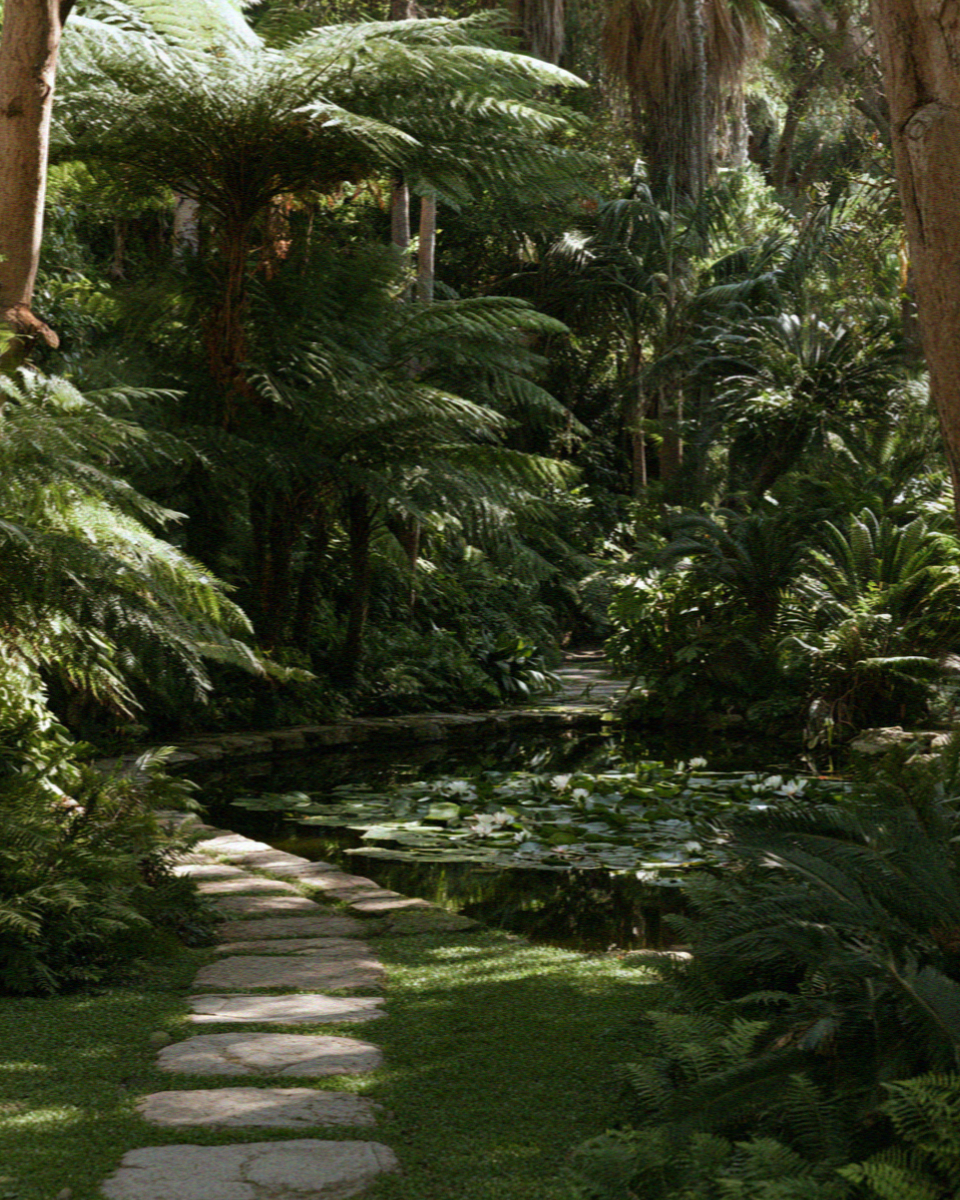
What spring gives you instead is the greenery. Ischia is fertile, terraced with vineyards and lemon trees, and in April and May it is dense and flowering in a way it is not by August, when the hillsides have gone dry and tawny. La Mortella, the garden William Walton and his wife Susana made above Forio, opens in early April and runs to the start of November, but only on Tuesdays, Thursdays, Saturdays and Sundays.
The thermal parks come back to life in this window, which is what makes spring viable at all. Giardini Poseidon at Citara reopened in mid April this season and Negombo at San Montano followed a week or so later. Castiglione at Casamicciola and Aphrodite Apollon at Sant’Angelo run to a similar rhythm. By the end of April the island is awake, hotels included, and you pay low season rates for it.
Late May and early June are the best value weeks of the year. The sea has climbed to about 19C in May and 23C in June, the air is in the low twenties, the gardens are still lush, and Ferragosto is over the horizon.
High Summer: July and August
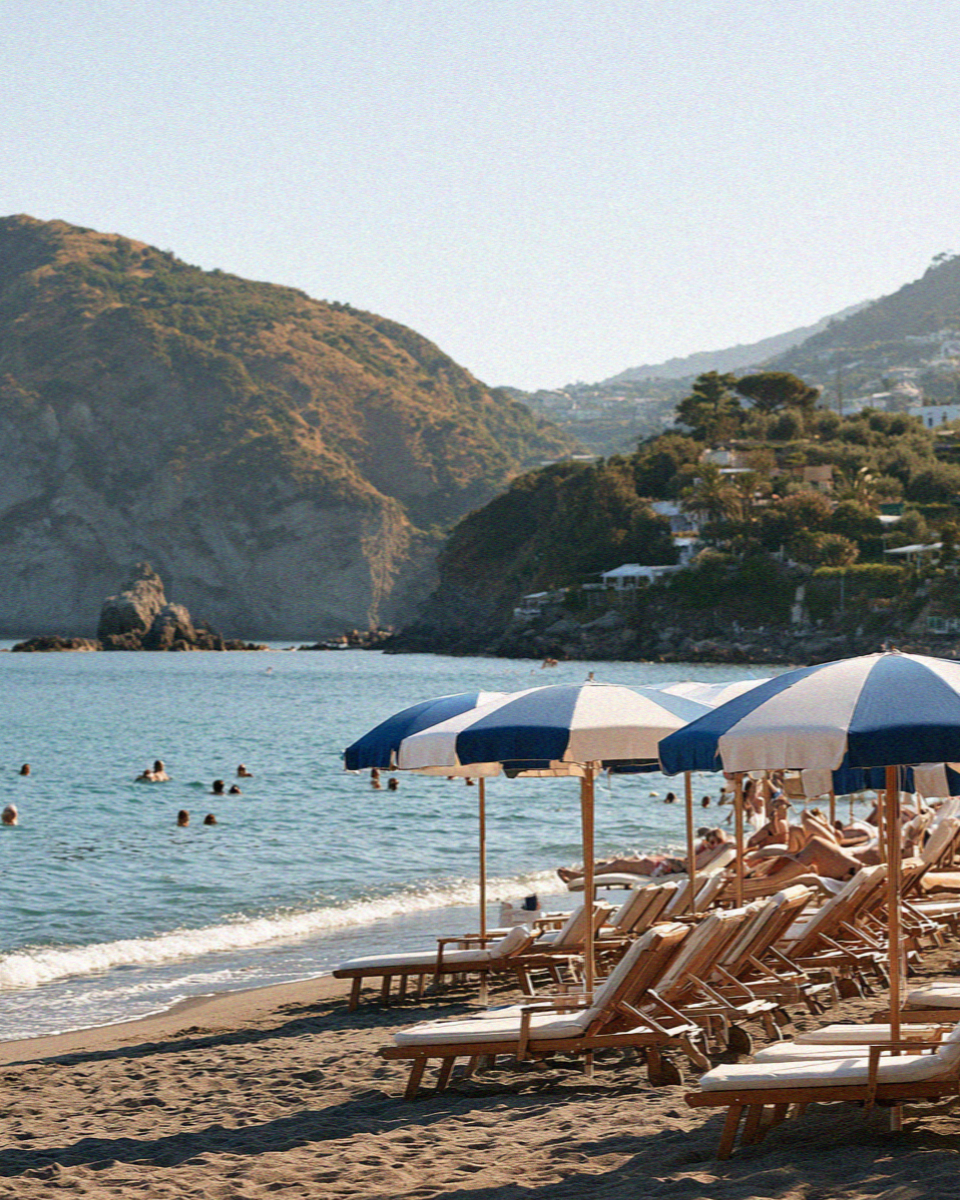
July and August are hot, busy and expensive, and the only months when everything on the island is open at once.
Daytime highs sit around 28 or 29C, the sea peaks at about 26C, and rain is close to theoretical. Every thermal park, beach club, boat rental and seasonal restaurant is running.
The cost is crowds, specifically Italian crowds. August is when Italy takes its holiday and Ischia is a domestic favourite. The pressure concentrates around Ferragosto on 15 August, when Maronti and Citara fill from early morning and hotels price accordingly. Poseidon adds a surcharge for the whole of August. Book rooms months ahead for that fortnight, not weeks.
Two events are worth arranging a trip around. The Ischia Film Festival takes over the Castello Aragonese for a week from late June into early July, screening inside a fifteenth century fortress. Then, around 26 July, comes the Festa a Mare agli Scogli di Sant’Anna, the island’s biggest night. Illuminated allegorical boats, built by the comuni and paraded through the bay of Cartaromana below the castle, compete before a jury, and the evening ends with the Castello Aragonese apparently set ablaze by a long fireworks display reflected in the water. Entry is free. Get to Ischia Ponte early, because the whole island goes.
Note too that from roughly Easter to October Ischia restricts car access for visitors arriving from within Campania, so plan on buses and taxis, as I set out in my complete guide to Ischia.
September and October, Which Is When I Would Go
If someone gave me a week on Ischia and let me pick it, I would take the second half of September without hesitating.
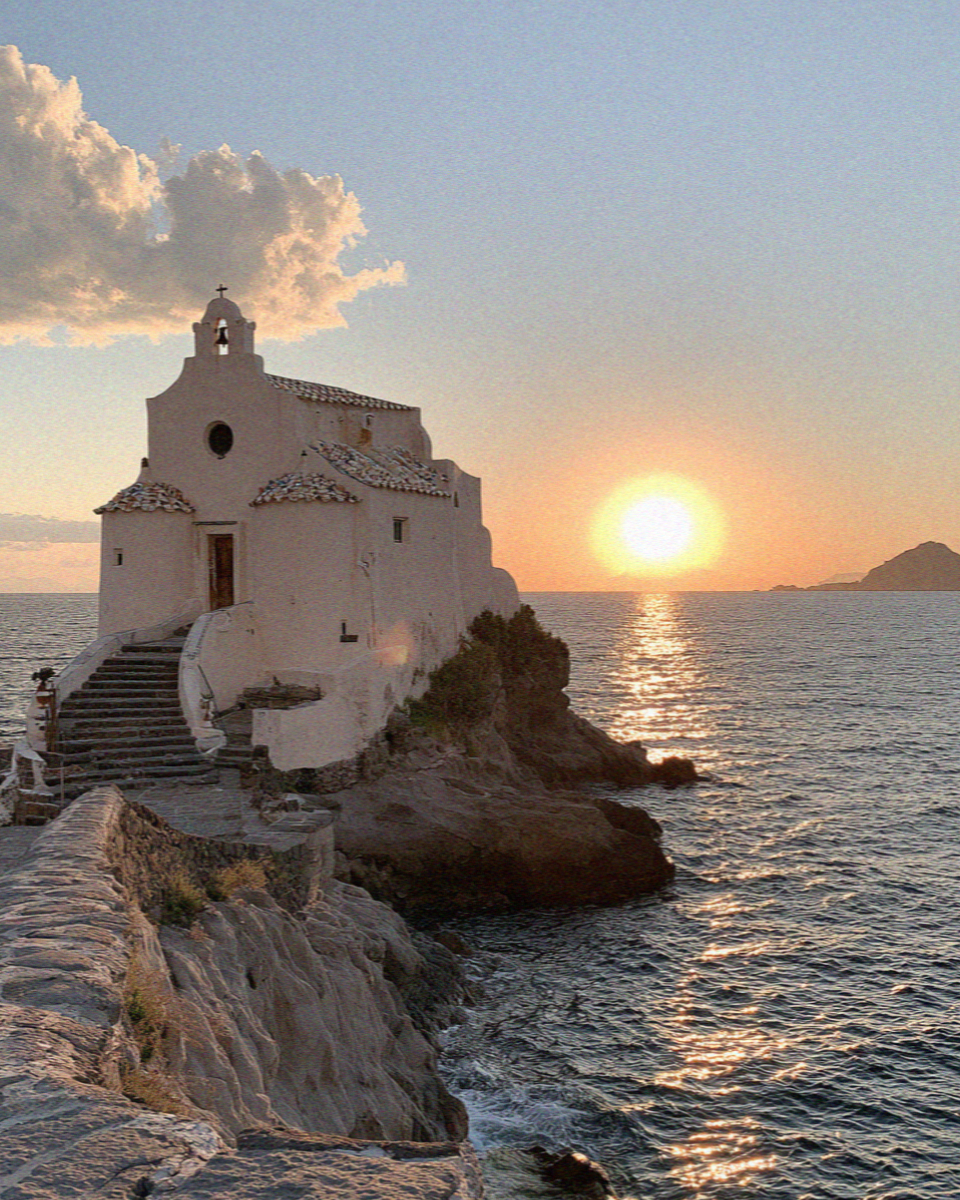
The sea is still around 25C, essentially August water. The air has dropped back to a walkable 25C, so Monte Epomeo and the coastal paths stop being a punishment. The Italian holiday has ended, the beaches have space, and hotel rates fall off a cliff after the first week. The light in Forio in late September, on the white curves of Santa Maria del Soccorso, is the best light the island gets.
September is also harvest. The terraced vineyards that grow Biancolella and Forastera come in, and Andar per Cantine, run by the Pro Loco in Panza, walks visitors along the old vineyard paths between working cellars for tastings and island cooking, across ten days or so in the second half of the month. It is the island’s proper autumn event, not a tourist construction.
October holds up better than people expect. Highs around 22C, sea still about 21 or 22C, swimming realistic for most of the month. But this is when the shutters come down. Negombo closes in the first half of the month, Castiglione in the same stretch, Aphrodite Apollon around the twentieth. Poseidon is the last big one standing, open daily until 31 October, though it shuts an hour earlier by then. Hotels, beach clubs and outdoor restaurants follow.
So the first two weeks of October are excellent and the last week is already half asleep. Check your dates against the parks.
November to March: Quiet, and All About the Thermal Water
Winter on Ischia is real, and it is not for everyone.
November is the wettest month and the point at which the tourist island shuts. The big thermal parks are closed until spring, most seasonal hotels, beach clubs and outdoor restaurants have gone, and ferries drop to winter timetables, far fewer than summer’s every thirty to sixty minutes, with rough seas able to suspend them for a day.
What stays is the part that was never seasonal.
Ischia is a working island of six comuni and tens of thousands of residents, so the towns keep going, the restaurants keep cooking, and prices are a fraction of August. A number of thermal hotels stay open all winter because they have their own hot spring feeding indoor pools, and soaking in 37C water while it rains on the sea outside is a decent argument for a winter break. Pick the hotel for its water, not its beach.
Sorgeto is the other winter constant. The cove at Panza, where the volcanic spring runs into the sea and pools among the rocks at bathing temperature, is free and open all year, and winter is arguably when it is best, because the two hundred steps down are not a sweat. The Castello Aragonese also stays open year round, nine until sunset, apart from a maintenance closure from early January into early March.
Winter highs hold around 14 to 16C, mild rather than cold. Just do not come in January expecting to swim, and do not come at all if you want the parks.
Read also: The Best Thermal Parks and Hot Springs in Ischia | The Best Beaches in Ischia | The Complete Guide to Ischia
Frequently Asked Questions
What is the overall best month to visit Ischia?
September, particularly the second half. The sea is still around 25C while the air has eased back to about 25C. The Italian crowds have gone, prices drop sharply after the first week, the harvest is under way, and every thermal park is still open, which is not true by late October.
Can you swim in the sea in Ischia in October?
Yes, for most of it. The October average sea temperature is around 21 to 22C, comfortable for a proper swim, with daytime highs near 22C. By November the sea is about 19C and the beach clubs have closed, so you swim from open beaches rather than sunbeds.
Are the thermal parks open in winter?
No. Negombo shuts in early October, Castiglione and Aphrodite Apollon later that month, and Giardini Poseidon runs latest, until 31 October, reopening in mid April. Through winter your options are a hotel with its own thermal water and indoor pools, or Sorgeto at Panza, the free volcanic cove that is open all year.
When is the Sant’Anna festival in Ischia?
In the last week of July, centred on the saint’s day of 26 July, in the bay of Cartaromana below the Castello Aragonese. Illuminated allegorical boats built by the island’s comuni parade before a jury, and the night ends with fireworks that appear to set the castle alight. Admission is free and Ischia Ponte fills early.
Is it worth going to Ischia in winter?
It is, if you go for the water rather than the beach. Winter highs stay around 14 to 16C, prices are low, and the island still works as a normal Italian community rather than a resort. But the thermal parks and most seasonal hotels and restaurants are shut, and ferries run reduced timetables that bad weather can suspend. Book a hotel with its own thermal pools and treat Sorgeto as the day out.