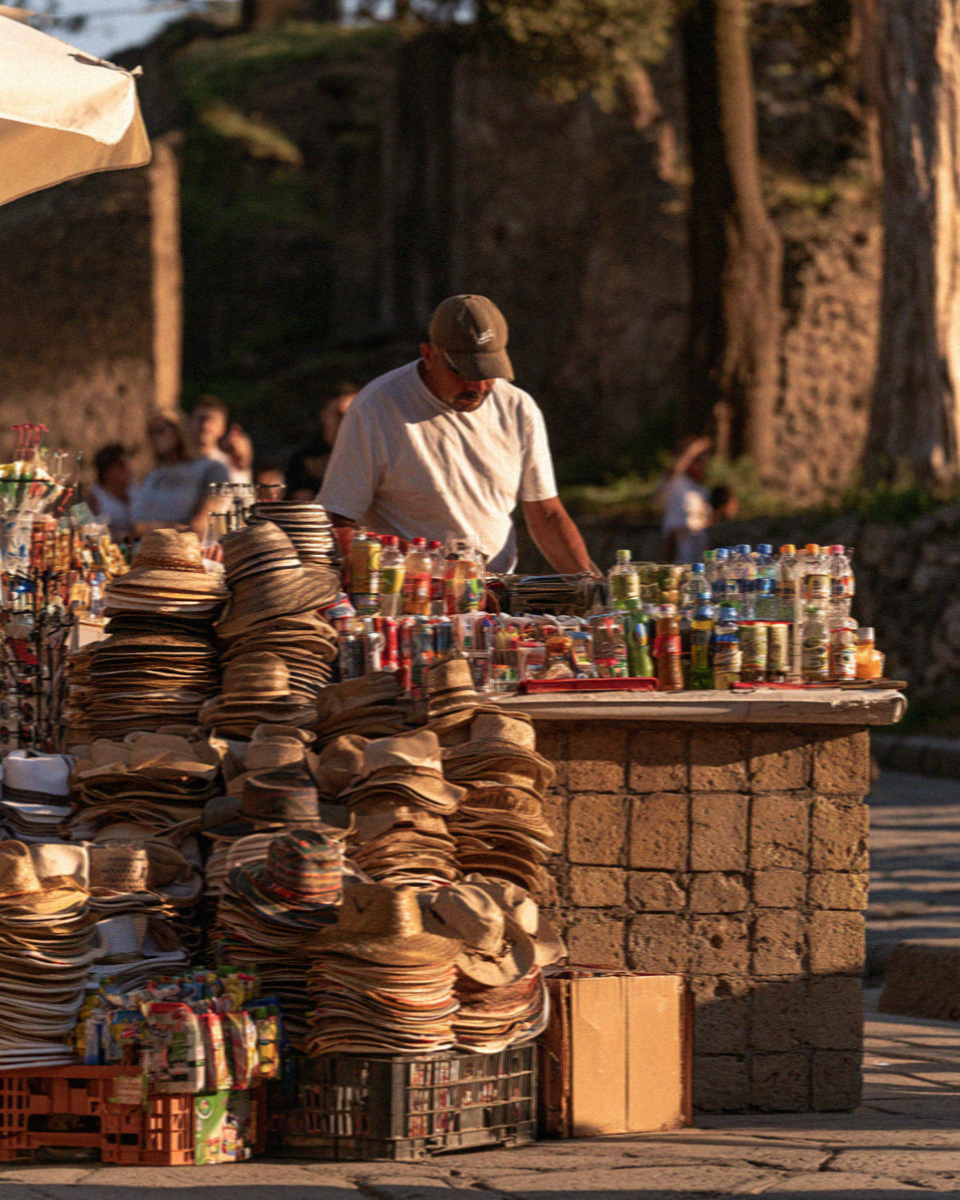
Almost nobody looks up.
You come out of the Pompei Scavi station, you turn left through the gate, you spend four hours in the first century, and you go back the way you came. The town two streets away does not register at all. It is scenery between the train and the ruins.
I did exactly that the first time and I would probably have done it again, except that I once had two hours to fill before a train and walked in the wrong direction.
The town is called Pompei, with one i. The ancient site is Pompeii with two. That distinction is not pedantry, it is the whole story: the modern town is not a survival of the Roman one, it is a nineteenth-century creation that grew up around a church.
What it actually is
A pilgrimage town.
In 1872 a lawyer named Bartolo Longo arrived in the Valle di Pompei, which at the time was malarial farmland with a few hundred people in it. He had spent his student years involved in spiritualism and had come out of it badly, and he arrived carrying the kind of guilt that produces either a breakdown or a cathedral.
He got a donated painting of the Madonna of the Rosary, in poor condition, delivered on a manure cart. He put it in a small church. People began to report answered prayers. Word spread the way it does, donations arrived, and by 1891 there was a basilica.
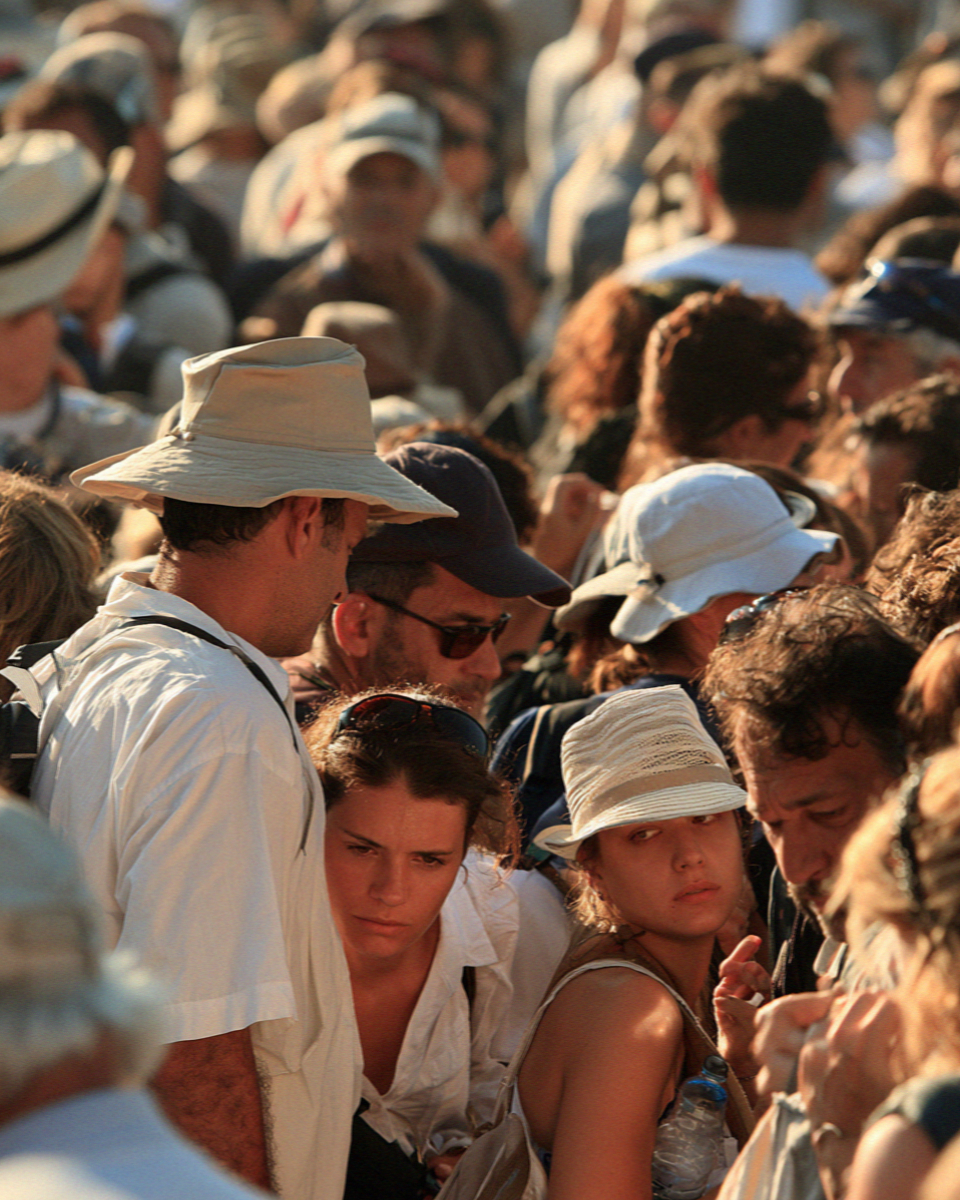
Today the Pontifical Shrine of the Blessed Virgin of the Rosary dominates the town, and around four million pilgrims a year come to it. Which means the modern town receives visitor numbers in the same order as the ruins, from a completely different set of people, arriving for a completely different reason, mostly without either group noticing the other.
Two enormous crowds, two streets apart, with almost no overlap. I find that genuinely strange and rather wonderful.
Whether to bother
Honest answer: not instead of anything. If you have one day, spend it in the ruins.
But there are two situations where it earns its time.
You have an hour before a train. Very common, since the timetable rarely matches when you are ready to leave. The basilica is a ten minute walk from the site and it is open, free, and air conditioned, which after five hours on unshaded basalt is not a small thing.
You are staying overnight in Pompei. Plenty of people do, to be at the gates for opening. In which case the evening is yours and there is more to it than the hotel bar.
What to see, in an hour
The basilica. Large, late nineteenth century, and unapologetically ornate in a way that is closer to Naples than to Rome. The bell tower can be climbed for a view that takes in the ruins on one side and Vesuvius on the other, which is the single best orientation you can get on the whole valley. Go up if it is open.
The square in front of it. Bartolo Longo laid the town out around the church deliberately, so the piazza and the streets radiating from it have a planned quality unusual in Campania.
The everyday town behind it. Two streets back from the basilica the pilgrimage stops and an ordinary southern Italian town begins: shuttered at lunchtime, a bar with four men in it, laundry, scooters, a good pastry counter. This is the part I would actually recommend. It is not a sight. It is a place, and after a morning in a city with no living inhabitants it functions as a decompression chamber.
Eating
The area immediately around the site entrance is the usual thing: menus in five languages, photographs of the food, prices set for people who are tired and captive.
Walk five minutes toward the basilica and it improves considerably. Walk ten and you are eating where the town eats.
The general Campanian rules apply and they will not fail you. If the menu is short, that is a good sign. If it is not translated, better. If there is a queue of local people at one o’clock, join it.
Staying the night here
This is the case for the town that most people never consider, and it is stronger than it looks.
The single best thing you can do at Pompeii is arrive at nine when the gates open. From Naples that means a train around half past eight. From Sorrento, similar. From the Amalfi Coast in August it means leaving in the dark and hoping the coast road behaves.
From a hotel in Pompei it means walking for ten minutes.
The hotels here are, as the live guide says, functional rather than inspiring. Nobody comes for the rooms. What you get instead is the only version of this visit where you are not racing a timetable at either end: in the gates at opening with the site nearly empty, out at one when the heat arrives, a long lunch, and back in at three with your ticket still valid while the day trippers are on their trains home.
You also get the evening, which is the part that surprises people. The pilgrim crowds thin after the last Mass, the square empties, and an ordinary town has its passeggiata in the shadow of an enormous basilica with a volcano behind it.
One night. It converts the hardest day trip in Campania into an unhurried two half-days.
A note on the name
The ancient city is Pompeii. The modern town is Pompei. The archaeological park calls itself Parco Archeologico di Pompei, using the Italian spelling, which confuses almost everyone at some point.
The station you want for the ruins is Pompei Scavi, scavi meaning excavations. There is another station simply called Pompei, on a different line, which serves the modern town and is a considerable walk from the gates.
People get on the wrong train for this reason more often than you would think. If you are heading for the ruins, the word you are looking for is Scavi.
Frequently Asked Questions
Is the modern town of Pompei worth visiting?
Not instead of the ruins, but it is a good use of a spare hour before a train or an evening if you are staying overnight. The basilica is ten minutes from the site, free to enter, and mercifully cool after a day on unshaded stone.
What is the basilica at Pompei?
The Pontifical Shrine of the Blessed Virgin of the Rosary, built from 1876 onward by Bartolo Longo around a donated painting of the Madonna. It draws around four million pilgrims a year, which is a comparable crowd to the ruins arriving for entirely different reasons.
What is the difference between Pompei and Pompeii?
Pompeii with two i’s is the ancient city. Pompei with one is the modern town, which grew up in the late nineteenth century around the basilica. The archaeological park uses the Italian spelling, which is why signage looks inconsistent.
Which station do I need for the Pompeii ruins?
Pompei Scavi, on the Circumvesuviana line between Naples and Sorrento. Scavi means excavations. There is a separate station called simply Pompei on another line which serves the modern town and leaves you a long walk from the entrance.
Where should I eat near Pompeii?
Not immediately outside the gate, where the menus are translated into five languages and priced for captive visitors. Walk five to ten minutes toward the basilica and the standard improves sharply. A short untranslated menu and a local queue at one o’clock are the signals to trust.
Read also: The Pompeii Day Trip: From Naples, Sorrento, Rome and the Amalfi Coast | How to Visit Pompeii: Tickets, Entrances and Skipping the Queue | The Ancient Ruins of Pompeii: Everything You Need to Know