Where to eat in Polignano a Mare divides neatly into three: a dining room inside a sea cave that you have almost certainly seen a photograph of, a handful of genuinely good informal places, and a coffee that was invented in this town and exists nowhere else in the same form. This is a small cliff town in Puglia where the view can cost you more than the food, so here is what is worth it, what is not, and what to order.
The rule that saves you money and improves your dinner
The closer a table is to the cliff edge, the more you are paying for the cliff.
That is not a scandal, it is a market. But it does mean that the best value eating in Polignano happens one or two streets back from the view, and the best food often happens somewhere with no view at all.
Decide in advance which you are buying on any given night. Both are legitimate. Confusing them is what leaves people annoyed.
Grotta Palazzese, and whether to do it
Ristorante Grotta Palazzese is the reason a lot of people have heard of this town.
It is a dining room built inside a limestone sea cave in the cliff, open on one side to the Adriatic, with the water moving below the tables. It has been photographed more than almost any restaurant in the world and the setting genuinely is extraordinary. There is nothing else quite like it.
The practical facts. It is open late spring and summer only. Lunch runs 12:30 to 16:30 last entry, dinner 18:00 to 22:30 last entry, and dinner is served in two-hour turns so the table can go again. You must book through their own website. À la carte is priced by number of dishes: 250 euros a head for one to three, 280 for four, 300 for five. There are tasting menus called Essenza, Abbraccio and Verdemare.
My honest read. You are buying the room, and the room is worth something real. The cooking is good rather than transcendent, and at that price the gap matters. The two-hour turn means it is not a long, loose Italian evening, it is a seating.
If the setting is the point and the budget is there, go and enjoy it without apology. If you want the best meal in Polignano for the money, eat somewhere else and take the boat trip instead, which passes the cave from the water and shows you the same extraordinary thing from below for a fraction of the cost.
The informal seafood counter
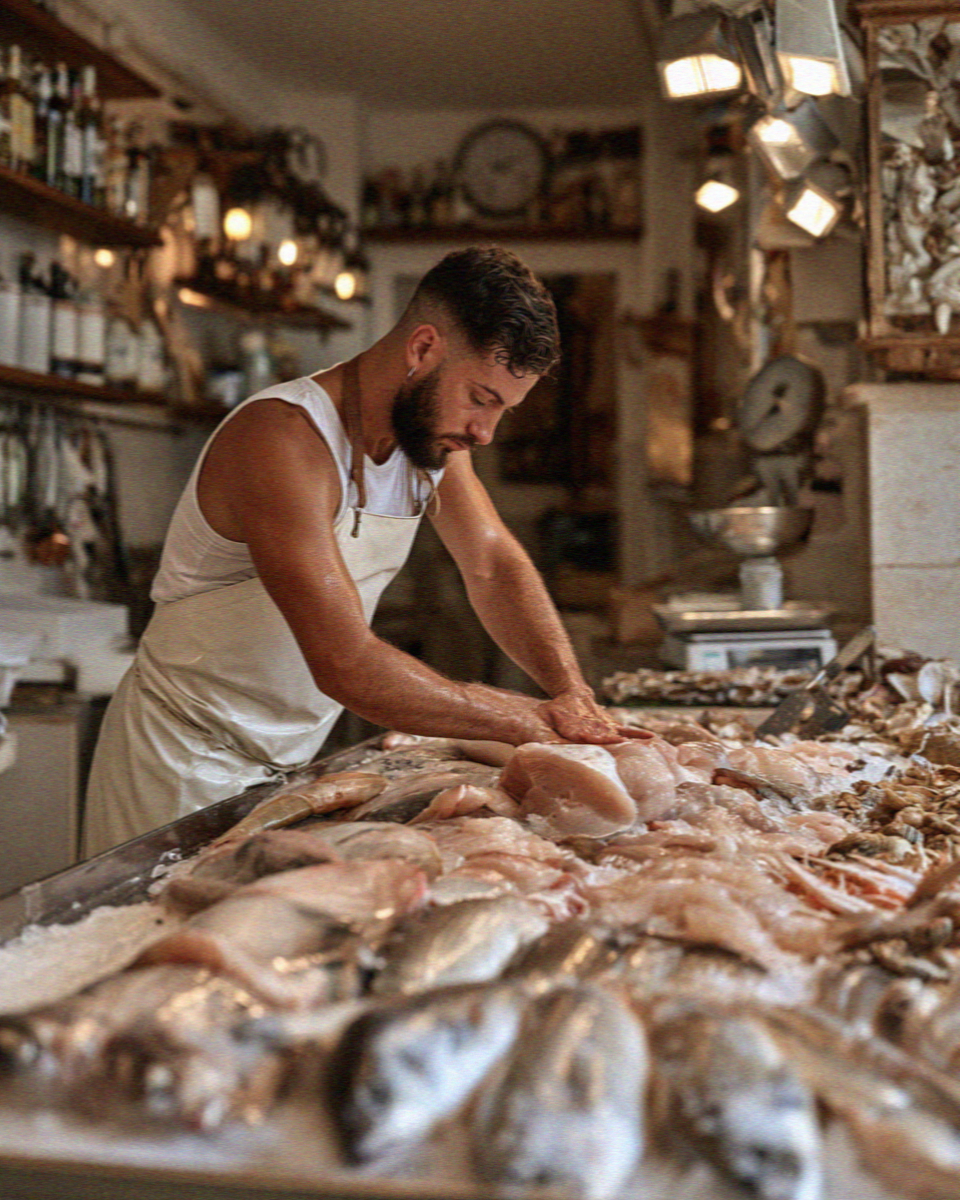
Pescaria, on Via Mazzini, is where I would actually send most people.
It grew out of a fish business run by Bartolo L’Abbate and it does Adriatic seafood without ceremony: raw fish, cooked fish, fish pasta, generously filled panini, eat in or take away. It is quick, it is properly good, and it costs a fraction of the view restaurants.
This is the lunch answer on a day you are swimming and boating and do not want to sit through three courses in the heat.
What to eat in Puglia while you are here
Order regionally and you will eat better. Puglia has its own kitchen and it is not the same as the rest of Italy.
Orecchiette, the little ear-shaped pasta, usually with cime di rapa (turnip tops, bitter, garlicky, anchovy) or a simple tomato sauce. It is the regional dish and it is everywhere.
Raw seafood. This coast eats fish raw more readily than most of Italy. Raw prawns, sea urchin in season, marinated anchovies. If the place is good, order it.
Burrata, which comes from Andria not far inland and is a different object here than the version that has travelled.
Focaccia barese, with tomato and olive, sold by weight from bakeries and eaten standing up.
Taralli with everything, and a bowl of them will appear whether you asked or not.
Wine: Primitivo if you want red with weight, Negroamaro for something more savoury, and a cold Verdeca or Fiano if you are eating fish, which you should be.
The coffee this town invented
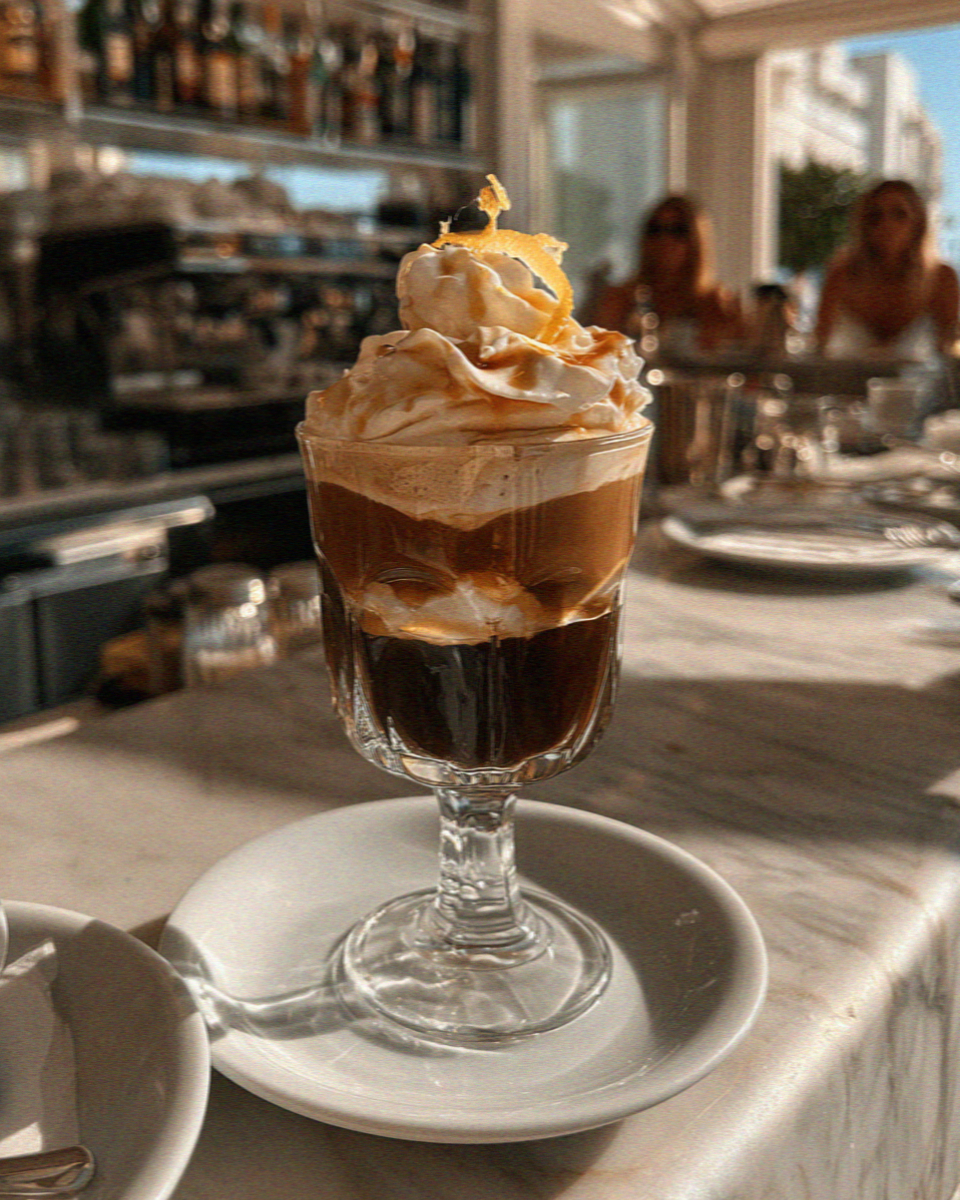
Caffè speciale is a Polignano invention and it deserves its own section.
It was created at Mario Campanella, Il Super Mago del Gelo on Piazza Giuseppe Garibaldi: espresso combined with cream, amaretto and lemon zest, served warm in a small glass.
It arrives layered, and the point is to drink it as it comes rather than stirring it into a uniform beige. You get the citrus first, then the almond, then the coffee underneath. It is sweet, it is strong and it is not really a coffee with flavourings, it is its own drink.
Most bars in town now serve a version. The original is still worth queueing for, and in the evening you will queue.
The same place is a gelateria and has been for decades, so you can reasonably do both.
Aperitivo and the evening
Six o’clock is the hinge of the day here.
The day visitors start leaving, the temperature drops, and every terrace with a view of the water fills with people ordering spritz and settling in. This is the moment to pay for the view, because you are buying an hour rather than a meal.
Then eat late. Nine or after is normal, and the town is far more pleasant once the coach crowd has gone.
Booking, timing and a few practical notes
Book dinner in July and August, especially anywhere with a terrace. Small town, finite tables.
Grotta Palazzese needs booking well ahead and only through their own site.
Lunch does not usually need a reservation if you are eating informally.
Many kitchens close between roughly three and seven. If you want food at five you are looking at bars, gelaterie and focaccia, which is a perfectly good outcome.
Cash is still welcome in smaller places, though cards are widely taken now.
Frequently Asked Questions
Is Grotta Palazzese worth the price?
It depends what you are buying. The setting, a dining room inside a sea cave in the cliff, is genuinely one of a kind and worth experiencing if the budget allows. The food is good rather than exceptional, à la carte runs from 250 euros a head, and dinner is served in two-hour turns. If you want the room, go. If you want the best food in town for the money, eat elsewhere and see the cave from a boat instead.
How much does Grotta Palazzese cost?
À la carte is priced by number of dishes: around 250 euros per person for one to three dishes, 280 for four and 300 for five. There are also tasting menus. It is open in late spring and summer only, and reservations must be made through the restaurant’s own website.
Where do locals eat in Polignano a Mare?
One or two streets back from the cliff edge, and at informal places like Pescaria on Via Mazzini for seafood without ceremony. The general rule holds everywhere in Italy and holds hard here: the tables with the best views rarely have the best food, and the further you walk from the parapet the better you eat for the money.
What is caffè speciale and where do you get it?
It is a drink invented in Polignano at Mario Campanella, Il Super Mago del Gelo on Piazza Giuseppe Garibaldi. Espresso with cream, amaretto and lemon zest, served warm in a glass and drunk in layers rather than stirred. Most bars in town now make a version, but the original is the one to queue for.
What food is Polignano a Mare known for?
Adriatic seafood, often served raw, and the wider Puglian kitchen: orecchiette with cime di rapa, burrata from nearby Andria, focaccia barese sold by weight, and taralli with everything. The town’s own contribution is caffè speciale, which was created here.
Read also: The Best Things to Do in Polignano a Mare | Where to Stay in Polignano a Mare | The Complete Guide to Polignano a Mare