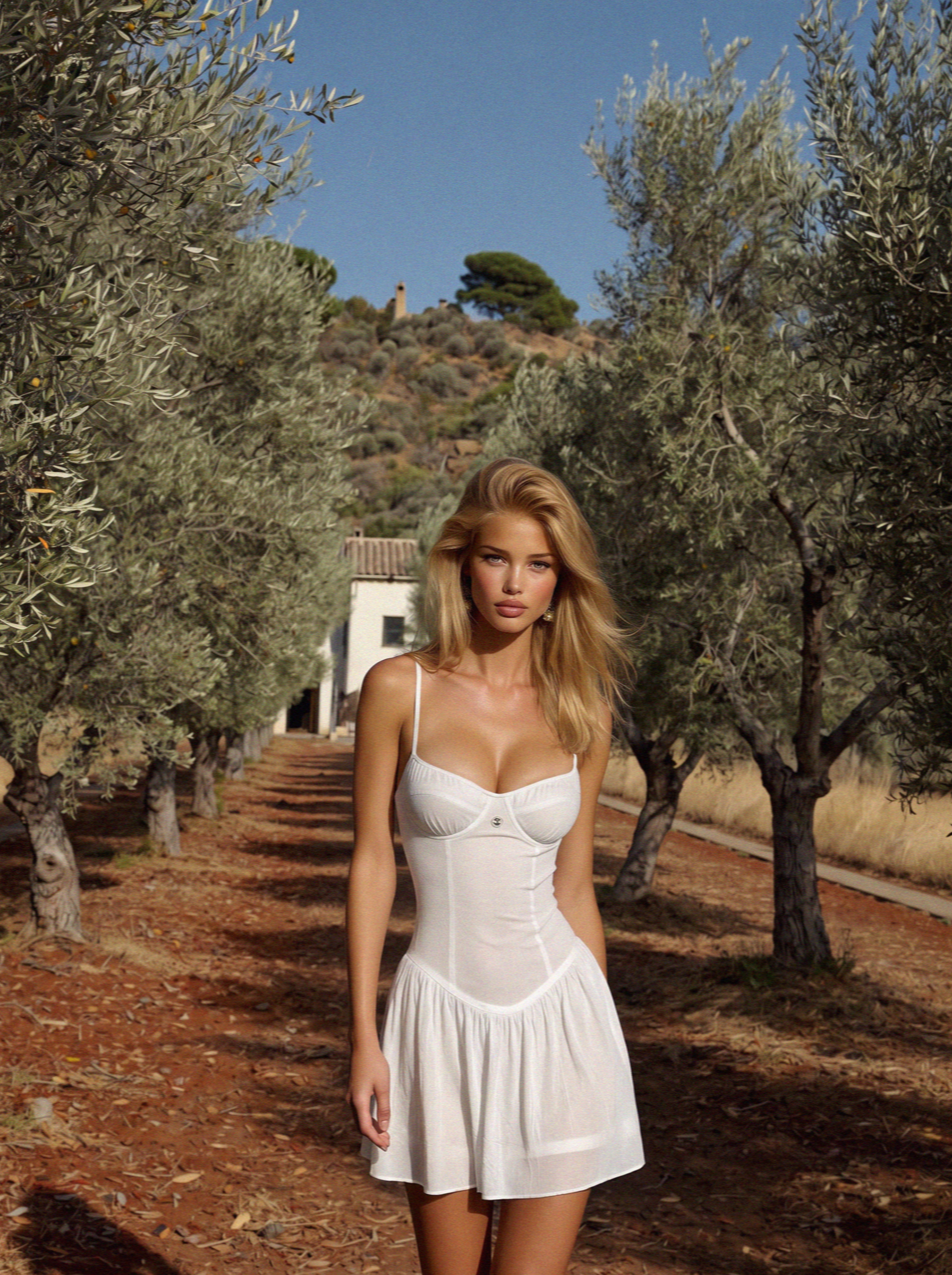
The masseria is the reason a lot of people come to this part of Puglia without quite being able to explain why, and it is the single most distinctive thing about staying near Ostuni.
It is also the decision most likely to go wrong, because a masseria is not simply a hotel that happens to be in the countryside. It changes the shape of your holiday. This is what one actually is, what it costs, and who should and should not book one.
What a masseria actually is
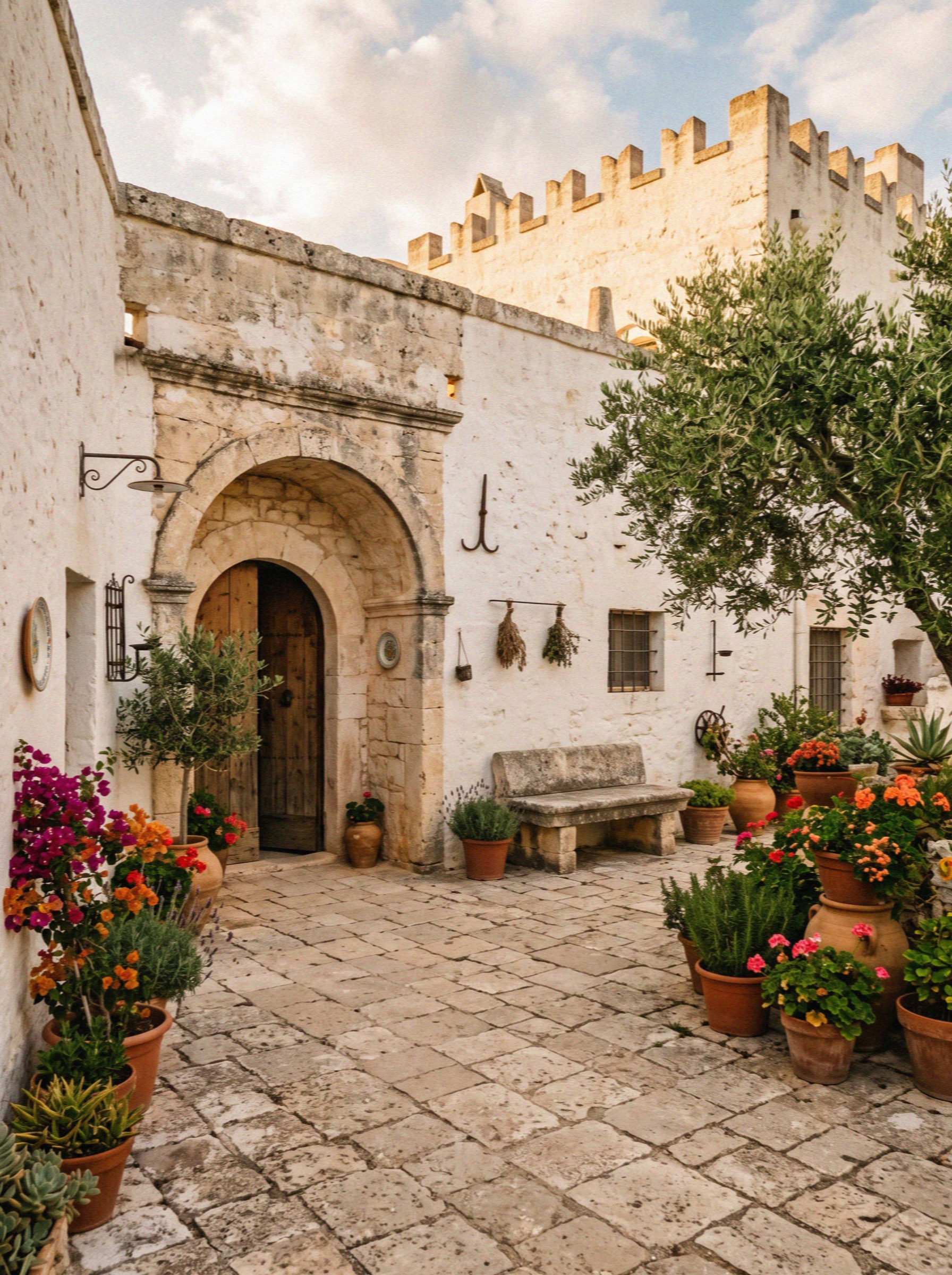
A masseria is a fortified farm estate. Historically it was the working heart of an agricultural holding, usually olives in this region, built out on the land rather than in a town because the land was the point.
The architecture follows from that. Thick lime-washed walls, small deep-set windows, a courtyard you enter through an arch, vaulted stone ceilings inside, and often a tower or defensive features, because this coast spent centuries being raided and a farm estate a few kilometres from the sea needed to be able to shut itself. They are white, low, heavy-walled buildings that stay remarkably cool in August without much help.
Around Ostuni a great many have been converted into places to stay. At one end that means a working farm with a handful of simple rooms and the family still pressing oil. At the other it means a serious luxury hotel with a spa, a pool, a restaurant and prices to match. Both are called masserie and the gap between them is enormous, which is why “we’re staying in a masseria” tells you almost nothing on its own.
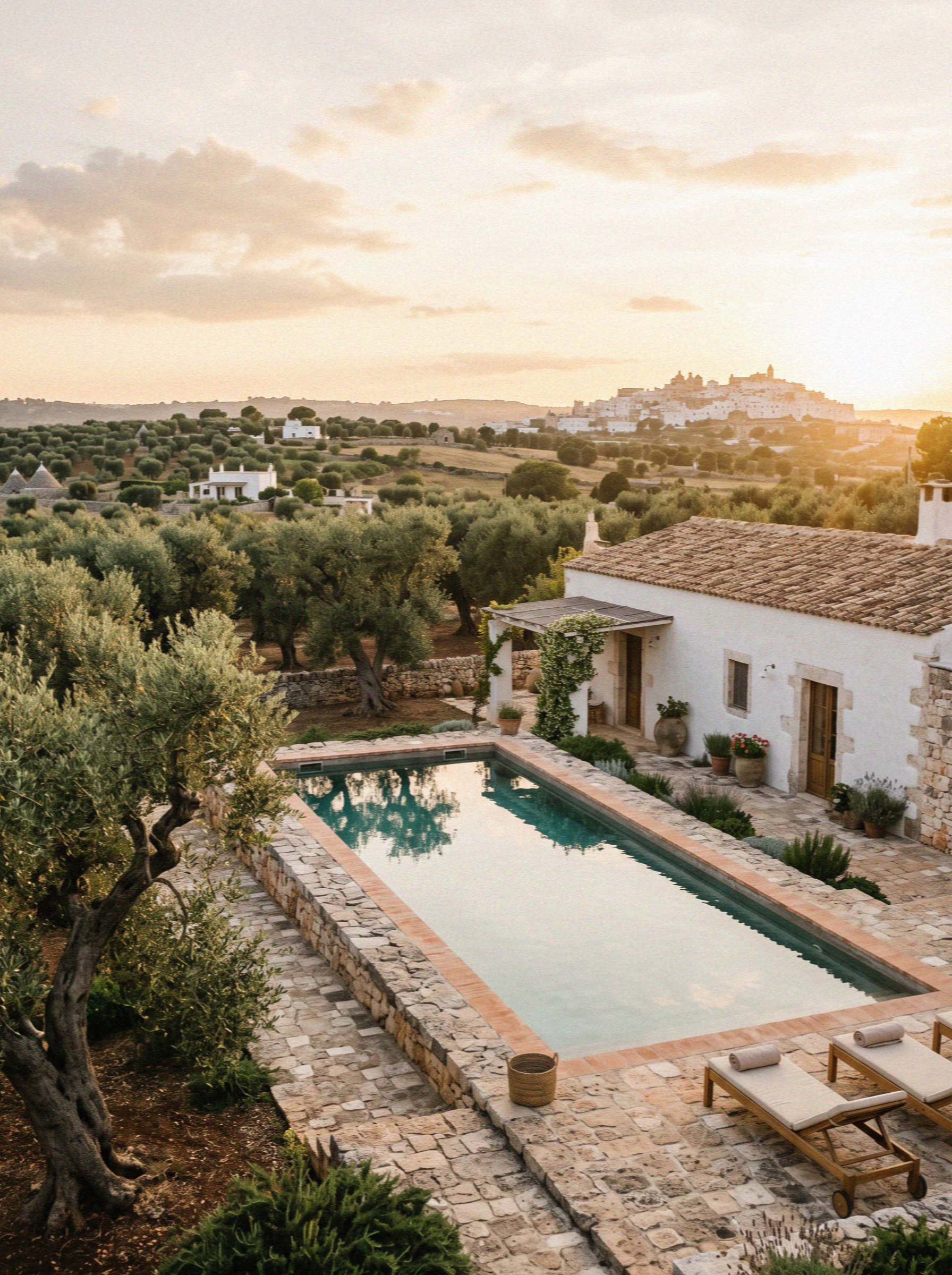
The good ones share something regardless of price: space, silence, thick walls, old olive trees, and the sense of being on a piece of land rather than in a building.
What it costs
This is the part worth being straight about.
At the upper end, Masseria Torre Coccaro is the well-known luxury option in this area, with booking-site rates starting somewhere around 314 dollars a night. Masseria Le Carrube sits a step below, with rates quoted from roughly 217 to 280 dollars depending on the source and the day. Masseria Il Frantoio is a working olive estate that comes up constantly in conversation about this coast, though I could not find a reliable published nightly rate for it.
Two honest caveats about those numbers. They are booking-site “from” prices, which means the cheapest room on the quietest night, and they move a great deal between February and August. And they were accurate when I checked, not necessarily when you are reading. Treat all of the above as bands that tell you the rough tier of each place, then check real dates.
Below that tier there are agriturismi and smaller converted farms at considerably less, and above it there are estates that will take whatever you are willing to give them. The spread here is wider than in almost any other kind of Italian accommodation.
A morning on the estate

What you are really buying is the morning.
You wake up somewhere very quiet. The walls are a metre thick so the room is cool and dim even when it is already hot outside. Breakfast is in the courtyard or under a pergola, and it is usually excellent in a specific Puglian way: ricotta, tomatoes, bread, cake, the estate’s own oil, fruit that was on a tree recently. Beyond the courtyard wall there are olive trees that were old when your grandparents were born.
Then you swim, or you sit, or you do nothing at all until the middle of the afternoon.
That is the product. If reading that made you want to be there, book one. If reading it made you slightly restless, you want a room in the old town instead.
Who should not book one
I would talk three kinds of traveller out of it.
If you do not have a car. This is not negotiable. A masseria is out on the plain, taxis are neither cheap nor plentiful, and there is no useful public transport between the estates and the town. Everything, including every dinner, requires driving. If you are arriving by train and not renting a car, stay in Ostuni.
If you are only here two nights. The masseria experience is about slowness and you need at least three nights to get any of it. On a short stay you will spend your time driving between the estate and the sights and get the worst of both arrangements.
If you want to walk to dinner. Many masserie have their own restaurant, which is often very good and which you will be eating at most nights, because the alternative is a twenty minute drive each way and somebody staying sober. Some people find this delightful. Others find it claustrophobic by the third evening.
Masseria or the old town
The clean way to decide.
Choose the old town if it is your first visit, if you have two nights, if you have no car, or if you want the town itself, the lanes at seven in the morning and the terraces at nine at night.
Choose a masseria if you have three nights or more, a car, and you want the holiday to be about the landscape rather than the sightseeing. It is also the better choice for a couple, and much the better choice in high summer, when having a pool in the middle of the day stops being a luxury and starts being the plan.
And there is a third option people forget: do both. Two nights in town, then three out among the olives. You see the place properly and you finish somewhere quiet.
Frequently Asked Questions
What is a masseria in Puglia?
A fortified farm estate, historically the working centre of an agricultural holding and usually an olive one in this region. They are built white, low and thick-walled with a courtyard and often a defensive tower. Many around Ostuni have been converted into hotels, ranging from simple agriturismi to full luxury estates.
How much does a masseria near Ostuni cost per night?
The spread is very wide. Masseria Torre Coccaro sits at the luxury end with rates from around 314 dollars, and Masseria Le Carrube from roughly 217 to 280 dollars, though both are booking-site starting prices that vary a great deal by season. Smaller agriturismi cost considerably less. Check current dates rather than relying on any published figure.
Do you need a car to stay in a masseria?
Yes. Masserie sit out on the plain among the olive groves, with no useful public transport and limited taxis. Every trip into Ostuni, to the coast or out to dinner requires driving. Without a car, stay in the old town instead.
Is it better to stay in Ostuni old town or a masseria?
The old town if you have two nights, no car, or want to walk to dinner. A masseria if you have three or more nights, a car, and want a slower holiday with space and a pool. In high summer the pool alone is a strong argument for the masseria.
Do masserie have restaurants?
Many do, and they are often very good. This matters more than it sounds, because if you are staying out on the plain you will be eating at your own estate most evenings unless you want a twenty minute drive each way with a designated driver.
Read also: where to stay in Ostuni, the best time to visit Ostuni, and the complete guide to Ostuni.