Puglian food is peasant cooking that became fashionable without changing much, which is the best thing that can happen to a regional cuisine. It is vegetable-heavy, bread-heavy, olive-oil-heavy and much simpler than the cooking of northern Italy, and Ostuni does it well without making a performance of it.
This is what to order, where to go, and two habits that will improve every meal you eat here.
What to order
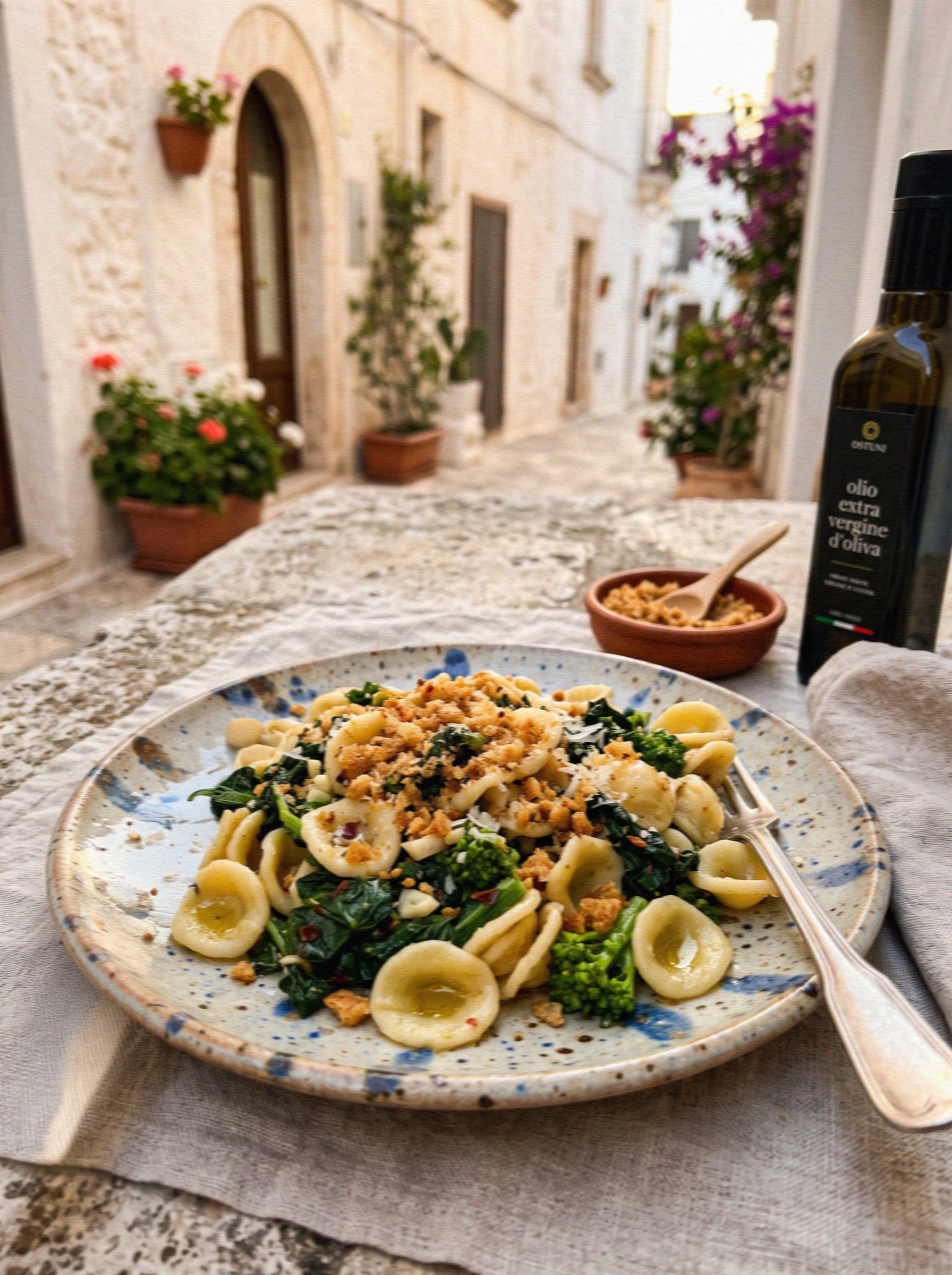
Orecchiette. The little ear-shaped pasta, made by dragging a knife across a piece of dough and turning it over a thumb. The classic version here is with cime di rapa, turnip tops, and toasted breadcrumbs. Bitter greens, good oil, a bit of chilli, crunch on top. It sounds austere and it is one of the great pasta dishes.
Burrata. It comes from this region and what you have eaten elsewhere under that name is almost certainly not this. A skin of mozzarella around a middle of cream and curd, served the day it was made, at room temperature, with oil and salt and nothing else needed.
Fava e cicoria. A purée of dried broad beans with wild chicory, olive oil poured over. It reads on a menu like something you would skip. It is deeply savoury and slightly bitter and it is the dish I would send you to Puglia for.
Whatever the fish was that morning. The coast is ten minutes down the hill. Ask what came in rather than reading the list.
Bread. Puglian bread is a serious matter, dense and yellow-crumbed and long-keeping. It is not filler. Use it for the oil.
Where the fish comes from
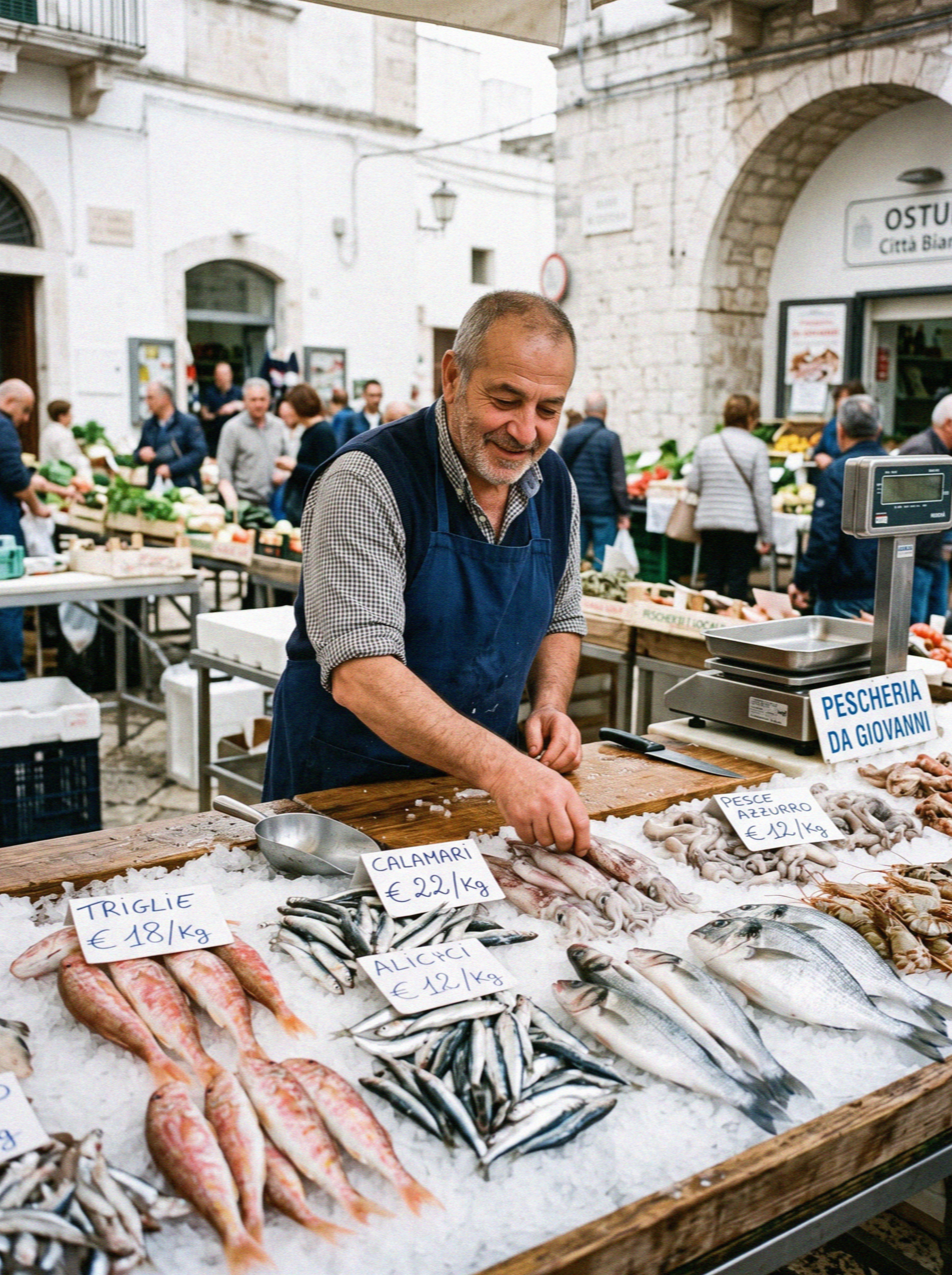
Ostuni is up on its hill, but the sea is only seven or eight kilometres away and the fish on the good menus here came off that coast the same morning.
This is worth knowing because it changes how you order. In a town like this the fish is not a fixed menu item, it is whatever the boats brought in, and the right move is to ask rather than to choose. If a waiter tells you what is good today rather than handing you a laminated card, believe them and order that.
The same logic runs through the vegetables. This is farming country and the contorni change with what is in the ground, so a plate of grilled aubergine in August and a plate of chicory in March are the same recommendation.
The restaurants
Osteria Piazzetta Cattedrale is the one I would book first. It sits beside the cathedral in the old town and does imaginative interpretations of Apulian dishes with local wine. It holds a Bib Gourmand in the MICHELIN Guide Italia, which is the award for good cooking at good value rather than for luxury, and that is exactly the right description. It is consistently among the highest rated places in town across review sites, with well over a thousand reviews behind that.
Taverna della Gelosia is the one for seafood. The catch of the day is the thing to order, and the setting in the old town is the sort of vaulted, stone-walled room you hoped Puglia would produce.
Ristorante Porta Nova sits out by the old gate, and a good part of what you are paying for is the position, with the plain dropping away below and the coast in the distance. Go at sunset and accept that the view is doing some of the work.
I have deliberately not put prices against any of these. I could not verify current ones and an out-of-date number is worse than no number. Expect a mid-range trattoria bill at the first two and something higher at the third for the view.
Two habits worth adopting
Eat later than feels natural. Nothing serious happens in a Puglian dining room before half past eight. A restaurant that is full at seven is full of visitors. If you turn up at nine you will eat better, in a busier room, with locals around you.
Order the vegetables properly. The contorni here are not garnish. This is a region that got extremely good at cooking without much meat, and two vegetable dishes and one pasta will beat a conventional three courses almost every time.
Wine, and the coffee
The reds are primitivo and negroamaro, big and warm and inexpensive, and they are lovely with the food and heavy in August. In heat, ask for the local white or the rosato, order it by the carafe, and notice how little it costs.
Coffee follows the ordinary Italian rules, which is to say drink it standing at the bar, quickly, and do not order a cappuccino after a meal unless you enjoy being gently judged.
Buy the oil
This is the thing to carry home, and the difference between buying it well and buying it badly is large.
Do not buy oil from a souvenir shop in the centre with a ribbon round the neck of the bottle and a picture of the town on the label. You are paying for the ribbon.
Buy instead from a proper alimentari, or better, from one of the estates out on the plain, many of which sell direct. The plain below Ostuni is covered in olive trees that are genuinely ancient, enormous and hollow and split, still producing, and the oil that comes off them is green and grassy with a peppery catch at the back of the throat that makes you cough slightly if it is fresh and good. That cough is the polyphenols and it is what you are paying for.
Taste before you buy where you can. And accept that once you have had it, supermarket oil at home will taste like nothing at all for about a month.
Aperitivo, and the evening
The hour before dinner is its own event here and it is the cheapest good thing in town.
From about seven the squares and the terraces fill. Order a spritz or a glass of the local white, and something to eat will usually arrive alongside it without being requested. Sit where you can see the plain, because from the edge of the old town the ground drops away and the light does something worth an hour of your attention.
This is also the moment to understand the town’s rhythm: the passeggiata, everybody out walking for no reason other than that this is when one walks. Join it. Then eat at half past nine like everyone around you.
Booking
In July and August, book. Ostuni is a small town with a limited number of good tables and a large number of summer visitors, and the places worth eating at fill several days ahead. In the shoulder months you can usually walk in, though the terrace tables with the view still go first.
Frequently Asked Questions
What food is Ostuni known for?
Puglian cooking: orecchiette pasta with turnip tops and breadcrumbs, burrata, fava e cicoria which is a broad bean purée with wild chicory, very good bread, and fish from the coast below the town. Olive oil from the surrounding groves goes on nearly everything and is worth buying to take home.
What is the best restaurant in Ostuni?
Osteria Piazzetta Cattedrale is the strongest all-round choice, holding a Bib Gourmand in the MICHELIN Guide Italia for good cooking at good value. Taverna della Gelosia is the pick for seafood, and Ristorante Porta Nova is the one for a view over the plain at sunset.
What time do people eat dinner in Ostuni?
Late. Restaurants fill from about half past eight and a place busy at seven is mostly serving visitors. Booking a table for nine will give you a better meal in a livelier room.
Do you need to book restaurants in Ostuni?
In July and August, yes, several days ahead. It is a small town with a limited number of good tables. Outside high summer you can usually walk in, although terrace tables with a view are the exception.
Is Ostuni good for vegetarians?
Unusually good. Puglian cooking is built on vegetables, pulses and bread rather than meat, so the contorni and pasta dishes are genuinely the strong part of the menu rather than an afterthought. Fava e cicoria, orecchiette with greens and grilled vegetables are all standard.
Read also: the best things to do in Ostuni, an Ostuni itinerary, and the complete guide to Ostuni.