Two airports serve this end of Puglia and only one of them is the sensible answer. Brindisi sits roughly 39 kilometres from Lecce. Bari is around 110. Almost everything on this page follows from that gap, and it is worth settling before you book the flight rather than in an arrivals hall with a suitcase and two hours of transfers still ahead of you.
Everything else about the city, what to see and when to come and where to eat, sits in the complete guide to Lecce. This page is only the logistics, which here are genuinely misunderstood.
So the most useful sentence goes at the top, rather than buried under the airport tables: a car is effectively required for the coast. Not helpful, not recommended, required. Most of the beaches and the small stops between them have no useful public transport at all, and combining more than one of them in a day is only realistic if you are driving. Lecce itself is walkable and the trains reach a handful of towns, but the moment your plan involves sand, it involves a car.
Fly into Brindisi
Brindisi Airport, code BDS, is the one to book. It is small, it is close, and the transfer is short enough to land in the early afternoon and be on a square with a drink by evening.
From the airport it is somewhere around 35 to 50 minutes into Lecce by taxi or direct bus. A shuttle runs from outside the terminal to the Airport City Terminal at the entrance to Lecce, which takes roughly 40 to 45 minutes. That drop-off point is not in the historic centre, so if you are staying inside the old town, allow for a short taxi or a walk with the bags.
The other route is the airport bus to Brindisi station, about 40 minutes and running roughly every half hour, then a train on to Lecce. It is more moving parts for no real gain unless the train timing suits you or you want to stop in Brindisi anyway. Given the choice, take the direct bus or the taxi.
If you end up at Bari
Sometimes the schedule decides for you, and Bari is not a disaster, just longer. Two legs rather than one.
First, the airport to Bari Centrale on the Ferrotramviaria line, about 15 minutes, in the region of five euros. Then Trenitalia south to Lecce, somewhere between 70 and 90 minutes depending on whether you land on a regional service or a faster one, and roughly ten to fifteen euros. Treat both figures as approximate. Italian rail fares move with the service, the day and how far ahead you book, so take the shape of the cost rather than the number.
Added up, Bari is a half-day of travel with two changes and a suitcase. Brindisi is a bus ride. If the Bari flight is dramatically cheaper it can still be worth it, but price the extra hours honestly on a short trip.
Lecce is the end of the line
Lecce is the end of the Trenitalia line. The track runs down the heel and stops here. Trains come in from Bari and Brindisi, and there are direct long-distance services from further north, which is why plenty of Italians arrive without ever seeing an airport.
Being the terminus means you cannot miss your stop. It also means anything further south or west is no longer Trenitalia’s problem, which is where the other railway comes in.
FSE, the slow line to Gallipoli and Otranto
Ferrovie del Sud Est, usually just FSE, runs the local Salento lines that Trenitalia does not. This is how you reach two of the best day trips without driving.
Gallipoli is around an hour and twenty minutes. Otranto is around an hour and forty, often with a change at Maglie. Galatina sits on the Gallipoli line and comes up well before it, so it is the shortest ride of the three and the one people overlook. Fares are low, a few euros, which makes a spontaneous day out feel like nothing at all.
Both journeys are slow and both are pleasant, running through flat country and small stations with nobody on the platform. If you need to be somewhere at a precise hour, check the timetable the evening before, because services thin out on Sundays and in the shoulder months, and a missed connection at Maglie is a long wait in a small place.
Driving the Salento
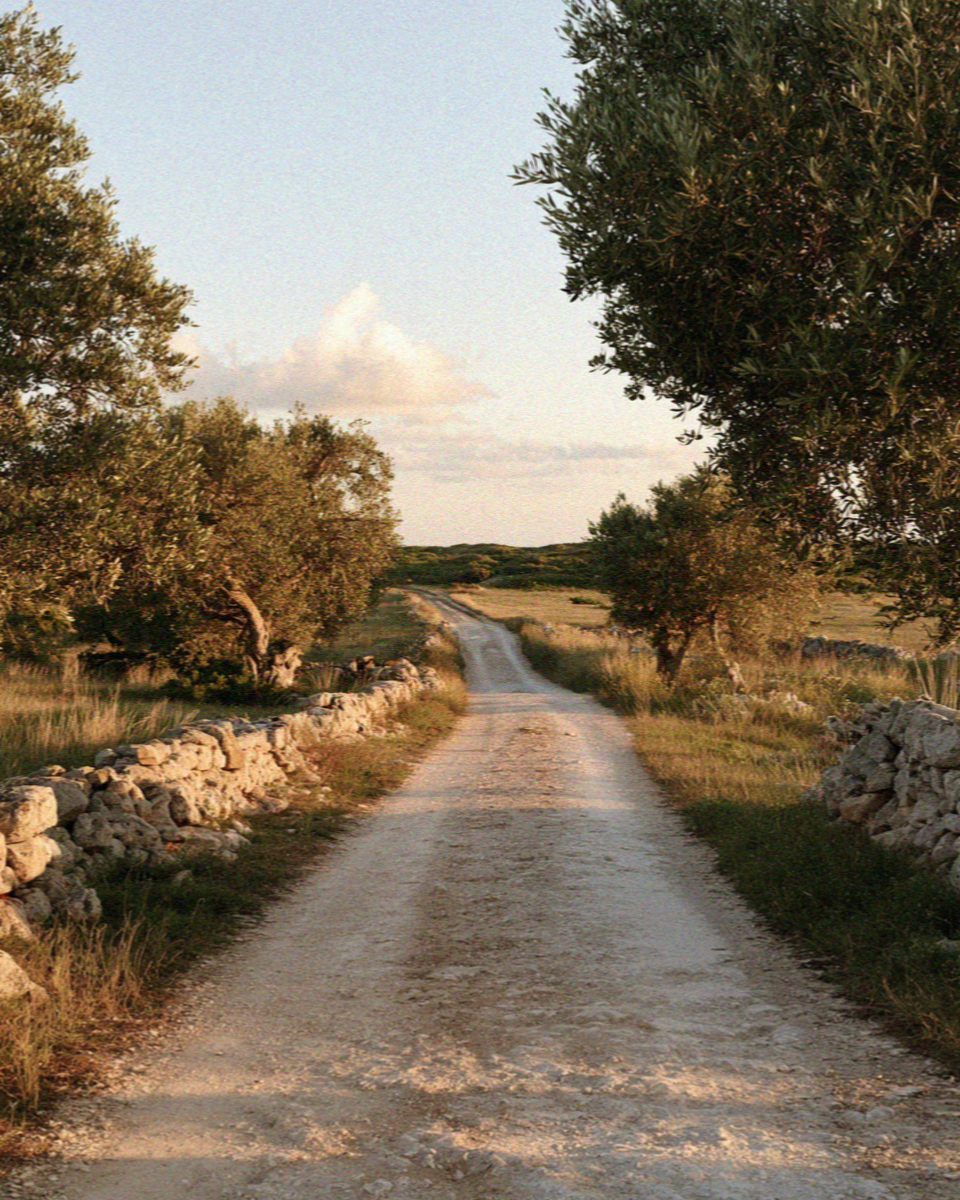
This is the part that makes the trip work.
The Salento is flat, the roads are straight, and the driving is easy by Italian standards. Distances are short and the landscape between places is old olive groves and dry stone walls and red earth, so the drive is part of the day rather than a tax on it.
From Lecce, the nearest beaches are around 20 to 30 minutes away. That covers San Cataldo, the city’s own stretch of coast, Torre dell’Orso on the Adriatic side, and Torre Lapillo and Porto Cesareo on the Ionian. The furthest worth driving to are about an hour out, Pescoluse down towards the tip and Torre Mozza. An hour each way is a whole day committed, so choose one coast in the morning and stay with it.
The same applies to the inland trips, with one exception. Galatina is roughly half an hour by car, and it also sits on the FSE line to Gallipoli, which makes it the one inland town that is genuinely easy without keys. Gallipoli is around 40 minutes by car against an hour and twenty by train, and Otranto around 45 minutes against an hour and forty. If you have the car anyway, the drive wins on time, and by more than the clock suggests, because it frees you to stop somewhere on the way back.
Parking at the popular beaches in summer costs a few euros and involves a walk. Arrive early, in the proper sense of early, and the walk is short. Arrive at eleven in August and it will not be.
Parking in Lecce, and whether you want the car every day
The historic centre is a ZTL, a zona a traffico limitato, and what matters is how much of the city it takes in. This is not a handful of awkward lanes you can steer around. It covers essentially the whole baroque old town, everything inside the old gates, which is the entire area you came here to see. Assume you cannot drive into it.
Now the part where I would rather be honest than confident. The published hours vary between sources, and not by fifteen minutes, by whole afternoons: one version runs mornings and evenings Monday to Saturday, another gives quite different windows with a summer set and a winter set. The fines are quoted at different amounts too. I am not printing an hour I cannot stand behind, because a wrong one reaches you as a notice at home weeks later. Your hotel is the authority here. They live with the zone, they know which gate is live and when, and their answer beats any table on the internet, mine included.
What a hotel inside the zone can usually do is register your plate for a temporary access window, long enough to pull up, unload at check-in and collect the bags at check-out. Arrange it in advance rather than on the doorstep, with the plate number from the rental agreement. What a hotel cannot do, if it has no parking of its own, is hand you a permanent permit, so do not picture the car sitting outside your door for a week.
So you park outside the zone and walk in. Piazza Libertini and Piazzale Rudiae are the usual answers, with larger car parks near the station. The reported rates conflict as well, so no figure from me, only that this is not the expensive part of your trip.
Which is the strongest practical argument for the thing I would suggest anyway: do not keep a hire car for the days you are in the city. It earns you nothing inside the walls and gives you a problem outside them. Pick one up for the coast on the morning you need it, and hand it back when you are done with the sand. Tidier, usually cheaper, and it removes the one bureaucratic part of the Salento.
Frequently Asked Questions
Should I fly into Brindisi or Bari for Lecce?
Brindisi, if the schedule allows it. It is around 39 kilometres from Lecce against roughly 110 from Bari, and the transfer is a single leg of about 35 to 50 minutes rather than a train into Bari Centrale followed by another train south. Bari works, it simply costs you most of a day and two changes.
How do I get from Brindisi airport to Lecce?
Direct bus or taxi, around 35 to 50 minutes. A shuttle also runs from the terminal to the Airport City Terminal at the entrance to Lecce, roughly 40 to 45 minutes, which is not in the historic centre, so allow for a short onward hop. Or an airport bus to Brindisi station, about 40 minutes and roughly every half hour, then a train.
Do I really need a car in the Salento?
For the coast, yes, for the reason set out at the top of this page: the bus network barely serves the sand and does not join one beach to the next. For Lecce itself, no. The city is walkable, and the old town is a restricted traffic zone you cannot drive into anyway, so the car becomes a parking problem rather than a convenience. Hiring only for the beach days often makes more sense than hiring for the whole trip.
Can I reach Gallipoli and Otranto by train?
Yes, on the FSE line rather than Trenitalia. Gallipoli is about an hour and twenty, Otranto about an hour and forty, often with a change at Maglie, and Galatina sits on the Gallipoli line closer in than either. Fares are only a few euros. All of them are slow and scenic, and all of them are quicker by car.
How long does the train from Bari to Lecce take?
Between roughly 70 and 90 minutes, depending on whether you are on a regional service or a faster train, and somewhere around ten to fifteen euros. Take the fare as an approximation, since it varies with the service and how far ahead you book.
Once you have worked out how you are arriving and whether you are driving, the next question is where you are going with it, and here that means the water and the towns. Both coasts, the driving times and which stretches of sand are worth the hour are in my guide to the best beaches near Lecce, and the towns you can reach in a morning, by train where the train goes and by car where it does not, in the best day trips from Lecce. Everything else about the city sits in the complete guide to Lecce.