The neighbourhood question matters more in Palermo than in most Italian cities.
Not because anywhere is dangerous, but because the character changes street by street in a way that catches people out. Two hotels four hundred metres apart can give you completely different holidays, and one of them will involve a lot more shouting at two in the morning.
Here is how the areas actually differ. The wider planning is in my complete guide to Palermo.
La Kalsa
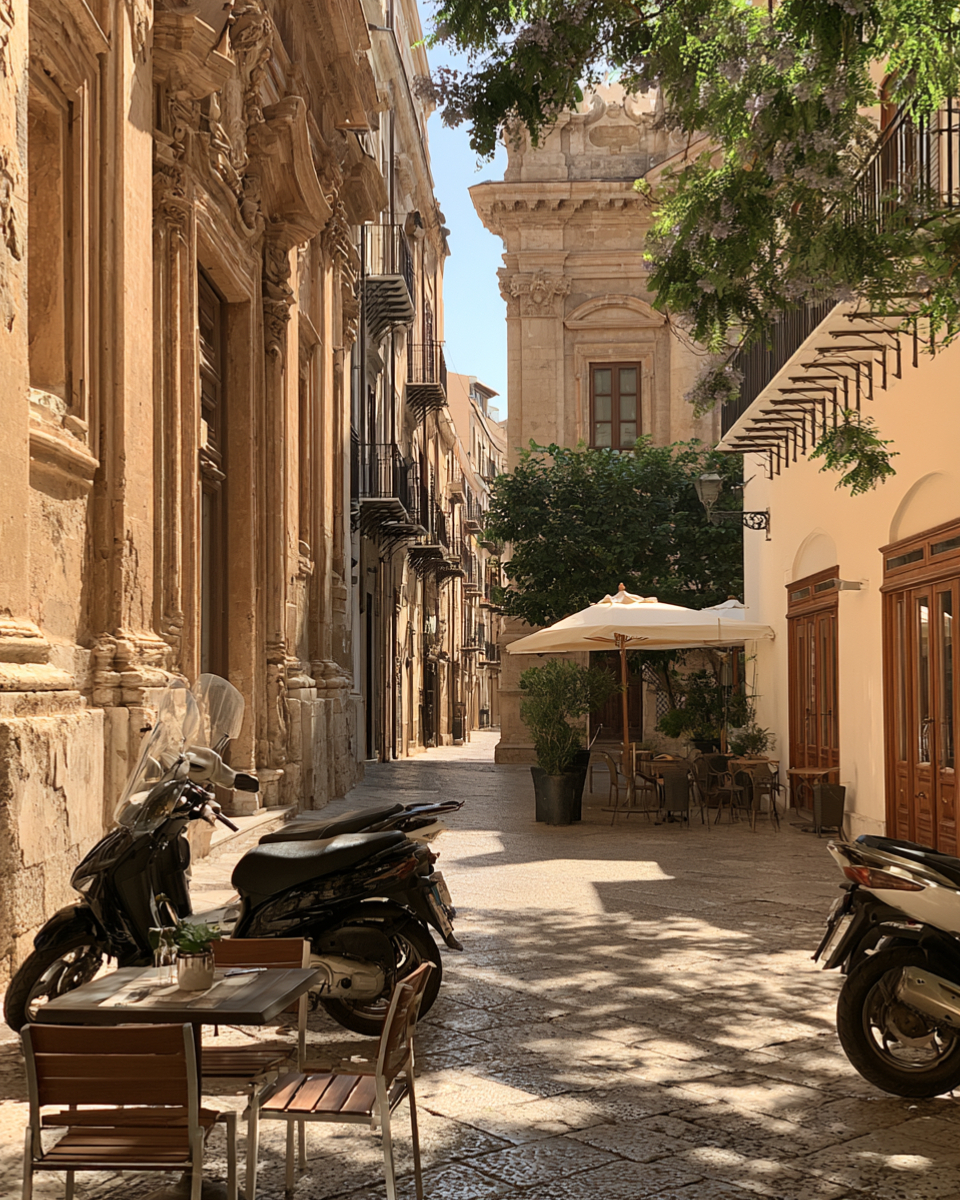
The old Arab quarter, south and east of the cathedral, running down toward the waterfront.
Kalsa was bombed heavily in 1943 and left half-ruined for decades, and it has spent the last fifteen years becoming the most interesting part of the city to stay in. Aristocratic palazzi, quiet squares with a church on one side and a bar on the other, art galleries in restored buildings, and enough ordinary life that it does not feel curated.
Stay here if you want to be inside the historic centre, walk everywhere, and still be able to sleep.
Be aware that it is patchy. A beautiful square can be one street from a stretch that is still derelict. This is normal and not a safety problem, but it surprises people who booked on photographs.
Prices in the mid range, roughly eighty to a hundred and forty euros for a decent double in season.
Politeama and the modern city

North of the old centre, wide nineteenth century boulevards, shops, the two big theatres.
This is the polished Palermo. Straight streets, tall pale apartment blocks, plane trees, department stores, and an easy fifteen minute walk down into the historic quarters when you want them.
Stay here if it is your first time in Sicily, or you are travelling alone and want somewhere unambiguous to come back to at night, or you simply like a quieter base. It is also the easiest area for arriving by car, which the old centre very much is not.
The trade-off is that you are staying in a handsome Italian city rather than in Palermo proper. The atmosphere everyone comes for is fifteen minutes south.
Prices start around ninety euros and climb.
Vucciria and Castellammare
Central, historic, and loud.
The Vucciria area is where the nightlife happens, and by nightlife I mean crowds drinking in the street until very late, most nights in summer. If that is the holiday you want, staying in it is efficient and fun.
Stay here if you are young, out late, and unbothered.
Do not stay here if you need to sleep before midnight, and read the reviews for noise rather than the description.
Around the station
Cheap, convenient for trains, and dull.
Palermo Centrale is well connected and the area around it is perfectly functional, with the ordinary caveats that apply to station districts anywhere. If you are moving on quickly and want to be near the platform, it does the job.
Stay here if you have one night and an early train. Otherwise there is no reason.
Mondello
Twenty minutes north by bus, on the beach.
Staying at the beach and commuting into the city is a real option in July and August, when the centre is genuinely uncomfortable in the afternoons. You get sea air and a swim before dinner, at the cost of a bus ride each way and a much quieter evening.
Stay here if you are travelling with children, or coming in high summer and prioritising the sea. There is more on the beach itself in Mondello and the beaches near Palermo.
What to look for in the room itself
Palermo is a hot, loud city with old buildings, and three things matter more here than they usually do.
Air conditioning, not a fan, if you are coming between June and September. This is not a luxury in August.
Double glazing or an internal room. A beautiful balcony over a street is a wonderful thing at seven in the evening and a poor thing at two in the morning. Ask which way the room faces.
A lift, or ask about the stairs. Palazzo conversions routinely put lovely rooms on the third floor of a building that has never had a lift and never will.
Palazzo stays
The thing Palermo does better than almost anywhere is the converted aristocratic apartment.
There are a lot of these now: three or four rooms inside a genuine eighteenth century palazzo, frescoed ceilings, tiled floors, a courtyard with a gate onto a street that looks like nothing at all. They are frequently cheaper than a bland chain hotel in a northern Italian city, and they are the reason to stay in the centre rather than the modern grid.
Look for them in Kalsa and around the cathedral in particular.
Around the cathedral and Capo
The stretch between the cathedral and the Capo market is worth calling out separately, because it is where a lot of the best-value rooms are.
You are inside the historic centre, two minutes from the cathedral, and inside a market quarter that is genuinely residential. That means washing on the balconies, a fruit stall under your window and a certain amount of scooter noise from seven in the morning.
Stay here if you want the old city at close range and you are a sound sleeper. It is the most Palermitan of the central options and generally cheaper than Kalsa for the same standard of room.
Be aware the streets are narrow and poorly lit at night. Nothing worse than that, but it is not the well-swept version of Italy.
Booking notes that matter here
Book earlier for mid July than you would think. The Festino fills the city and prices rise across the board for the week.
Read the noise reviews, not the photographs. This is the single most common complaint about Palermo accommodation and the single easiest thing to avoid.
Check what floor it is on and whether there is a lift. Palazzo conversions are frequently on the third floor of a building with a beautiful stone staircase and nothing else.
Ask about arrival. Small B&Bs often have no night desk, and taxis cannot always reach the door in the restricted zones.
What I would book
First visit, two or three nights: Kalsa, in a palazzo conversion, on an internal courtyard.
First time in Sicily and slightly unsure: Politeama, and walk south each morning.
High summer with children: Mondello, and treat the city as a day trip.
Read also: a Palermo itinerary, getting to Palermo and around, and my complete guide to Palermo.
Frequently Asked Questions
What is the best area to stay in Palermo?
La Kalsa for most people: it is inside the historic centre, walkable to everything, and quiet enough to sleep. Politeama is the better choice for a first visit to Sicily or for solo travellers who want a calmer base, at the cost of being fifteen minutes from the atmosphere.
Is it safe to stay in the historic centre of Palermo?
Yes. The centre is busy and lived in, and the usual city precautions are enough. What surprises people is not danger but patchiness, since a restored square can sit one street from a building that is still a ruin. That is a matter of appearance rather than risk.
How much does a hotel in Palermo cost?
Budget rooms and simple B&Bs run about fifty to eighty euros a night. Mid range doubles and palazzo apartments in Kalsa, Vucciria or Politeama sit roughly between eighty and a hundred and forty. Prices climb through July and August and around the Festino in mid July.
Should you stay in Mondello instead of Palermo?
Only in high summer, or if you are travelling with children. Mondello puts you on the beach twenty minutes from the city by bus, which is a real advantage in August when the centre is uncomfortable in the afternoon, but the evenings are much quieter.
Do you need air conditioning in Palermo?
Between June and September, yes, and a ceiling fan is not a substitute. July and August regularly pass thirty-five degrees and the stone holds the heat well into the night. Check for it specifically rather than assuming.
V.