From the sea it looks like a mistake somebody got away with.
Bonifacio sits on a spine of white chalk at the southern tip of Corsica, and the sea has spent several thousand years eating away underneath it. So the houses at the edge of the old town do not sit on the cliff. They hang over it, with nothing below them but a scooped-out overhang and then eighty metres of air and water.
It is the single most photographed thing on the island and it is worth the whole trip. Where it fits in a route is in my complete guide to Corsica.
The cliffs
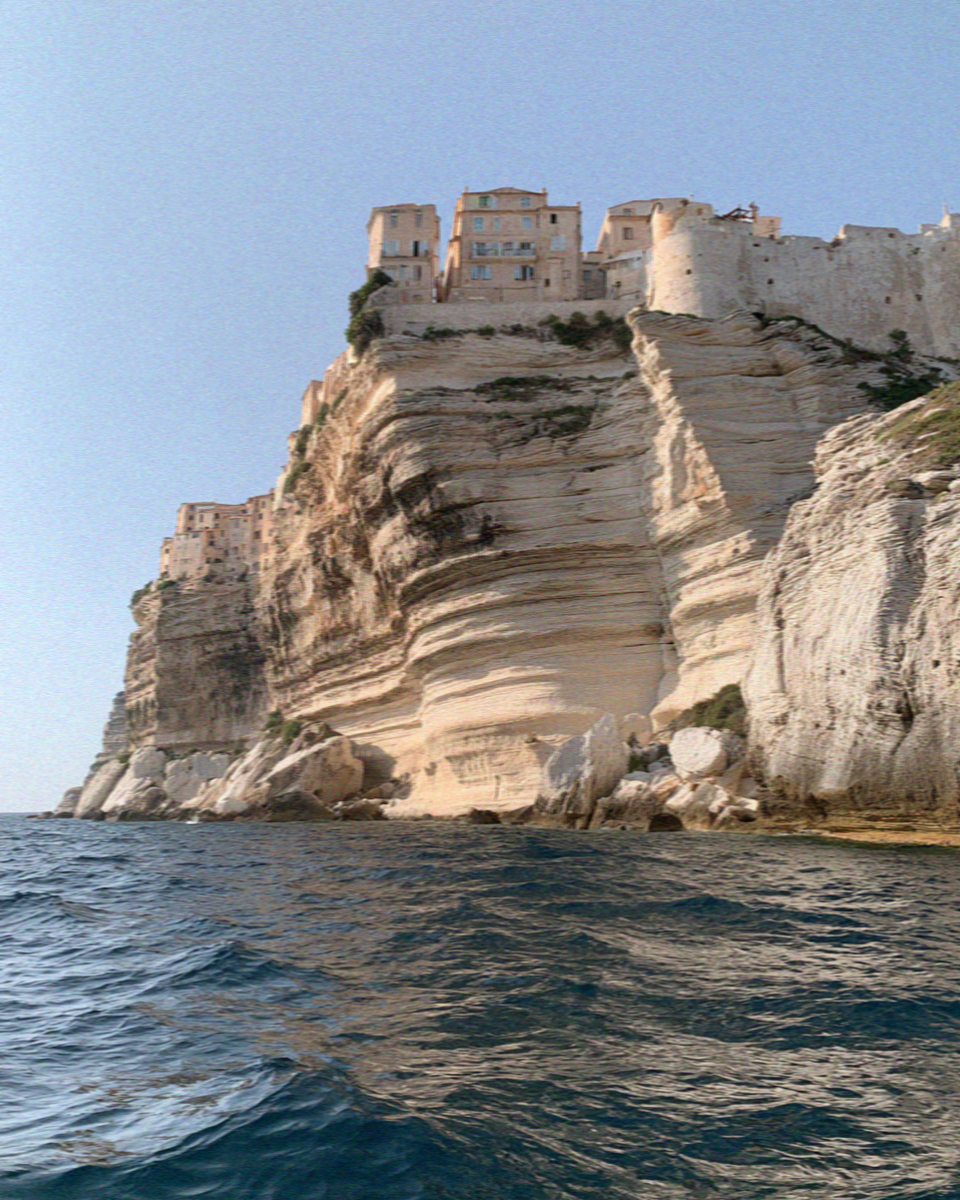
You need to see them from below, and that means a boat.
The chalk is stratified in pale horizontal bands, undercut at the waterline into caves and overhangs, and the town sits along the top like something balanced there. From the land you get the view out. From the water you get the thing itself, and it is a different experience entirely.
Boats leave constantly from the marina in season. The short circuit runs about an hour along the cliffs and into the caves. The longer trips add the Lavezzi islands, covered in Corsica boat tours.
The staircase
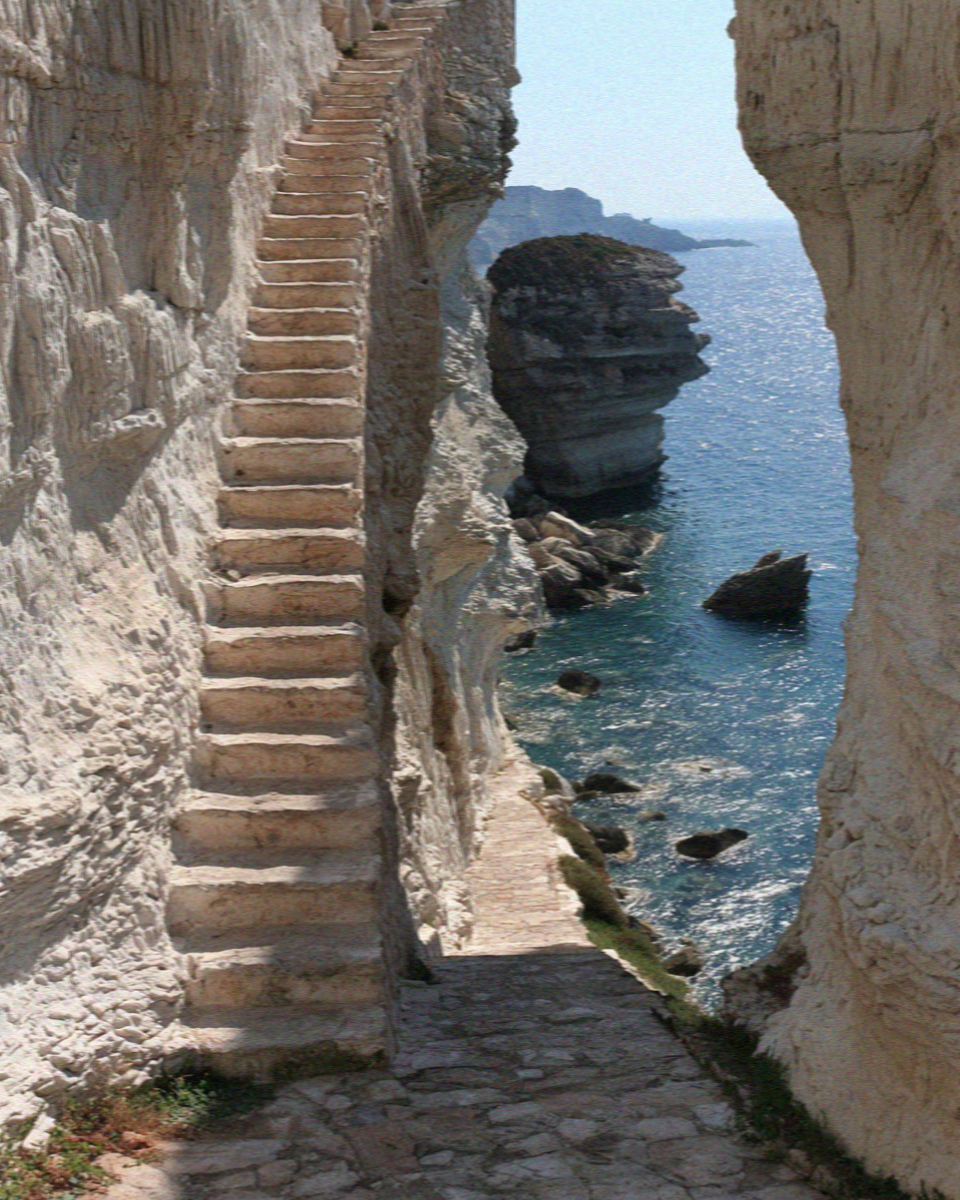
A hundred and eighty-nine steps cut in a straight diagonal down the cliff face, entry about €5.
The story is that an Aragonese army cut it in a single night during the siege of 1420. It is almost certainly not true, and it is much more likely a medieval route down to a freshwater well. Both facts are worth holding at once, because the legend is why everybody climbs it and the well is why it exists.
Going down is easy. Coming back up in August heat is not, and the steps are steep, worn and wet in places from seepage. Sensible shoes rather than sandals, and do it early or late rather than at two in the afternoon.
The old town
Up on the plateau behind Genoese walls, and the contrast with the marina below is total.
Narrow lanes, tall shuttered houses built close together against the wind, and a scattering of medieval churches. The Bastion de l’Étendard is the fortified point at the seaward end. Walking out to the far end of the plateau at the cemetery gives you the town from behind, which is the view most people miss.
Give it two hours on foot. It is small, and the pleasure is wandering rather than ticking off.
Getting up there
Three options from the marina.
The Montée Rastello and then the Montée St-Roch, which is the direct climb on foot and takes about ten minutes at a steady pace. A little road train in season if the climb does not appeal. Or drive up and park on the plateau, which in July and August I would not attempt.
The Lavezzi islands
Low granite islets in the strait between Corsica and Sardinia, a nature reserve, with water clear enough to see the sand under a boat at ten metres.
Crossings run from the marina, roughly €25 to €40 for the transfer, or about €65 for a half day of four hours including the cliffs and caves. Boats leave you for a few hours to swim and walk. There is nothing there: no shop, no shade to speak of, no water. Take everything with you.
Worth knowing there is a small cemetery on Lavezzi for the 700 or so who died when the frigate Sémillante went down on the rocks in 1855, which gives the place a weight the turquoise water does not prepare you for.
Crossing to Sardinia
This is the bit people do not realise until they are standing at the port.
Santa Teresa Gallura in Sardinia is 50 minutes away by ferry, running roughly €30 to €45 as a foot passenger, with around 37 crossings a week in summer and about six the rest of the year. Moby and Ichnusa operate it, first sailing usually 08:30 and last around 20:20.
That makes a two island trip very straightforward. The Sardinian side is covered in my guides to the Costa Smeralda and Alghero.
When to come, and for how long
A full day is right. Half a day means choosing between the boat and the old town, and both are the point.
Come in the morning or the evening. Midday in July and August the plateau is hot, shadeless and full, and the marina restaurants are at their least appealing. The cliffs light best in the late afternoon from the water, which is the argument for an evening boat.
Bonifacio makes a comfortable base as well as a day trip, and how it compares with Porto-Vecchio is in where to stay in Corsica.
The marine cemetery, and the walk past it
At the far western end of the citadel, past the last of the houses, there is a cemetery of white family chapels laid out in lanes like a small town.
It is quiet, it is free, and almost nobody walks that far. Beyond it the path continues along the plateau above the sea toward the lighthouse at Pertusato, which is the best sunset walk in the south of Corsica and takes about forty minutes each way from the citadel gate.
Go in the last hour of light. The chalk goes gold, the cliffs opposite fall into shadow, and Sardinia sits on the horizon looking closer than twelve kilometres.
Eating here
The marina quay is where everyone eats and it is priced accordingly: expect €30 to €50 a head for dinner with wine, and a view that partly justifies it.
Up in the citadel is better value and better food. The lanes behind the main street have small places doing Corsican rather than tourist menus, and by nine the day visitors have gone. What to order is in where to eat in Corsica.
The local speciality worth asking for is aubergines à la bonifacienne, stuffed with brocciu and herbs. It is on more menus here than anywhere else on the island.
Read also
The Best Corsica Boat Tours | Where to Stay in Corsica | Victoria’s Complete Guide to Corsica
Frequently Asked Questions
Is Bonifacio worth visiting?
Yes, it is the single most striking place in Corsica. A medieval town on white chalk cliffs that the sea has undercut, so the clifftop houses overhang the drop. Give it a full day, ideally including a boat trip to see the cliffs from below.
How many steps is the King of Aragon staircase?
189 steps, cut diagonally into the cliff face, with entry around €5. The legend says an Aragonese army cut them in one night in 1420, though they were more likely a medieval route down to a freshwater well.
How much is a boat trip in Bonifacio?
Roughly €25 to €40 for the crossing to the Lavezzi islands, and around €65 for a half day of about four hours combining the islands with the cliffs and sea caves. The short cliffs and caves circuit alone takes about an hour.
How do you get from Bonifacio to Sardinia?
The ferry to Santa Teresa Gallura takes about 50 minutes and costs roughly €30 to €45 as a foot passenger. There are around 37 crossings a week in summer, dropping to about six off season, operated by Moby Lines and Ichnusa Lines.
How long do you need in Bonifacio?
A full day. That allows the old town on the plateau, the staircase, and a boat trip to see the cliffs from the water. Half a day forces you to choose between the boat and the town, and both are worth doing.