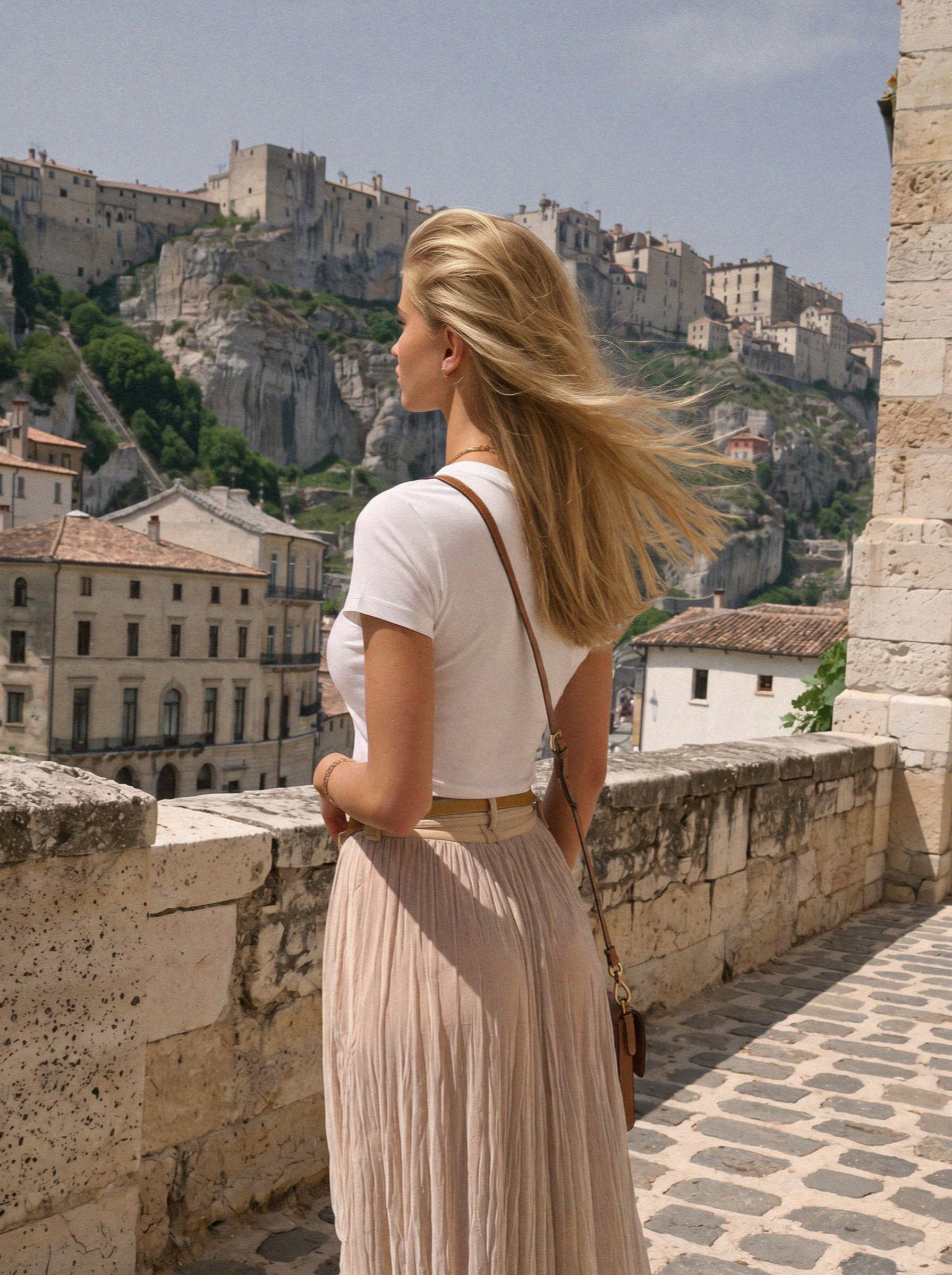
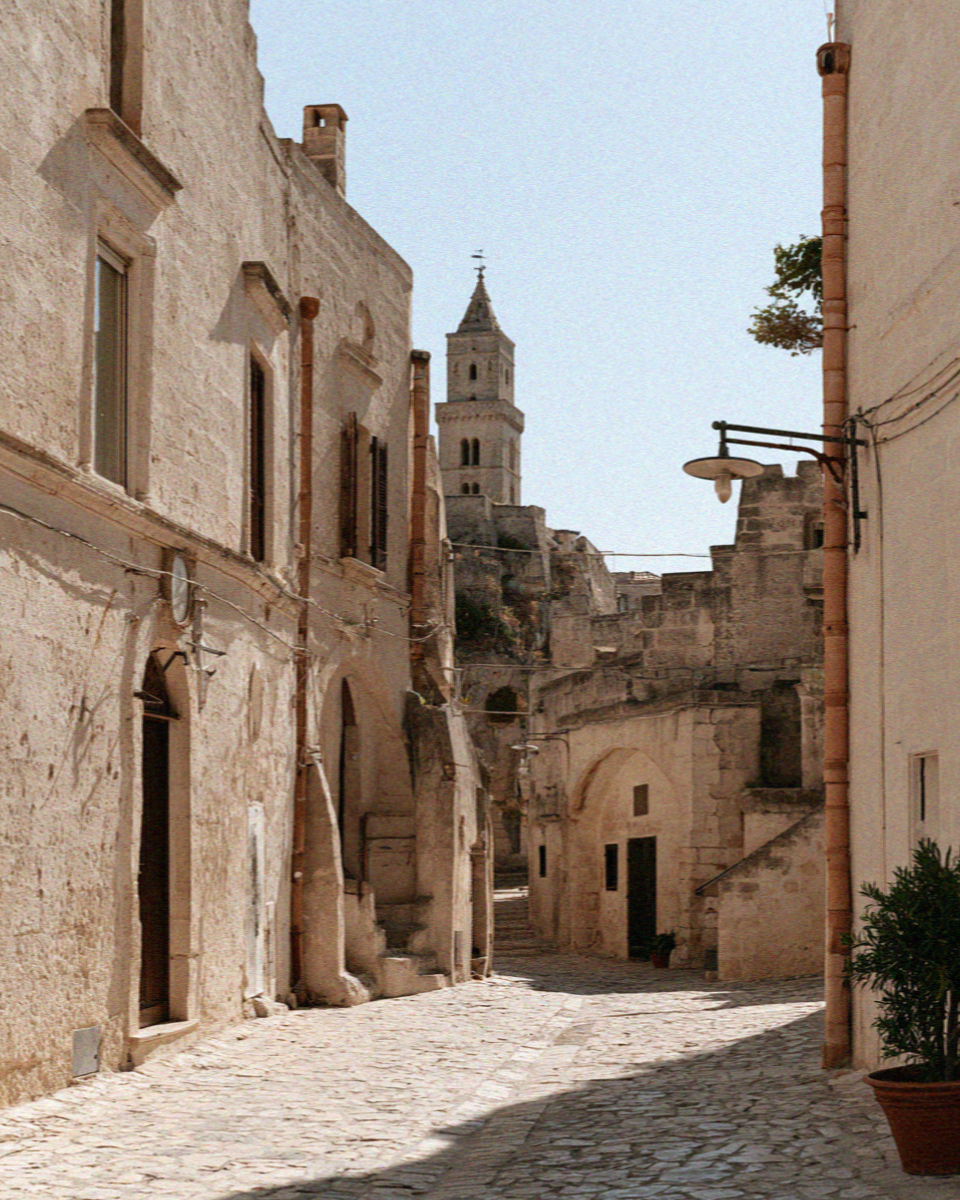
Matera is a town of bare pale stone, built in tiers, with almost no shade and a great many steps.
Every seasonal decision here follows from that one sentence. It is why spring and early autumn are so obviously the right answer, why July and August are genuinely hard rather than merely warm, and why winter is better than most people expect.
The short version: late April to early June, and mid September through October. Everything else has a caveat.
The wider planning is in my complete guide to Matera.
Spring and early autumn, which is the answer

Roughly ten to twenty degrees, comfortable walking weather, and long usable days at both ends.
Spring has one thing autumn does not: the ravine is green. The Murgia is a dry limestone plateau for most of the year, burnt to pale straw by July, but in April and May the slopes carry scrub, grass and wildflowers, and the gorge walk stops being an endurance exercise and becomes a genuinely lovely one.
Autumn trades the green for warmer stone and softer light, and September evenings are still long enough to eat outside. Late September and October are, for photography, probably the best weeks of the year.
Both are also the busiest and priciest for cave hotels, because everyone else has worked this out too. If you want a good room, book months ahead.
July and August, honestly
Highs average around thirty degrees and heat waves take it well past that.
The number is not the problem. The problem is that Matera is pale limestone on every surface, it reflects heat back at you, there is essentially no shade in the Sassi, and getting anywhere involves climbing. The heat holds from about nine in the morning until six in the evening, which removes the middle of the day entirely.
It is also the busiest stretch of the year, and the most expensive.
I came in August anyway and it was fine, because I stopped fighting it. The town becomes an early-morning and after-six place. You go out at seven, you are back inside by half past ten, and the middle of the day belongs to the interiors, which is not a consolation prize: the cistern, the rock churches and the cave museums are all naturally cool, and they happen to be the best things here.
If you do come in high summer, the cave room stops being a novelty and becomes the reason you are able to sleep.
Winter, which is underrated
November through March is cold, quiet and often clear, with daytime temperatures usually in single figures to low teens.
The advantages are real. You will have Sasso Caveoso genuinely to yourself. Cave hotels are at their cheapest. And the town in low winter sun, with woodsmoke and lit windows in the rock, is atmospheric in a way the summer version is not.
The drawbacks are equally real. Some smaller sites cut their hours. Rain makes the polished stone paving dangerously slippery, which matters more here than in a flat town. And the ravine walk is muddy and sometimes not sensible at all.
Christmas is its own case: the Sassi are used for a living nativity, which is exactly the sort of thing a town of caves does well.
The one date that overrides everything
2 July, the Festa della Bruna.
Matera’s patronal feast has run every year since 1389, in honour of the Madonna della Bruna, and it is not a polite procession. A large papier-mâché cart is built over months, decorated elaborately, blessed and paraded through the town. Then, once the statue of the Madonna has been carried safely off it, the crowd is let at the cart and tears it to pieces.
This is the assalto al carro, the assault on the float, and people carry fragments home. A piece of the frame, a scrap of painted paper, a broken papier-mâché figure. They are kept for luck for the year.
The usual explanation is that a cart which is destroyed can never be repeated, so every year’s is unique. Whatever the origin, the effect is that the town spends months making something beautiful specifically in order to demolish it in public, which tells you a great deal about the place.
Fireworks over the ravine close the night.
If you want to see it, book accommodation months ahead and accept that early July heat comes with it. If you do not, avoid the first days of July entirely, because the town is full and prices follow.
Month by month, briefly
April and May. The best of spring. Green ravine, mild days, everything open. Busy from late April.
June. Still manageable in the first half. Hot by the end.
July and August. Hot, busy, expensive. Workable on an early-and-late schedule. The Festa della Bruna falls on 2 July and fills the town. Crapiata, the region’s pulse and grain soup, is traditionally made in early August.
September. Excellent from the middle of the month onward. Warm stone, cooler air, long evenings.
October. Quieter, softer light, arguably the best photographic month. Some risk of rain.
November to March. Cold, cheap and empty. Best for atmosphere, worst for the gorge.
What to pack, whenever you come
Proper shoes with grip, because the paving is polished limestone worn round by centuries and it is slippery wet or dry.
In summer: water, a hat, and the acceptance that you will not be outdoors between eleven and five.
In winter: layers and something waterproof, since cave interiors are cool year round and the wind on the plateau has nothing to stop it.
Read also: a Matera itinerary, where to stay in Matera, and my complete guide to Matera.
Frequently Asked Questions
When is the best time to visit Matera?
Late April to early June, and mid September through October. Temperatures sit roughly between ten and twenty degrees, the walking is comfortable, and everything is open. Spring has the advantage of a green ravine; autumn has the better light.
Is Matera too hot in July and August?
It is difficult rather than impossible. Average highs are around thirty degrees with heat waves higher, and the town is bare pale stone with no shade and constant steps, so the heat holds from about nine until six. Plan to be out early and after six, and use the cool cave interiors in between.
Is Matera worth visiting in winter?
Yes, if you want it quiet. November to March is cold and often clear, the Sassi are nearly empty, and cave hotels are at their cheapest. The trade-offs are reduced opening hours at smaller sites, slippery paving in the rain and a ravine walk that is frequently too muddy.
What is the quietest month in Matera?
January or February. The town is at its emptiest and cheapest, and Sasso Caveoso in particular can feel like it belongs to you. Bring layers and waterproof shoes, and expect some sites to be on shorter winter hours.
How long is the summer heat each day in Matera?
Roughly nine in the morning until six in the evening during July and August. That is the window to spend underground or indoors, which is why the cistern, the rock-cut churches and the cave museums are the sensible midday plan in high summer.