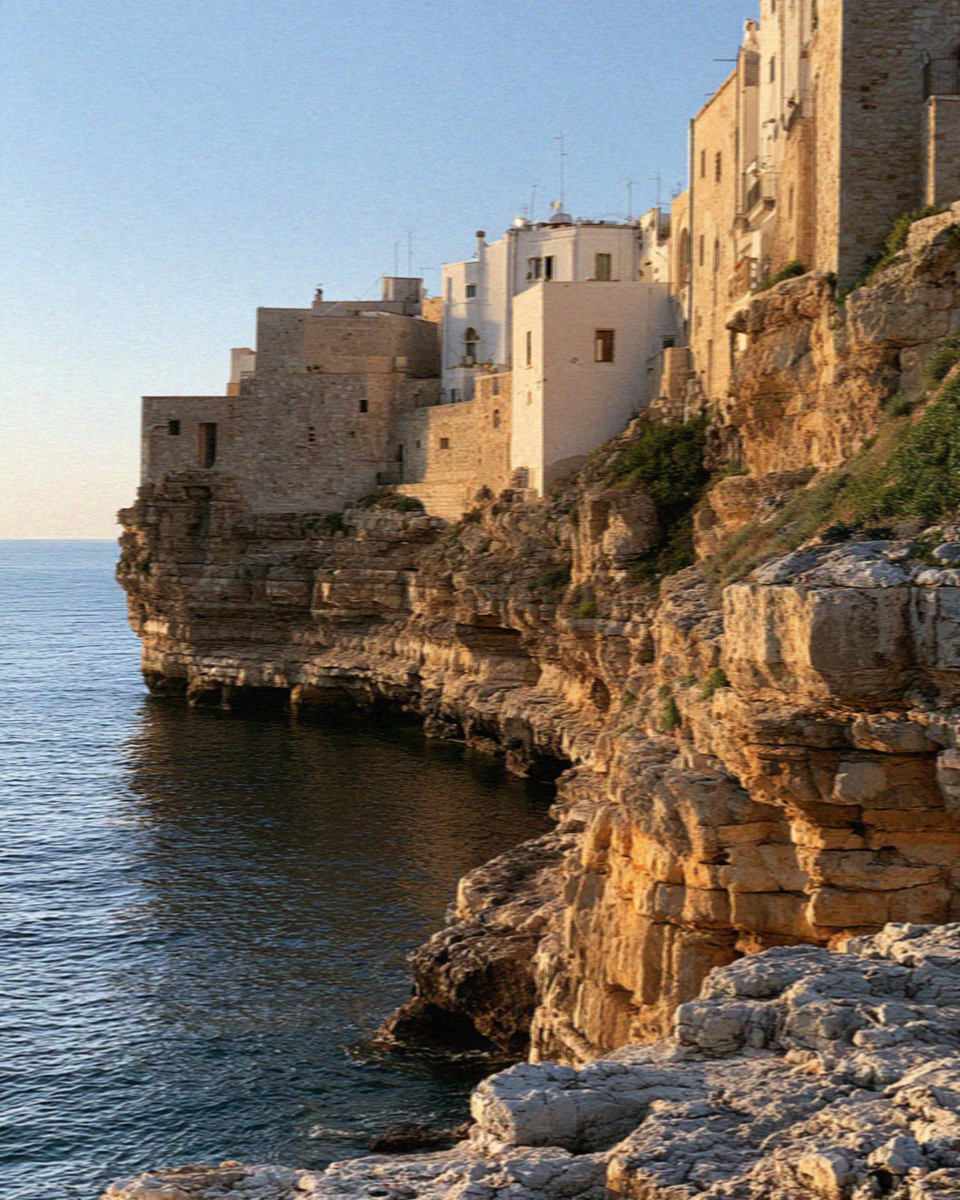
The best time to visit Polignano a Mare is May to June or September to October, and it is not a close call. This is a small cliff town in Puglia with one famous cove, a great deal of summer demand and a sea that stays warm long after the crowds thin out. Here is the month-by-month case, the sea temperatures, and the one September weekend you should either plan around or deliberately avoid.
The short answer
Go in the shoulder.
May, June, September and October give you warm days, a swimmable sea, better light and a town you can actually move through. July and August give you the same town with two or three times as many people in it and forty-degree afternoons.
If August is the only time you can come, come in August. Just run your day at the edges, which the itinerary guide is built around.
Sea temperature, which matters more than air temperature here
Polignano is a swimming town, so this is the number that should drive your decision.
The sea is comfortable from about June through October. It peaks around 26C in August, holds well into September, and stays swimmable for most people through much of October. It bottoms out at roughly 13.4C in February.
That gap between air and water is the whole argument for autumn. In late September the air has come off its peak but the sea has not, because water takes months to give up the heat it spent all summer taking on.
Spring, March to May
The town waking up.
March is still genuinely cool, cold enough in the mornings that you will want a proper jacket and mild enough by the afternoon to sit outside for a coffee. Beautiful for walking the old town, useless for swimming.
April warms noticeably. Bougainvillea comes out along the white walls, the light gets clean, and you can have the terraces almost to yourself.
May is where it starts being obviously a good idea. Warm days, quiet lanes, and by late in the month the sea is tolerable for the hardy.
The trade: some seasonal restaurants and boat operators do not open until later in spring, and Grotta Palazzese runs in late spring and summer only. Check before you build a trip around anything specific.
Summer, June to August
June is arguably the single best month. The sea has warmed, everything is open, and the crowds have not fully arrived.
July and August are peak in every sense, hot enough that the middle of the day is for shade and water rather than walking. Every boat is running, every table is booked, and Lama Monachile fills by nine in the morning and stays full. Accommodation prices climb steeply and the old town in the middle of the day is genuinely congested.
None of that makes August bad. It makes August a different trip, one that requires timing. Swim before half past eight, disappear into the shade at midday, come back out at six.
Autumn, September to October
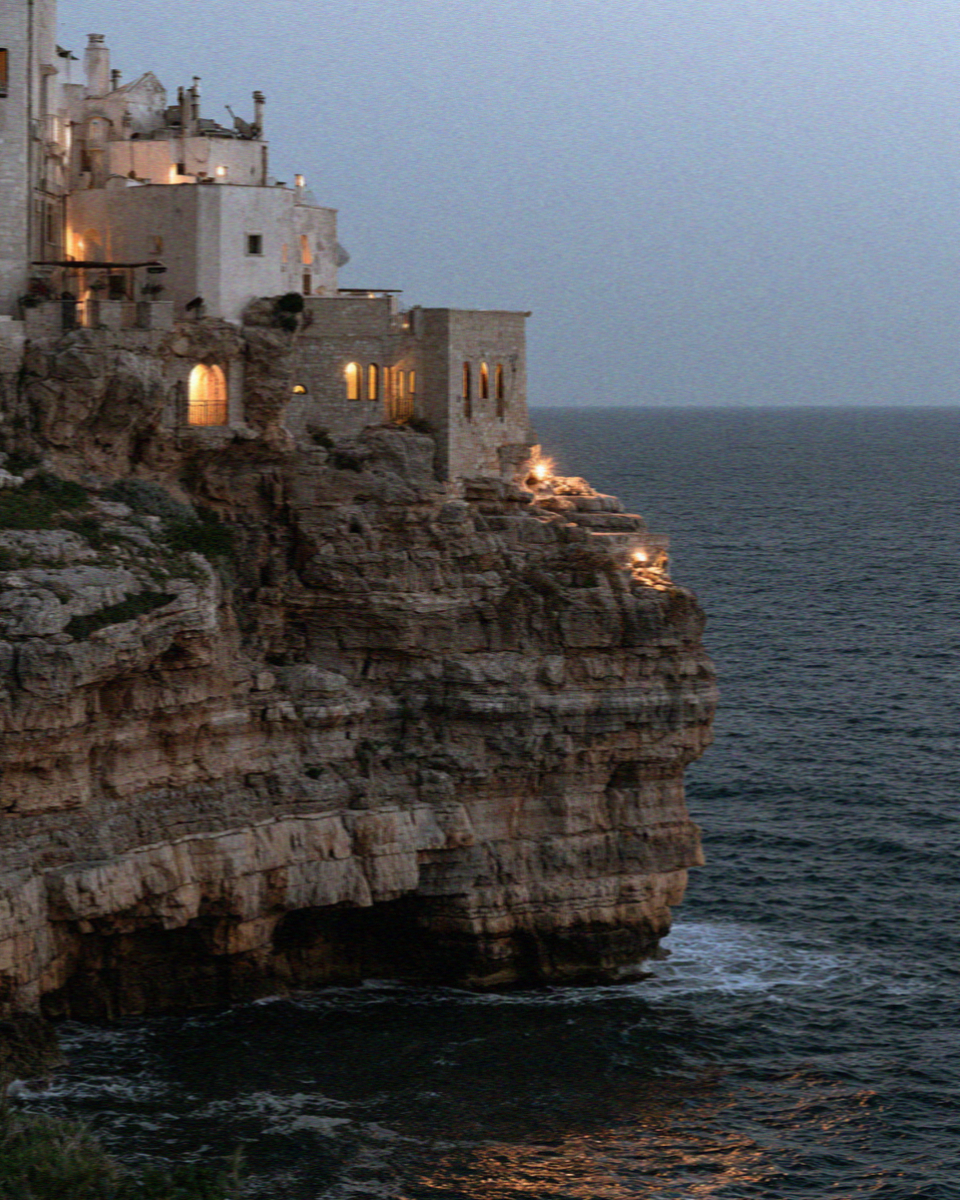
September is my pick for the whole year.
The sea is still holding summer heat, the light goes golden and long, the crowd thins after the first week, and the evenings are perfect for sitting outside. Everything is still open.
October is quieter again, warm enough to swim for a good part of the month, and the town starts to feel like it belongs to the people who live in it rather than the people photographing it. Some seasonal operations begin winding down toward the end.
If you want the town at its best with the water still good, come in the last two weeks of September or the first two of October.
Winter, November to February
Beautiful, bracing and mostly closed.
Daytime temperatures sit between about 12 and 13C. The Adriatic turns dramatic, waves come into the ravine at Lama Monachile, and you can stand on the bridge in January with nobody else on it.
Much of the seasonal town shuts: boat tours reduce or stop, Grotta Palazzese is closed, and some restaurants take their break. Swimming is for the committed only.
Come in winter for the stone, the weather and the emptiness. Do not come expecting a beach holiday.
The one weekend to plan around
The Red Bull Cliff Diving World Series comes to Polignano, and the 2026 edition is scheduled for 25 to 27 September.
Divers go from a platform above the cove and around thirty-five thousand people pack the cliffs, the rooftops and every balcony with a sightline. Twenty-four athletes compete. It is spectacular, and it completely transforms a town this size.
That means one of two things for you:
Come deliberately, and book accommodation months out, because there is not much of it inside the walls and it goes.
Or avoid the dates, if what you want is the quiet golden-light September that the rest of the month offers.
What you should not do is book that weekend by accident. And do reconfirm the exact dates before planning travel around them, because event schedules move.
Crowds, hour by hour
Whatever month you choose, the daily pattern barely changes.
Before half past nine: yours. Empty lanes, empty bridge, space on the cove.
Ten to five: the coaches and the day trippers from Bari. Peak everything.
After six: the day visitors leave and the town becomes itself again.
This is why staying overnight matters more here than in most places. A day trip lands you squarely in the middle window.
Frequently Asked Questions
What is the best month to visit Polignano a Mare?
September, narrowly ahead of June. In September the sea is still holding its summer warmth, the light is better than in high summer, everything is still open and the crowds thin after the first week. June is a close second because the water has warmed but the peak season rush has not fully started.
When is the sea warm enough to swim in Polignano a Mare?
June through October. The water peaks around 26C in August and stays comfortable well into October, dropping to about 13.4C by February. Because the sea holds heat longer than the air, late September and early October give you warm swimming with far fewer people.
Is Polignano a Mare crowded in August?
Yes, very. July and August are peak season and the town is small. Lama Monachile fills by nine in the morning, the old town is congested through the middle of the day and accommodation is expensive and scarce. It is still worth visiting if that is your only window, provided you shift your day to early morning and evening.
Is Polignano a Mare worth visiting in winter?
For the right traveller, yes. Days sit around 12 to 13C, the Adriatic turns dramatic and you can have the bridge and the lanes entirely to yourself. But boat tours reduce or stop, Grotta Palazzese is closed, some restaurants take their break and swimming is not realistic. Come for the stone and the emptiness, not for a beach trip.
When is the Red Bull Cliff Diving event in Polignano a Mare?
The World Series stop returns to Polignano and the 2026 edition is scheduled for 25 to 27 September, drawing around thirty-five thousand spectators. Book accommodation months in advance if you want to be there, or check the dates and avoid them if you want a quiet September. Confirm directly before planning travel around it.
Read also: The Best Beaches in Polignano a Mare | A Polignano a Mare Itinerary: One to Two Days | The Complete Guide to Polignano a Mare