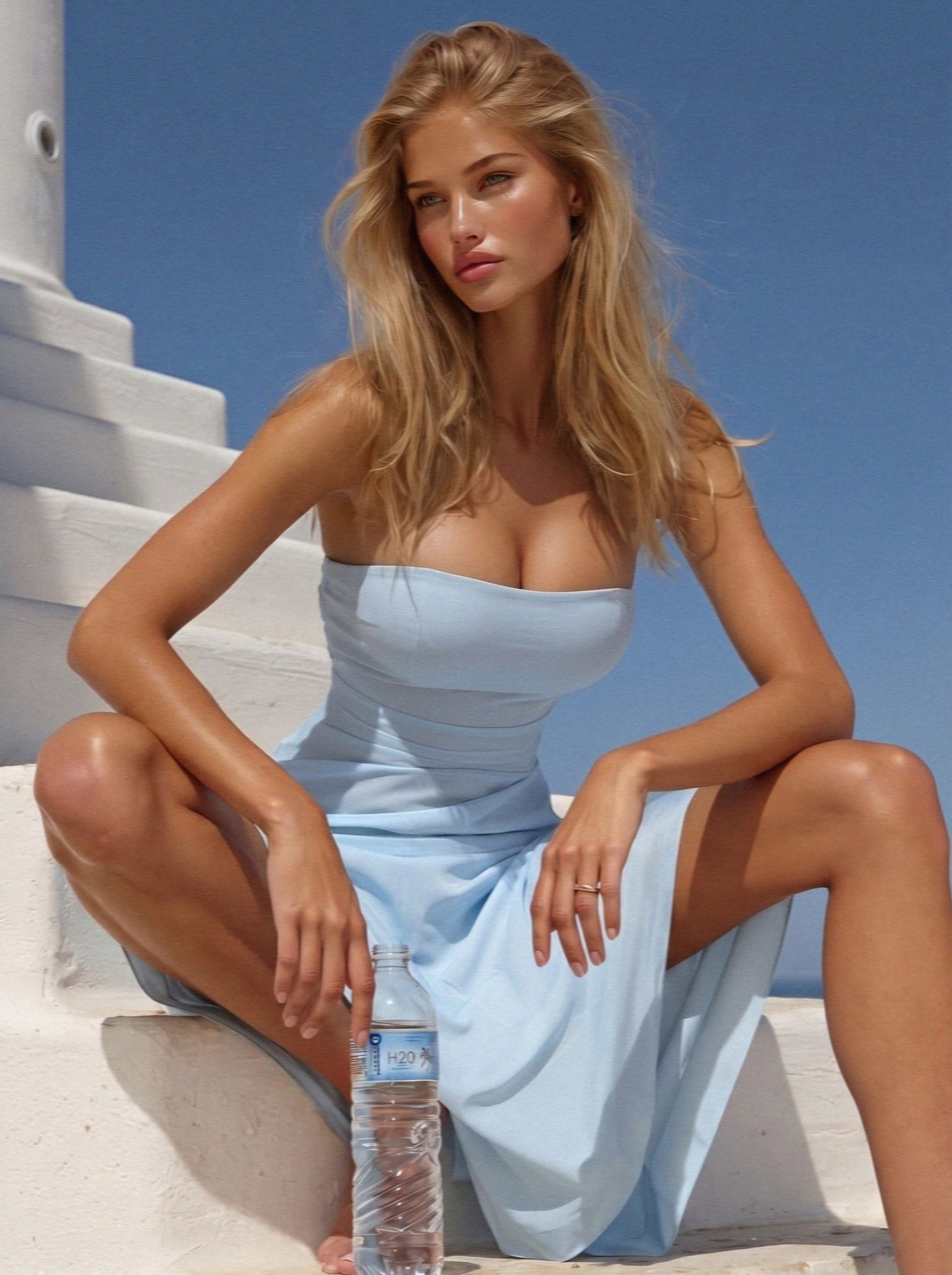
You have already seen this place. That is the difficulty.
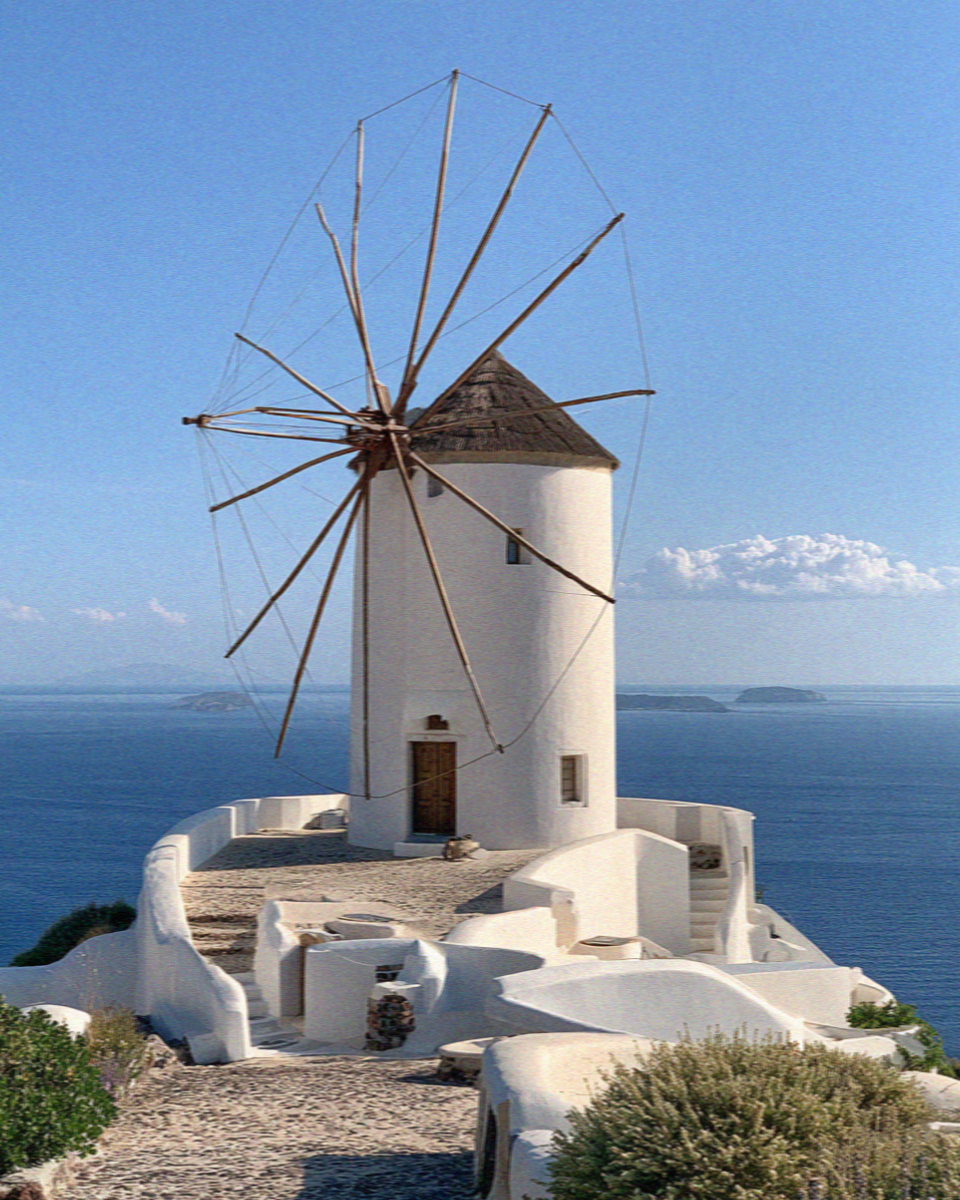
Before the ferry has finished turning into the bay you know the shape of what is coming, because you have seen it on a thousand screens, in other people’s holidays, behind other people’s engagements. White and blue. A cliff. A church with a dome. I arrived at Athinios already carrying the picture, which is a strange way to arrive anywhere.
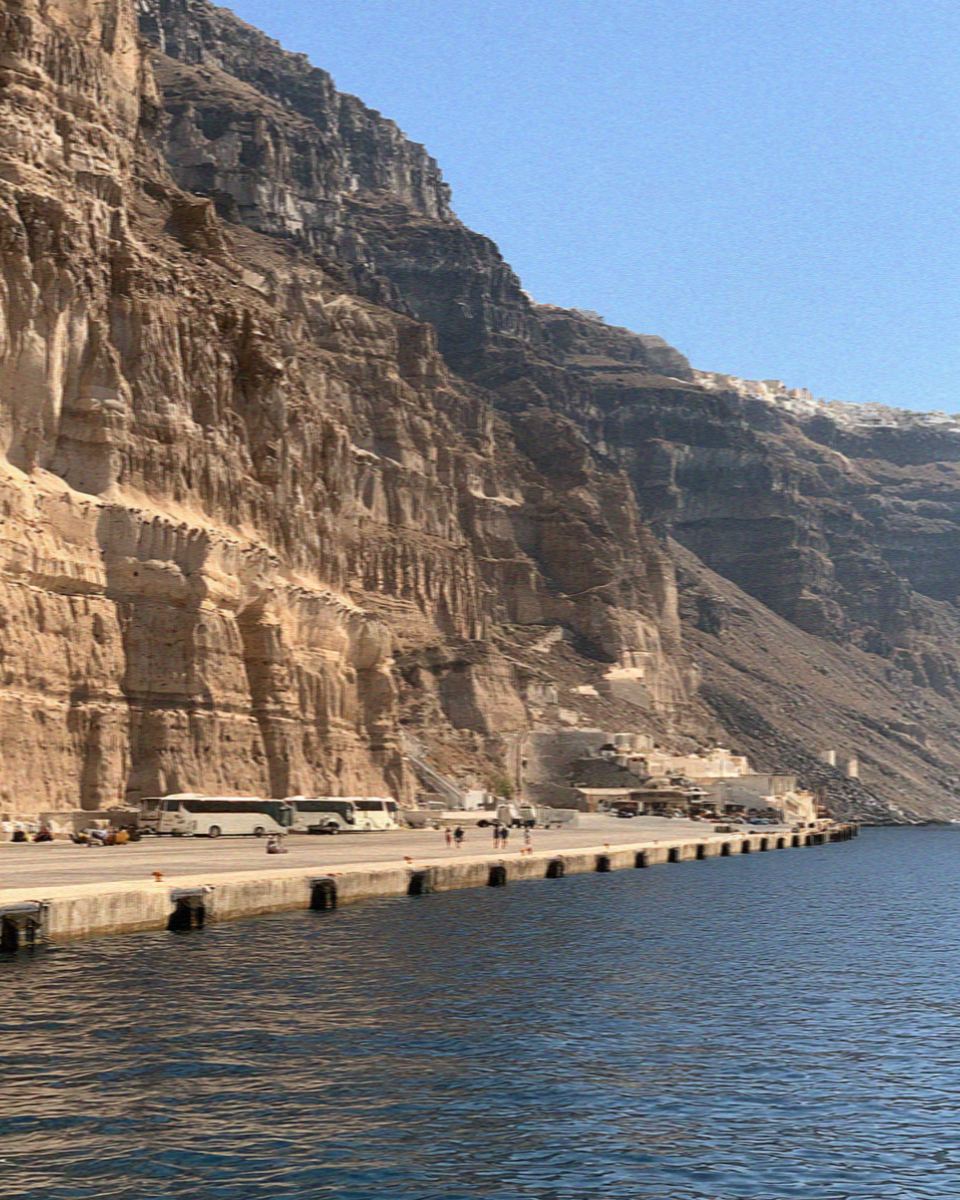
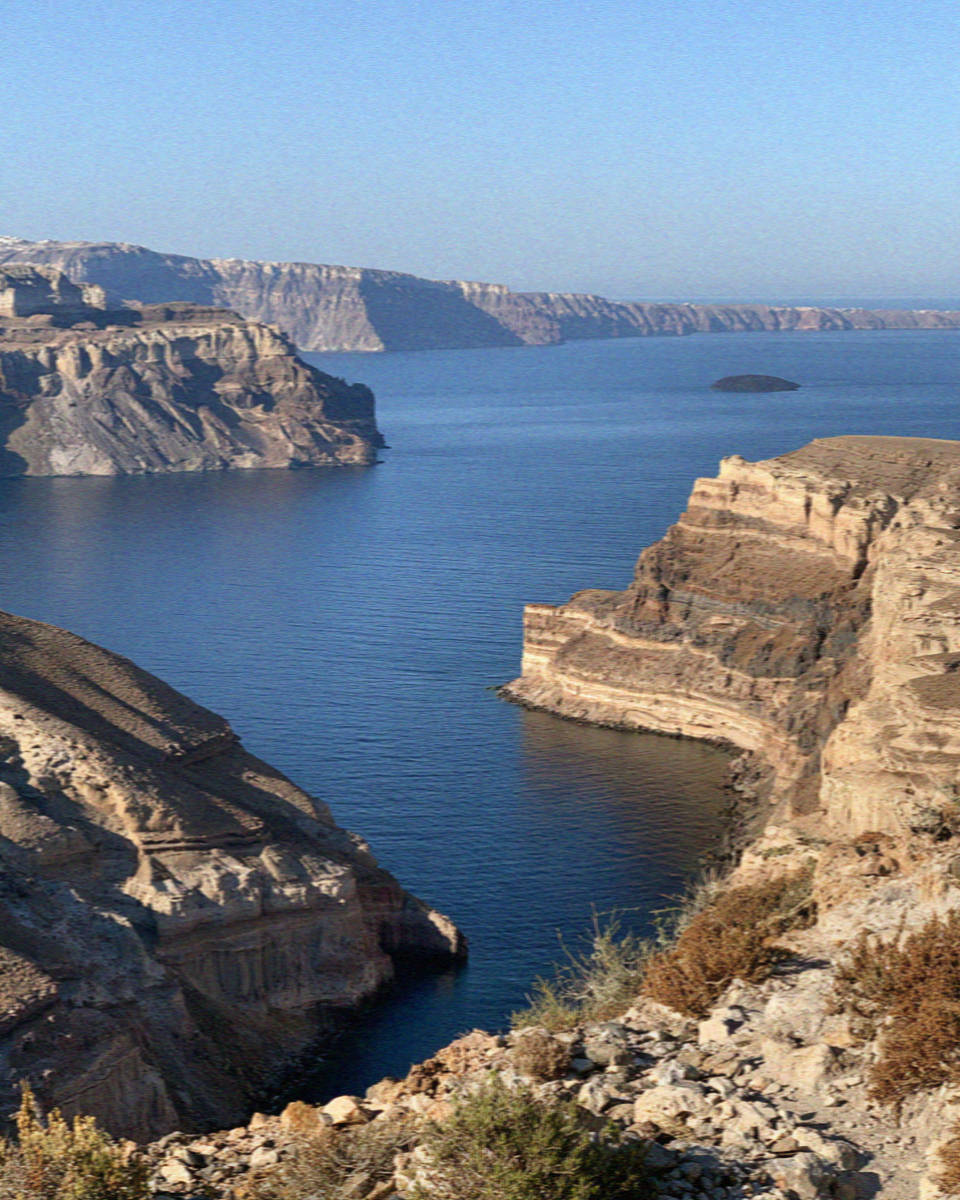
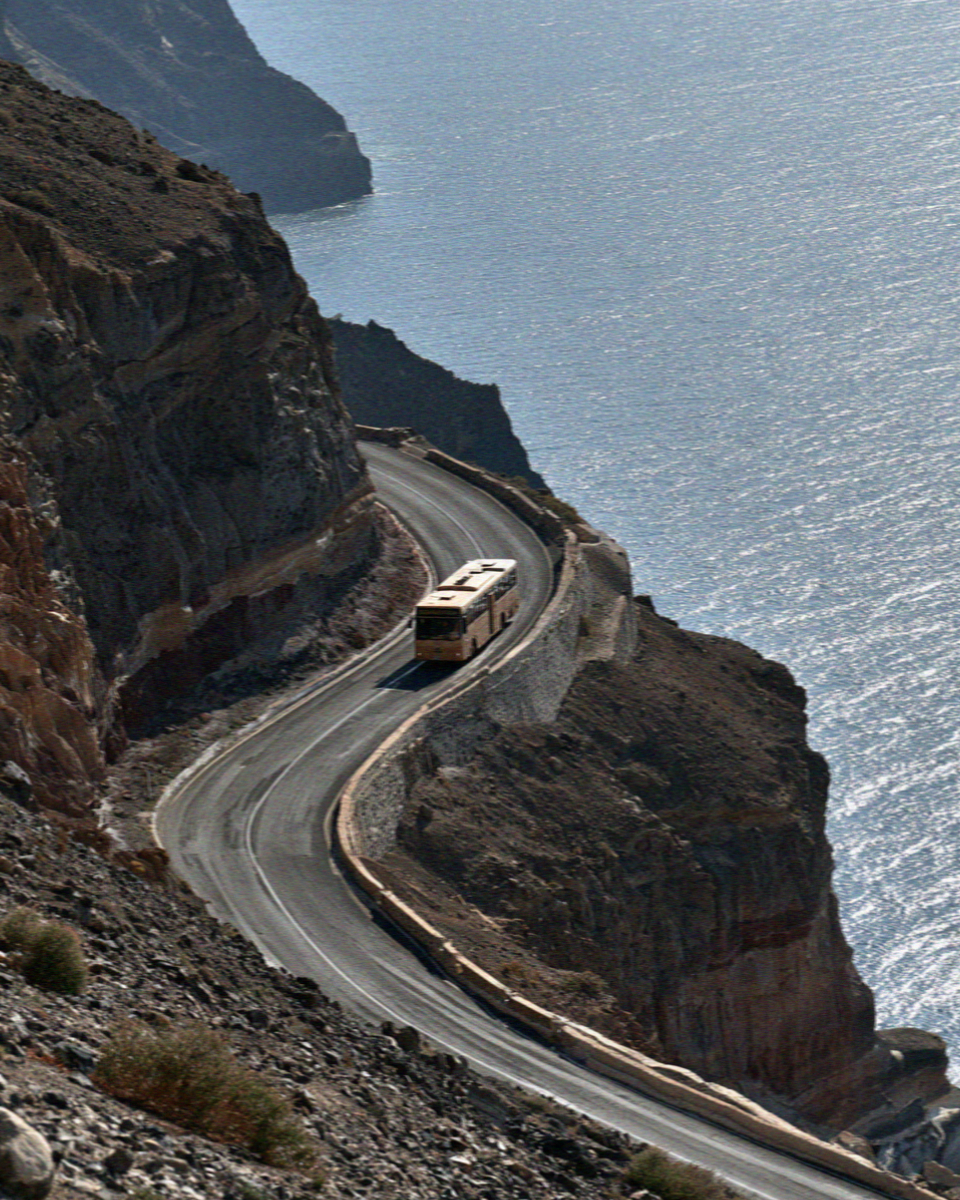
The port itself does its best to correct you. Athinios is not white and blue. It is a concrete shelf at the bottom of a cliff, loud with coaches and car horns and men shouting hotel names, and the road that leaves it climbs the caldera wall in switchbacks so tight the bus has to swing wide at each one and take the turn in two movements. I sat on the wrong side. The whole way up there was nothing out of my window but rock, close enough to touch, banded in grey and rust and a dark powdery red where the old ash layers sit on top of one another like something interrupted.
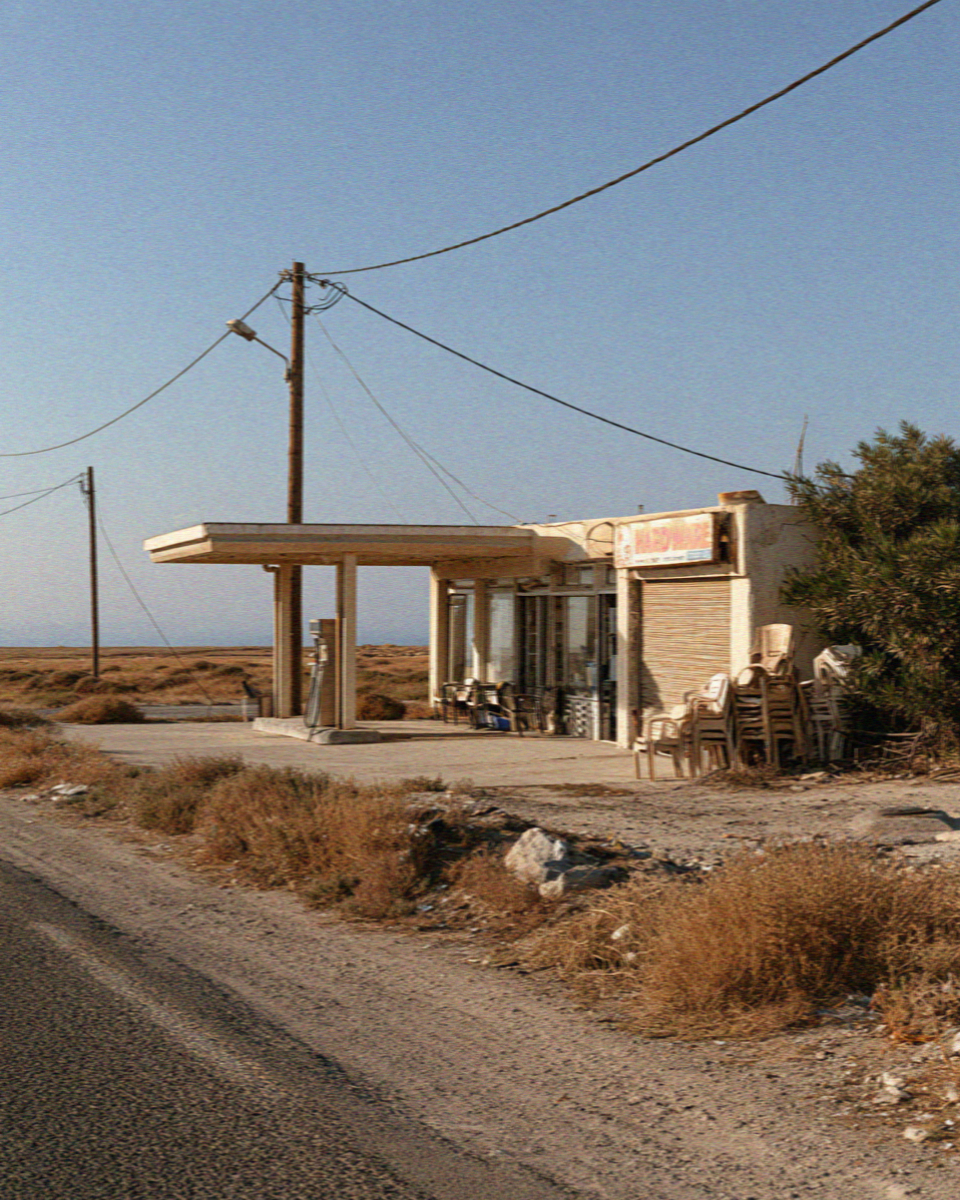
Then the road tips over the rim and you are on the other side of the island, and it is all ordinary. Flat fields. A petrol station. A hardware shop with plastic chairs stacked outside. Nobody photographs this part.
I had expected to resent the famous view. I think I had decided to somewhere over the Aegean. It is what happens when you photograph places for a living. You develop a reflex against the angle everyone takes, and the reflex is not always honest.
But the caldera is not a view. The pictures cannot carry it.
It is a hole in the sea. The island is a crescent because the middle of it is missing, and the missing part is filled with water six hundred feet deep, and Therasia sits out there across the gap as the far wall of the same broken circle. You stand at the railing in Fira and you are standing on the inside edge of something that came apart. The cliff below you is striped with what it was made of. In the centre, Nea Kameni, black and low and bare, still building itself.
You cannot photograph the depth. I tried, for about an hour, and everything I took looked like the picture I already had.
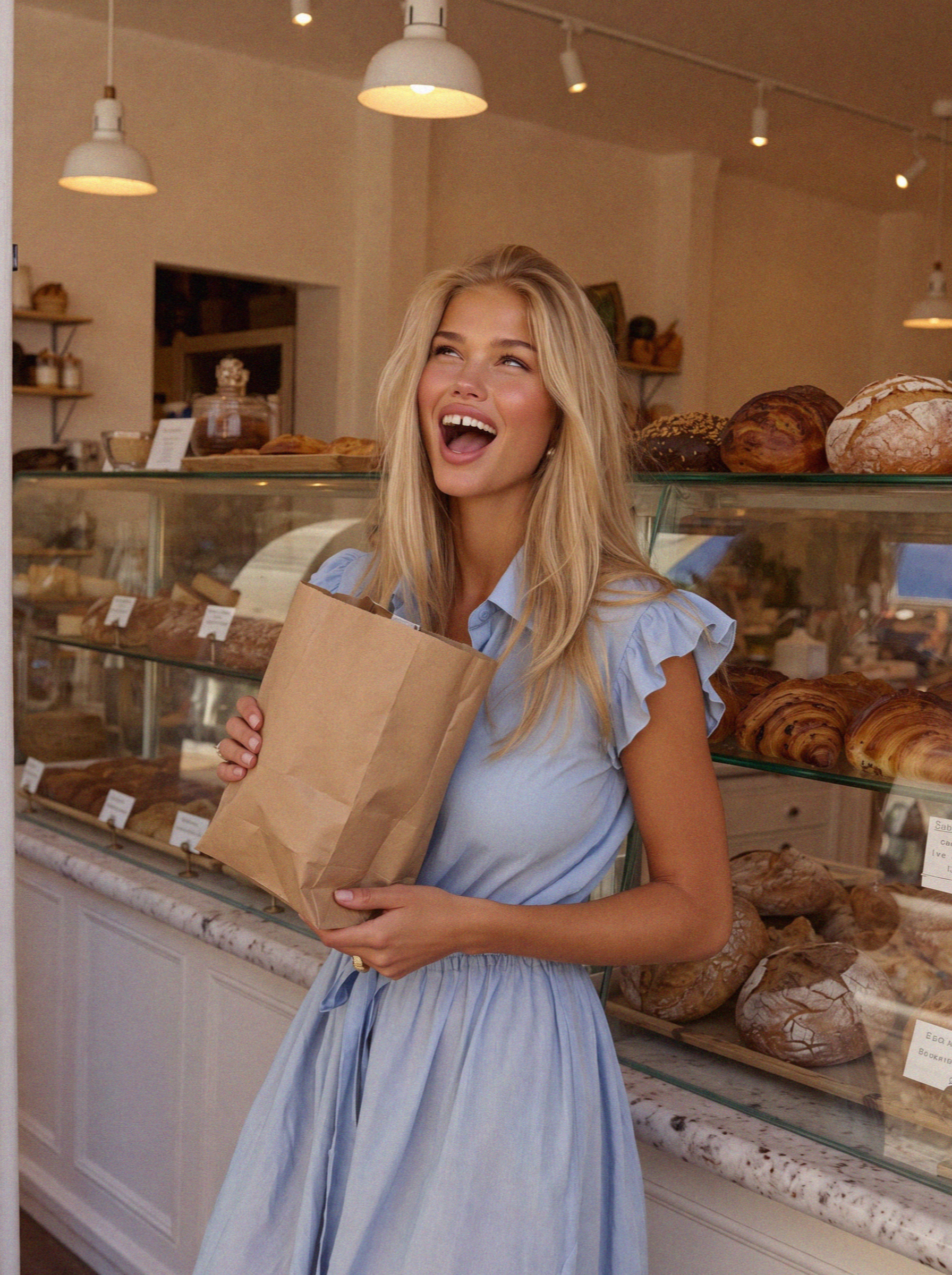
September helps. I came at the right end of it, when the season has broken but the sea has not cooled, and there is an atmosphere to a place that is exhaling. Some shops have already gone dark. Others have a handwritten sign saying they close on the fifteenth, or the twentieth, or when it stops being worth it. At the bakery in Firostefani the woman gave me the last two things on the tray and did not charge me for the second, not out of kindness exactly but because she was closing and they would only be thrown out. The cruise ships still come. Two were in the bay, and the tenders run back and forth all morning ferrying people up to the rim and back down again by four, and after four the town is almost startling in its quiet.
That is when the island stops performing. Not at sunset, when everyone is looking. Around five, when everyone has gone.
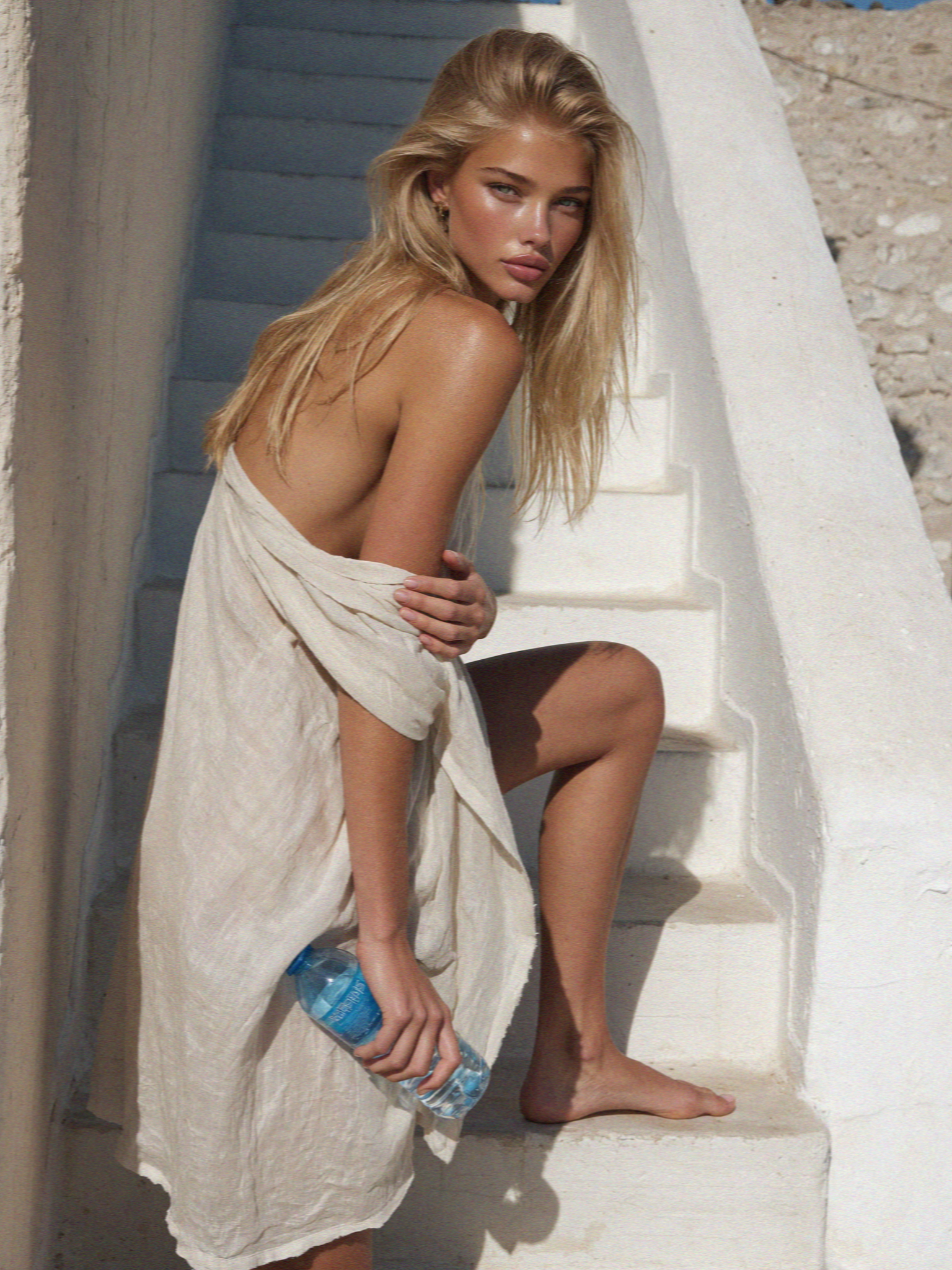
Practical things you learn quickly here. There is no water. No rivers, no springs, nothing on the surface at all, and for most of its history the island drank from cisterns cut into the rock and fed by whatever rain arrived. Now there are desalination plants and the tap water is not for drinking, and you buy it in the big blue bottles like everyone else and carry them up the stairs. There are a great many stairs. Everything here is stairs.
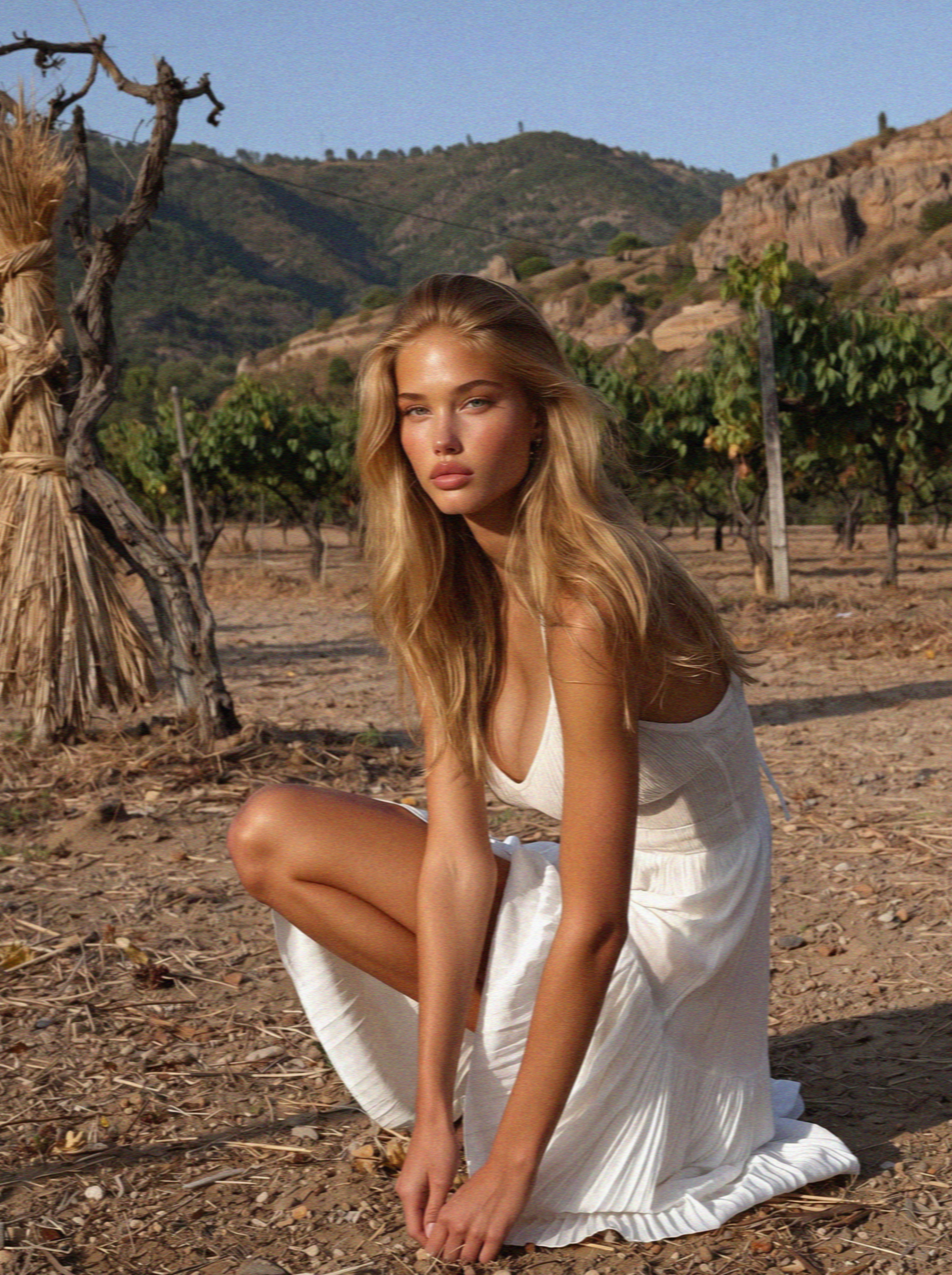
The vines were the part I did not know about. Out on the flat side of the island, away from the caldera, the vineyards do not look like vineyards. The vines are not trained up on wires. They are coiled on the ground in low circular baskets, the fruit tucked inside the coil, and they look like nests, or like something woven and abandoned. It is a defence against the wind, which comes hard across the plain and would strip an upright vine bare, and against the sun, which would cook the grapes if they were not shaded by their own leaves. The soil is pale and dry and crumbles when you push a foot into it. Volcanic. It holds almost no water and the vines take what they need from the night air instead.
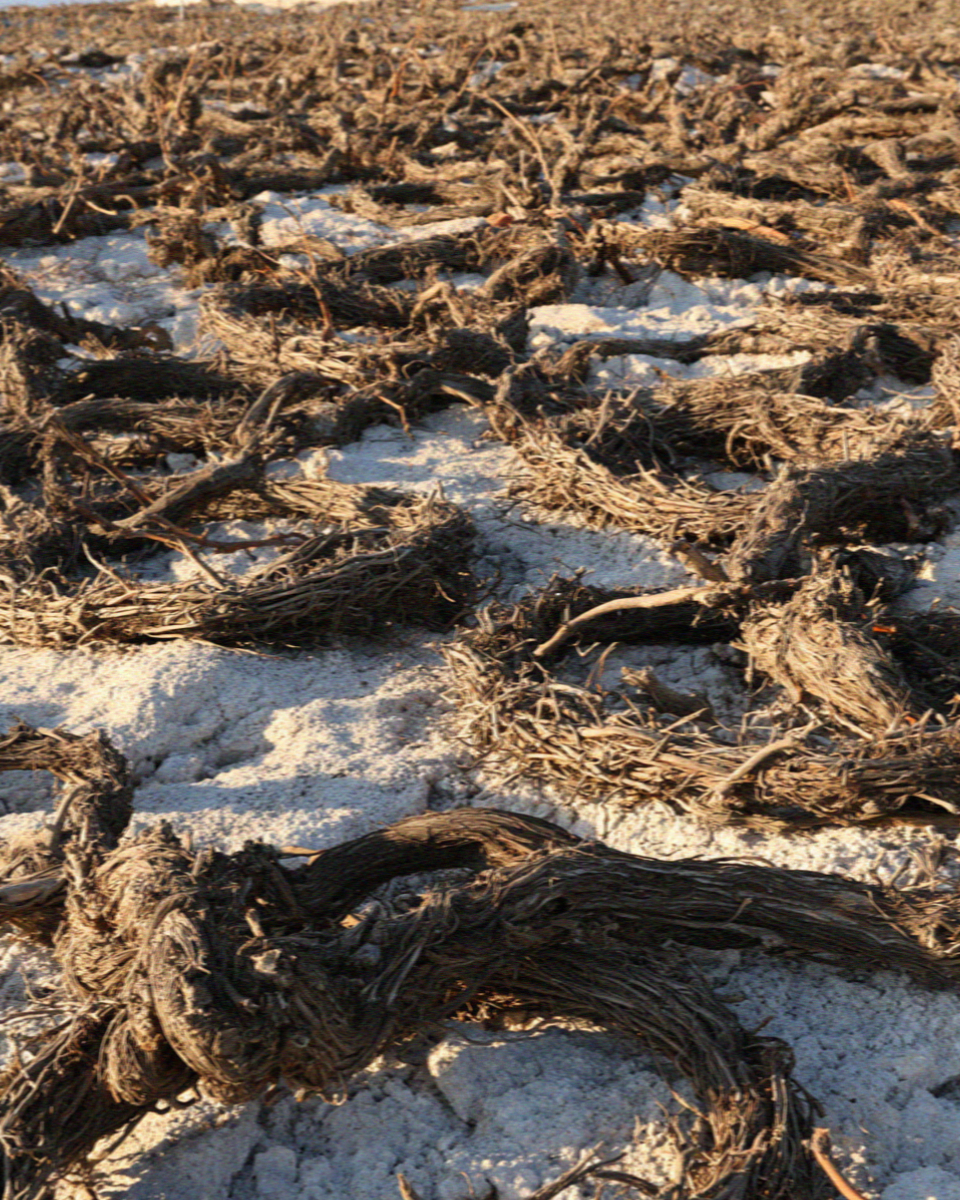
I liked that enormously. A whole agriculture built around having nothing to drink.
Camille sent me a photograph of her own window in Paris, grey and streaming, with the message revolting here, tell me nothing. So I told her about the vines and not about the caldera, which felt like the correct division of spoils. She replied asking whether the wine was any good. It is. Assyrtiko, and it is not what you expect from a hot island at all, sharp and mineral and almost saline, as though the sea had got into it somewhere.
At five I took the bus up to Oia, because you have to, and because I wanted to see whether it was as bad as people say.
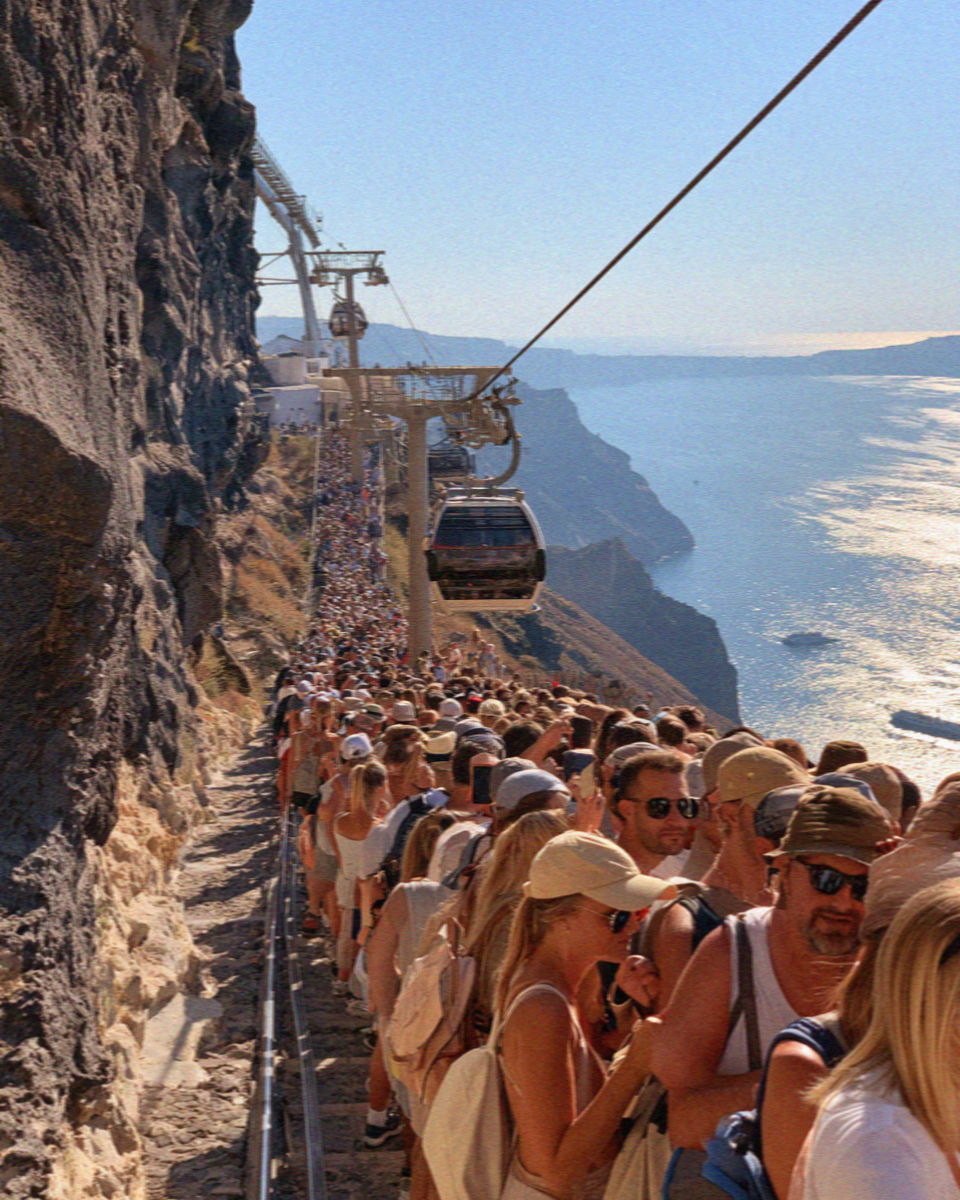
It is worse. Oia at six in the evening is not a village, it is a queue. The main lane runs one way by sheer pressure of bodies and you move at the speed of the slowest person in front of you, past the shops selling the same linen and the same evil eye, and everybody is holding a phone above their head at the same angle. The good vantage points had been taken well before five. Along the wall above the old castle ruin people were sitting shoulder to shoulder in rows, waiting, the way you wait for a flight. Somebody’s tripod. Somebody’s drone, briefly, until a man shouted at it.
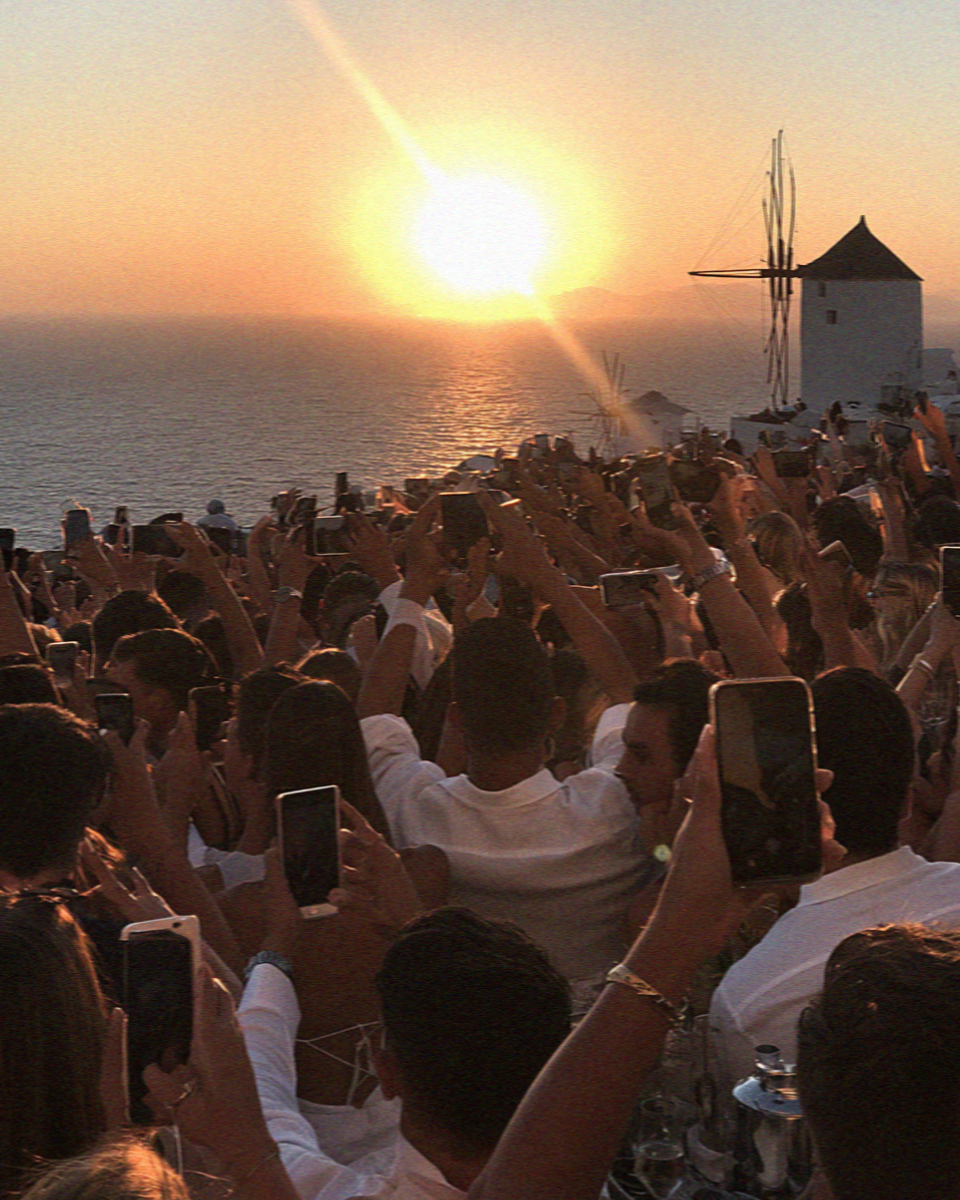
I got about two thirds of the way along and stopped. Long enough to watch three couples ask three strangers to photograph them in the same spot. Then I turned round and went the other way.
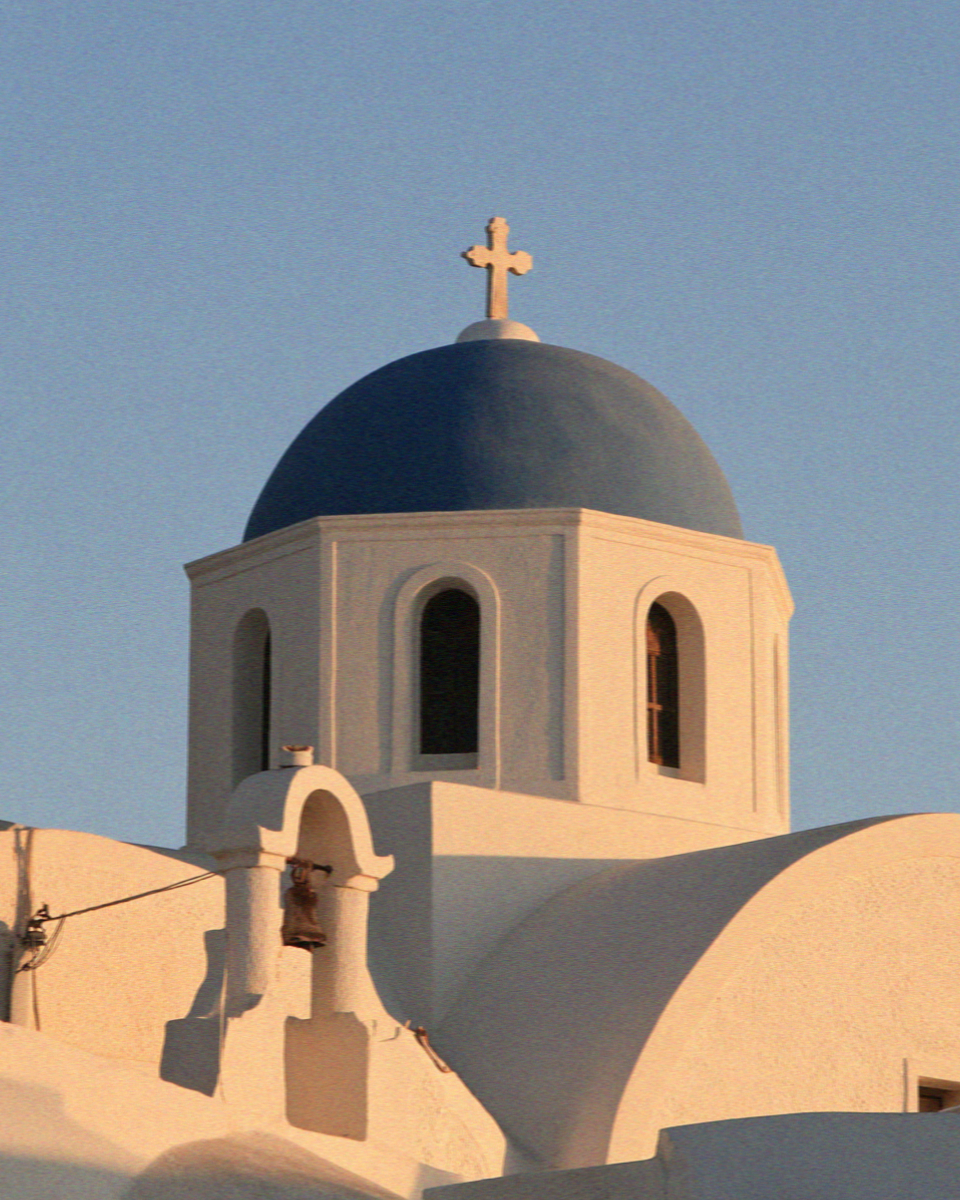
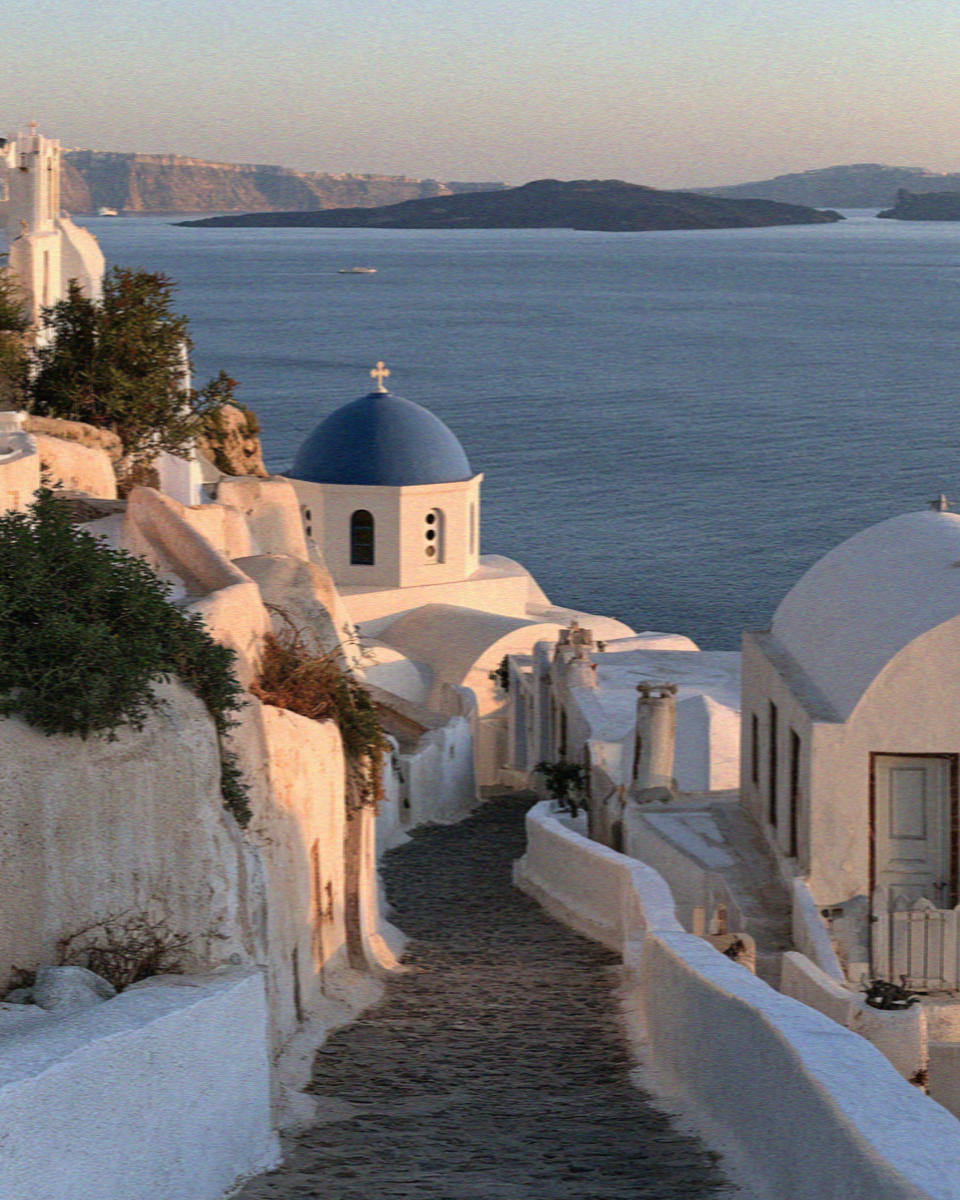
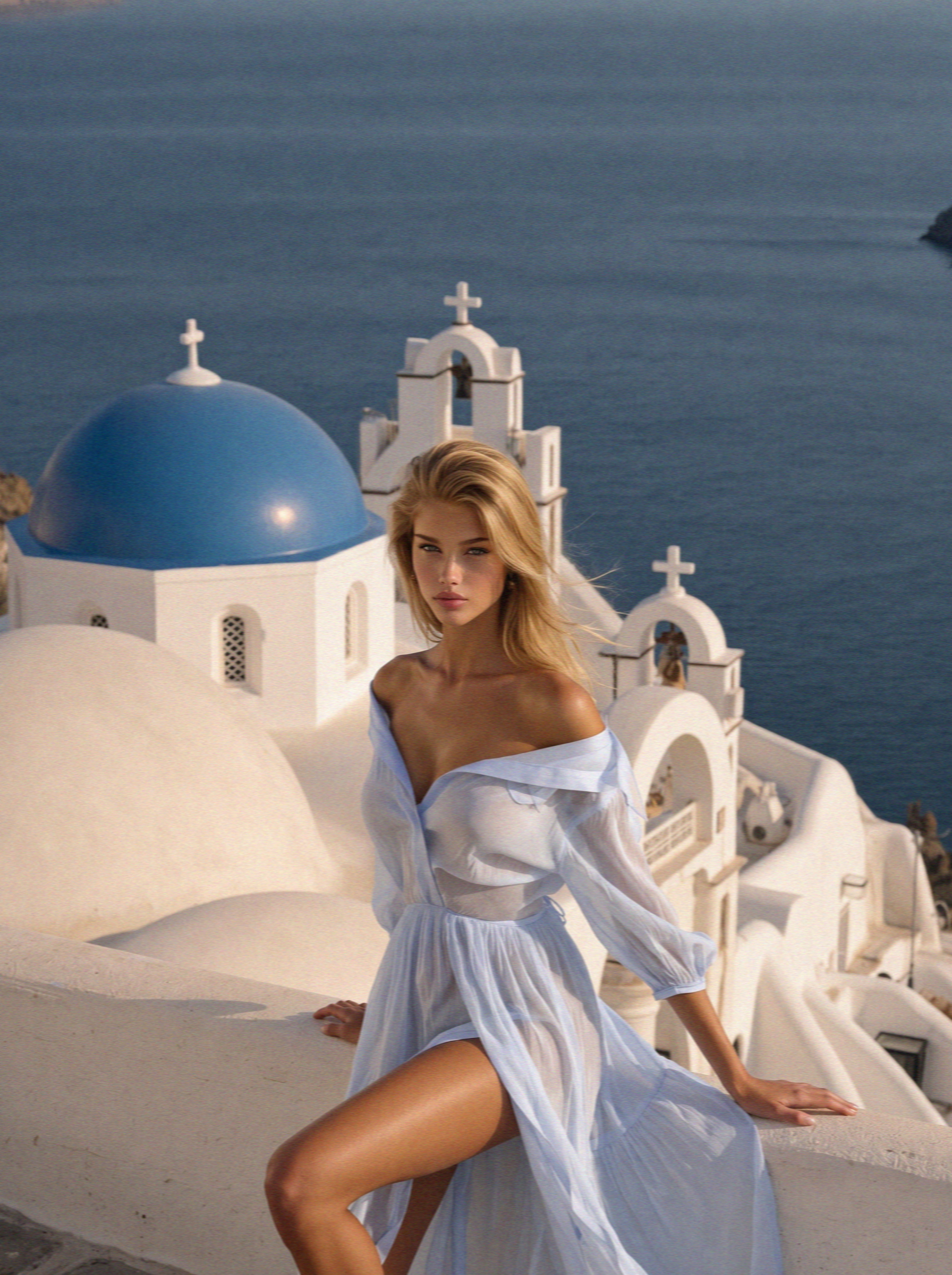
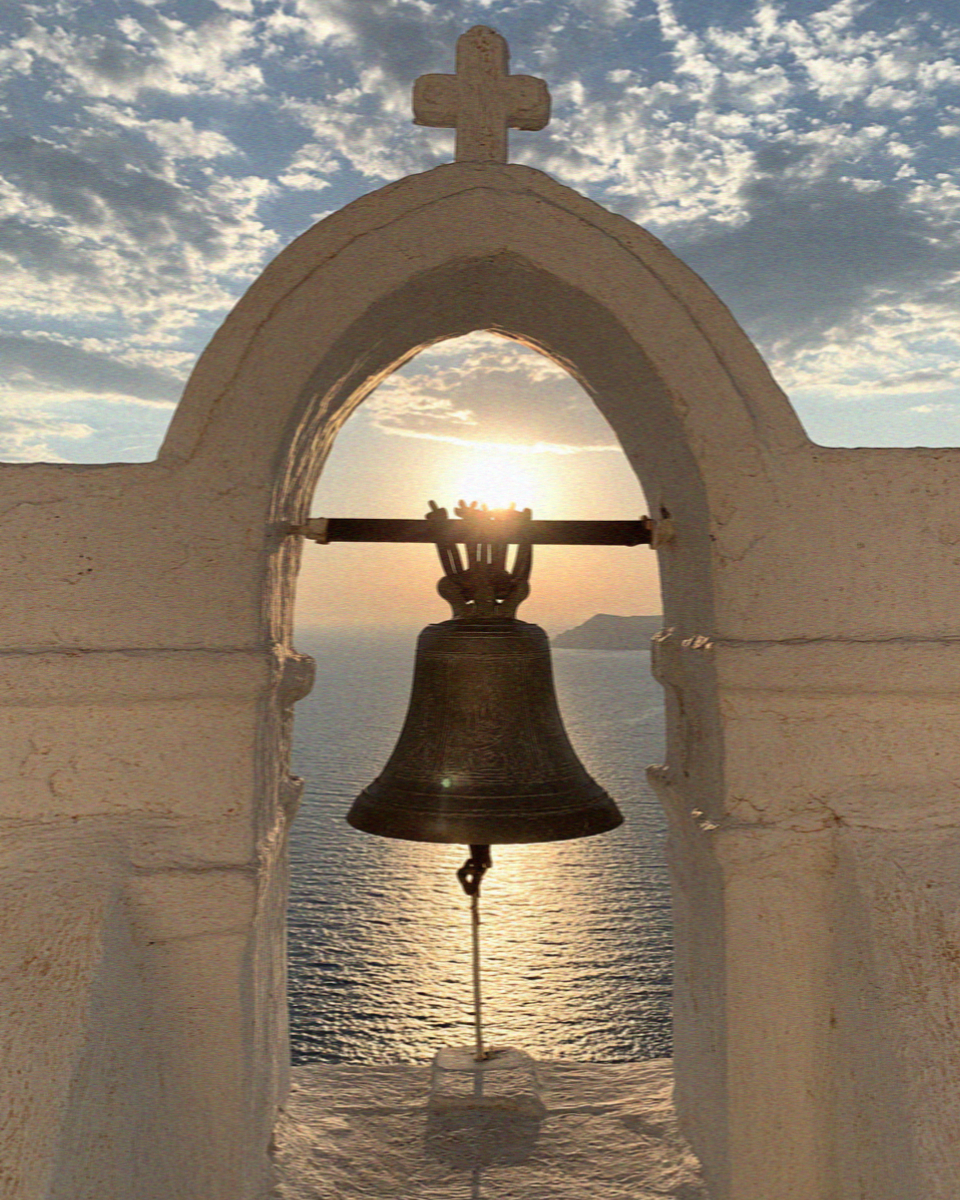
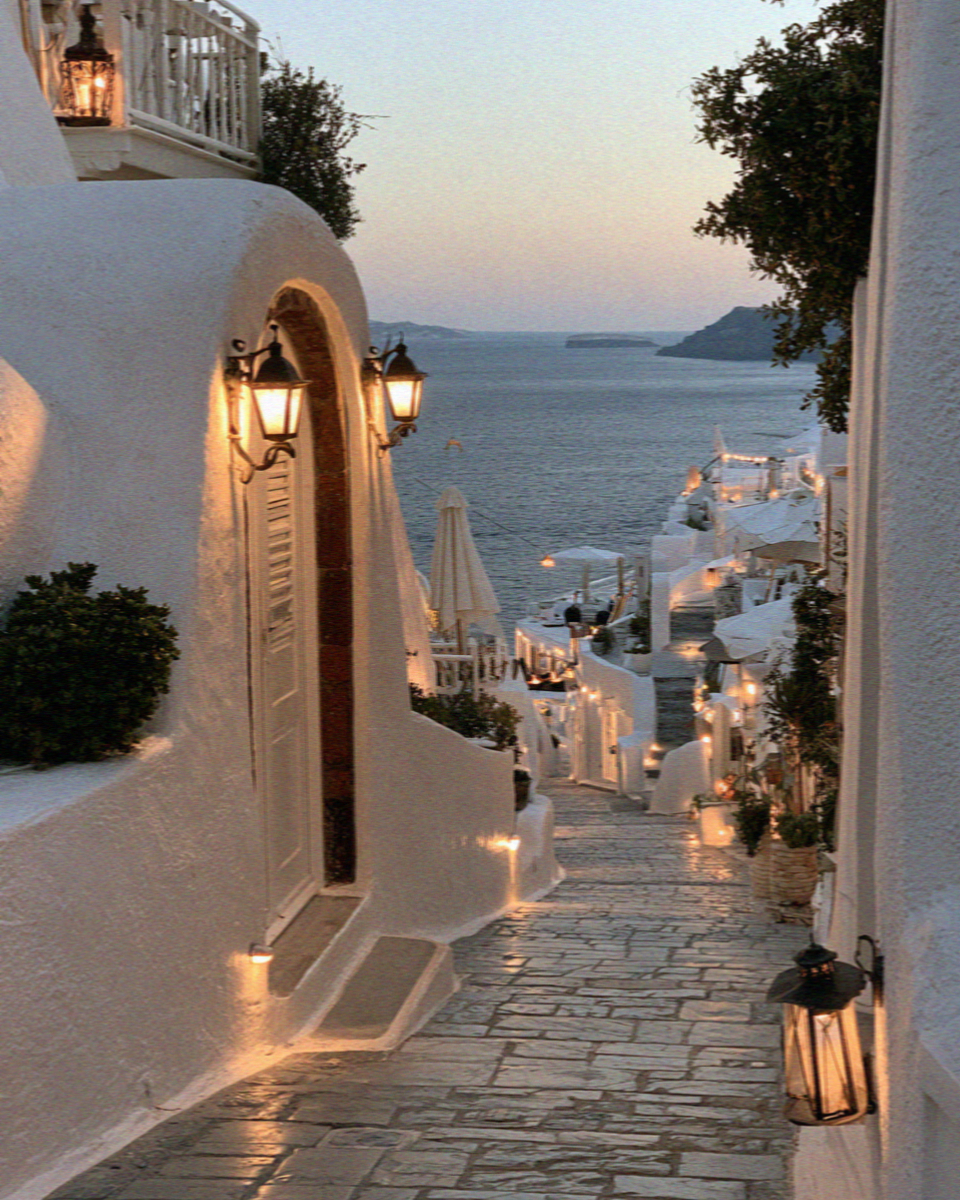
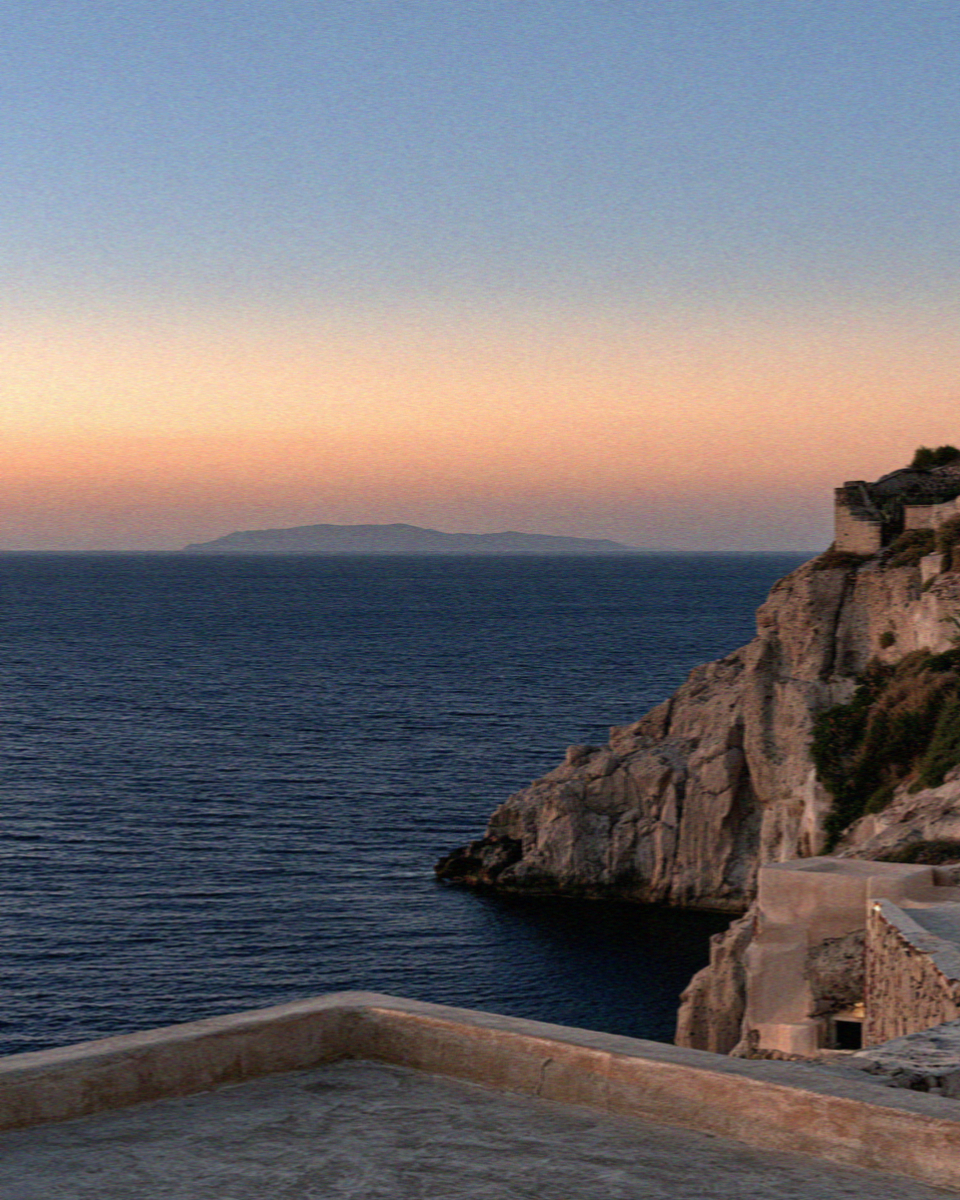
Which is how I ended up on the rim path between Imerovigli and Fira at the exact moment everyone else on the island was pointed north. Twenty minutes out of Oia and there was no one on the path at all. Just the drop, and the light going long and gold across the water, and the churches with their blue domes standing about in ones and twos looking exactly like themselves.
They are not of the island, the photographs. They are of the moment the light turns, which lasts about twenty minutes, and which you can only have by being in it. Everything else is a souvenir. The picture is not a lie. It is a very small part of a very large thing, mistaken for the whole for so long that people arrive expecting the part.
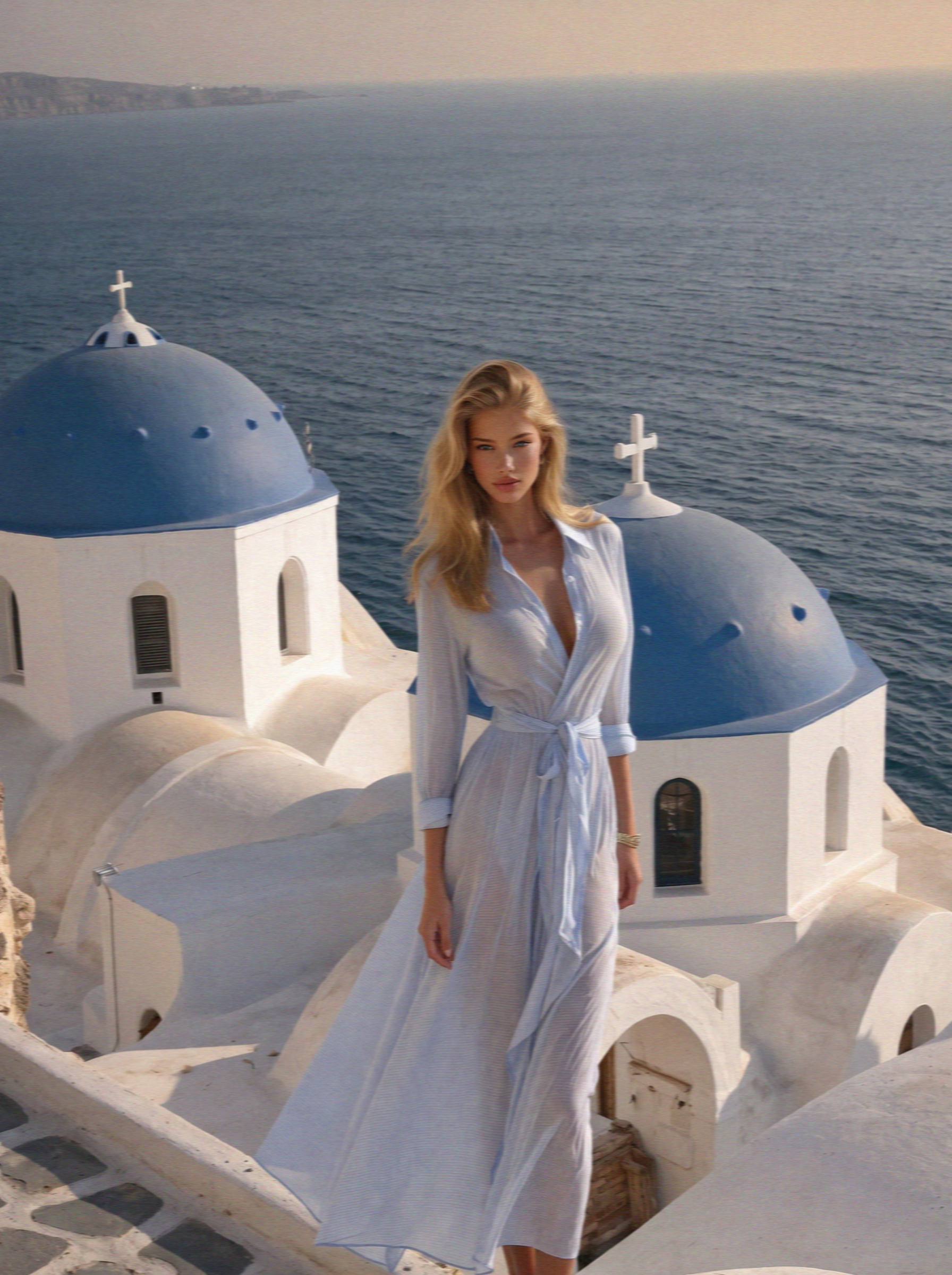
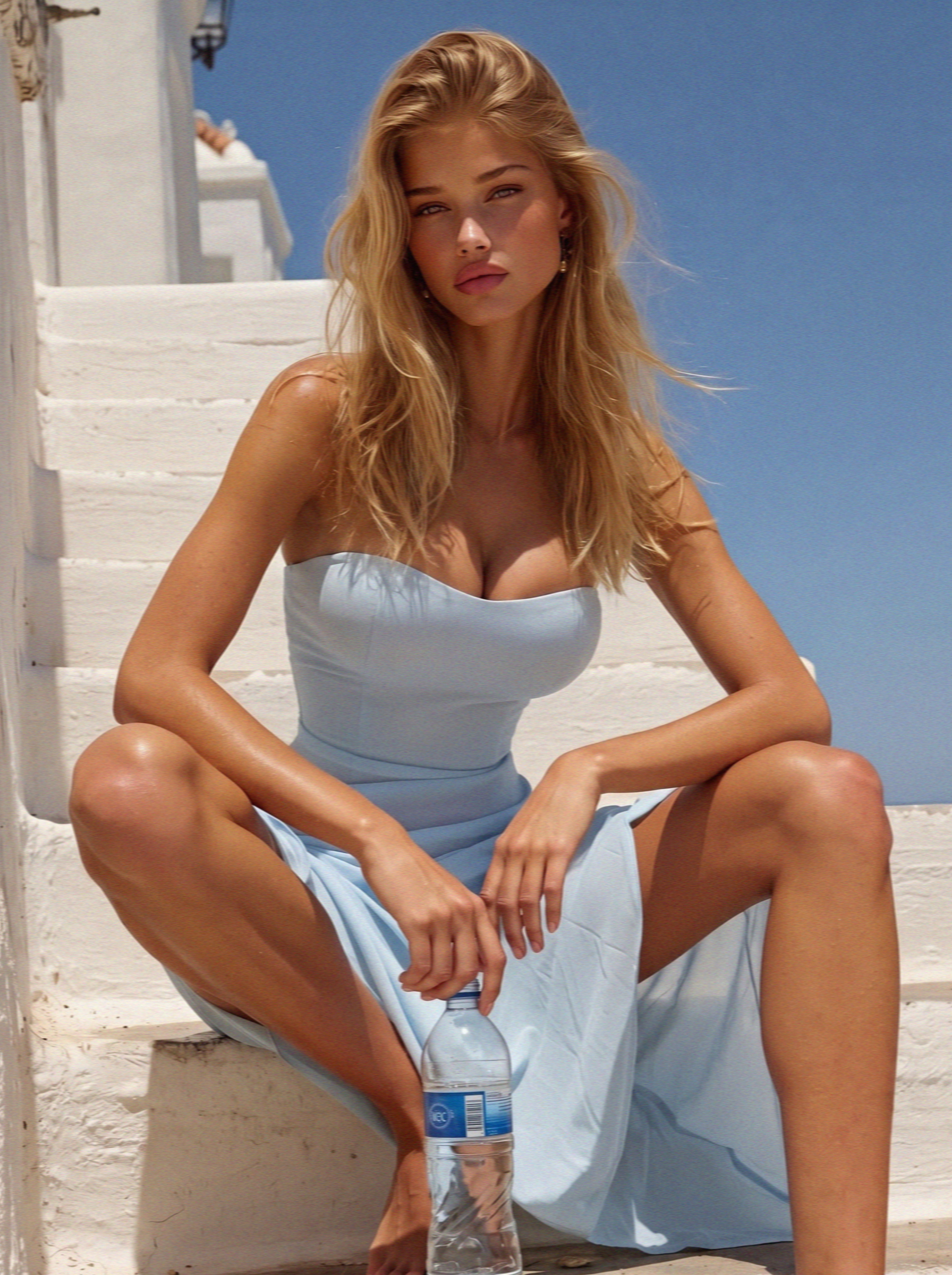
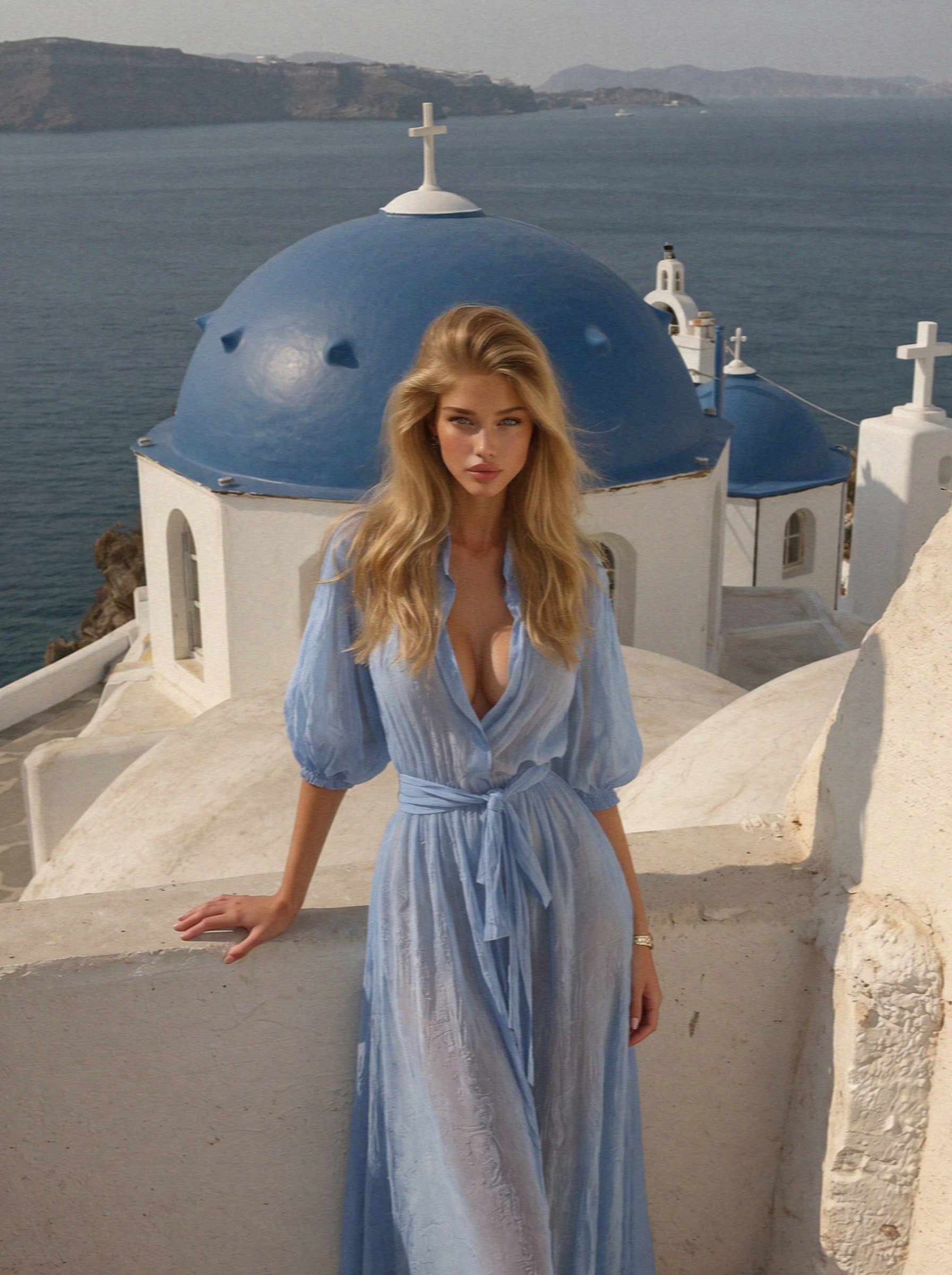
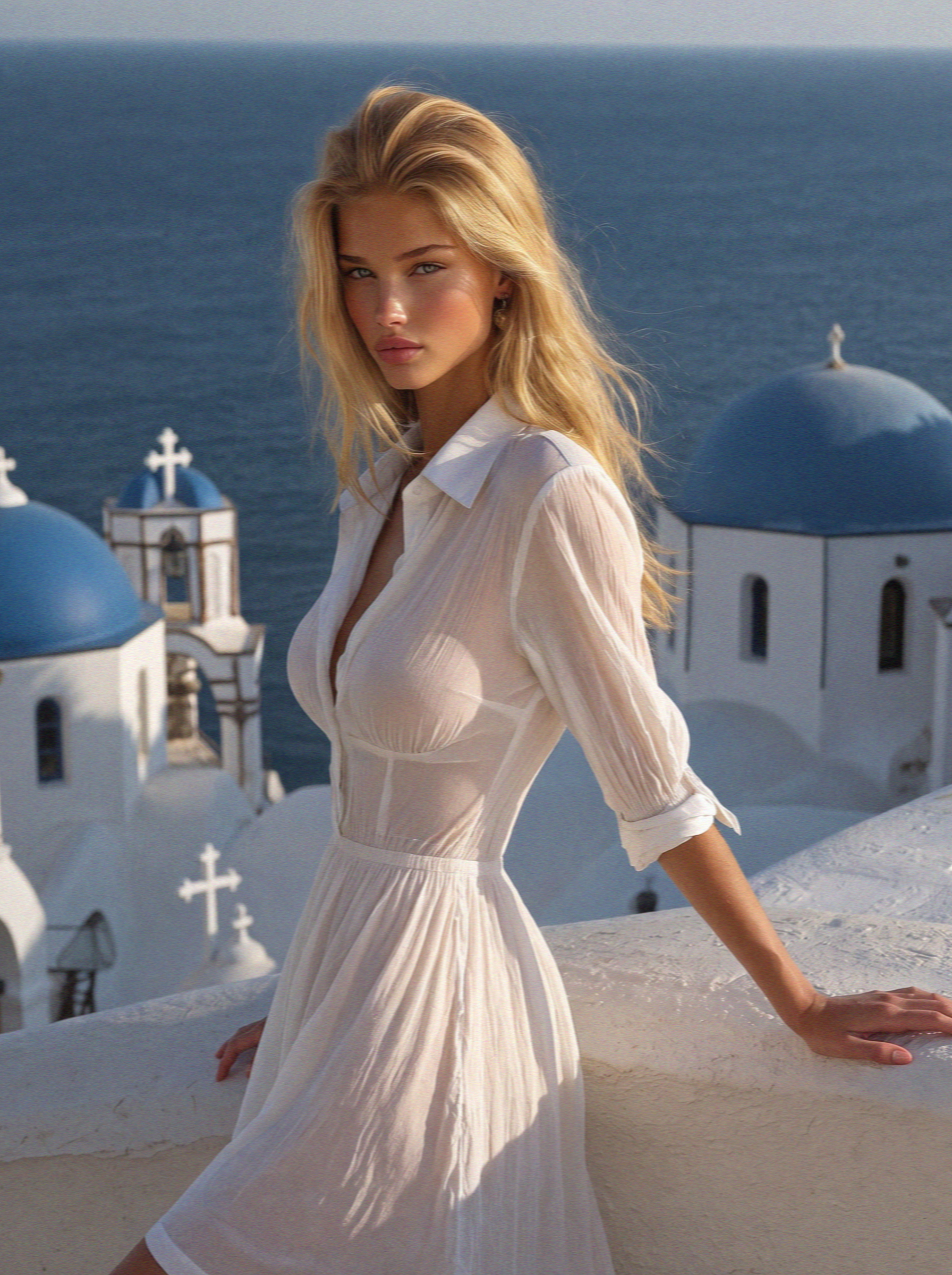
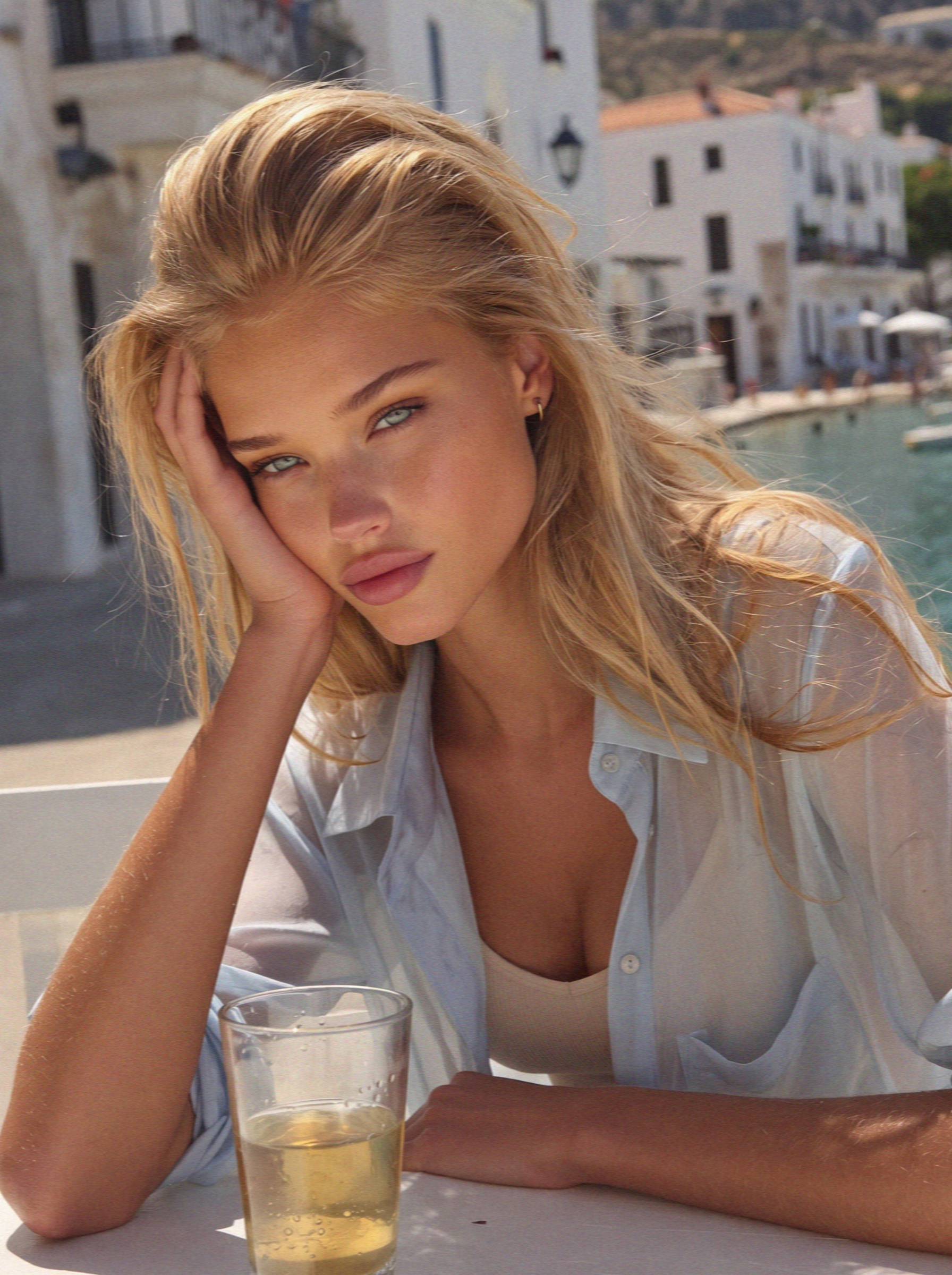
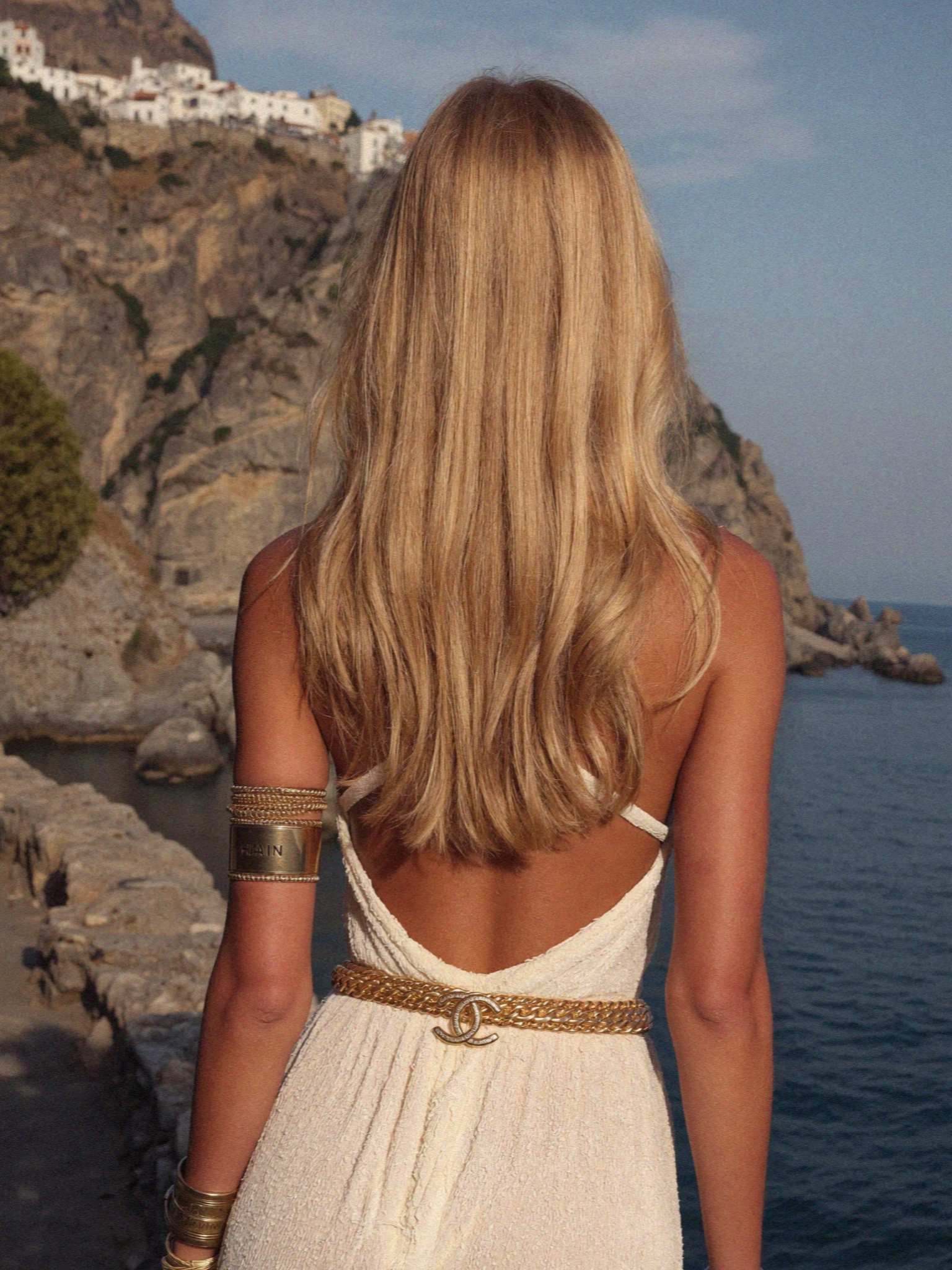
The photographs you will see from here will have nobody in them.
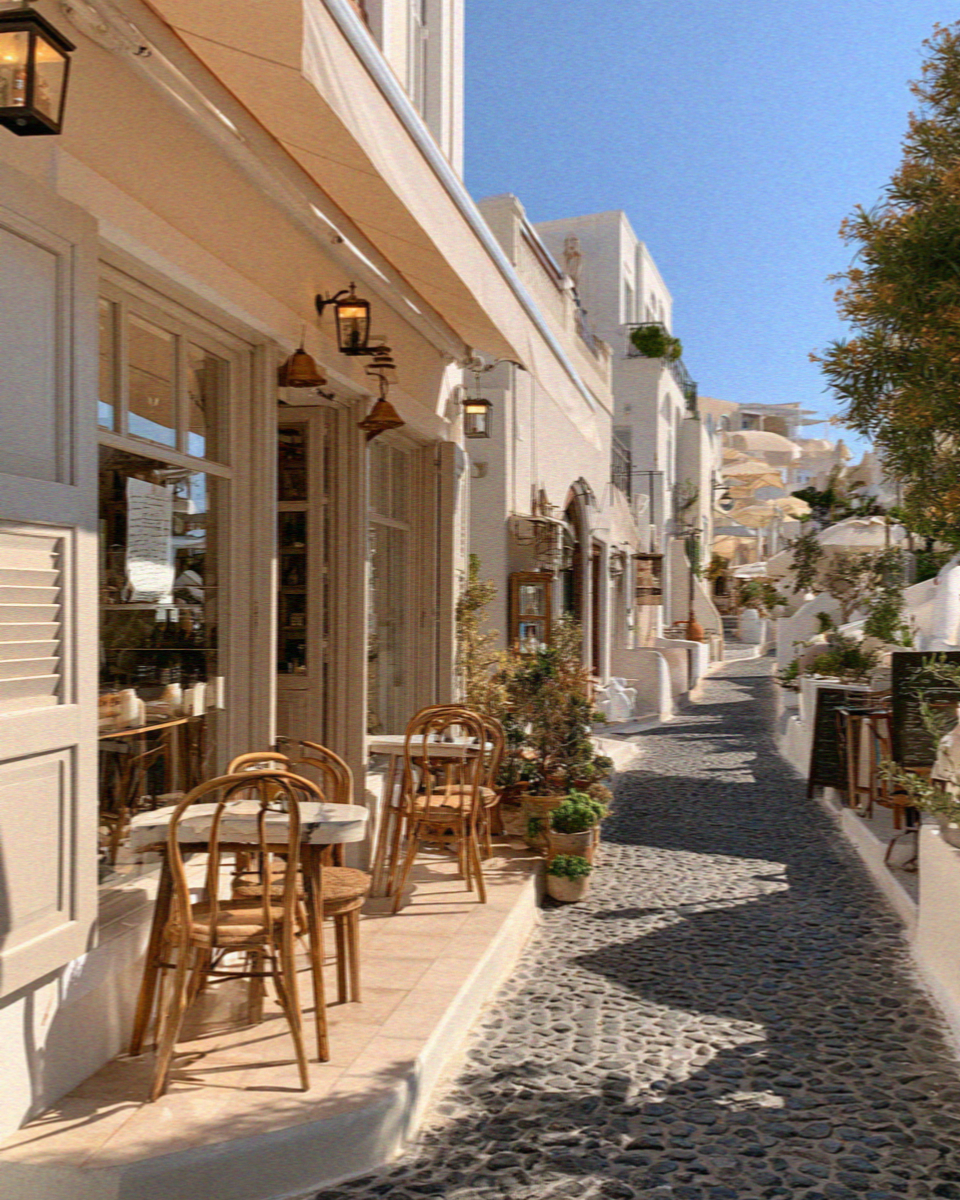
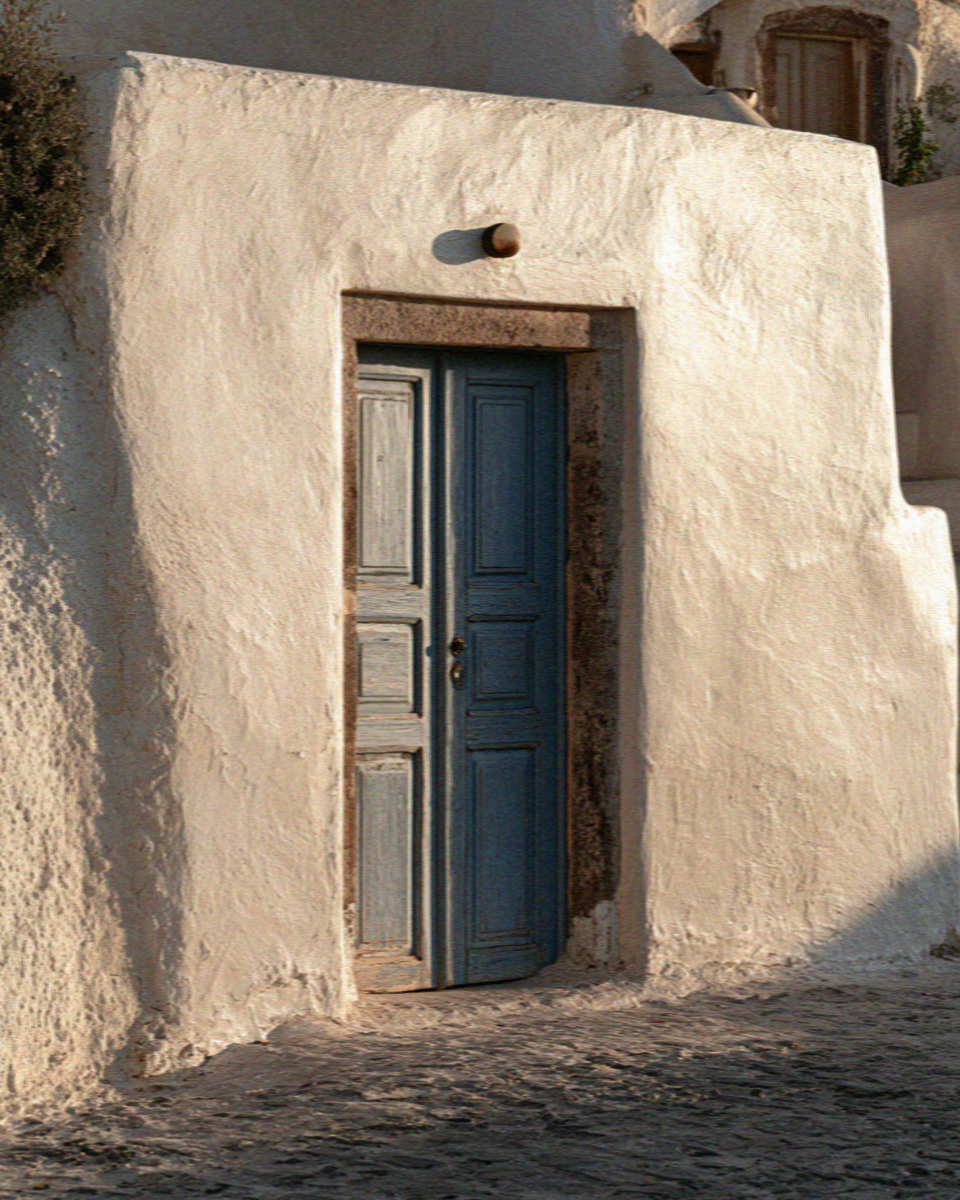
Not because the island was empty. You have just read how empty it was. But because my photographer is very good, and what he is good at is not light or composition in the way people imagine. It is knowing where to stand. He will put the camera low and shoot upward so four hundred people sitting on a wall pass entirely beneath the frame. He will wait out a gap of four seconds in a lane that has not been empty all day. He will find the one doorway, the one flight of steps, the one angle along a whitewashed wall where the crowd is simply behind him, and he will take it, and it will look like we had the place to ourselves.
He has been doing it long enough that he can walk into somewhere like this and see the empty pictures inside the full one, the way you might look at a crowded room and see where the furniture is. I have watched him do it in Rome and in Venice and it never stops being a small magic trick.
So the pictures are not lies exactly. Everything in them was there. It is only that the frame is a decision about what to leave out, and we make that decision every single time, and so does everybody else with a phone above their head on that wall.
I did not take anything good myself. I stayed until it went blue, then walked back in the dark with my sandals in my hand, because the path was smoother than the steps.
Tomorrow I am going down to the water. The sea in September is warmer than the air by evening, which is a small, specific luxury I intend to make full use of before the island finishes closing.
Four more days. I have not yet been anywhere I had not already seen, and I am beginning to suspect that is entirely my own fault.
V.
More images from Santorini