Ischia surprises people who arrive expecting a smaller Capri. It has actual beaches. Long ones, sandy ones, beaches you can lie down on all day rather than a slab of rock with a ladder bolted into it. The island is volcanic, so the sand runs from pale gold to dark grey, and in places the ground underneath you is genuinely hot.
A word on money first. Almost every beach here splits into a free stretch and private lidos. Two loungers and an umbrella run around 20 to 30 euros a day in June and September, closer to 30 to 40 in July and August. The free sections are genuinely free and genuinely crowded.
Maronti, the long one at Barano
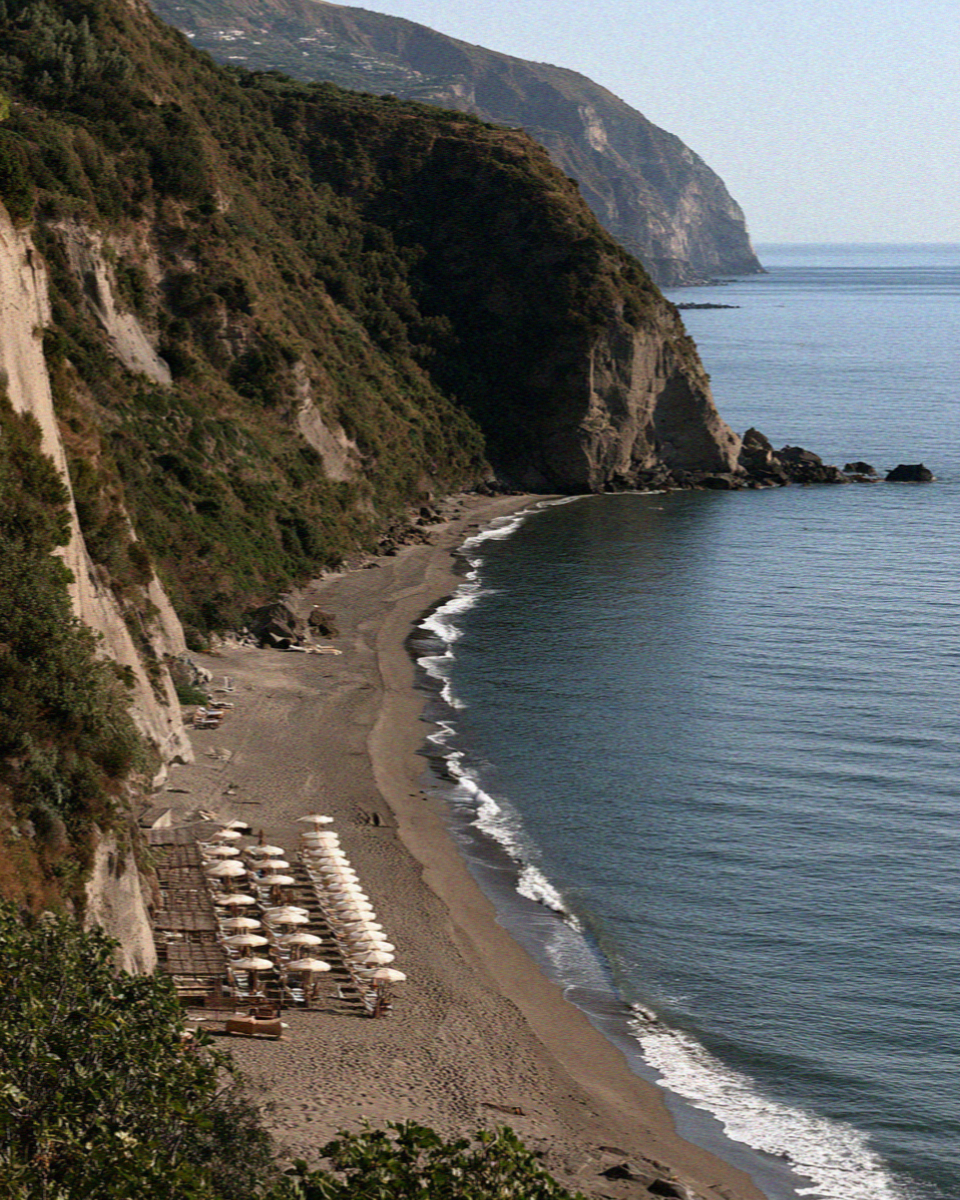
Maronti is the island’s big beach, close to three kilometres of dark sand along the south coast in the comune of Barano, from below Testaccio west to the headland under Sant’Angelo. It never feels as full as the numbers suggest. Lidos cluster at each end, the middle thins into free sand, and the sea shelves gently and stays calm, which is why Italian families with small children colonise it in August.
The eastern half is the practical half: parking, a road down from Barano, the bus. The western half, under Sant’Angelo, is prettier and quieter, reached by the little water taxi from Sant’Angelo’s harbour, about five minutes and a few euros each way when I did it, or on foot along the shore in ten to fifteen minutes.
Then the strange part. In one section the sand is hot, not warm from the sun but hot from below, steam venting up from the volcanic system under the island, and at the vents it climbs close to boiling. The Romans buried themselves in it for aching joints, and a couple of the beach restaurants still cook in it, chicken and potatoes buried for hours. Dig a shallow hole with your hand and you will feel it. Do not dig deep, and do not let a child do the digging.
From the eastern end a ten-minute path up a gorge reaches Terme di Cavascura, rough baths cut into the rock, entry around ten to fifteen euros. Maronti is the beach I would send almost anyone to first.
Citara, Forio
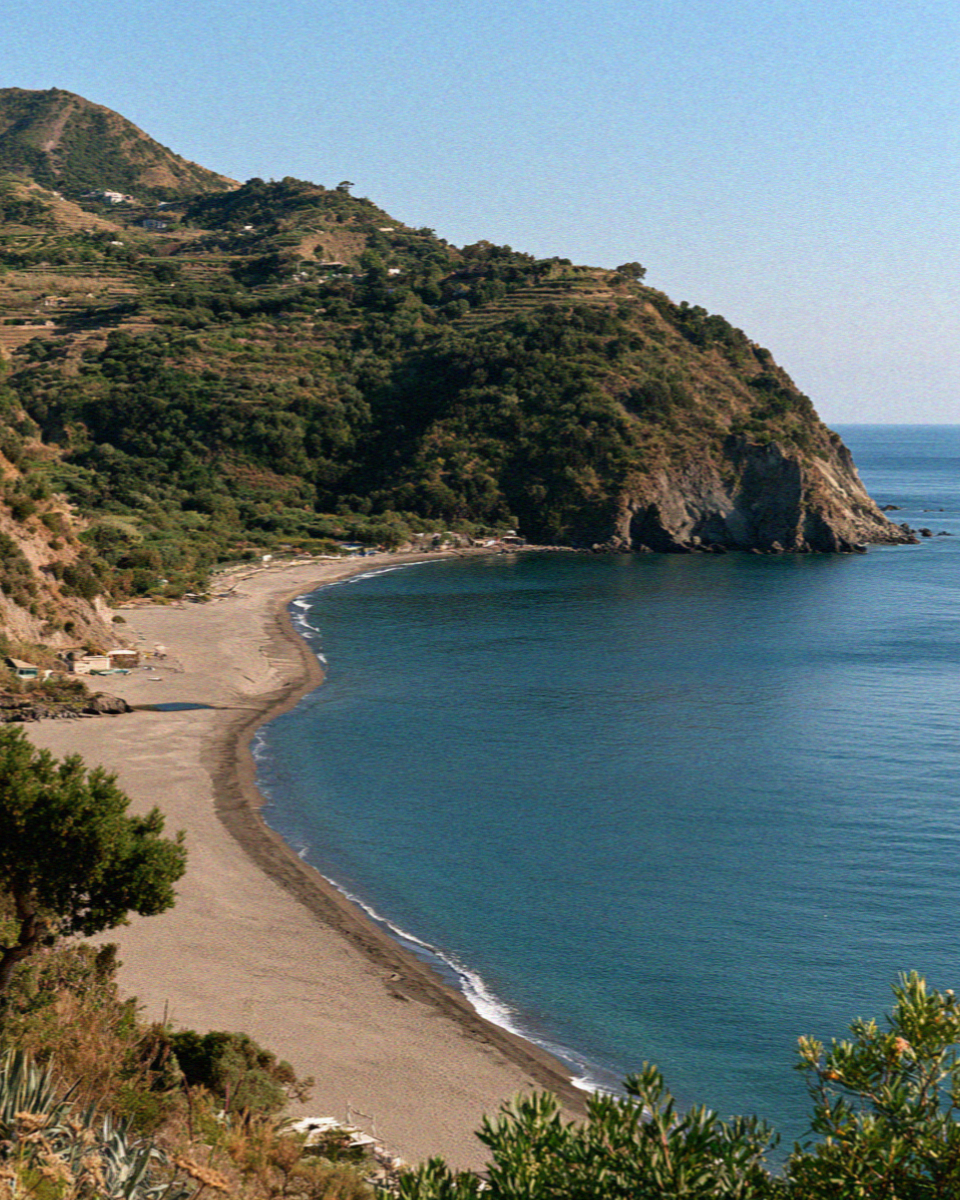
Citara is the wide west-facing bay below Forio, and its whole character comes from facing the sunset. Coarse gold sand with pebbles through it, and light in the late afternoon that turns everything the colour of apricot.
The northern end belongs to Giardini Poseidon, the largest thermal park on the island, which holds its own stretch of sand below terraced pools. A full day ticket sat in the low forties per adult at the time of writing, lounger and umbrella included, so if you were doing a thermal park anyway the arithmetic is not bad. The rest runs through ordinary lidos and one free section that fills fast.
The catch is the sea. Citara is exposed, and any west wind puts a chop on the water and a shorebreak that is no fun with children. On a flat day it is glorious. Buses come down from Forio, and the paid parking above the beach is gone by mid-morning in August.
San Montano, Lacco Ameno
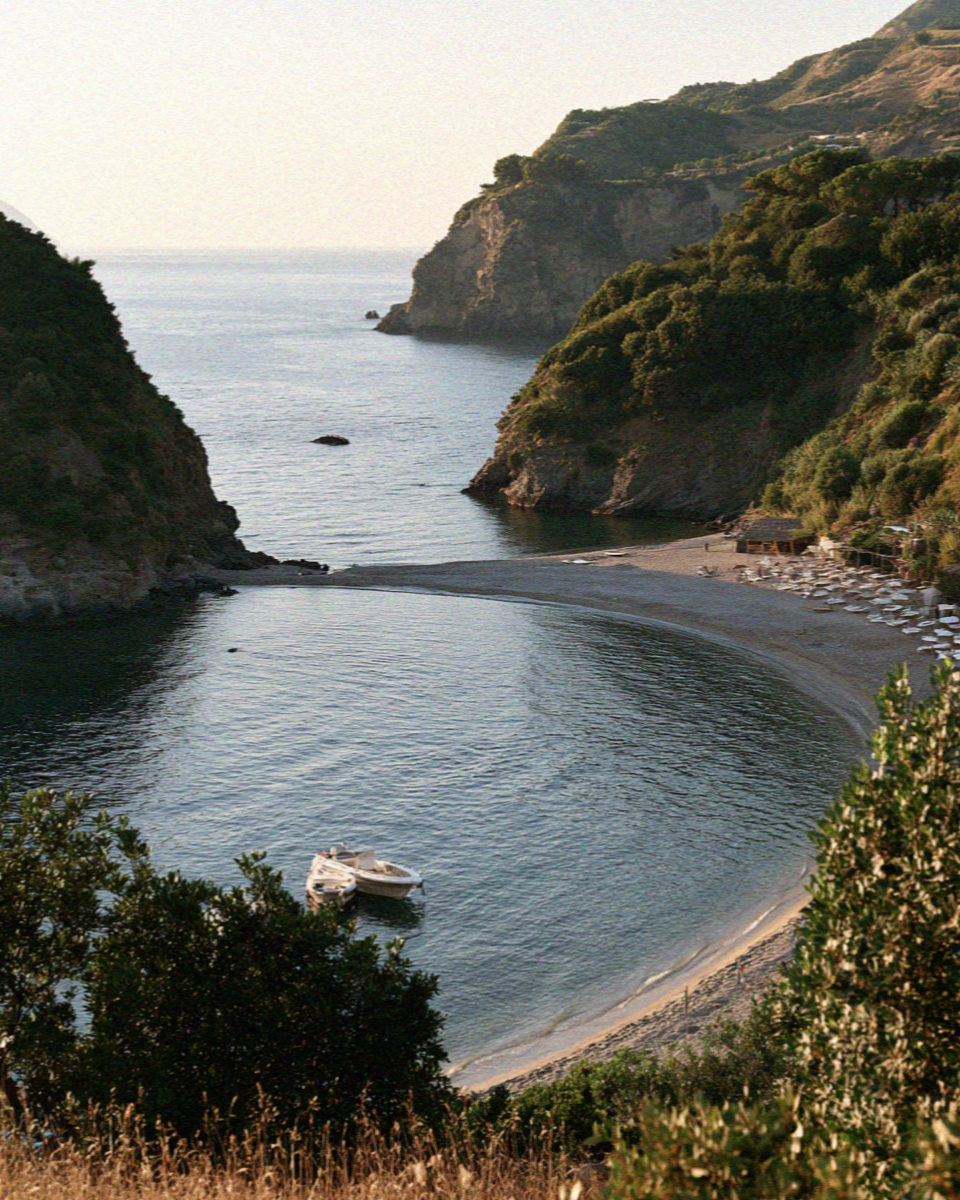
If you want the postcard, it is San Montano. A shell-shaped bay of about three hundred metres, fine pale sand rather than the island’s darker grit, headlands closing in on both sides so the water sits flat and shallow and an improbable green-blue. Negombo, the thermal park, takes the western side and runs its own beach there, so the public sand is shorter than the bay looks from above.
Access is the thing nobody warns you about. Buses (lines 1, 2, CD and CS among them) stop on the main road roughly nine hundred metres away, a pleasant ten-minute walk down and a considerably less pleasant climb back at six in the evening with a wet towel. Roadside parking disappears early, though Negombo has covered parking.
Best in the morning, and best in June or September. In peak August I would go to Maronti instead and keep San Montano for a photograph.
Cartaromana, and the castle in the frame
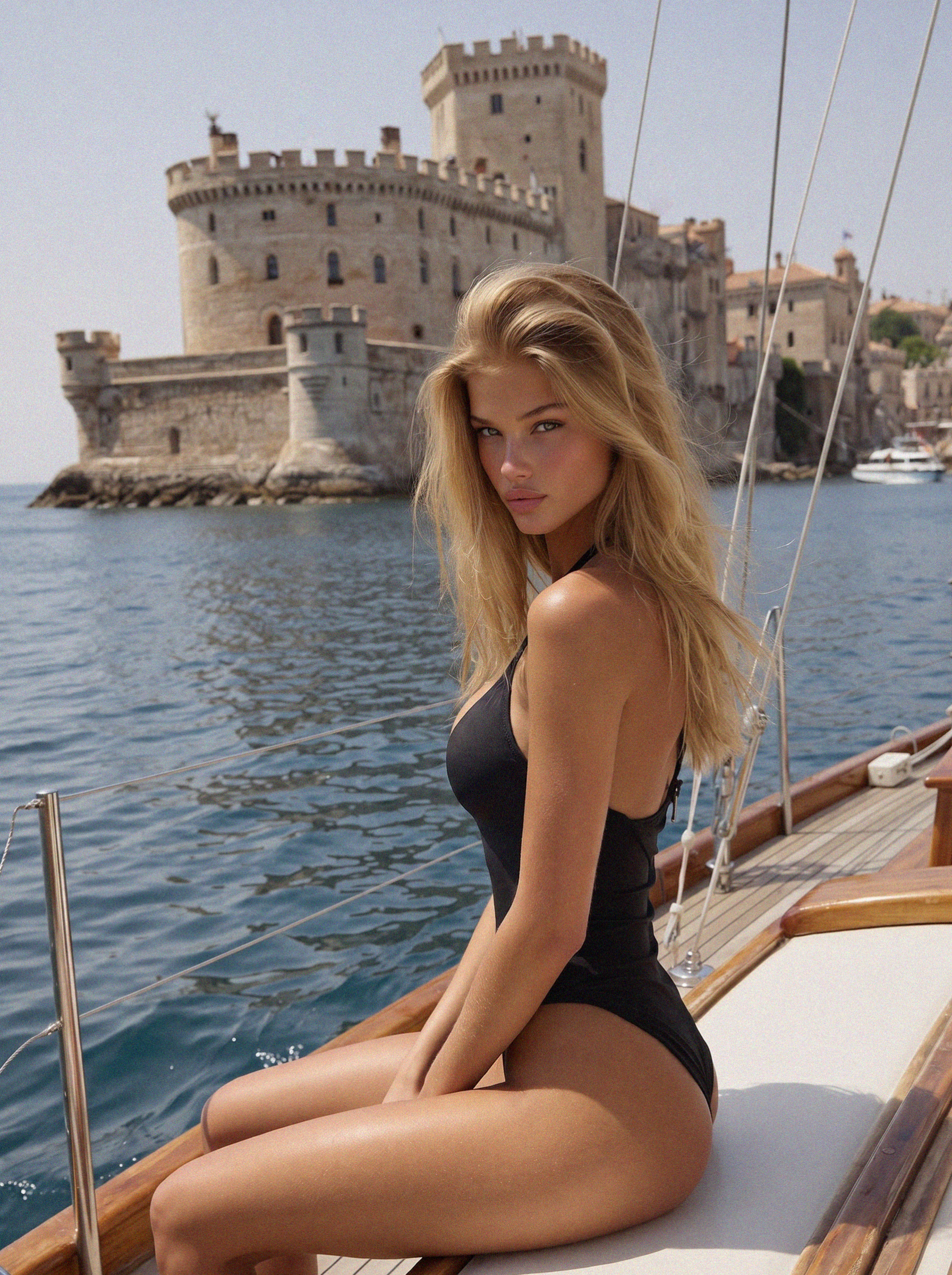
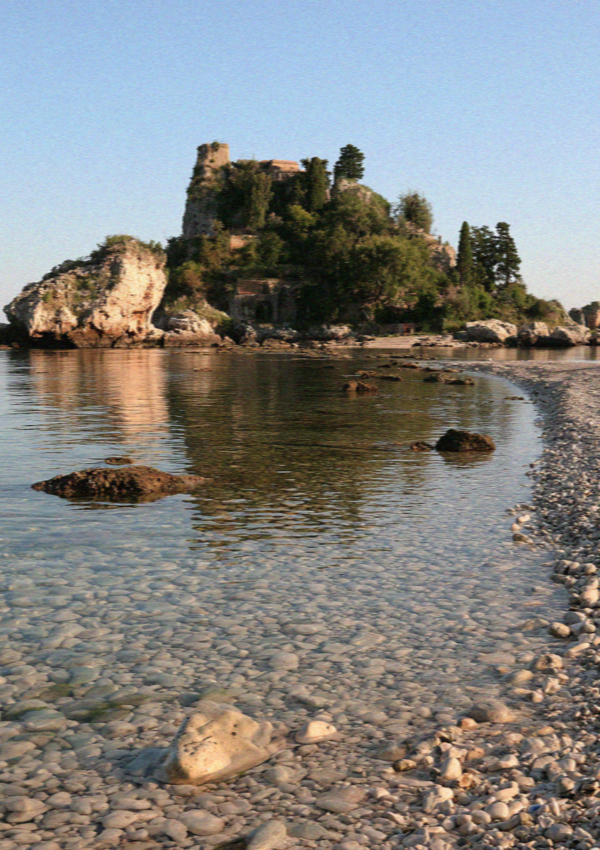
Cartaromana sits on the east side of Ischia town and its whole reason for existing is the view. You lie down, you look up, and the Castello Aragonese is out there on its own rock with the bridge running back to Ischia Ponte. Nowhere else gives you the castle from this angle.
The beach itself is modest: coarse sand and stones, a couple of small establishments, a restaurant, nothing glossy. Warm thermal water seeps up at the shoreline, so you will swim into a pocket noticeably hotter than the sea around it. Under the water between here and the castle lie the remains of Aenaria, the Roman port that sank, which is why snorkellers head out in a purposeful line.
On foot from Ischia Ponte you follow the signs up a steep hill for five to ten minutes and drop down the other side, fine going and a proper effort coming back. Local buses stop at Piazzale Cartaromana. Easiest is the taxi boat, no hill at all.
Go late. The light on the castle at the end of the day is the best thing on this coast.
Sorgeto, the cove that boils
Sorgeto is not really a beach. It is a narrow cove below the village of Panza, floored with round stones and boulders, with volcanic springs pushing up through the seabed. Where hot meets cold you get natural pools at roughly bath temperature, and at the source it is hot enough to scald. People cook eggs in it. It is free and it never closes.
The price is the staircase: something over two hundred steps cut down the cliff, ten to fifteen minutes going down, longer and hotter coming up. If your knees are unhappy, take the taxi boat from Sant’Angelo instead, a handful of euros each way.
Wear something on your feet, because the stones are sharp and the hot patches are unpredictable. And go in the cool of the year, or early morning, or after sunset. A hot tub in the August afternoon is a poor idea, and the cove is small enough that a crowd ruins the quiet. October at dusk, water steaming, is when Sorgeto is unforgettable.
Chiaia, Forio
Chiaia is Forio’s own beach, running along the edge of town, which makes it the most useful beach on the island rather than the most beautiful. Sand, shallow water, a line of lidos with bars and restaurants, and you can walk there from your hotel without organising anything. The sunset, with the whitewashed Soccorso church on the promontory to the north, is the reason to stay past six.
Spiaggia dei Pescatori, Ischia Ponte
The fishermen’s beach sits a couple of hundred metres before the old village at Ischia Ponte, and fishing boats are still hauled up on the sand at one end. Fine golden sand, a gentle shelf, the castle on your right and Procida and Vivara ahead. Part free, part lido.
Nothing about it is dramatic, but it is walkable from the port, calm enough for children, and two minutes from dinner. Staying in Ischia town without a car, this is your default.
Punta Caruso, for swimming off rocks
For a swim rather than a sunbathe, Punta Caruso at the northwestern tip is where the water is best: deep, cold, glass-clear, dropping straight off black lava rock, with caves and gullies that make the snorkelling the finest on Ischia.
Be clear about what it is not. No sand, no bar, no lifeguard, no shade beyond what the rock throws. You reach it on foot from the path off Via Guardiola, and the way down is rough. Not a place for small children, or for any day the sea is up.
Just below it is San Francesco, which has sand and lidos at around 20 euros for two loungers and an umbrella outside high season, into the thirties in August. Swim off the rocks, then walk down for lunch and a chair.
Which one, for whom
- Family, whole day: Maronti, eastern end.
- Best photograph: San Montano, before eleven.
- Sunset and a thermal park: Citara.
- The castle in your eyeline: Cartaromana, late afternoon.
- Something you will remember: Sorgeto, out of season.
- No car, in Ischia town: Spiaggia dei Pescatori.
- Serious swimming: Punta Caruso.
If you only get to two, make them Maronti and Cartaromana. One gives you the space to do nothing all day, the other the island’s best view from a towel. The rest of it sits in my complete guide to Ischia.
Read also: The Best Thermal Parks and Hot Springs in Ischia | The Best Things to Do in Ischia | The Complete Guide to Ischia
Frequently Asked Questions
Which is the best beach in Ischia?
Maronti at Barano, for most people. It runs close to three kilometres along the south coast, so it absorbs crowds better than anywhere else, the sea is calm and shallow, and it has the fumarole stretch where volcanic steam heats the sand from below. San Montano at Lacco Ameno is prettier, but it is small and it fills up.
How much does a sunbed cost on Ischia?
Roughly 20 to 30 euros a day for two loungers and an umbrella in June and September, and around 30 to 40 in July and August, with front rows at the better clubs costing more. Most beaches also keep a free section, which is busy by mid-morning in high season.
Are Ischia’s beaches sandy or stony?
Mostly sandy, which sets Ischia apart from Capri. Maronti, San Montano, Chiaia and Spiaggia dei Pescatori are all sand, from pale gold to volcanic grey. Citara mixes sand with pebbles, Cartaromana is sand and stones, Sorgeto is round boulders, and Punta Caruso is bare lava rock.
How do you get to Maronti beach from Sant’Angelo?
Take the small water taxi from Sant’Angelo’s harbour, about five minutes and a few euros each way, which lands you on the quiet western end of the sand. You can also walk the shoreline path in ten to fifteen minutes. Local buses reach the eastern end, where there is parking.
Is Sorgeto worth the steps?
Yes, but choose your moment. It is a couple of hundred steps down the cliff from Panza and the climb back is hot work, so take the taxi boat from Sant’Angelo if that is a problem. The natural pools sit at around bath temperature where the springs meet the sea, entry is free and the cove never closes. Go early, late or out of season, and wear something on your feet.