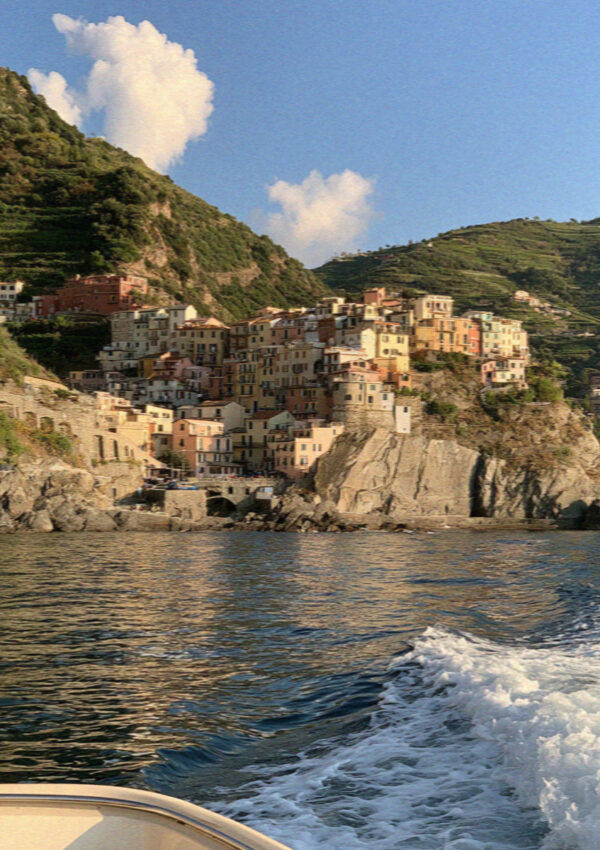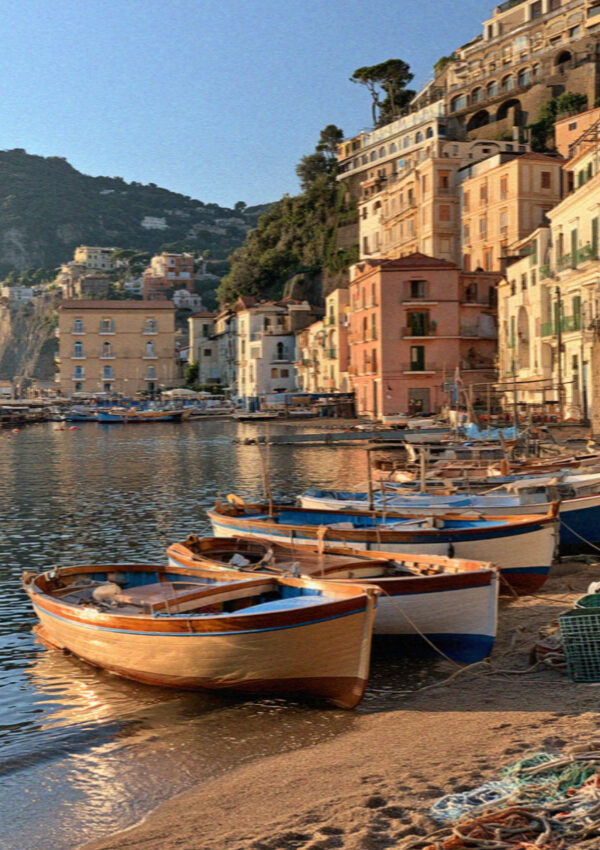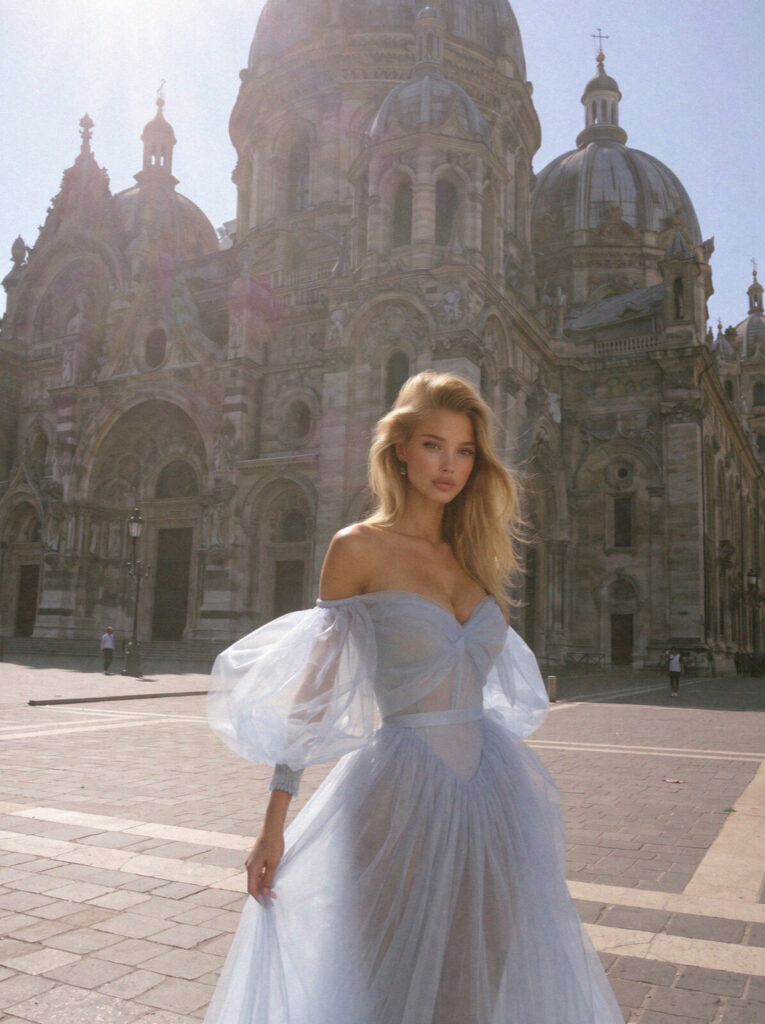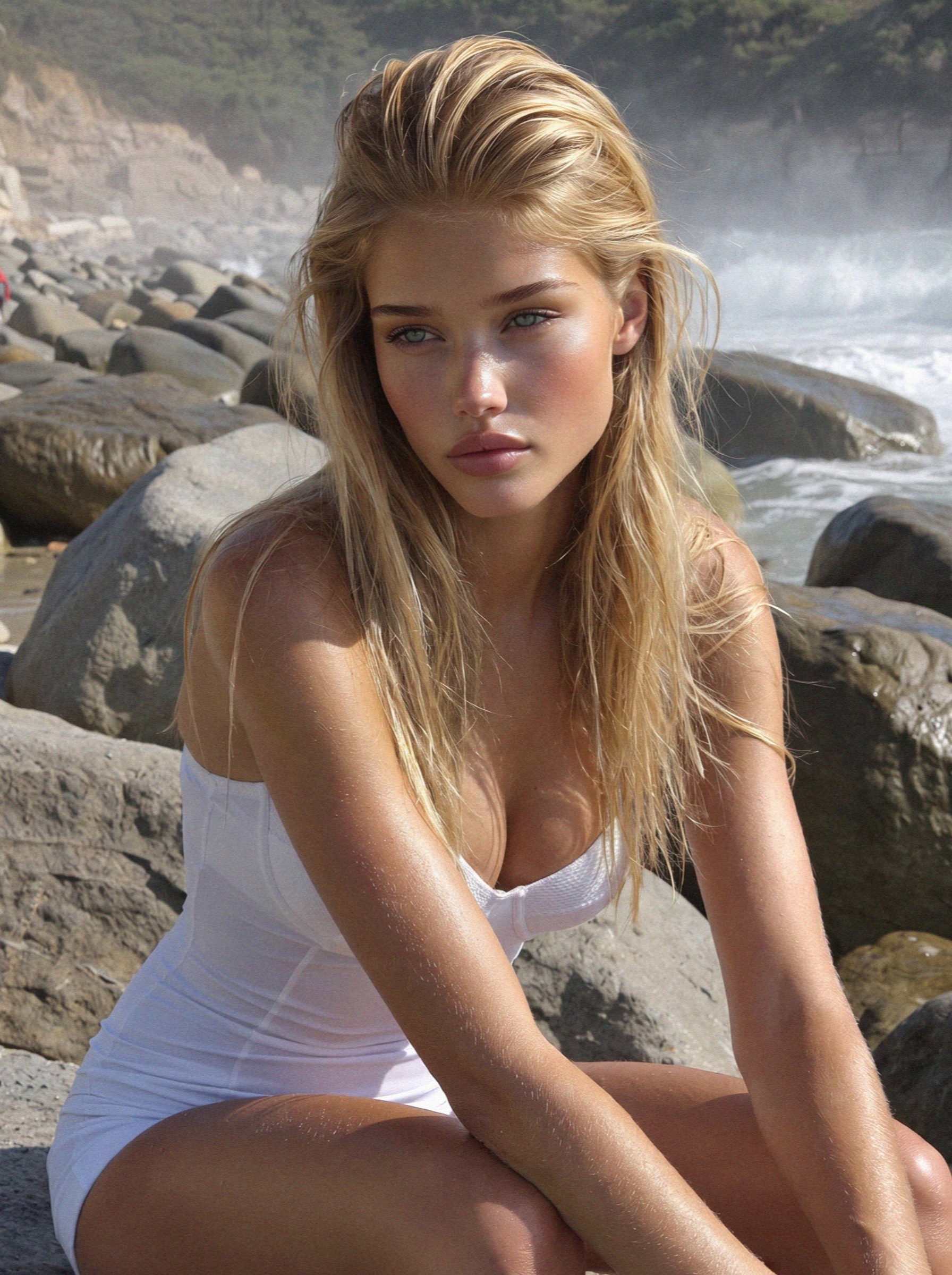
I have been photographed on this island and I have also photographed it, and the two jobs teach different things. In front of a camera you learn what light does to a face. Behind one you learn that a place runs to a timetable, and that most people arrive at the wrong hour and then blame the place.
It helps that Ischia is green. Capri and the coast opposite are pale limestone, and pale stone in August goes to chalk in a photograph. Ischia is volcanic and planted, pine and vine and caper up the slopes, so it holds colour through the middle of the day when the bare islands have given up.
Below is where to stand, which way each spot faces, and therefore when to go.
The Castello Aragonese from the causeway
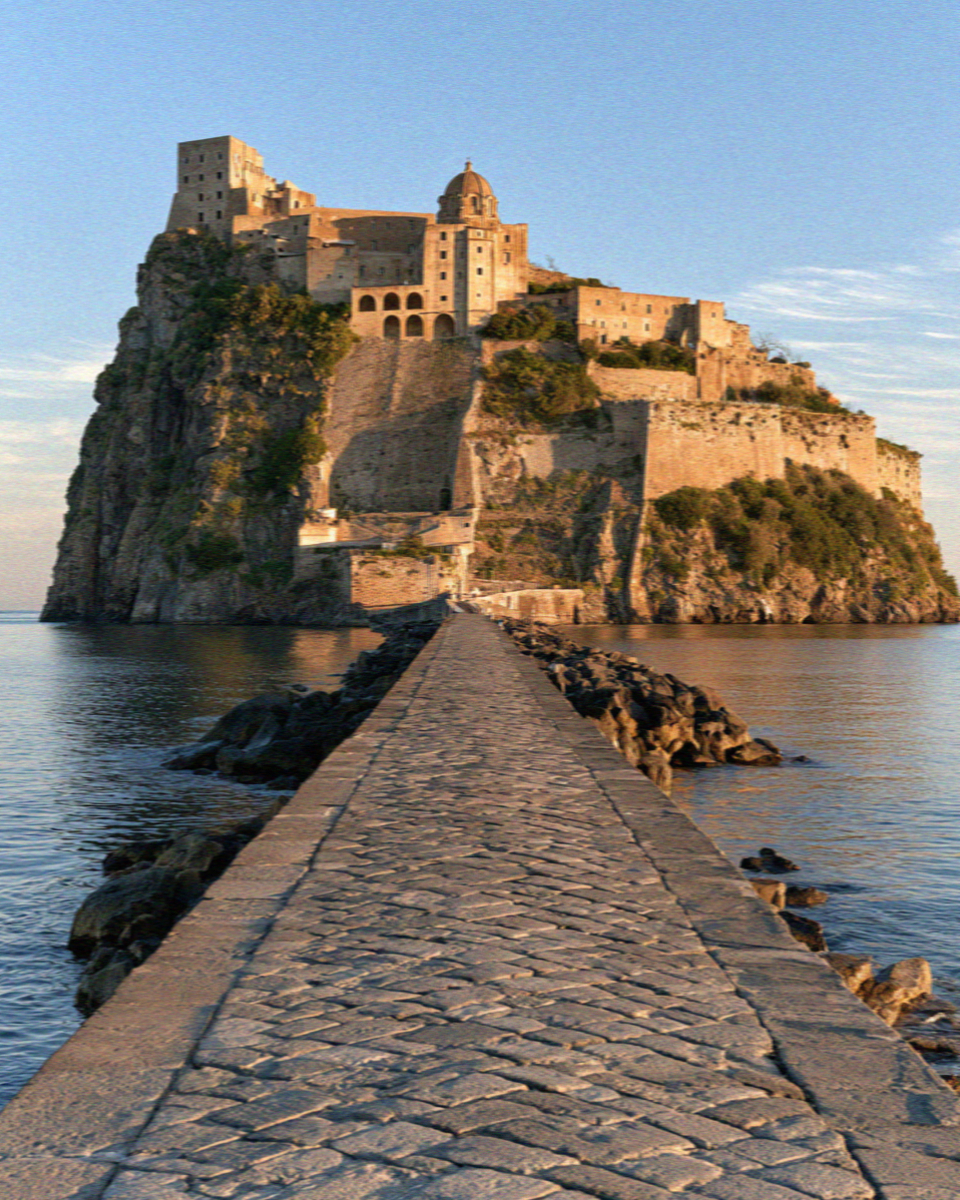
The castle sits on its own islet off Ischia Ponte, joined by a stone causeway roughly 220 metres long. The classic frame is from the village end, low down, with the causeway running away from you and the rock stacked above it.
The causeway runs east, and that fact decides everything. Shoot it in the morning and you are pointed into the sun, the stone goes flat and the sky burns out behind the walls. Come an hour before sunset and the sun is behind your shoulder, lighting the whole western face, and the tufa turns the colour of apricot skin.
Drop onto the pebble beach to the left for water in the foreground. Inside, take the lift up and walk down through the terraces, because the best angles are on the way down.
The same castle from Cartaromana
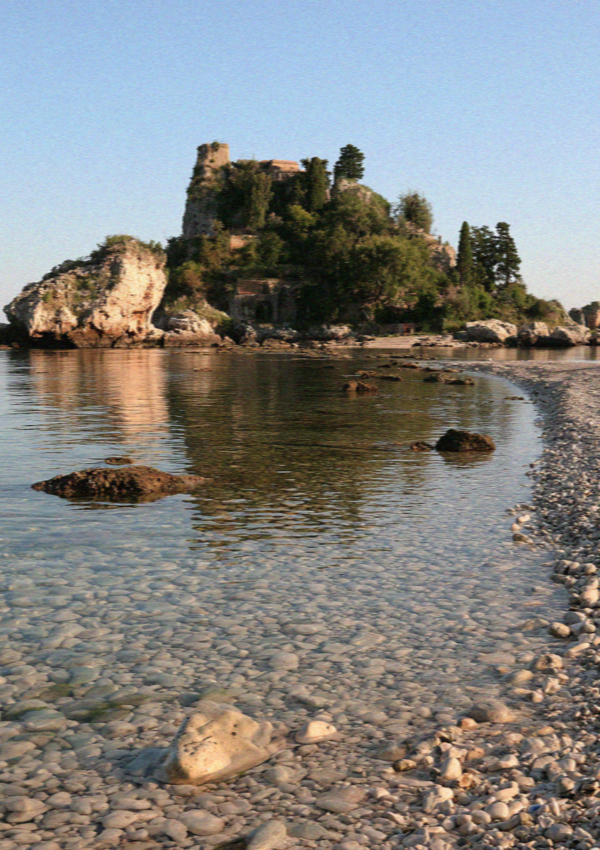
Cartaromana is the other angle, and to my eye the better one: the castle across open water, the rocks of Sant’Anna in front of it, detached from the town.
The beach sits on the eastern shore below Via Nuova Cartaromana, down a steep flight of steps or by water taxi. It faces east. People assume anything with a castle on it must be a sunset shot, arrive at seven, and find the sun already gone behind the hill at their back.
Go at sunrise instead. The sun comes up out of the sea beyond the castle, the water turns pewter then rose, and nobody is there. The second window is late afternoon, before the hill takes the light. Never at midday, when the water goes glassy white and the rock loses its texture.
Santa Maria del Soccorso at Forio
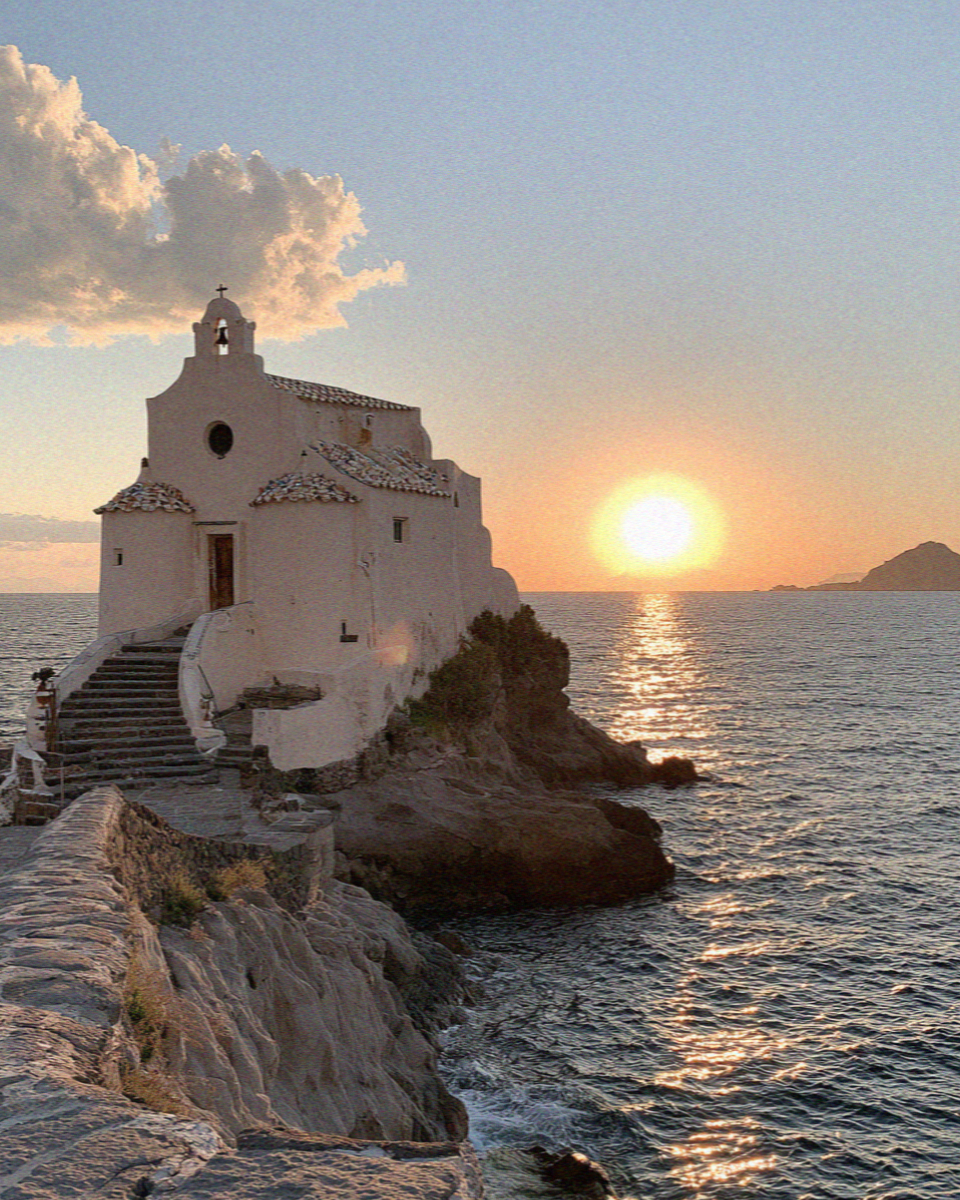
The whitewashed church on its promontory at Forio, sea on three sides, is the sunset spot on Ischia and everybody knows it. It faces due west, and the sun drops into open water with nothing in the way.
Which also means it is busy. In high summer the terrace fills half an hour beforehand, so if you want the church rather than forty phones in the frame, be earlier and stand off to one side.
My two frames: from the terrace steps below and to the left, shooting up so the white walls sit against the sky, and from further back along the lane, where the promontory reads as a silhouette.
Then stay. The twenty minutes after the sun goes are better than the sunset itself, the walls turning lilac, the crowd already leaving for dinner.
Sant’Angelo from the path above the village
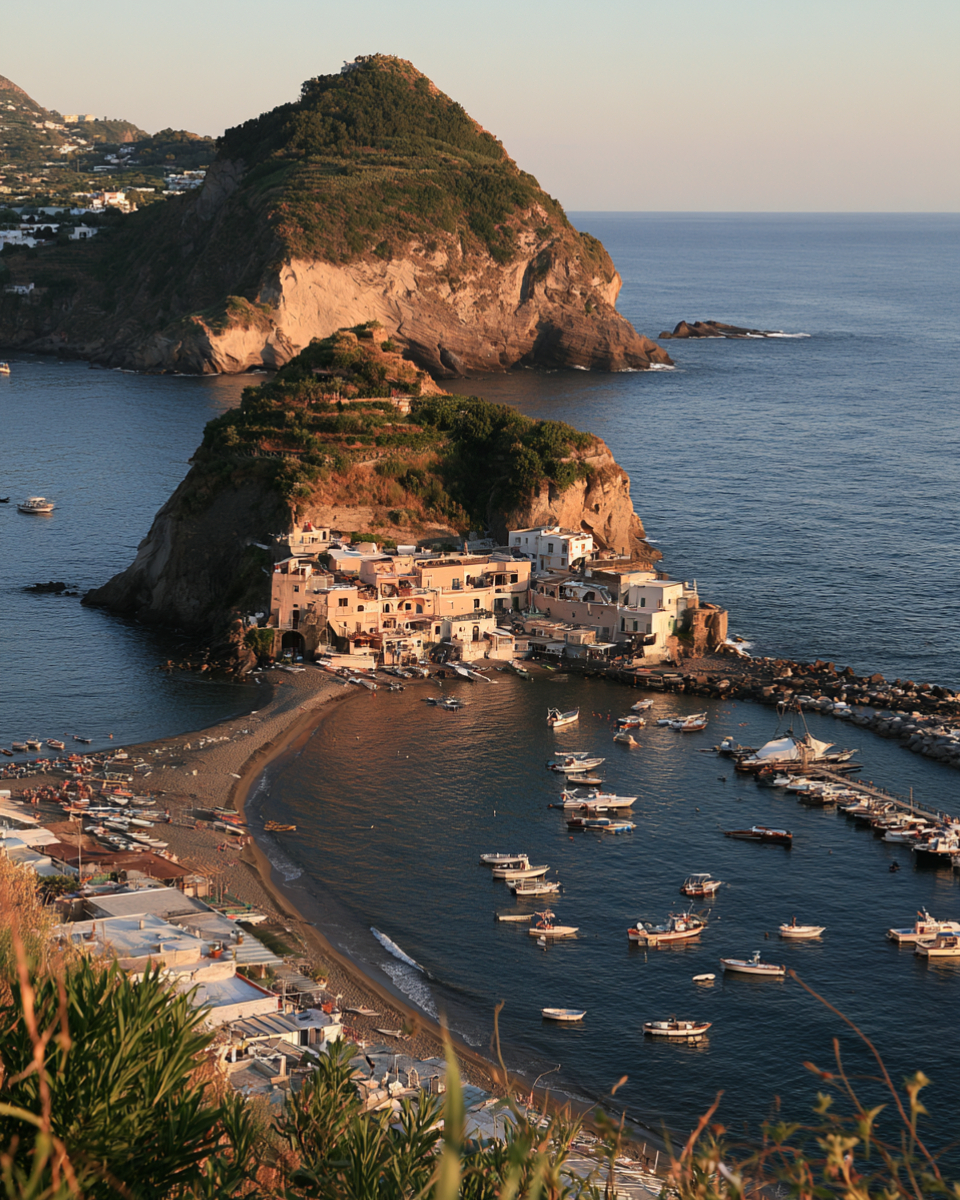
The village is car-free and sits at the island’s southern tip, tied to a tuff islet by a thin isthmus of sand. From sea level it is charming and unreadable. From above, the shape of it makes sense.
The reliable viewpoint is the Belvedere di Serrara in Piazza Pietro Paolo Iacono, a wide natural terrace over the south coast: the village, the islet, the Maronti coastline and, on a clear day, Capri behind. The old mule track down to Sant’Angelo is a proper walk, an hour or so downhill, and it opens onto better angles as it drops.
This coast faces south, so it is lit all day and there is no bad hour, only bad quality. Late afternoon is the one, when the light comes across from the west and separates the islet from the water.
The top of Monte Epomeo
Epomeo is 789 metres, the highest point on the island, a block of green tuff pushed up rather than a cone. The quickest route starts from the square at Fontana and takes about an hour on foot.
The view is a full circle: Forio and the west coast, San Montano and Monte Vico, the castle east, and on a clear day Vesuvius, Capri and Procida. Go early. Midday up here is the flattest picture on the island, all haze and no shadow, and the walk is only partly shaded.
The Fungo at Lacco Ameno
A ten-metre lump of green tuff standing in shallow water off the Lacco Ameno seafront, eroded at the waist so it genuinely reads as a mushroom. Small subject, low camera. Crouch on the shingle so the rock breaks the horizon, not the far shore. This is a north-facing coast, so the Fungo is softly lit most of the day and takes a warm western rim in the last hour, which is when to shoot it.
San Montano from above
The bay between Monte Vico and the Zaro headland holds the prettiest water on Ischia, shallow and pale and properly turquoise. Water colour needs high sun, so this is the exception to everything else here: go between about eleven and two, exactly the hours you would otherwise avoid. The elevated angle comes from the road climbing Monte Vico and from the upper terraces of the Negombo park.
The terraced vineyards inland
Above Panza, Campagnano and Frassitelli the hillsides are cut into narrow terraces held up by parracine, kilometres of dry stone walls built from local tuff. Some are still planted with Biancolella, some have gone back to scrub, the highest sitting around 600 metres. Photograph them in the last hour, when the low sun turns every wall into a line of light with a shadow beneath it. At midday they flatten and disappear.
Sorgeto, and the steam on the water
The cove below Panza, down a staircase of a couple of hundred steps, is where thermal water rises through the seabed and meets the sea. It is free and never closes, and the rock pools sit at bathing heat while the water at the source is close to boiling.
The cove faces southwest, so the late sun comes in low and backlights the steam. That is the whole picture: white vapour lit from behind against dark rock. At midday you cannot see it at all. Salt and sulphur do gear no favours, so keep a cloth sealed in a bag.
Ischia Ponte after dark
Via Luigi Mazzella runs down through the old town to the harbour front, pastel houses either side and the castle at the end of it. A poor photograph at noon, a good one at dusk, when the lamps come on and the pastel reads as colour rather than glare. Wait for the blue hour, when the sky still balances the warm windows.
What the light actually does here
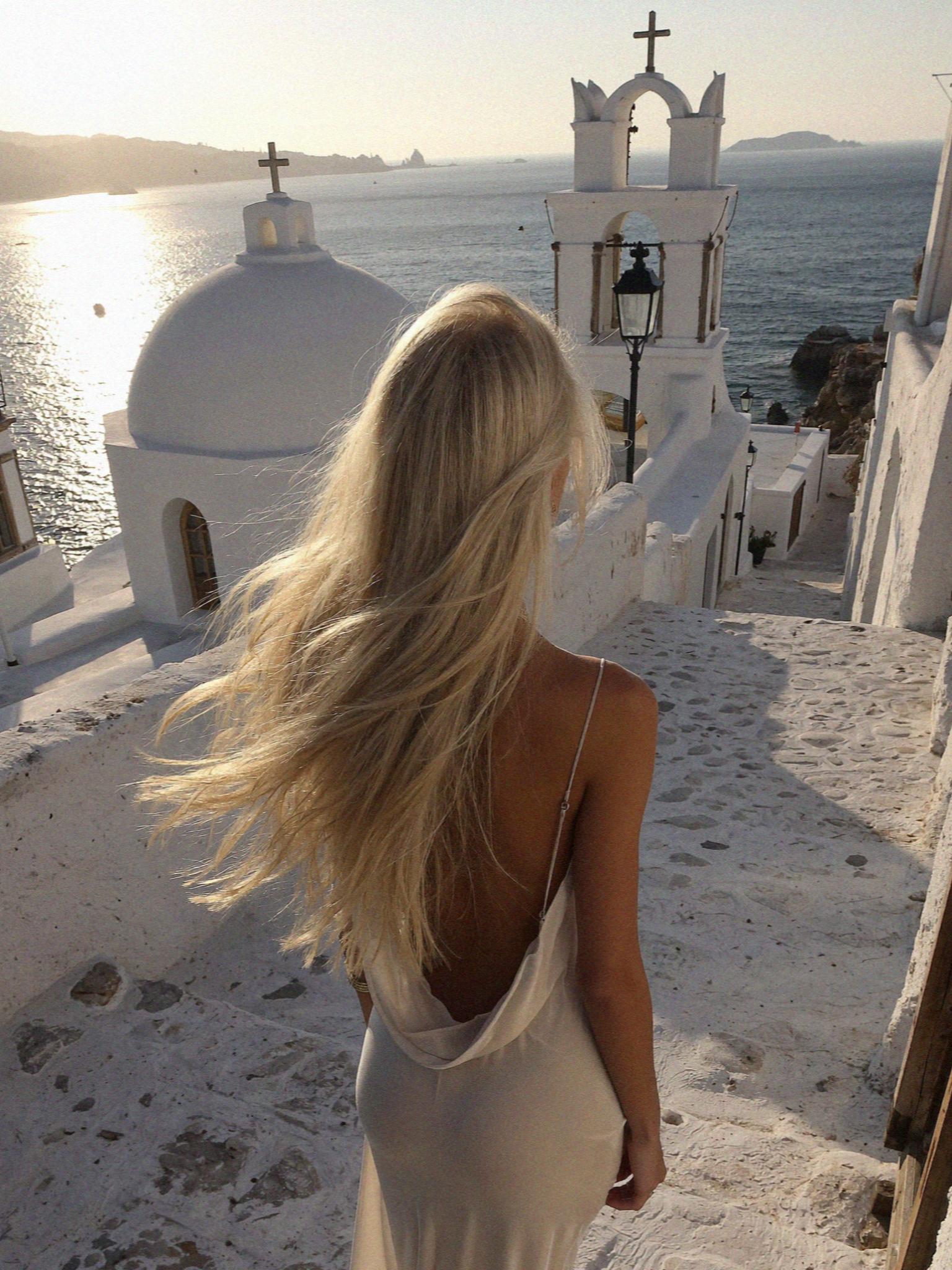
From about eleven until four in high summer the light is hard, white and vertical. It puts black holes under eyes, bleaches whitewash to paper and drains the sea. Nothing on this list is worth doing in those hours except San Montano. Use them properly: eat, swim, sleep, find a garden. Then work the two hours after four and the hour after sunrise.
One more thing, and I feel strongly about it. At the thermal parks and at Sorgeto the people around you are half undressed, often older, often there for their health. A camera changes the temperature of a place like that at once. Shoot wide, with nobody identifiable, or shoot yourself, and put the lens down when anyone is close.
The rest of the island, the walks and the boats, is in my complete guide to Ischia.
Read also: The Best Things to Do in Ischia | The Perfect Ischia Itinerary | The Complete Guide to Ischia
Frequently Asked Questions
Where is the best sunset spot on Ischia?
Santa Maria del Soccorso at Forio. The white church stands on a promontory with sea on three sides and faces due west, so the sun sets into open water in front of you. It is popular, so arrive well before sunset, and stay for the twenty minutes afterwards when the sky holds its colour.
Can you photograph the Castello Aragonese at sunset from Cartaromana beach?
Not really. Cartaromana faces east, so the sun sets behind the hill at your back and the bay falls into shadow early. It is a sunrise spot, and a late-afternoon one before the hill takes the light. For a sunset frame of the castle, use the causeway at Ischia Ponte instead.
What time of day should I avoid photographing on Ischia in summer?
Roughly eleven in the morning until four in the afternoon. The sun is high and the light hard and white, which flattens the tufa, bleaches the whitewash and drains the sea. The exception is San Montano bay, where high sun is what turns the shallow water turquoise.
Is it acceptable to take photos at Ischia’s thermal parks?
Be careful with it. People at Sorgeto and at parks like Poseidon and Negombo are bathing, often for their health, and a camera changes the mood quickly. Keep to wide views with nobody identifiable, or photograph your own group.