Ostuni is easy to reach and slightly awkward to arrive at, and the gap between those two things catches a lot of people out.
The trains are frequent and cheap. The problem is what happens when you step off one. This guide covers getting here, the thing nobody warns you about, and where to go once you are using the town as a base, which is one of the best reasons to stay here at all.
Arriving by train
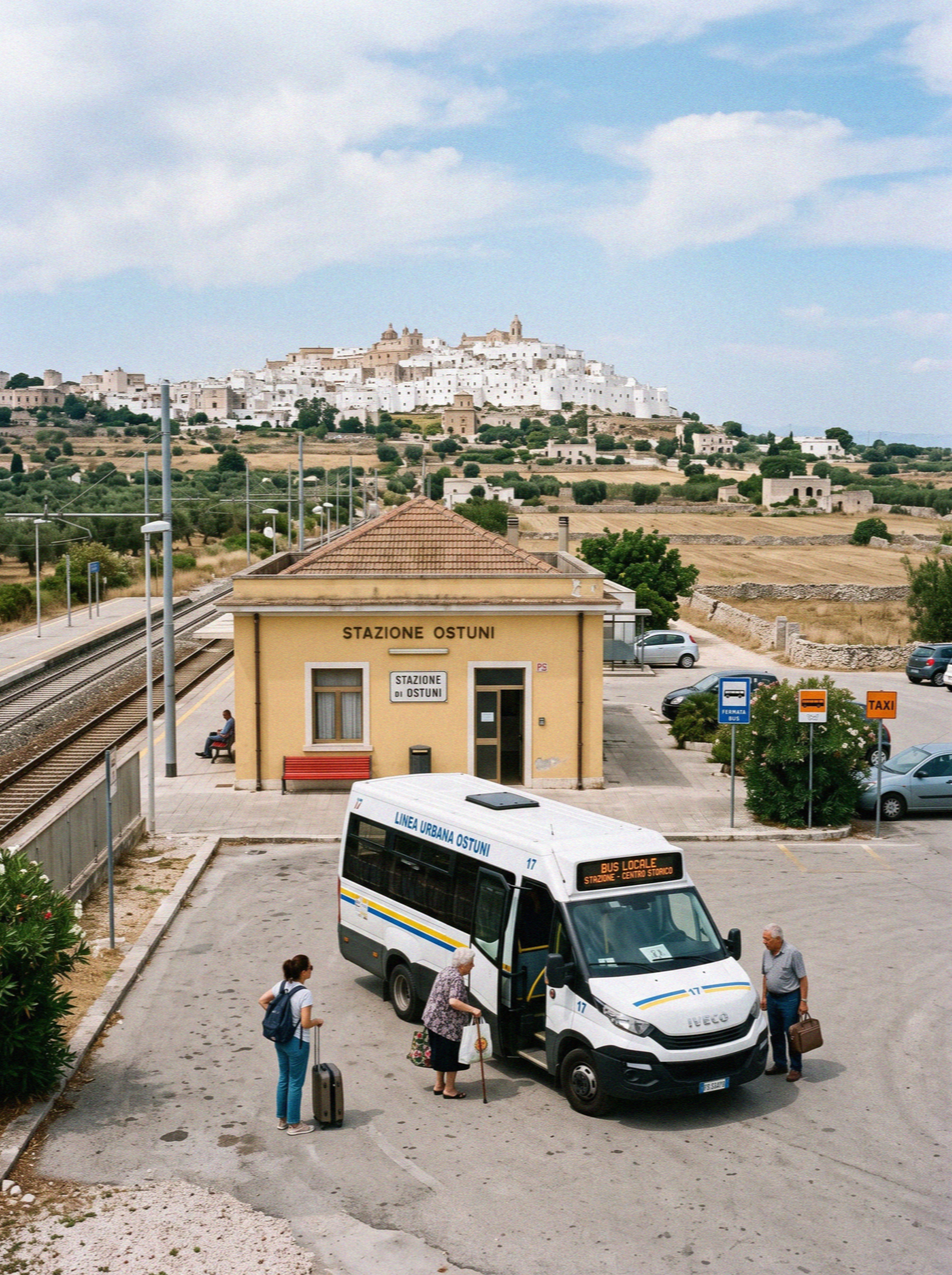
Ostuni sits on the main Adriatic line, so the trains are straightforward.
From Bari Centrale it is about fifty minutes to an hour, with roughly thirty trains a day. From Brindisi it is about twenty minutes further down the same line. If you are flying in, Brindisi airport is the closer of the two, though Bari carries more flights and is usually easier to get a sensible fare into.
Now the thing that matters, which I am putting plainly because I wish somebody had told me: Ostuni station is not in Ostuni.
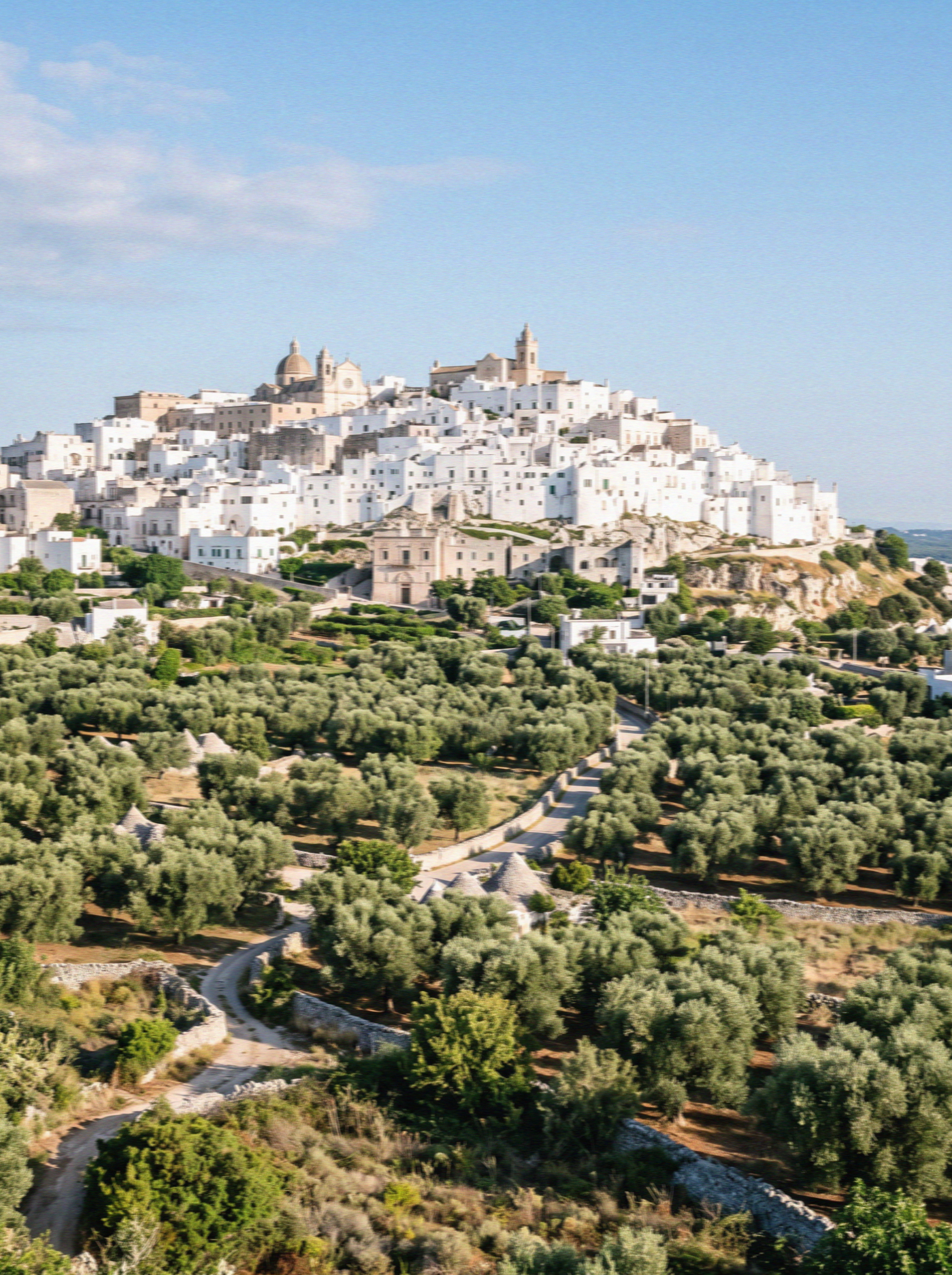
The station sits a few kilometres from the town, down on the plain below the hill. The town is up above you and you can see it from the platform, which makes it feel closer than it is. You cannot reasonably walk it with luggage, and you certainly cannot walk it with luggage in August.
There is an STP shuttle bus that runs between the station and the centre from early morning until late evening. Buy the ticket in the tabacchi inside the station, not on the bus, for about 1.50 euros. The bus generally waits outside when a train comes in, so if you step off and see one, get on it.
Coming back down is the less reliable half. The buses do not always keep to the posted timetable, and a missed connection here means a missed train. Either leave yourself a generous margin, or take a taxi down to the station and stop thinking about it. For the sake of a few euros it removes the only genuinely stressful part of visiting Ostuni.
Arriving by car
Driving gives you the region, which is the main argument for it. The Valle d’Itria and the coast both need a car unless you are committed to buses.
What you must not do is drive into the old town. The historic centre is a ZTL, a limited traffic zone, it is camera enforced, and fines in Puglia run in the region of 80 to 100 euros. The signs are clear and the cameras do not care that your hotel is inside.
Park below and walk up:
- Parcheggio Ex Foro Boario is the one to aim for. Spacious, usually has room even in high season, around 4 euros for the whole day, and seven to ten minutes on foot from the historic centre.
- Parcheggio Via Tenente Specchia is a smaller lot closer to the ZTL boundary, about five minutes out.
If you are staying inside the walls, ask your accommodation before you arrive exactly where to leave the car and how far you will be carrying bags, because the old town is stepped and the answer is sometimes further than you would like.
The Valle d’Itria
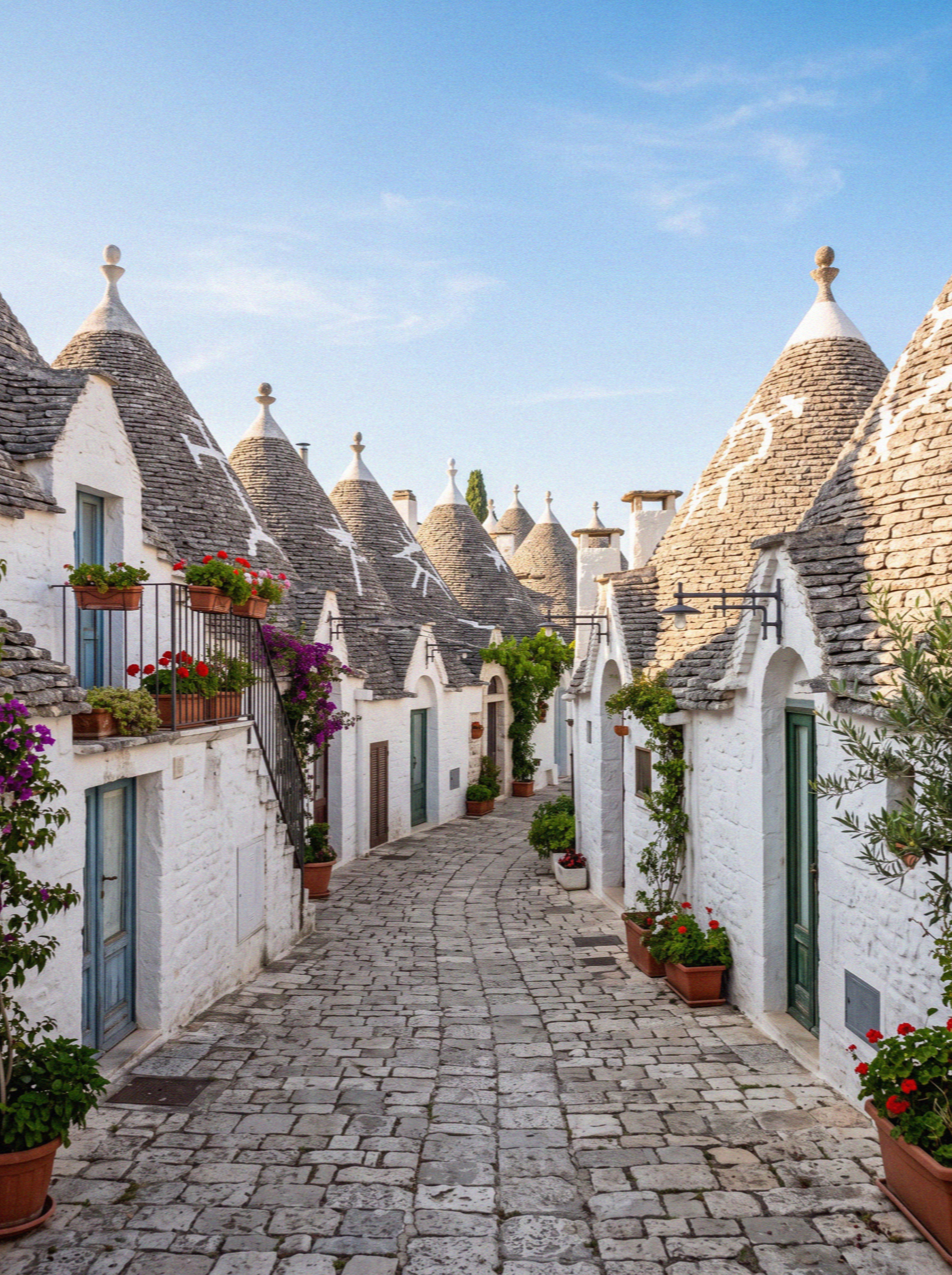
This is the reason Ostuni makes such a good base. The white towns of the Itria Valley sit close together inland, and the driving times between them are short enough that two or three in a day is relaxed rather than a route march.
Alberobello is the famous one, about 43 kilometres and roughly 45 minutes by car. It is the town of trulli, the conical dry-stone roofed houses, and there are enough of them concentrated in two districts that it has UNESCO protection. It is also the busiest place in the valley by a wide margin, so go early or go late.
Locorotondo is 9 kilometres and about 10 minutes from Alberobello. Round in plan, as the name suggests, whitewashed, and considerably quieter than its neighbour.
Martina Franca is another 6 kilometres and 10 minutes on. This is the baroque one, with a grander and more theatrical old town than anywhere else on the circuit.
Cisternino closes the loop. The run from Martina Franca back through Cisternino to Ostuni is about 32 kilometres and 40 minutes.
Nothing on that circuit is more than twenty or thirty minutes from the next thing. A comfortable day is two towns and a long lunch. An ambitious day is three. Four is a mistake.
Polignano a Mare
The other day trip I would make time for is up the coast rather than inland.
Polignano a Mare is a cliff town built out over sea caves, with a pebble cove wedged into a ravine at its centre and the whole old town standing on an overhang above the Adriatic. It is a completely different proposition to Ostuni, which is white and inland and calm, and the contrast is what makes the pair work.
Go early. The cove there fills by nine in high season and the town is at its best before the day visitors arrive, which is the same advice as for Ostuni and for much the same reason.
I have written it up in full in the complete guide to Polignano a Mare.
The coast below Ostuni
Not really a day trip, since it is ten minutes away, but worth naming here because visitors arriving by train often assume the sea is out of reach without a car.
It is not. The beaches below town run from Pilone, about six kilometres out and backed by dunes, through the rocky coves of Costa Merlata, to the protected reserve at Torre Guaceto roughly twenty minutes up the coast. In summer there are bus services down to the coast, though as with the station shuttle, check the return times rather than assuming.
Frequently Asked Questions
How do you get from Bari to Ostuni?
By train from Bari Centrale on the Adriatic line, about fifty minutes to an hour, with roughly thirty services a day. Brindisi is about twenty minutes further along the same line and is the closer airport.
Is Ostuni station in the town?
No, and this is the most common surprise. The station is a few kilometres away on the plain below the hill town. An STP shuttle bus runs between the station and the centre from early morning to late evening, with tickets around 1.50 euros from the station tabacchi. The return service is less reliable, so allow extra time or take a taxi down.
Can you drive into Ostuni old town?
No. The historic centre is a limited traffic zone, camera enforced, with fines in Puglia in the 80 to 100 euro range. Use the Ex Foro Boario car park at around four euros a day, seven to ten minutes on foot from the centre.
How far is Alberobello from Ostuni?
About 43 kilometres, roughly 45 minutes by car. From Alberobello, Locorotondo is 9 kilometres and Martina Franca another 6, so several Valle d’Itria towns combine easily in one day.
What are the best day trips from Ostuni?
The Valle d’Itria circuit of Alberobello, Locorotondo, Martina Franca and Cisternino, all within twenty to thirty minutes of each other. Polignano a Mare up the coast is the other strong option and makes a good contrast, being a cliff town over the sea rather than a white town over olive groves.
Do you need a car in Ostuni?
Not for the town itself, which is walkable and closed to traffic. You need one for the Valle d’Itria and it makes the beaches much easier. Without a car you can still reach Ostuni by train and shuttle and enjoy the old town fully.
Read also: an Ostuni itinerary, the best beaches near Ostuni, and the complete guide to Ostuni.