Nothing here happens by accident. There is no harbour at the end of the street and no ferry to drift onto, so a day outside the walls is a day you commit to the night before, and you leave early, because by two in the afternoon in summer nobody in the Salento is doing anything ambitious.
What the city does have is position. It sits between the Adriatic and the Ionian, near enough to both that either coast is a morning’s work, and the towns worth the trip are spread around it in a loose ring rather than strung along one road. That is the practical case for sleeping in Lecce, which I make at more length in the complete guide to Lecce.
One warning before the list, because it changes plans. The train reaches three of the towns below and none of the coast. The local line is the FSE, Ferrovie del Sud Est, separate from the Trenitalia services that end at Lecce. Slow, cheap and perfectly pleasant. Otranto and Gallipoli are both on it, and so is Galatina, which sits on the Gallipoli line and is the closest of the three. What the train will not do is get you to Santa Maria di Leuca, or to a beach, or reliably let you string two towns together in an afternoon on a thin timetable. Combining is mostly a car thing.
Otranto
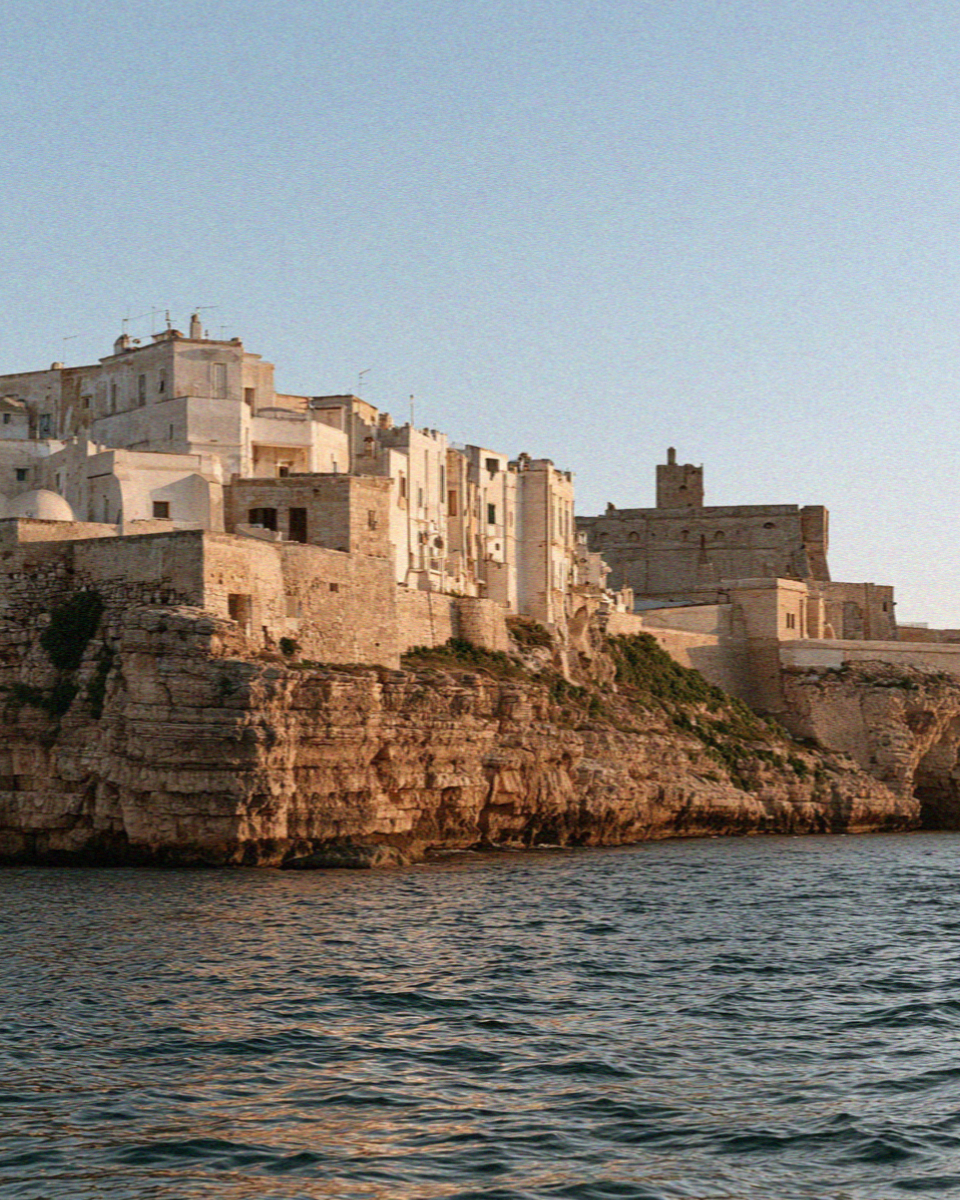
The easternmost town in Italy, and the one I would choose if you only take a single day trip. About 1h40 by FSE, often with a change at Maglie, or about 45 minutes by car.
Otranto is small, walled, whitewashed and built hard against the water, and the old town takes very little time to cross. Which means the morning goes to the two things that earn the journey and you are still down by the harbour before lunch.
The first is the cathedral floor. A 12th-century mosaic, the tree of life, running the length of the nave in one continuous composition of animals, figures and months of the year, far stranger than the phrase “medieval floor mosaic” prepares you for. You walk along the edge of it and look down. Give it longer than you think.
The second is the chapel of the martyrs in the same building, which holds the remains of the townspeople killed when Otranto was besieged by an Ottoman force and fell, in the summer of 1480. Around eight hundred men who refused to convert were beheaded on a hill above the town; the church canonised them in 2013. The bones are arranged behind glass, and some people find it difficult. It is the reason the town remembers itself the way it does, and I would not skip it.
Beyond those there is the Aragonese castle and the walls, and the coast immediately north, where Baia dei Turchi puts pine trees down to the water. Half a day for the town, a full day with the beach.
Gallipoli
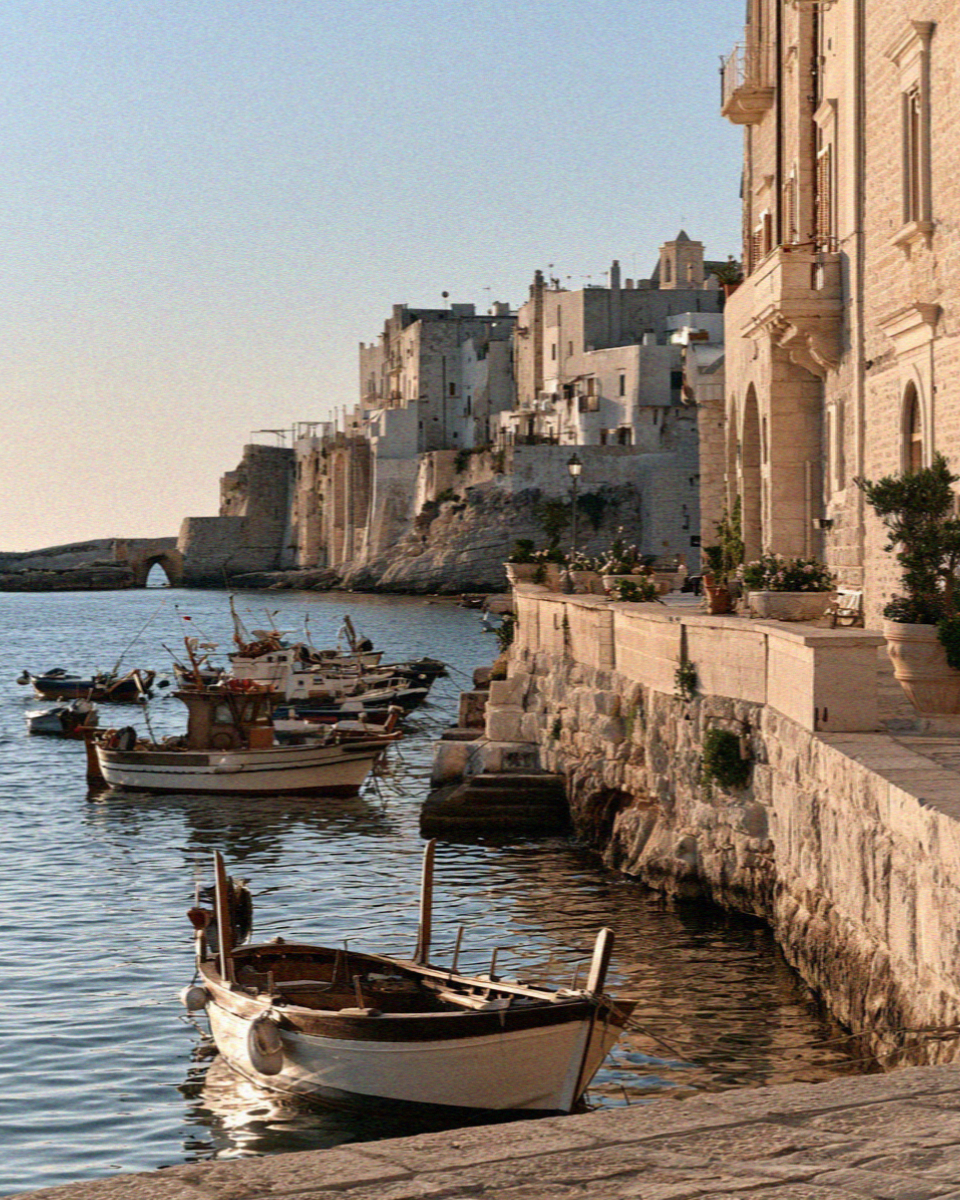
The Ionian answer to Otranto, and a completely different animal. About 1h20 by FSE, or about 40 minutes by car.
The old town sits on a small island joined to the modern town by a bridge, an unusually clean piece of geography: you cross the bridge and you are somewhere else. Inside it is dense, low and lived in, a working fishing port with a baroque cathedral in the middle worth going into even after a week of Lecce facades. Walk the sea wall right around the outside of the island. It is the best thing there.
The complication is what surrounds it. The beaches immediately south, Baia Verde, Punta della Suina and Lido Pizzo, are why a great many people come, and in August the town’s character bends toward them. Want the old town, go early and give it the morning. Want the beach, that is a separate day. Doing both in August mostly means sitting in traffic during the afternoon you had planned to swim in.
Galatina
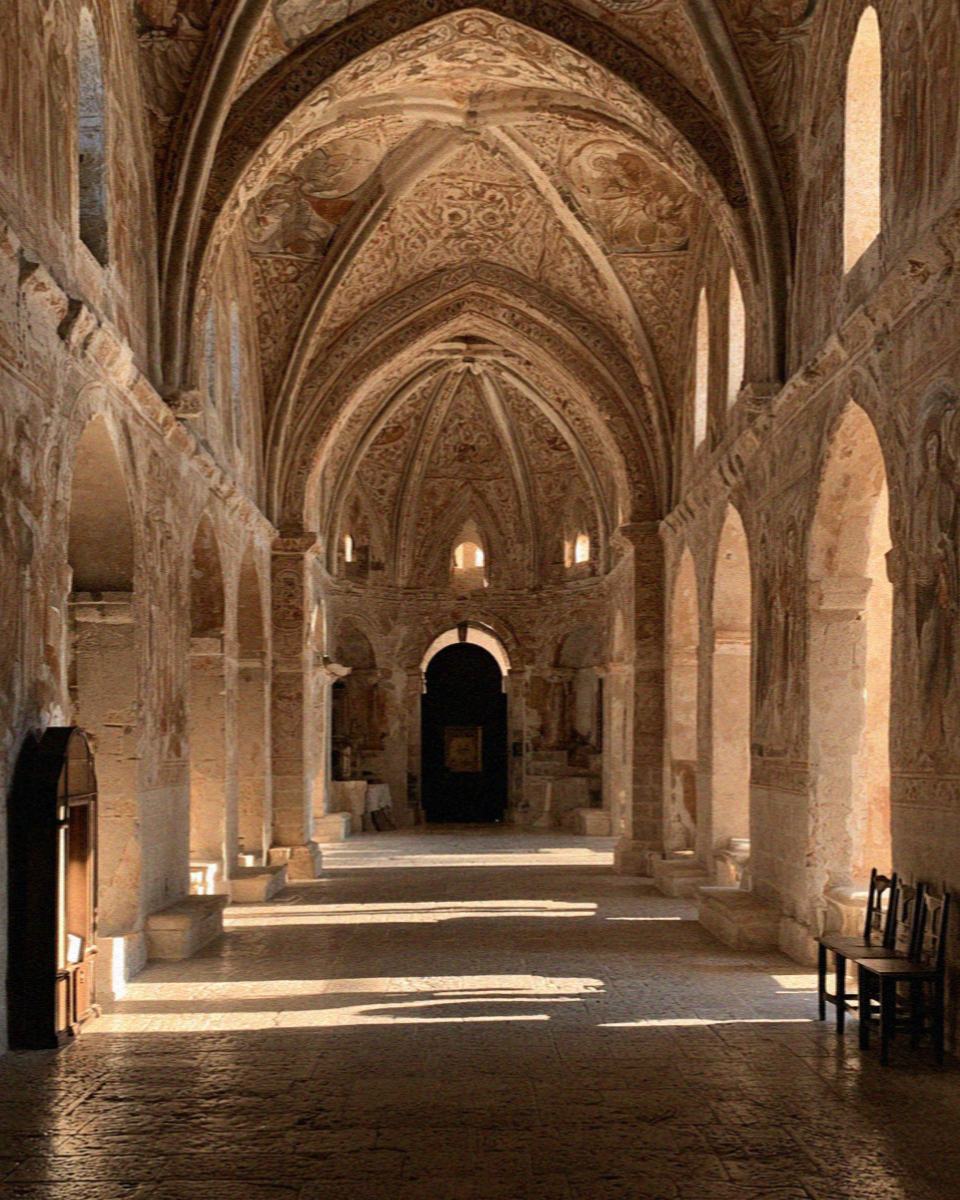
The one most visitors miss, and the one I would push hardest. About 30 minutes inland by car, which makes it the easiest of these to fold into a half day. It is also on the FSE line to Gallipoli, so of the three towns on the railway it is the shortest ride from Lecce.
The Basilica di Santa Caterina d’Alessandria is entirely frescoed. Not partly, not in the apse, not one restored chapel. Walls, vaults and arches, the lot, in a 14th and 15th century cycle compared to Giotto’s work at Assisi that does not embarrass itself in the comparison. After the carved limestone of Lecce, all surface and shadow, stepping into a cool dim room painted floor to ceiling in faded colour is a genuine shift. It is also quiet most of the year, which in this region in summer counts.
Galatina is the historic home of tarantism as well, and that is not folklore packaged up for visitors. The old belief held that a spider’s bite threw a woman into a state only music could break, danced out of her over hours or days, and Galatina was where the afflicted were brought. The music is the pizzica, fast and repetitive and relentless, and the direct ancestor of what the region now dances every August. Which brings us to the next entry.
Santa Maria di Leuca
The tip of the heel, at the bottom of the peninsula, where the Adriatic and the Ionian meet. There is no useful train, it is the longest of these drives, and it deserves a full day rather than an afternoon.
What is there is a lighthouse on the headland, a small harbour, and a seafront of grand old villas, each built to a different idea of what a villa should be and none of them shy about it. Walking that promenade is the point of coming, more than any single building on it. Add the Ionian coast just along from it, where Pescoluse sits, the very shallow, very pale stretch marketed as the Maldives of the Salento, and you have a real day out.
Leuca is about arriving at the end of something rather than a list of sights. Want your day dense, take Otranto.
Melpignano and the Notte della Taranta
Melpignano is a small village with no reason to appear in a day trips article for most of the year. Once a year it has an overwhelming one.
The Notte della Taranta runs across the Salento’s villages through mid to late August, and the finale is held at Melpignano on the last Saturday of August. Pizzica, all night, with a reported crowd of over 100,000. This is the tarantism of Galatina turned into the region’s largest cultural event, and in that fortnight it is the most interesting thing happening in Puglia.
Two honest caveats. It is not a day trip in any ordinary sense: it is a night, it ends very late, and the journey back needs settling before you leave. And it falls in the hottest, busiest part of the year, days around 31 to 34°C with overnight lows near 19 to 20°C, so it does not cool much after dark. It sits within days of the Festa di Sant’Oronzo in Lecce, around 24 to 26 August, which makes that fortnight either the best or the worst time to be here. The trade-off is set out in the best time to visit Lecce.
The one you cannot swim in
If you drive to Otranto, the coast road passes Roca Vecchia and the Grotta della Poesia, the limestone sinkhole open to the sea that you have almost certainly seen photographed with someone mid-air above the water.
That photograph is out of date and every guide still running it is wrong. Since 18 July 2026 the Roca Vecchia archaeological area is ticketed at €5 for non-residents, and swimming, bathing and diving are prohibited, actively, with signage throughout and no authorised way down to the water. The reasons given are visitor numbers, the ancient inscriptions and medieval remains, and the risk of the crag collapsing. Go and look, because it is remarkable, and go knowing that looking is all you will do.
The four-town organised tour
You will see Otranto, Santa Maria di Leuca, Gallipoli and Galatina sold as a single organised day tour. Here is what that actually is.
It is a very long day. Those four points sit at roughly the four corners of the Salento, and the driving takes most of the hours. What you get at each stop is a walk through the centre, the one headline sight and a coffee. What you do not get is a morning in Otranto with the mosaic to yourself, the sea wall at Gallipoli, or time inside the basilica at Galatina, which are the reasons those towns are on this list at all.
With one day and no car it does the job efficiently. With three days, take three towns, one per morning, and come back in the afternoons.
Frequently Asked Questions
Can I do day trips from Lecce without a car?
Partly. The FSE regional line reaches Gallipoli in about 1h20 and Otranto in about 1h40, and fares are low, from a few euros. Galatina is on the Gallipoli line too, and closer than either. Santa Maria di Leuca is not on the network, none of the beaches are usefully served, and stitching two towns together on a thin timetable is where the train starts to cost you the day. That part needs keys.
Which day trip should I take if I only have one?
Otranto. About 45 minutes by car or 1h40 by train, and the cathedral’s 12th-century floor mosaic and the chapel of the martyrs genuinely earn the journey. A morning covers the old town without rushing, and Baia dei Turchi is close by for the sea.
Is Galatina worth going out of the way for?
Yes, and it is the most underrated stop here. The Basilica di Santa Caterina d’Alessandria is frescoed from floor to vault in a 14th and 15th century cycle often compared to Giotto’s at Assisi, about 30 minutes inland by car and on the FSE line to Gallipoli if you would rather take the train. Galatina is also the historic home of tarantism and the pizzica, which pairs it neatly with the Notte della Taranta.
Can you still swim at the Grotta della Poesia?
No, not since 18 July 2026. There is a €5 charge for non-residents now, the site is run as archaeology rather than a swimming hole, and there is no authorised way down to the water. It is a place you go to look at. Most guides, and most of Pinterest, still show people jumping in and are out of date.
Is the four-town organised tour worth it?
It depends what you want. Those four towns in one day means most of the day is spent driving, and each stop becomes a short walk and a coffee rather than a visit. Reasonable with one day and no car. With more time, take them one per morning.
For the coast rather than the towns, the two seas and the driving times between them are in the best beaches near Lecce, and airports, the FSE line and hiring a car are covered in getting to Lecce and around the Salento. Everything else sits in the complete guide to Lecce.