Lecce is inland, and that single fact decides most of what follows. There is no sea breeze to take the edge off four in the afternoon, no water to step into when the light goes hard. The city sits on the flat of the Salento, built almost entirely of pietra leccese, a soft limestone that takes the day’s heat and hands it back long after dark. In late July that is not a decorative observation. It is the thing that will rearrange your day whether you planned for it or not.
The nearest coast is San Cataldo, and everything else worth swimming at is twenty to forty minutes away by car at the closest, an hour at the furthest. So Lecce in summer is a city you leave in the middle of the day and come back to in the evening, which is fine if you have a car and know that going in, and much less fine if you do not. The rest of the practical picture, the hotels and the churches and the two coasts, sits in my complete guide to Lecce.
What follows is month by month, and I have tried to be straight about it rather than encouraging.
The short answer
Late April to June, and September into October. Those are the months when the air sits somewhere around 22 to 26°C, when you can walk the old town at two in the afternoon without planning an escape, when the churches are open late and the coast has woken up but not filled. If you have any freedom at all in your dates, take one of those windows and stop reading.
If you do not have that freedom, the rest of this is for you.
Spring and early autumn
April starts cool and ends properly warm. The last week of the month is the beginning of the good stretch. The churches move onto their long summer schedule on 1 April, opening 9am to 9pm rather than 9am to 6pm, which sounds administrative until you realise it gives you the whole evening inside the Basilica di Santa Croce and the Duomo rather than a rushed hour before six. The coastal businesses are still stirring at this point, and some of them will not be open at all.
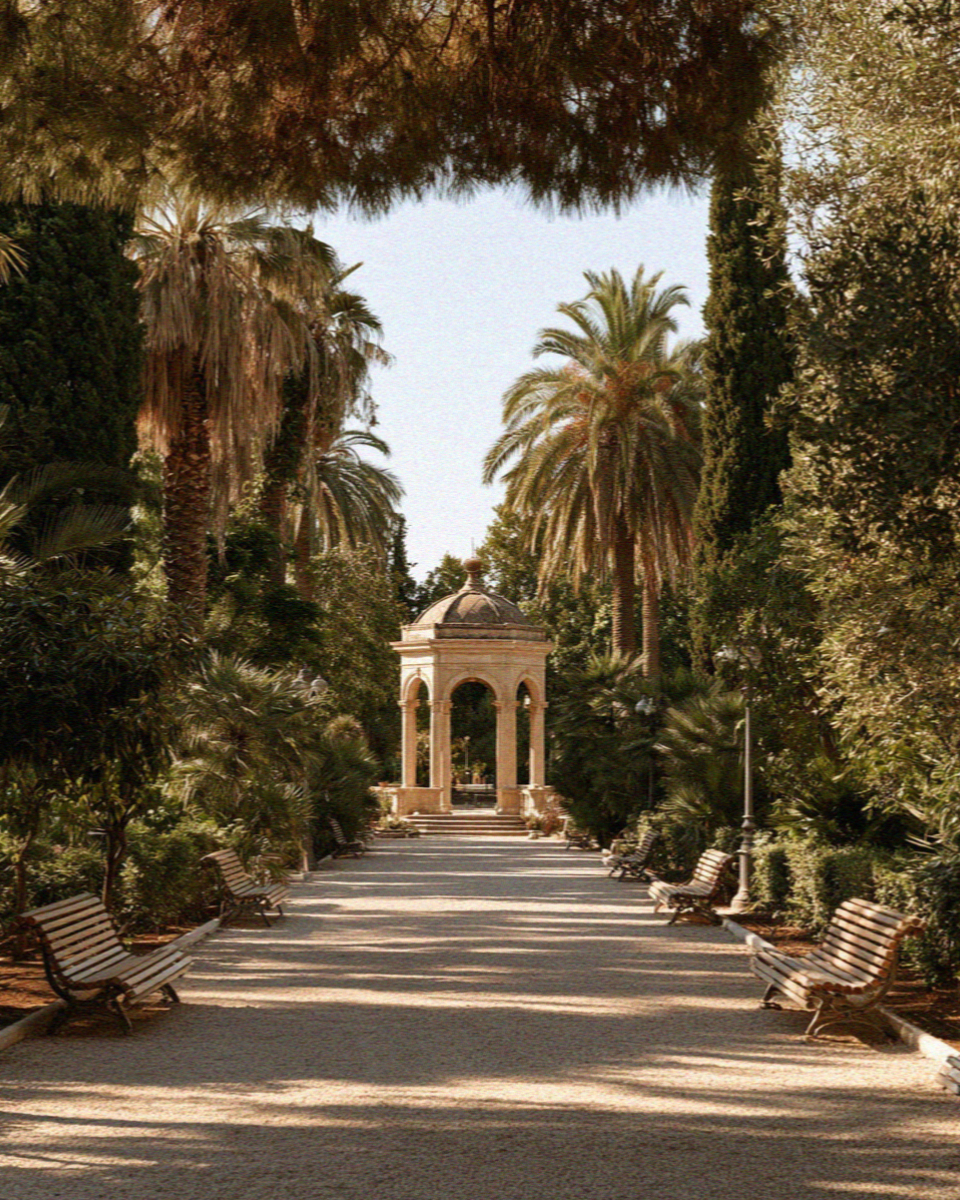
May is the month I would pick if someone made me choose one. Warm without effort, long light, the Giardini Pubblici Giuseppe Garibaldi behind Santa Croce full of shade you do not yet need. The lidos on both coasts are opening. The sea takes longer to warm than the air does, so a May swim is bracing rather than luxurious, but the beaches are yours.
June is the last comfortable month before the summer proper. Hot in the middle of the day, still manageable, and the coast is at its best: open, staffed, and not yet at August prices for a sunbed and an umbrella. By the end of the month the shape of a day is starting to change, and you begin doing the old town early.
September is May’s mirror and in some ways better, because the sea has had all summer to warm up. The crowds thin steadily through the month. The churches stay on the 9am to 9pm schedule until the end of September, then drop back to 9am to 6pm on 1 October, so if evening light inside Santa Croce matters to you, come before the switch.
October is quiet, mild and often lovely, with the caveat that the coast begins closing around you. Lidos shut, seasonal restaurants in the beach towns shut, and by the end of the month a drive to Punta Prosciutto gets you a beautiful empty dune and nowhere to buy a coffee. The city itself is entirely unaffected and rather wonderful.
July, and the shape of a hot day
July is hot and effectively rainless. Highs run around 31 to 34°C and the peak comes mid-month. What people underestimate is the night: overnight lows sit around 19 to 20°C, so the city does not properly cool down between one day and the next. Air conditioning stops being a preference somewhere around the tenth of the month.
This is workable, and thousands of people work it every year, but only by giving up the idea of a continuous day. The old town from seven until about eleven, then a caffè leccese, espresso poured over ice with almond syrup, which exists precisely because of this weather. Then indoors: the churches on the LeccEcclesiae ticket, the Museo Faggiano with its excavated layers, the vaulted rooms of a palazzo hotel. Out again from six.
The other July fact is that the Salento coast is busy from the first week onward, and the parking at the popular beaches involves a walk and a few euros before you have even seen the sea. If your plan is a beach every day, July will deliver it. If your plan is Lecce itself, July will fight you for the middle of every day.
August, and whether to risk it
August is July with more people and two of the best nights in the southern Italian calendar, and I do not think there is a clean recommendation to be made here. There is a trade-off, and you should make it knowingly.
The heat is the same as July’s, holding in the low thirties, with the same warm nights. The coast is at its fullest and its most expensive. Some of the city’s own restaurants close for their own holidays, which catches people out.
Against that, two things happen.
Notte della Taranta runs across the Salento villages through the middle and end of the month, a festival of pizzica, the Salento’s own dance, played all night. The finale is at Melpignano on a Saturday late in August, the exact date moving from one year to the next, and draws crowds reported at over 100,000. It is not a discreet folk evening. It is an enormous field of people dancing to a tambourine rhythm that the region has been playing for centuries, and it is genuinely one of the reasons to be here rather than somewhere else.
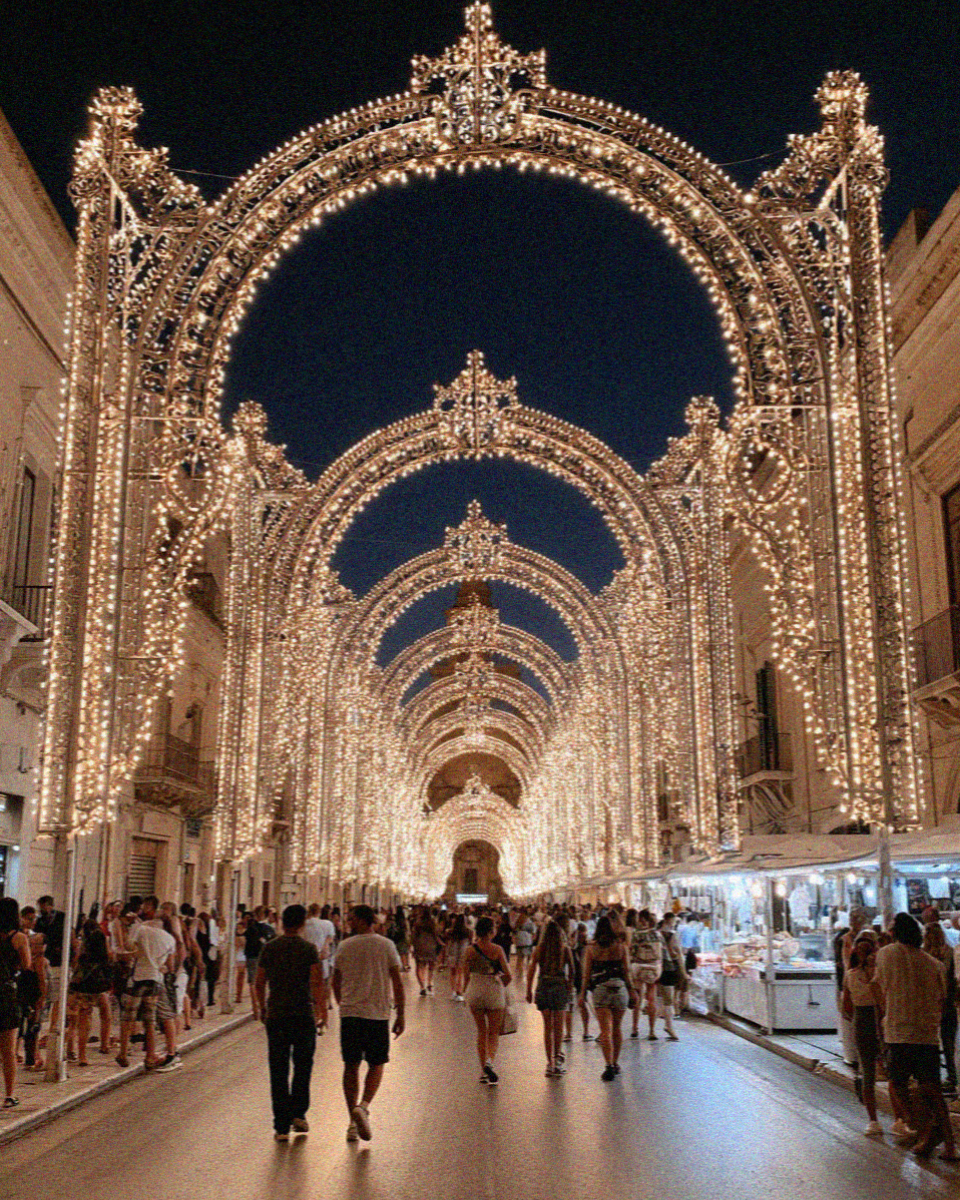
Festa di Sant’Oronzo, for Lecce’s own patron saint, falls around 24 to 26 August: three days of processions, stalls, fireworks and the illuminated arches that go up over the streets and turn the whole centro storico into something between a cathedral and a fairground.
So both of the year’s best events land inside the hottest, busiest fortnight. If you are coming for the festivals, come for the festivals, book early, accept the heat and do not expect to also have a quiet baroque city to yourself. If you are coming to see Lecce, come in May or September and know you have missed them. Trying to do both in one trip is how people end up disappointed by both.
November to March
Winter in Lecce is mild rather than cold, and very quiet. This is the season nobody writes about, which is exactly its appeal and also its limitation.
The city works. The churches are open, on the 9am to 6pm schedule, and the shorter hours are the main practical loss: an early winter dusk plus a six o’clock close means the interiors need to be done in daylight, and you cannot leave Santa Croce until after dinner the way you can in June. The trattorias are open, the pasticcerie are turning out pasticciotti warm at eight in the morning, and the old town on a bright cold day, with the low sun coming down the lanes at an angle it never manages in summer, is a real pleasure.
The coast, on the other hand, is shut. Most seasonal businesses in the beach towns close, and a winter drive to the sea is a walk on an empty shore rather than a day out. The inland day trips still work: Galatina and its frescoed basilica, Otranto for the cathedral floor, both fine in January.
There is also the Fòcara di Novoli, an enormous bonfire in a village north of Lecce, built through the first half of January and lit on the 16th for the feast of Sant’Antonio Abate, after which it burns for three days. If your trip falls in January it is worth planning around.
Frequently Asked Questions
What is the best month to visit Lecce?
May and September are the two strongest months. Both give you air temperatures around the low to mid twenties, long evenings, open coastal businesses and the churches on their late 9pm summer closing. September has the warmer sea, May has the fresher city and the gardens at their best.
How hot does Lecce actually get in summer?
Highs of roughly 31 to 34°C through July and August, peaking around the middle of July, with effectively no rain. The important number is the overnight low, which stays around 19 to 20°C, so the limestone city does not cool down much between days. Plan the old town for early morning and after six, and keep the middle of the day indoors or on the coast.
Is it worth visiting Lecce in August for the festivals?
It is a genuine trade-off rather than a straight yes. Notte della Taranta, with its Melpignano finale on a Saturday late in the month, and the Festa di Sant’Oronzo around 24 to 26 August are both excellent. Check the finale date before booking, because it moves. They also fall in the hottest and most crowded fortnight of the year, with accommodation at its peak and some city restaurants closed for their own holidays. Come for the festivals or come for the city, not both.
Can you visit Lecce in winter?
Yes, and the city itself is at its quietest and most livable. The churches shorten to 9am to 6pm from 1 October to 31 March, so interiors have to be done in daylight. The coast largely closes: most seasonal beach businesses shut for the winter, though inland day trips like Galatina and Otranto still work well.
When do the beaches near Lecce open?
The lidos on both coasts come to life through May and are fully running by June. October sees them closing again, and by winter almost nothing on the coast is trading. If a beach day is central to your trip, June or September are the safest bets either side of the July and August crush.
Everything else about the city sits in my complete guide to Lecce. If you are coming in the heat, the day I have built around it, old town early and coast or shade at midday, is set out hour by hour in a Lecce itinerary for two to three days, and the two coasts you will be escaping to, and how far each one actually is, are in the best beaches near Lecce.