Lecce is small enough that you could walk past every headline sight in one morning, and hot enough that trying to do so in July would spoil the trip. In high summer the highs sit around 31 to 34C, the nights fall back only to about 19 or 20, and it does not rain. By nine in the evening the walls are still warm to the palm.
So this is not a list of sights in a sensible geographic order. It is a day shaped around temperature. Old town early, indoors or in deep shade through the middle, out again from six, when the shutters go up and the squares fill. Get that rhythm right and two days is enough for the city.
A third day turns this into a Salento trip rather than a Lecce one, and it goes one of two ways, the coast or a town inland. Both are below, and the wider picture sits in my complete guide to Lecce.
Morning: the old town before it wakes
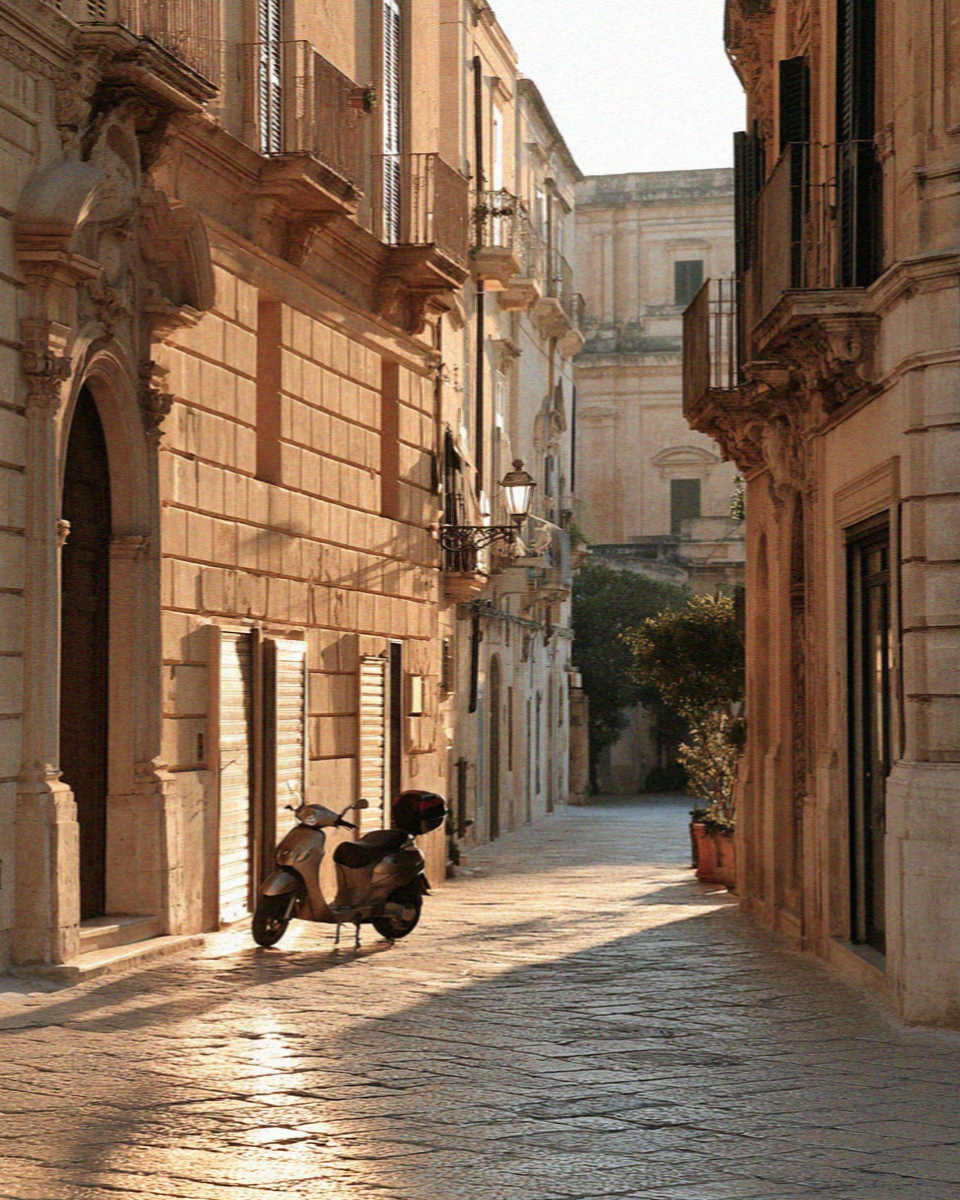
Seven o’clock to nine. This is the hour the old town is yours. The lanes are in shade, the temperature is bearable, delivery vans are the only traffic, and nobody is standing in front of anything you want to look at.
Do not plan it. Walk. The centro storico is compact and almost impossible to get properly lost in, and the pleasure of the first hour is turning corners without an aim.
Two things to aim at while it is quiet. Piazza del Duomo is closed on three sides and reached through a single gap, so an early visit gets you the whole of it to yourself with nobody crossing the frame. And Piazza Sant’Oronzo, where the Roman amphitheatre sits below the modern pavement, in a hole in the middle of the square. About a third of it is uncovered, the rest still under the buildings around it, and it was only found in the early 1900s. About 102 metres by 82, holding twelve to fourteen thousand on the ministry’s own figure. Ten minutes at the railing, or a few euros and an hour to go down inside, which has been possible again since it reopened in October 2025. Going down is the part to check in advance: the hours are seasonal, they run to the afternoon and evening in summer rather than the morning, and it closes on Mondays. The railing is there whenever you are.
Mid-morning: pastry and coffee
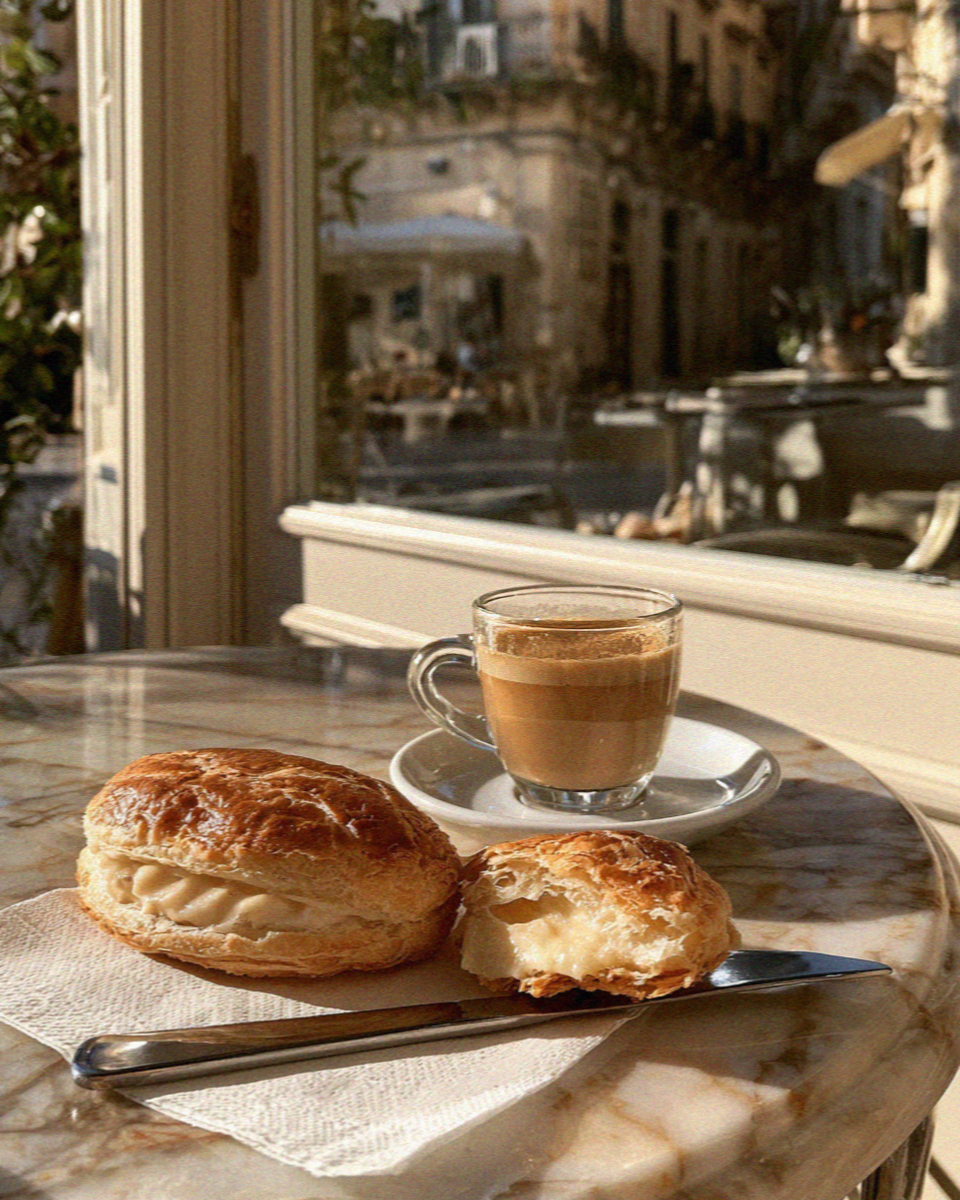
Nine to eleven. Breakfast is a pasticciotto, a small oval shortcrust shell with warm pastry cream inside, eaten warm and standing up. Caffè Alvino on Piazza Sant’Oronzo is the traditional address, reckoned to be the oldest café in the city. Natale is the other name you will hear.
Around eleven, locals switch to a rustico, a disc of puff pastry filled with béchamel, tomato and mozzarella, straight from the oven at the bar. If you are still full, order a caffè leccese instead, espresso poured over ice with almond syrup. It is not a tourist drink, it is what people here do about the heat, and by day two you will be having two a day.
Late morning: the churches, on one ticket
Eleven to one. Use the shade of the interiors while the sun is at its worst.
Six sites run on one LeccEcclesiae ticket, €11 for an adult, €5 between 12 and 17, €24 for two adults with children. Any of the three ticket desks will sell you one, or buy ahead online. The hour that matters for this itinerary is the close: 9pm in the summer half of the year, 6pm from October, last entry a quarter of an hour before either.
The fifteen day validity is what makes this itinerary work: one visit per site, spent whenever you like, so two churches a morning across two mornings beats six in a row. Do check what you are wearing before you set out, because shoulders, knees and hats are all ruled on at the door and they do turn people away. On a 33 degree day the answer is sleeves in a bag, not a walk back to the hotel.
Santa Croce deserves the time. Begun in 1549 and not finished until 1646, it is what most people have actually travelled here to stand in front of, and it does not give itself up in one look: a rose window over a wall of animals, figures and foliage that keeps producing something you missed. Stand across the street rather than under it. The Duomo campanile is worth going up if you have the time, though it is a separate ticket from the six-site one. On a clear day you can see to the Adriatic.
The long afternoon: indoors, or not moving
One to six. This is the part most itineraries pretend does not exist. In summer the old town empties, the shutters come down and the light goes flat and punishing. Fighting it wastes a day.
Lunch long. Le Zie Trattoria Casereccia is the one to book, family run and cooked the way a grandmother cooks, with a door that has to be opened for you. Trattoria Nonna Tetti and Alle Due Corti are the other two traditional rooms, the latter with its menu in dialect. Order ciceri e tria, chickpeas with pasta where part of the pasta is fried and the rest boiled, so it arrives with two textures in it.
Then pick one shaded thing and do nothing else. Museo Faggiano, €5, open daily from half past nine, exists because a family digging to fix a plumbing problem in the early 2000s went down through Messapian, Roman and medieval layers and never really stopped. Otherwise a cartapesta workshop, papier-mâché having been worked here since the 1700s by a trade the barbers started. Or the Giardini Pubblici Giuseppe Garibaldi behind Santa Croce, laid out in 1830, with real shade. Or your hotel and a shuttered room. There is no shame in the shuttered room.
Evening: the passeggiata
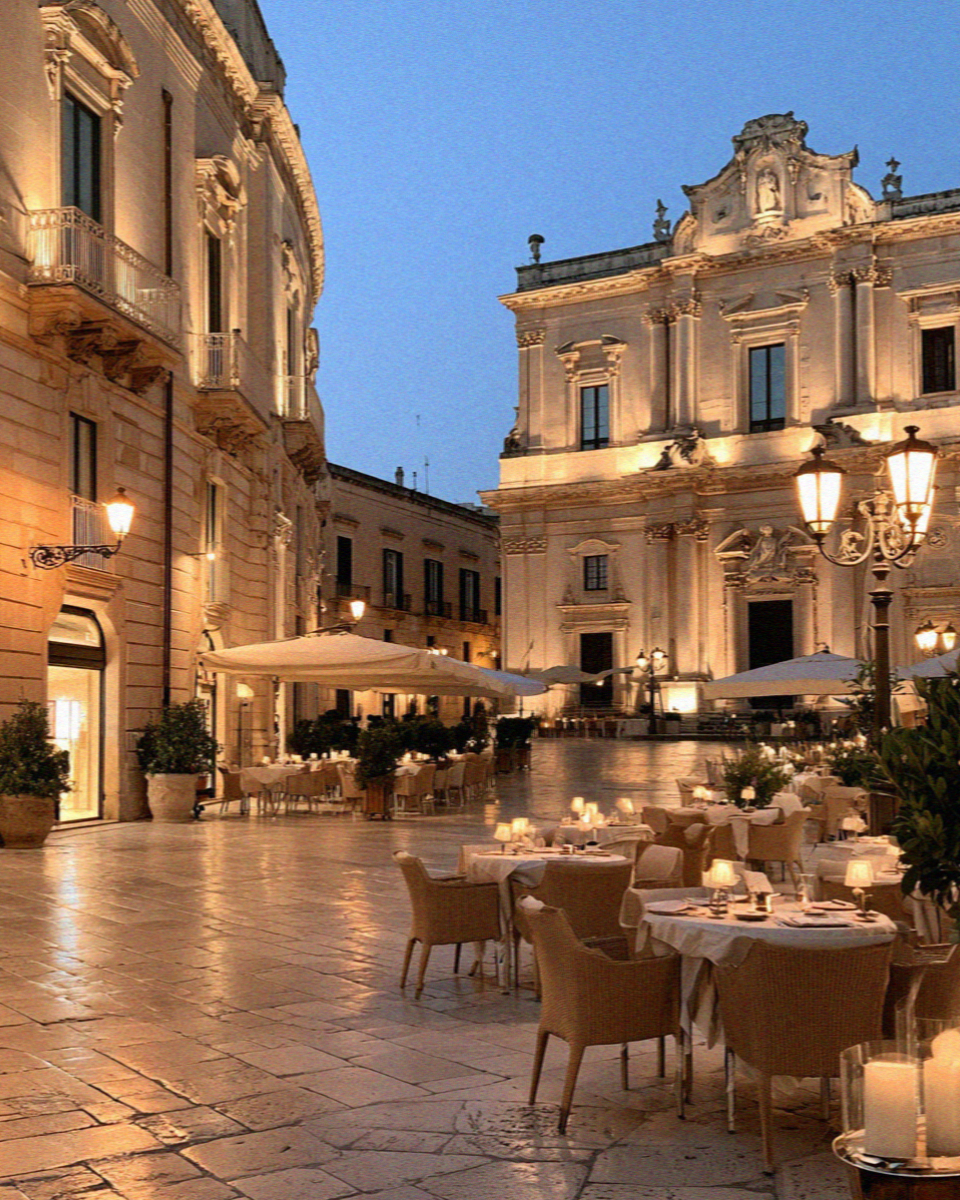
Six until late. The city comes back. Shutters lift, the squares fill with families and groups of older men who clearly meet here every evening, and the temperature drops just enough to be pleasant.
Aperitivo first. Mamma Elvira is the wine bar to start at: ask for a Negroamaro, the Salento’s own grape, rather than defaulting to Primitivo. Then walk the old town again in artificial light, a different city from the one you saw at seven in the morning, the carving thrown into hard relief by the floodlights. Dinner starts late. Nine o’clock is normal and nobody will hurry you.
Day two, hour by hour
Same shape, different contents.
Early: the streets you missed, and Piazza del Duomo again, because the enclosed square changes completely with the angle of the light.
Mid-morning: the second half of your church ticket, since it is still valid. Santa Chiara, San Matteo, the Antico Seminario cloister.
Late morning: the Castello di Carlo V, the sixteenth century fortress on the edge of the old town, the largest castle in Puglia, which also houses the papier-mâché museum. It opens Wednesday to Sunday, so this part of day two does not work on a Monday or a Tuesday.
Afternoon: the Roman theatre, smaller and quieter than the amphitheatre, then lunch and the garden again.
Evening: a puccia, the filled bread roll people eat standing up, if you want something lighter than dinner, then whichever square you liked best. The ranked version of all this is in my guide to the best things to do in Lecce.
Day three, option one: the coast
Lecce has no beach of its own. It sits between two seas and belongs to neither, which is exactly why it works as a place to sleep.
You need a car. This is the single most useful thing in this article: the timetables that serve the sand are seasonal and thin, and a beach day assembled out of them will be mostly waiting. San Cataldo, Lecce’s own local seaside, is closest. Torre dell’Orso on the Adriatic and Torre Lapillo or Porto Cesareo on the Ionian are all roughly 20 to 40 minutes. Pescoluse, near the tip, is about an hour.
Choose your sea. The Adriatic side is rockier and more dramatic, sea stacks and low white cliffs. The Ionian is pale fine sand and water so shallow you can walk out a long way. Both are in the best beaches near Lecce.
One warning, because the pictures you have seen are out of date. Grotta della Poesia at Roca Vecchia went behind a €5 gate for non-residents on 18 July 2026, and the water is now off limits, with no authorised way down and the ban actually policed. Go to look at it, not to jump into it.
Day three, option two: a town, not a beach
Three obvious alternatives, and two are reachable by train.
Otranto, the easternmost town in Italy, is about 1 hour 40 on the FSE regional line or 45 minutes driving, with a whitewashed old town on the sea and a twelfth century cathedral floor mosaic. Gallipoli, on the Ionian side, is about 1 hour 20 by FSE or 40 minutes by car, its old town on an island joined to the mainland by a bridge. Galatina is only about 30 minutes inland, on the same FSE line as Gallipoli, and gets skipped by nearly everyone, which is a mistake: the Basilica di Santa Caterina d’Alessandria is frescoed floor to vault in a fourteenth and fifteenth century cycle, and it is the home of tarantism and the pizzica.
Pick one. Tour operators sell all of them in a single day and it is far too much. More is in the best day trips from Lecce.
Frequently Asked Questions
Is two days enough for Lecce?
For the city itself, yes. Two days at the pace above covers the amphitheatre, the churches on the combined ticket, a museum and two proper evenings without rushing. A third day buys you the Salento, and that is the day most people wish they had added.
What should I do in Lecce between one and six in the afternoon in summer?
As little as possible outdoors. Highs of 31 to 34C are normal in July and August and the old town genuinely empties. Take a long lunch, then choose one shaded or indoor thing: Museo Faggiano, a cartapesta workshop, the Giardini Pubblici, or a shuttered hotel room. Walk before nine and after six.
Do I need a car for a three day trip to Lecce?
Not for the city, which is walkable and where the centro storico is restricted to traffic anyway. For the coast, effectively yes, because the bus service to the beaches is seasonal and infrequent enough that a day built on it is mostly spent at stops. If your third day is Otranto, Gallipoli or Galatina instead, the FSE regional trains will do it without a car.
Can you still swim at Grotta della Poesia?
No. A €5 charge for non-residents came in on 18 July 2026 and the whole Roca Vecchia site is now managed as archaeology rather than a swimming spot, with no authorised way down to the water and the rule enforced on the ground. Almost every picture you have seen of people jumping in predates that.
Once you have the shape of the days, the rest is detail: what to see and in what order is in the best things to do in Lecce, the month by month case for coming at all is in the best time to visit Lecce, and the whole city sits together in the complete guide to Lecce.