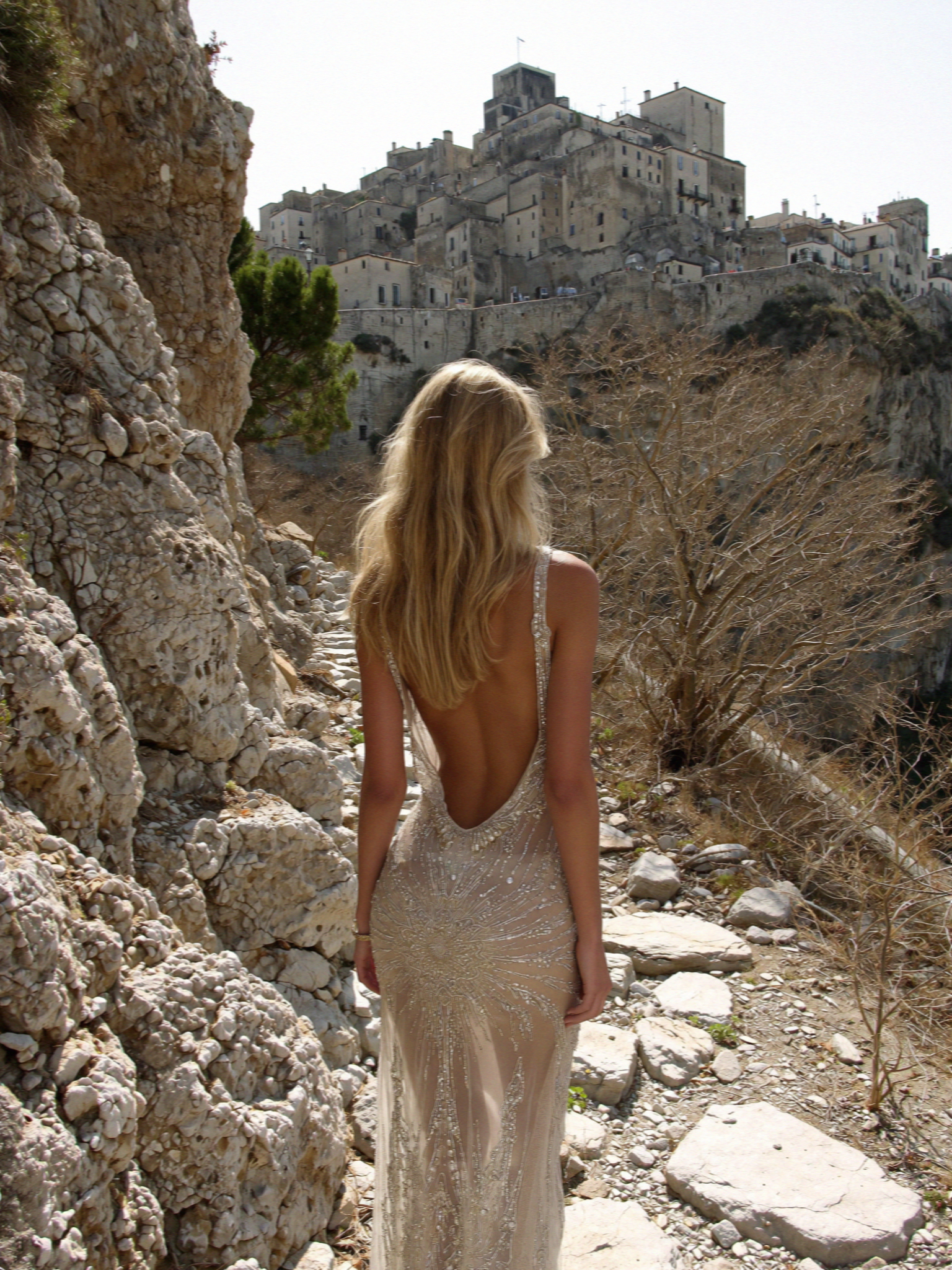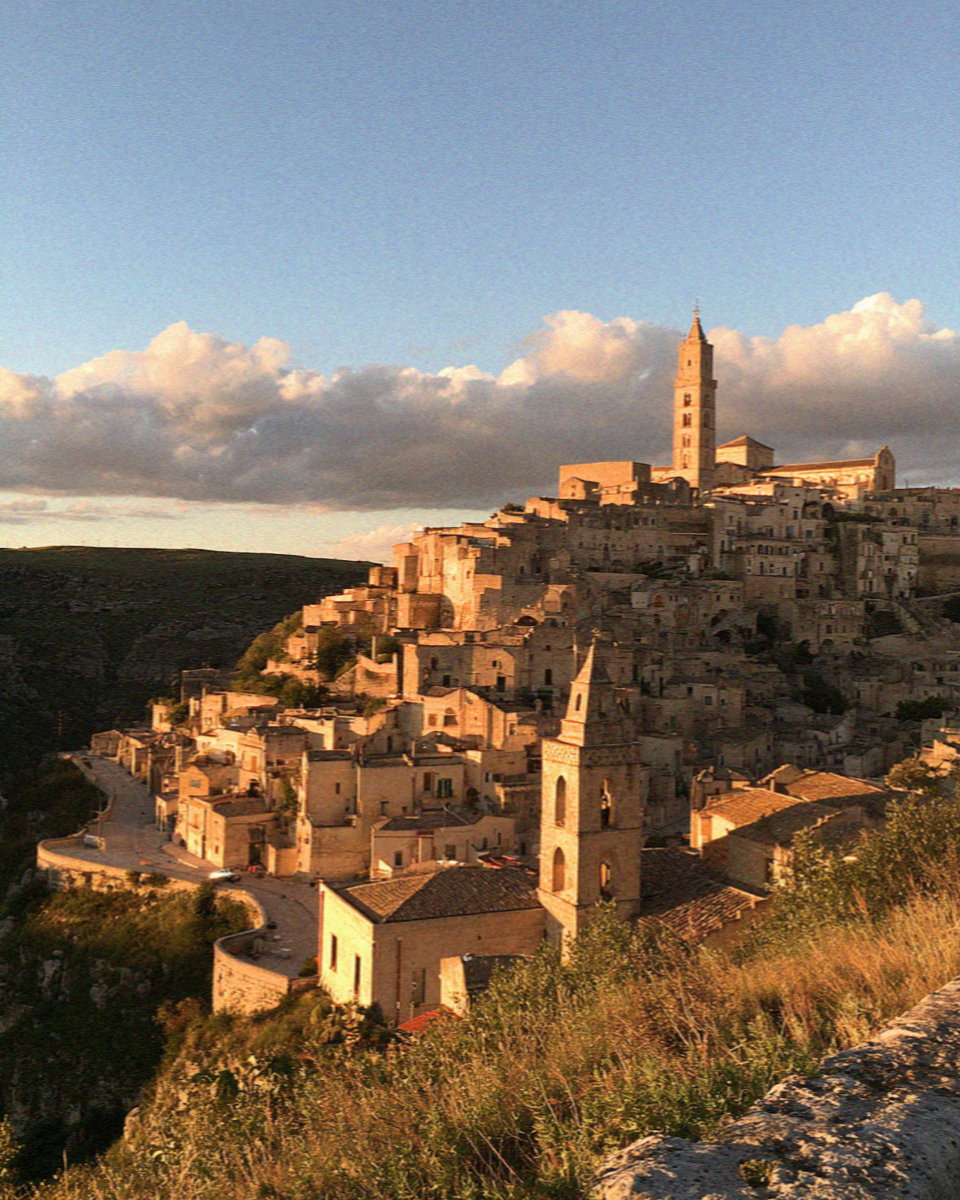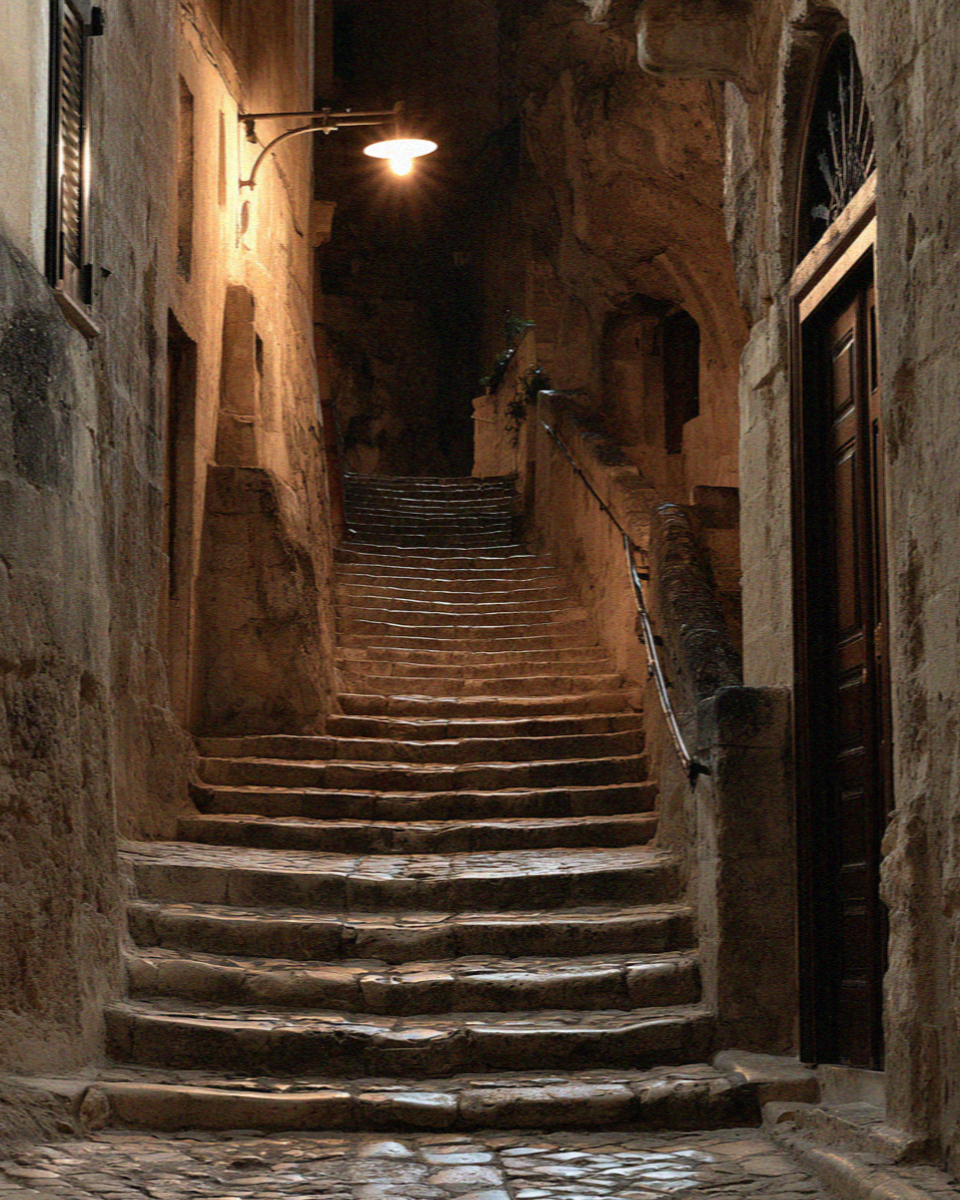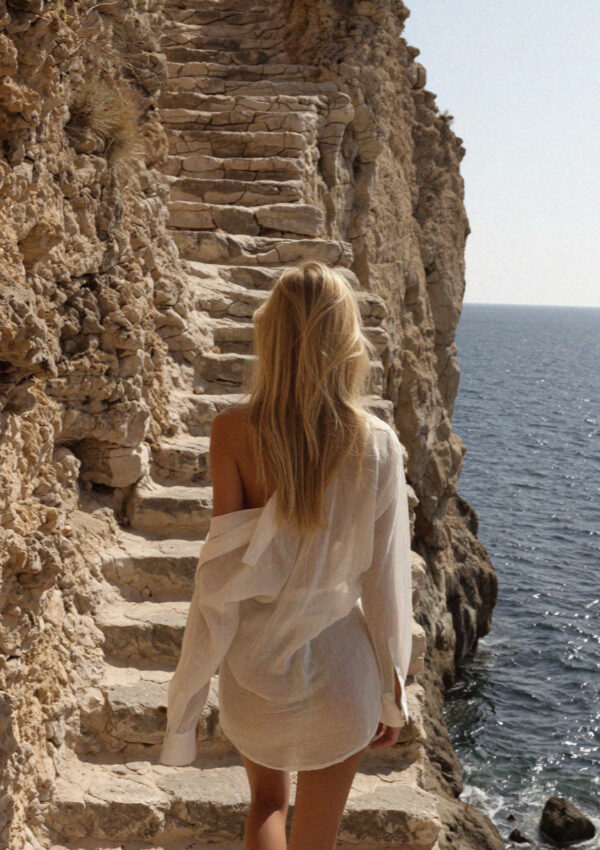
There are two summers here and they do not touch.
One of them is the old town in the morning. Honey stone, and shutters going up, and a boy carrying a tray of something across a square at an angle that suggests he is late. The other is the coast, which is blue and white and has no opinions at all.
I spent three days going between them and thought I would eventually have to choose.
I did not choose. What happened instead is that the road between them turned out to be the part I keep thinking about.
The practical version of all this, the ferry times and the tickets and where to actually eat, is in my complete guide to Lecce. This is the other thing.
The first summer is made of stone.
Breakfast is a pasticciotto and it has to be warm. Shortcrust, about the size of a small boat, filled with pastry cream that is still soft in the middle. Nobody here treats this as a treat. It is eight in the morning and men in work clothes are eating them standing up, in two bites, the way you would eat a piece of toast.
Then caffè leccese, which is espresso poured over ice with almond syrup. It is not a tourist drink and it is not a dessert. It is what you have when it is going to be thirty-four degrees by eleven and you need the coffee anyway.
The town itself is almost too much.
Every doorway has something carved above it. Faces, mostly. Fruit and foliage and lions and then, without warning, a stone man over an archway with his mouth open, roaring at a street that has been ignoring him for four hundred years. I stood under him for a while. He is very good. He is also completely wasted on the two of us, him and me, at that hour, on that street, with nobody else there.
There is a particular oddness to a city this ornate being this ordinary. Women buying tomatoes under it. A dog asleep against a plinth that took someone a year.
By half past eleven the light goes hard and flat and the town starts to close itself, and you understand that you are meant to leave.
The second summer is made of water.
East is twenty minutes and then you are somewhere with a different weather.
The Adriatic here is not the soft shallow turquoise of the other coast, the Ionian side, where the sand is pale and the water stays at knee height for what feels like a hundred metres. This side is rockier and clearer and colder and more dramatic about itself. White limestone. Small bays with two sea stacks standing off them, called the Two Sisters, which is the sort of name people give a thing when they have looked at it for a very long time.
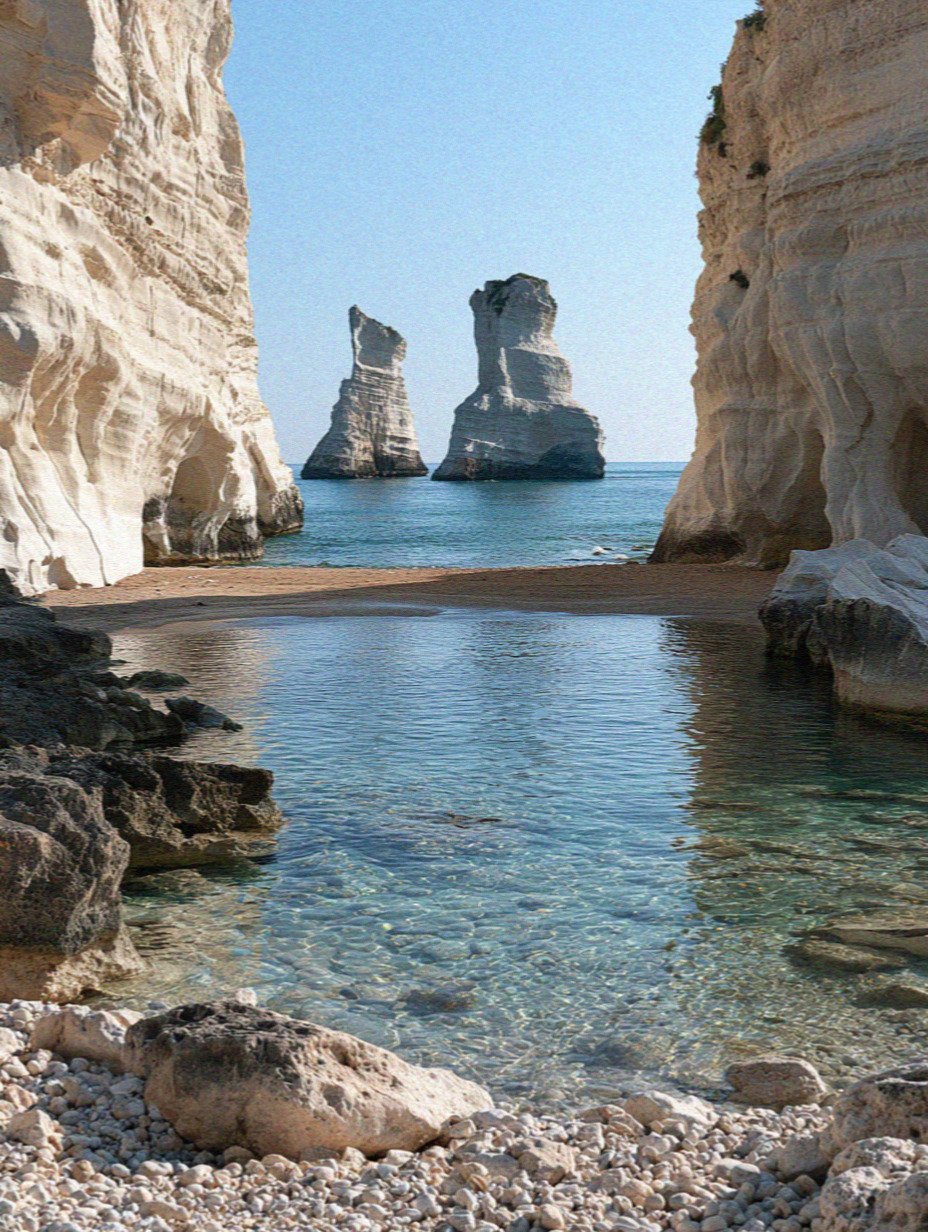
That side is for looking at. It is rock and white cliff, the water goes dark and deep almost immediately, and it is the more photographed of the two coasts by a wide margin.
For swimming I went the other way, and I went early.
Seven in the morning on the Ionian side, which in August is the only honest way to do it. Pale sand, low dunes, water about the temperature of a bath that stays at waist height for what feels like a hundred metres. There was almost nobody on it. Two people at the far end with a dog. A man raking the sand in front of a lido that had not opened yet.

You do not really swim in that water. You stand about in it. I stood about in it for an hour, and then came out and lay down and did not think about anything, which is not a thing I am good at. The salt dried on my arms and made them feel like paper. There was sand in places I kept finding for two days.

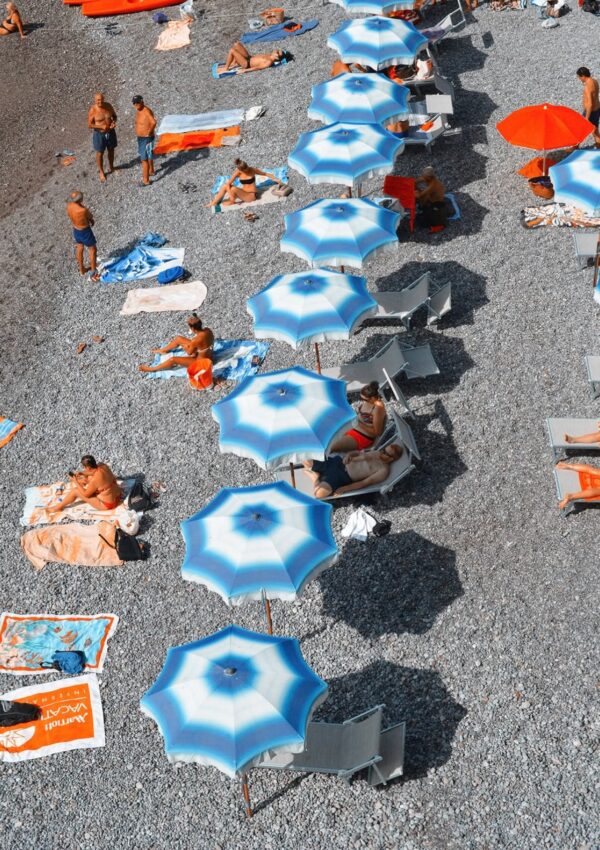
By ten it was a different beach entirely, and that is the part that does not go in the photograph. Umbrellas in rows from the car park to the water. The lido music on. Towels going down on every free stretch of sand, families who have plainly had the same square metre every August for thirty years, a man carrying four sun loungers at once.
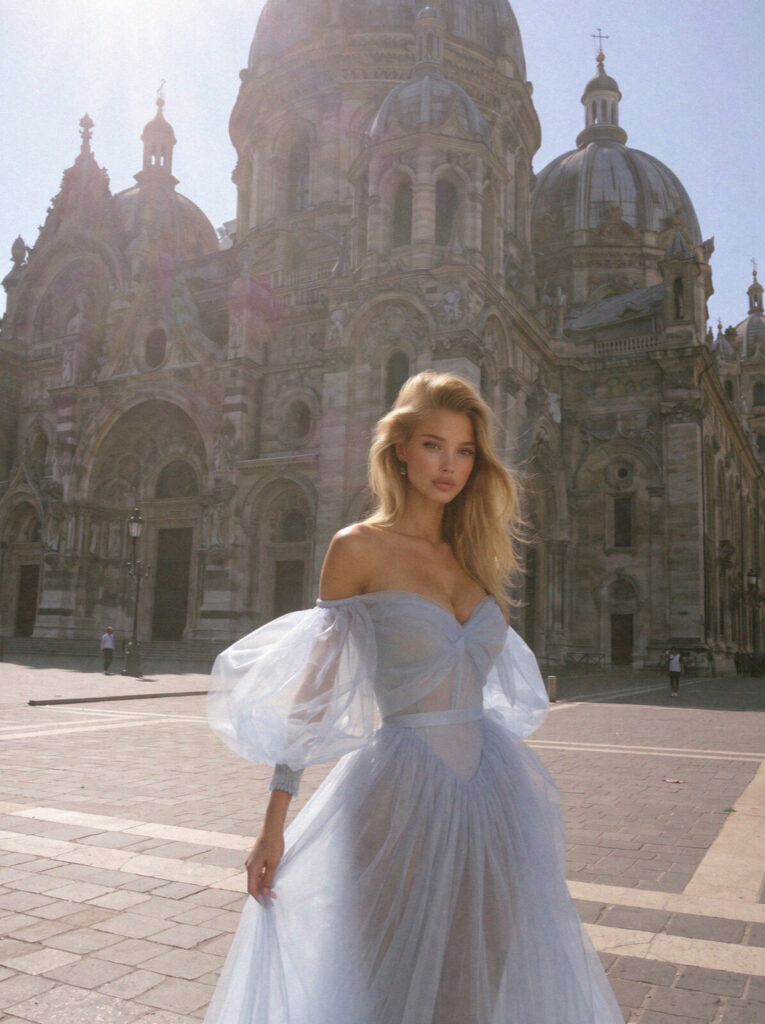
I should say this plainly, because the pictures will not. My photographer cannot stand a stranger in the background, or a footprint in sand he has decided is clean, and he shoots narrowly enough that he can leave me alone on a beach with four hundred people on it. Other mornings he wants precisely the opposite and takes all of it, the loungers and the radios and the man carrying four sun beds, because he says that is the day too.
Both are honest. Only one of them is the whole beach.
By eleven the sand was not walkable. The last twenty metres to the water have to be crossed at a run, on your toes, in a way that has no dignity in it whatsoever, and everybody does it, and everybody arrives at the sea making the same noise.
I left as it filled up. I like both coasts. I am suspicious of people who only like one.
Further up the coast there is a hole in the rock where the sea comes in underneath, a round pool open to the sky with old carved letters somewhere down in it. Grotta della Poesia. You could once climb down and swim in it and everyone did, and there are ten thousand photographs of exactly that.
You cannot now. It is an archaeological site, it costs five euros to go in, and you look at it from above.
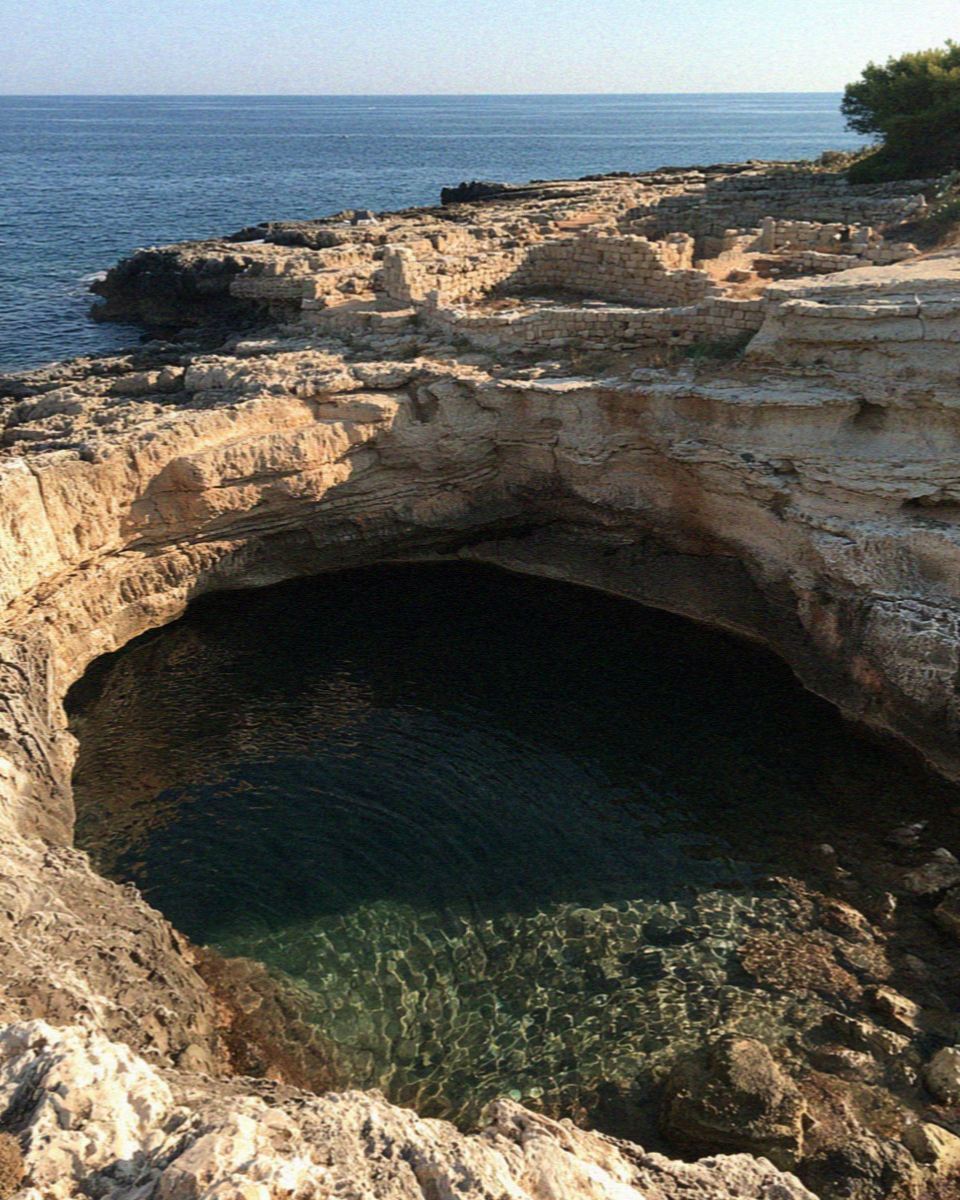
I want to be honest that I minded for about a minute. Then I stood at the rail and watched the water turn over in it, green and then not green, and thought that a place being closed to me is not the same as a place being ruined.
Some things get looked at instead of used. That seems fair, at four thousand years old.
Here is what I did not expect.
The drive from the town to the sea is twenty minutes of olive country, and most of the olive trees are dead.
Not cut down. Standing. Grey and bare and enormous, thousands of them, in rows, with their trunks still doing that slow twisted thing that takes three hundred years and their branches holding nothing at all. It is called Xylella. It arrived near Lecce in 2013 and it has killed something like twenty-one million trees in the Salento. This province was where it started.
You come around a bend expecting a postcard and you get a field of standing skeletons instead, going all the way to the horizon, in beautiful evening light, because the light does not know.
And then in among them, young trees. Small ones, planted in tight new rows, a different variety that the disease does not take as easily. About three million so far, which sounds enormous and is not, against twenty-one.
And then, sometimes, one that lived.

A big one, behind a dry stone wall, green and heavy and ordinary, with the red earth underneath it and the wall doing what dry stone walls do, which is stand there without anything holding them together. Nobody has put a sign on it. It is just a tree that is still alive in a place where most of them are not.
I got out and looked at it for a while.
My grandmother’s house is stone, in the south of France, and there are fields around it with goats in them. I have never once wondered what those fields have lost.
I went back into the town at seven, when it opens again, and had a glass of Negroamaro and watched the same thing I watched the night before, which is several thousand people being extremely well dressed and completely unbothered about who is watching.
The two summers are still two summers. The morning one and the water one. I do not think they are meant to be reconciled.
But you have to drive through the third thing to get from one to the other, and the third thing is not pretty, and it is the only part of the three days that has stayed with me all week.
Nobody photographs it. I understand why.
I would go back for it.
V.
More from Lecce