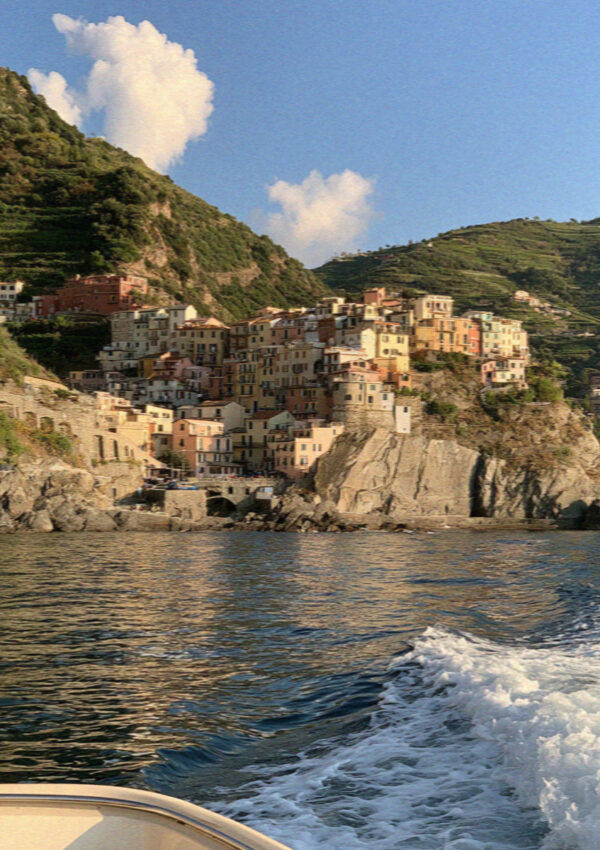
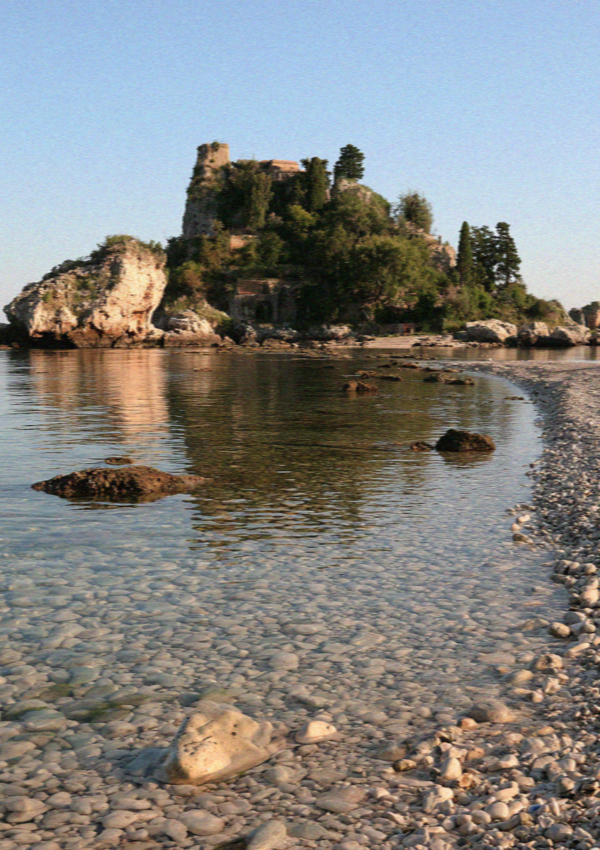
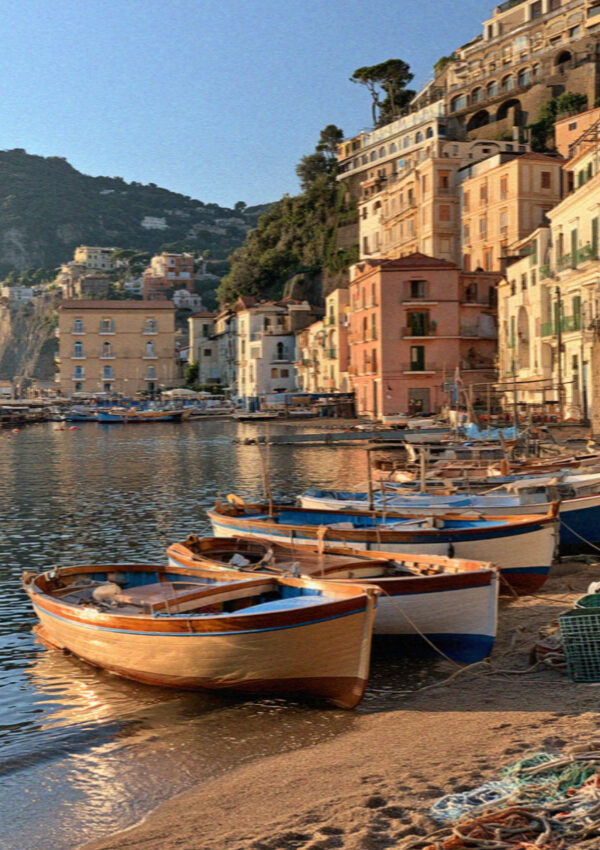
The gentlest part of Corsica, and the easiest to love on a first trip.
The Balagne was once called the garden of Corsica, and the shape of it explains why: mountains close behind, a fertile strip of olive and fig terraces below them, and then a coast of long sandy bays. Everything is close together, which after the driving distances elsewhere on this island feels like a holiday within a holiday.
Where it fits in a route is in my complete guide to Corsica.
Calvi

A Genoese citadel on a rocky promontory, a long crescent of sand and umbrella pine below it, and mountains behind that hold snow into early summer.
The town was handed to Genoa in 1280 and the fort was built up into a citadel over the following centuries. Inside the walls it is quiet, steep and small: cobbled lanes, a cathedral, thick pale stone, and views down over the marina and out across the bay.
Calvi also claims Christopher Columbus, on the strength of a ruin in the citadel and a fairly thin chain of evidence. The Genoese would dispute it. The claim is signposted anyway, which tells you something about the island.
Give the citadel an evening rather than a midday. The day visitors leave, the stone goes warm, and the lanes are yours.
Below it, the beach runs about five kilometres round the bay, backed by pines, shallow and calm. It is one of the few beaches on Corsica you can walk to from your hotel.
Île-Rousse
Half an hour east, and a completely different feeling.
Founded in 1758 by Pasquale Paoli during the independent Corsican republic, specifically as a port to compete with Genoese Calvi. That origin shows: it is a planned town with a grid, a large shaded square of plane trees, and a covered market with stone columns.
It is more workaday than Calvi and more lived-in. The market in the mornings is the best on this coast. The red rocks that give the town its name are out on the islet joined to the shore by a causeway, and worth walking out to at sunset.
The Balagne villages

The reason to come, and a very good slow day.
A string of hill villages sits on the slopes behind the coast, each one a tight knot of pale stone houses on a spur with a bell tower and terraces falling away below. They are close together, and the road between them is a loop you can drive in a few hours or spread across a whole day.
Sant’Antonino is the one everybody photographs, and rightly. It claims to be among the oldest continuously inhabited villages in Corsica, sits on a rock at 500 metres, and is car free inside. You park below and walk up through vaulted passages cut between the houses. The view runs the length of the Balagne to the sea.
Pigna is the craft village, deliberately restored, with workshops making music boxes and instruments. Slightly curated, genuinely charming, and there is often live music in the evenings.
Corbara has a Dominican convent below it and the best single view over Île-Rousse and the coast.
Speloncato is higher and less visited, built around a square with a bar and not much else, which is the point.
Drive it clockwise from Calvi and stop when a village looks right. That is the correct way to do the Balagne. A schedule ruins it.
The wine, and Patrimonio
Just east of the Balagne, over toward Saint-Florent, is Patrimonio, the oldest appellation in Corsica.
Reds from Nielluccio, essentially Sangiovese, structured and savoury. Whites from Vermentino, crisp and faintly saline. Many domaines open for tasting without an appointment in season, and the wine barely leaves the island, so this is the place to drink it.
There is a wine fair in Patrimonio in May, three days of tasting with the growers. More on Corsican food and wine is in where to eat in Corsica.
The beaches
The Balagne’s beaches are the practical kind rather than the famous kind, and for a family week that is the better trade.
Calvi beach runs about five kilometres round the bay, sand backed by umbrella pine, shallow and calm, with the citadel at one end. You can walk to it from most of the town, which is not true of a single beach in the south.
Algajola, halfway to Île-Rousse, is a long open sweep with a small village behind it and considerably fewer people.
Bodri and Ghjunchitu, just west of Île-Rousse, are the pretty ones: pale sand, low rock, clear water, reached by a short walk from a rough car park.
Lozari, east of Île-Rousse, is the biggest and the emptiest, and where the road turns off toward the Agriates and Saleccia. How they compare with the south is in the best beaches in Corsica.
The wind matters here. When the west coast is blown out, this north-facing corner often is not, and vice versa. Ask, or look at the flags on the quay.
Getting here, and how long to stay
Calvi has its own airport, small, seasonal, and twenty minutes from the town. Ferries come into Calvi and Île-Rousse from Nice, Toulon and Marseille. Full detail in getting to Corsica and around.
Three nights is right as part of a week-long island route. A week works if you want a slow, low-driving holiday with beaches, villages and wine, which is a very reasonable thing to want.
From Calvi it is two and a half hours south to Porto for the Gulf, and about two and a quarter east to Bastia.
Read also
Where to Stay in Corsica | Where to Eat in Corsica | Victoria’s Complete Guide to Corsica
Frequently Asked Questions
Is Calvi worth visiting?
Yes, and it is the best all-round base in northern Corsica. A Genoese citadel on a promontory, a five kilometre crescent beach backed by pines directly below the town, mountains behind, and the Balagne hill villages twenty minutes away.
What is the Balagne region in Corsica?
The northwest corner behind Calvi and Île-Rousse, once called the garden of Corsica. Mountains, olive and fig terraces, and a string of hill villages including Sant’Antonino, Pigna and Corbara, all close enough together to visit in a slow day.
What is the prettiest village in the Balagne?
Sant’Antonino, on a rock at around 500 metres with vaulted stone passages between the houses and a view along the whole Balagne to the sea. It is car free, so you park below and walk up. Pigna is the other favourite, restored as a craft village.
Which is better, Calvi or Île-Rousse?
Calvi for the citadel, the beach and the range of restaurants. Île-Rousse for a more lived-in town with an excellent morning market and a shaded central square. Calvi is the better base, Île-Rousse the better half day.
Can you visit Patrimonio vineyards?
Yes. Patrimonio is Corsica’s oldest appellation, just east of the Balagne toward Saint-Florent, making reds from Nielluccio and whites from Vermentino. Many domaines offer tastings without appointment in season, and there is a wine fair each May.