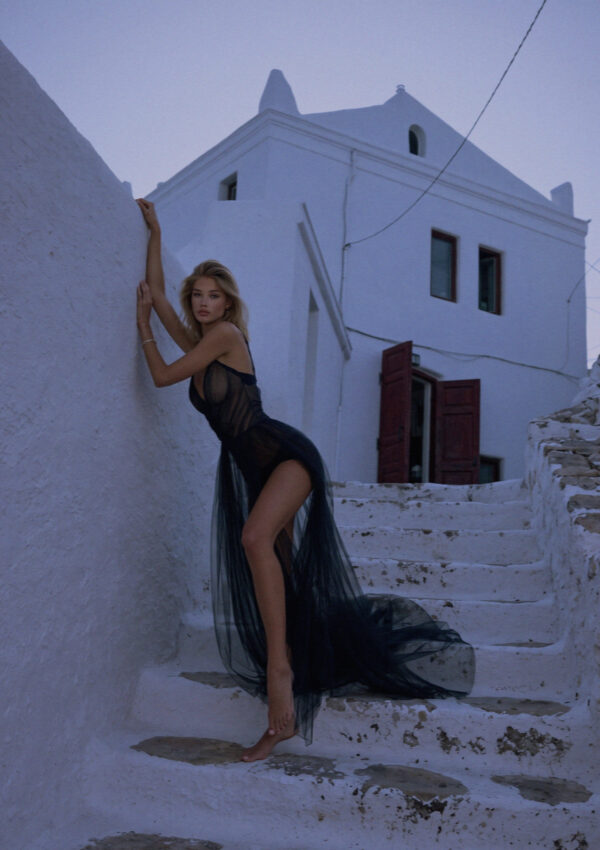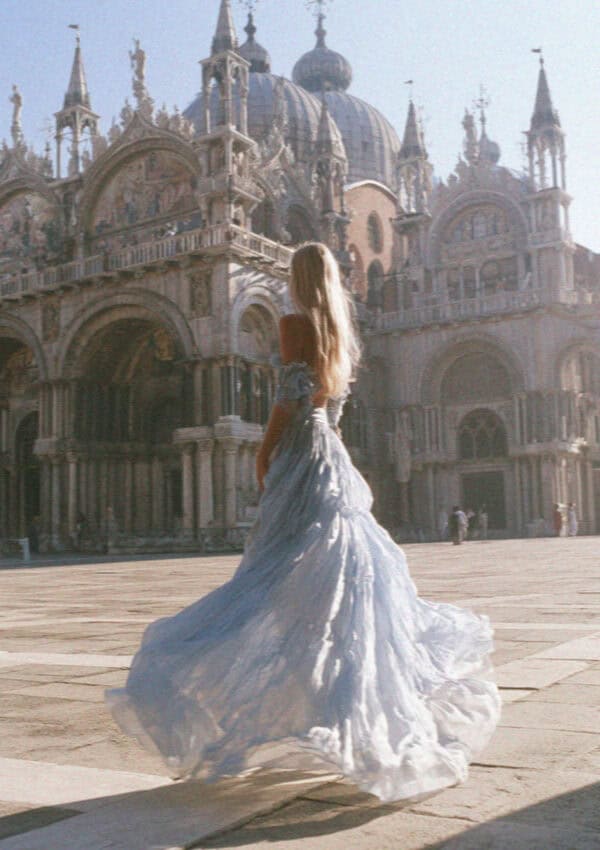
We only meant to stay one day.
The plan was a single afternoon and then the road back. Then the team found a villa two streets from the square, nobody made a serious case for leaving, and by evening it had stopped being a decision at all.
So we stayed, and shot the whole village again in the wrong light on purpose.
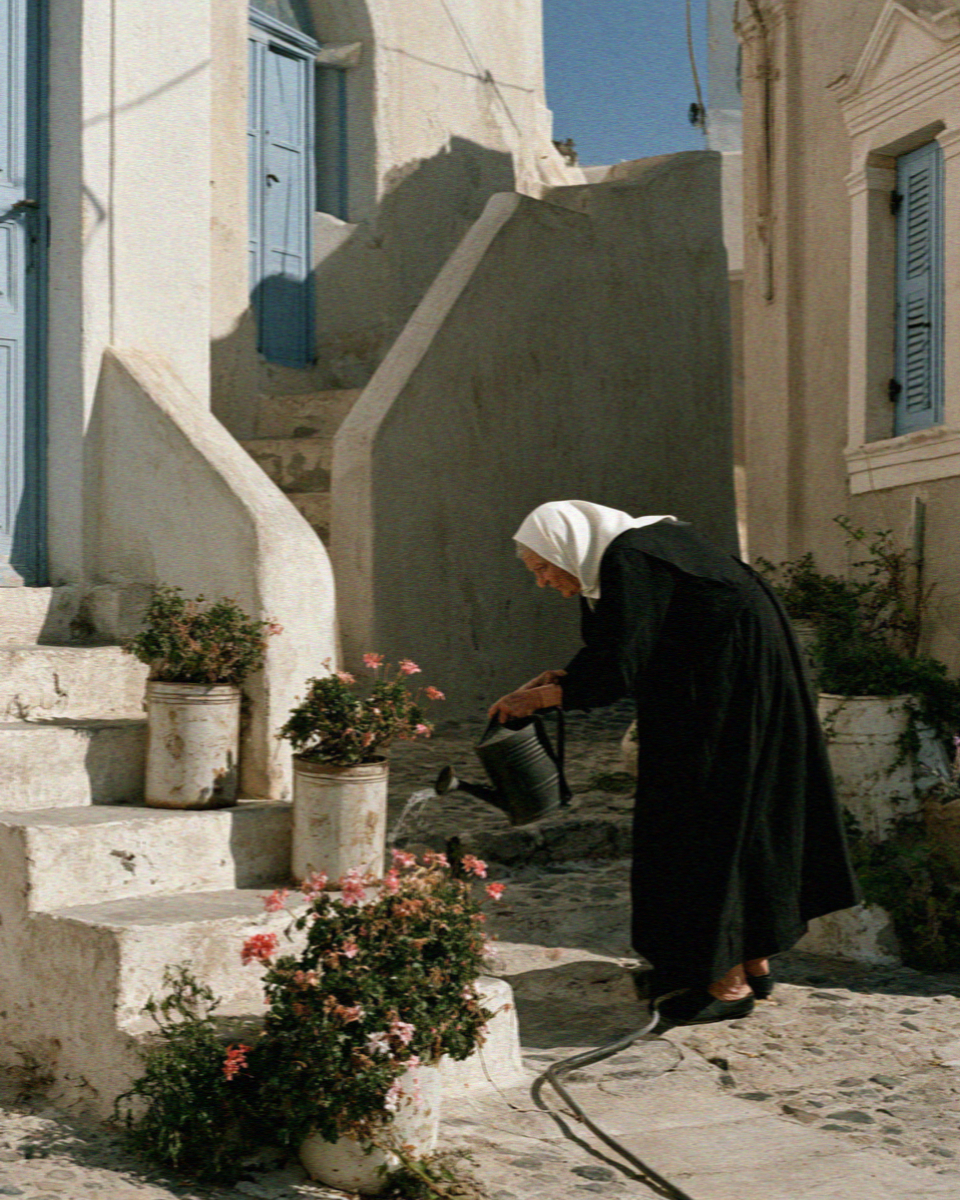
Yesterday I had this place at six in the morning, when it was the colour of skimmed milk and the shadows were still blue.
Today I had it at noon.
It is not the same village.
At noon the white is not beautiful. It is violent. The walls throw the sun straight back at you and there is nowhere in the lanes to put your eyes. You walk with your head down, looking at the stones.
The stones are hot.
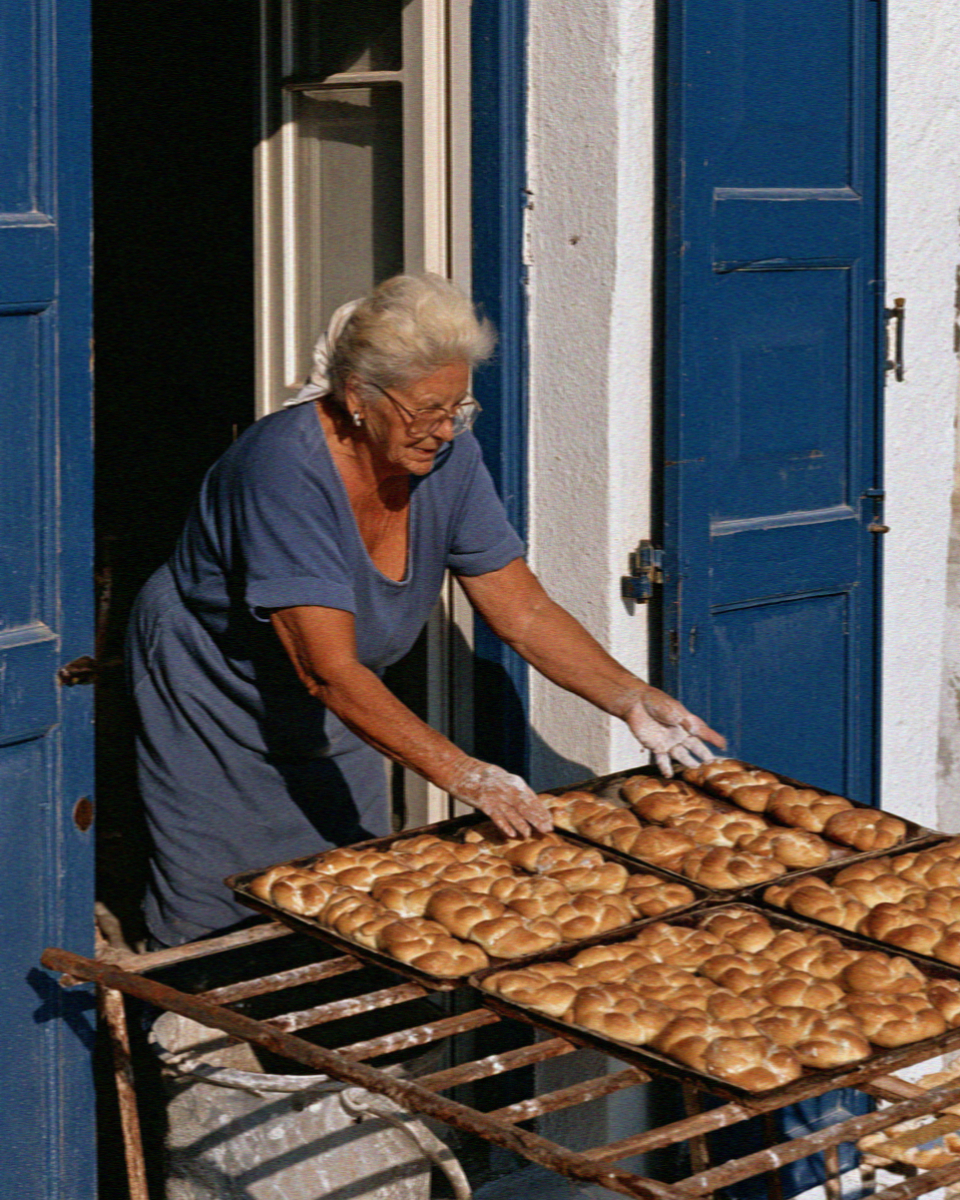
The bakery was open before any of it started.
Not biscuits this time. Bread.
A woman in a blue housecoat was pushing tray after tray out into the light on a rack with rusted legs. Small braided rolls, still steaming where they touched each other.
She did not look up.
I stood across the lane and watched her do it four times, and I have thought about it more than I have thought about most of the photographs.
Then the shutters started closing.
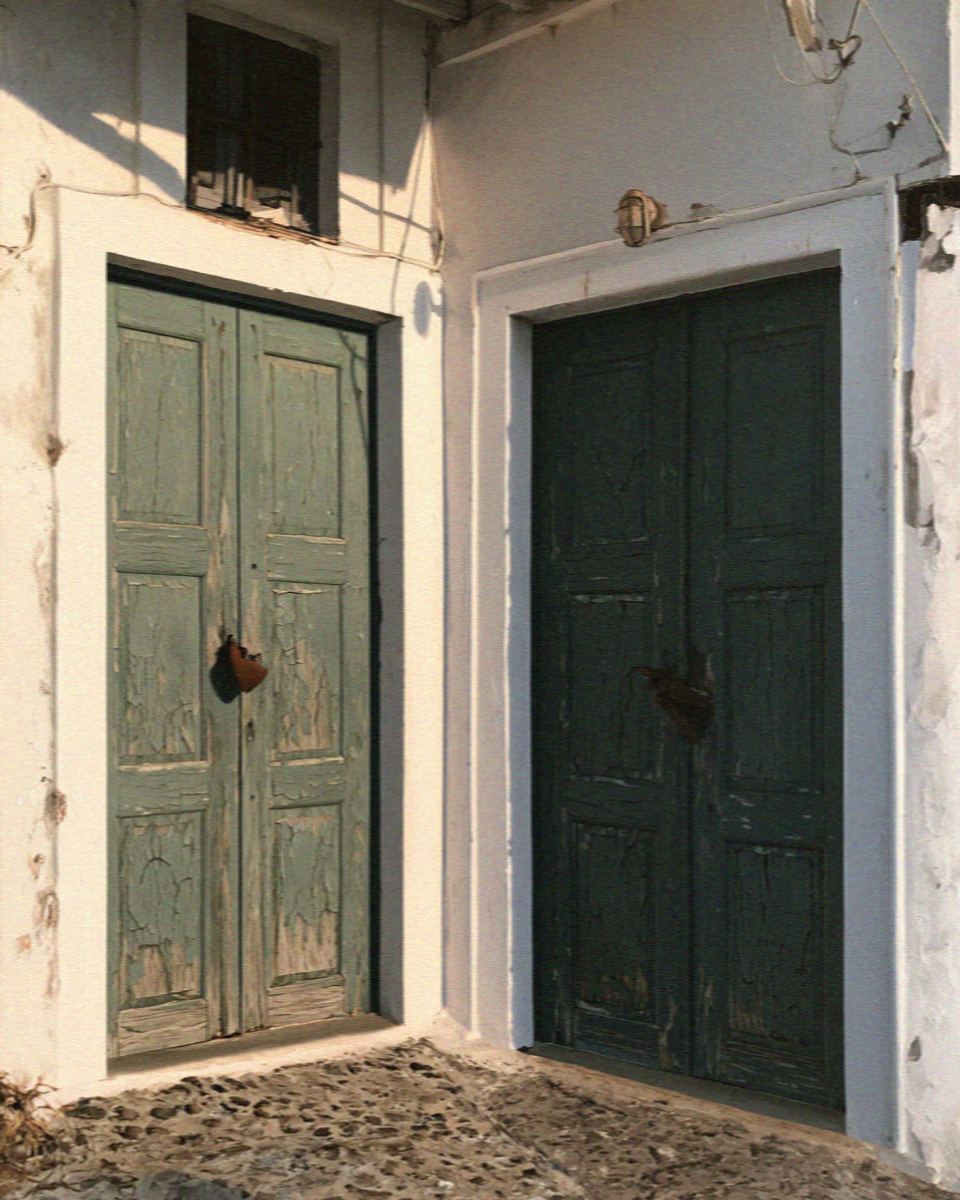
By one o’clock there was nobody.
Not quiet. Empty.
Every door on the lane was shut, the ones with locks and the ones without, and somewhere behind them the whole village was eating lunch or lying down.
We had it entirely to ourselves, which is the thing you dream about and then find slightly unnerving.
Somebody was sweeping a doorstep at the far end. That was all. The sound carried the length of the street.
There is a particular embarrassment in being the only thing moving in a place. We kept our voices down without agreeing to.
A cat crossed ahead of us, thought better of it, and disappeared under a gate.

I started noticing the houses instead, because there was nothing else to notice.
My mother taught me to look at wear before anything else. Not the pretty object in the middle of the room. The repairs. What has been mended, how often, and whether it was done by somebody who cared or somebody in a hurry.
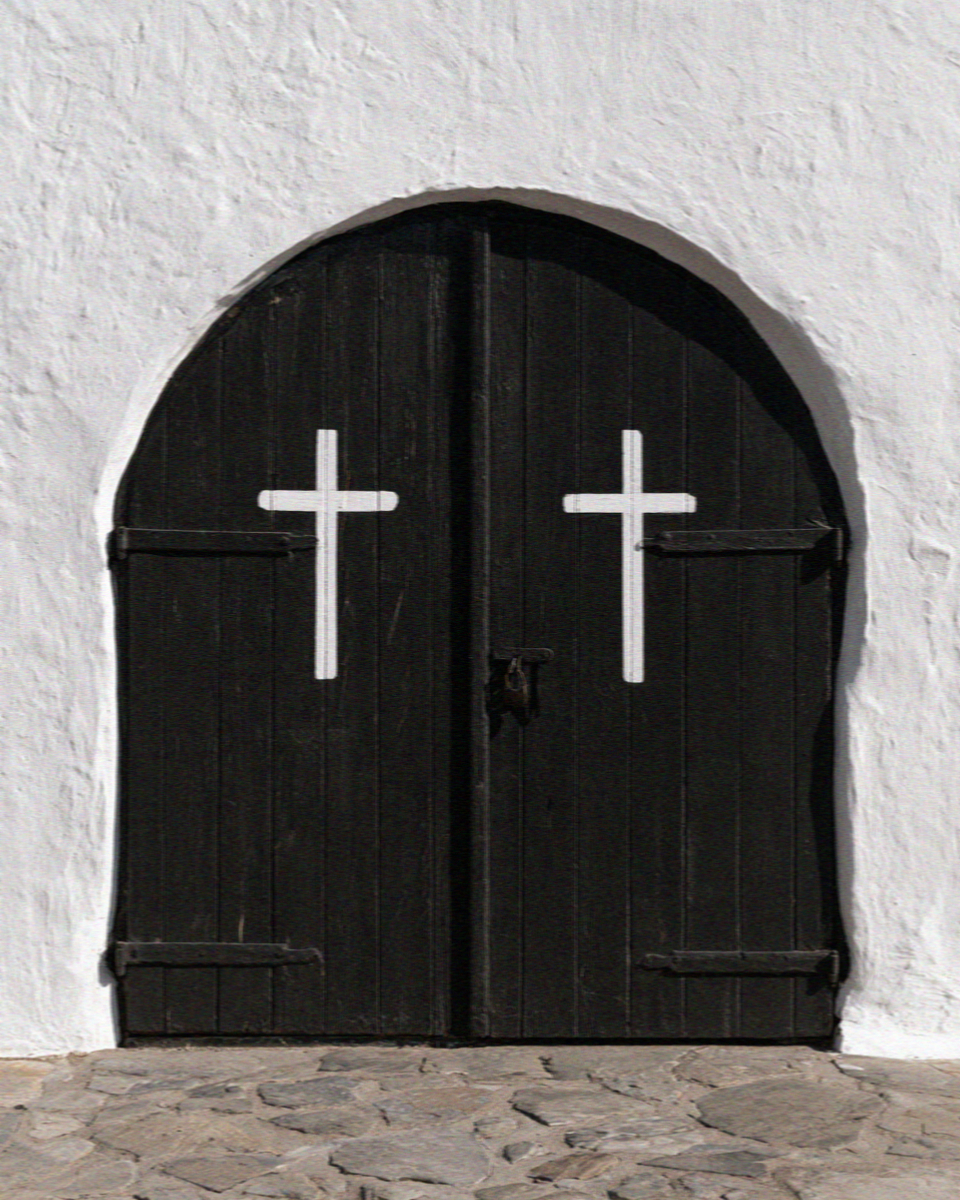
These doors have been painted so many times the colour has become a geology. Green over blue over something darker. Where the wood has split, the paint has split with it into little plates, and somebody has screwed a plain metal strip across the worst of it rather than replace the door.
Nobody replaces the door.
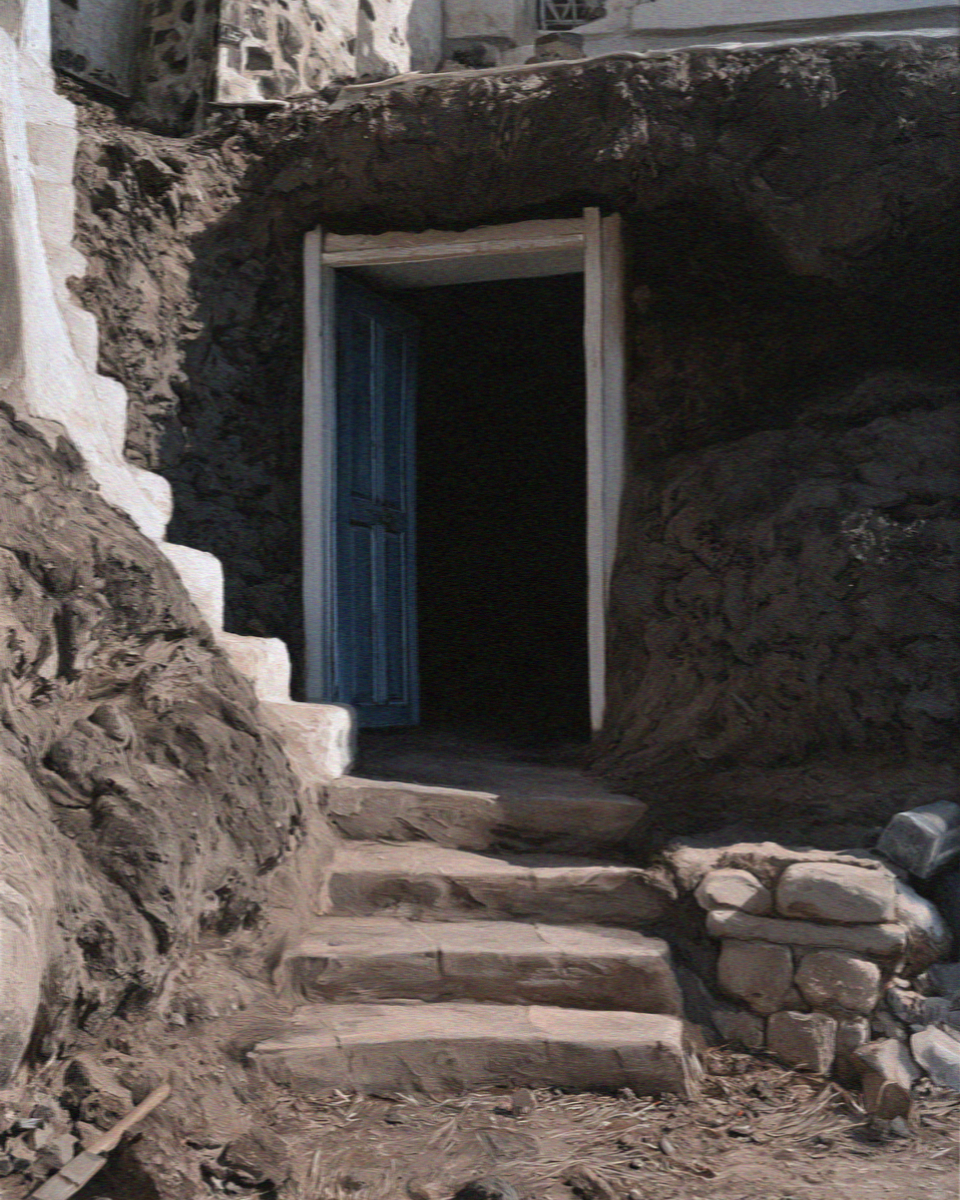
Then I found one that was not really a house at all.
Three stone steps. A blue door. No building behind it that I could see. Just darkness going back into the hill.
They call them skafta.
The ground here is soft enough that people cut rooms straight into it. For centuries some of the cheaper houses on the island were not built so much as dug, one long vaulted room disappearing into the slope, sometimes with another behind it.
I went two steps inside.
The temperature dropped immediately.
It smelled of stone and old wine.
Suddenly everybody disappearing at noon seemed perfectly sensible.
The village has been built around the sun from the beginning. Narrow lanes. Thick walls. Small windows. Courtyards turned inward. Rooms underground.
And when all of that is still not enough, apparently you close the shutters and go to lunch.
We were the only people in Megalochori who had not understood this.

The dresses did not care.
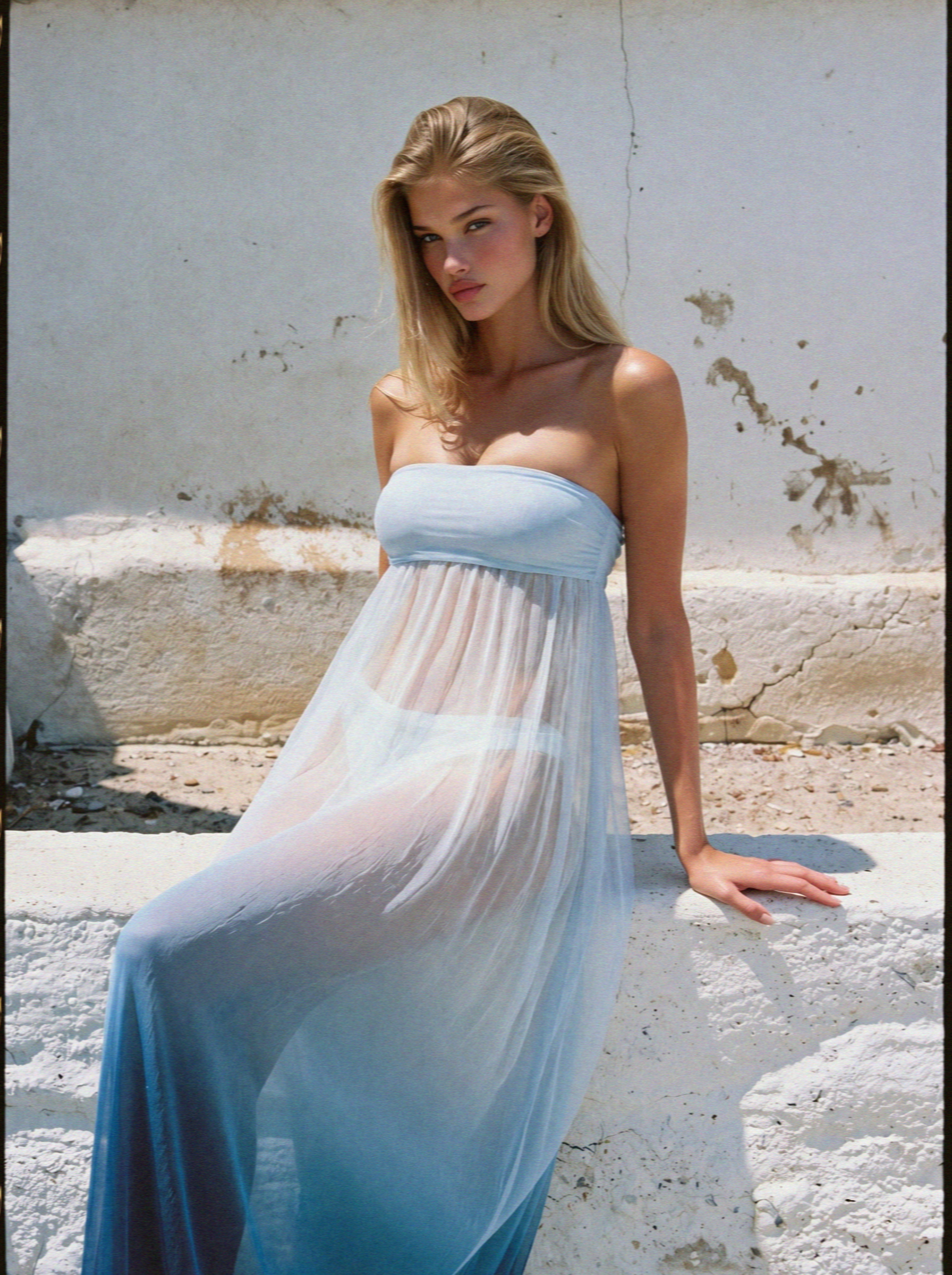
Brown chiffon against a wall so bright the camera did not know what to do with either of us.
Then mint, on a flight of steps, in the one strip of shade we could find. Sitting down because standing had stopped being realistic.

He worked fast and said almost nothing.
Barefoot on stone at six in the morning is romantic.
Barefoot on stone at half past one is a decision you make repeatedly.
I drank a litre and a half of water and still felt like paper.

Around five the village came back.
You hear it before you see it.
A shutter.
Then a chair.
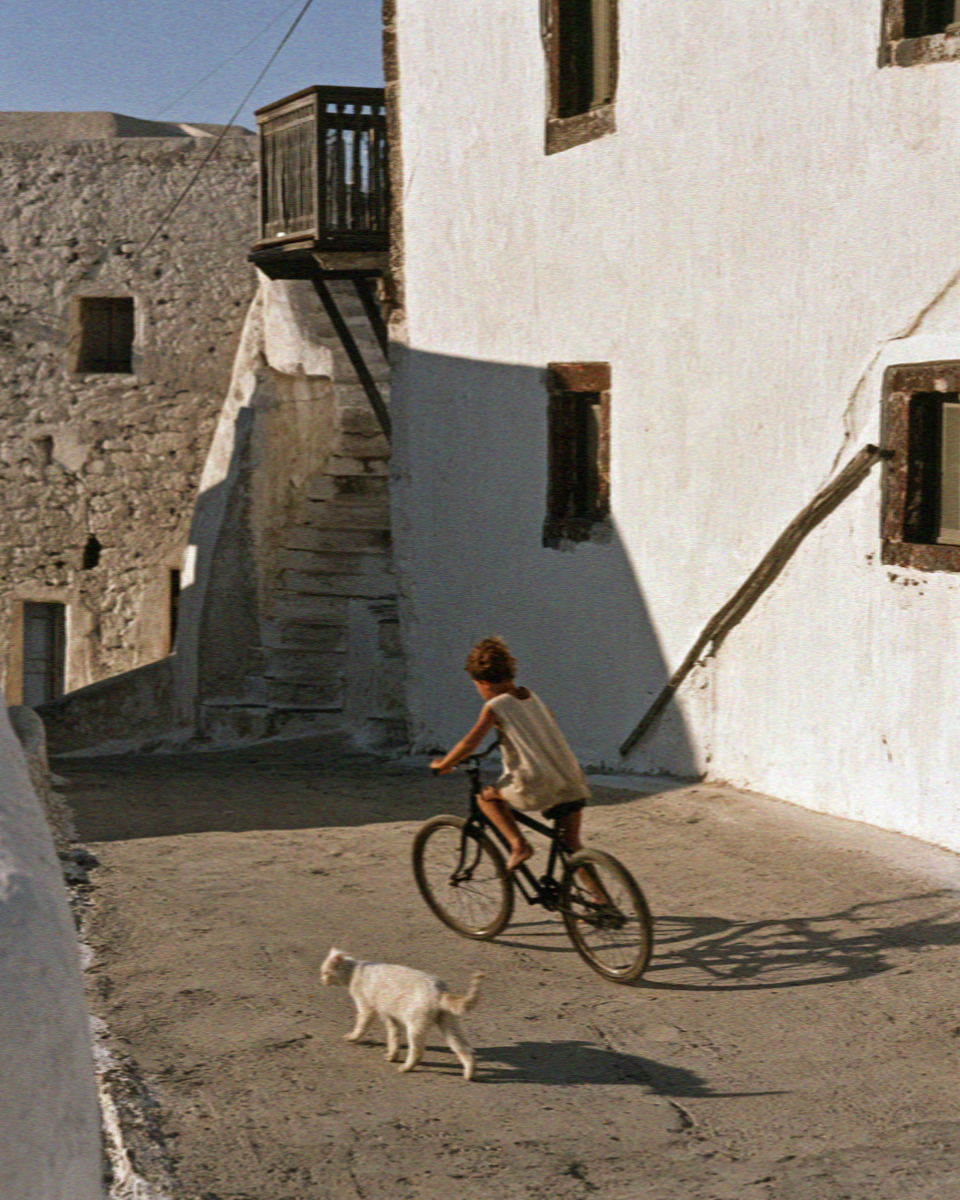
Then two women talking somewhere above us. A television. A boy on a bicycle far too big for him going down the lane with a dog running beside the front wheel in a way that made me stop breathing for a second.
Neither of them was concerned.
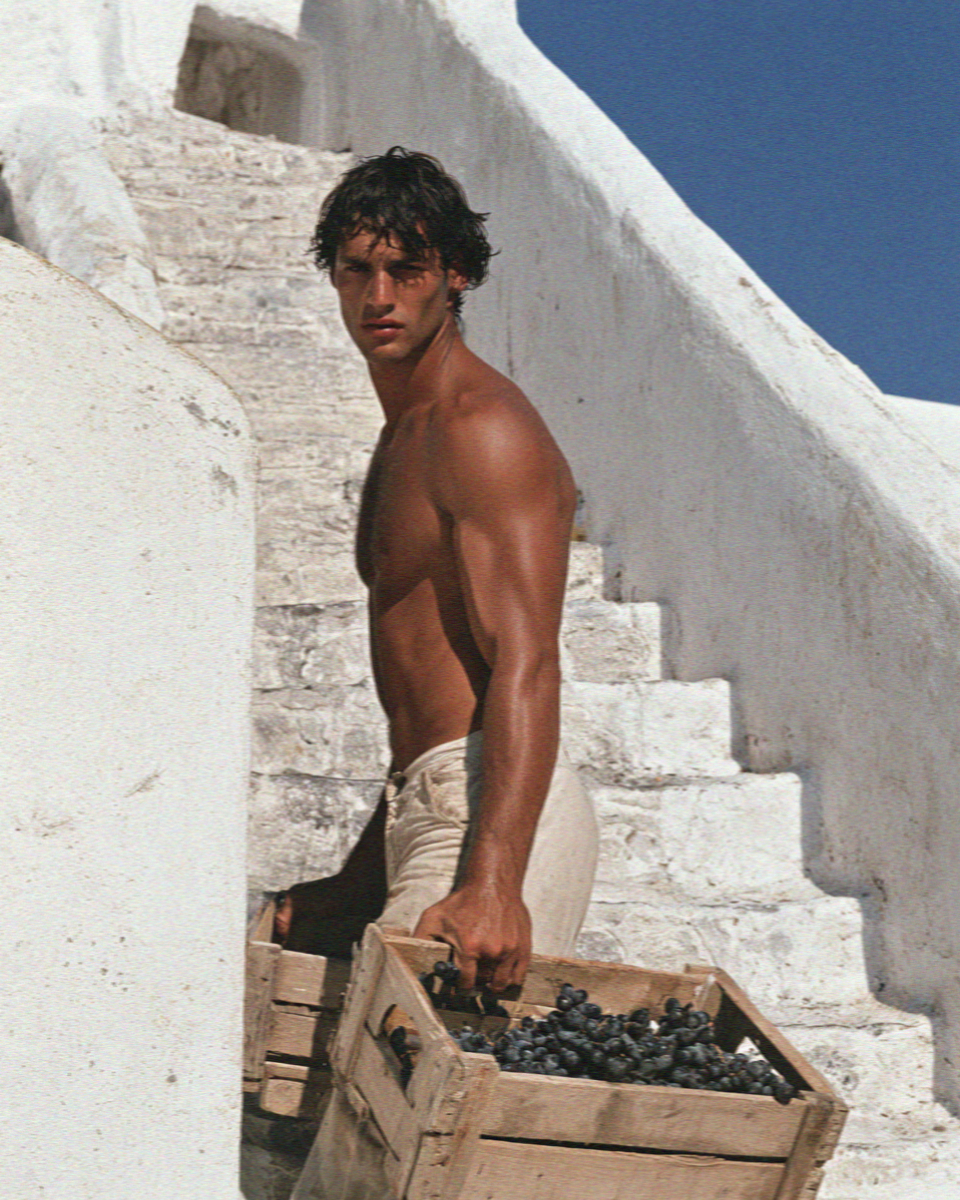
A young man came up the steps carrying a crate of black grapes on his hip, then went back down and did it again with another.
He looked at the camera, then at me, then at neither of us, and kept going.
Whatever was happening here, it had been happening since long before we arrived with a rail of evening gowns.
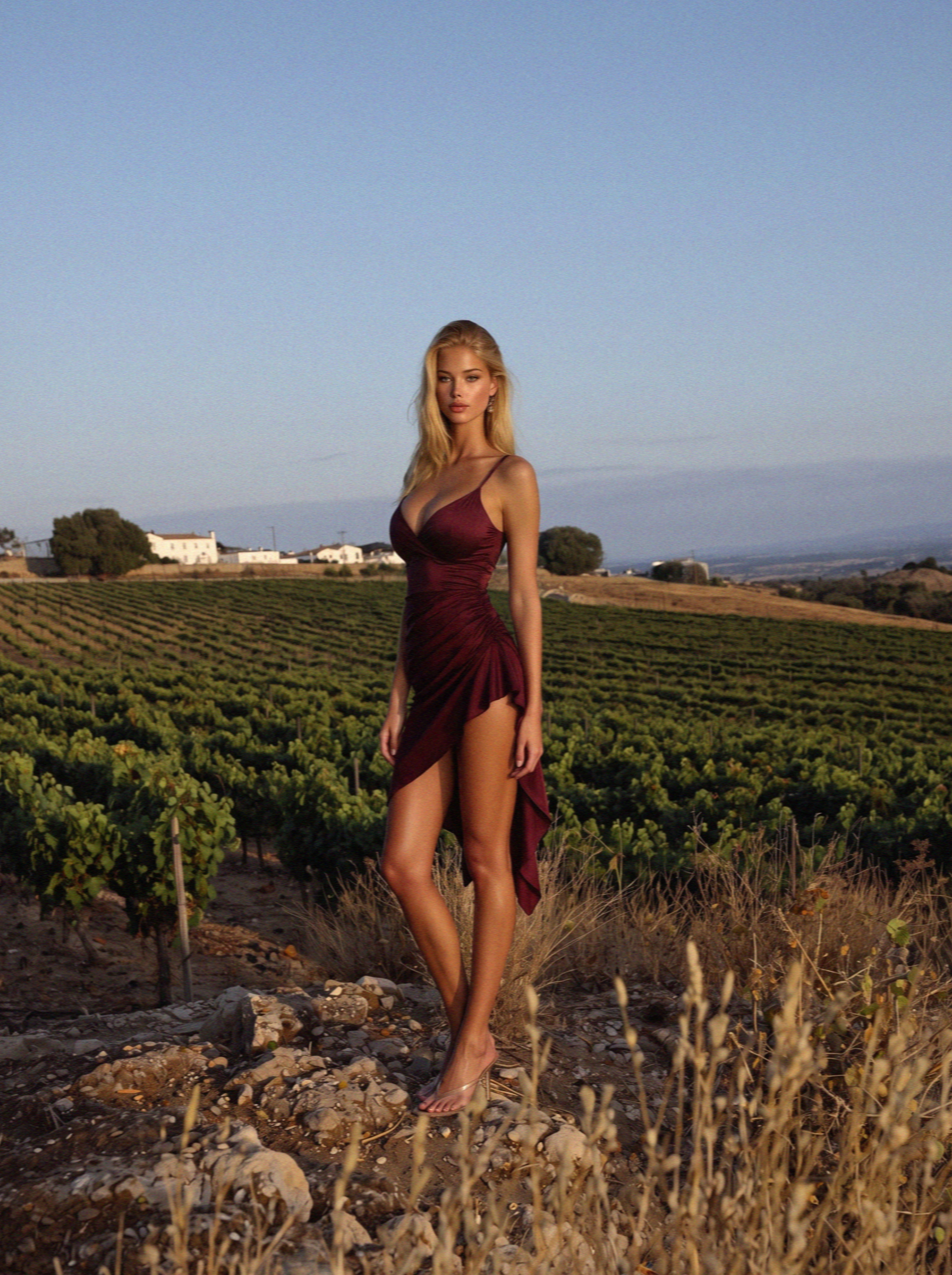
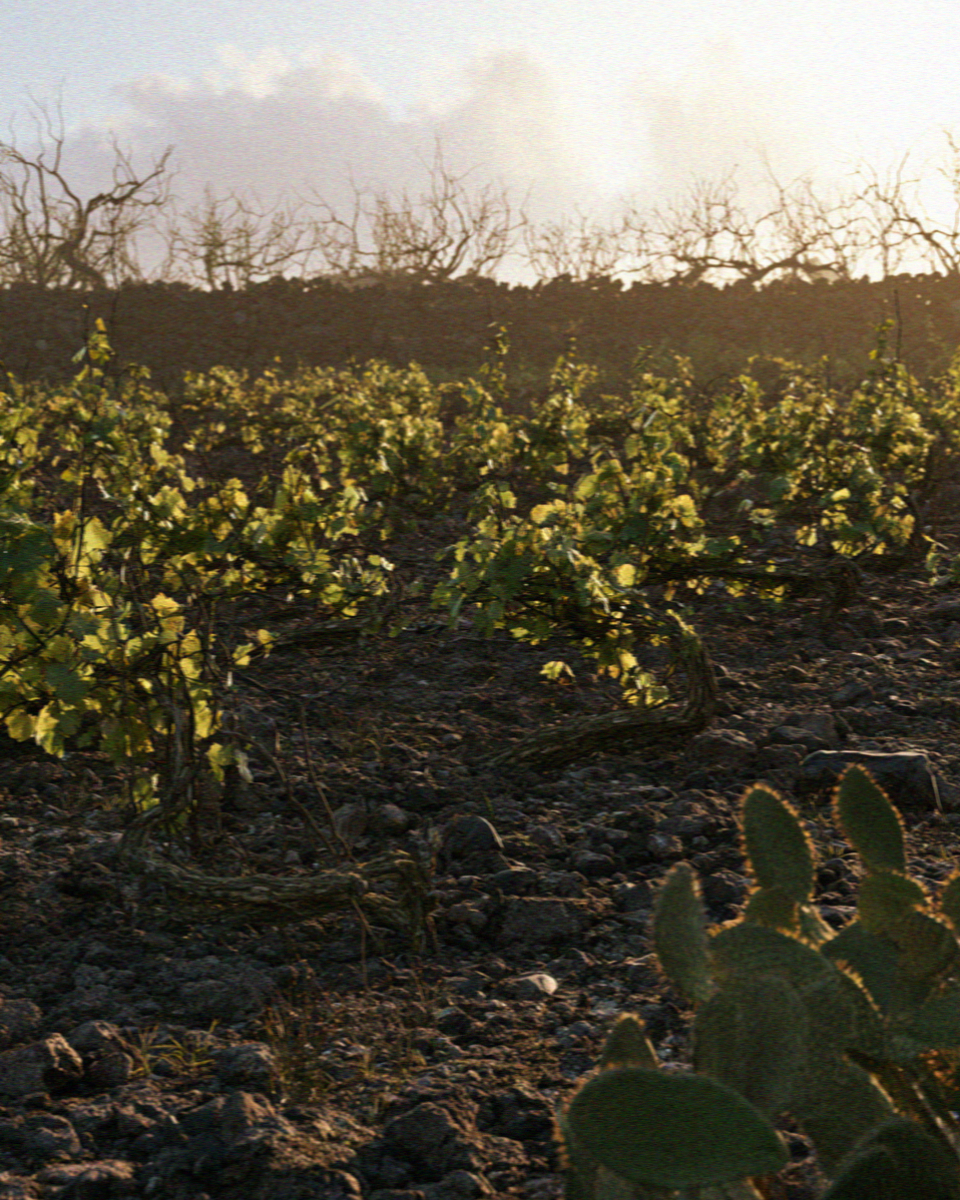
We finished out in the vines.
They do not grow them upright here. They coil them low to the ground in baskets, with the grapes protected inside from the wind.
From the road they look like abandoned wreaths.
The light went orange and then went quickly, and the prickly pear at the edge of the field lit up along all its edges.
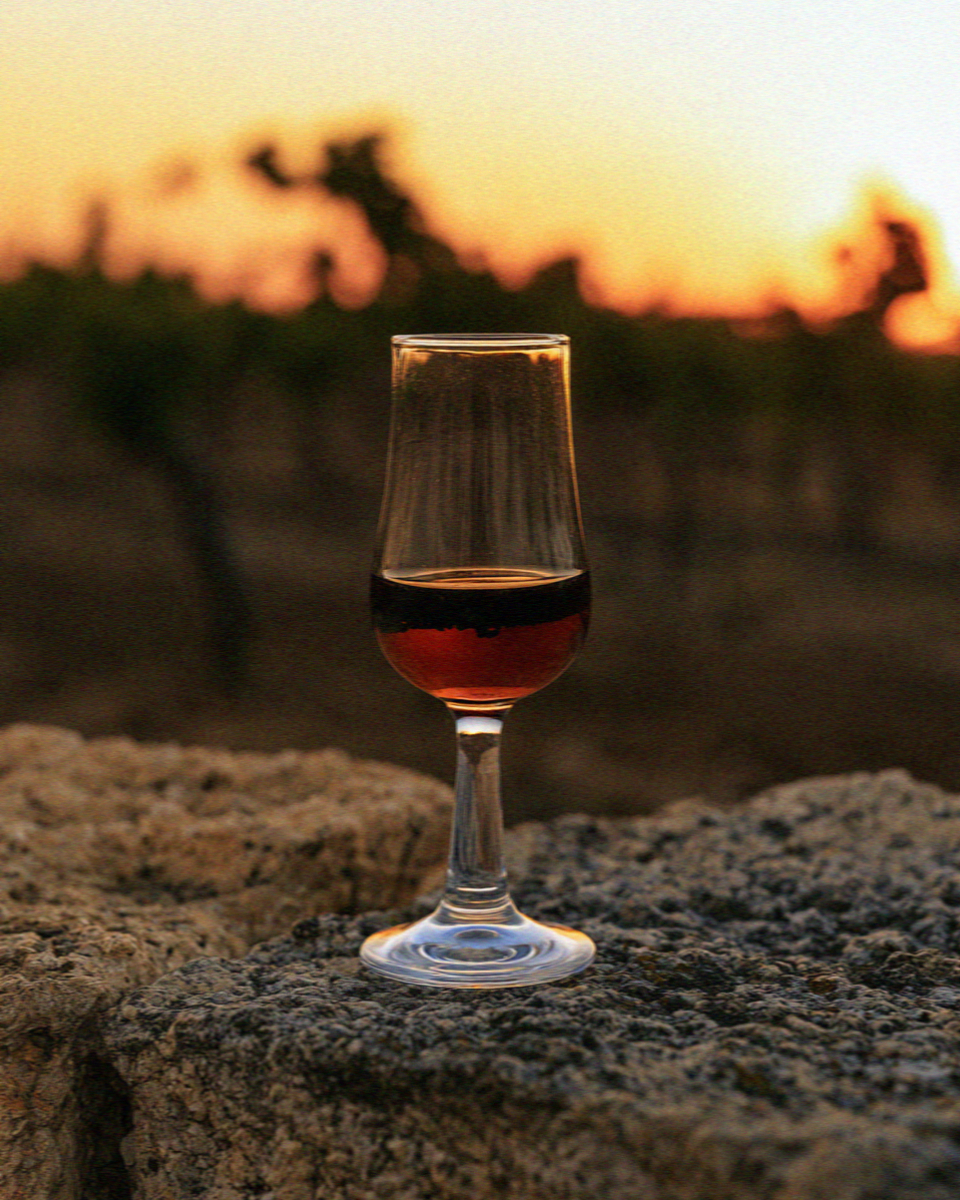
Somebody put a glass in my hand.
I sat on a lump of volcanic rock that was still holding the whole afternoon’s heat and drank it and did not say anything for a while.
We ate late at the villa, on a terrace two streets from the square, with the doors open and nobody bothering to change out of what they had been working in.
The producer fell asleep in a chair before the plates were cleared.
Nobody woke her.
One day was never going to be enough. I think I knew that when we arrived.
Yesterday I liked Megalochori at six in the morning.
Today I think I liked it better when everybody shut the doors on us.
Tomorrow we really do go.
V.
More images from Santorini