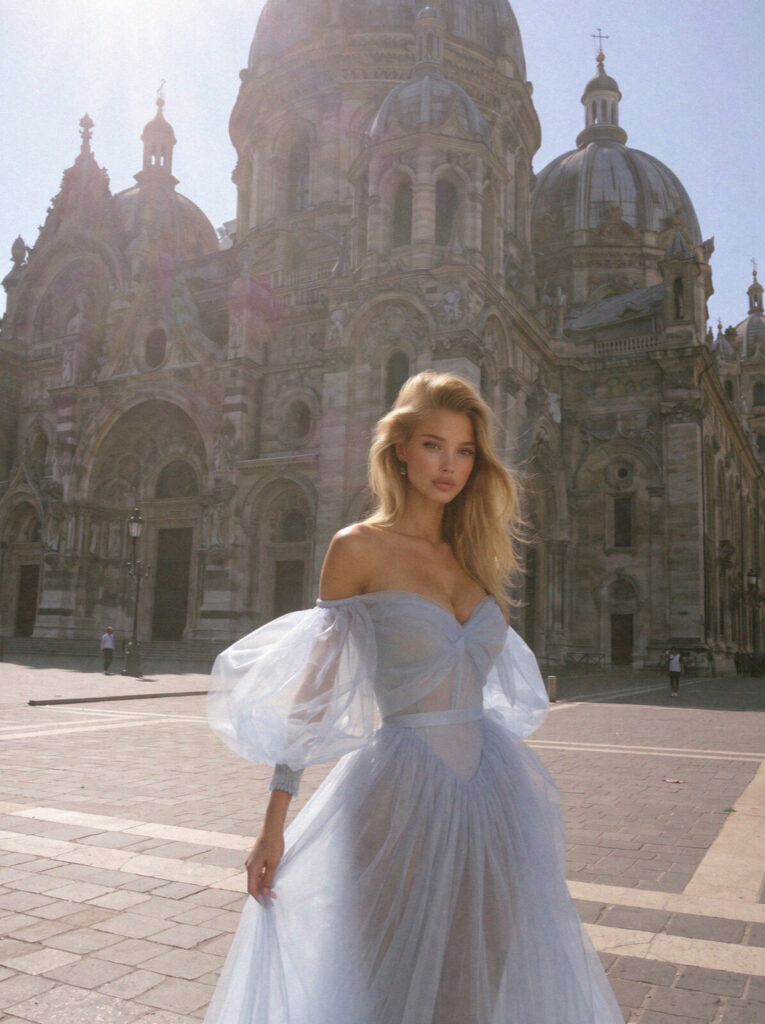
It is six in the morning in Megalochori, and the light has not decided what it is going to do yet.
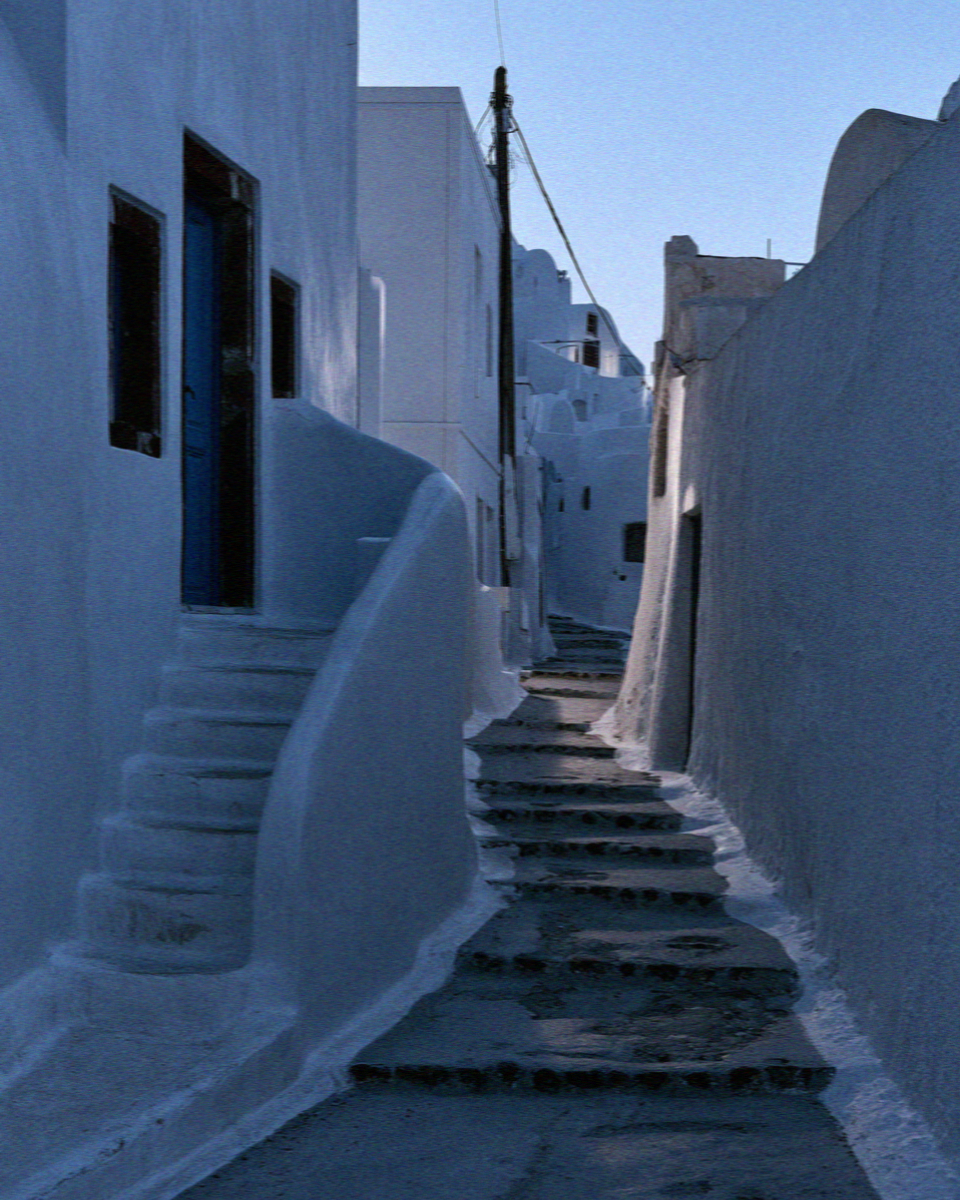
The houses are not white at this hour. They are the colour of skimmed milk, and the shadows between them are blue enough to make the lanes look colder than they are.
We were working today.
It is the part of my life people see most and probably understand least, and it nearly always begins like this: in the dark, a garment bag across the back seat of the car, nobody talking.
My photographer loves the hour before the sun because there are no hard shadows to fight and nobody walking through the frame. The village has not quite woken up yet. Neither, really, have I.
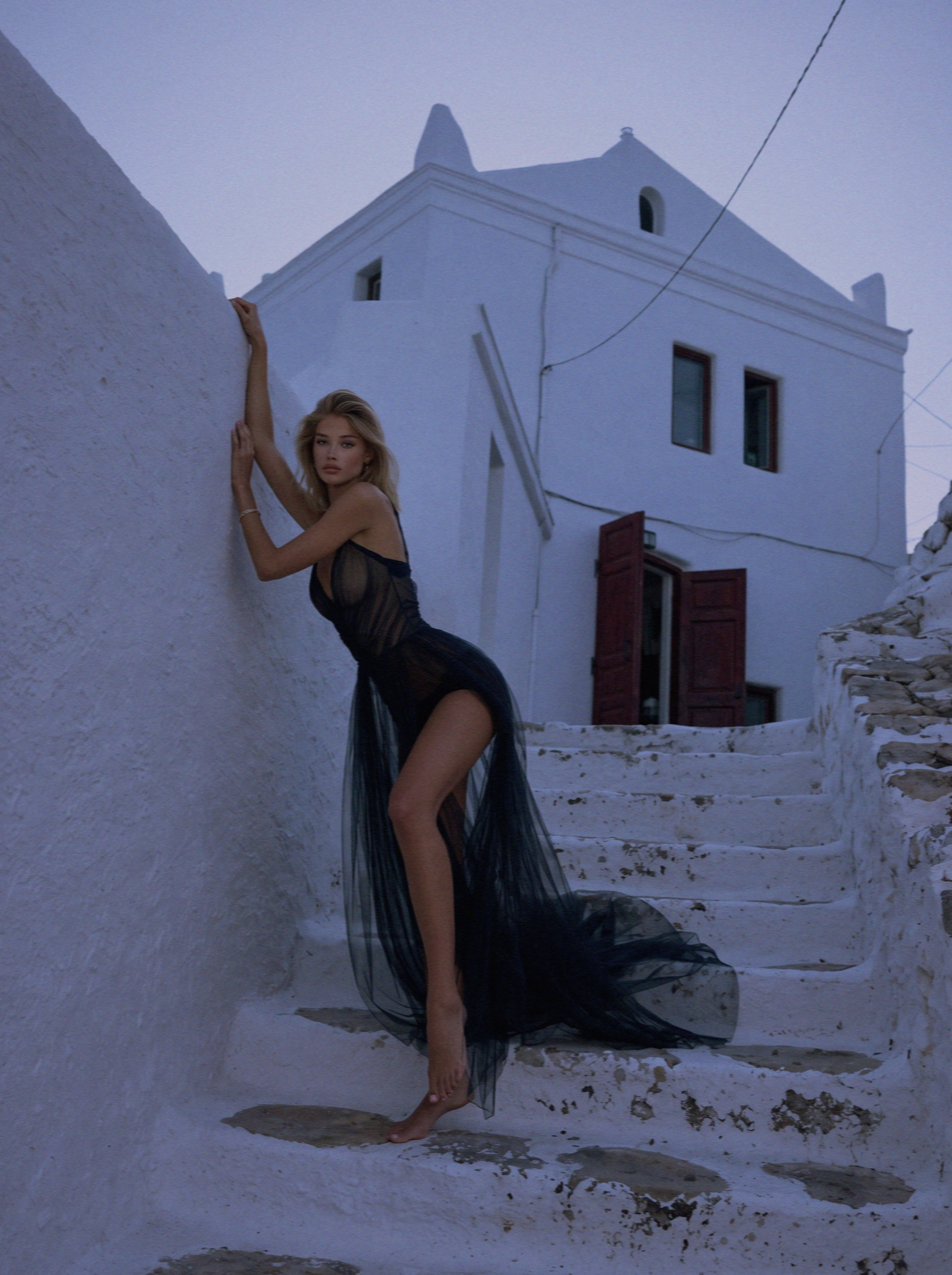
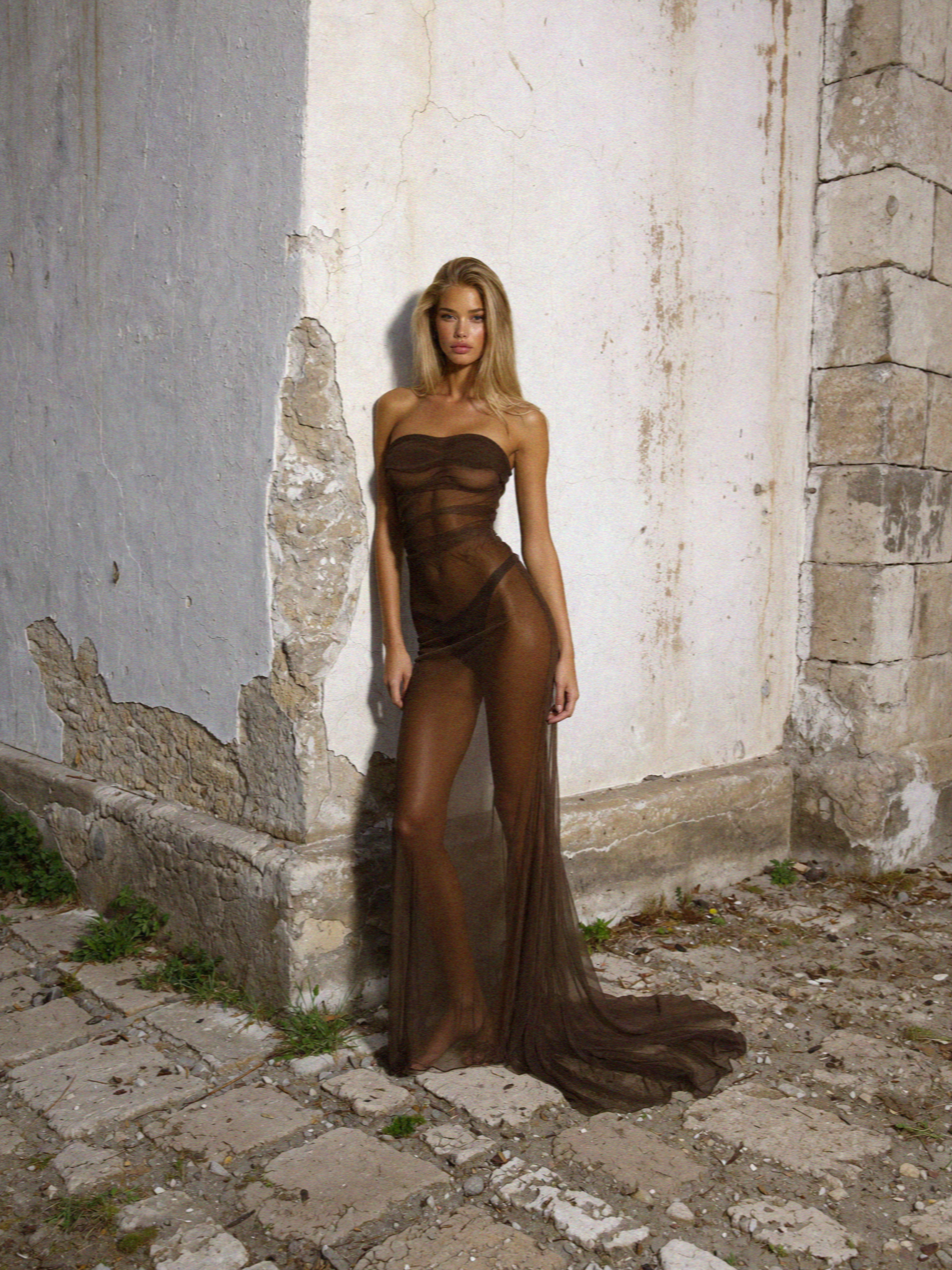
The first dress was black and sheer, with a train that followed me over the stones like a second, slower person. I stood against a long whitewashed wall beside a flight of worn steps, one arm over my head, and the stone was cold through the fabric.
The first frames of any morning are never the good ones. Your body arrives before you do. It stands where it is told and holds its shoulders like a coat hanger, and it takes a little while for the rest of you to catch up.
He knows this. He shoots, looks at the back of the camera, says nothing, shoots again.
Eventually I stop thinking about where my hands are. The cold stops mattering. I forget about the lens.
That is usually when he starts getting what he wanted.

The elderly people were already up. They always are in villages like this.
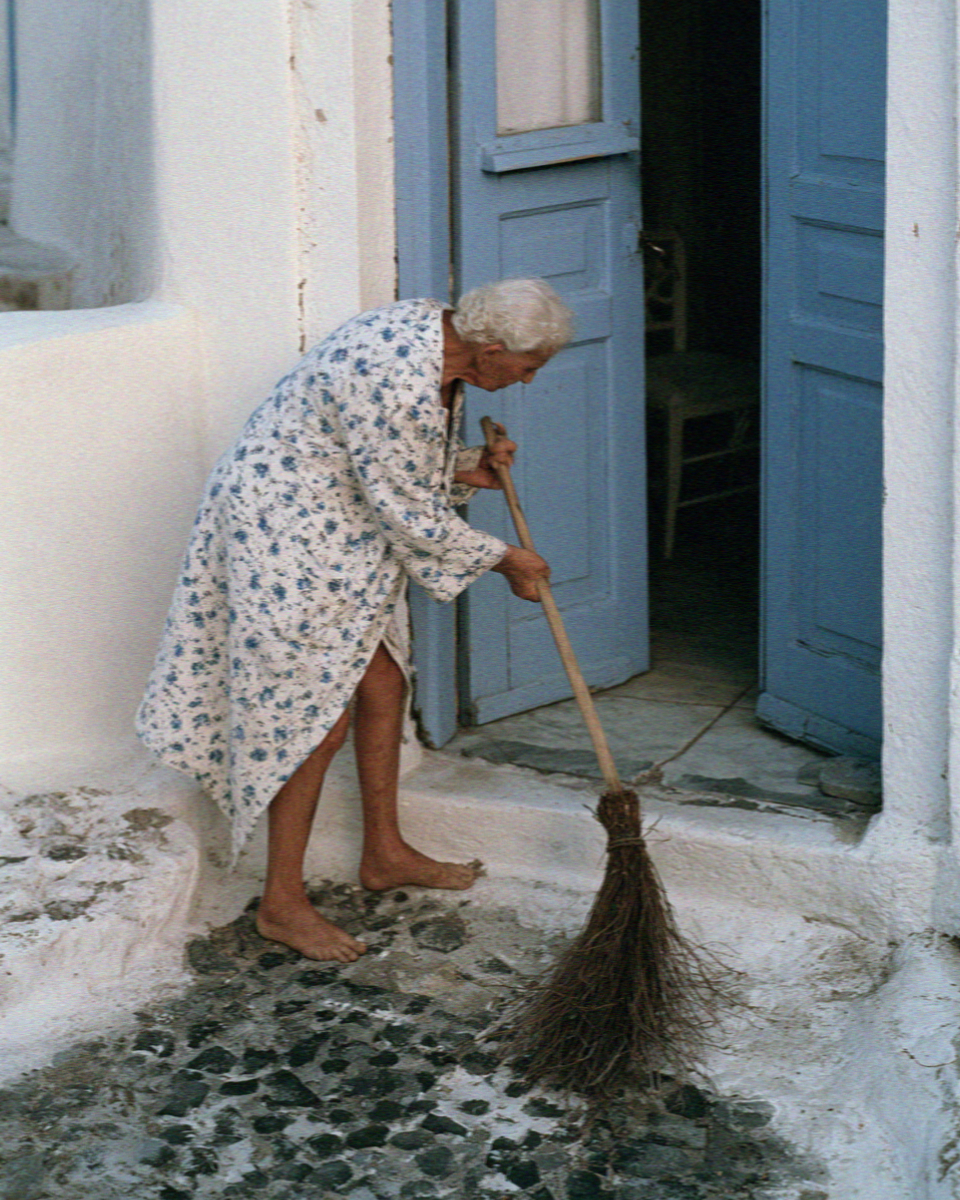
A woman in a housecoat was sweeping her step with a broom made of stiff twigs. A man sat on a chair outside a closed door as though he had been there all night. They watched us pass. Some nodded. Some simply looked.
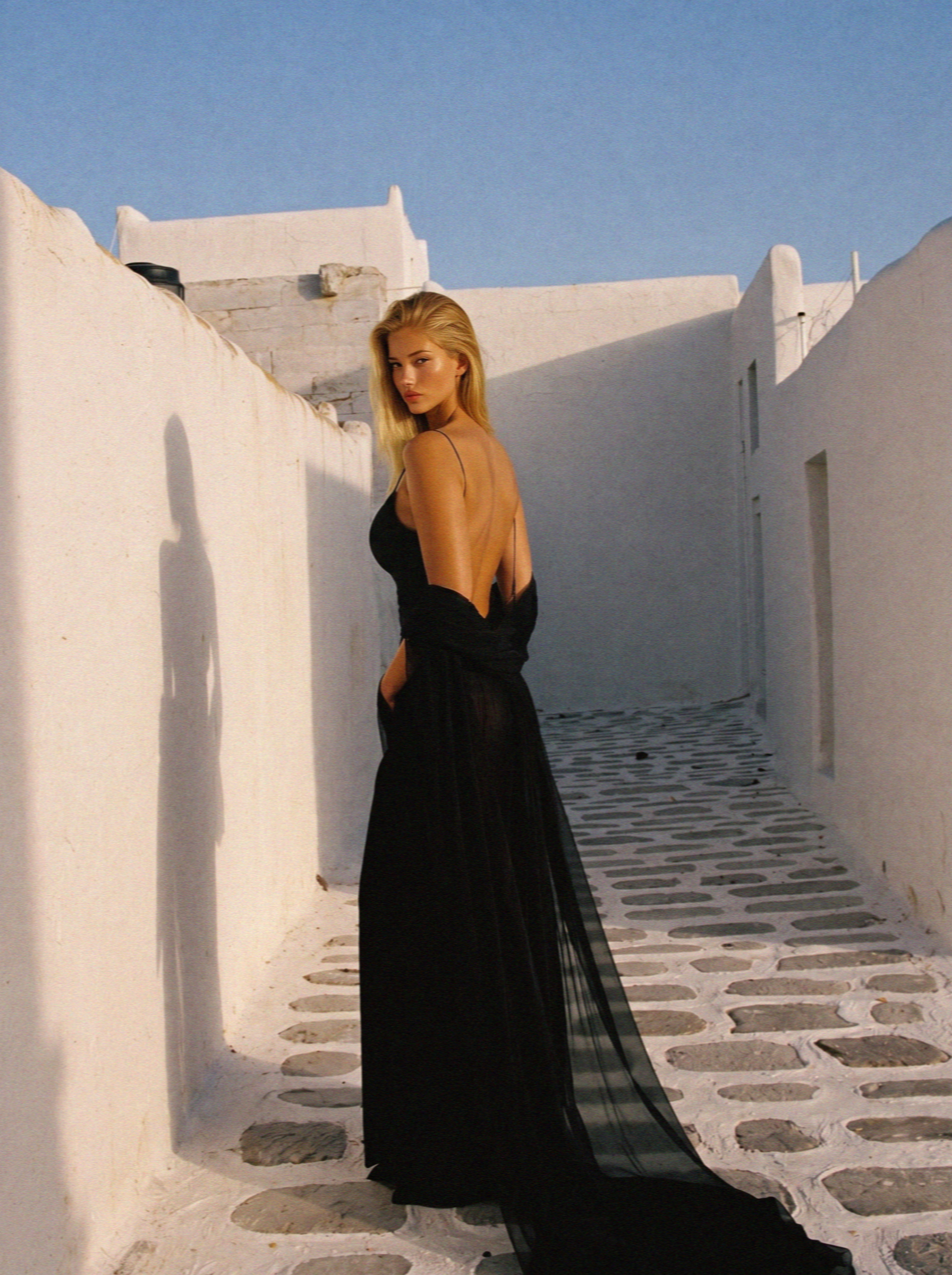
A man with a camera and a blonde woman in a black evening gown, barefoot on their street at six in the morning.
Nobody seemed particularly impressed.
Then I smelled the bakery.
Sugar and warm butter coming down the lane.
I have loved sweets for as long as I can remember, so for about twenty minutes after that I was no use to anybody.
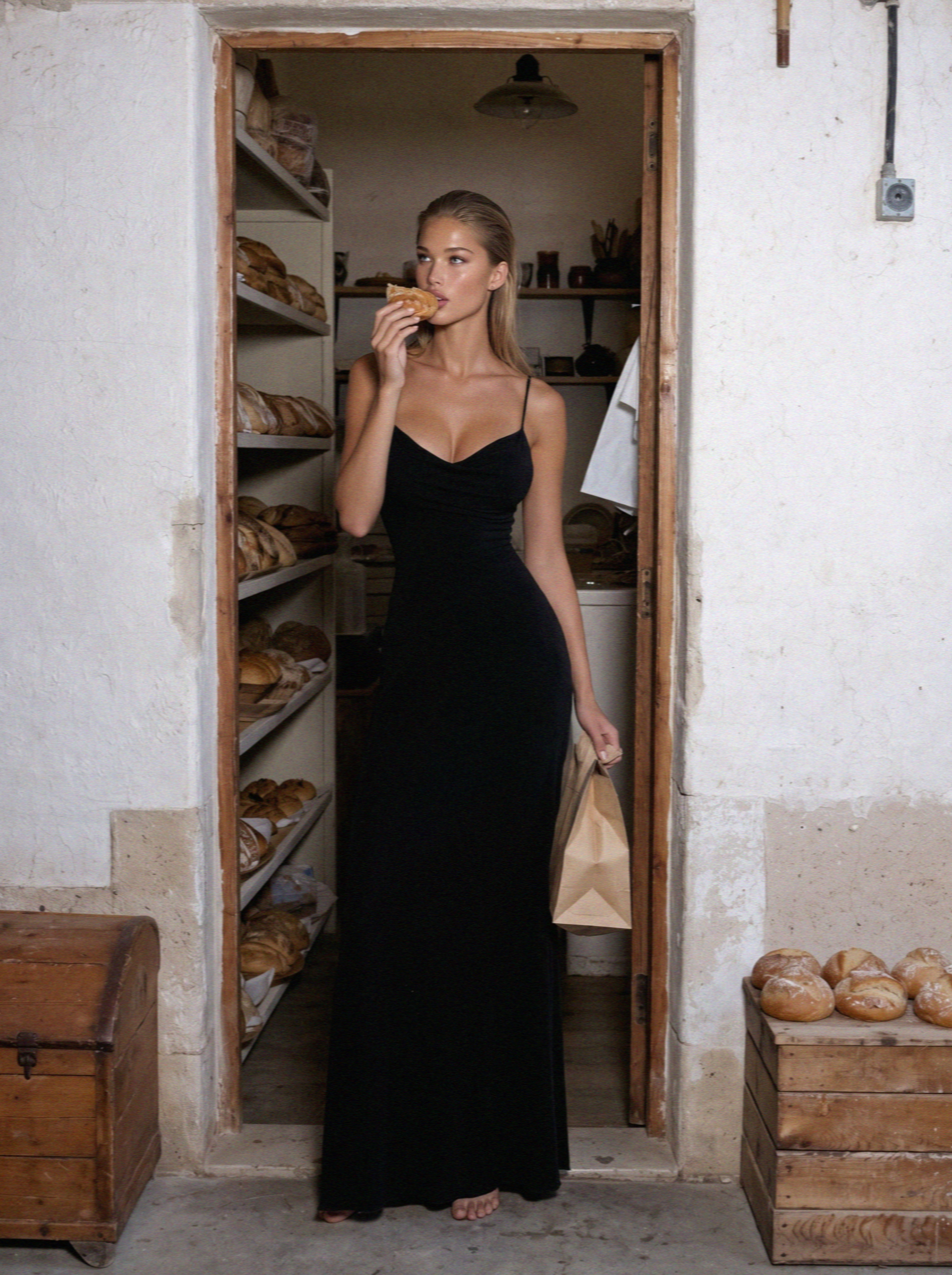
We found it on the way back to the car. A small bakery with the door propped open with a chair, trays of braided butter biscuits cooling on a rack, and a woman behind the counter who looked at my dress, then at my bare feet, then at me.
She put two biscuits in a paper bag without being asked.
They were still warm.
I ate both before we reached the corner.
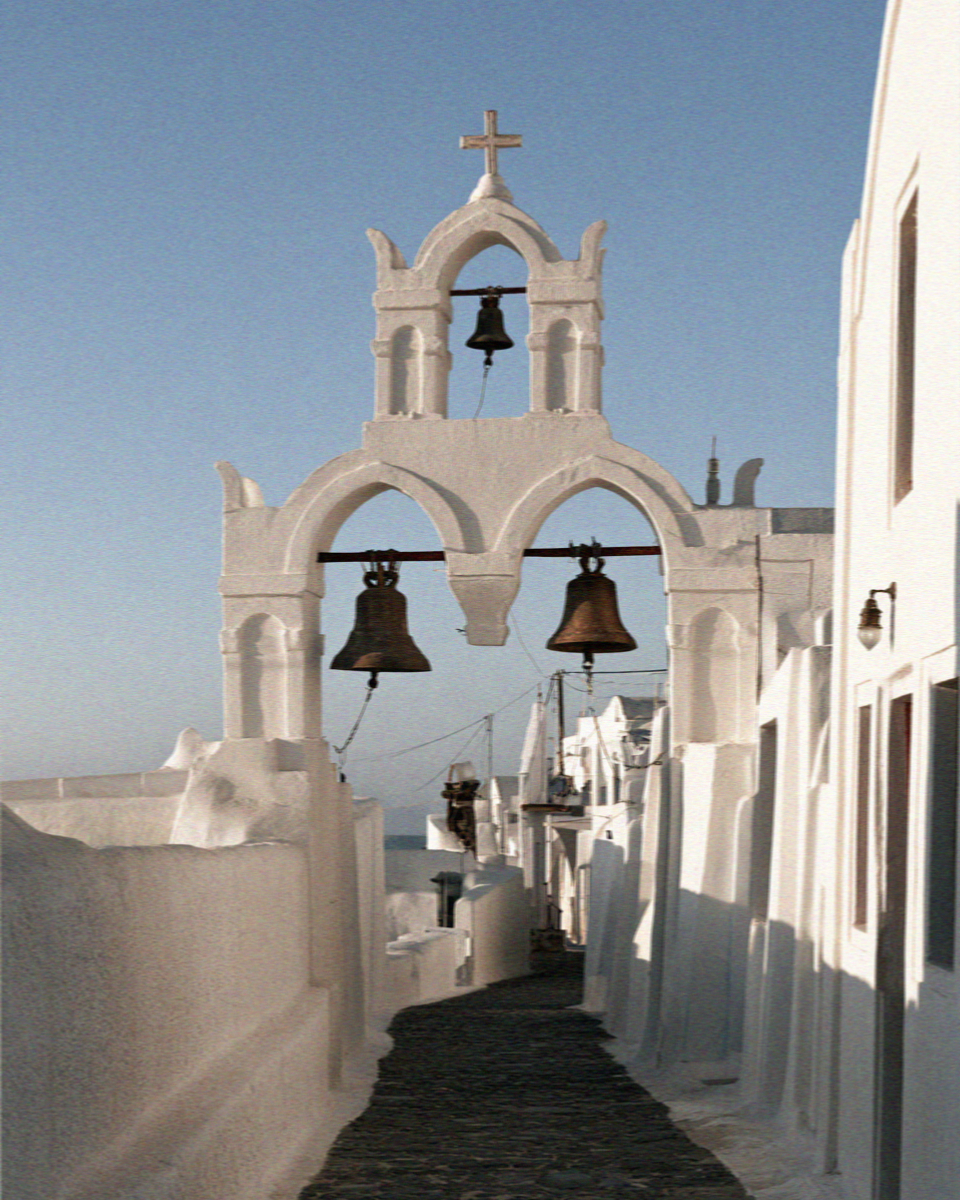
Megalochori means the big village, although it is not especially big.
What it was, for a long time, was a wine village. Merchants built houses behind high walls here, with courtyards turned inward and cellars cut into the volcanic ground to keep the barrels cool. Wine had been leaving from here for centuries, including the sweet Vinsanto I tasted yesterday in Pyrgos.
I liked discovering that. Yesterday it had simply been something amber in a glass. Today I was walking past some of the houses it helped pay for.
The earthquake in 1956 emptied much of Megalochori. People left, houses were abandoned, and parts of the village stood quiet for years.
It has come back slowly, but you can still see both versions at once. There are restored houses with fresh white paint, and beside them walls where the whitewash has fallen away in great pale patches, with grey stone showing underneath.
Those were the walls we came back for in the afternoon.
By then the light was hard and the stone was warm.
The second dress was the one I will remember. Pleated chiffon, pale green at the top and blue at the bottom, with so much fabric that it pooled around my feet and spilled over the edge of the step.
We put it against the most broken wall we could find.
There was a small brass plate screwed into the plaster beside me. I could only half read it. A merchant’s name, something about general trade, and a house founded sometime in the eighteen hundreds.
He looked at the screen for a long time and then said I looked as though I had come up out of the water and not bothered to dry off.
I have decided to take that as a compliment.
For the rest of the afternoon, whenever he needed me to turn, he called me the mermaid.

The third dress was darker, a long brown-black gown over one shoulder with a train he spread across the stones by hand.
Very carefully.
It was hot by then. I stood barefoot where two old walls met and realised that the stone that had been cold under my feet that morning was now warm.
Somewhere between dresses a barley rusk appeared from the same bakery.
They are twice-baked and hard enough to make you think seriously about your teeth. I was standing there in a short sequinned dress, black and nude, and bit into it anyway because I was hungry.
That is the photograph he kept.

Near the end of one lane we found a pair of old green doors. The paint had been there so long it had cracked into tiny plates.
I wore plum silk against them, one shoulder bare, and just as he took the photograph a gust came up the lane and threw my hair sideways across the frame.
I thought it had ruined it.
It was the best one.

By late afternoon we had walked out of the lanes altogether.
At the edge of the village there is a little church with black double doors and two white crosses painted on them. Beyond it the houses stop and the vines begin, low and green and curled into their baskets close to the ground.
A narrow path runs through them toward a chapel with a blue dome.
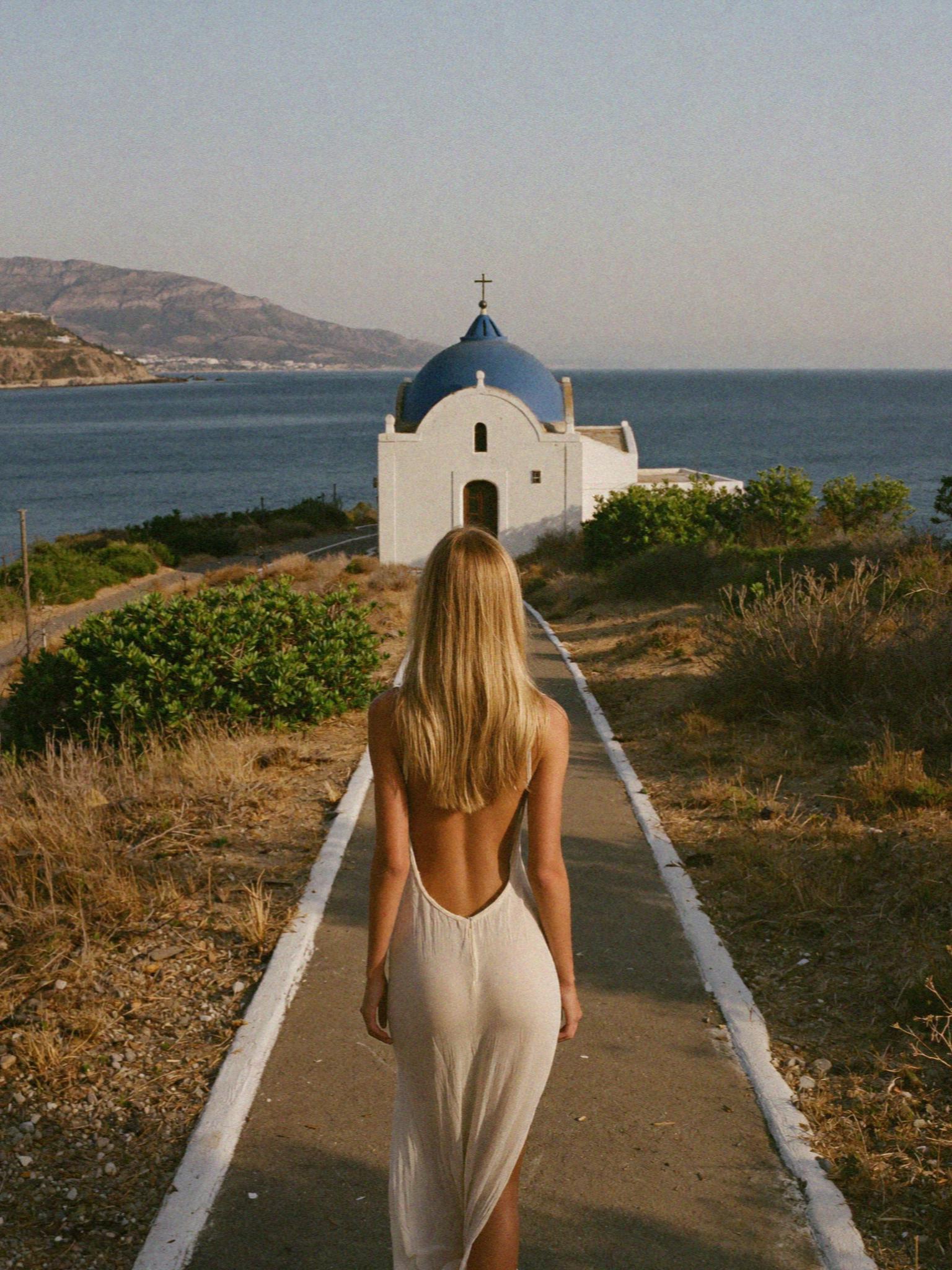
I walked into the field in the plum dress and stood with my back to the camera.
Nobody else was there.
Just the vines, the path, the dome and the sky.
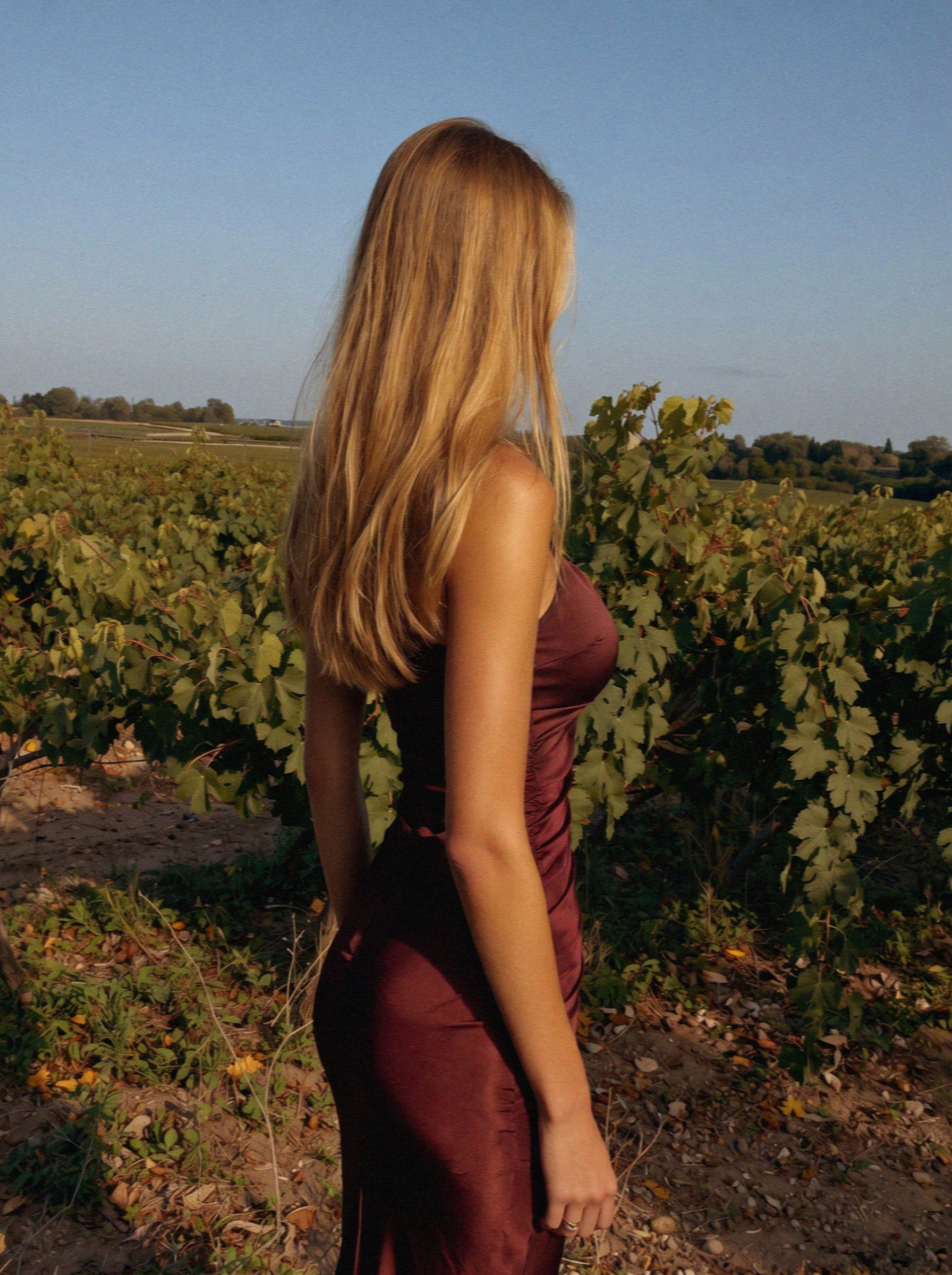
People imagine a shoot is about being looked at.
Mostly it is waiting.
Waiting for the light. Waiting for the wind to stop. Waiting for somebody to cross the frame. Waiting until I stop thinking about what I am doing and he stops having to tell me.
Then the dresses go back into their bags, and somehow those are not the things I remember anyway.
I remember the woman sweeping her doorstep.
The bakery opening.
Two warm biscuits in a paper bag.
The wall cold against my feet at six in the morning, and the same stone warm when I came back in the afternoon.
One more day.
V.