Bergamo rewards the traveller who slows down. The upper town is small enough to cross in fifteen minutes, which fools people into thinking they have seen it, when in fact the whole pleasure is in the lingering. Here is what I would not miss, arranged more or less in the order I would actually do them, starting at the top of the funicular and working outward. For the fuller picture of the city, start with my complete guide to Bergamo.
What to book before you come
I will be honest with you: the Citta Alta is free and the funicular that gets you up to it costs about the same as a coffee, so there is very little to buy here. What is worth arranging is how you arrive, and the two days you spend outside the city.
- The transfer between Bergamo airport and Milan. 4.7 from over six and a half thousand people, which tells you how many of us fly into BGY thinking it is Milan. If you are not staying in Bergamo, book this before you land rather than joining the queue at the bus stand.
- A Franciacorta winery day, with lunch. Five and a half hours. Italy makes its best method-traditional sparkling wine forty minutes from here and almost nobody staying in Bergamo goes.
- Verona and Sirmione on Lake Garda. A long day, 4.7 from three hundred and sixty people, and the easiest way to see the lake without hiring a car.
- A private guide for the upper town. Two to eight hours, priced per group. Bergamo is Venetian, not Milanese, and the walls tell you that if somebody explains them.
The Piazza Vecchia, the Colleoni Chapel, the walls and the walk up through Porta Sant Agostino cost nothing at all.
Stand in the Piazza Vecchia
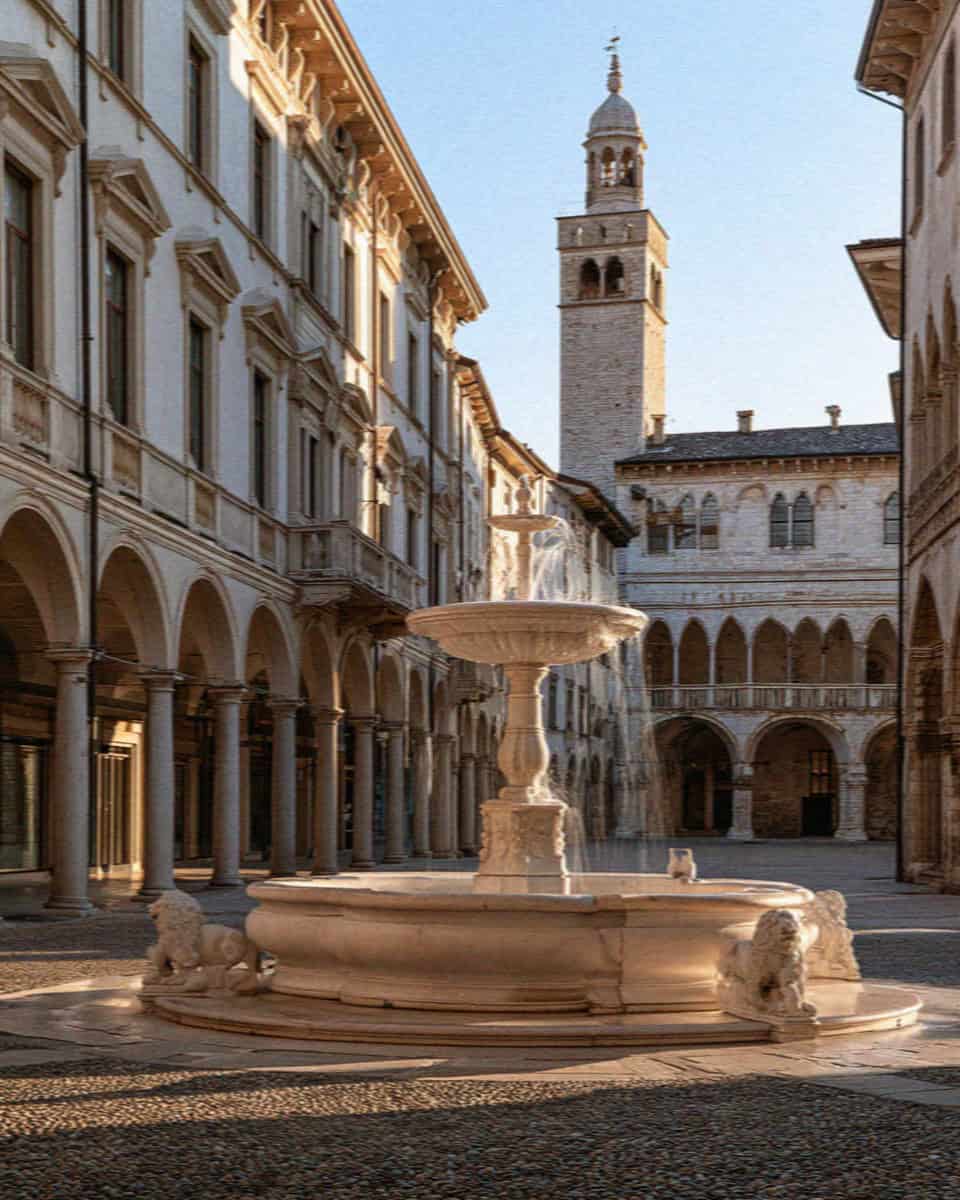
Everything in the Città Alta leads to the Piazza Vecchia, and there is no better place to begin. It is a square that seems to have been composed rather than built: the white marble Contarini fountain in the centre, ringed by little stone lions you will want to photograph; the arcaded sweep of the old civic library, the Palazzo Nuovo, along one long side; and, opposite, the medieval Palazzo della Ragione raised up on graceful arches. Walk beneath those arches, and the square opens, theatrically, onto the churches beyond. Le Corbusier is supposed to have called this the most beautiful square in Europe and begged that nothing be touched. Come once in the middle of the day for the life of it, with children chasing pigeons and old men reading papers, and again late at night, when the lamps are lit, and the stones are empty and yours alone, and you will understand why people talk about this square the way they do.
Plan Your Visit to Bergamo
A few things I booked and loved. These help support the blog, at no cost to you.
- Where I stayed: search Bergamo hotels
- Rent a car to explore the area
- Stay connected: get a travel eSIM
This section contains affiliate links. If you book through them I may earn a small commission, at no extra cost to you.
Climb the Campanone
On the corner of the square rises the Campanone, the civic bell tower, and it is worth every one of the few euros it costs to go up. There is a lift for most of the height and a short climb at the top, and then the whole of Bergamo unfolds: the terracotta roofs of the upper town, the modern city spreading across the plain, and the blue line of the Alps to the north. If you are still up in the town at ten in the evening, stop and listen, because the great bell still tolls one hundred times, exactly as it has for centuries, the old signal that the city gates were about to close for the night. It is one of those small living traditions that make a place feel continuous with its own past.
Step into Santa Maria Maggiore and the Cappella Colleoni
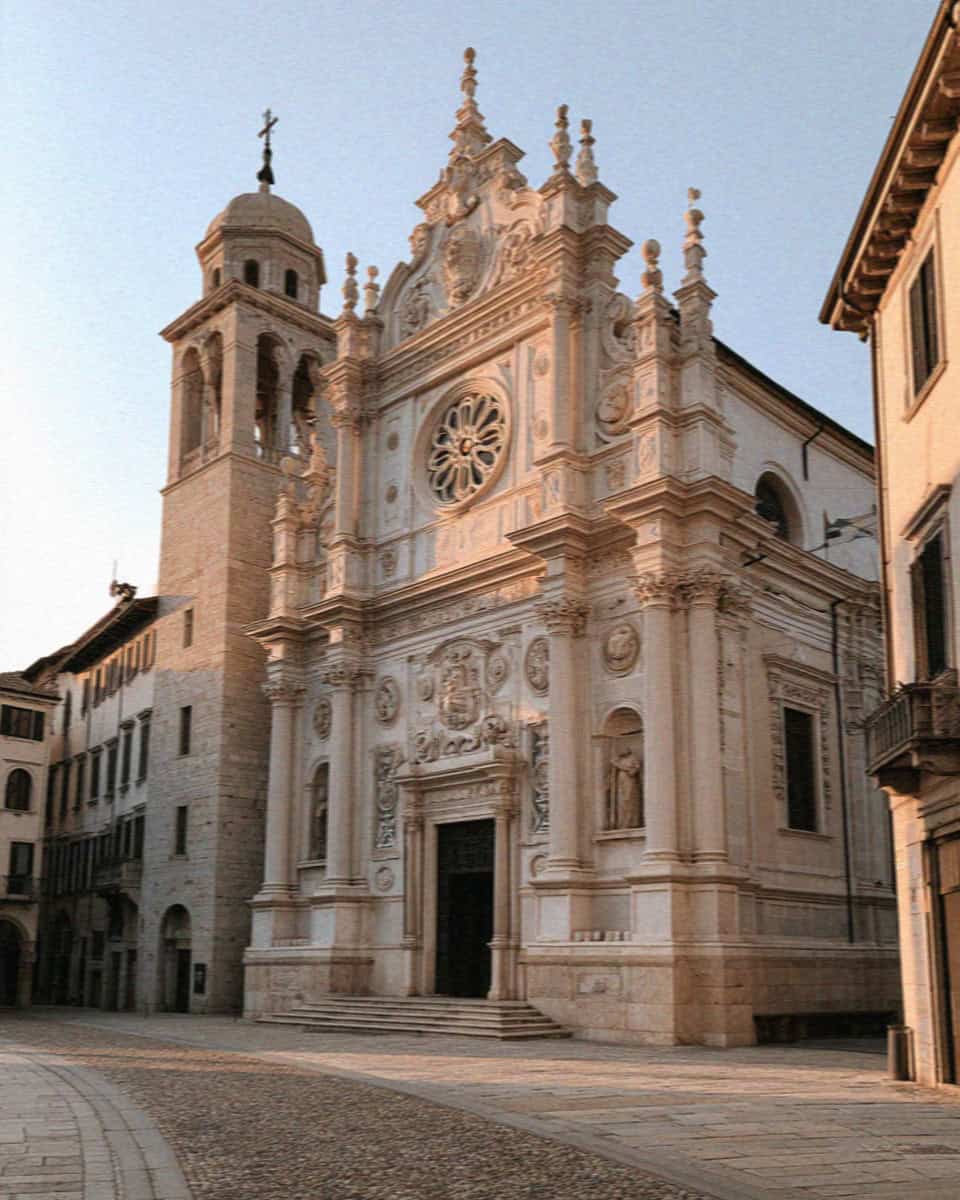
Behind the Palazzo della Ragione stand two of the most extraordinary interiors in Lombardy, side by side, and both are free to enter. The Basilica di Santa Maria Maggiore is austere and Romanesque on the outside and then, within, an overwhelming cascade of Renaissance and Baroque tapestries, gilded stucco and intricate inlaid choir stalls designed after drawings by Lorenzo Lotto; the composer Gaetano Donizetti, Bergamo’s most famous son, lies buried against one wall beneath a marble monument. Immediately beside it is the Cappella Colleoni, the private chapel and tomb of Bartolomeo Colleoni, a fifteenth-century mercenary general so rich and so vain that he had part of the basilica demolished to make room for it. Its facade, by the sculptor Amadeo, is a dizzying pink-and-white marble confection of figures, medallions and twisting columns. Together they are gaudy, sacred and unforgettable. Look, too, into the octagonal Baptistery across the way and the Duomo, the cathedral, to complete the set.
Walk the Venetian walls
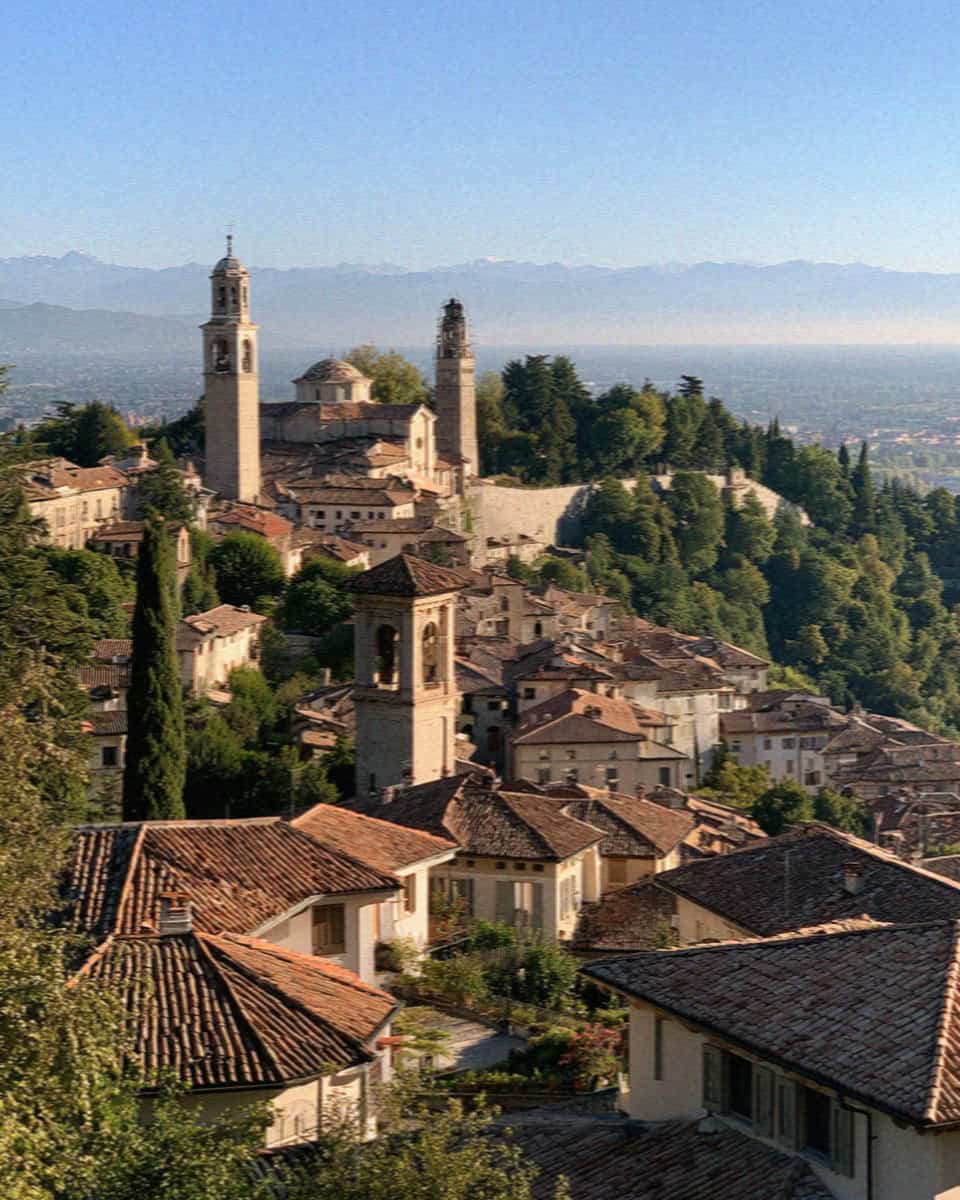
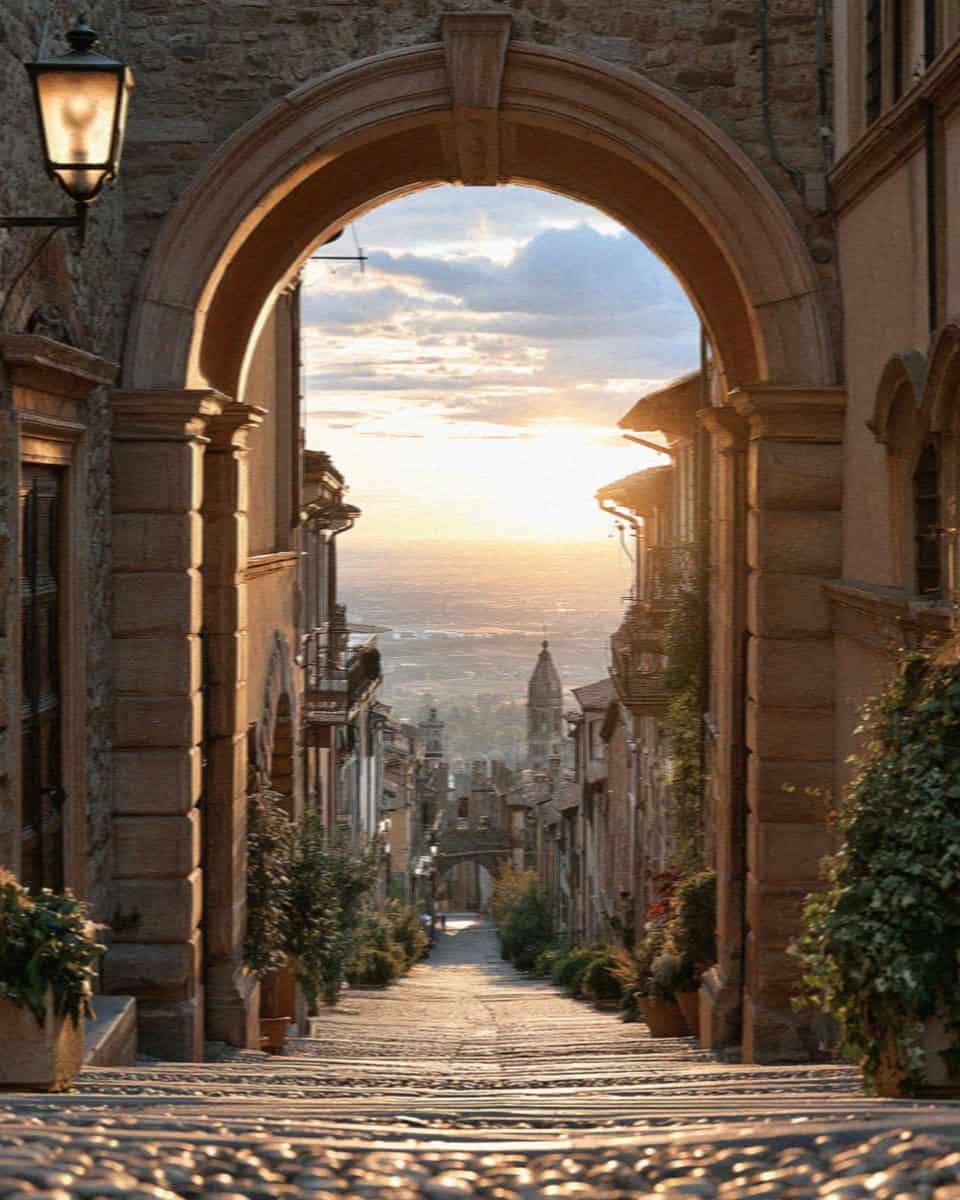
If you do one thing in Bergamo, walk the Venetian walls. Built by the Republic of Venice in the sixteenth century and inscribed by UNESCO in 2017, they run four kilometres around the upper town and were so formidable that no army ever tested them, which is precisely why they survive whole. You can stroll long stretches of the top and the tree-lined avenues just inside, passing monumental gates like Porta Sant’Agostino and the pink-stoned Porta San Giacomo, where half of Bergamo gathers to watch the sun go down over the plain. Give yourself the better part of an hour, time it for the last of the daylight, and this becomes the memory you carry home.
Ride up to San Vigilio
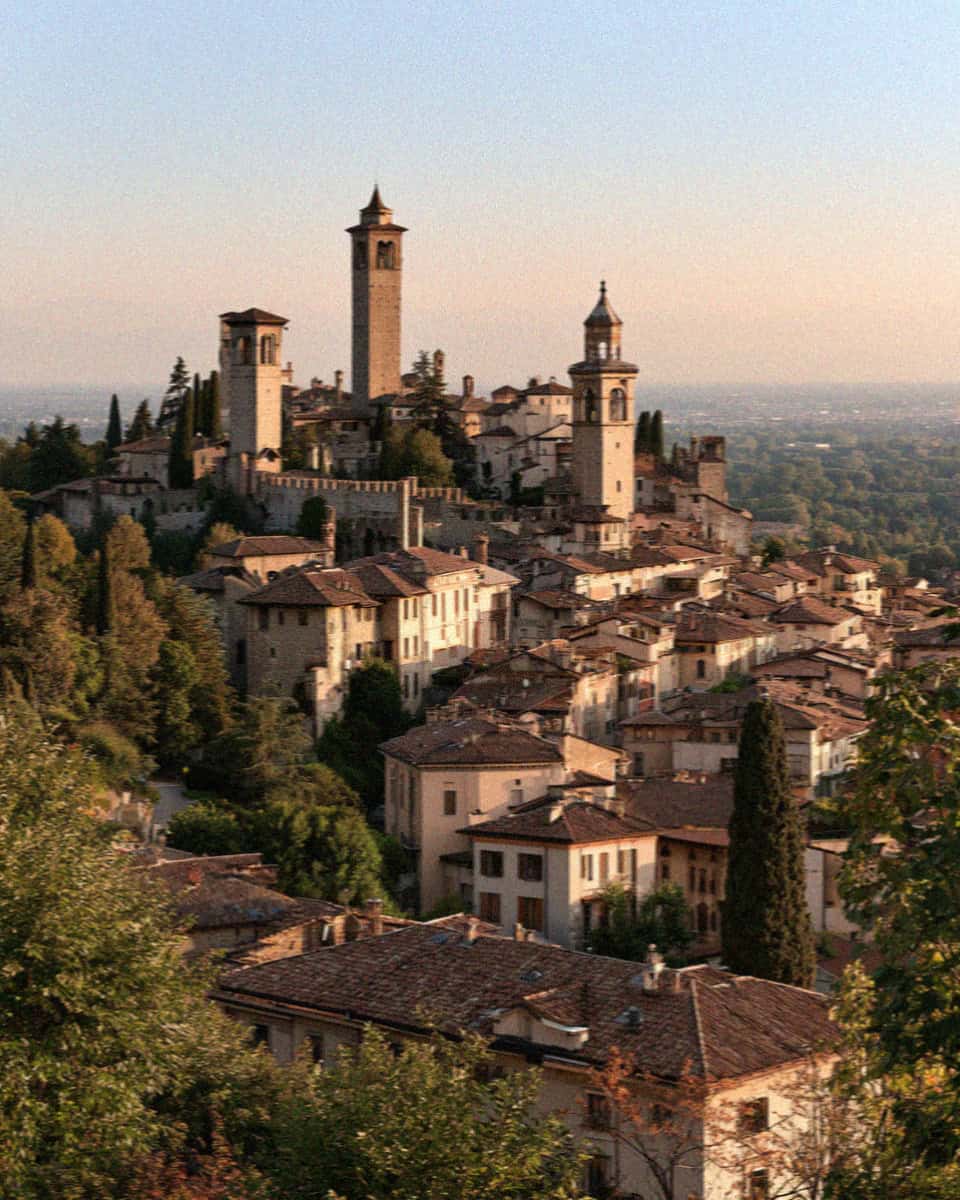
From the edge of the upper town near the Colle Aperto gate, a second small funicular carries you further up the hill to San Vigilio, where a ruined castle and its little park give you the widest view of all, back over the whole tumble of the Città Alta and out across the valleys. It is a five-minute ride, covered by the same cheap urban ticket, and a favourite of locals for a quiet evening drink. Go up toward dusk, find a bench or a terrace, and stay for the lights coming on below.
Come down for the Accademia Carrara
Do not let the upper town keep you entirely. Down in the Città Bassa, a short walk or bus ride away, the Accademia Carrara is a small art gallery with a collection that would be the pride of a far larger city: Raphael, Botticelli, Bellini, Mantegna, Titian and Lotto, hung in calm, uncrowded rooms. Across the road, the GAMeC shows modern and contemporary art for those who want it. An hour or two here is the perfect cool, quiet counterweight to a morning on your feet in the sun, and it is a side of Bergamo most day-trippers never see.
Explore the Rocca and its park
For a little more history and a lot more view, the Rocca, the old fortress at the eastern end of the upper town, sits in a leafy park scattered with monuments and cannon and houses a museum of the city’s nineteenth-century story. It is quieter than the piazza, the views back over the roofs are lovely, and the climb up to it takes you through some of the prettiest, least-trodden lanes in the Città Alta.
Wander with no plan at all
Finally, leave time to do nothing in particular. Bergamo is a city for aimless wandering: down stepped lanes to forgotten gates, into a tiny bar for a coffee at a marble counter, past the everyday shops the residents still use along Via Gombito and Via Colleoni. Buy a scoop of stracciatella and eat it on a warm wall. The monuments are wonderful, but the atmosphere is the real thing, and you only find it by getting a little lost.
A practical note
A few things smooth the day. The funiculars, both the main one and the San Vigilio line, run on the same 1.60-euro urban ticket as the buses, so a single fare covers a lot of ground; the great churches are free, and the Campanone and Accademia Carrara ask only small admissions. Go early or stay late to have the upper town before or after the Milan day-trippers, who tend to arrive mid-morning and leave by early evening. Wear flat, grippy shoes, because it is all beautiful, uneven stone, and carry water in summer. You can walk the whole upper town in a morning, but the city is far happier given a day or two.
How to fit it together
With one day, keep to the upper town and the walls; with two, add the Accademia Carrara, the Rocca and San Vigilio and let the pace drop. I have written both versions out hour by hour in the perfect Bergamo itinerary, gathered the loveliest viewpoints in my guide to the best photo spots in Bergamo, and, when you are hungry, put everything worth ordering in where to eat in Bergamo. For where to lay your head, see where to stay in Bergamo.