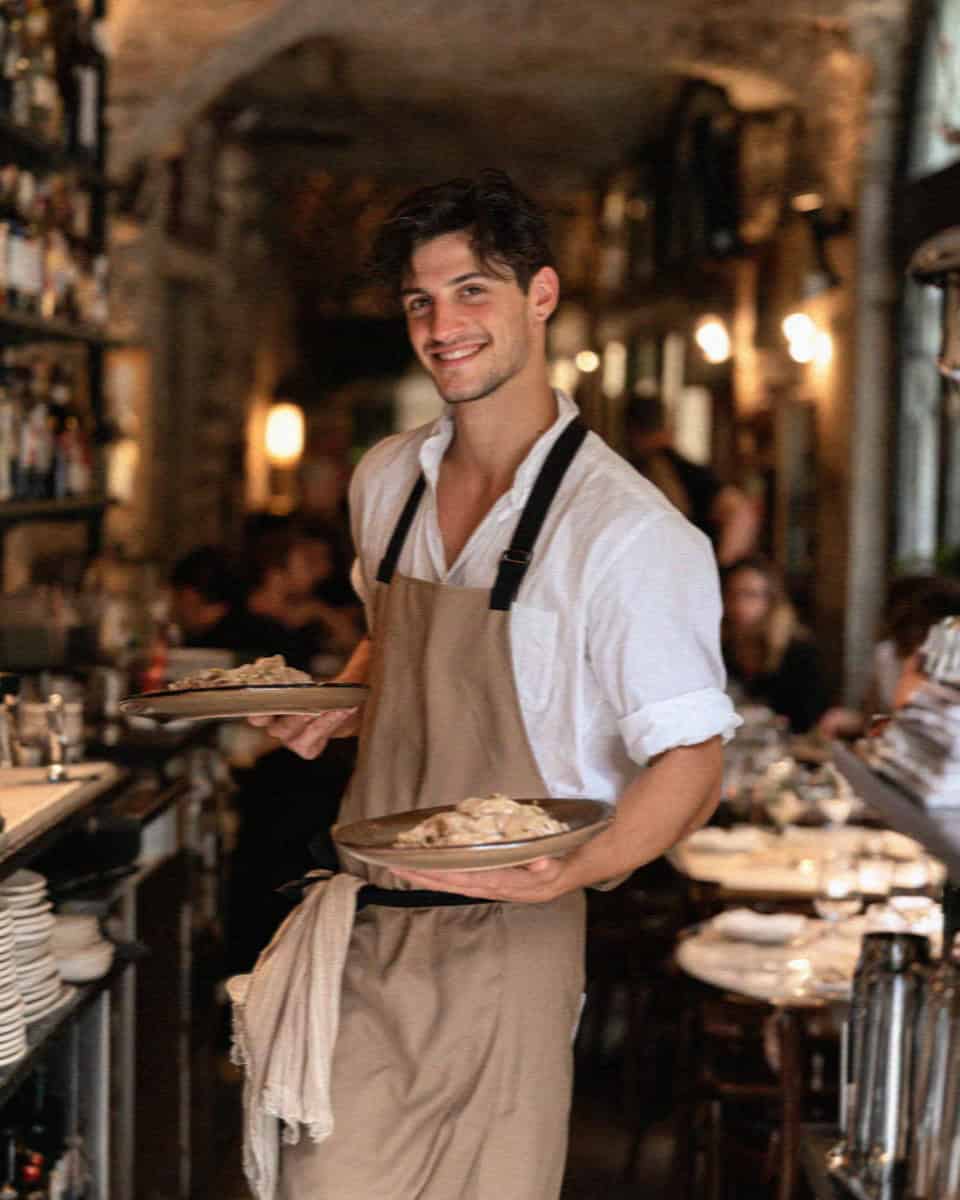
Bergamo is a UNESCO City of Gastronomy, and the local cooking is exactly what you want from a place with the Alps at its back: buttery, generous, built on cheese and polenta and slow-cooked meat. This is not delicate coastal food; it is mountain food that has come down into a beautiful city, and it is wonderful. Here is what to order, what to drink, and where I would go, from the old trattorie of the upper town to the pastry counters below. For the wider view of the city, begin with my complete guide to Bergamo.
What to order
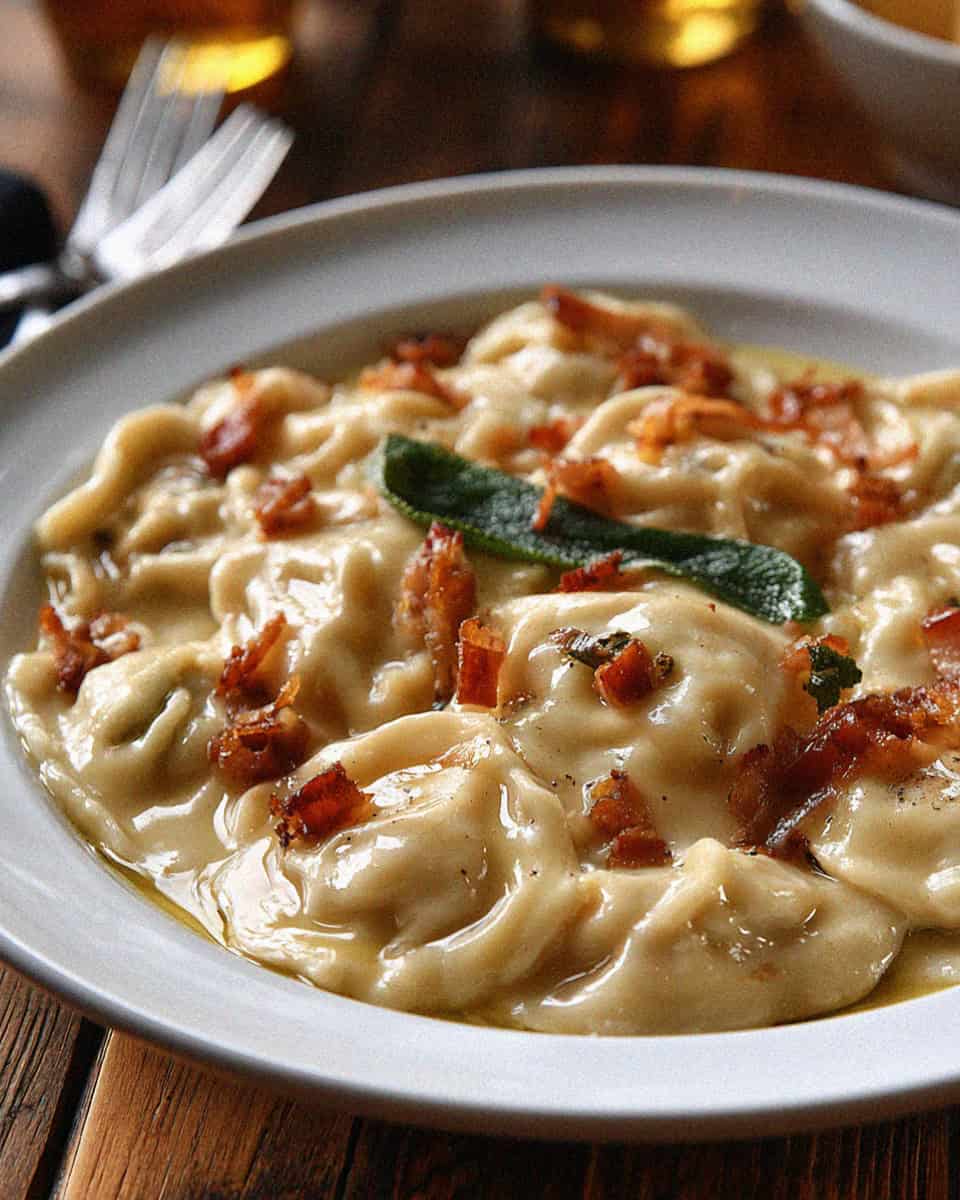
The dish that says Bergamo is casoncelli alla bergamasca, plump curls of fresh pasta stuffed with a mix of meat and, in the old recipe, a whisper of amaretti and raisin for depth, then dressed simply in melted butter, crisp pancetta and sage. Order it once, and you will order it again. After that comes polenta taragna, a dark, rich polenta of corn and buckwheat folded through with the valleys’ melting cheeses, and scarpinocc, a slimmer stuffed pasta from the village of Parre. In the hills you will meet foiade, wide ribbons of pasta with mushroom or game, and slow-braised beef, rabbit or the local coniglio, served, inevitably, with more polenta. It is honest, warming food, and a little goes a long way.
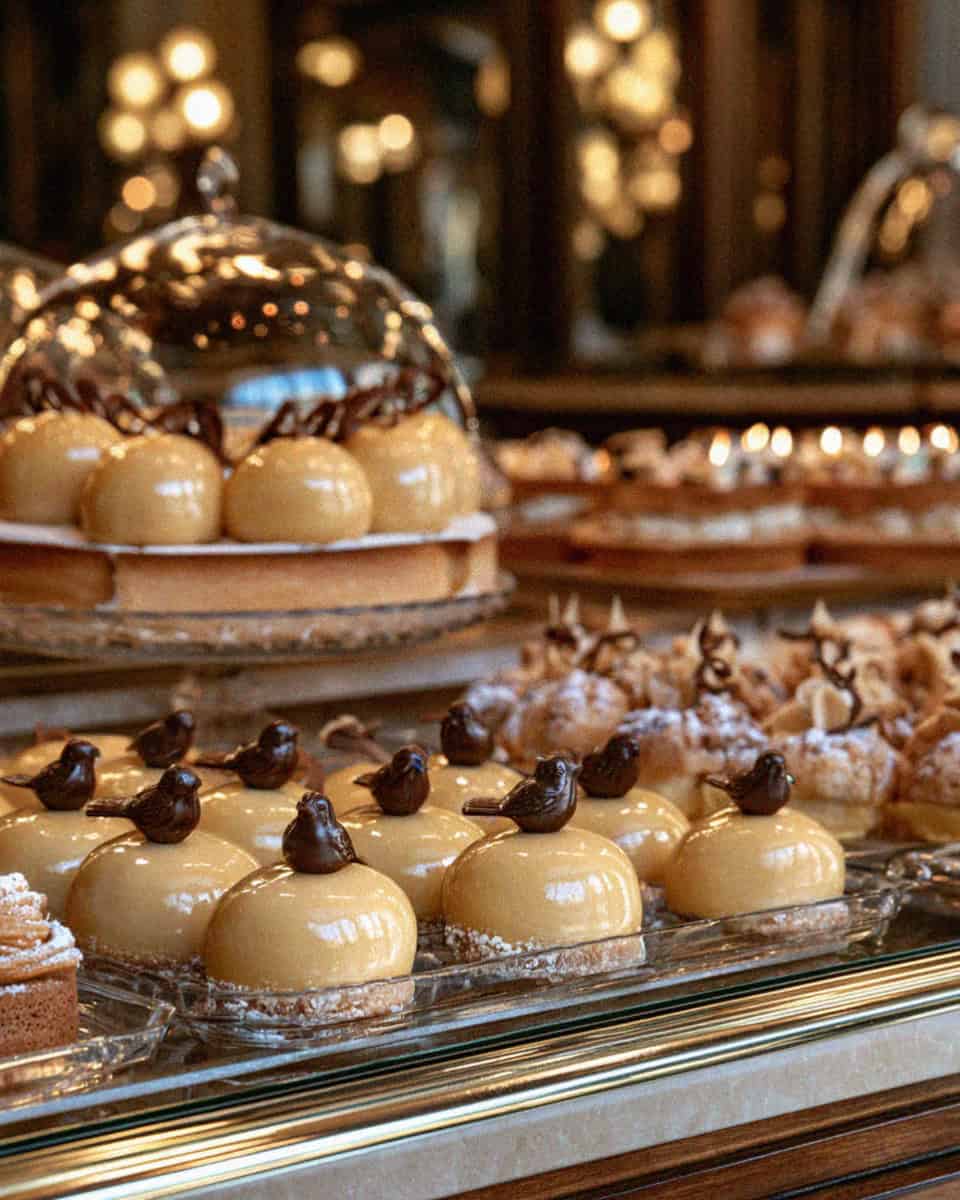
Two dishes carry the city’s name in a curious way. Polenta e osei in its savoury form is polenta with small birds, a rustic old dish; but the version everyone photographs is the sweet one, a little dome of sponge and buttercream under a coat of yellow marzipan, topped with tiny chocolate “birds,” sold in every pastry window. And torta Donizetti, named for the composer, is a soft ring cake of almond and candied citrus that goes perfectly with an afternoon coffee.
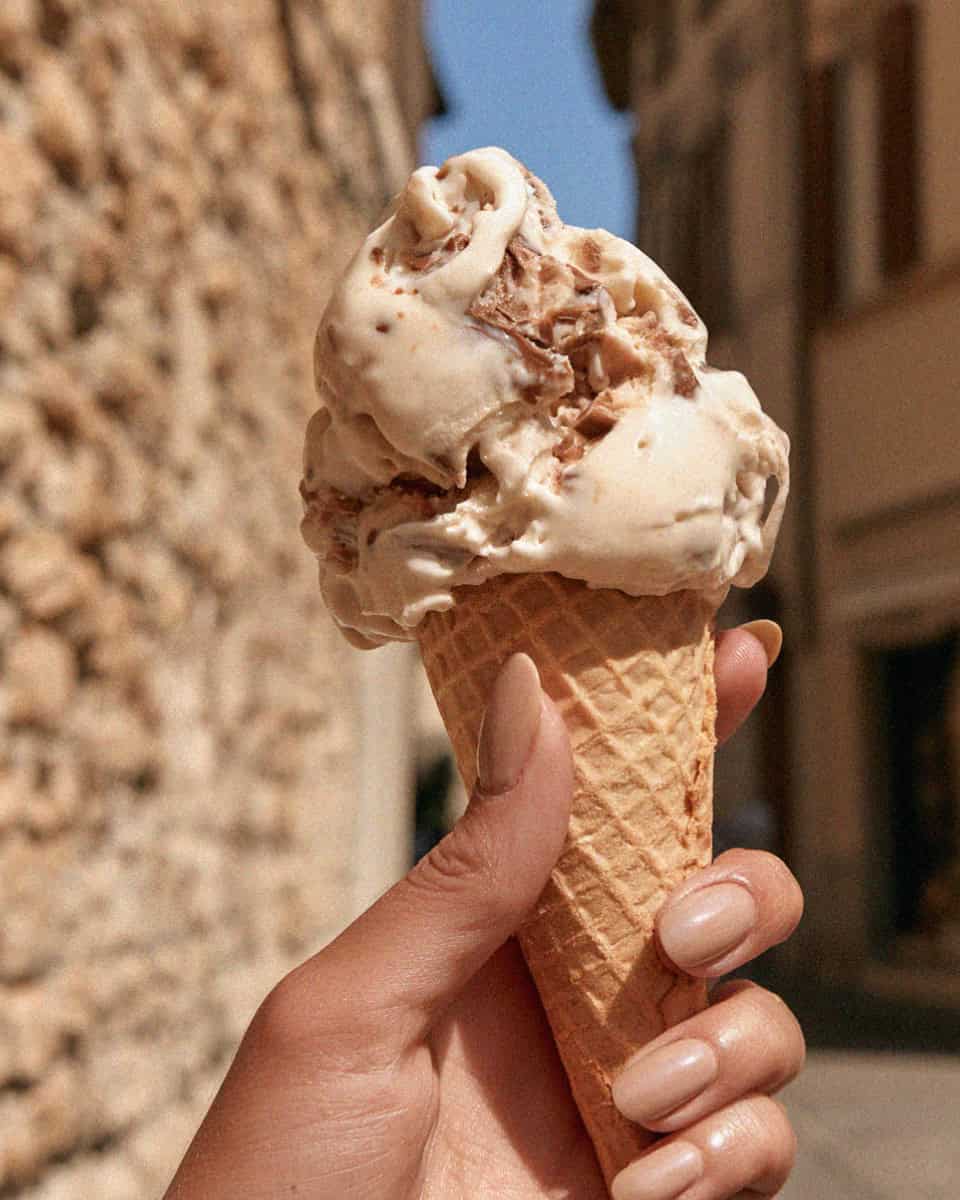
Then there is the one I love most to tell people about: stracciatella gelato, those shards of chocolate running through sweet cream, was invented right here in Bergamo, at La Marianna near the Colle Aperto gate, in 1961. Ordering a cone there is a small pilgrimage, and the gelato more than lives up to the story.
Plan Your Visit to Bergamo
A few things I booked and loved. These help support the blog, at no cost to you.
- Where I stayed: search Bergamo hotels
- Rent a car to explore the area
- Stay connected: get a travel eSIM
This section contains affiliate links. If you book through them I may earn a small commission, at no extra cost to you.
What to drink
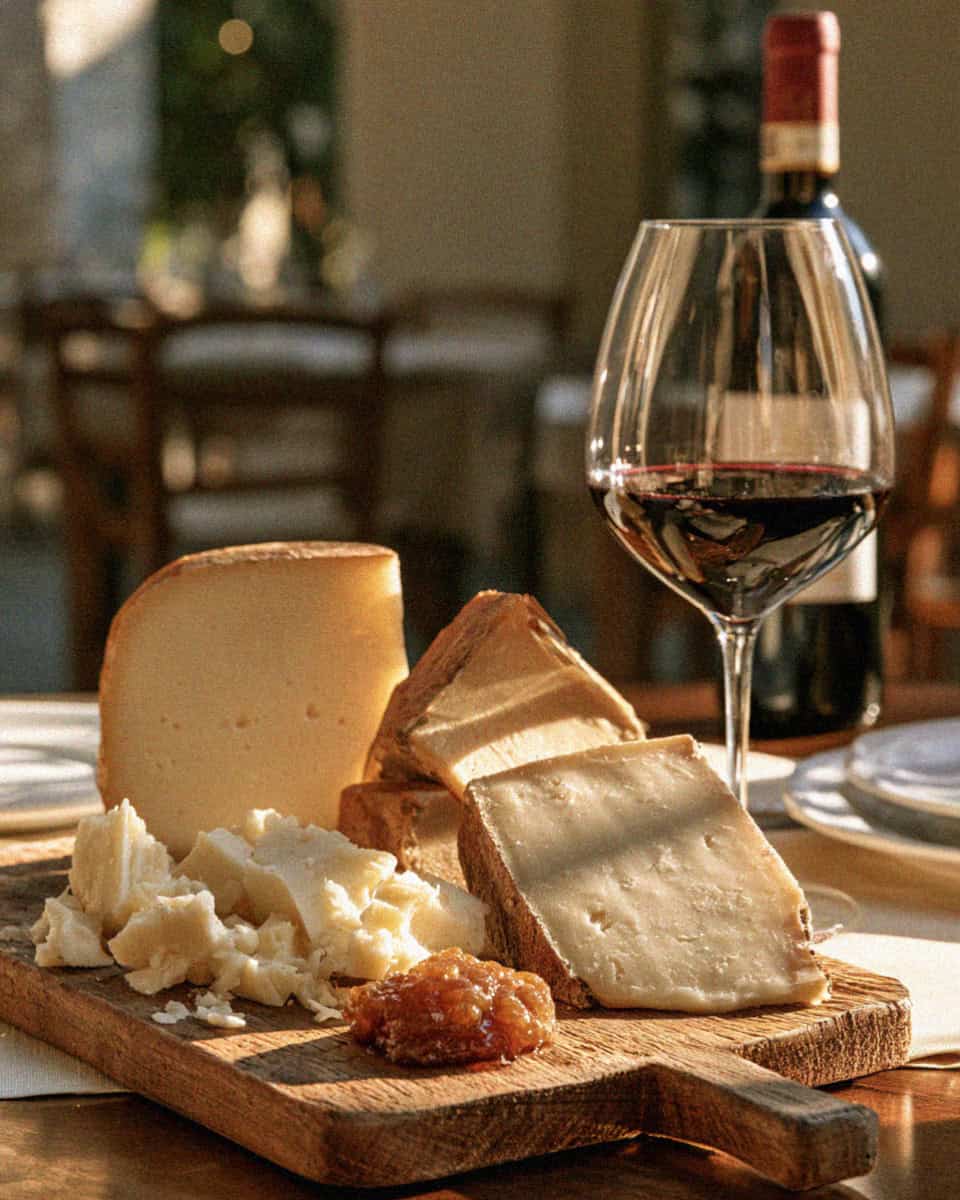
Bergamo province is said to hold more protected cheeses than any other in Italy, names like taleggio, branzi, formai de mut and the crumbly, blue-veined strachitunt among them, so a tagliere, a board of local cheeses with honey and mostarda, is never wrong. Drink it with the local red, Valcalepio, an easy, food-friendly blend from the hills just east of the city. If you want to feel like a local in the know, seek out Moscato di Scanzo, a rare, sweet red passito made in tiny quantities in a single nearby village and poured at the end of a meal. And a spritz or a glass of Franciacorta sparkling from just down the road makes the ideal aperitivo on a terrace as the walls glow.
Where I would eat in the upper town
For the full traditional experience, Trattoria Il Sole, tucked just off Piazza Vecchia, does honest local plates, casoncelli and tripe and polenta, in a setting that has been feeding travellers for generations. Da Mimmo, a Città Alta institution on Via Colleoni, is as good for a proper meal of polenta with rabbit as for a wood-fired pizza on its pretty courtyard. Vineria Cozzi, a wine bar and kitchen going since 1848, is my pick for a lighter, more contemporary lunch with a serious list of local bottles, and it will even pack you a picnic. For casoncelli with a view and a kinder bill, Trattoria La Colombina looks out over the rooftops toward the walls, and the Circolino di Città Alta, in an old convent courtyard, is where you go for good, simple food at gentle prices in the open air. For a cosy, intimate dinner of game and risotto, the Antica Osteria del Vino Buono is hard to beat.
A meal up the hill, and a bite on the go
If you ride up to San Vigilio, the Baretto di San Vigilio is a lovely spot for a long, view-blessed lunch or an evening drink above the whole city. And for something quick between sights, the little kiosks near the funicular sell polenta with melted cheese or braised meat in a paper cone, the upper town’s honest answer to street food.
Down in the lower town
The Città Bassa is where Bergamo eats its everyday meals, and it is worth coming down for. The historic pastry counters along the elegant streets are the place to buy your polenta e osei and torta Donizetti to take away, and the cafés and bars around the Sentierone fill with locals at aperitivo hour, glasses in hand, the evening stroll in full swing. Prices are generally friendlier down here than up on the hill, and the quality is just as high.
A Bergamo food day, morning to night
If you want to eat the city properly, let the day build. Start with a coffee and a slice of torta Donizetti at a pastry counter in the lower town, the way locals do, standing at the bar. Mid-morning, browse a deli or the market for a wedge of taleggio or stracchino and some salumi to carry home. Take casoncelli for lunch on a terrace in the upper town, unhurried, with a glass of Valcalepio. In the heat of the afternoon, climb to La Marianna for the stracciatella at its source. Then, as the walls turn gold, find a spot for aperitivo, a spritz or a glass of Franciacorta with a board of local cheese, before a long dinner of polenta taragna and slow-braised meat, finished, if you have room, with a thimble of sweet Moscato di Scanzo. Do that, and you will have tasted Bergamo from top to bottom.
For lighter and vegetarian appetites
Bergamo’s cooking is rich by nature, but you will not go hungry if you want to eat a little lighter. The wine bars, Vineria Cozzi chief among them, do fresh, seasonal plates and good salads alongside the classics; there are cheese-and-vegetable versions of the stuffed pastas; and a board of local cheeses, some bread and a glass of wine makes a lovely small supper. Portions tend to be generous, so pace yourself across the day rather than ordering everything at once, and remember that a cone of gelato is a perfectly respectable second course.
A rough sense of cost
A plate of casoncelli runs somewhere in the region of twelve to sixteen euros; a full traditional meal with a glass or two of wine, perhaps thirty-five to fifty a head; a coffee at a marble counter, a euro or two; and a cone of that famous stracciatella, just a few euros and worth ten times as much. Book ahead for dinner in the upper town on weekends, when Milan comes up the hill for the evening and the good tables fill early.
Plan the rest
Work up an appetite first with my guide to the best things to do in Bergamo, fit the meals into your day with the perfect Bergamo itinerary, and choose a base near the good tables in where to stay in Bergamo.