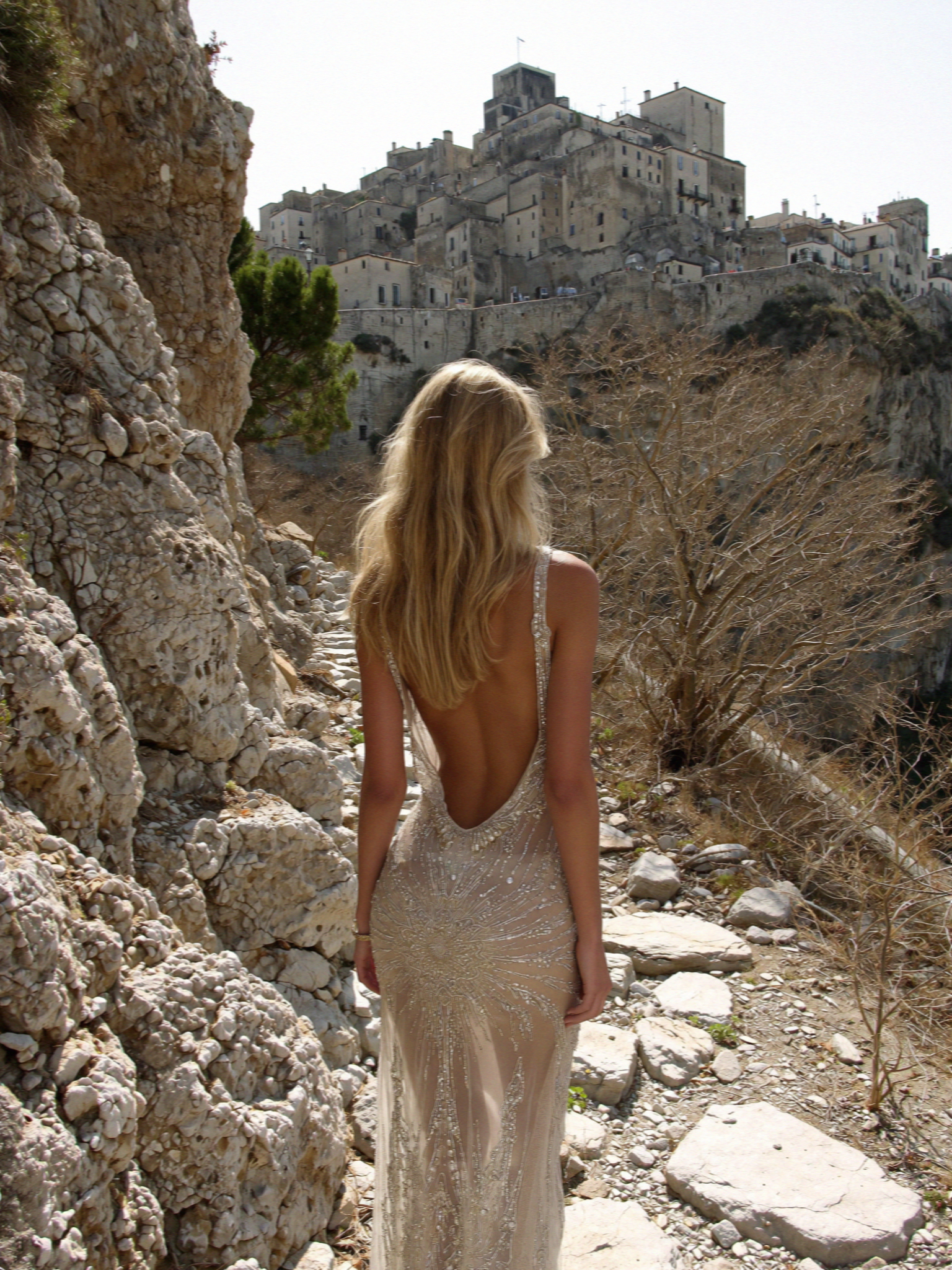
The best thing to do in Matera is to leave it and look back.
The town cannot be seen from inside itself. Standing in the Sassi you are too close and too low, and the famous stacked shape simply does not assemble. It exists from exactly one place: the far rim of the gorge, on the limestone plateau opposite, in the Parco della Murgia Materana.
Getting there is either a ninety minute walk that is the highlight of most people’s visit, or a fifteen minute drive. Both are legitimate. This is what each involves.
The wider planning is in my complete guide to Matera.
The walk, in short
Roughly four kilometres round trip, about ninety minutes at a fair pace, and moderate rather than hard. It follows a marked route down from the old town into the ravine, across the river on a suspension footbridge, and up the far side to the viewpoint.
The difficulty is not distance or gradient. It is footing: loose stone, rock steps, and stretches with a drop beside you. Trainers with grip are the minimum and walking shoes are better.
Down into the gorge
You leave the town at the bottom edge of Sasso Caveoso and the change is immediate. Within five minutes the buildings stop, the noise stops, and you are on a rocky path between scrub and bare limestone with the river somewhere below.
It is steeper than it looks from above, and it is the part people underestimate on the way back up.
The bridge at the bottom

At the bottom of the ravine the path reaches a narrow suspension footbridge across the water.
It moves. Not alarmingly, but enough that people stop in the middle and then hurry off it, and enough that anyone genuinely uneasy about heights or wobbling should know before they commit to the descent. It is short, it is well maintained, and crossing it is the moment the walk turns from a hike into an occasion.
Check locally before you set out, since the bridge has been closed for maintenance at times, and the alternative crossing adds distance.
Up the other side
The climb out is the work of the day: switchbacks up bare rock, no shade at all, and a steady gradient.

Then it flattens into the plateau, which is a different world from the town: dry limestone, low scrub, thyme, wide sky, sheep somewhere, and almost no built structure. In spring it is green and full of wildflowers. By July it is bleached and hard.
The caves on the far wall

Look back across at the gorge wall as you go and you will start seeing openings in it. Dozens of them, then more.
The plateau and the ravine walls are scattered with rock-cut caves and churches, some of them the oldest religious sites in the area, cut and painted long before the town opposite looked anything like it does now. Several can be visited. Most simply sit there.
It reframes the Sassi rather usefully: not a town that grew into caves, but the surviving, prosperous corner of a landscape that was full of them.
The viewpoint
The belvedere itself is unremarkable underfoot, which is the point. There is nothing to it but a rim of rock, and across the gorge, the whole of Matera.
Go for the last ninety minutes of daylight, or the first hour after dawn. In the evening the low sun rakes across the tiers and separates them, and if you stay past sunset you get the lights coming on tier by tier while the gorge below goes completely black.
Take a torch if you stay for that, because the walk back is not one to do in the dark by phone light. Most people who stay for the lights drive.
Doing it without the walk
Entirely reasonable, and the right choice in July or with anyone who would find the descent hard.
The plateau is reachable by road in about fifteen minutes from the town, and taxis will take you and collect you. Agree a return time. There is nothing up there but the view, and no reliable way to summon a car back.
What the park actually is
The plateau is not simply the place you go to look back at the town. It is the Parco della Murgia Materana, a protected regional park of roughly eight thousand hectares, and it is listed by UNESCO jointly with the Sassi rather than separately.
That joint listing is the argument the whole site rests on. The town and the gorge are one thing: the same limestone, the same rock-cutting, the same eight thousand years of people living inside it. Matera is the corner of it that kept going.
Inside the park there are something over a hundred and fifty rock-cut churches, prehistoric settlement sites, and shepherds’ caves still fitted with stone troughs and low walls for penning animals. Most of it is unsigned and unstaffed. You are walking through an archaeological landscape that has never been tidied up, which is unusual in Italy and is the real reason to cross rather than drive.
The marked route from the town is trail 406, and it is signed reasonably well once you are on it. The footbridge at the bottom is usually called the Tibetan bridge, which is simply the Italian term for that style of narrow suspension crossing and not a claim about its origins.
What to take
Water, more than you think, and there is nowhere to buy any once you leave the town.
Shoes with grip. A hat in summer. A torch if you are staying for dusk. And start early, because the climb out faces the sun and there is no shade anywhere on it.
In July and August, do not attempt this in the middle of the day. People do, and it is the one genuinely risky thing in an otherwise gentle destination.
Read also: the best photo spots in Matera, the rupestrian churches of Matera, and my complete guide to Matera.
Frequently Asked Questions
How long is the walk to Belvedere Murgia Timone?
About four kilometres round trip and roughly ninety minutes at a fair pace. It descends from the old town into the ravine, crosses the river on a suspension footbridge and climbs the far side to the viewpoint.
Is the Matera ravine walk difficult?
Moderate. The distance and gradient are manageable for most people, but the footing is loose stone and rock steps with drops in places, and the climb out has no shade. Proper shoes matter more than fitness. Avoid it in the middle of a summer day.
Can you drive to the Belvedere in Matera?
Yes. The plateau is about fifteen minutes by road and taxis will run you over and collect you. Agree a return time in advance, because there is nothing at the viewpoint and no dependable way to call a car from it.
Is there a bridge across the ravine in Matera?
Yes, a narrow suspension footbridge at the bottom of the gorge. It moves underfoot, which some people find unnerving. It has been closed for maintenance at times, so check locally before setting out, as the alternative crossing adds distance.
When is the best time to go to the Belvedere?
The last ninety minutes of daylight for the strongest light on the town, or the first hour after dawn for the quietest. If you stay past sunset to watch the lights come on across the Sassi, take a torch or, better, arrange to drive back.