Some links in this guide are affiliate links. If you book through one, this site may earn a small commission, at no extra cost to you. How this works.
Alghero is small enough that you can see the whole of it in a day and interesting enough that you should not.
The old town is about six hundred metres end to end. What fills a stay is not the number of sights but the fact that the town has a rhythm, and the good parts of it happen at particular hours: the walls at seven, the market at eight, the cape before the heat.
Here is what I would actually do, roughly in the order I would do it.
1. Walk the walls, twice
This is the thing. The sea-facing ramparts run the whole western edge of the old town, they are flat and wide on top, and they are free.
Do the circuit once in the morning when there is nobody on them and you can see how the town is built: the walls come first, the houses are pressed up behind them, and the lanes run back inland at right angles like ribs.
Then come back at seven, when the entire town is up there walking in both directions, and understand that the wall is not a monument. It is the living room.
Start at Bastione della Maddalena at the north end and work south past Pigafetta and Magellano to the harbour. Half an hour slowly. The bars along the inside edge charge for the position and it is worth it once.
2. Get lost in the old town on purpose
The lanes are narrow enough that two people pass sideways, and tall enough to be in shade at two in the afternoon in August, which in a Sardinian summer is not a small thing.
Look for three things as you go. The bilingual street signs, Italian above and Catalan below. The pointed stone doorways, which are late Catalan gothic and not something you find on the Italian mainland. And the way every fifth lane ends abruptly in a rectangle of blue where the wall opens onto the sea.
The Cattedrale di Santa Maria is in the middle of it. The facade is a bit of an argument with itself, neoclassical stuck onto something much older, but the bell tower is the best view down onto the rooftops in the town.
3. Neptune’s Grotto and the cape
The one excursion nobody should skip. Twenty minutes west, the land ends in a two hundred metre white cliff at Capo Caccia, and there is an enormous cave at the bottom of it.
It is guided, timed, and about half an hour underground among stalactites and a still saltwater lake. You get down there either by boat from the harbour or by a stairway cut into the cliff face, and the choice matters more than you would think. The full detail is in my guide to Neptune’s Grotto and Capo Caccia.
Go early. The first entries of the day are cooler, quieter and the light on the water outside is better.
4. Spend a day on the water
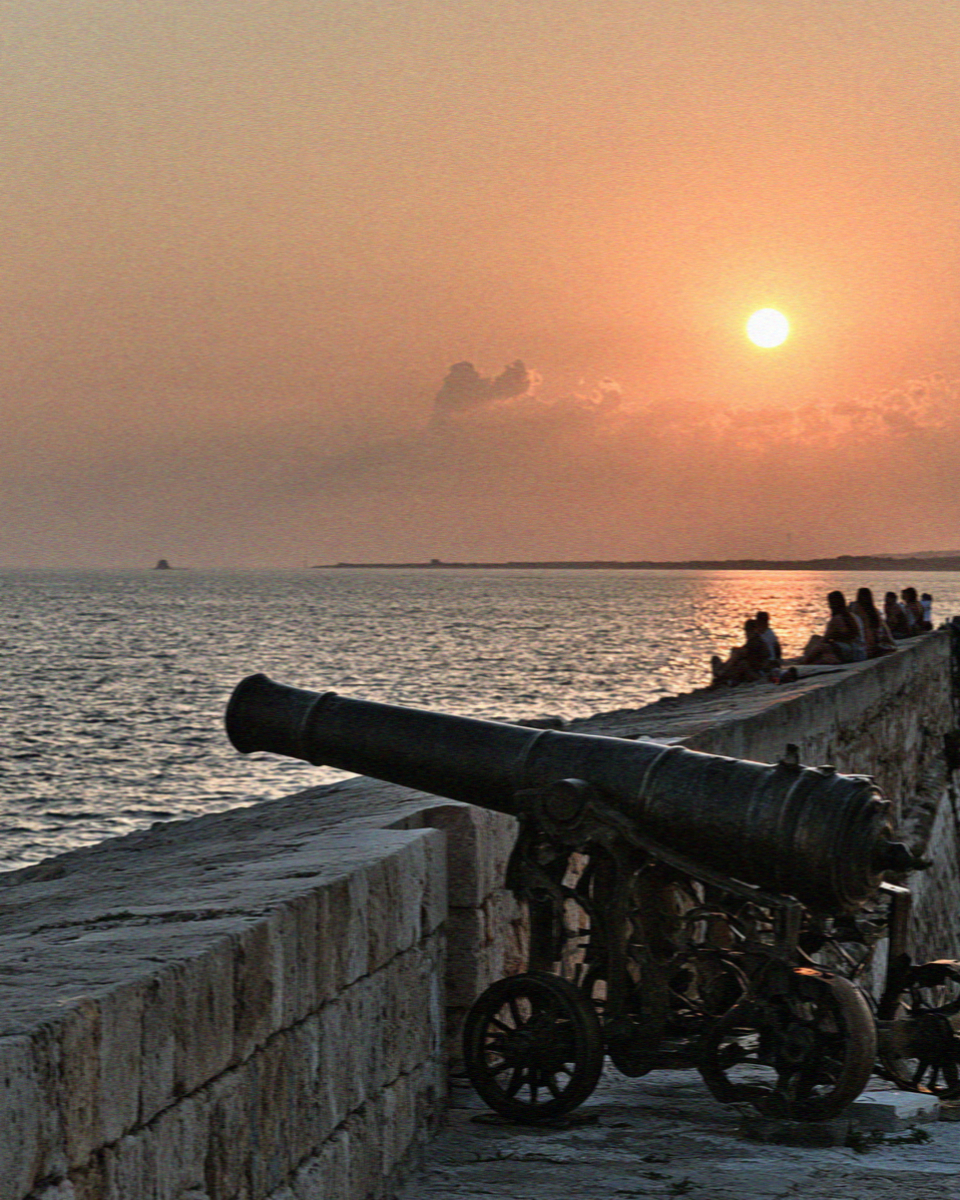
Almost half of everything bookable in Alghero happens on a boat, and it is mostly sailing rather than cave-hopping: catamarans out to the bay at Porto Conte, snorkelling under the cliffs, and sunset trips that work here because the town faces west into open sea.
If you only do one, do a sunset sail. There is no land between this coast and the Balearics, so the sun goes down into water rather than behind a headland, and it is a different thing from an Amalfi sunset. Which trip suits which day is in the best Alghero boat tours.
5. Get on a bus to a beach
The thing that makes Alghero unusual is that the good beaches are on a public bus for about a euro.
Maria Pia is closest, fifteen to twenty minutes, dunes and pine behind it. Le Bombarde and Lazzaretto are further round toward the cape, both white sand with water that shelves so slowly you walk out a long way before it reaches your waist.
Take the earlier bus rather than the later one. These beaches fill from about eleven. Which one to choose and how to reach each is in the best beaches in Alghero.
6. See the Bronze Age, cheaply
Twenty minutes inland there is a dry stone tower built roughly three and a half thousand years ago by people who left no writing whatsoever, and a necropolis of tombs cut down into flat rock that is older still.
Nuraghe Palmavera and the Anghelu Ruju necropolis are both single-figure entry, both uncrowded, and there is a combined ticket. Go late in the afternoon when the light is long and you will likely have the place to yourself. What you are actually looking at is explained in the nuraghi near Alghero.
7. Look at the coral properly
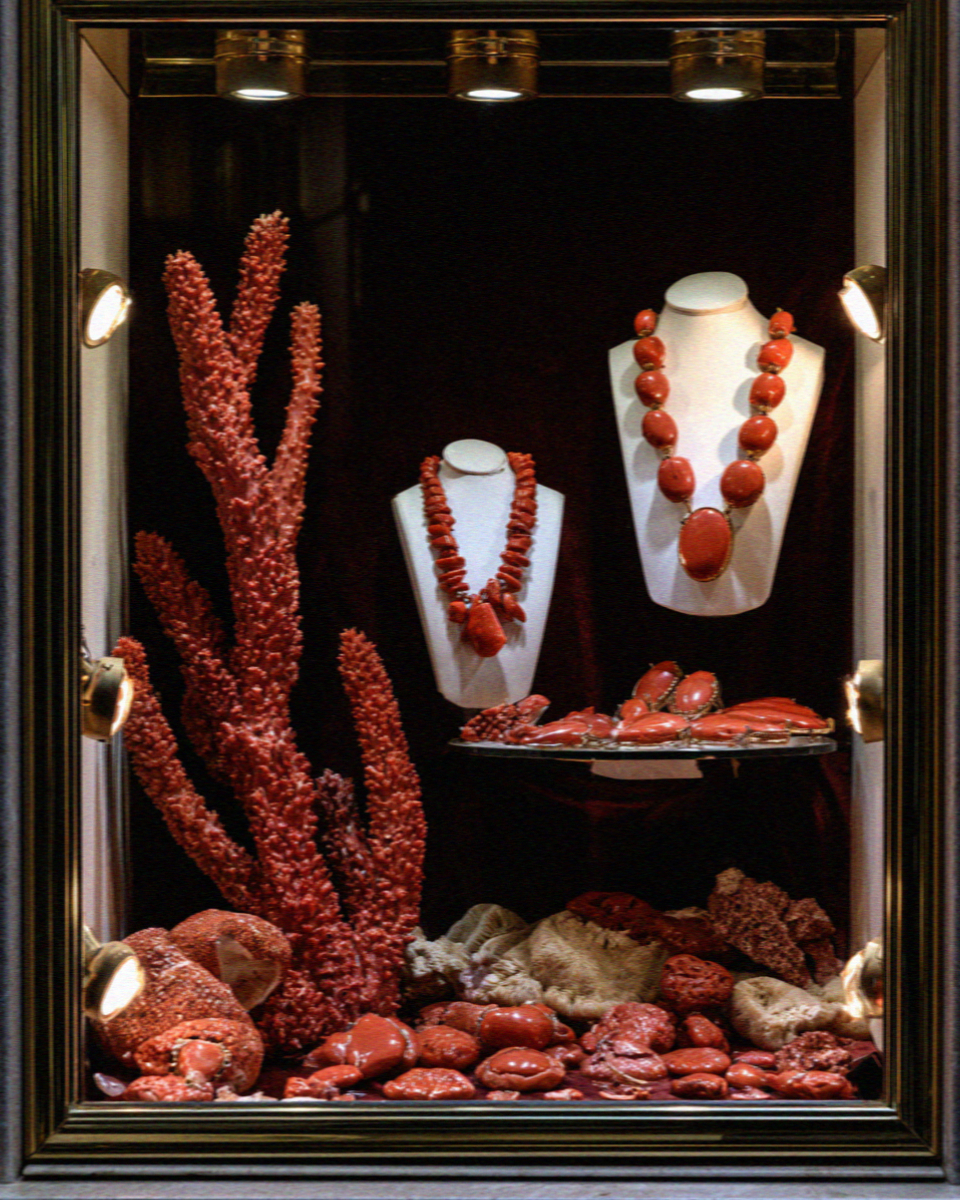
This coast has been fished for red coral for centuries and the workshops in the old town still cut and set it.
Whether or not you buy anything, go and look in one of the established windows, because you will see the raw branch next to the finished piece and it explains the price instantly. Real Mediterranean coral is dense, cool to the touch and grained along the branch. A great deal of what is sold as coral elsewhere in town is dyed substitute, and it looks convincing until you have seen the real thing beside it.
8. Eat the lobster once
Aragosta alla catalana is lobster served cold over raw sliced onion and tomato with oil and lemon, and it was invented in this town in 1949. It is not cheap and it is the meal to have once rather than the meal to have twice.
Book it. From June to September the places that do it properly fill a day or two ahead. Where, and what it should cost, is in where to eat in Alghero.
9. Drive the coast road to Bosa
The best day out of Alghero and the reason to hire a car for part of your stay. Sixty kilometres of cliff road south to a town of pastel houses stacked under a castle on a river.
It is about ninety minutes each way without stopping, which nobody does, so give it most of a day. Do not try to combine it with the Grotto. Both want a morning and doing them together ruins the better one.
10. Do nothing at all, at seven
I am serious about this one. The single best hour in Alghero costs nothing and requires no booking: be on the wall between seven and eight with something cold, facing out.
What to skip
The tourist train that loops the town. It covers ground you can walk in twenty minutes and the old town lanes are too narrow for it, so it mostly shows you the modern part.
Buying coral from a stall rather than a workshop.
And trying to do the Grotto, the beaches and Bosa in two days, which is the most common mistake here and leaves you with a blur.
What to book before you come
Most of this list is free and needs no planning. These three do need booking, and they are the ones people write home about.
- The old town on foot with a guide. The bastions, the Jewish quarter and the Catalan street names, in the order they make sense.
- A small boat day with snorkelling and lunch. Small group, more time in the water, and it goes where the big catamarans do not.
- A Sardinian home cooking class. Four courses, someone else’s kitchen, and you finally learn what a culurgione is supposed to look like.
Frequently Asked Questions
What is Alghero best known for?
Its Catalan heritage and language, the walkable sea walls around the old town, red coral fished and worked locally, Neptune’s Grotto in the cliffs at Capo Caccia, and lobster served alla catalana with raw onion and tomato.
How many days do you need in Alghero?
Four is comfortable: one for the town and the walls, one for the Grotto and the cape, one for the beaches and the archaeology, and one for the coast road to Bosa. Three works if you cut Bosa.
Can you do Alghero without a car?
Yes for the town, the walls and the main beaches, which are all on local buses for around a euro. You need a car or a tour for Bosa, Porto Ferro and the inland sites.
What is there to do in Alghero in the evening?
Walk the ramparts between seven and eight, when the whole town does. After that the old town lanes fill with restaurant tables and stay busy until late. It is a town that lives outdoors rather than one with much nightlife.
Is Alghero good for families?
Very. The beaches shelve gradually and are bus-reachable, the old town has no traffic to speak of, and the archaeological sites are small enough to hold a child’s attention. The Grotto stairway is the one thing that is genuinely hard with young children.
Read also: Neptune’s Grotto and Capo Caccia | The Best Beaches in Alghero | Victoria’s Complete Guide to Alghero