Corsica’s problem, if it is one, is that most of the good things are at opposite ends of a slow island.
So this is ordered by what is genuinely worth building a day around rather than by geography, with a note on where each one sits. How to string them together is in the Corsica itinerary, and the island overall is in my complete guide to Corsica.
Stand on the cliffs at Bonifacio
South. The one unmissable thing.
A medieval town on white chalk that the sea has undercut, so the clifftop houses overhang eighty metres of nothing. See it from the plateau, then see it from a boat, because they are two different experiences and the second is better. Detail in Bonifacio.
Take a boat into Scandola
West. The other unmissable thing.
Red volcanic rock going vertically into clear water, sea caves at the waterline, ospreys on the ledges, and no way in except by sea. Four to five hours from Porto, usually combined with the Calanques de Piana and a stop at Girolata. Detail in Scandola and the Gulf of Porto.
Drive the Calanques de Piana at sunset
West. Half an hour of road, and one of the great half hours in the Mediterranean.
Orange granite pinnacles and arches above the sea, and low light turns them properly red. The pull-ins fill early in season. Go, and then go back the next evening.
Swim at Saleccia
North. The effort is the point.
A kilometre of white sand in the Agriates with no road and no buildings, reached by boat from Saint-Florent, a 4×4 track, or a four and a half hour walk. It looks Caribbean and it is empty. Which beach suits you is in the best beaches in Corsica.
Walk the citadel at Calvi
North. A Genoese fortress on a promontory above a long crescent of sand and pine, with mountains behind that hold snow into early summer.
The lanes inside the walls take twenty minutes to walk and are worth doing in the evening when the day visitors have gone. Detail in Calvi and the Balagne.
The Genoese towers

Everywhere. Around eighty-five still standing.
Round stone watchtowers on almost every headland, built by Genoa against Barbary raids and spaced so a signal fire could run the length of the island. Once you notice one you notice all of them, and a walk out to one at the end of a headland is one of the best free hours on Corsica.
The tower at Campomoro in the southwest is the largest and you can go inside it.
Eat in a ferme auberge
Inland, anywhere. The best meal you will have here.
A working farm serving a fixed menu of what it produces: charcuterie, a stew, a sheep’s cheese, fiadone. Usually several courses for €30 to €45, and usually needing a phone call the day before. Detail in where to eat in Corsica.
Drive Cap Corse
North. A full unhurried day.
The finger of land pointing north from Bastia, with a single road round it past fishing hamlets, watchtowers and terraced vineyards, almost entirely undeveloped. The western side is the spectacular half. Do it clockwise so the sea is on your side of the road.
The Restonica gorge
Interior. The one inland day worth taking.
Above Corte, a narrow road climbs into the mountains along a river of granite pools that are painfully cold and extremely clear. There are walks from the top car park up to glacial lakes. Go early, because the road is narrow and the parking is small.
The west coast rock
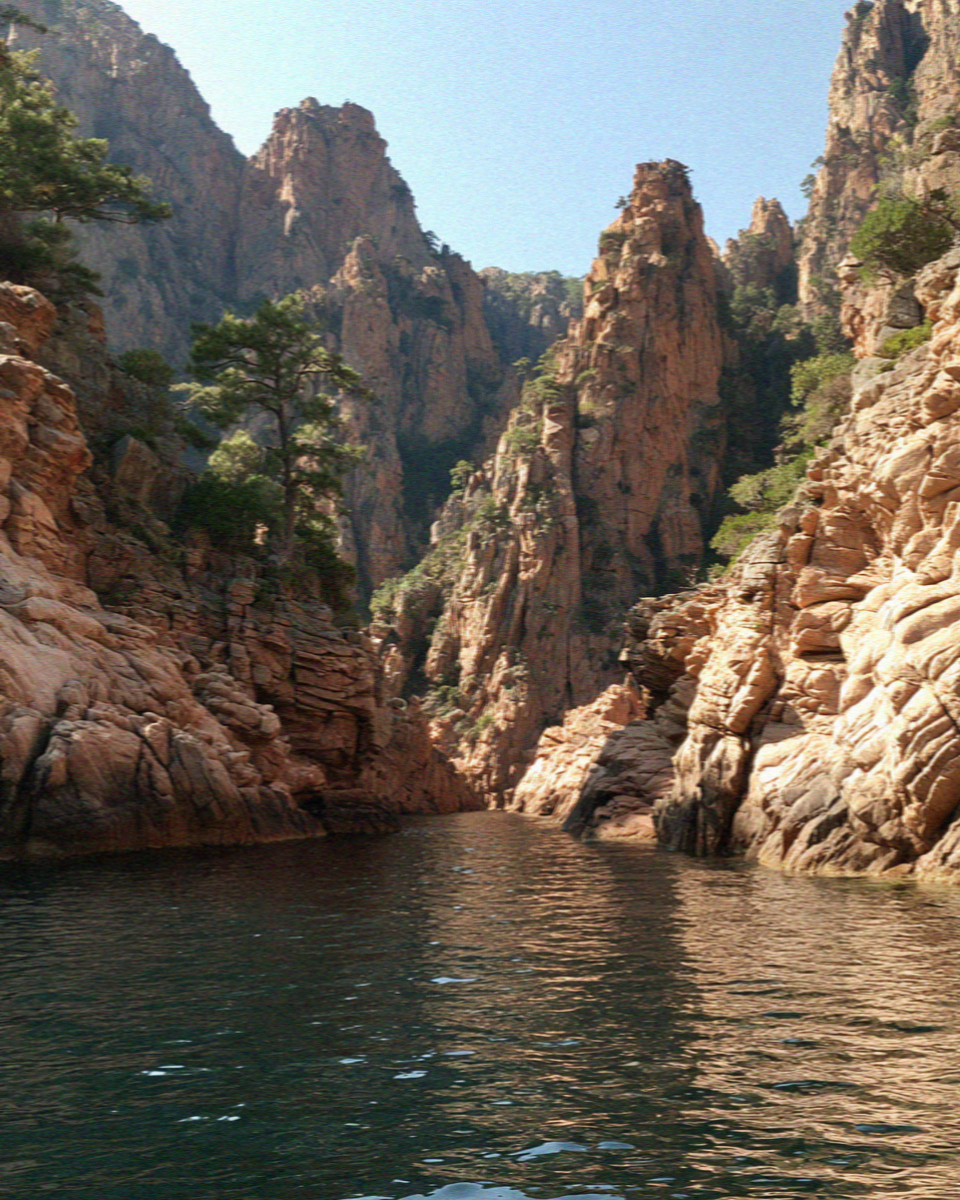
West. Not a single site, more a stretch.
Between Porto and Cargèse the coast is red porphyry and the road runs above it with inlets, spires and pine growing out of bare rock. There is no ticket and no queue. It is simply the best driving on the island, and the reason a hire car is not optional.
Boat to the Lavezzi islands
South. Granite islets in the strait to Sardinia, in water clear enough to see sand at ten metres.
Crossings from Bonifacio run €25 to €40, or about €65 for a half day including the cliffs and caves. Take everything with you, because there is nothing there. More in Corsica boat tours.
Walk the coastal path to Girolata
West. Two and a half to three hours each way, and the best half day on foot here.
The path leaves from the Col de la Croix on the road north of Porto and drops through maquis to a village with no road in. You can walk both ways, or walk one way and take a boat back, which is what most people do and what I would do again.
Start early. There is no shade for long stretches and the return climb is the hard half.
See a village funeral procession, or a Good Friday granitola
Inland, at Easter. Not something you can plan a trip around, but worth knowing exists.
The Holy Week processions in the interior villages, particularly the spiral granitola at Calvi and the Catenacciu at Sartène, where a hooded penitent carries a cross barefoot through the town, are among the oldest continuous rituals in the Mediterranean. If you are here in spring, ask locally rather than looking for a listing.
What to skip
The GR20 unless you came for it. It is widely described as the hardest waymarked trek in Europe, takes around fifteen days, and is not a thing to try a stage of casually in sandals.
Ajaccio’s Napoleon circuit unless you are keen. The birthplace museum is fine, the statuary is plentiful, and neither is why you came to Corsica.
Doing both ends of the island in four days. Covered elsewhere, but it bears repeating.
Read also
Bonifacio: The Town on the Cliffs | Scandola and the Gulf of Porto | Victoria’s Complete Guide to Corsica
Frequently Asked Questions
What is Corsica best known for?
Its beaches and its coastline: white sand and clear water in the south, red volcanic rock and the UNESCO listed Gulf of Porto in the west, and the cliff town of Bonifacio in the far south. Also its charcuterie, its mountains and the GR20 trek.
What is the number one thing to do in Corsica?
Bonifacio, seen both from the clifftop and from a boat below, is the single most striking sight. A boat trip into the Scandola reserve on the west coast is the close second, and it can only be reached by sea.
Is Corsica good for hiking?
Very. The GR20 is the famous long distance route and is genuinely demanding, taking around fifteen days. There are far gentler options too, including the coastal path to Girolata, walks in the Restonica gorge above Corte, and short headland walks to the Genoese towers.
Can you see Corsica without hiking?
Easily. The best of the island is coastal and reachable by car and boat: the beaches, Bonifacio, the Calanques de Piana road, Cap Corse and the Balagne villages. Hiking is an option here rather than a requirement.
How many days do you need to see Corsica?
Seven days covers the coastal highlights across two bases. Ten days adds the interior or Cap Corse comfortably. Four or five days works only if you stay in one region rather than trying to cross the island.