September, and it is not a close decision.
The heat has broken but the sea is still around twenty three degrees. The Italian holidays end in the first week and the crowds thin within a fortnight. The town holds its patron saint festival late in the month. And the light in the last hour, on a coast that faces due west into open sea, is the best it gets all year.
If you cannot come in September, October is quieter again and still swimmable. Everything else is a trade, and here is what each one costs you.
September
Days around twenty seven degrees, nights about nineteen, eleven hours of sun. The sea is at its warmest of the entire year, because the water lags the air by about two months.
The town empties gradually rather than suddenly. The first week still feels like summer. By the third the restaurants take walk-ins again and the beaches have space on them.
Late in the month is the Festa di Sant Miquel, the patron saint festival: several days of music, stalls and street performance, and the town at its most itself. Book accommodation around it or you will find the good rooms gone.
The one caveat is rain. September is one of the wetter months here, with around six rainy days and fifty millimetres. It tends to arrive as a short heavy afternoon storm rather than a grey week.
October
The quiet reward. Days from about twenty two to twenty eight, the sea still warm enough into the second half of the month, and the town returned to itself.
Some seasonal restaurants and the beach bars start closing. The beach bus service winds down, which matters if you have no car, and the boat to Neptune’s Grotto stops running around November. The stairway stays open all year.
This is the month for walking, for the archaeology, and for the coast road to Bosa in low golden light.
July and August
Hot, busy and expensive, and there is a version of this that is still wonderful.
The sea is warm, the sailing is at full schedule, and the evening on the ramparts is at its liveliest. But the old town restaurants need booking days ahead, the beaches near town are full by eleven, prices roughly double, and Ferragosto in the middle of August is the peak of all of it.
If you come now, do everything early. The Grotto on the first entry, the beach on the first bus, dinner booked before you arrive.

May and June
The other good answer, and the better one if you care more about walking than swimming.
Everything is open, the countryside is still green rather than burnt, and the wildflowers on the headlands in May are genuinely worth the trip on their own. The town is busy without being crowded.
The catch is the water. This coast faces open sea and warms later than eastern Sardinia. In May it is bracing. By late June it is fine. If swimming is the point of your trip, come later.
April
Shoulder in the true sense. Mild, green, cheap, and unpredictable.
The Grotto boat starts up around now. The beach bus has not. Some places are still shut for the winter and open through the month rather than on a fixed date.
Come in April for the walking, the archaeology and the price, not for the sea.
Winter
Quiet, and more interesting than it sounds.
A fair number of restaurants and most of the beach infrastructure close. The boat trips stop. The town returns to being forty four thousand people who live here, which is its own thing to see.
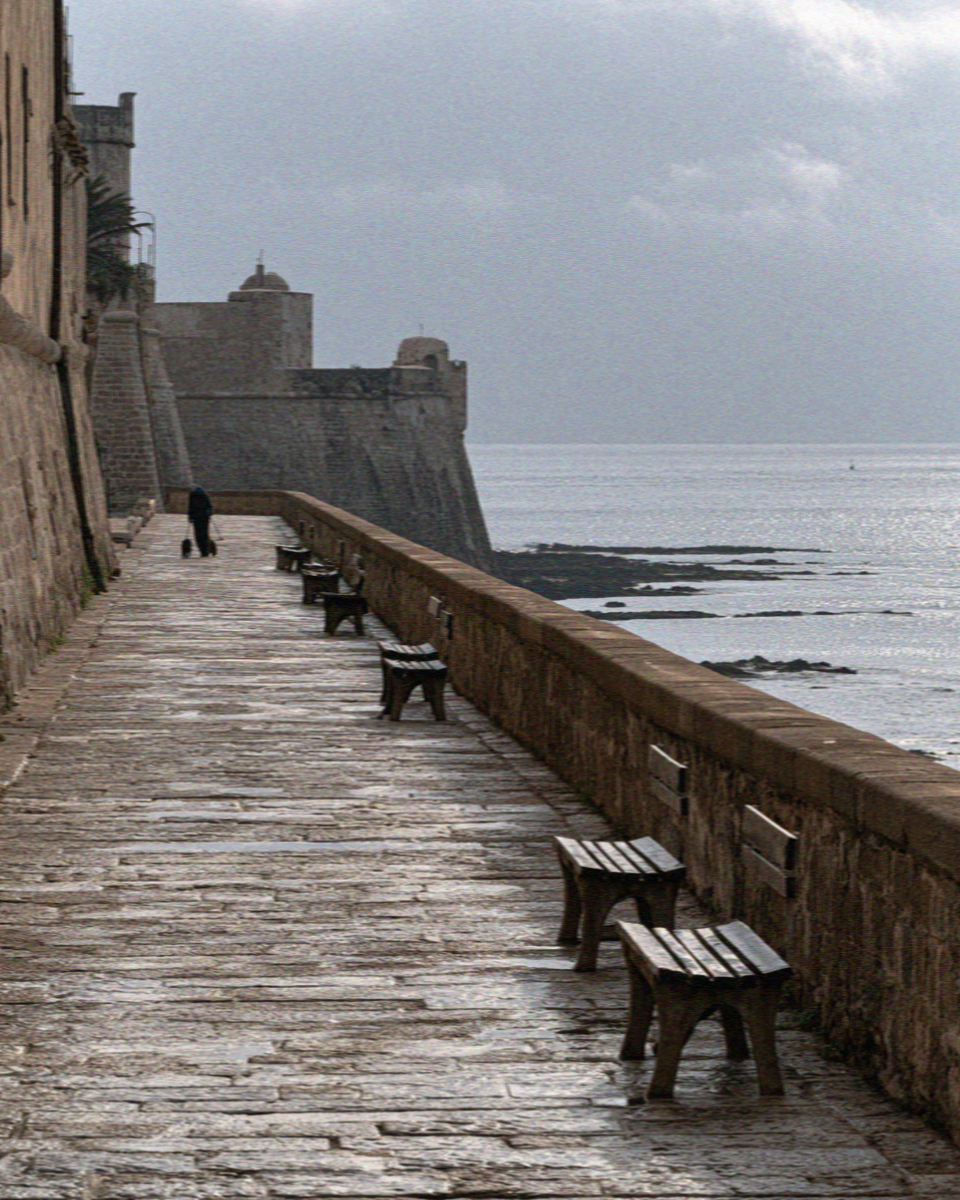
What stays open: the old town, the walls, the Grotto by the stairway, and the archaeological sites on shorter winter hours. What you get: the ramparts in a westerly storm, with the sea coming over the rocks below and nobody on the wall at all. I would not build a first trip around it. It is a very good second one.
Booking around the festival
The Festa di Sant Miquel is worth planning for rather than stumbling into.
It runs over several days in late September and it takes the town over completely: music in the squares, stalls down the main streets, processions, and the whole of Alghero outside until very late. It is not staged for visitors, which is exactly why it is worth seeing.
The practical consequence is that the good old town rooms go early for those dates, and the restaurants are at their fullest. If you want to be here for it, book well ahead. If you would rather have the quiet version of September, come in the first half of the month instead and you will have the warm sea without the crowd.
Either choice is a good one. Just make it deliberately rather than discovering on arrival that the town is either at a party or has just finished one.
Month by month, quickly
January to March. Cold by Mediterranean standards, wet, very quiet, cheapest. Sites on short hours.
April. Mild and green. Grotto boat resumes. Sea too cold.
May. Wildflowers, everything open, sea still cool. Excellent for walking.
June. The sweet spot before the crowds. Sea warm enough by the end.
July. Hot and full. Best water, worst queues.
August. Peak of everything, including price. Book far ahead.
September. The best month. Warm sea, thinning crowds, the festival.
October. Quiet, warm enough, beautiful light. Services winding down.
November and December. Winding down to winter. Boat trips finished.
What actually changes with the season
Three things, and they matter more than temperature.
The beach bus. Summer only. Without it, and without a car, the good beaches are out of reach.
The Grotto boat. Roughly April to November. Outside that it is the 654 steps or nothing, which is a genuine consideration for some visitors and is covered in Neptune’s Grotto and Capo Caccia.
The wind. The mistral can arrive in any month, and it is what cancels the sailing rather than rain. That is why anything on the water should be booked early in a stay, as set out in the best Alghero boat tours.
Frequently Asked Questions
What is the best month to visit Alghero?
September. The sea is at its warmest of the year at around twenty three degrees, the summer crowds thin within a fortnight of the Italian holidays ending, and the town holds its patron saint festival late in the month.
Is Alghero warm enough to swim in October?
Generally yes, particularly in the first half of the month. This coast faces open sea so it warms late and cools late, which means October water is often better than June water.
What is Alghero like in August?
Hot, busy and expensive. The sailing runs a full schedule and the evenings on the ramparts are at their best, but restaurants need booking days ahead, beaches fill by mid morning and prices roughly double. Do everything early in the day.
Does Alghero close in winter?
Partly. Many restaurants and all the beach infrastructure close, and the boat trips stop. The old town, the ramparts, the archaeological sites on shorter hours, and the stairway down to Neptune’s Grotto all stay open.
When is the sea warmest in Alghero?
August and September, with September usually the best combination of warm water and fewer people. The sea lags the air by around two months, which is why early summer swims colder than it looks and October still swims well.
Read also: The Best Beaches in Alghero | The Best Alghero Boat Tours | Victoria’s Complete Guide to Alghero