The honest answer is that it depends on a question nobody asks themselves before they go, which is: do you want to see Pompeii, or do you want to be in it?
Those are different visits and they take different amounts of time.
Seeing it means covering the named things. The Forum, the main street, two or three of the great houses, the baths, the amphitheatre. That is a route, and a route can be walked in three hours.
Being in it means allowing for the side street you did not plan on, the room you stand in for ten minutes because the light is doing something, the bench you sit on. That takes five or six.
Below is what each length of visit actually buys you.
Two hours
Not enough, and I would rather say so.
You will see the Forum and a short stretch of Via dell’Abbondanza and you will leave with the impression that Pompeii is a lot of broken walls. The site is sixty-six hectares. Two hours is a corridor through it.
If two hours is genuinely all you have, consider going to Herculaneum instead. It is small enough that two to three hours is a complete visit rather than a rushed one, and you will come away having seen something whole.
Three to four hours
The standard visit, and a legitimate one.
Enter at Porta Marina, climb to the Forum and give it proper time, because after the enclosed streets the scale of it is the first real surprise of the day. Walk east along Via dell’Abbondanza with its stepping stones and cart ruts and shop counters. Take in one or two of the great houses. Finish at the amphitheatre or turn back via the baths.
You will have seen the shape of a Roman city and the highlights within it. You will not have wandered.
Four hours is the sweet spot inside this bracket. Three is brisk.
Five to six hours
This is the visit I would argue for if you can manage it.
Everything above, without hurrying, plus the parts that make the place particular rather than famous. The quieter western streets where nobody goes. The Garden of the Fugitives at the far southeastern edge. A bath complex properly, standing in the tepidarium for a while doing nothing.
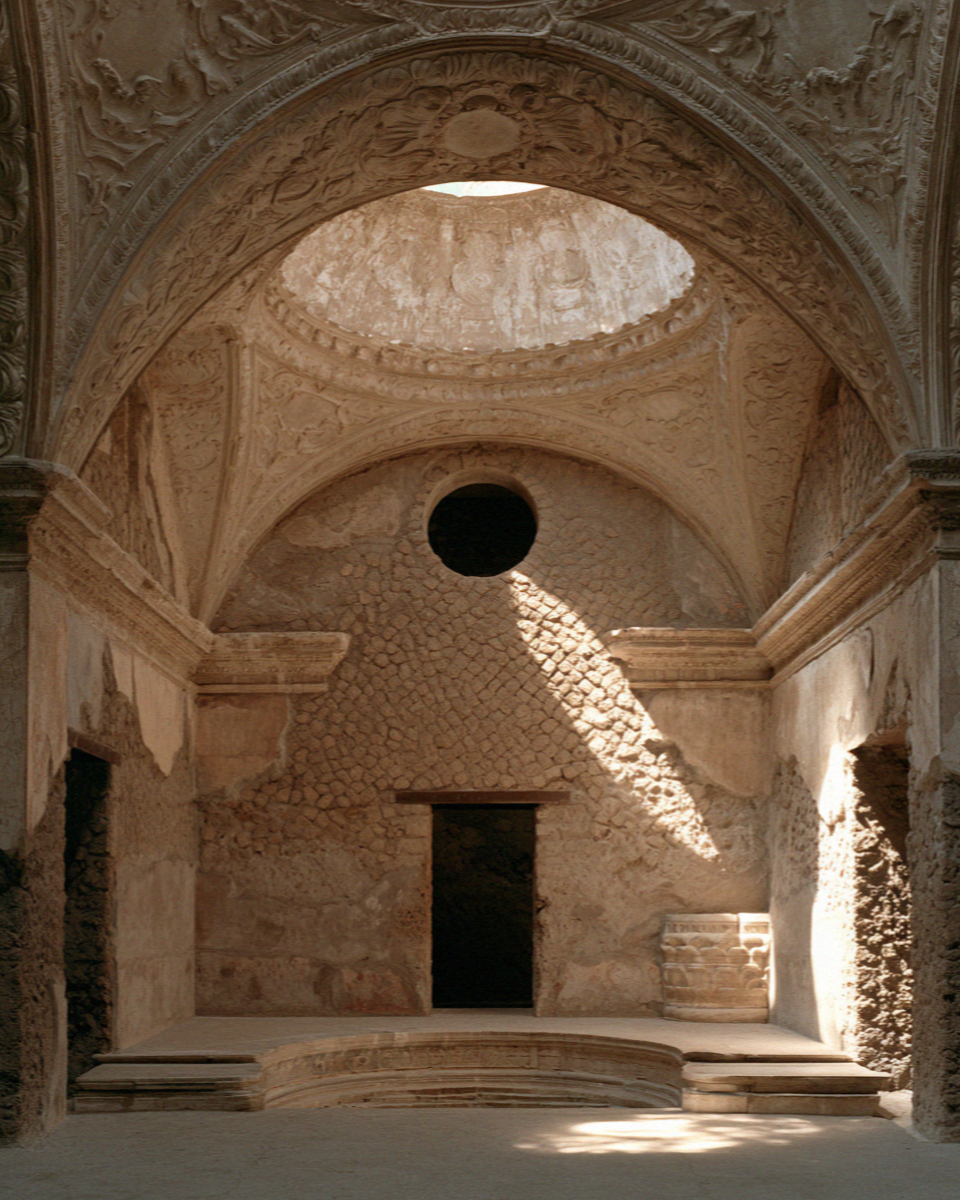
The difference between four hours and six is not thirty percent more ruins. It is the difference between a site and a city.
The constraint is heat, not interest. Six hours in July, on unshaded stone, is more than most people can actually do. Which is why the timing matters as much as the duration.
A full day
Everything above, plus the Villa of the Mysteries on the Pompeii Plus ticket and its shuttle, plus time in the afternoon to go back to somewhere you liked in the morning and see it in different light.
Seven hours is a lot of walking on uneven basalt. Plan a proper sit-down in the middle of it.
Two days
Uncommon and rewarding.
Day one at Pompeii. Day two split between Herculaneum in the morning and the archaeological museum in Naples in the afternoon, which is where nearly all the finest objects from both sites now live.
Seeing the site first and the objects second is the correct order and it is not close. The Alexander mosaic means something entirely different once you have stood in the room its floor came out of.
The timing matters more than the duration
This is the part I would underline.
Four hours starting at nine beats six hours starting at eleven. The gates open at nine, the coach parties arrive from around half past ten, and by one o’clock in summer the site is both crowded and punishing. Two hours in the cool early morning with raking light and empty streets are worth double the same two hours at midday.
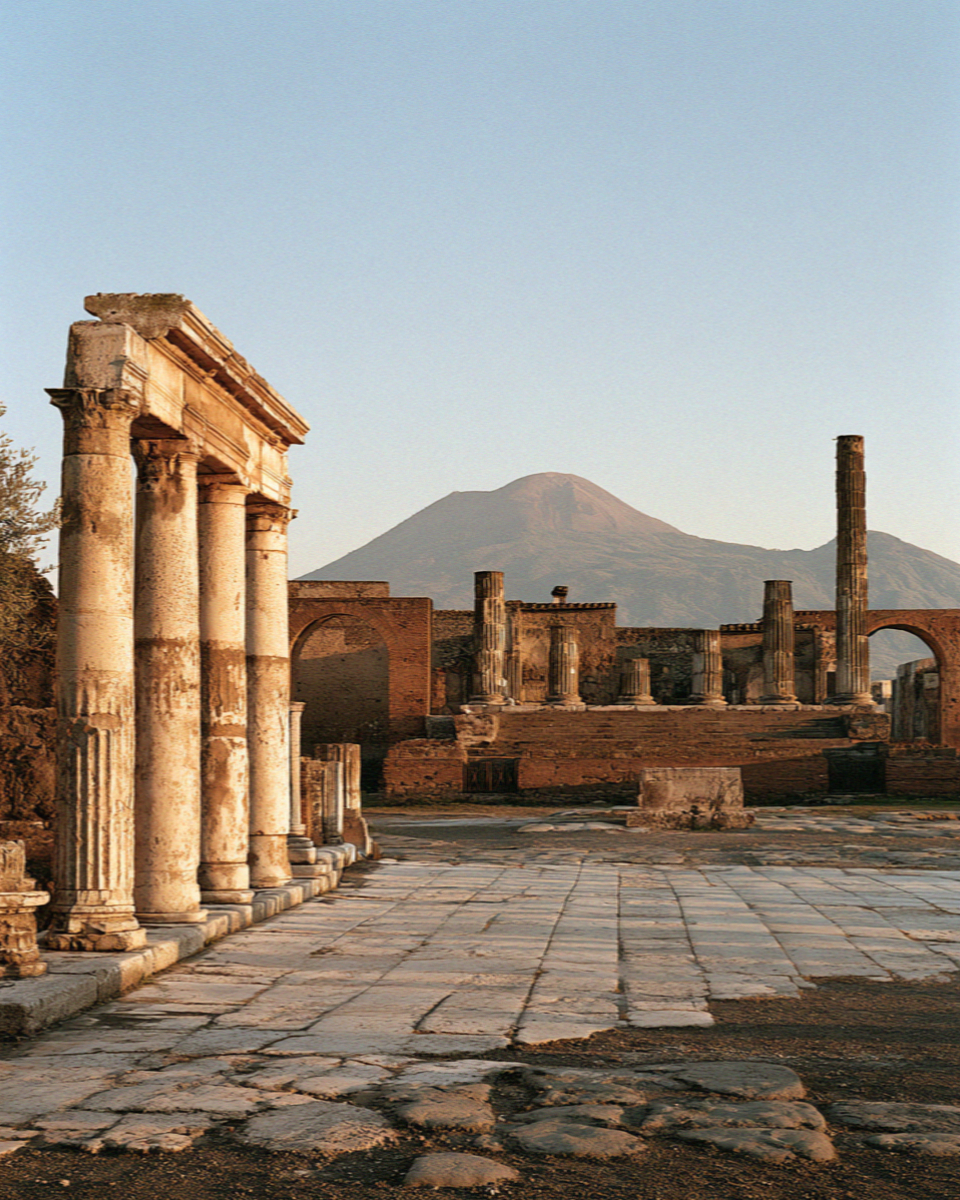
If you cannot start early, the second-best option is starting late. Entering at three in summer, with the site emptying and the light going long, is far better than arriving at noon. Just watch the last entry time, which is half past five in the main season and half past three in winter.
Building in the heat
In July and August, plan the day in two halves with a genuine break between them.
Nine until half past twelve in the ruins. Out for lunch and shade somewhere with a roof. Back in at three for two hours in improving light. That is a five hour visit that feels like a good day rather than an endurance event.
The site is almost entirely unshaded. There are fountains, and you will use them.
What gets cut when time runs short
Knowing the order in which things fall off the list is more useful than knowing the ideal itinerary, because the ideal itinerary rarely survives contact with a real morning.
The first thing to go is the amphitheatre, because it sits at the far eastern end and getting there and back is a serious walk in the heat. It is also, for a lot of people, the most physically impressive thing on the site: one of the oldest stone amphitheatres anywhere, with its seating largely intact and room for twenty thousand. If you know you are short on time, consider entering at Piazza Anfiteatro and doing it first, while you still have legs.
The second is the Garden of the Fugitives, tucked into the southeastern corner. This is the one I would fight hardest to keep. It is the part of the site that stops being architecture.
The third is any of the great houses beyond the first one you enter. They begin to blur, and after two most people stop reading the signs. This is fine. Pick two, do them properly, walk past the rest.
The last thing to go, and it should be, is the unplanned wandering in the quiet western streets. That is the part that separates a visit from a tour, and it is also the part most easily sacrificed because nothing on the map tells you to do it.
If you find yourself running out of day, drop a house rather than the wandering.
So, in one line
Three to four hours if Pompeii is one item on a busy trip. Five to six if it is a reason you came. Start at nine either way, because that decision is worth more than the extra hours.
Frequently Asked Questions
Is two hours enough for Pompeii?
Not really. You will see the Forum and one street and leave with an impression of broken walls. If two hours is all you have, Herculaneum is the better use of them, since it is small enough to see properly in that time.
How many hours do most people spend at Pompeii?
Three to four, which covers the Forum, Via dell’Abbondanza, a couple of the great houses and the amphitheatre. Five to six lets you add the quieter streets, the baths and the Garden of the Fugitives without rushing.
What is the best time of day to visit Pompeii?
From opening at nine. The coach groups arrive around half past ten, the light is low and raking early on, and the stone has not yet started throwing heat back at you. Four hours from nine is worth more than six from eleven.
Can you see Pompeii and Herculaneum in one day?
Yes. Give Pompeii the morning, take the fifteen minute train to Ercolano, and give Herculaneum two to three hours in the afternoon. It is a long day but not an unreasonable one, since the second site is small.
Do you need a full day at Pompeii?
Only if you want the Villa of the Mysteries as well, which needs the Pompeii Plus ticket and a shuttle, or if you want to revisit places in different light. Most people are well served by five hours.
Read also: How to Visit Pompeii: Tickets, Entrances and Skipping the Queue | Pompeii in the Heat, and With Children | The Ancient Ruins of Pompeii: Everything You Need to Know