Pompeii is a stone city with no roofs, built on a plain, facing south, with almost no trees.
That sentence is the entire problem. Everything else in this guide follows from it.
In July and August the site becomes an oven by late morning. The basalt paving absorbs heat all day and gives it back upward. There is no canopy anywhere along the main streets. And the site is large enough that when you decide you have had enough, you are still twenty-five minutes from the gate.
People faint at Pompeii every summer. Not many, but not none. It is worth planning for properly rather than optimistically.
The heat, practically
Go at nine or go at three. The gates open at nine and the coach parties arrive from about half past ten. Between nine and eleven the stone has not yet loaded up with heat and the light is low. From about three the site starts emptying and the light improves again. The middle of the day is the worst of everything at once: hottest, fullest, flattest light.
Split the day if you can. Nine until half past twelve, out for a proper lunch under a roof, back at three for two more hours. This is a five hour visit that feels civilised. Your ticket lets you leave and return on the same day at most times of year, but confirm on the day rather than assuming.
Learn where the shade is. There is more than it first appears, and none of it is where you want it. The bath complexes are cool and vaulted and genuinely cold by comparison. The covered market building. Deep doorways on the north side of east-west streets. The colonnaded portico around the Forum. A few of the houses have modern roofing over their fragile rooms.
Plan the route so that a shaded stop falls every thirty or forty minutes rather than discovering you need one when it is too late.
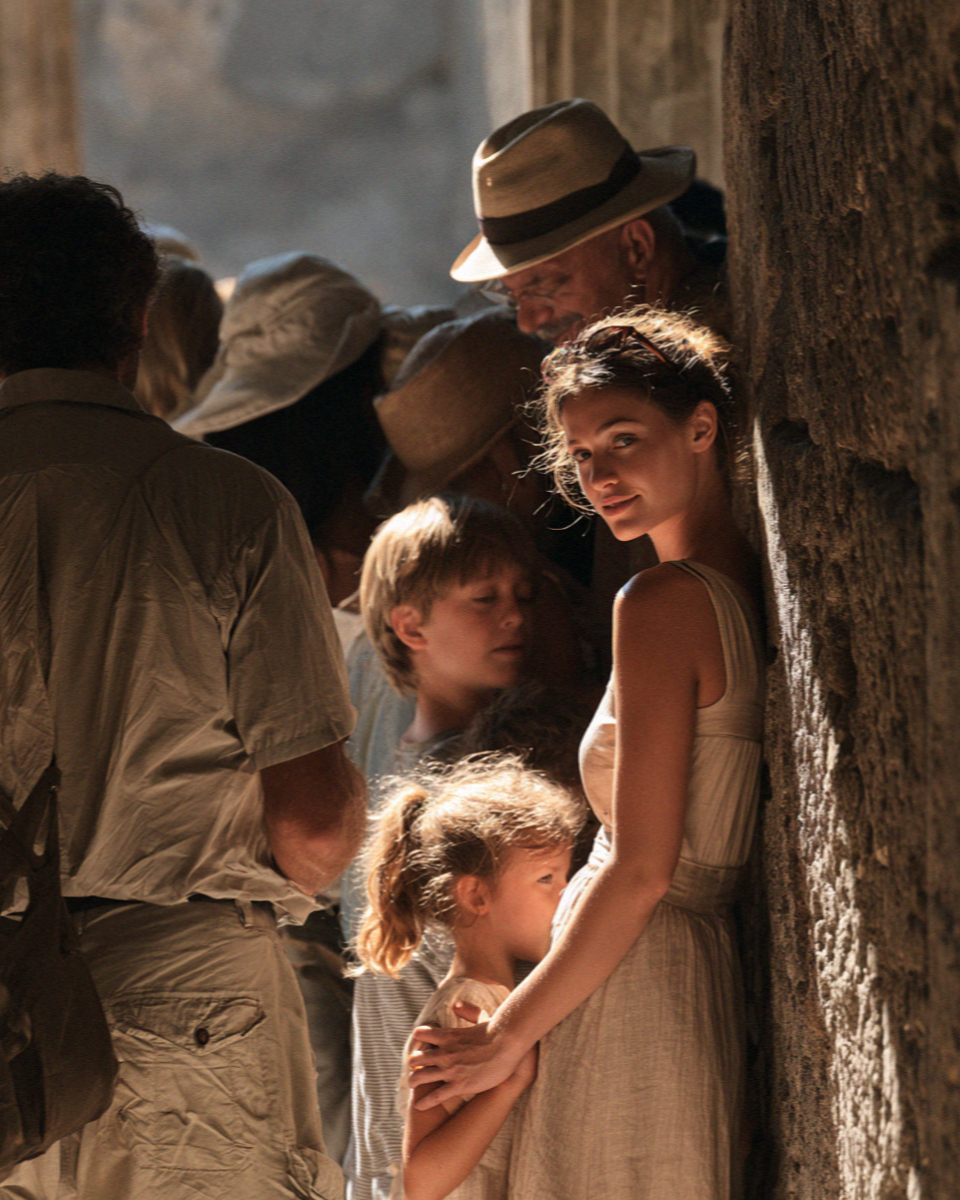
Use the fountains. There are drinking fountains through the site with cold, potable water. Fill up at every one you pass rather than at the one you need. Distances between them are longer than you expect.
A hat is not optional. Nor is a real sunscreen application before you go in, because reapplying halfway round is something almost nobody actually does.
Wear closed shoes with a sole. Sandals on original basalt for five hours is a genuine mistake and a common one.
With children
Pompeii can be wonderful with children. It is a whole city with streets and shops and a stadium, and children who are bored by cathedrals often love it. But it needs shaping.
Pick an entrance for the legs, not the map. Piazza Anfiteatro puts you at the amphitheatre immediately, which is the single most child-legible thing on the site: a stadium, obviously a stadium, that held twenty thousand people. Starting there and walking west means you begin with the win.
Aim for three hours, not six. A short good visit beats a long deteriorating one.
Give them things to find rather than things to look at. The cart ruts in the road. The stepping stones and why they are spaced like that. The fast food counters with the round holes for the jars. The lead pipes. The election notices painted on walls. The dog mosaic that says beware of the dog. Pompeii is unusually rich in the specific and concrete, which is exactly what children engage with.
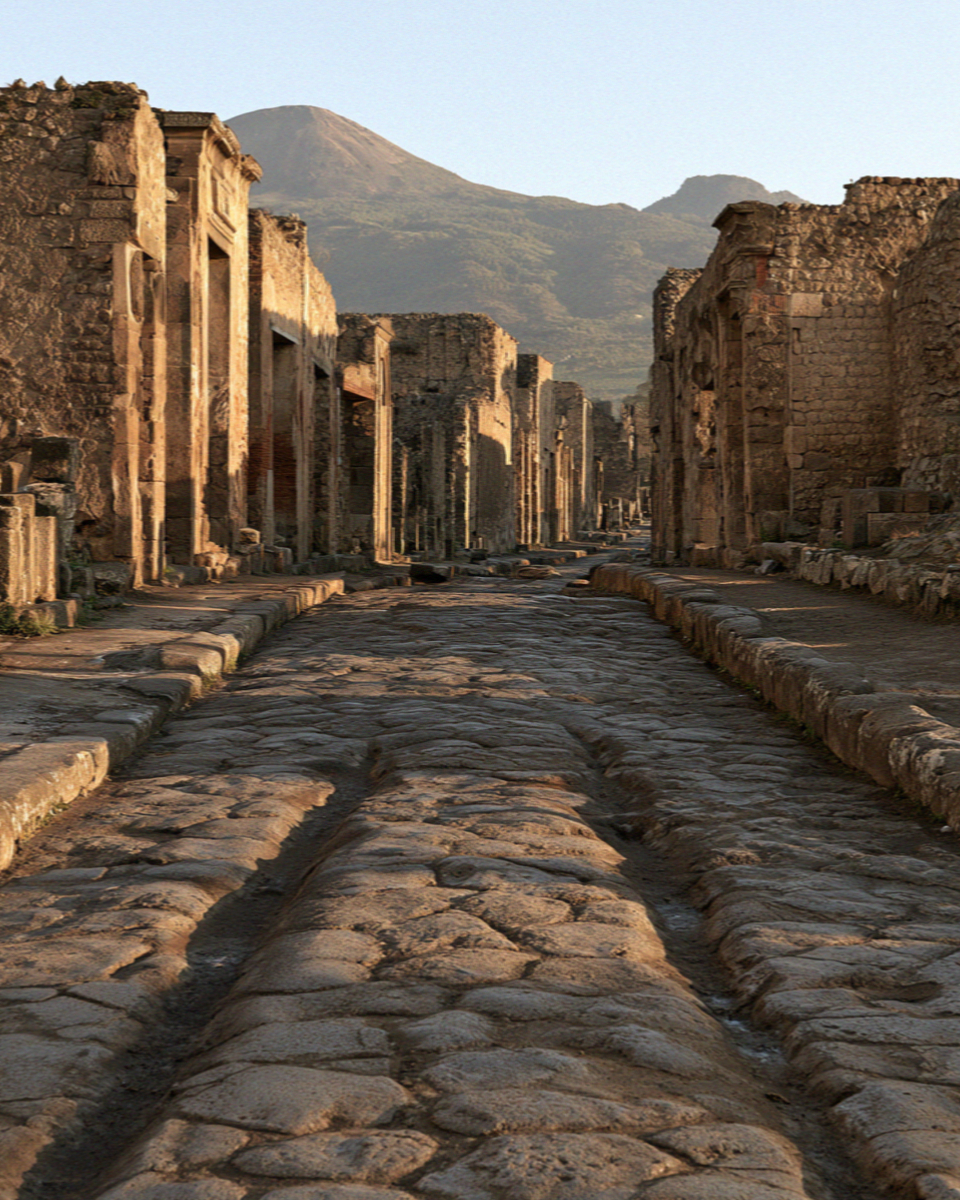
Skip the great houses if they are not landing. Two are plenty. Four is a march.
Buggies are hard. The paving is uneven original stone with high kerbs and stepping stones across most streets. A carrier is far easier than wheels for anything under three.
The part to decide about in advance
Pompeii contains human remains, displayed openly, without warning at the point of encounter.
The plaster casts are the site’s most famous images. In the Garden of the Fugitives, at the southeastern edge, thirteen of them lie where the people died, in a vineyard, in positions that read unmistakably as the last moments of a family. Others are displayed elsewhere on the site.
There is no barrier, no signage preparing you, and no separate route around it.
Some children find this fascinating in the way children are fascinated by mortality, and handle it entirely well. Some do not. What you do not want is to come around a corner into it without having decided.
Look at the map before you go in. The Garden of the Fugitives is easily avoided if you choose to avoid it. So is the small display of casts near the granary in the Forum, which is more commonly stumbled into.
If you do go, going deliberately is better than arriving by accident.
Herculaneum, incidentally, is harder in this respect and almost nobody expects it, because the remains there are actual skeletons rather than casts.
When to come instead
If you have any flexibility at all, come in April, May, late September or October.
The site is the same. The light is better. The temperature is manageable and the crowds are a fraction of August. Spring and early autumn are simply the correct answer for Pompeii and everybody who has been in August knows it.
Winter is quieter still, and the ruins in grey light have their own quality, but the shorter hours cut what you can cover and last entry moves to half past three.
Frequently Asked Questions
Is Pompeii too hot to visit in summer?
It is demanding rather than impossible. The site is unshaded stone that holds heat, and midday in July or August is genuinely punishing. Go at opening or from mid-afternoon, split the day with a long lunch under a roof, and use the drinking fountains throughout.
Is Pompeii suitable for children?
Yes, with shaping. Aim for around three hours rather than a full day, enter at Piazza Anfiteatro so the amphitheatre comes first, and give them concrete things to find such as cart ruts, stepping stones and the fast food counters. Skip most of the great houses.
Are there plaster casts of bodies at Pompeii, and can you avoid them?
Yes, and yes. The most affecting group is in the Garden of the Fugitives at the southeastern edge, with others displayed near the Forum. There is no warning at the point of encounter, so if you are travelling with children, look at the map first and decide deliberately rather than arriving by accident.
Is there shade at Pompeii?
Less than you want, but more than it first appears. The bath complexes are cool and vaulted, the covered market and the Forum portico help, and deep doorways on the shaded side of streets are usable. Plan a shaded stop every half hour rather than looking for one when you need it.
What is the best month to visit Pompeii?
April, May, late September and October. The heat is manageable, the light is better than in high summer, and the crowds are a fraction of August. Winter is quieter again but the shorter hours and half past three last entry limit how much ground you can cover.
Read also: How Long Do You Need in Pompeii? | Pompeii or Herculaneum: Which Should You Visit? | The Ancient Ruins of Pompeii: Everything You Need to Know