Almost everyone who comes to the Bay of Naples has heard of one of these places and not the other.
That is the whole problem in a sentence. Pompeii is a name that arrives in childhood and never leaves. Herculaneum is a name most people encounter for the first time on a signboard at Naples Centrale, ten minutes before they decide they do not have time for it.
I have now done both, on separate days and in the wrong order, and I have opinions.
The short version, if you are standing in a station reading this on a phone: if you have one day and you have never seen either, go to Pompeii. If you have two days, go to both, and go to Herculaneum second. If you have one day and you already know the story, or you are travelling with someone who wilts in the heat, or you want to be moved rather than impressed, go to Herculaneum.
The longer version is below, because the honest answer depends on what you actually want from a morning.
The difference in one idea
They were killed by the same mountain on the same day and they were not killed the same way.
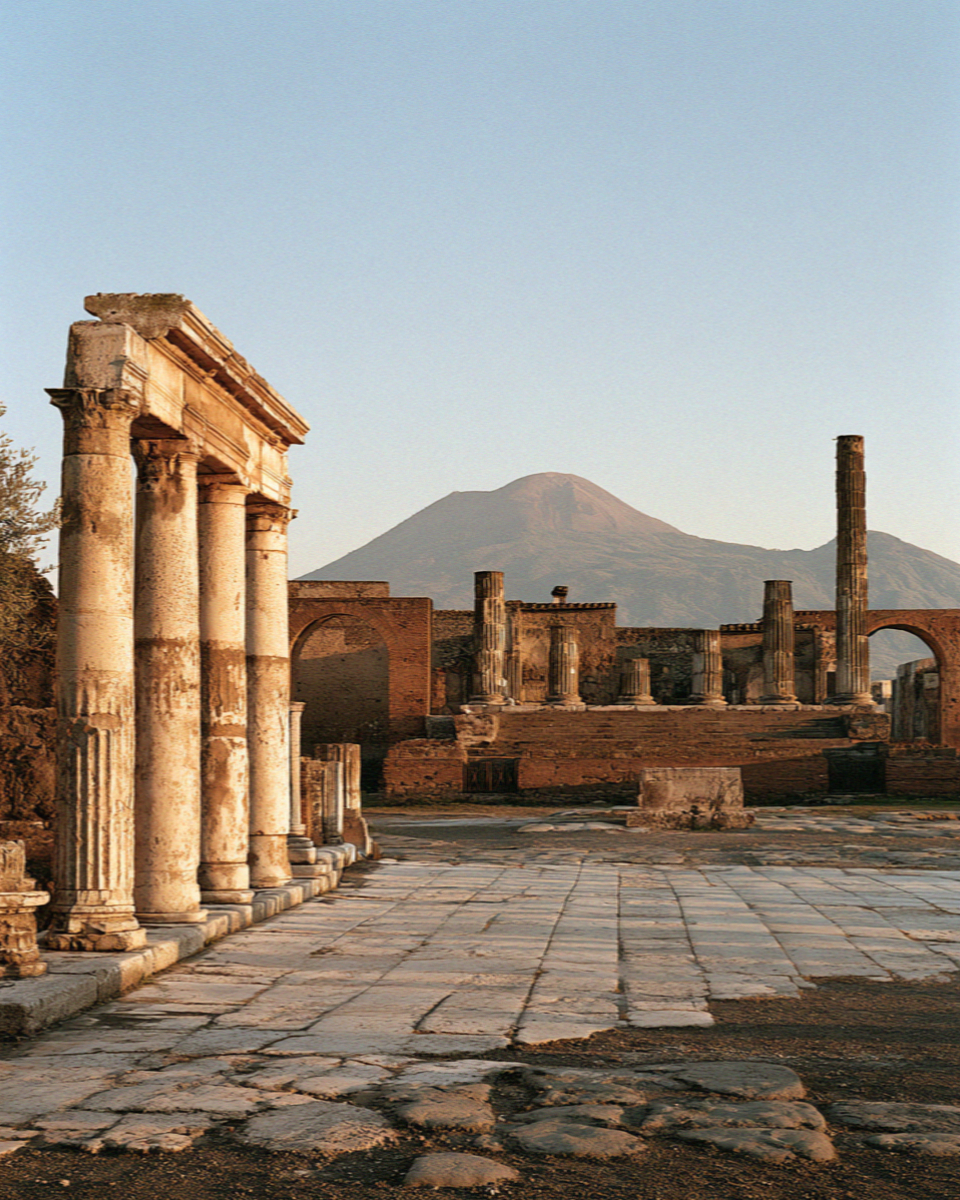
Pompeii was buried under pumice and ash that fell from above for hours. Roofs collapsed under the weight. The city was crushed and then covered, and what survived is the footprint of a place: walls to about head height, streets, floors, the shape of rooms.
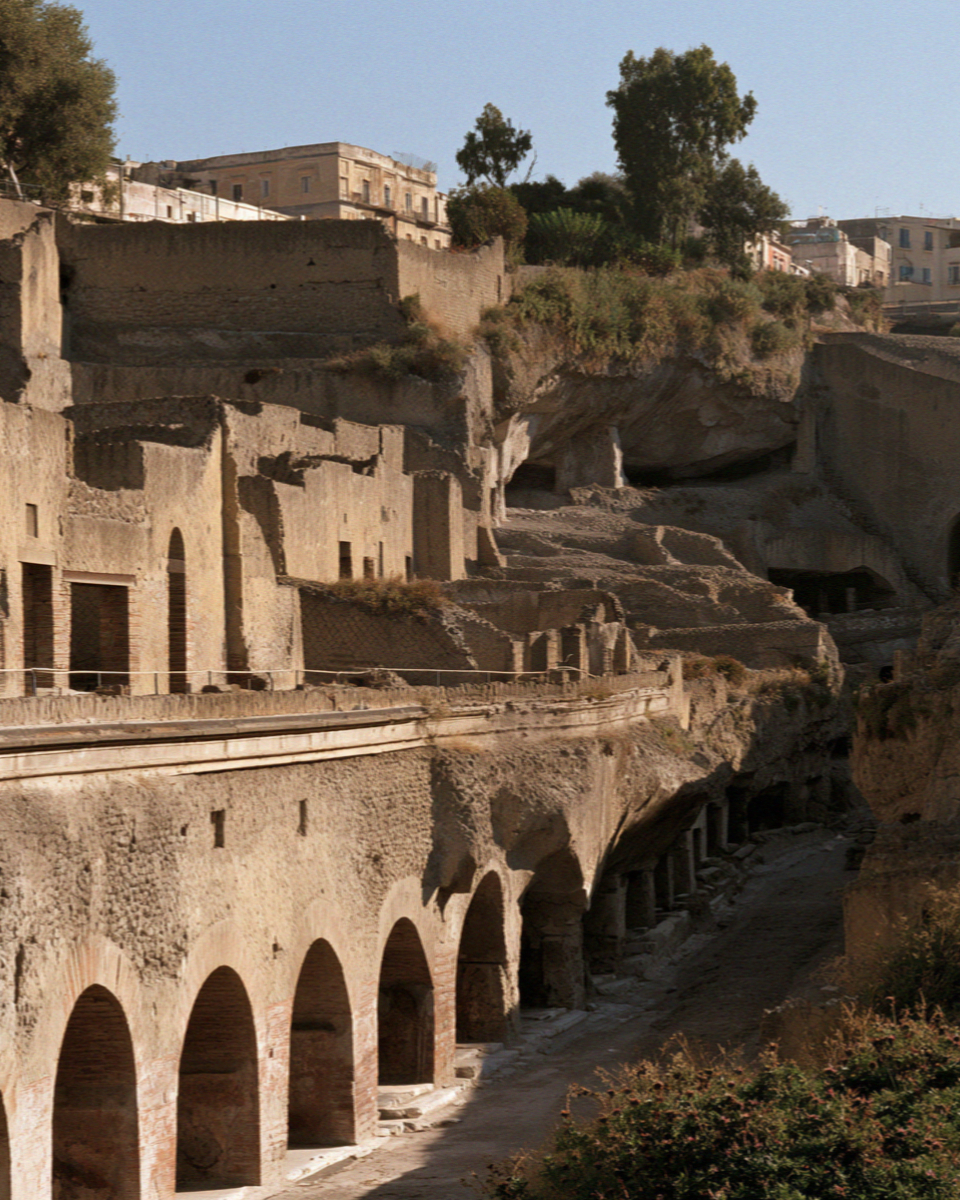
Herculaneum was hit by a pyroclastic surge that arrived fast and hot and filled the town like liquid. It did not crush. It sealed. When the material cooled it set into rock twenty metres deep, and the town inside it kept its upper floors, its staircases, its roof beams, its doors, its shop fittings, its furniture.
Everything that follows comes from that single difference.
What each one actually gives you
Pompeii gives you scale. It covers around 66 hectares against Herculaneum’s 20, and it held somewhere between ten and twenty thousand people against Herculaneum’s four thousand or so. You walk it for hours and you do not see all of it. That size is the point: you get a whole city, with a forum, a main commercial street, three bath complexes, an amphitheatre that seated twenty thousand, and enough distance between them that you understand how a Roman town was organised and how far people walked in a day.
Herculaneum gives you height and detail. Because it is small you can see most of it properly in two to three hours, and because it was sealed rather than crushed you are looking at rooms rather than outlines. There are wooden roof beams still in place above doorways, blackened but standing. There are wooden screens, a wooden bed frame, a carbonised loaf of bread. The mosaics are brighter because they spent two thousand years under a seal rather than under weather.
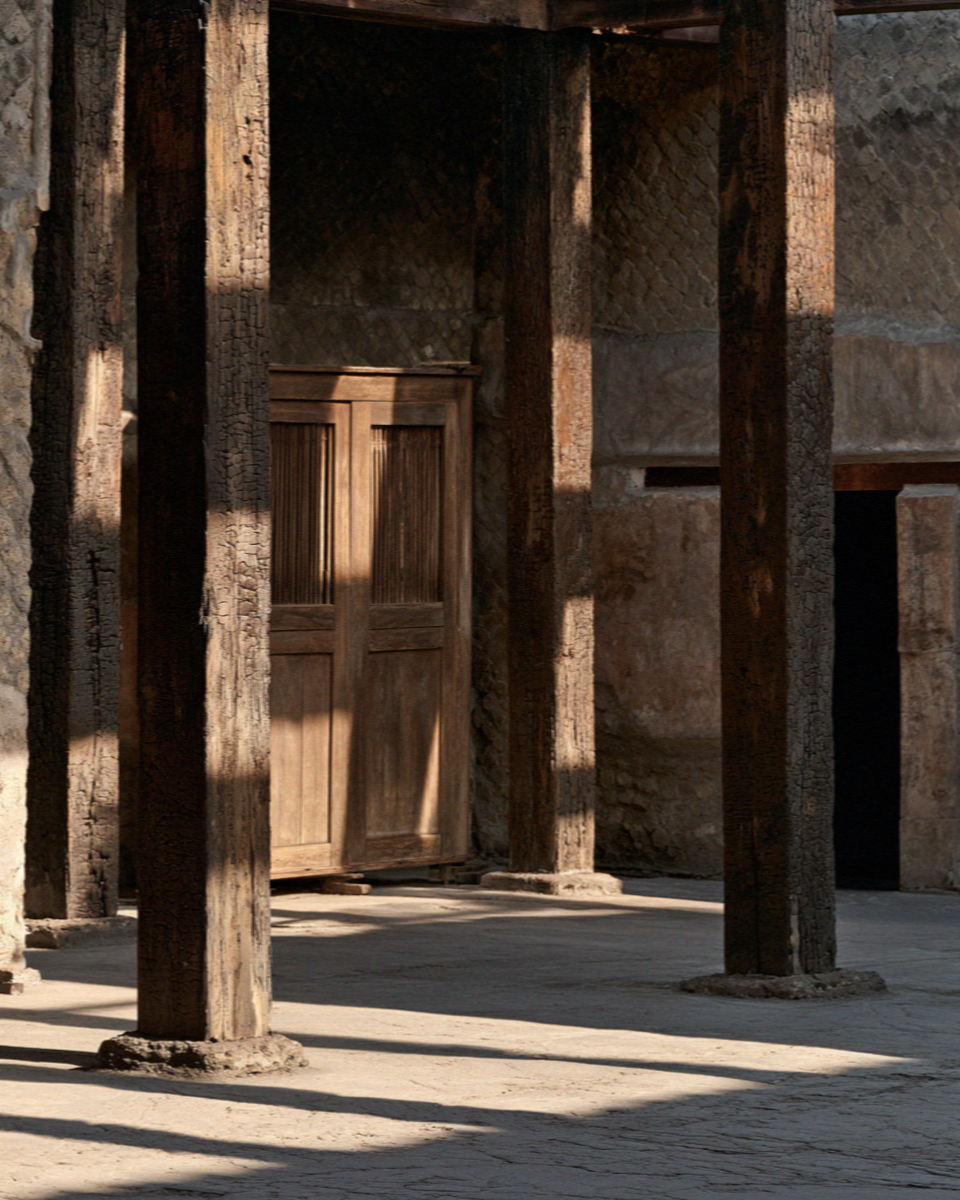
The first time you look up in a Herculaneum house and realise the beam above your head is the original one, something reorganises in your chest. Pompeii does not do that, because Pompeii has no ceilings.
The practical comparison
Cost. Herculaneum is about sixteen euros. Pompeii starts around twenty for the ancient city alone and twenty-five if you want the suburban villas with it. They are two separate archaeological parks with two separate ticketing systems, so there is no official combined ticket and nothing to save by pairing them. Anything sold online as a combo is two tickets in one basket. Under-eighteens are free at both, and both are free on the first Sunday of the month.
Time. Pompeii is a half day minimum and rewards a full one. Herculaneum is genuinely done in two to three hours. That asymmetry is the single most useful fact in this article: Herculaneum fits into a day that already has something else in it.
Getting there. Both sit on the same Circumvesuviana line out of Naples. Ercolano Scavi is about twenty minutes from the city, and the site is a ten minute walk downhill from the station through the modern town. Pompei Scavi is about forty minutes and the station is at the gate. The two sites are roughly fifteen minutes apart by train, which is why doing both in one day is possible if you start early and accept that you will be tired.
Crowds. This is not close. Pompeii can take twenty thousand people in a day and in July it feels like it. Herculaneum receives a fraction of that. On a weekday morning you can stand in a Herculaneum street with nobody else in it, which in Campania in August is close to a miracle.
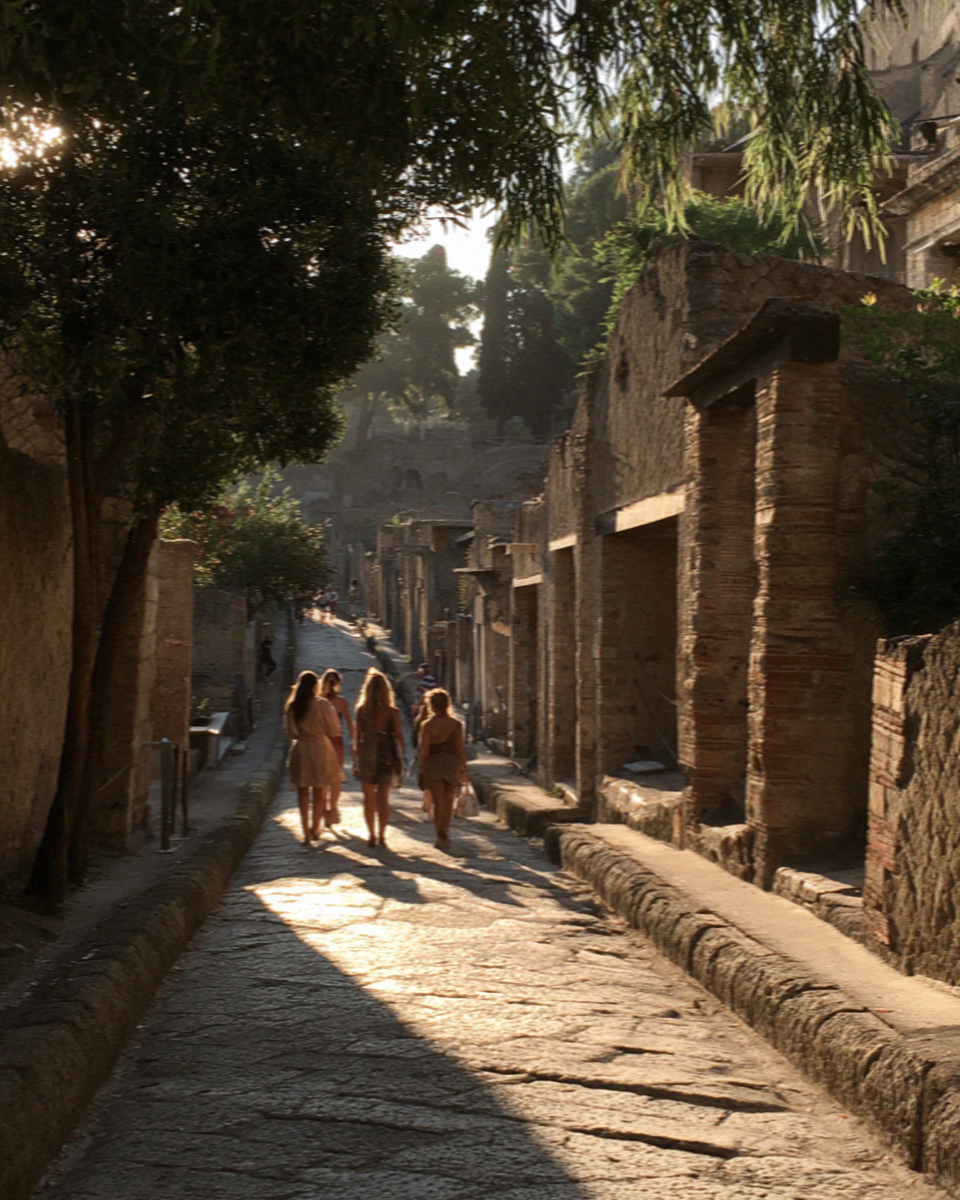
Shade. Also not close. Pompeii is roofless and pitiless and I have written elsewhere about planning a summer day there around doorways. Herculaneum has surviving upper storeys, narrower lanes and modern roofing over the most fragile rooms, and it sits in a hollow below the modern street where the air moves differently. If heat is going to be the deciding factor, Herculaneum wins outright.
Which one is more moving
I want to be careful here.
Pompeii has the casts, and the casts are the thing most people carry home. They are human remains and they are displayed as such, and standing among the thirteen in the Garden of the Fugitives is not an experience I would describe as enjoyable. It is the part of the site that does not let you stay a tourist.
Herculaneum has its own version, and it is worse, and almost nobody expects it. Along what used to be the shoreline there is a row of arched chambers, boat sheds, where hundreds of people sheltered waiting for a rescue by sea that did not arrive in time. Their skeletons are still in them. Not casts. Bone.
For a long time it was believed that Herculaneum had been evacuated in time. It had not. They were all down at the water.
If you are travelling with children, or with anyone for whom that is the wrong kind of afternoon, know that both sites contain this and neither hides it.
So: which one
Choose Pompeii if it is your first time, if you want the whole shape of a Roman city, if you have half a day or more, if the names are what you came for, or if you are travelling with someone who wants to say they have been.
Choose Herculaneum if you have two or three hours rather than six, if you have been to Pompeii before, if you care more about how people actually lived than about civic architecture, if you are visiting in July or August with someone who does not do well in heat, or if you would rather look closely at one street than walk past forty.
Do both if you have two days. Pompeii first, for the scale and the story. Herculaneum second, so that you arrive already knowing what you are looking at, which is when the beams and the staircases land hardest.
That order matters more than people expect. Herculaneum first makes Pompeii feel like a quarry. Pompeii first makes Herculaneum feel like a revelation.
Frequently Asked Questions
Is Herculaneum better preserved than Pompeii?
Yes, and not by a small margin. Herculaneum was sealed by a fast pyroclastic surge rather than buried under falling pumice, so buildings kept their upper floors and organic material was carbonised rather than crushed. You will see original wooden beams, doors, screens and furniture that simply do not survive at Pompeii.
Can you visit Pompeii and Herculaneum in one day?
You can, and plenty of people do, but it makes for a long day. Start at Pompeii at opening, give it four hours, take the fifteen minute train to Ercolano Scavi, and give Herculaneum two to three. Go in that order rather than the reverse, and accept that you will not do either at leisure.
Which is cheaper, Pompeii or Herculaneum?
Herculaneum, at roughly sixteen euros against Pompeii’s twenty and up. They are separate parks with separate ticketing, so if you are visiting both, budget for two full entries. There is no official combined ticket, and combos sold by resellers are simply the two tickets bundled.
Which is better with children or in extreme heat?
Herculaneum. It is smaller, so nobody is walked into exhaustion, it has far fewer people, and it has real shade from surviving upper floors and modern roofing. Pompeii in August is largely unshaded stone, and by midday the whole site is competing for the same few metres of shadow.
Do I need a guide for either site?
Herculaneum is small and well signed enough to do alone with a good audio guide. Pompeii is large and confusing and repays a guide more, particularly on a first visit, though it is perfectly possible alone if you plan a route in advance.
Read also: Herculaneum: The Complete Guide | The Pompeii Day Trip: From Naples, Sorrento, Rome and the Amalfi Coast | The Ancient Ruins of Pompeii: Everything You Need to Know