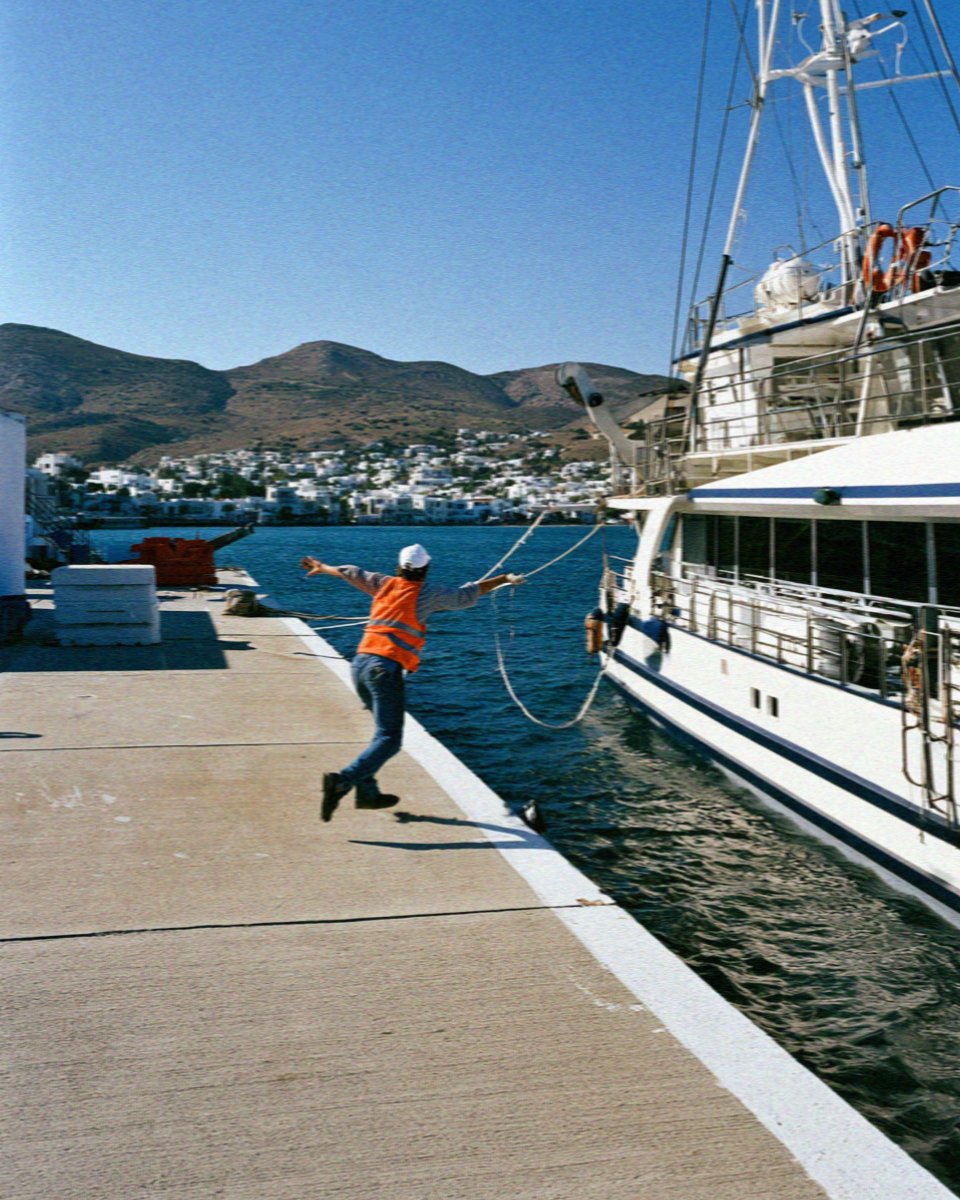
The catamaran from Paros left mid-morning and took a little under two hours. I spent most of it watching a boy of about six try to stand up every time the hull hit a wave, and his grandmother pull him back down by the waistband of his shorts without once looking up.
Neither of them ever tired of it.
Milos came up low and brown.
No white town spilling down to the water like the last three islands. A long bay, a small port tucked into the back of it, fishing boats, a line of tamarisks along a beach, and high on a hill above everything a scatter of white that I learned later was Plaka.
I had read on the boat that the bay is an old volcano with the sea let in.
I did not quite believe it until we were inside. Then it was obvious. The land closes around you in a great broken ring, as though somebody had taken a bite out of the island and let the Aegean pour through.
Paros was made slowly, under pressure, under the earth.
Milos was thrown up.
The room would not be ready until two. The team went to find coffee and I walked a few minutes up from the harbour into the mining museum, mostly because it was open and cool.
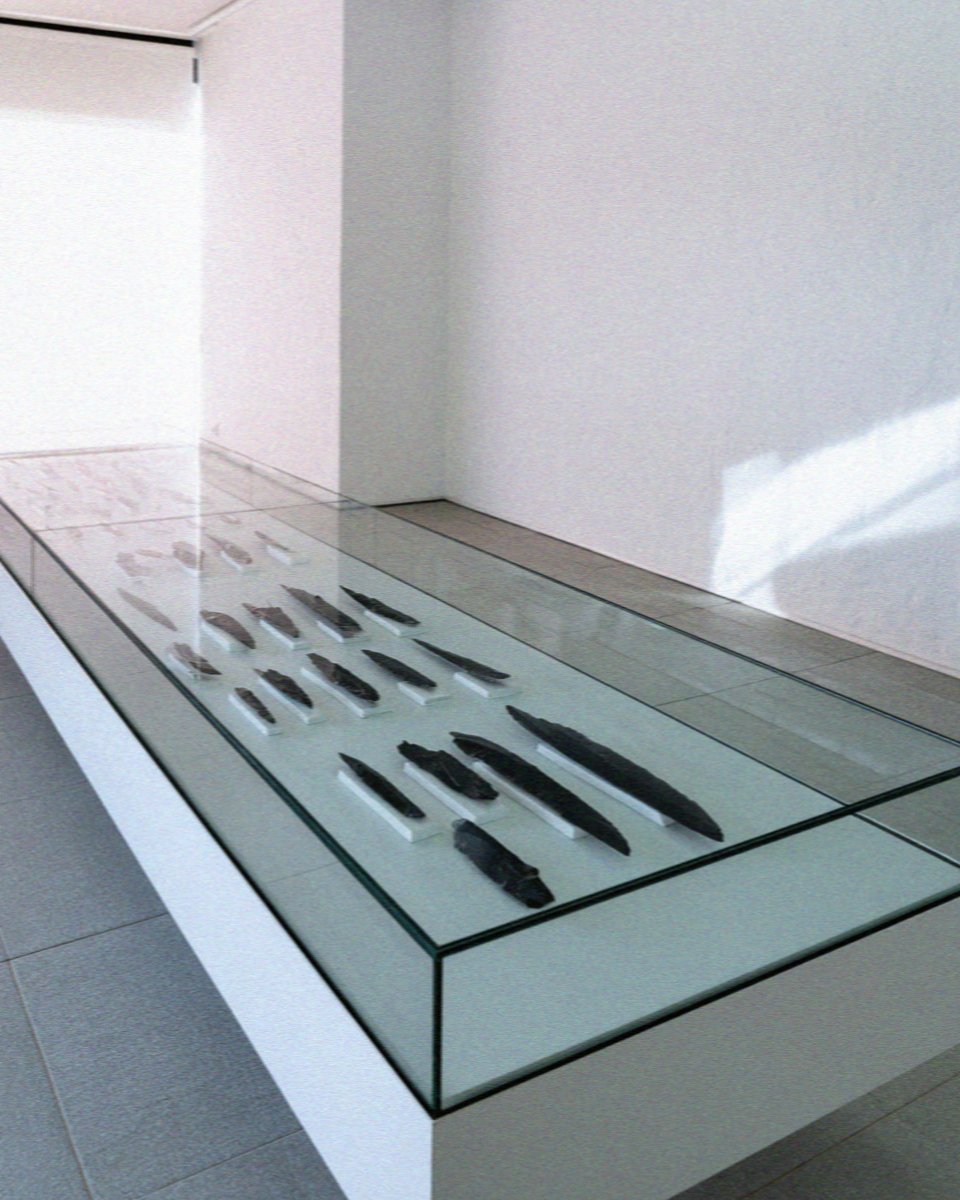
Upstairs there is a case of black glass.
That is what obsidian looks like. Black glass. It looks wet even when it is not, and so dark that it seems to have depth behind the surface. The blades in the case are long thin splinters, some no wider than a finger.
Obsidian is volcanic glass, made when lava cools too quickly to form crystals, but the part that interested me was not really how it was made.
It was what people did for it.
People were coming to Milos for this stone eleven thousand years ago.
That sentence stopped me.
Before farming had properly reached Greece. Before pottery. People were crossing open water to get here, in boats that have left almost nothing behind, because somewhere on this island was a black stone that could be broken into an edge extraordinarily finer than almost anything else they had.
And somebody had to come the first time.
That is the part I kept thinking about. Somebody had to push away from land without knowing exactly what was over the horizon, find this low brown island, find the black glass in it, and then find the way home again.
Pieces of Milos obsidian have turned up hundreds of kilometres away.
In this part of the world, some of the oldest evidence we have of people deliberately going to sea is a little piece of stone from here.
I still had the Paros marble chip in my pocket.
I took it out and held it beside the glass case and felt faintly ridiculous, like a child comparing two sweets.
The marble lets light in. The obsidian gives almost nothing back except your own reflection.
One became the goddess.
The other became the knife.
In the afternoon we drove up to Sarakiniko.
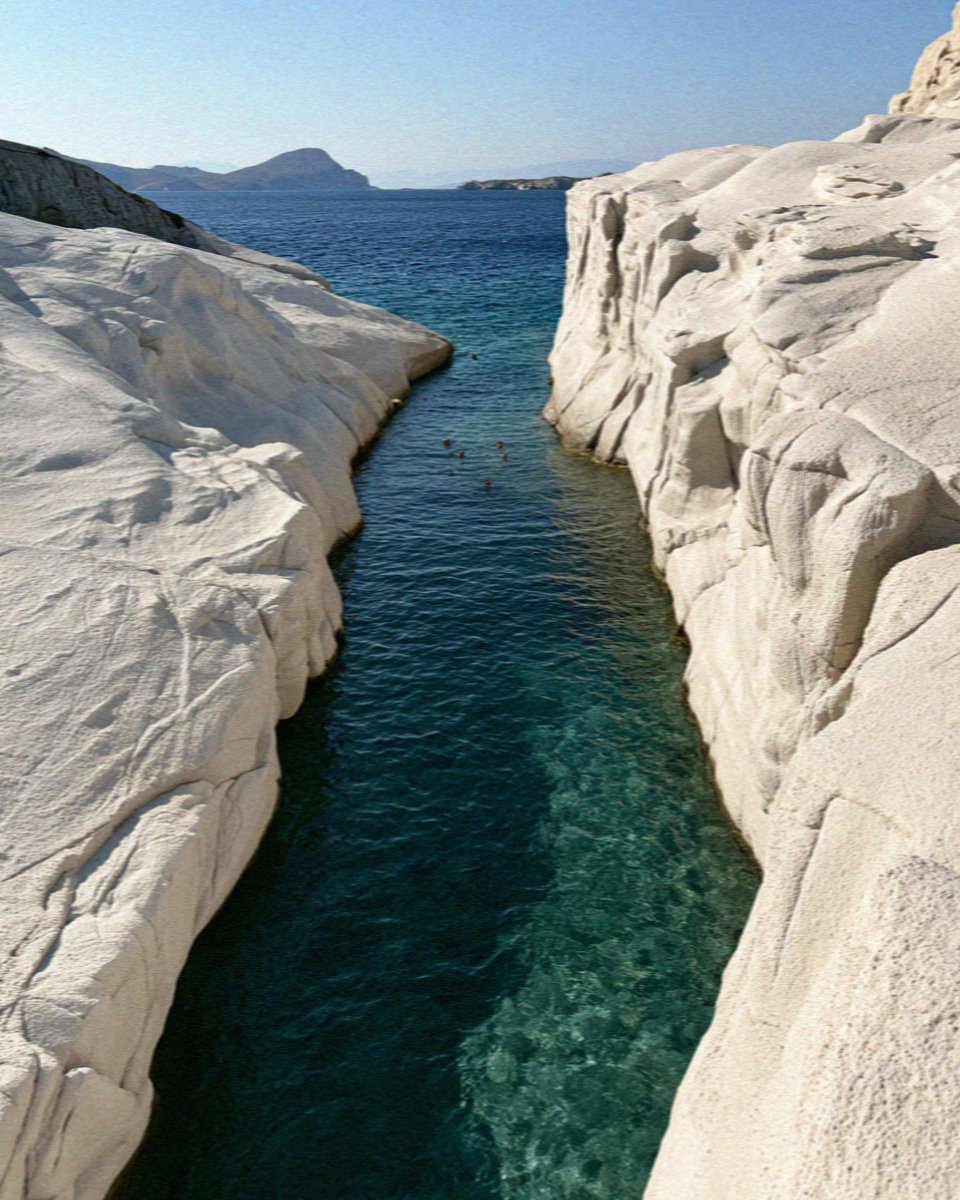
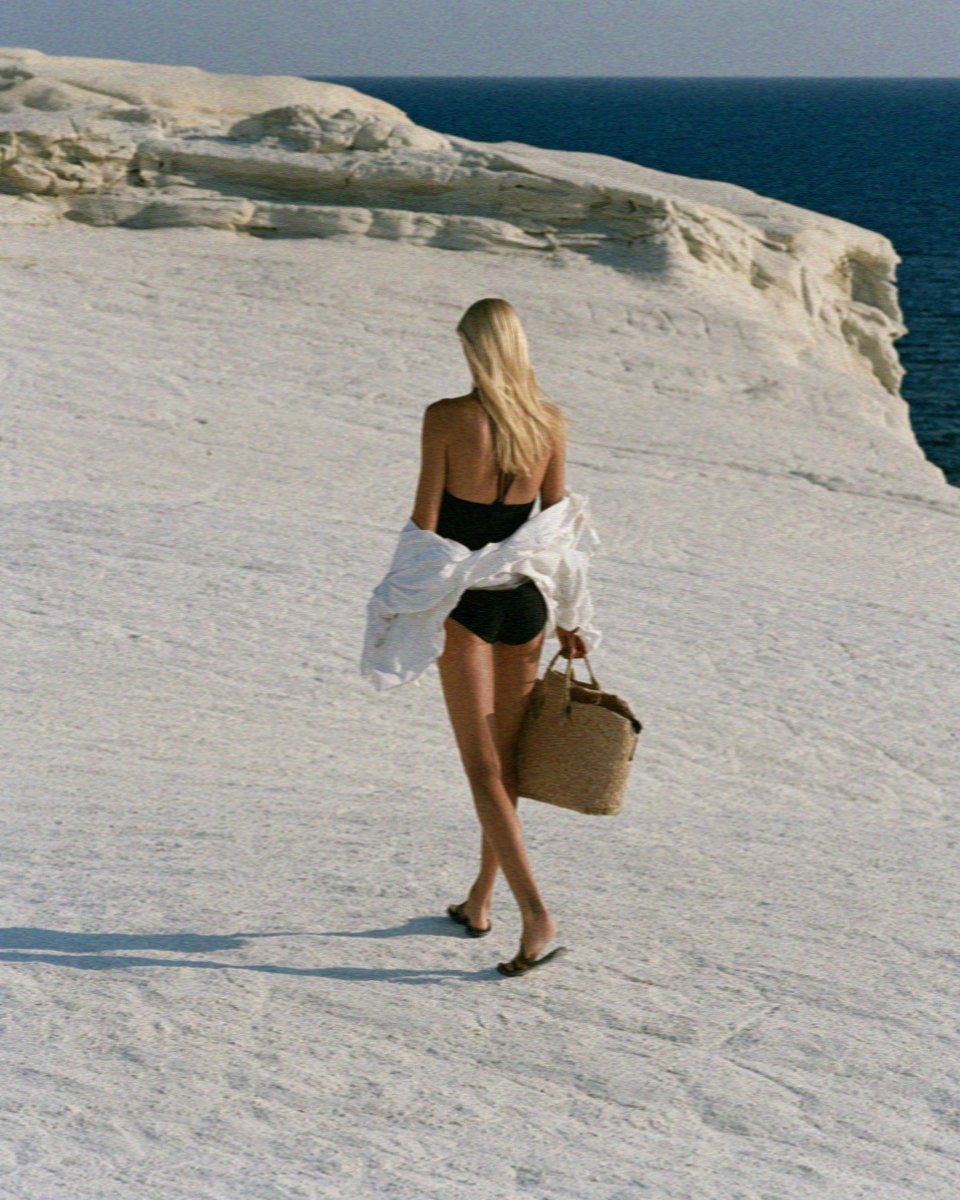
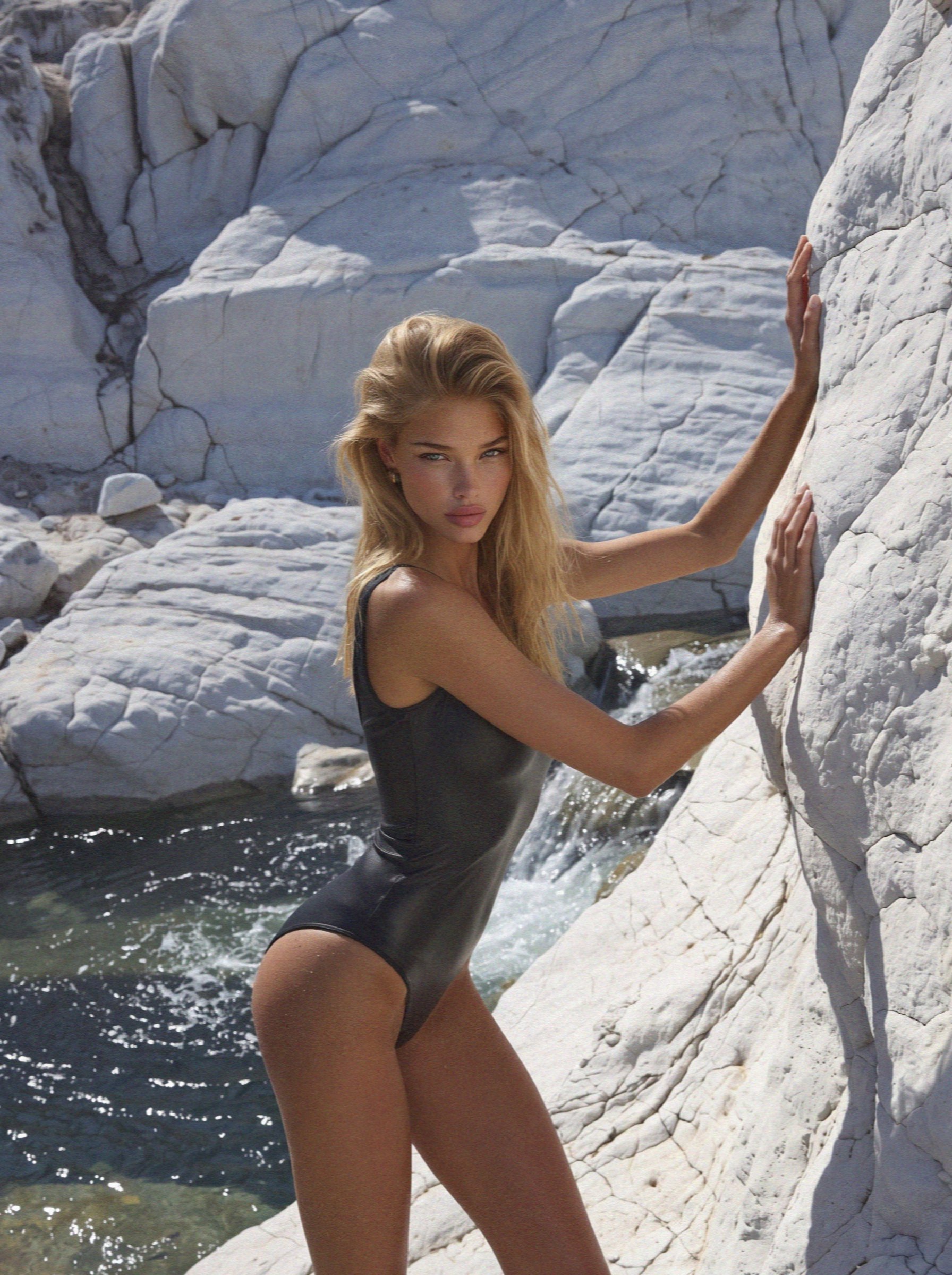
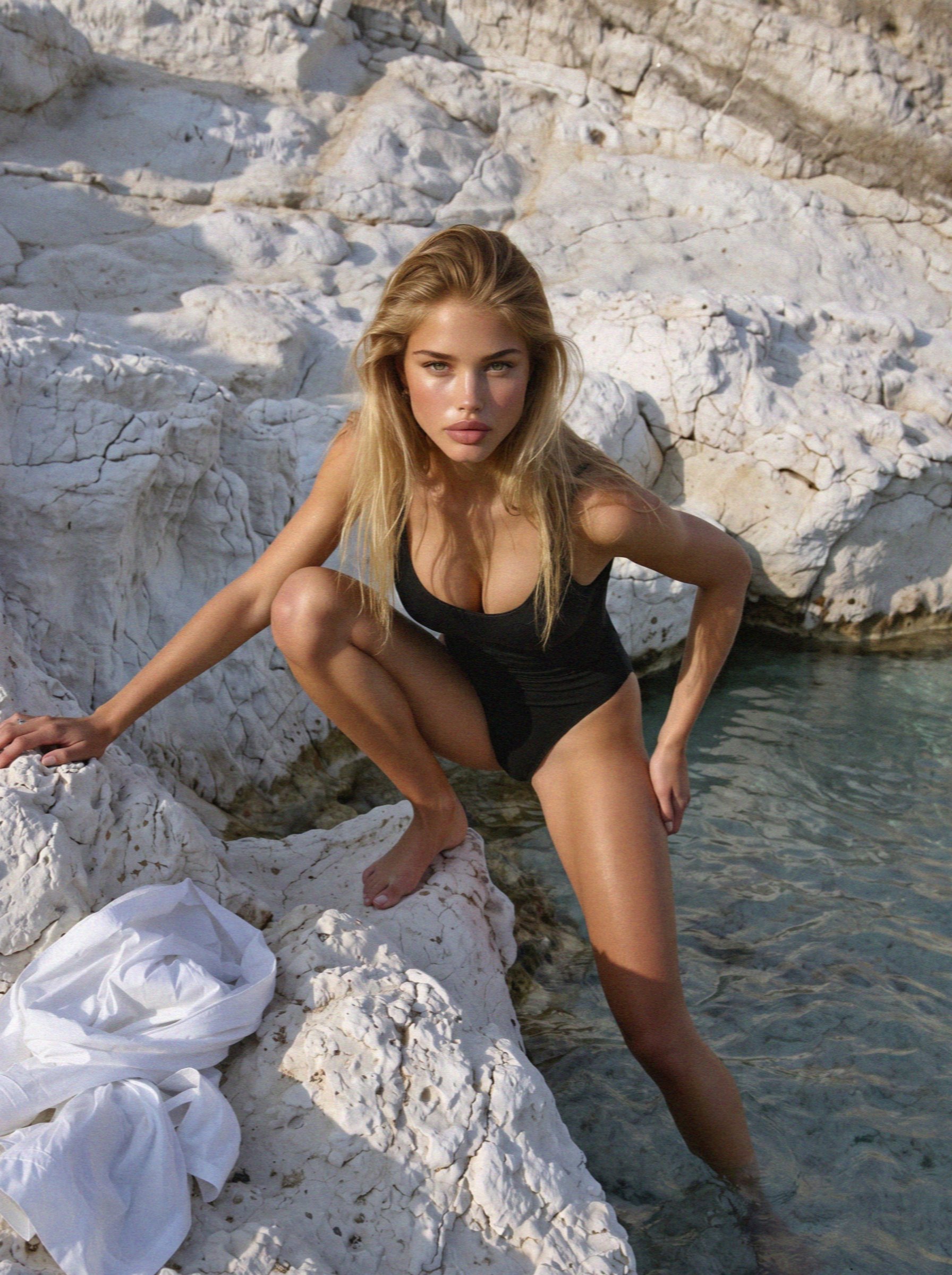
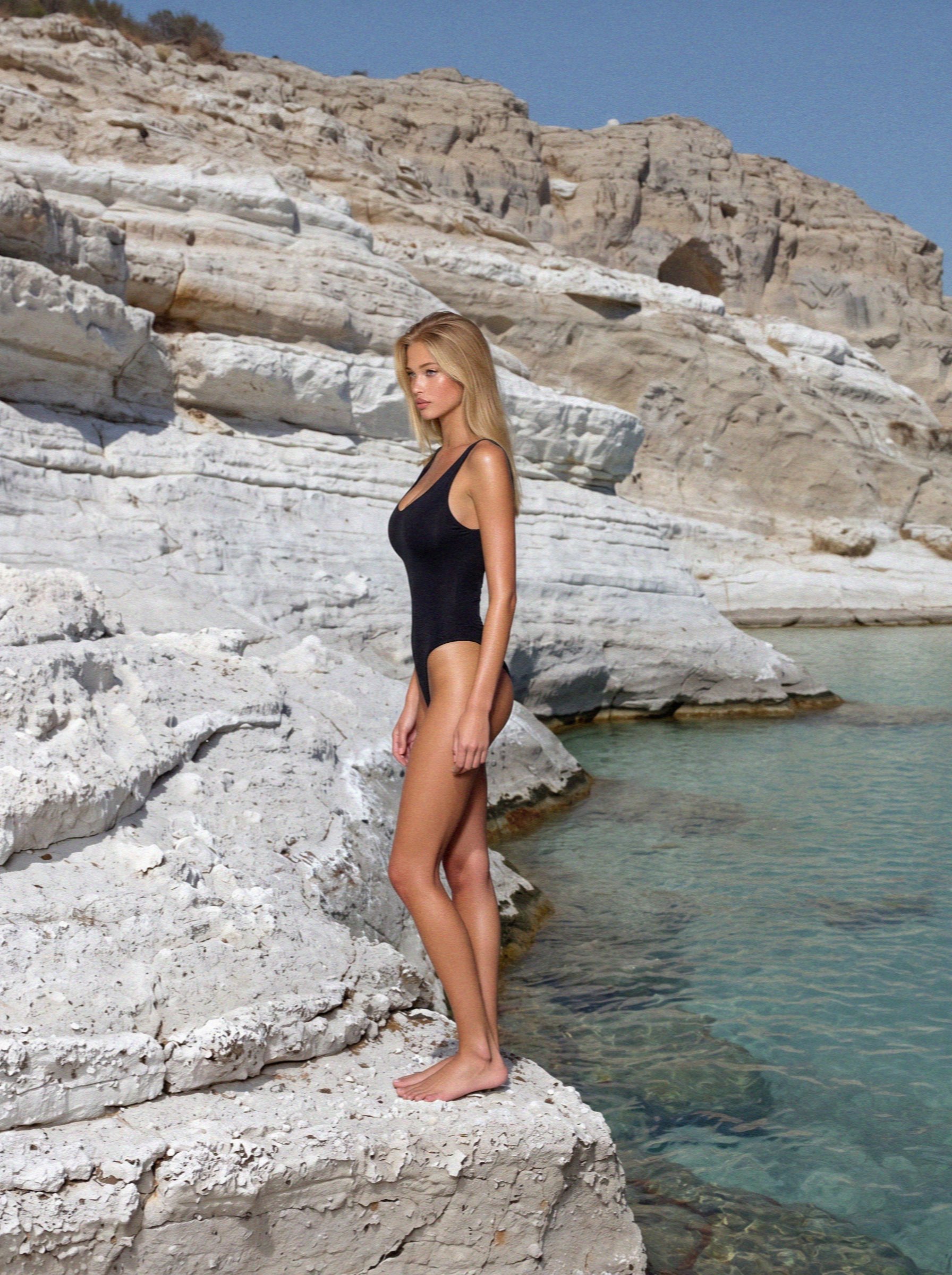
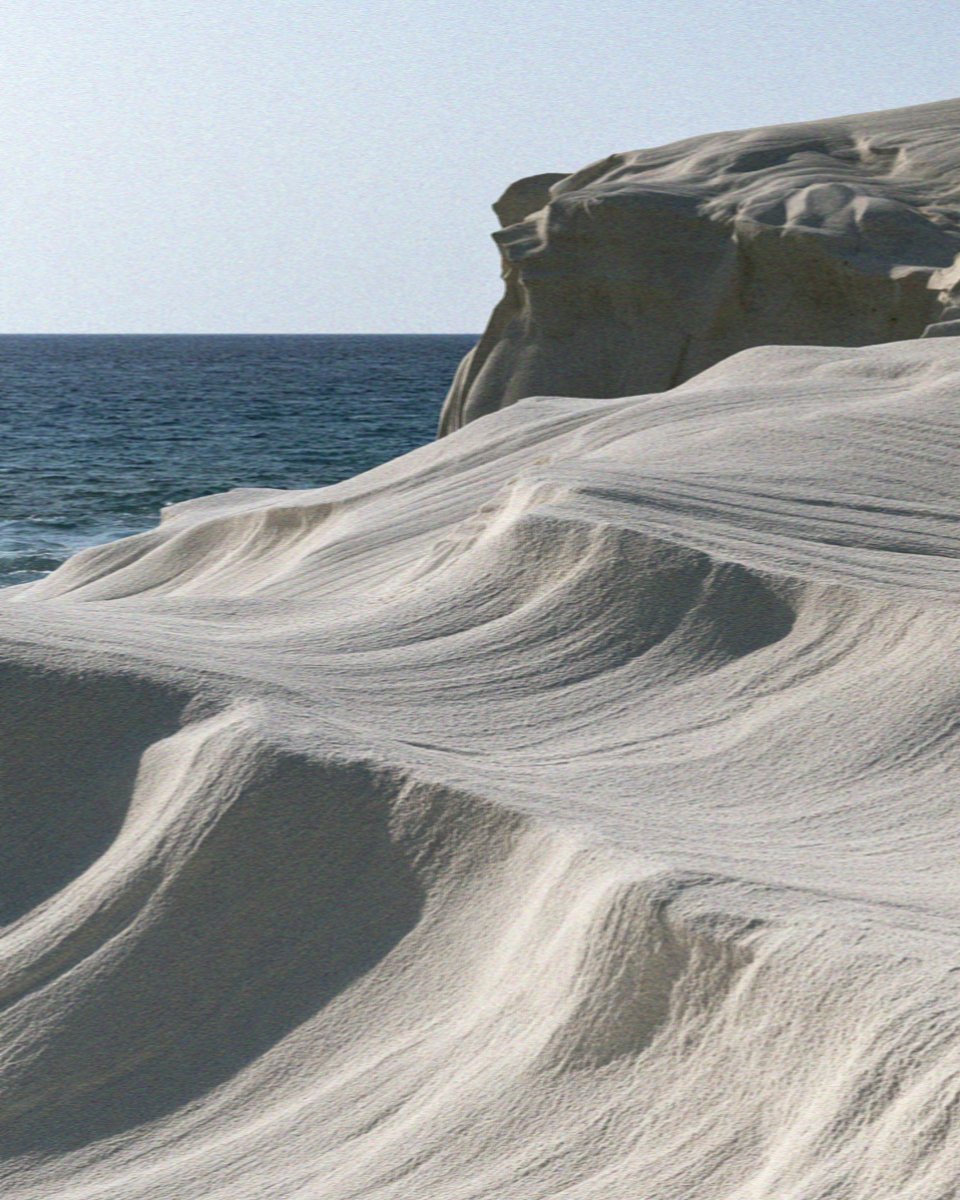
Everyone has seen the photographs and I still was not ready for how white it is.
Not marble white. Chalk white, bone white, the white of something that has been rubbed smooth for a very long time. The whole cove is volcanic ash and rock that settled here in layers, hardened, and then spent thousands of years being worked over by the wind and the sea.
The result looks less like a beach than somewhere the sea has accidentally reached on the moon.
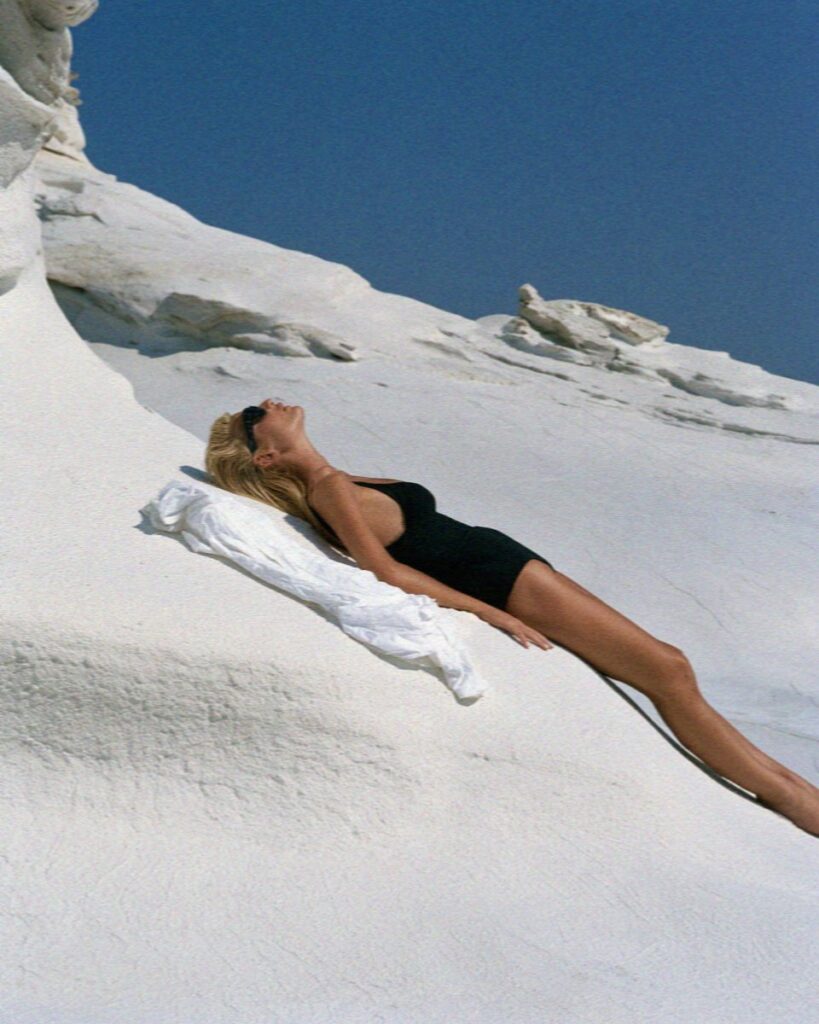
Underfoot it is soft, almost warm, faintly gritty, and it gets into everything.
And somehow this was what stayed with me from the museum.
The same island made both.
That black glass upstairs and all this white stone around me. One cooled into something that could hold an edge. The other came down in pale layers and was worn into curves.
Black and sharp.
White and soft.
The same fire underneath both of them.
That was enough geology for me.
Everyone else on the rocks was busy being photographed, including me.
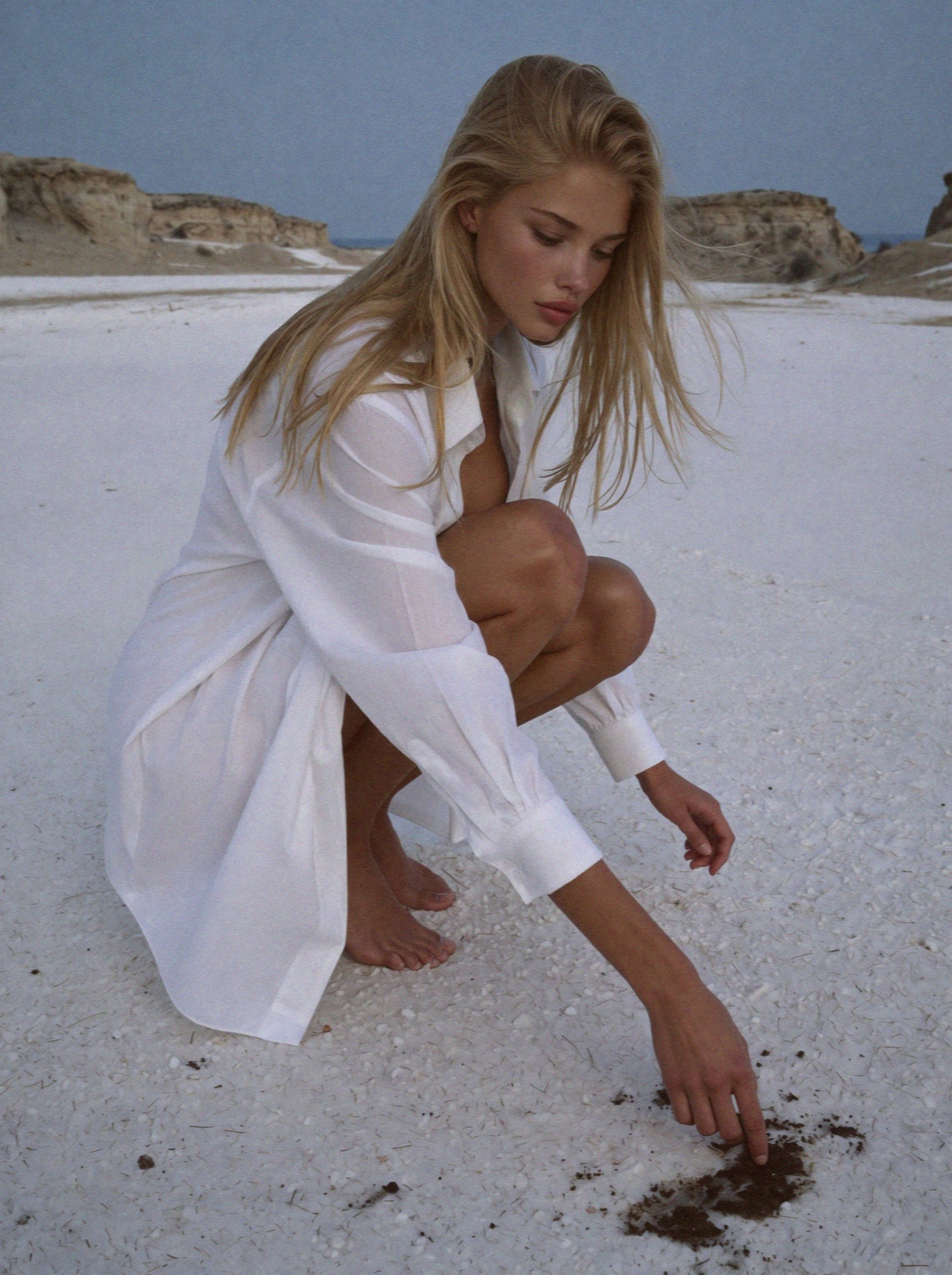
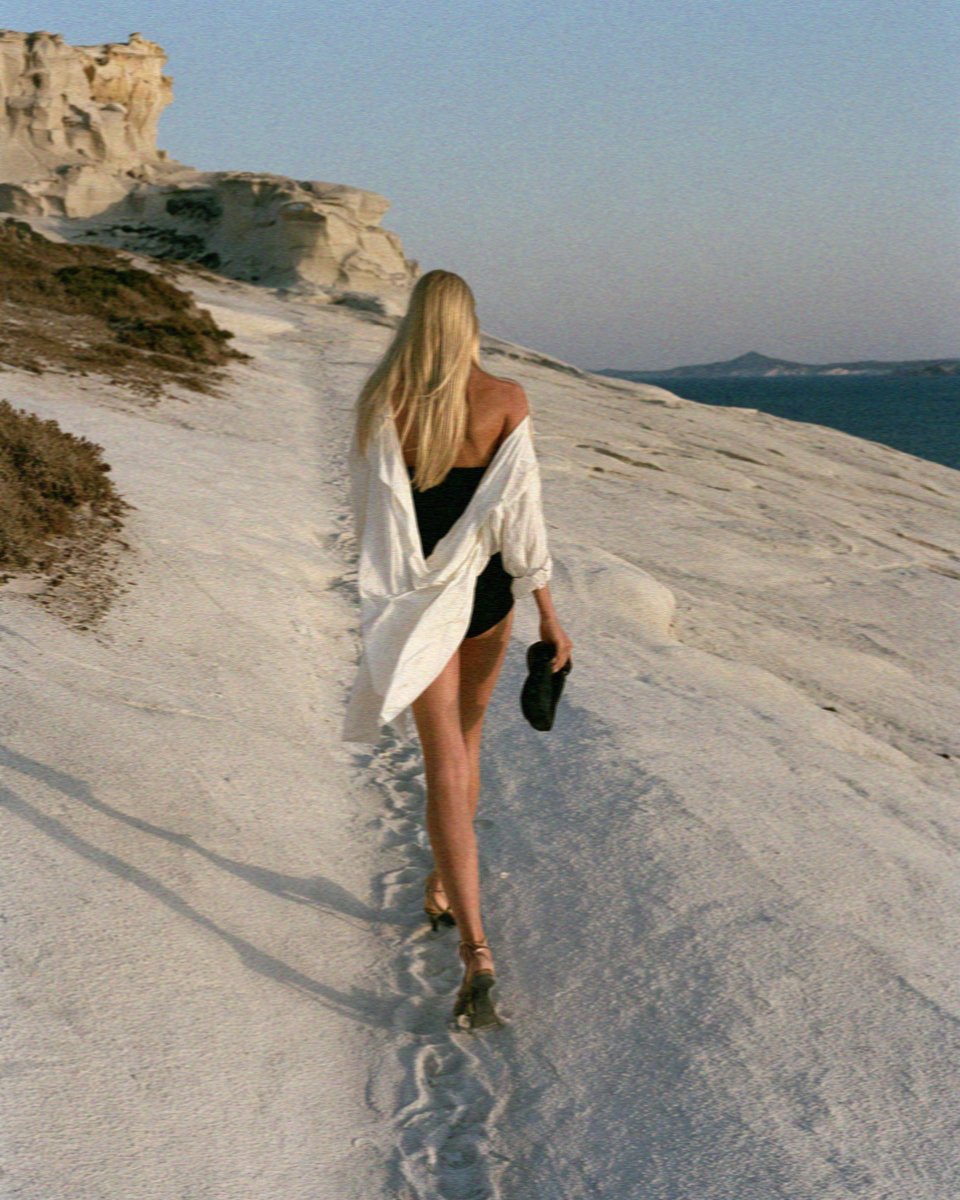
Black swimsuit, white shirt, which on Sarakiniko is less an outfit than a decision about contrast. My photographer walked backwards along a ridge for a quarter of an hour looking for the one angle where the sea showed between two curves of stone. He found it eventually, and we worked until the sun dropped enough that the white stopped burning your eyes and went the grey-blue of the inside of a shell.
Then I swam.
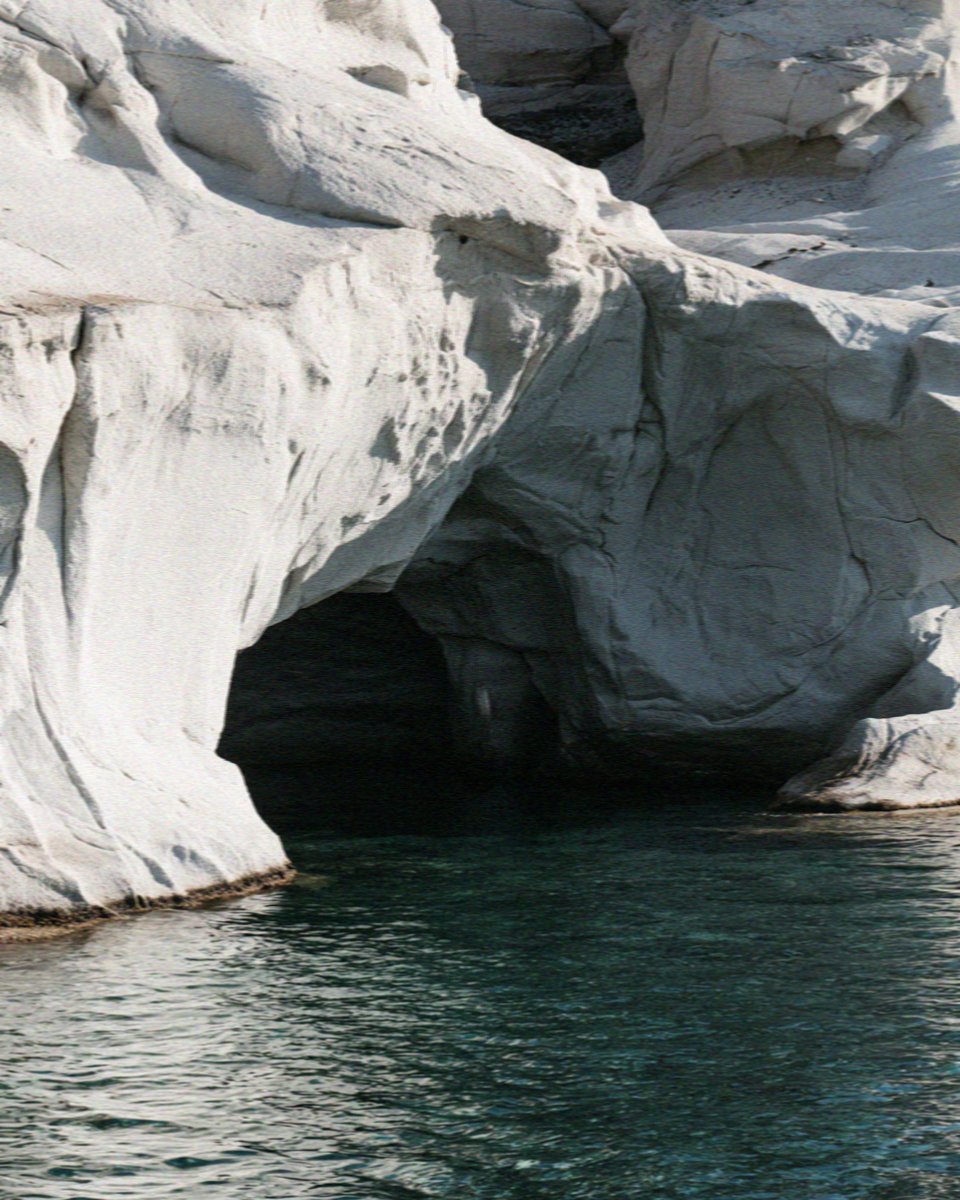
There is a long narrow inlet where the sea runs into the rock like a corridor, and people jump into it from the sides.
A Frenchman of about sixty jumped while I was watching, holding his nose, and came up enormously pleased with himself.
His wife applauded once, drily, from the top.
I climbed down instead.
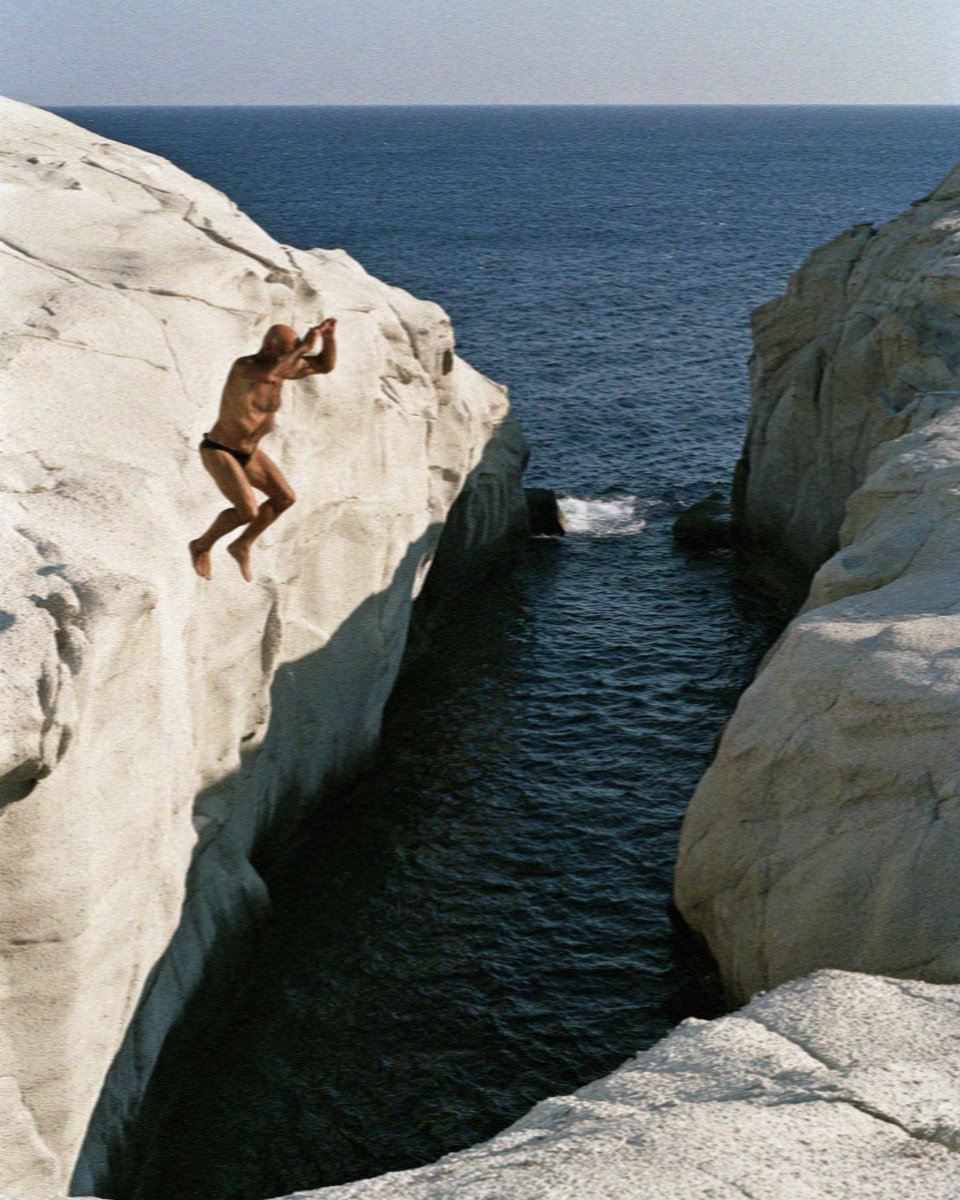
I am quite comfortable with this decision.
The water in the channel was cold, and then it was not. It was so clear that the white walls seemed to continue straight down beneath me, and the whole corridor looked as though somebody had switched a light on underneath it.
I swam towards the mouth where the channel opens to the sea, then held on to the rock and stayed there for a while.
The swell would lift me and set me down.
Lift me and set me down.
There are moments when travelling becomes very quiet. You stop trying to understand where you are, stop thinking about what you are going to write about it, and for a few minutes you are simply in the water.
My father was easiest in himself near water.
I used to think that was because he liked boats. I think now it may simply have been the water, that it asked nothing of him except to be in it.
I thought about that while I was floating there, and then I thought about nothing at all.
Halfway back to the car I saw something black in the white dust beside the path.
A little flake, about the size of my thumbnail.
My heart did something stupid.
I crouched down and picked it up.
It was a piece of a bottle.
I laughed so loudly the photographer turned around to see what had happened.
My sandals are drying on the balcony now.
I have rinsed them twice, and they are still white along the straps.
The marble chip from Paros is on the table beside them.
I am not bringing home the bottle.
V.
More images from Milos