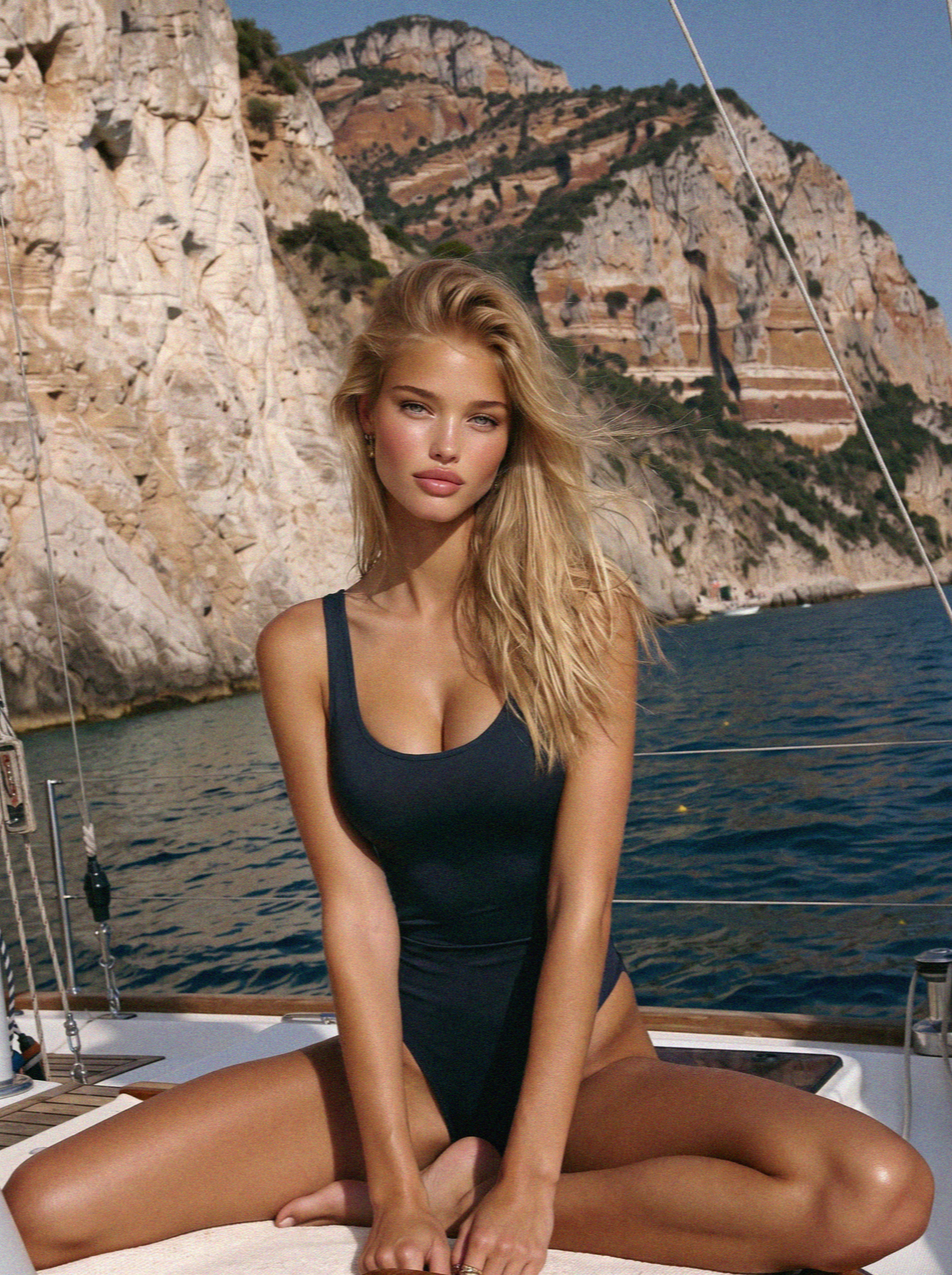
The boat left Adamas at nine.
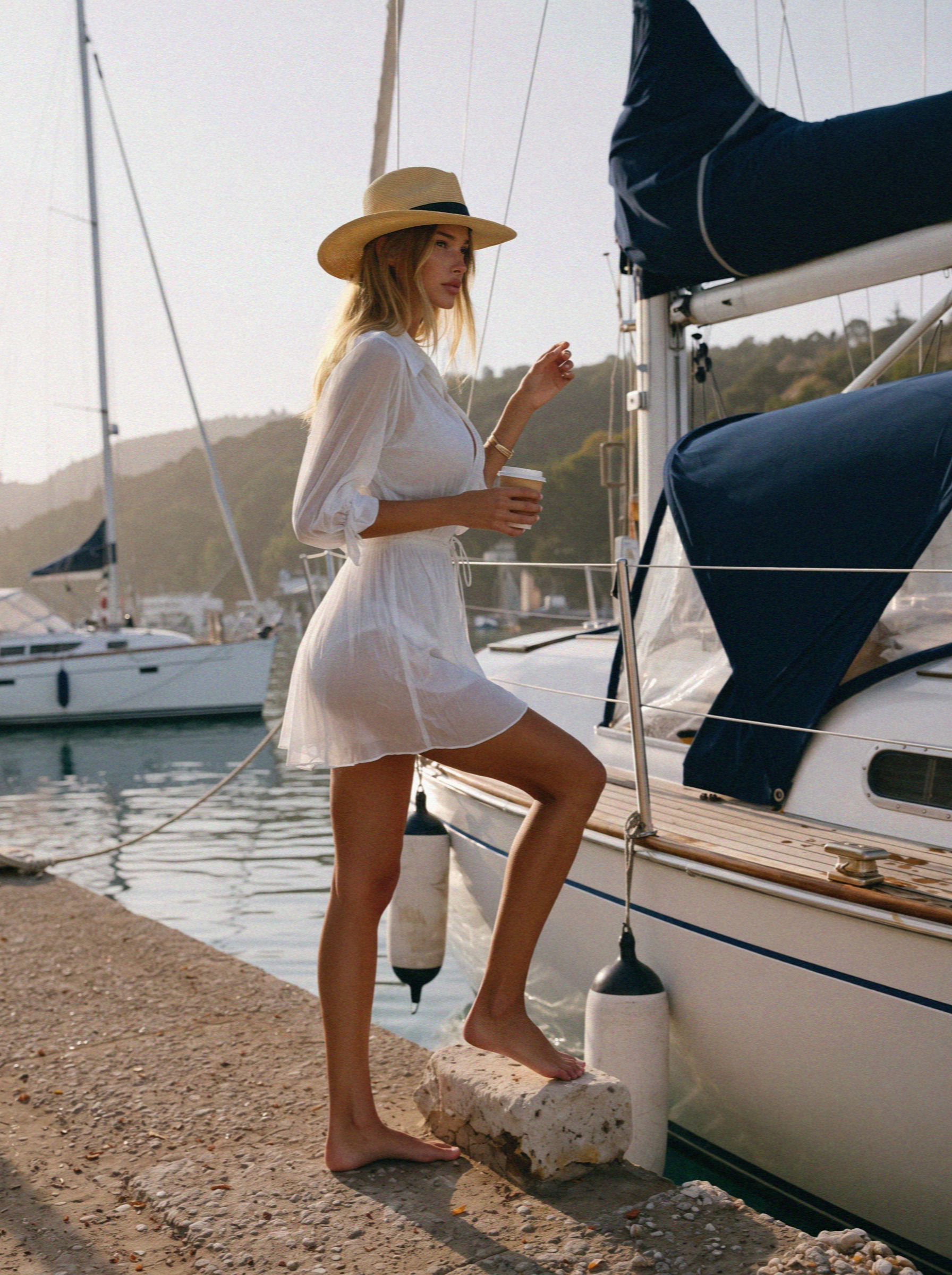
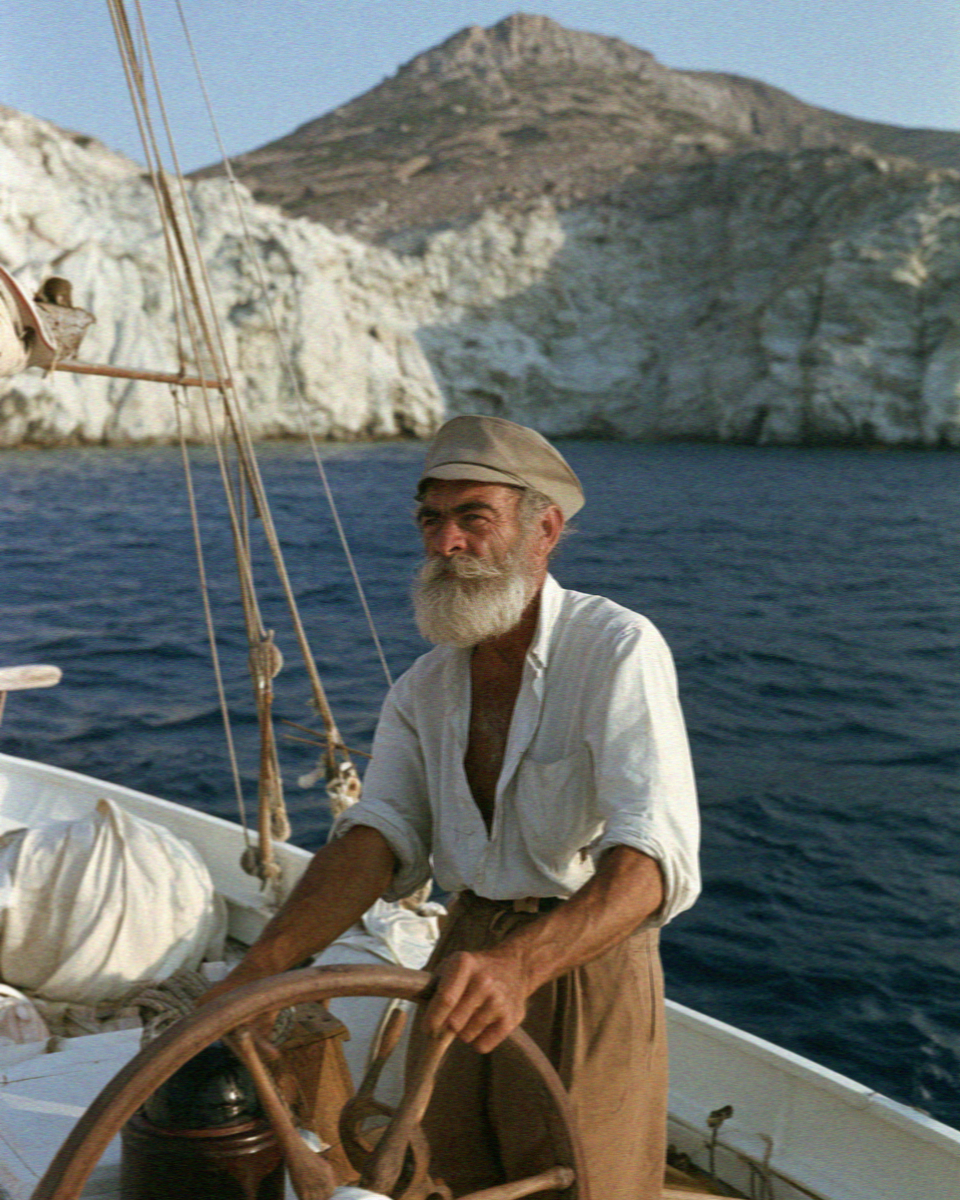
A white sailing boat with a blue awning, a captain with a grey beard and a voice that carried without being raised, and a deckhand of about nineteen who did everything else, including the coffee, the ropes and, later, a watermelon.
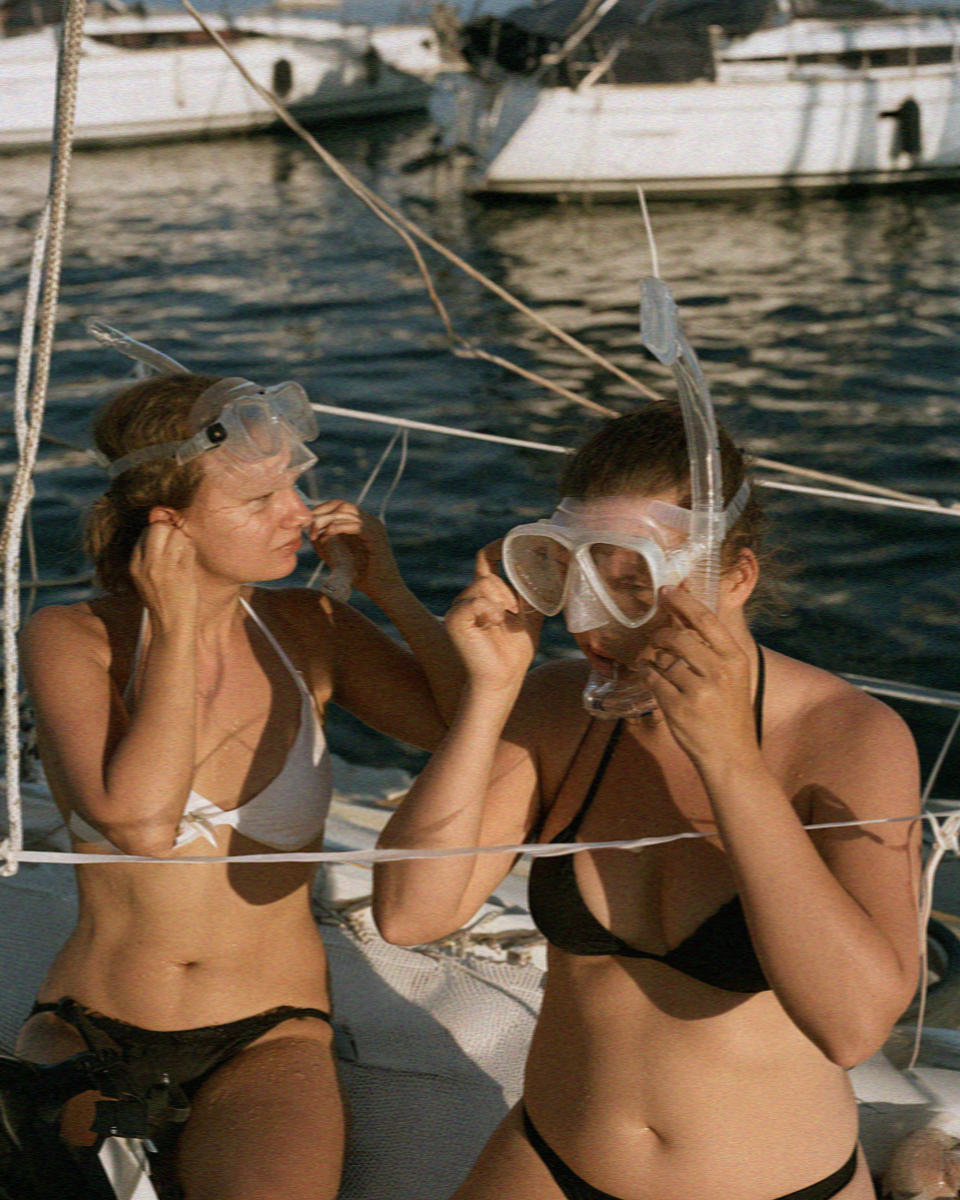
There were twelve of us. An Italian couple on their honeymoon who held hands even while putting on sun cream. A retired Australian pair with matching hats. Two Polish sisters who had brought their own snorkels and clearly meant business. Me, the team, and my photographer, who spent the first half hour working out where on a moving deck he could stand without falling into the sea.
The bay was flat and silver.
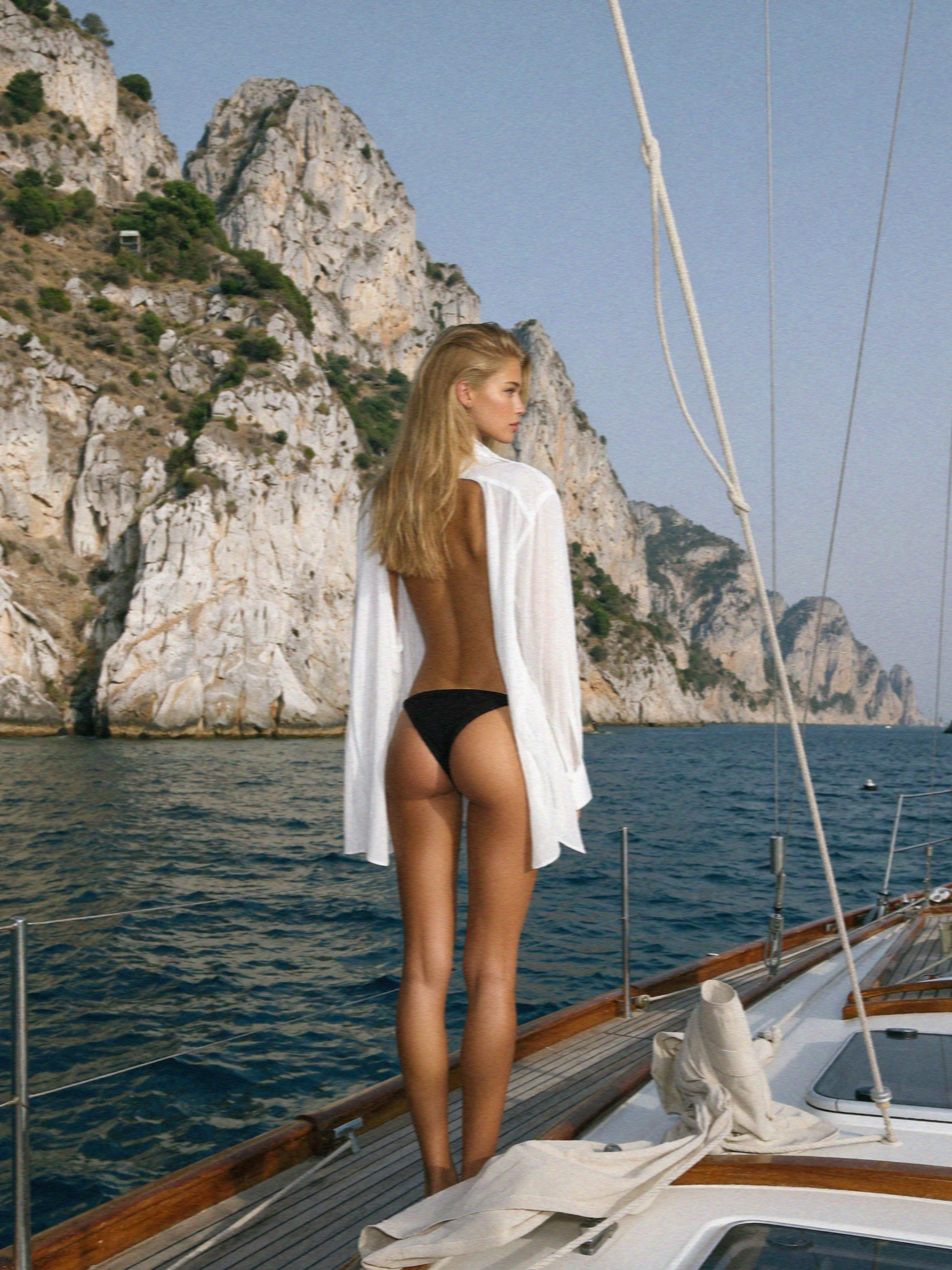
We motored out past the mouth of the old volcano and turned south along the western coast, and the island changed colour every few minutes. Brown, then rust, then a pale yellow, then white again. At one point the captain pointed at a cluster of rocks and told us they were the bears. I looked for a long time. One of them was quite clearly a bear. The rest were rocks being generous.
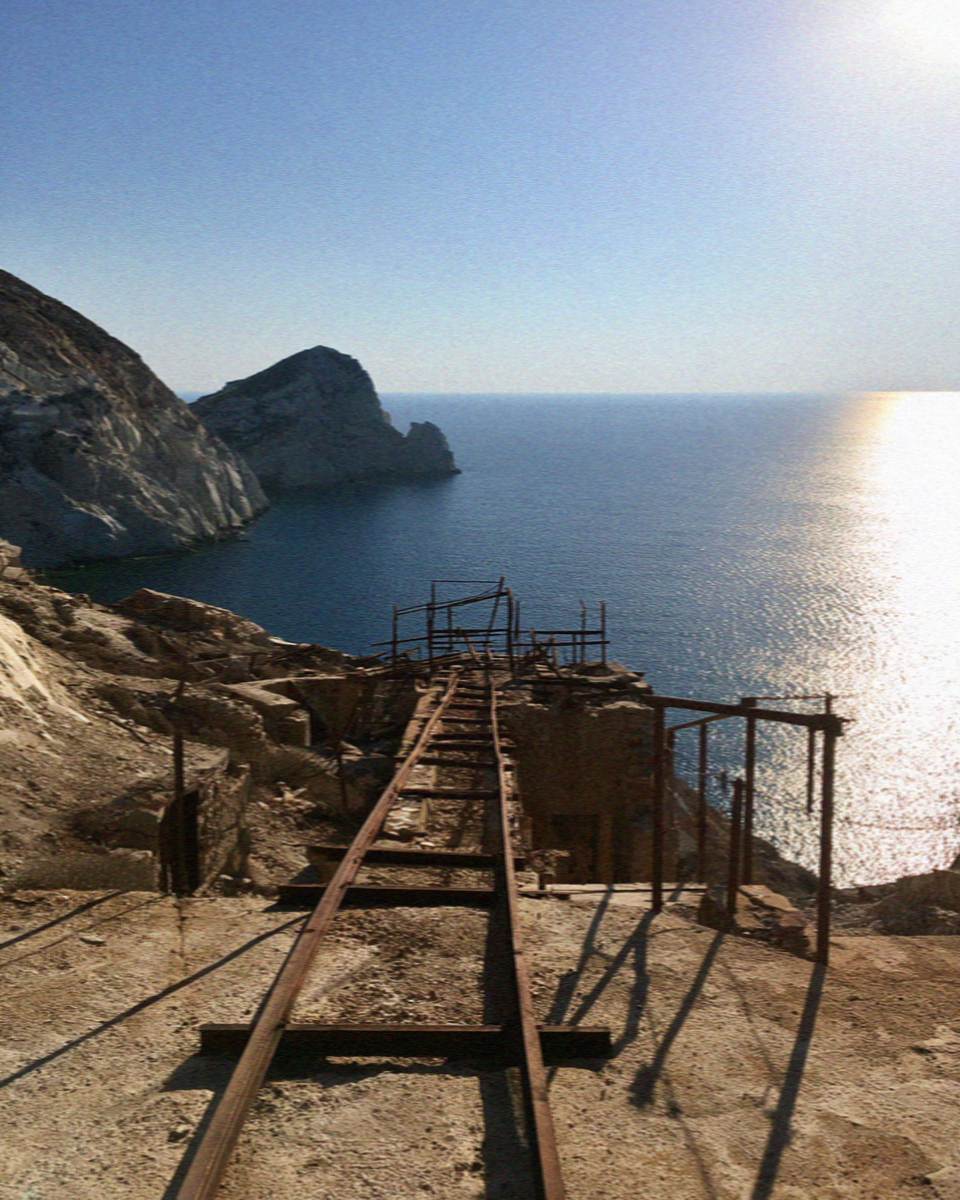
Further on there were the ruins of an old manganese mine above the water, rails running down to nowhere. Milos has been dug into for its stone for eleven thousand years, and it shows.
Sykia came first.
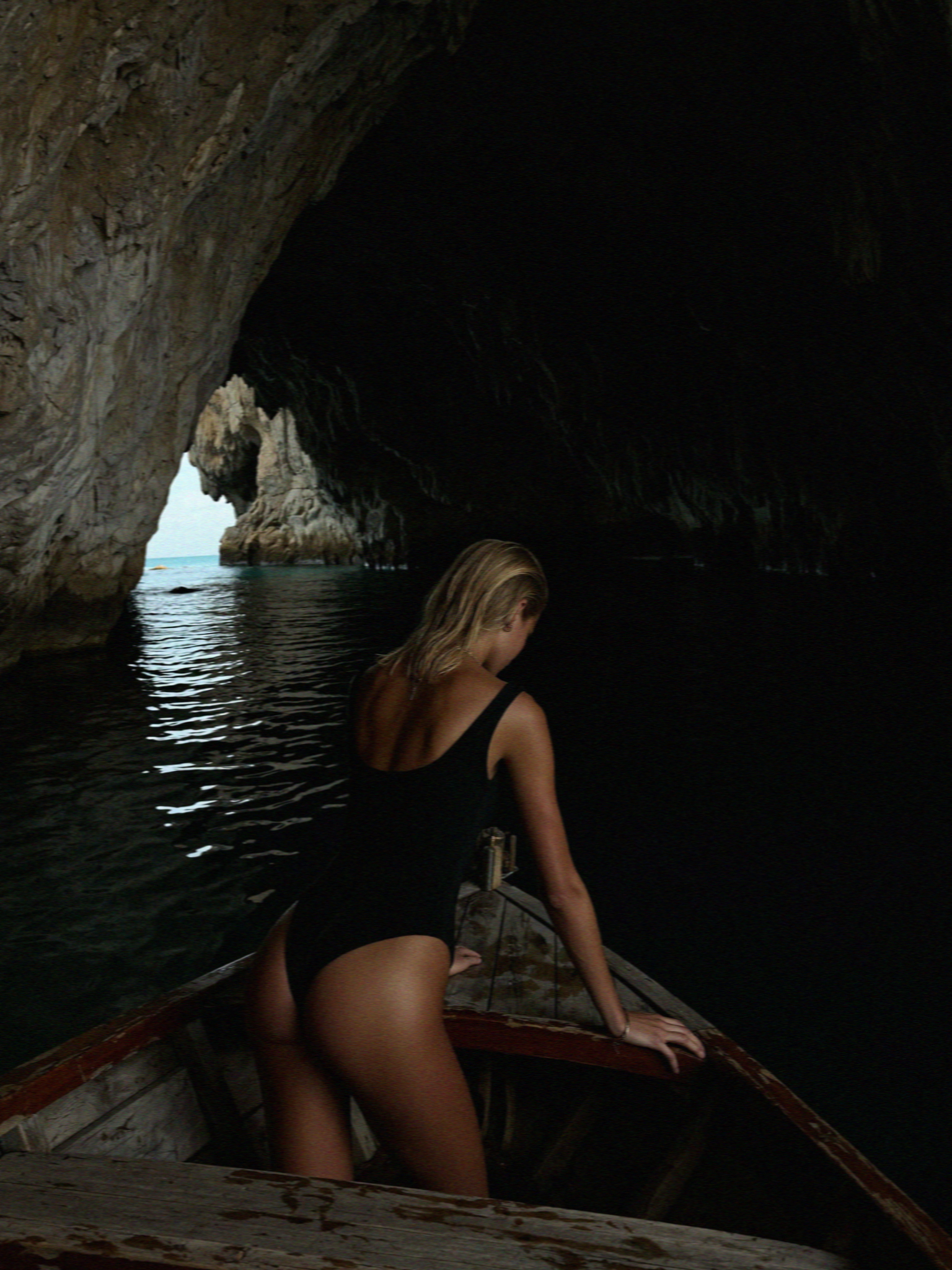
From the outside it is nothing. A dark opening at the foot of a cliff. The boat cannot go in, so the deckhand took us across in the dinghy, four at a time, and we slid in under the rock with our heads down.
And then the roof was gone.
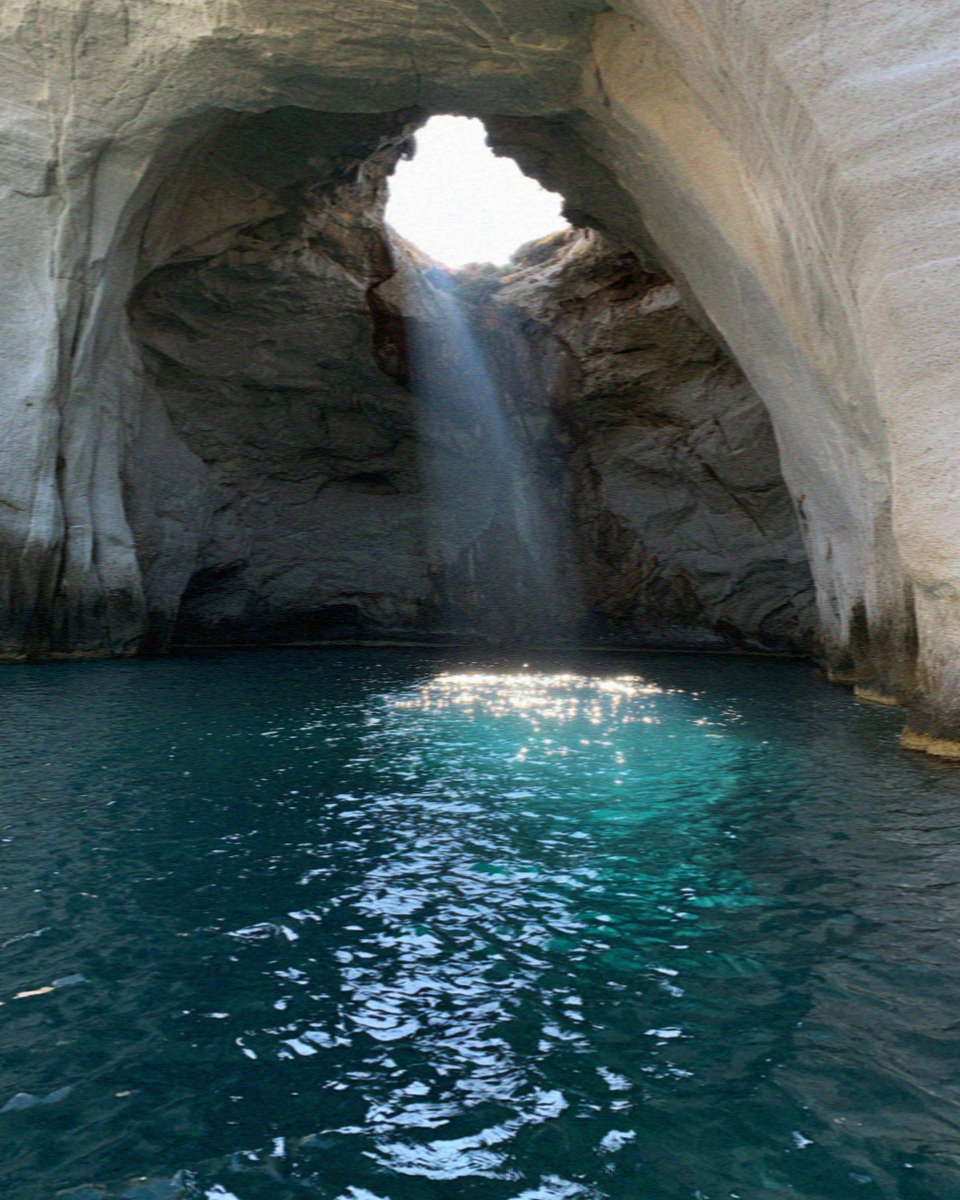
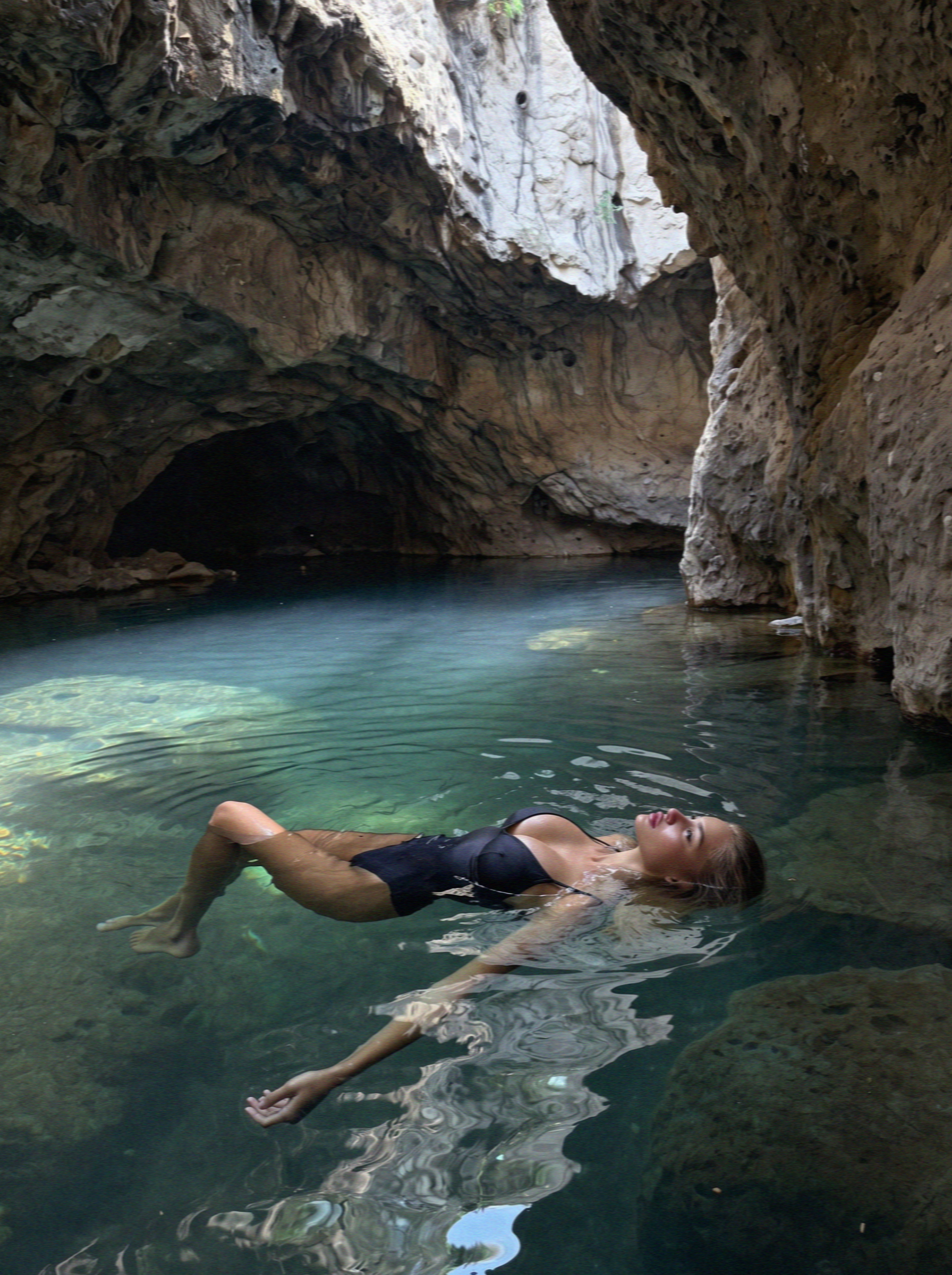
At some point, a very long time ago, part of the ceiling fell in, and what is left is a round room of rock open to the sky, with the sea for a floor. The light comes straight down through the hole and hits the water and the water throws it back up the walls, turquoise and moving, so that the whole cave seems to breathe.
Nobody spoke. Even the Polish sisters stopped adjusting their snorkels.
The Australian man said, very quietly, “Well.”
That was the right word.
I slipped over the side and floated on my back in the middle of it and looked up at the circle of sky. A gull crossed it. Then nothing crossed it.
Kleftiko was an hour further round the coast.
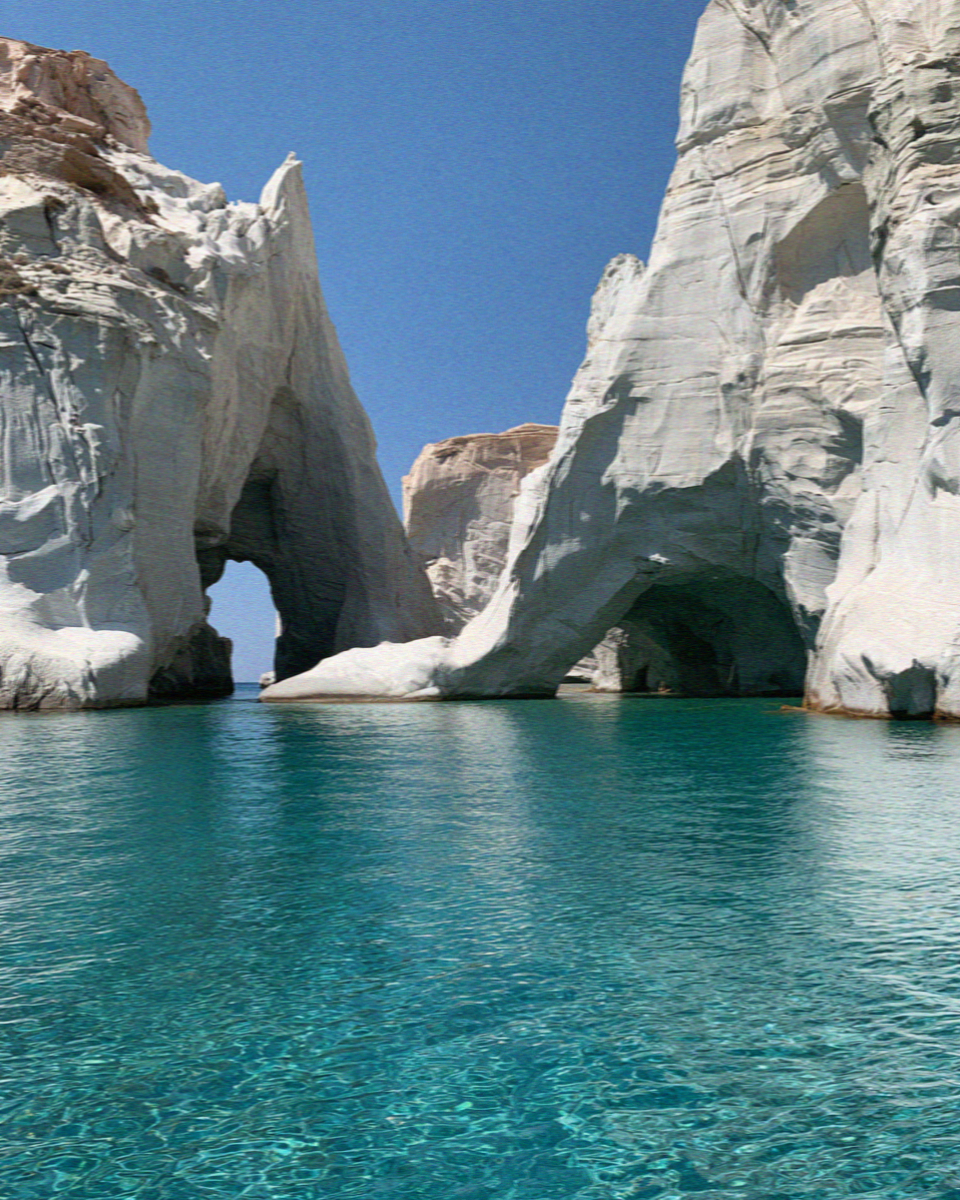
Towers of white rock standing up out of the sea, cut through with arches and tunnels and caves, the water around them that impossible blue that looks as though somebody has lit it from underneath. It is the same pale volcanic stone as Sarakiniko, but here the sea has not smoothed it into curves. It has carved it into a ruin.
The captain dropped anchor in the lee of the rocks and told us about the name.
Kleftiko comes from the Greek for thief. For a few hundred years this was where pirates hid. You cannot see the anchorage from the open sea, and you cannot see the open sea from the anchorage until you are almost out of it, so a ship could wait here in the rock with nobody knowing, and slip out when something worth taking went past.
Then he said that it was also the name of a dish.
Lamb, cooked slowly and sealed, so that no smoke rises from the fire. The story goes that the brigands in the hills cooked their meat that way so that nobody could find them by the smell.
So the same word means a place to hide a ship and a way to hide a dinner.
I found this unreasonably pleasing.
A whole language with one word for keeping very still until it is safe.
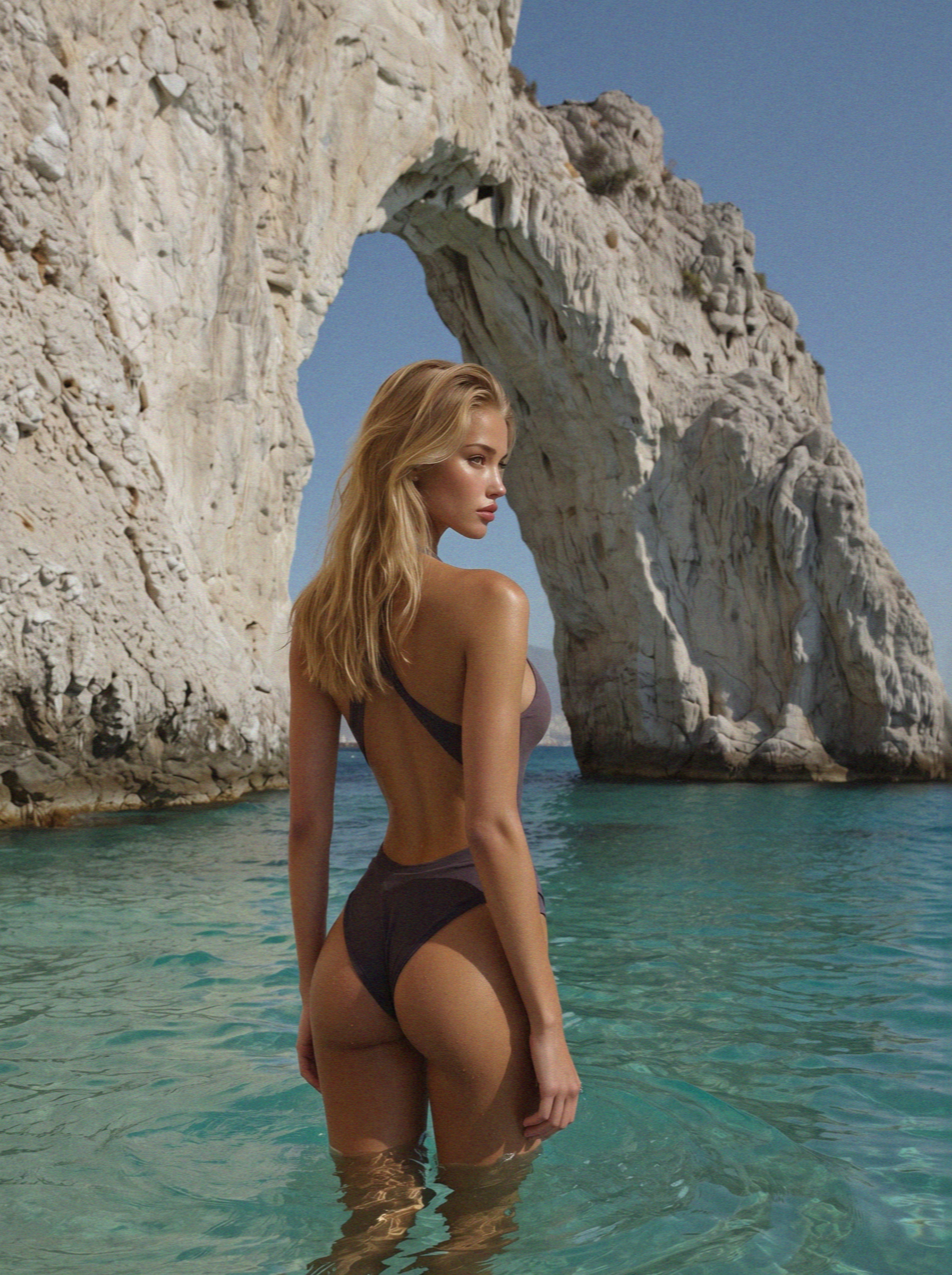
We swam.
You can swim through some of the arches. The water inside them is darker and much colder, and your voice comes back to you from the rock, and then you come out the other side into the light and the blue is so bright it is almost a sound.
I swam through the same arch three times.
My photographer, who does not swim when he is working, followed along the rock above me with the camera and said nothing, which from him is high praise.
There was meant to be a second tunnel, a long one through to the far side of the rocks, but by early afternoon the wind had come up from the north and the swell was running into it, and the captain shook his head and said that would be for another day.
My grandmother says c’est la vie, and she means it in her particular way. Not that nothing matters. That this cannot be undone, so what are we going to do now.
What we did now was lunch.
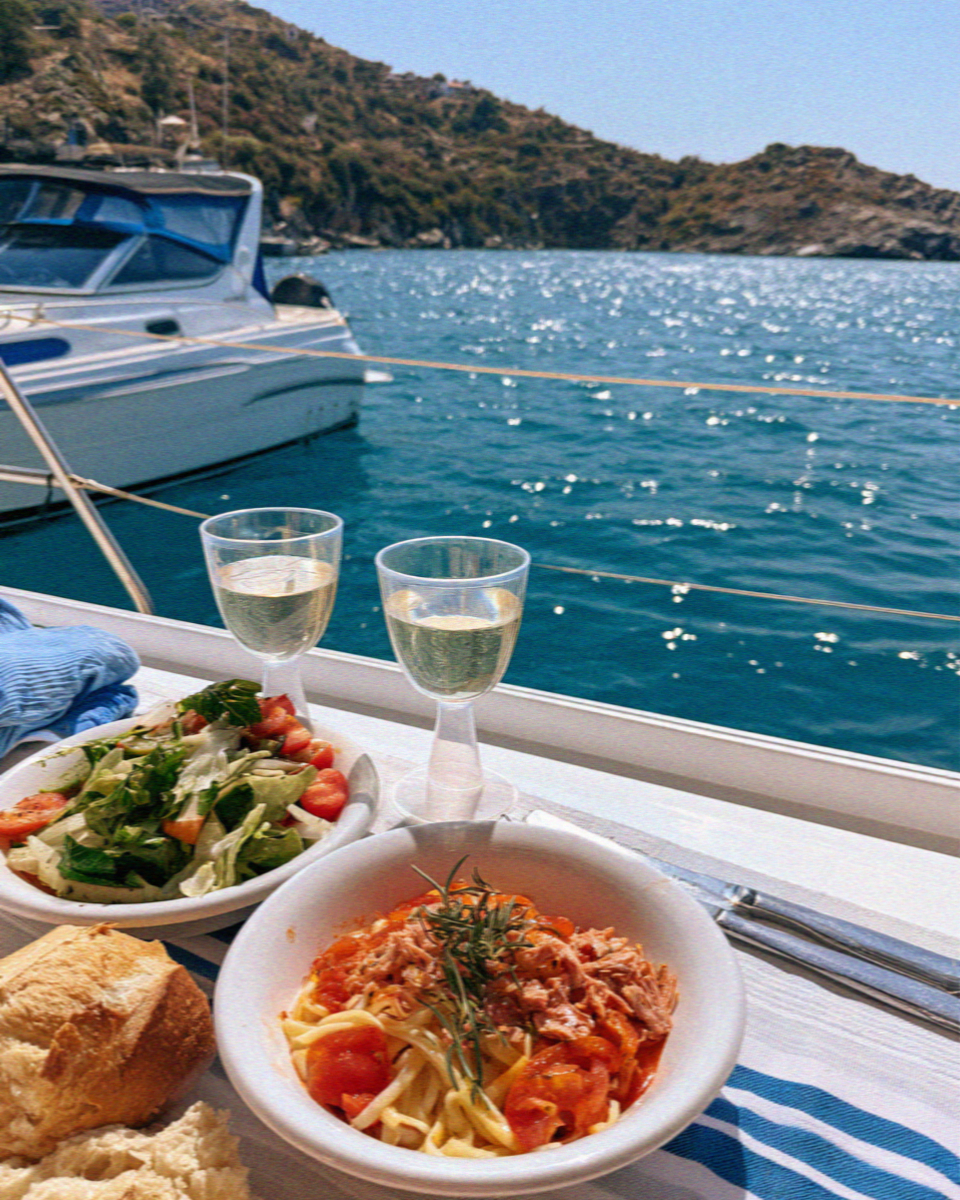
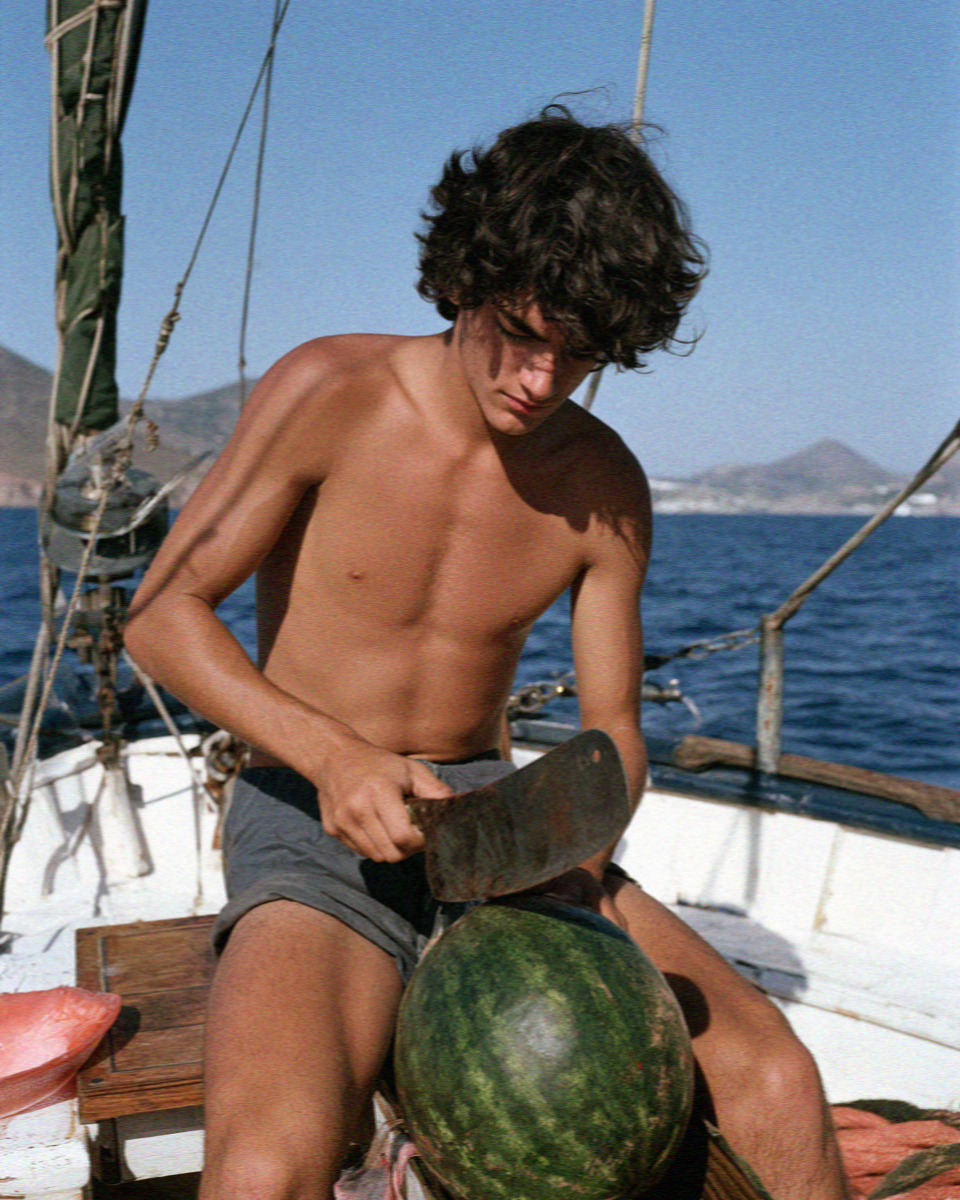
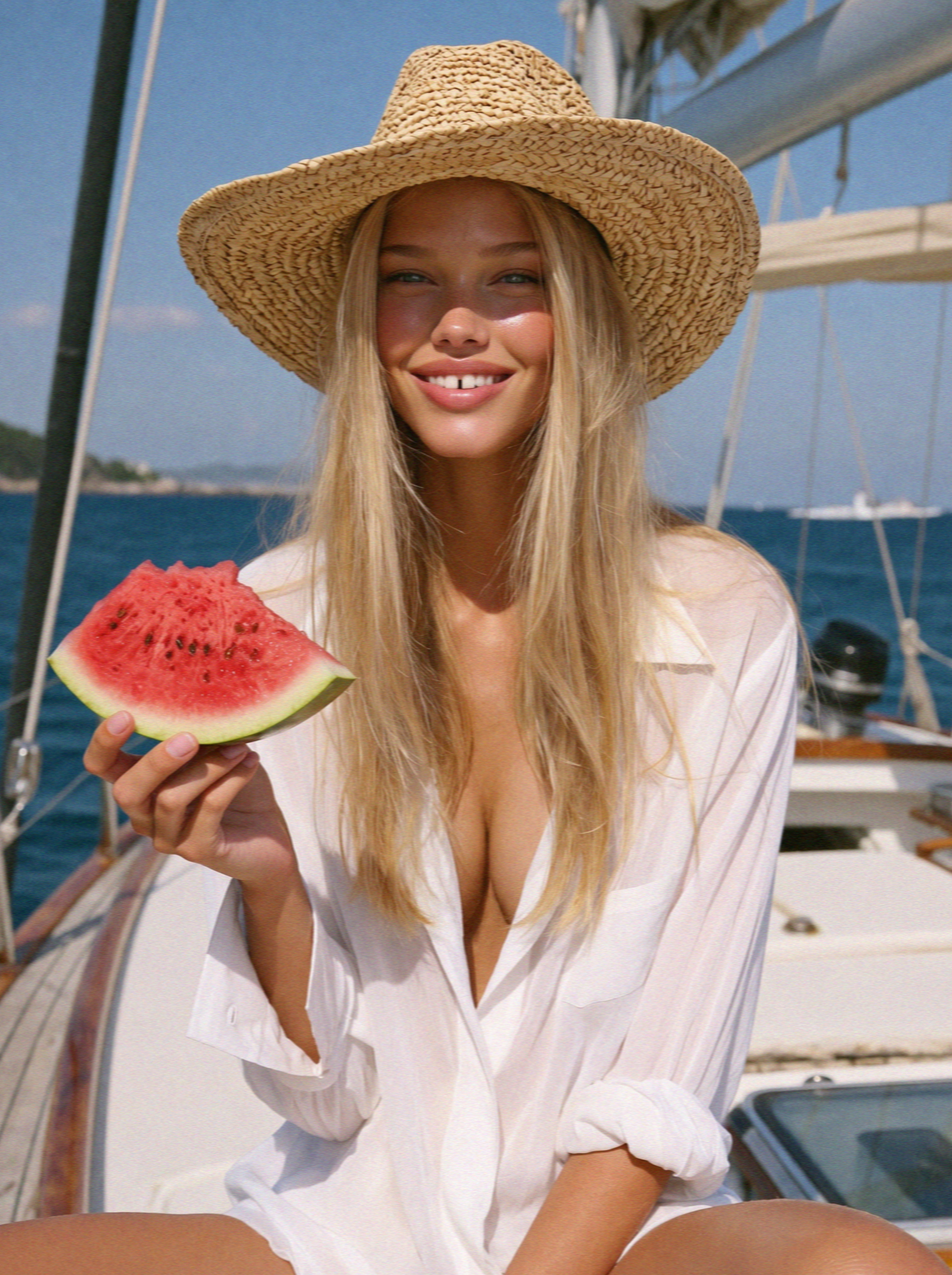
Greek salad, pasta with tomato and tuna, bread, a plate of local cheese, cold white wine in plastic glasses, and afterwards the watermelon, which the deckhand cut on the stern with a knife far too large for it while the boat swung gently on its anchor.
I ate sitting on the edge of the deck with my feet hanging over the water.
The Italian husband fell asleep. His wife put her hat over his face so he would not burn, and went on reading.
We came back the long way with the sail up and the engine off, and for an hour nobody said very much. The wind did all the work. The deckhand lay on the bow with his eyes shut. The white rock went gold behind us, then pink, then grey.
At the dock in Adamas, the Australian woman shook my hand and said it had been the best day of their whole trip, and then, after a moment’s thought, said it had been the best day of the last several years.
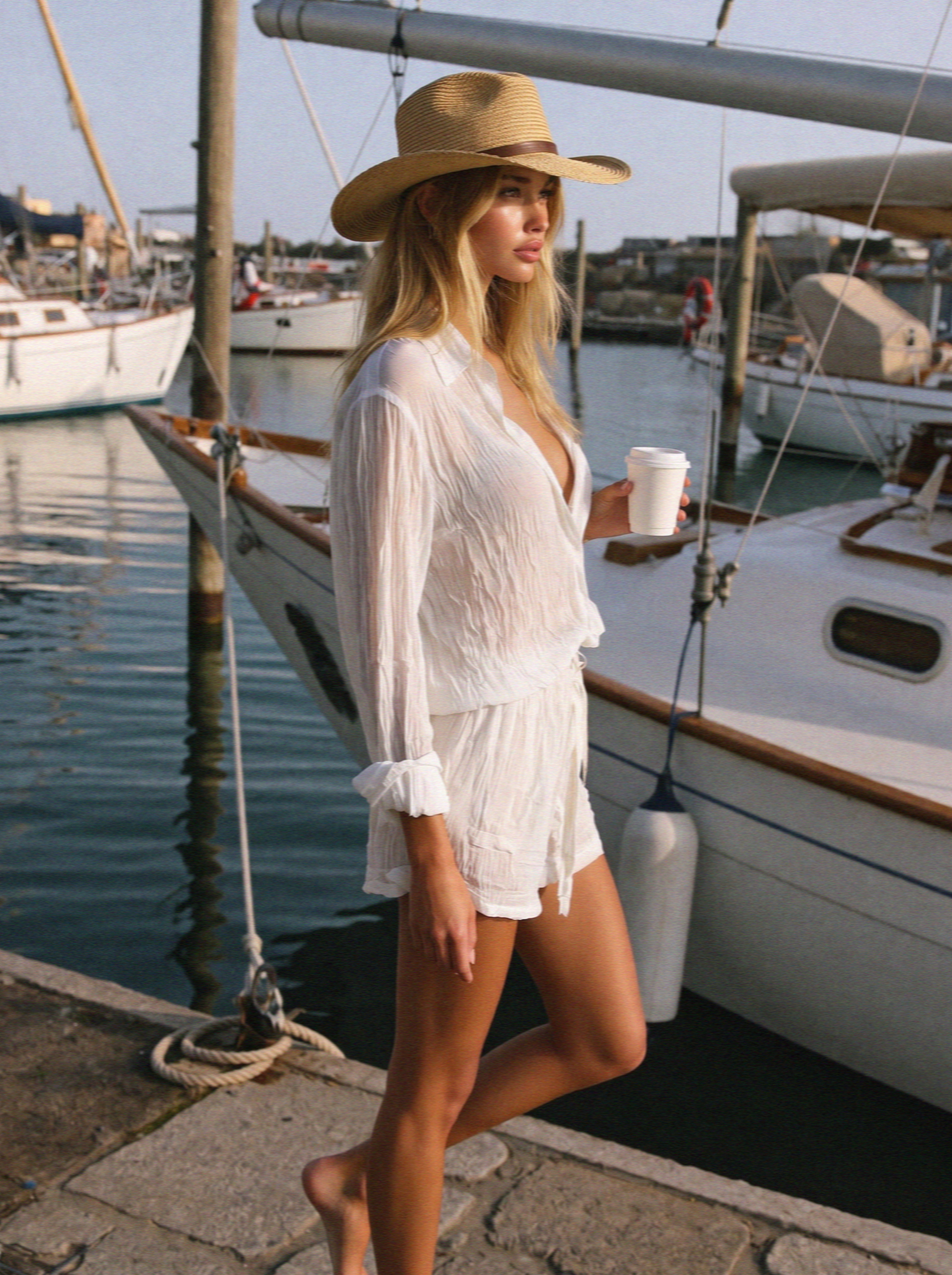
I ordered the kleftiko for dinner.
It came in a parcel of baking paper, tied with string, and when the waiter cut it open the steam came out all at once, as though it had been waiting all day to be let go.
It was very good.
There is still salt in my hair and I have decided not to do anything about it until the morning.
V.
More images from Milos