I went inland, which is the direction nobody drives.
Everyone here goes down. Down to the coves, down to the sea, down through the olives with the windows open and the radio on, and the olives are the thing you pass on the way to the thing. I had done it myself two days running. You stop noticing a landscape you are only ever crossing.
So I turned the other way, up onto the plain between the town and Fasano, and I stopped the car after about ten minutes because I had not properly looked at one of these trees in my life.
They are not what I thought olive trees were.
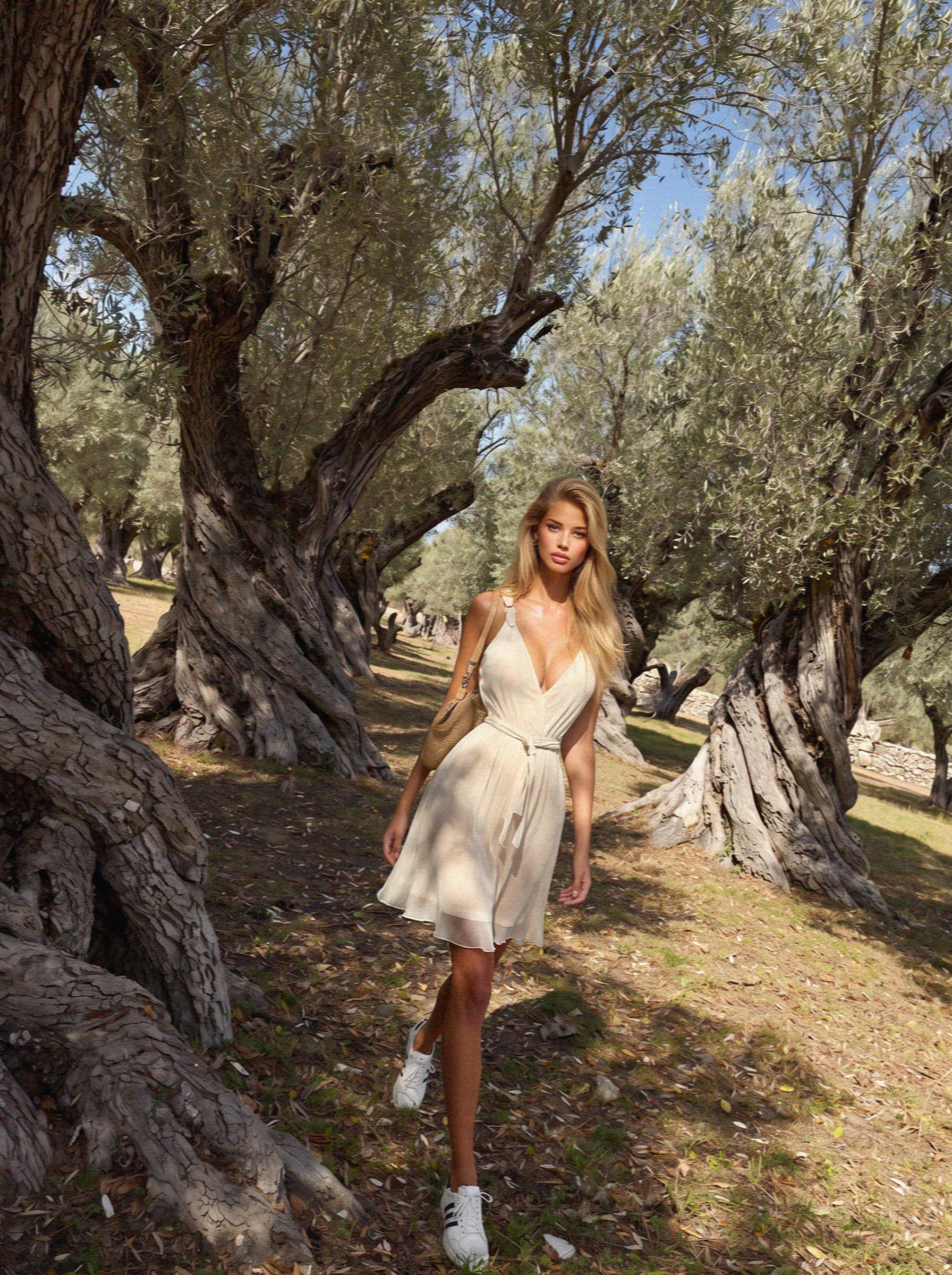
An olive tree in my head was a neat silver thing on a hillside, waist thick, planted in rows, the kind you see on a bottle. These are not that. These are enormous. Some of them are four and five metres round at the base and they have gone hollow with age, opened right up the middle, so that what is left is a shell of grey wood twisted round an absence. The trunks turn like rope under tension. Some have split into two separate columns that lean apart and carry, between them, a single full head of leaves.
They look like they are in the middle of a slow movement that started before anyone was watching.

There are about six and a half thousand hectares of this, running between Ostuni, Fasano, Monopoli and Carovigno, and something over three hundred thousand trees in it. Many are more than a thousand years old. A few of them are claimed at three thousand, which would put them in the ground when the Messapians were here, before Rome was anything, and I have no way of checking that and I found I did not want to.
Nobody planted these in rows. They were planted by people who assumed other people would still be here.
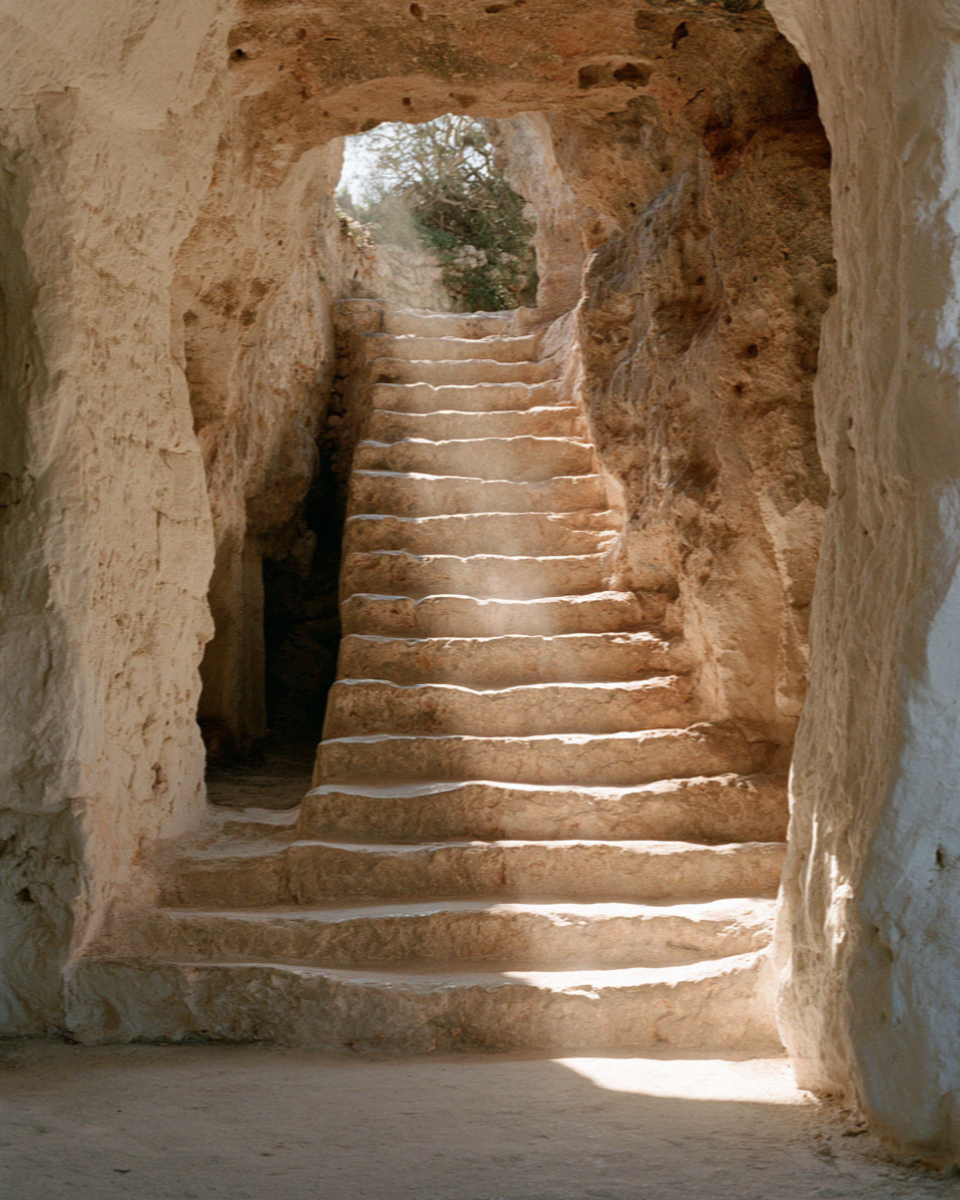
At one of the masserie halfway between the town and the sea there is a hole in the floor with steps going down it.
I want to describe this properly because it is the strangest thing I have seen in Puglia. Under the farm, cut down into the soft rock, there is a whole olive mill. Not a cellar with equipment in it. A room hacked out of the stone, low and cool, with a great round basin cut from the floor itself and a millstone standing in it on a wooden axle, and channels carved away to the sides for the oil.
A mule turned the stone. The men who worked it lived down there through the pressing season, months at a time, because bringing them up and down was more trouble than leaving them. There are niches in the wall where they kept lamps. There is a hollow where they slept.
Eleven degrees down there in August. I stood in it for a while with the light coming down the stairs behind me in one flat shaft, and the dust turning in it, and the whole thing smelling of cold rock rather than oil.
Then up the steps into thirty-six degrees and white light and the cicadas going like an electrical fault.
There is a bacterium in these trees.
It arrived somewhere near Gallipoli about a decade ago and it moves north, and it does something simple and total: it blocks the vessels that carry water up the trunk, and the tree dries out from the top down, and there is no cure. South of here, in the Salento, something over ten million olive trees are dead. You drive through it and it is grey. Not autumn grey. Dead grey, with the shapes still standing.
The whole province of Brindisi is inside the infected zone on the maps, and Ostuni is in Brindisi.
The trees I was standing under are alive. The front has slowed in the last few years, and the trees around here are being watched and tested and argued over, and there is a preservation zone and a register of the monumental ones and a great deal of hope of the practical kind, which is the kind that involves paperwork.
But you feel it in how people talk about them. Nobody at the farm said the word to me. They said how old the trees were, and how the oil from a tree this age is different, lower yield and more of it in the fruit. They talked about them the way you talk about someone in the family who is unwell, which is to say cheerfully and about other things.

I did not ask. It seemed like the sort of question you get to ask if you live here.
There was no menu, which I had been warned about and had not really believed.
Things simply arrived. Small dishes at first and a lot of them: broad beans crushed to a paste with bitter chicory, tomatoes with hard bread soaked underneath, small fried things, a cheese made that morning that came apart in threads and tasted of almost nothing except milk and salt, in the best way.
Then orecchiette, and I have had orecchiette all week, but these had been made by hand that morning by somebody who has made them every morning for a very long time, and they were thick and uneven and slightly chewy at the centre, and that unevenness is the entire point.
Then meat, slowly, and by then it was three o’clock.
The oil came in a small jug and they poured it over everything without ceremony. It was green and it caught in the back of the throat, and it had come out of trees I had been standing under an hour earlier, which is a short supply chain by any measure.
I ate for two and a half hours and the table next to me, four generations of one family, was still going when I left.

The light was going long by the time I came out and the whole plain had turned that particular silver that olive leaves do when the wind gets under them and shows the pale side.
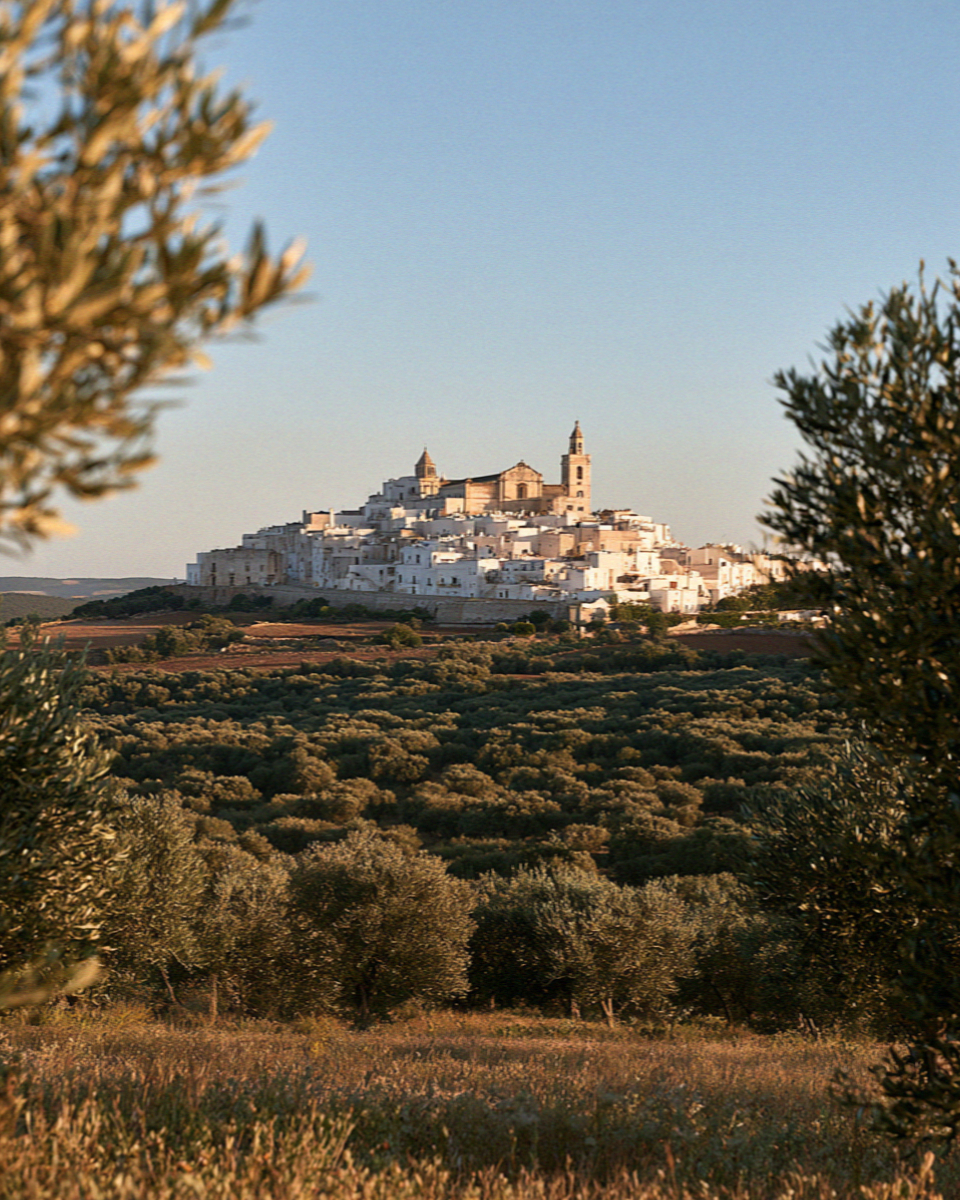
The town came up on its hill ahead of me, white, doing its trick.
And I found I did not much want to go back up to it. Three days ago the town was the entire reason I was here, and I had spent the day underneath and among things that were standing on this plain a thousand years before anyone thought to whitewash a wall.
I drove slowly. There was no traffic at all.
The trees went past for twenty minutes, and then twenty more, and they did not stop, and it occurred to me that I had been thinking of this as scenery on the way to somewhere for two days, and that it is in fact the largest and oldest thing here by a very long way.
V.
More images from Ostuni













This is a diary from Ostuni. The practical version, which farms to visit and where to eat out on the plain, is in my guide to the masseria stays near Ostuni, and the town itself is in my complete guide to Ostuni.