I got to the market before it existed.
Not before it opened. Before it was there at all. At ten past six Ballarò is a street, an ordinary one, with shuttered fronts and a man in a doorway smoking and a scooter going past too fast. You could walk the whole length of it and not know.
Then it assembles itself around you in about forty minutes.
The practical version of all this, the markets and the timings and where to sleep, is in my complete guide to Palermo. This is the other thing.

Trestles first. Two men carrying a table between them the way people carry a table they have carried ten thousand times, without looking at it or at each other.
Then crates. Then the awnings, which go up on poles and hooks that are already in the walls, have been in the walls for longer than anyone working underneath them, and the light changes colour as they go over. Everything below turns slightly orange and slightly green.
Then the ice.
The ice is the thing. Somebody hoses the cobbles first and the whole street smells of wet stone for a minute, and then the fish comes and goes onto crushed ice in a long bright bank, and the swordfish goes on last with its blade still attached because that is how you prove what it is.
I stood out of the way with a coffee and watched a man arrange lemons for eleven minutes.
He was not decorating. He was solving something. He would put one down, look at it, take it off again, move two others, put it back in almost the same place. At the end it looked like a pile of lemons. It also looked, unmistakably, like a pile of lemons that somebody had decided about.
The bar on the corner opened at half past six and had four people in it by twenty to seven, all standing, none of them talking to each other. Espresso, and a brioche, and for me a granita because I was on holiday and they were not.

Almond. Cold enough to hurt.
You put the brioche in it. I know how that sounds. You put the sweet bread into the almond ice and you eat the two things together at seven in the morning and it is completely correct, and no other breakfast I have had this year has come close.
The woman behind the counter watched me do it and gave a small nod, which I have decided to be pleased about.
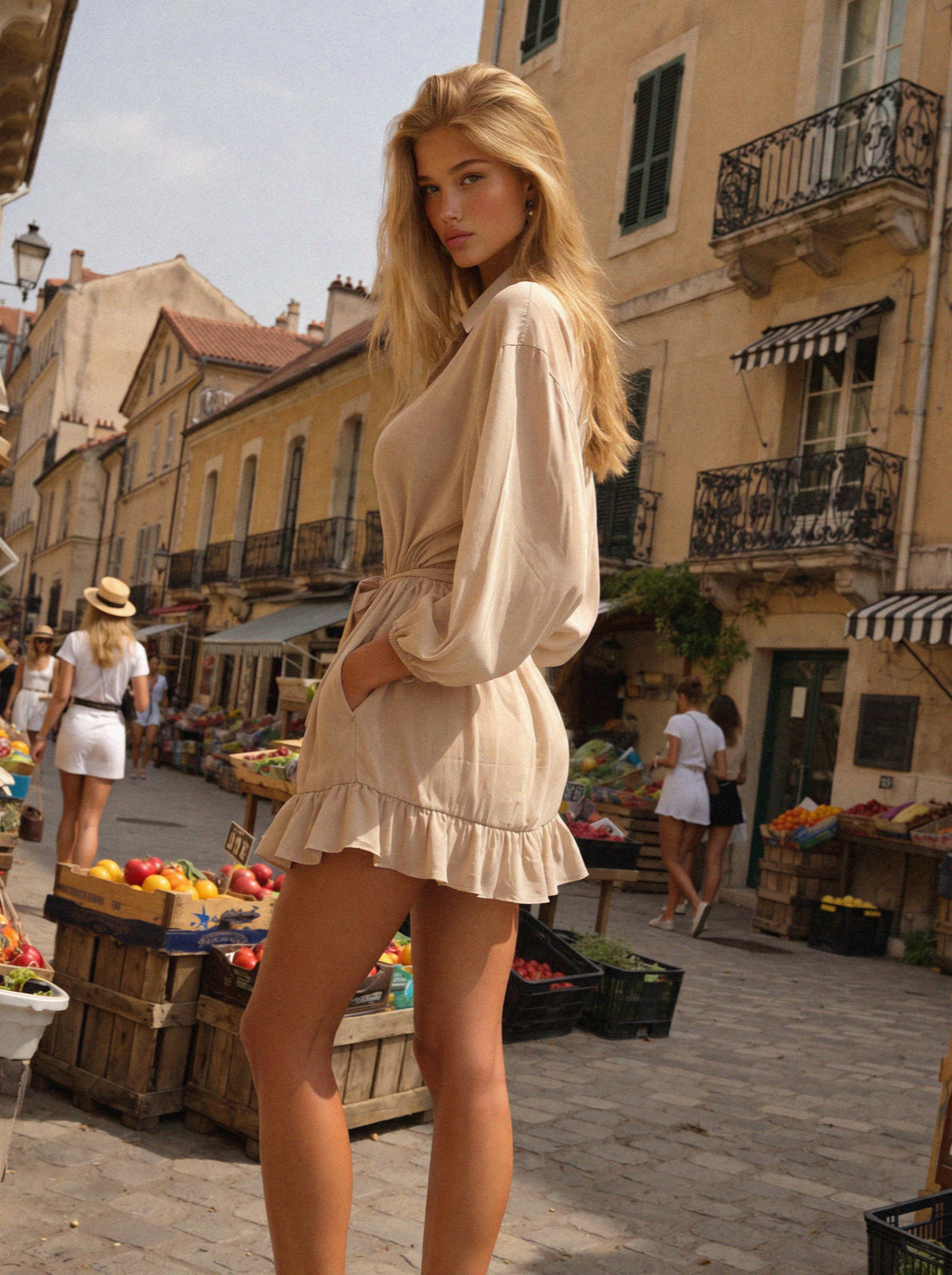
By half past seven the street was working.
Not busy with visitors, busy with the actual business of a city getting its food. Restaurant people with lists. Old women with wheeled bags who have opinions about every stall and are not shy. A nun. Two carabinieri eating something fried and standing exactly where they would be most in the way.
And the shouting had started, which is the part that gets written about and is not really shouting. It is closer to singing, a line called out over and over with the price at the end of it, each trader’s version slightly different, all of them going at once. It sounds like an argument and it is a sales pitch and it has been going on in that street, in some form, since the Arabs laid it out.
Nobody was performing it for me. That is what I want to say about it.
I have been to markets that have become a thing to see. This is not that yet. There were maybe six other foreigners in the whole length of Ballarò at eight in the morning and none of us mattered to anybody.
I bought nothing. I had nowhere to cook.
That felt slightly fraudulent, standing in a food market with no kitchen, and then I got over it, because I did buy something eventually: panelle, in a bun, from a man who folded the paper round it in one movement and had taken the next person’s order before I had turned away.
Two euros. Eaten standing. Chickpea and lemon and hot oil and soft bread.
Somewhere behind me a crate went over and there was a great deal of shouting that was, this time, genuinely shouting.
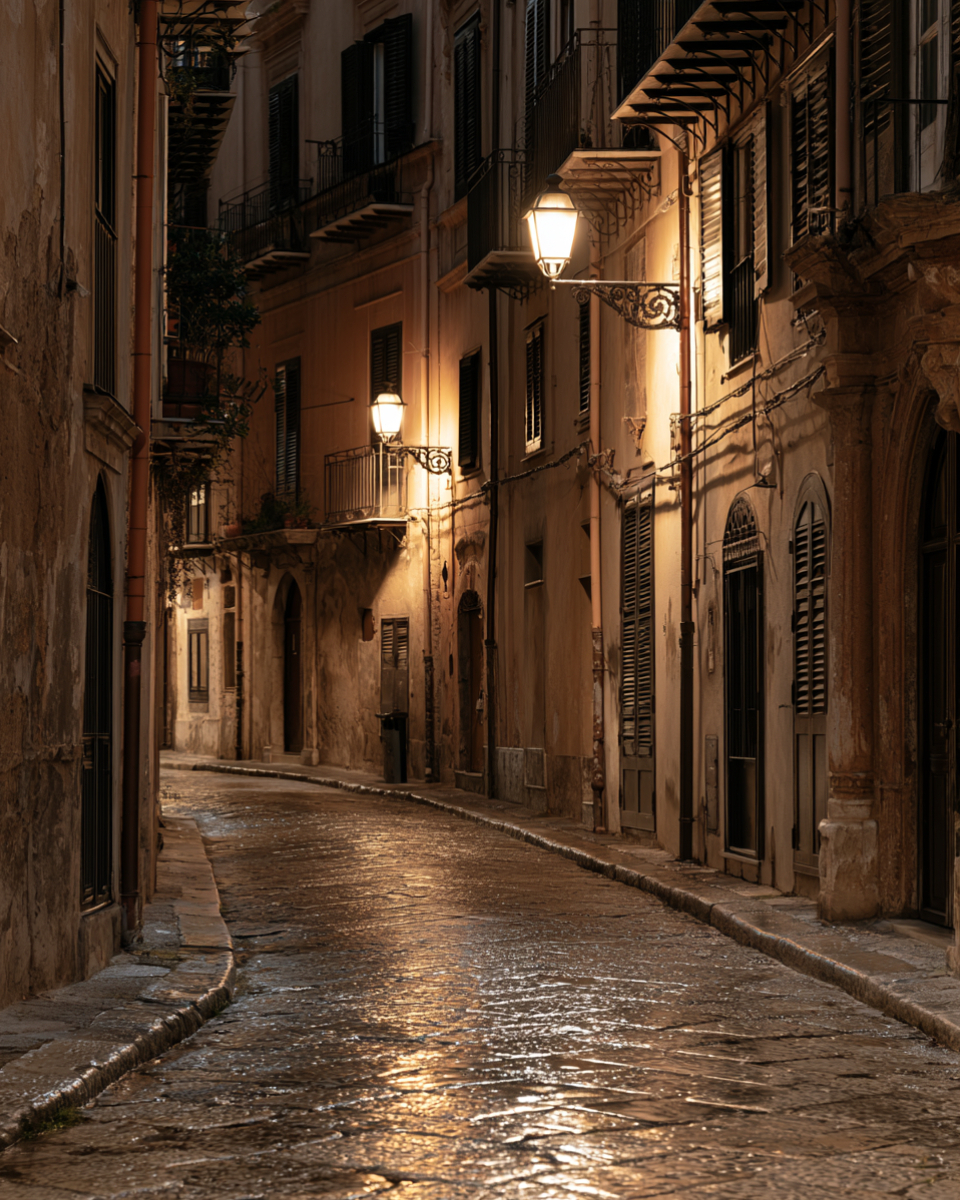
I came back that night, to the same street, and it was gone again.
Trestles stacked against a wall. Awnings rolled. One lamp on a bracket throwing a hard shape down a shuttered front, and the cobbles still wet in the low places from where somebody had hosed them down hours earlier.
A cat, obviously.
It is not a beautiful street. In daylight it is patched and cabled and half of it needs work, and at night it is a narrow dark run between buildings that have been standing too long with not enough money spent on them.
But I had watched it be built that morning, out of tables and poles and ice, by people who did not need to think about it. And I knew that at ten past six it would start again, and that this had happened yesterday, and would happen tomorrow, and that the arrangement of lemons was going to be solved from scratch by the same man in the same eleven minutes.
Cities that are trying to be liked show you their best hour.
Palermo let me stand in an empty street at six in the morning and watch it put itself together. I do not think it noticed I was there, and I have thought about that more than I expected to.
V.