I woke at five to a different sound.
Not louder. Different.
For two nights the sea had been a soft thing underneath everything, going in and out of the caves on its slow count, and sometime in the dark it had turned into something with edges.
I lay there and listened to it and knew before I looked.
At half past seven I went down to the bridge anyway, because that is what I do here now, and stood in the same place over the ravine.
Lama Monachile had the sea in it.
Not the flat turquoise slot of the first morning. The swell was coming straight up the cove and breaking the whole width of the pebbles, white, then dragging back, then white again. The water that had been clear enough to be embarrassing was the colour of a stirred drink.
Nobody was in.
Nobody was going in.
There was a red flag above the steps and it was doing the thing flags do, which is to be completely unambiguous.
The skipper had said it on the way back in, with about as much interest as a man reading out a bus timetable. No swell, no caves. It is not caution. It is arithmetic.
He had been right, and I had somehow still expected to be the exception.

Here is what I had not understood about this town until my last morning in it.
I had seen it from above, early, before it filled. I had seen it from underneath, from a boat, the hollow part nobody up there knows about. I had decided both times that I was getting somewhere.
What I had not seen was Polignano on a day when it has nothing to offer you.
And it turns out that is the day you find out what a place is actually like.
Because nothing happened. That is the point. The town did not apologise. There was no sense anywhere along that seafront that something had been cancelled.
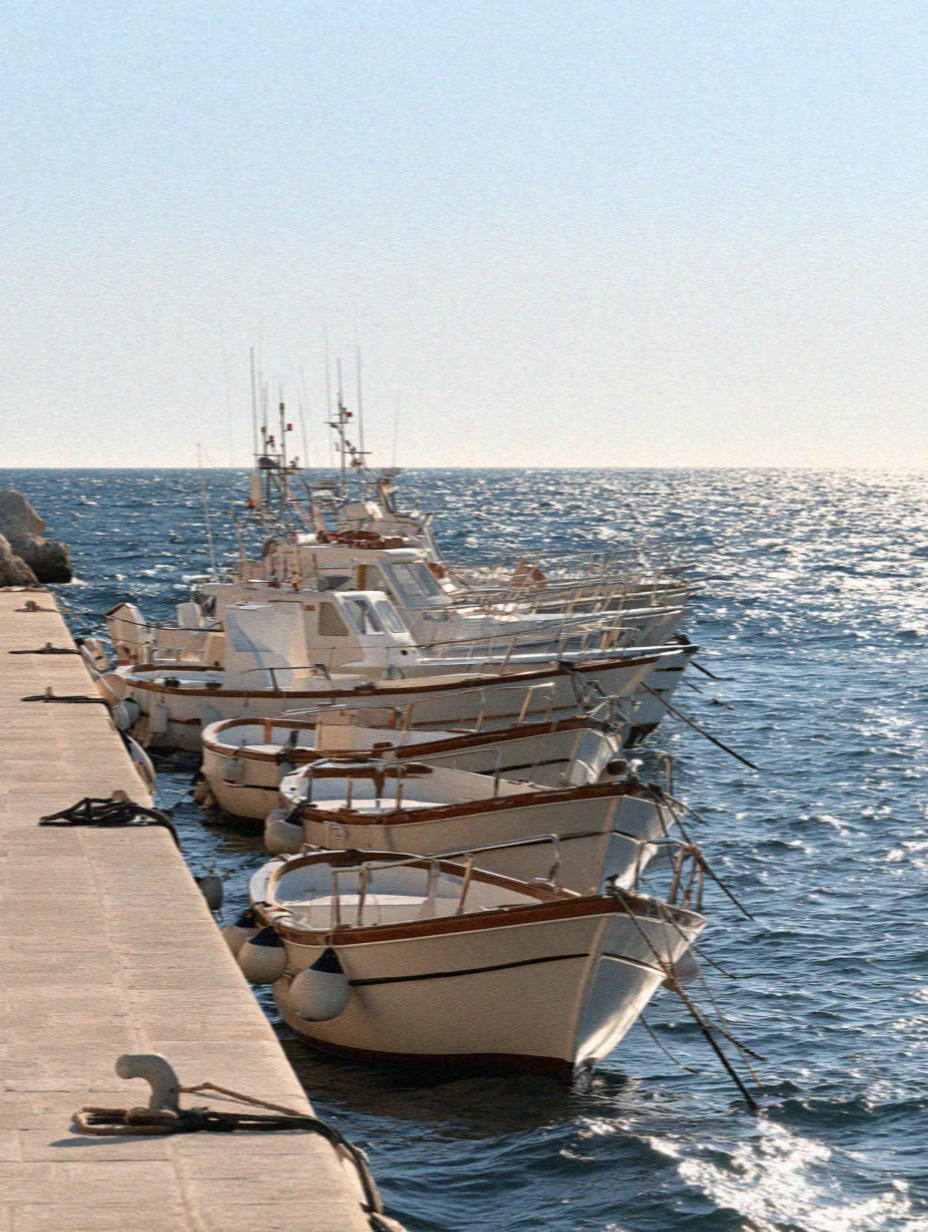
The boats stayed on their moorings at Cala Ponte doing small tired movements against the fenders. The men who take people out to the caves stood around in the way men stand around when they are being paid nothing, drinking coffee, entirely unbothered, because there will be another day and there always has been.
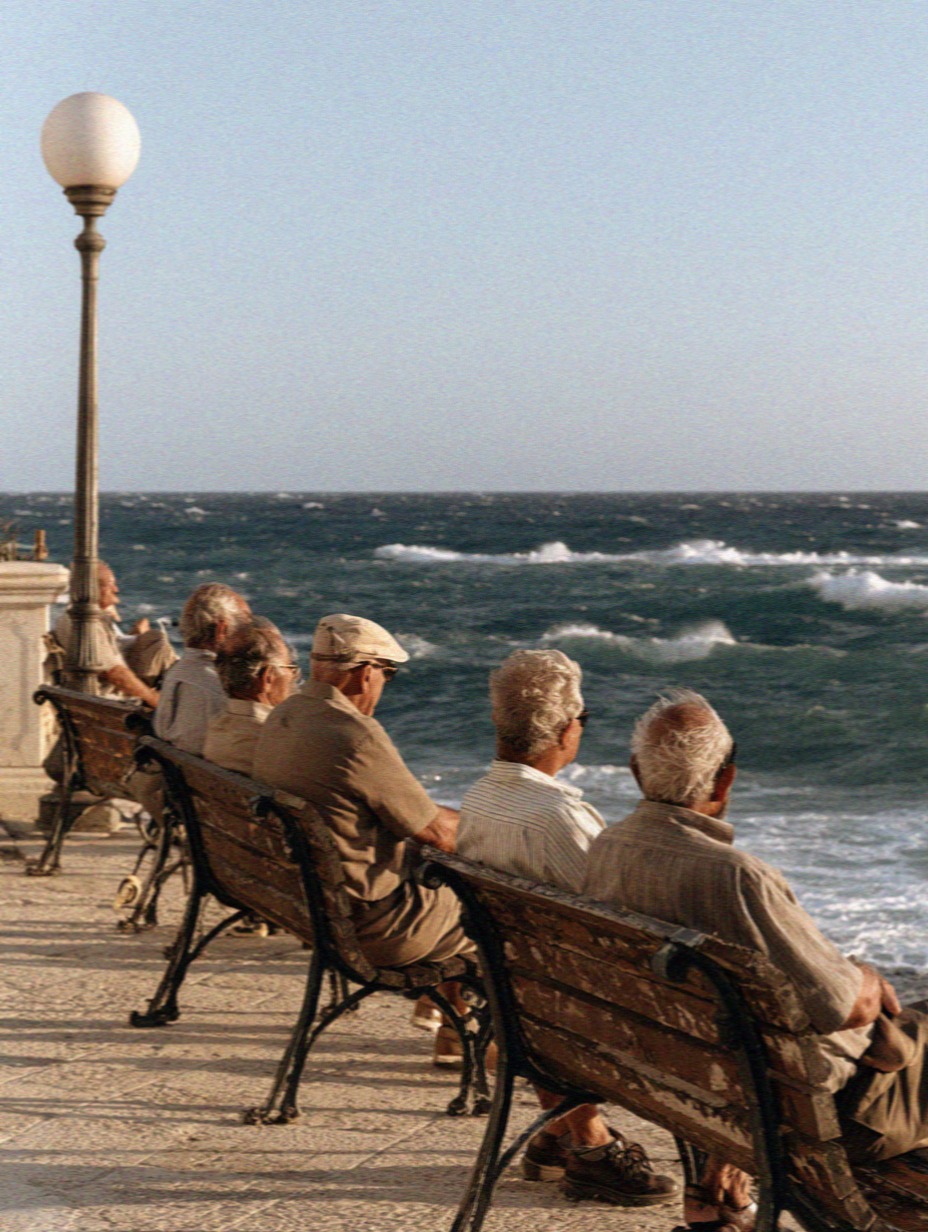
The bakery opened. The regulars arranged themselves on the benches at the same hour as always, facing the same direction, and looked at a sea they were not going into.
A town that performs would have felt thin that morning.
This one did not notice it was being watched.
I went up through the Arco Marchesale and into the white maze with my hair doing something ridiculous in the wind, and I walked for two hours with no plan at all, which I had not done once in three days because there had always been a thing to get to.
That is when I found the poem.
It was on a riser about knee height on a set of steps I had gone up and down at least four times, and I had never once seen it, because on all four of those occasions I had been looking at the sea at the end of the street.
Six words. Guido il Flâneur again, or somebody borrowing him.
I stood on a staircase in the wind reading a sentence I had walked over three times, and thought about how much of a place you miss by having somewhere to be.
I am still not translating any of them. That has not changed.

I had the coffee with the lemon in it for the third morning running.
The man made it without asking, which I noticed and have decided not to make more of than it is. Three mornings is not a relationship. It is a habit forming in public, and being allowed to.
Then I did the thing I would never have done if the sea had been flat.
I walked north out of the old town, past the point where the postcards stop, along the front where the cliffs get lower and less dramatic and the buildings stop being white and start being ordinary. Apartment blocks. A dog. A man hosing a step.
Twenty-five minutes out and I could turn and look back, and from there Polignano is not a famous view at all. It is a pale huddle at the end of a coastline, quite small, with weather coming at it.
The whole of the rest of that coast is out there doing the same thing, and I had been treating one four-hundred-metre stretch of it as the entire subject.
I would not have walked that way on a good day. Nobody would. There is nothing there.
It is the best hour I spent here.
I packed in the afternoon with the shutters banging, and left the swimsuit out to dry that had not been wet since the day before, which felt like a small joke at my expense.
Before I left the room I sat down for a minute on the end of the bed with everything zipped and stacked by the door.
We used to do that at home before a trip. All of us, briefly, in the hall, not saying much. I still do not know exactly what it was, and I have never asked, and I would rather not find out.
Then you pick the bags up and go.
Downstairs the wind had dropped a little. Not enough.
The forecast has it flat by Thursday. The caves will open, and the cove will go back to that colour, and at half past seven some woman will stand on the bridge with the whole thing nearly empty below her and think she has understood the place.
She will be right, more or less.
I got three mornings here. Two of them the sea let me in.
The third one it did not, and that is the one I am going to remember, which is not the arrangement I would have chosen and is, I suspect, how it usually goes.
The practical version of all of this, the boats and the times and what it costs, is in my complete guide to Polignano a Mare.
This was the other version. It has been all along.
More images from that morning






V.