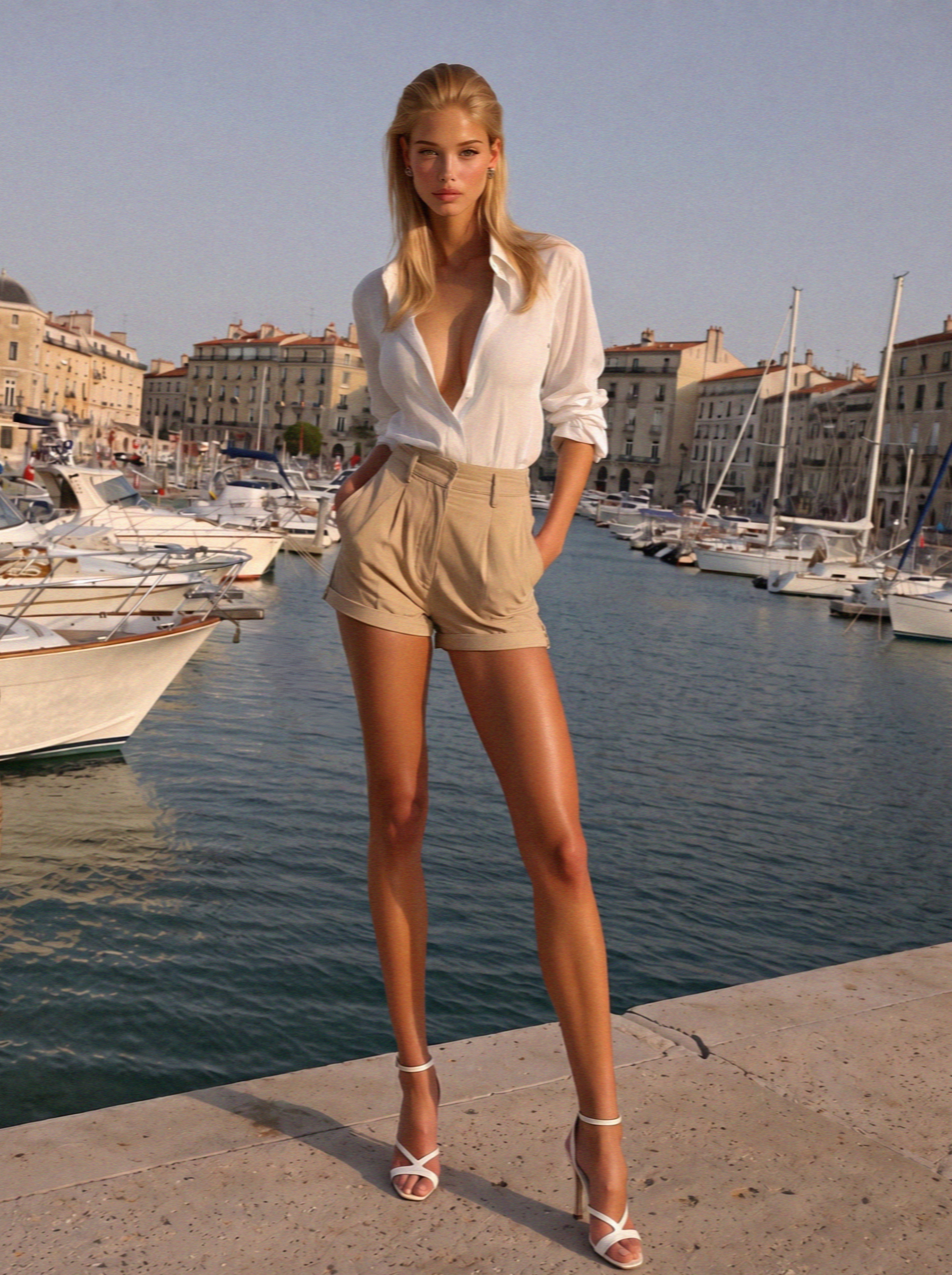
The marina is ugly, and I want to say that first, because nothing after it is.
Cala Ponte is concrete and pontoons and a chandlery, fifteen minutes out of the old town, and there is nothing of Polignano in it at all. People arrive expecting a small stone harbour with nets. I watched three separate couples do the face.
Then you get on a boat and go around the corner and the town takes it all back.

Our skipper was about sixty and did the whole two hours with one hand.
He spoke in Italian mostly, and in English when it mattered, and he had the particular flat delivery of a man who has said the same eleven sentences every day since May and still means about four of them. He did not point at things much. He would slow down instead, and wait, and let the thing arrive.
I liked him enormously.
He asked where we were from and did not listen to the answer, which I thought was fair. The practical version of the day, which boat, how long, what it costs, is in my complete guide to Polignano a Mare. This is the other version.
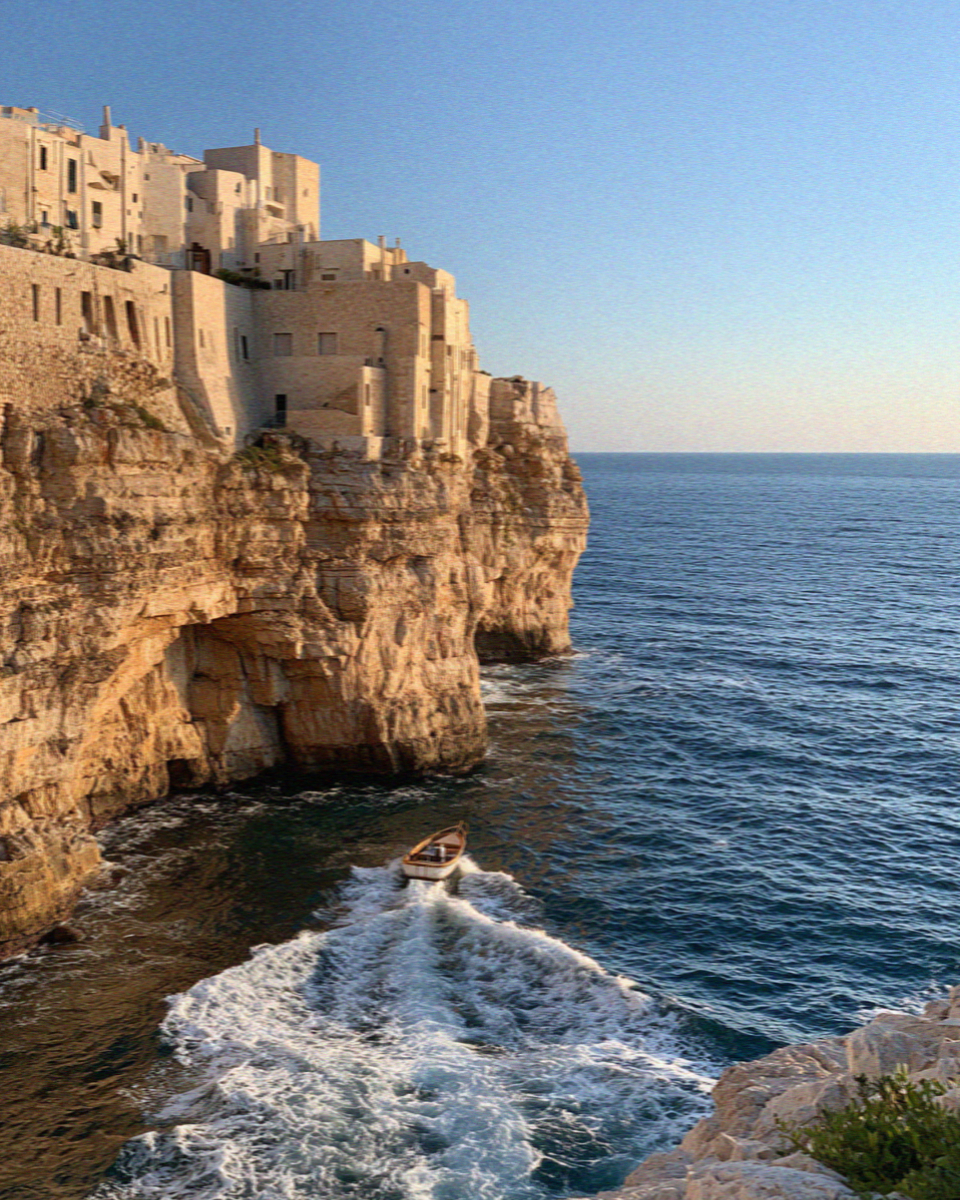
We ran south under the cliffs with the sun still low enough to be kind.
And here is the thing I did not understand until I was out there.
The town is hollow.
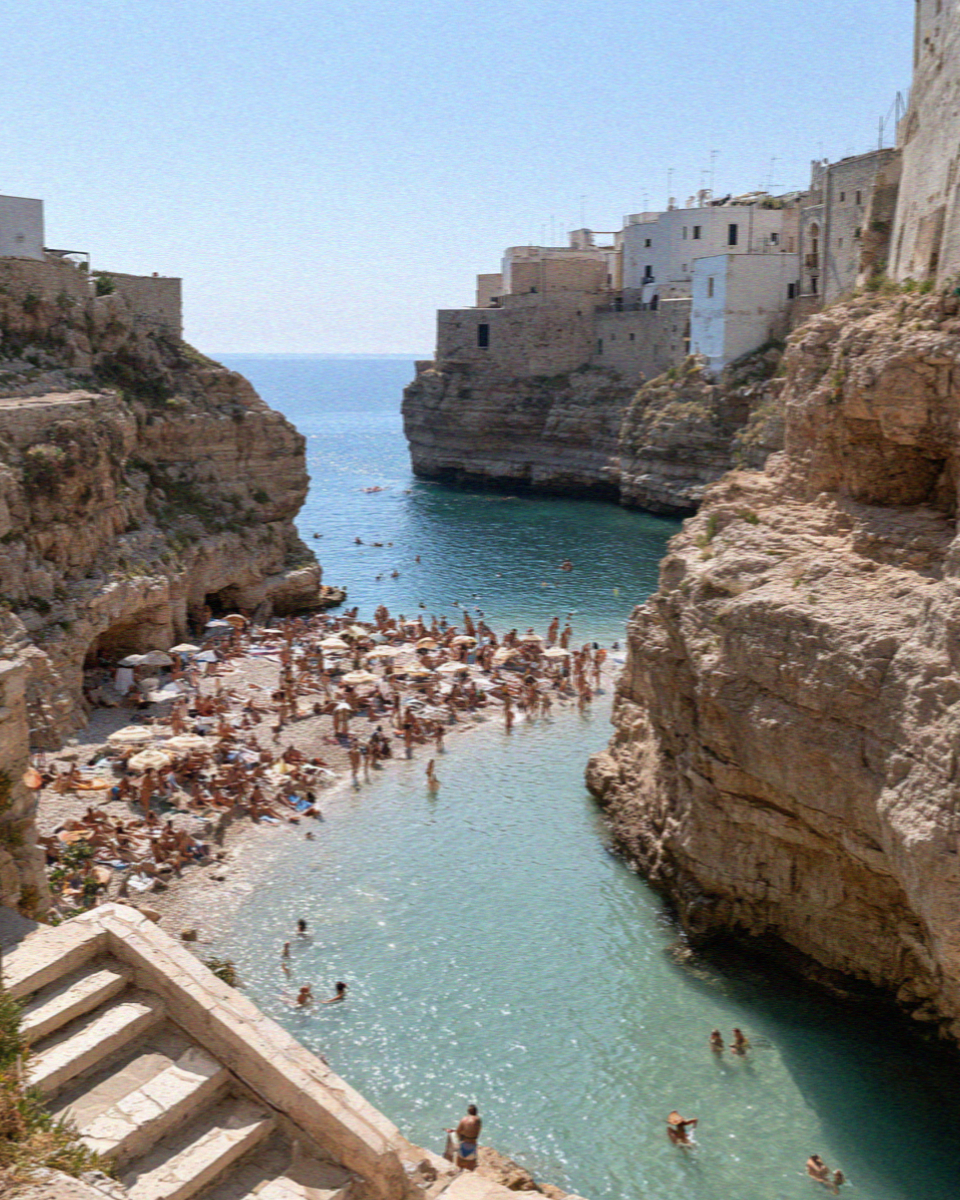
Not partly. Not in a place or two. The whole cliff it sits on is bored through with caves, some the size of a cathedral, some barely wider than the boat, and you cannot see one of them from a single street in Polignano. You walk around up there for three days on top of it, over the ravine, past the bridge, out onto the terrace at the end of the day, and the entire underneath of the place is a secret that is kept from you by geometry.
From the water you get the underneath.

The mouths come one after another once you know to look.
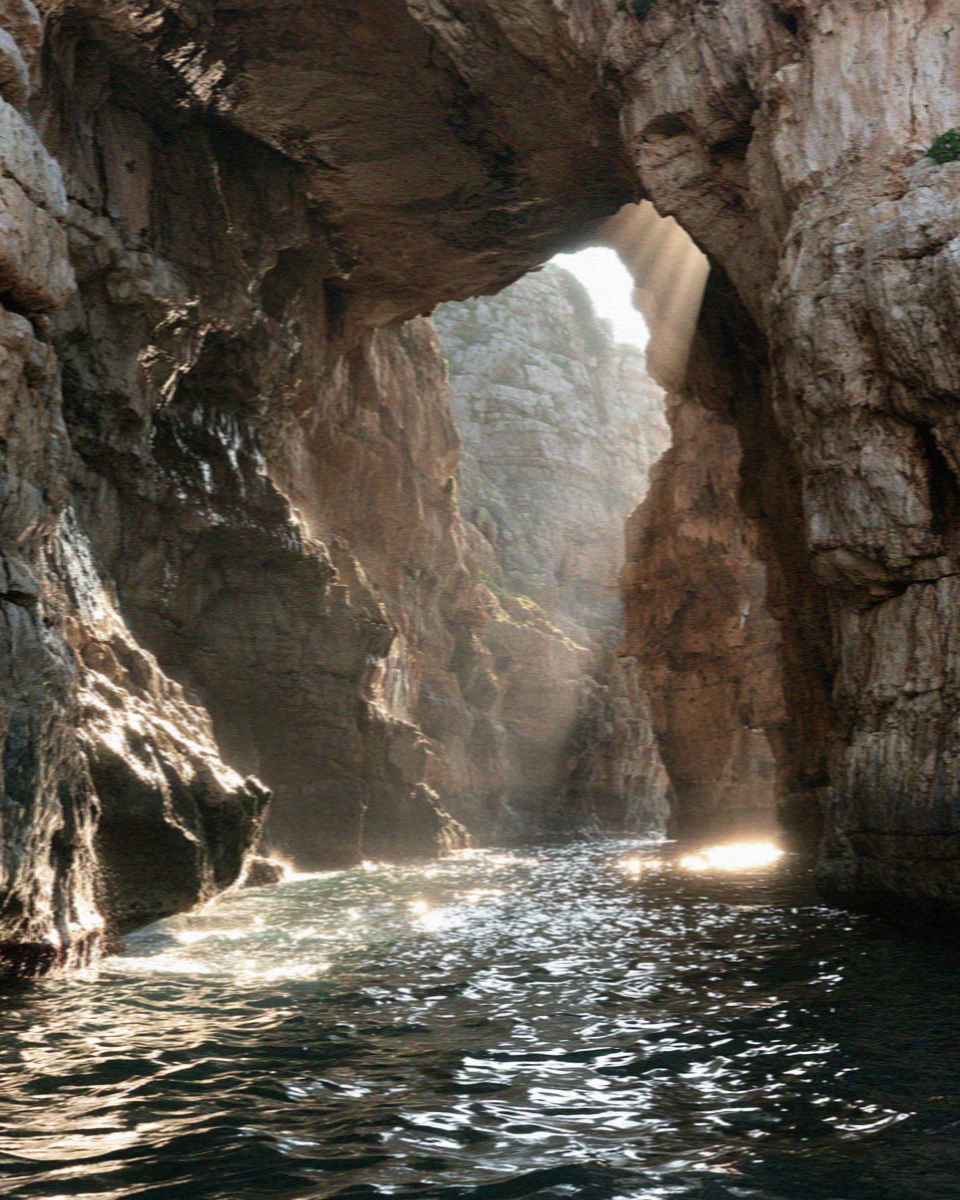
Some are arches you go under with the light coming through green from below. Some are proper chambers, and the boat noses in and the engine noise changes, goes close and boxed and much louder, and then the temperature drops by what feels like five degrees and everybody stops talking without being asked.
That is the part nobody warns you about. The cold.
You come in out of a hard August sun and the rock takes the heat off you in about four seconds, and the light that has come up through the water is moving across the ceiling in a way that is genuinely difficult to look away from. It is not blue like Capri. It is not lit and it is not staged. It is just a large cold room with the sea in it, doing that.
We went past the one with the restaurant inside.
Grotta Palazzese has a dining room built into the cliff, open on the sea side, and from a boat you are directly underneath it looking up at the underside of somebody’s lunch. White cloths. The backs of chairs. A waiter crossing the gap.
They did not look down.
I would not have looked down either. When you are up there you are in a restaurant. It does not occur to you that you are also inside a hole in a cliff that people are staring into from the water, and that from where I was sitting the whole arrangement looks completely mad.
Then he took us out to a cove with no road to it and cut the engine.
There is a particular pause on a boat when the engine stops. The hull keeps going for a moment on its own and everything gets very loud in reverse.
He put the ladder over the side and said, in English, that we had twenty minutes.
Nobody moved for about ten seconds.
Then a boy of eleven went off the bow without using the ladder at all and that settled it for everyone.

I will tell you the thing about getting into deep water off a moving boat, which is that it does not stop being slightly serious just because it is a holiday.
The water at the cove was the colour it is in the photographs, and clear enough that the bottom looked close and was not. Eight or nine metres, I would think. Pebbles down there the size of dinner plates, in focus, and completely out of reach.
You hang on the ladder for a second and let go.
I have my father’s boat.
It is a Riva, it is on Lake Como, it is the colour of a violin and I take it out only a handful of times in a year, which I am aware is not a defensible ratio. It smells of warm varnish and petrol and old sun, and this fibreglass thing off the coast of Puglia with a Puglian skipper and a plastic ladder smelled, for about a second, exactly the same.
Boats are all one boat, apparently.
I swam out further than I meant to and turned around, which is a habit I appear to have formed on this coast.
From out there the cliff runs north in a long pale wall with the town balanced along the top of it, and you can finally see the two things at once, the houses and the holes, the part that is lived in and the part that the sea has been quietly removing for several thousand years.
They are the same object.
That is the whole of Polignano, I think, and it took a boat to see it. A town on a cliff that is being eaten, doing perfectly well, hanging its washing out.
He gave everyone prosecco on the way back in, which was too sweet and too warm and exactly right.
The wind had got up a little. The skipper said, without much interest, that the caves would be closed tomorrow.
You cannot go into them in any swell. It is not caution, it is arithmetic: a boat in a stone chamber with a metre of sea moving is a boat against a wall. So the caves are open some days and shut others, and nobody can tell you which in advance, and the people who arrive tomorrow will get the cliffs and not the inside.
We got the inside.
I have thought about that more than I expected to. Two hours either side and it would have been a nice trip along a coast.
Back at the marina the concrete was still concrete.
I walked up into the old town in a wet swimsuit under a linen shirt, leaving a trail of small dark marks on the stairs that were dry again before I reached the top, and went and had the coffee with the lemon in it, because at this point I have decided it is simply what I do here.
The cove was full. It was two in the afternoon and Lama Monachile had a hundred people in it and I looked down at them from the bridge with the enormous unearned superiority of a woman who has been in the water since nine.
Below all of them, under the stone they were lying on, the caves were doing their slow cold business in the dark.
Nobody down there knew.
More from the water






V.