Ischia is larger than people expect, and that is the whole problem with planning it. Six comuni, a mountain in the middle, a ring road that takes an hour to loop. Get the order wrong and you spend the trip on a bus, watching the good light through a window.
I have built this itinerary twice, once badly and once well. Below is the well version: four days, each belonging to one side of the island, so you never double back. The beaches and the hotels sit in my complete guide to Ischia; this is only about order.
How the Island Actually Moves
Two EAV bus lines do most of the work, the same circuit run in opposite directions from the terminal beside the ferry pier at Ischia Porto: the CS, circolare sinistra, anticlockwise, and the CD clockwise. A full loop is around an hour, and Ischia Porto to Forio is roughly half an hour the short way, double that the long way, so check which side of the ring you want before boarding. Departures are about every half hour, and tickets from a bar or tabaccheria run around 1.50 euros for ninety minutes, nearer 2 from the driver, with a day ticket about 4.50.
Along the south coast, where the road runs high above the water, take the taxi boat instead. Bus for the ring road, boat for anything below it.
Day One: Ischia Porto, Ischia Ponte and the Castello
Hydrofoils from Molo Beverello take about fifty minutes and start around 22 euros; the car ferry from Calata Porta di Massa takes about an hour and twenty minutes and costs less. Take an early one; the afternoon is the part of day one that matters.
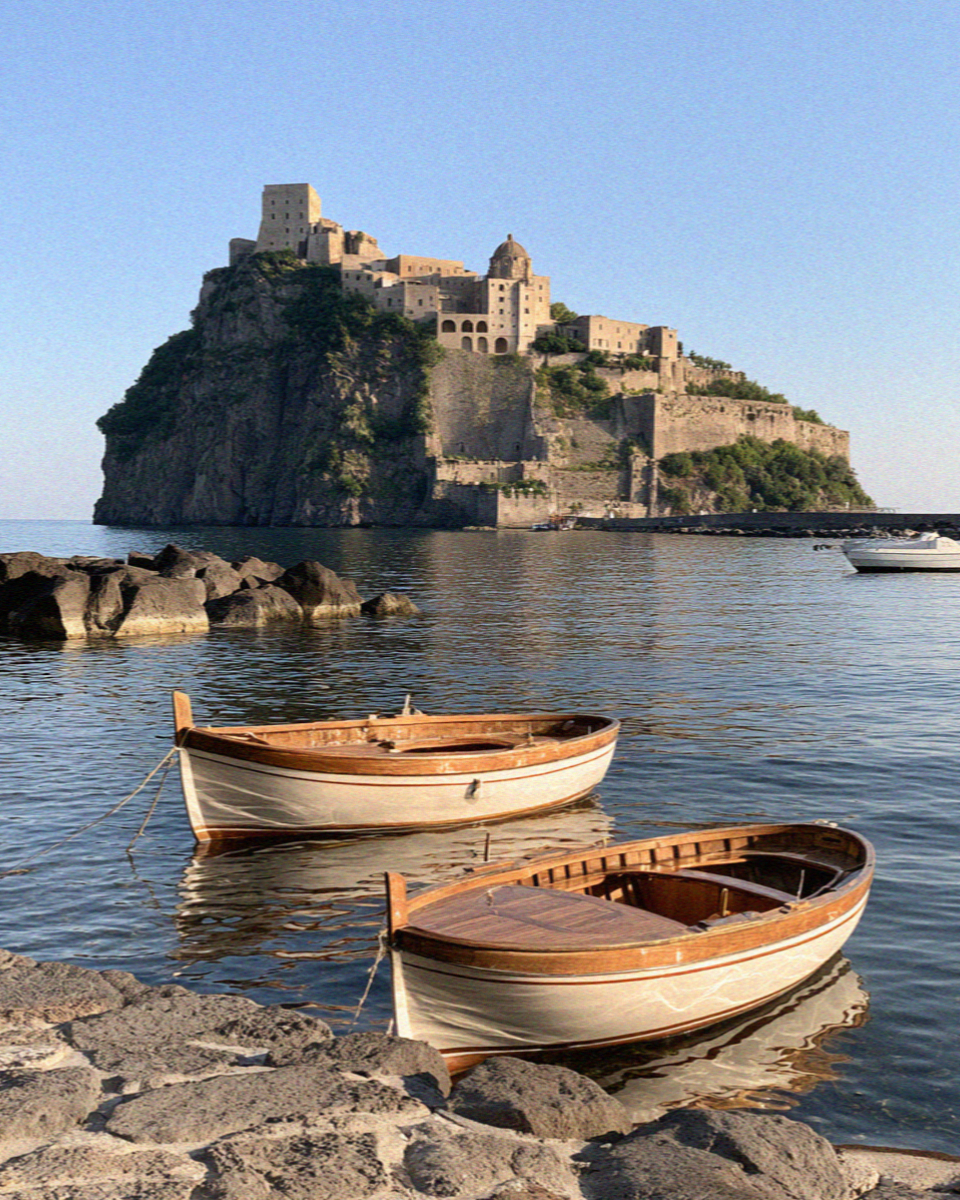
Drop your bags, eat near the porto, then walk out to Ischia Ponte along the seafront: twenty-odd minutes of harbour, pastel houses, then the causeway. The Castello Aragonese stands on its own islet at the end, and it is the best thing on this island.
It opens daily, all year, nine until sunset, last admission ninety minutes before closing, and tickets sit in the twelve to fifteen euro band. Allow two hours; I gave it three, on the roofless cathedral with its frescoes going soft, the terraces, the convent crypt where the nuns’ bodies were seated to dry. If your ferry lands late, move the castle to another day rather than rush it.
Dinner stays in Ponte, on Via Luigi Mazzella: Da Ciccio for the cooking, closed Tuesdays when I went, Al Pontile for a table facing the lit castle. With an hour spare beforehand, take a taxi boat round to the Bay of Cartaromana, where hot springs seep up under the shallows and the castle view is the one everybody photographs.
Day Two: A Thermal Park, Forio, and the Sunset
Day two goes west and stays west. Arrive when the gates open, not at noon.
Two parks are worth the money. Giardini Poseidon at Citara is the big one, around twenty pools terraced above the bay, open daily roughly mid-April to the end of October, nine until seven. A full day runs from the high thirties in the shoulder months to the mid-forties at peak, with a cheaper afternoon ticket from one o’clock.
Negombo, in the Bay of San Montano at Lacco Ameno, is the other, and the one I preferred: smaller, greener, laid out as a botanical garden, with a proper sand beach. Peak full day is about 70 euros, a half day from half one nearer 50, an afternoon ticket from four about 40. Full-day entry can be reserved up to the evening before, and in August it should be.
Pick one. A park day is a whole day, which is the point of it.
Leave around five for Santa Maria del Soccorso in Forio. The white church on its promontory faces due west, stone benches around the terrace, and it is the best sunset on the island by a margin. In summer the comune puts chairs out and runs an aperitivo up there, which sounds like a gimmick and is lovely. Get there early enough to sit, then eat in Forio, which has more of an evening in it.
Day Three: Sant’Angelo, Maronti and Sorgeto

The south coast, and the day the taxi boat earns its keep. Buses terminate at Cava Grado, about forty-five minutes from Ischia Porto on the CS, the CD or line 1, and from the stop you walk down into a village closed to cars entirely: fishing boats, a spit of land running out to the rock, one small piazza, steps everywhere. Coffee, the harbour, then down to the boats.
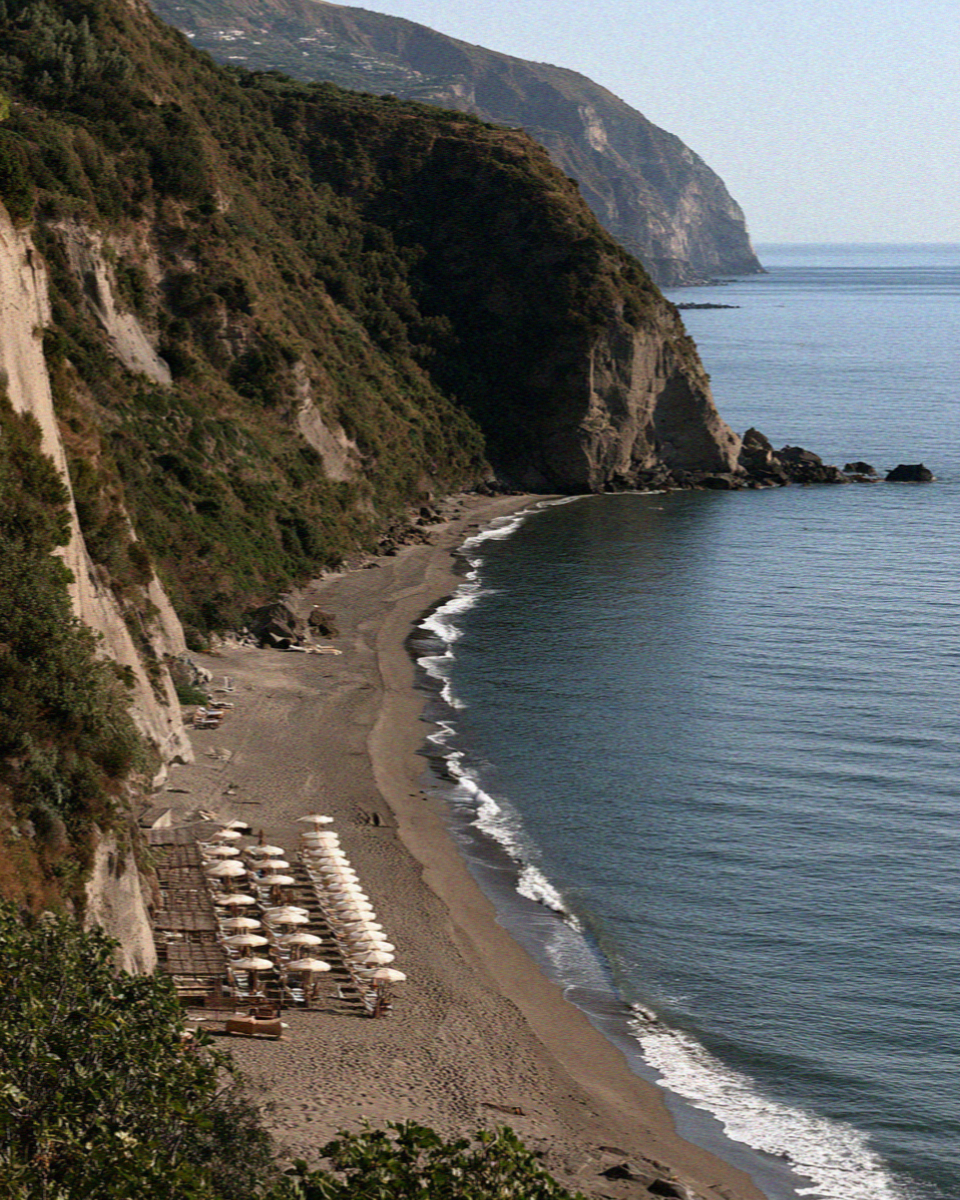
Water taxis run all day from the jetty to Maronti, the Fumarole and Cavascura, roughly three to five euros a head each way, the crossing a few minutes. Maronti is reachable by land too, line 5 to Barano and a fifteen-minute walk down, but that walk back up in August is no treat.
At the western end of Maronti the Fumarole heat the sand hot enough to cook in. Ten minutes from the eastern end, up a ravine, the Cavascura baths offer rock pools and a warm waterfall, roughly May to October, ten to twenty euros. Go for the setting, not the facilities.
Save Sorgeto for last, because this is the sequencing that makes the day. It is the free thermal cove near Panza where hot spring water meets the sea in the rock pools, best in the last hours of the afternoon and into dusk. Water shoes are not optional; the rocks are slippery and some spots run scalding.
Get there by water taxi from Sant’Angelo, or by bus to Panza and an eight-minute walk from Piazza San Leonardo. Either way there are roughly two hundred steps down and the same back up. That climb at six is fine. At two in the afternoon it is a mistake, and I have made it.
Day Four: The Green Interior, Epomeo and the Vineyards
The interior is the half nobody photographs, and it is why the island deserves four days.
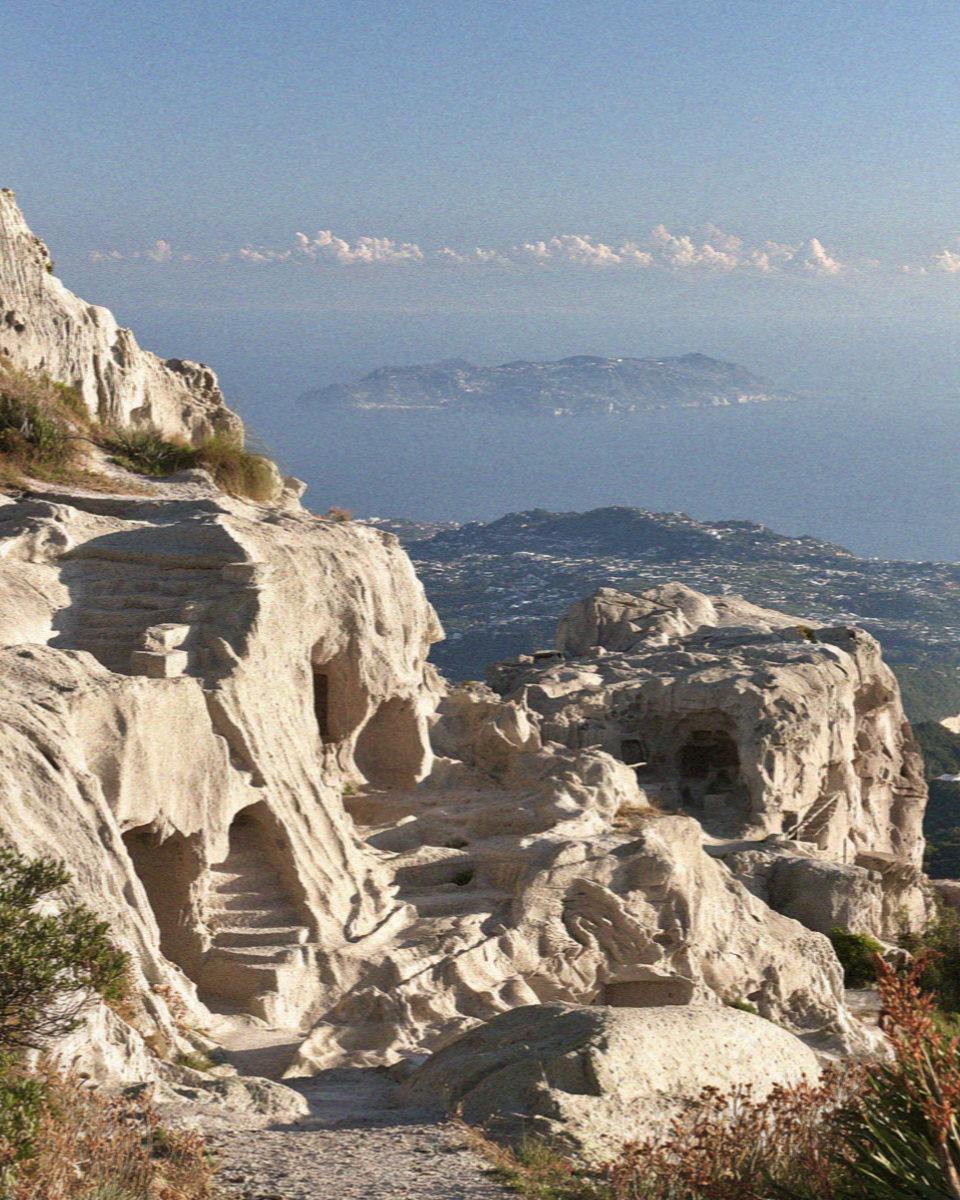
Take the CS or CD to Fontana, the highest village on Ischia, and start from the square by the church. The path to the summit of Monte Epomeo is just over two kilometres, waymarked red and white, an hour to an hour and a half up through chestnut wood and then bare tuff. A walk rather than a climb, but steady, and loose underfoot. Go early. At 789 metres you get the whole Bay of Naples, and at the top a fifteenth-century church, a hermitage and a small tavern, all cut into the rock.
Come down for a late lunch in the vineyards. The terraces are hand-built stone, worked by ladder, and the wines are Biancolella and Forastera, white and mineral and entirely of the place. Pietratorcia above Forio opens for lunch and dinner April to November by reservation, tastings from around 20 euros; Cantine Antonio Mazzella runs tastings by appointment, Monday to Saturday from ten. Book either. They are family operations, not visitor centres.
If time is left, finish at La Mortella in Forio, the garden William Walton and his wife made out of a quarry: April to early November, Tuesdays, Thursdays, Saturdays and Sundays only, nine until seven, around 15 euros. Those four days are the trap in this itinerary; check them before you fix day four.
The Sequencing Mistakes
- Booking a thermal park and anything else on the same day. The park is the day.
- Doing Sorgeto at midday. Hot water, hot air, hot climb, no shade.
- Assuming the bus goes the short way. Half the time it goes the long way round.
- Planning La Mortella on a Monday, Wednesday or Friday.
- Sleeping in Ischia Porto and commuting west daily. Sleep on the side you will use.
The Short Versions
Two days. Day one as above. Day two, Negombo in the morning, Forio and the Soccorso sunset late. You lose the south and the interior, but you leave having understood the place.
Three days. Add day three, Sant’Angelo and Maronti with Sorgeto at dusk. This is the version I would give most people.
A week. Keep the four days, then spread out. Give a whole day to the beaches, Citara and San Montano and the coves between them. Add Castiglione at Casamicciola, less landscaped and more used by islanders. Take the short ferry to Procida. Walk more of the Epomeo paths, which run well past the summit trail. And keep one day entirely empty, because the good part of Ischia is thermal water and long lunches, and neither can be scheduled.
Four days is still the number I would defend: enough to see the island properly, short enough that you leave still wanting the water.
Read also: The Best Things to Do in Ischia | Where to Eat in Ischia | The Complete Guide to Ischia
Frequently Asked Questions
How many days do you need on Ischia?
Four: one for Ischia Ponte and the Castello Aragonese, one for a thermal park and the Forio sunset, one for Sant’Angelo, Maronti and Sorgeto, one for Monte Epomeo and the vineyards. Three works if you cut the interior; two covers only the east coast and one thermal park.
Do you need a car on Ischia?
No. The EAV buses, CS anticlockwise and CD clockwise, circle the island about every half hour, a full loop taking around an hour. Singles are roughly 1.50 euros from a bar or tabaccheria, a day ticket about 4.50. For the south coast, water taxis from Sant’Angelo cost a few euros a head and beat driving.
What should you book in advance on Ischia?
Full-day entry at Negombo, which takes reservations up to the evening before and fills in August; any vineyard lunch or tasting, since Pietratorcia and Cantine Antonio Mazzella work by reservation; and your ferry from Naples on a summer weekend. The castle, Poseidon and Sorgeto need no booking.
Which Ischia thermal park is worth the money?
Negombo at San Montano, if you are choosing one: smaller and greener than Giardini Poseidon, with a proper sand beach. Peak full-day entry is around 70 euros, with cheaper half-day and afternoon tickets. Poseidon at Citara is the larger park, more than twenty pools, in the low forties for a day, and better value if you want volume.
When is the best time of day to visit Sorgeto?
Late afternoon into dusk, once the crowds thin. There are roughly two hundred steps down from the road above Panza and the same number back up, kinder in the evening than at midday. Bring water shoes, as parts of the pools run scalding.