The best beaches in Polignano a Mare are not really beaches. They are coves, cut into limestone, floored with pebbles or rock, with water that goes deep almost immediately. If you arrive expecting long sand you will be disappointed, and if you arrive expecting some of the clearest swimming water in Italy you will be very happy. Here is every cove worth your time, when to go to each one, and what to bring.
Set your expectations first
Polignano sits on soft limestone that the sea has been carving for a very long time. That geology gives you dramatic cliffs, hollow caves and spectacular water. What it does not give you is sand.
Nearly every entry into the sea here is over pebble or rock. The bottom drops away fast. There is very little shallow water for paddling.
That makes this an outstanding place to swim and a mediocre place to lie on a towel all day. Plan accordingly and you will love it.
Lama Monachile, and when to be there
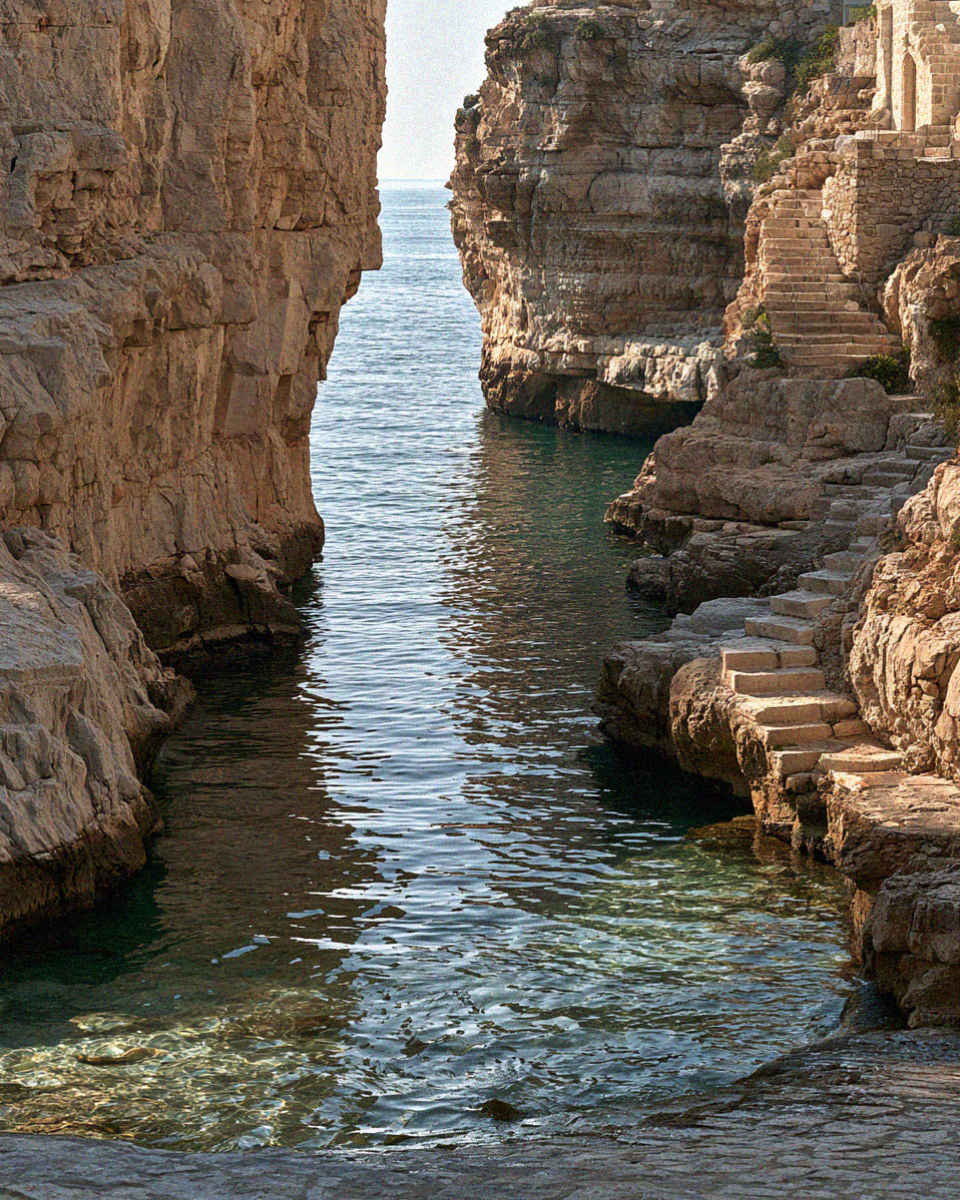
Lama Monachile, also called Cala Porto, is the famous one and the reason most people come.
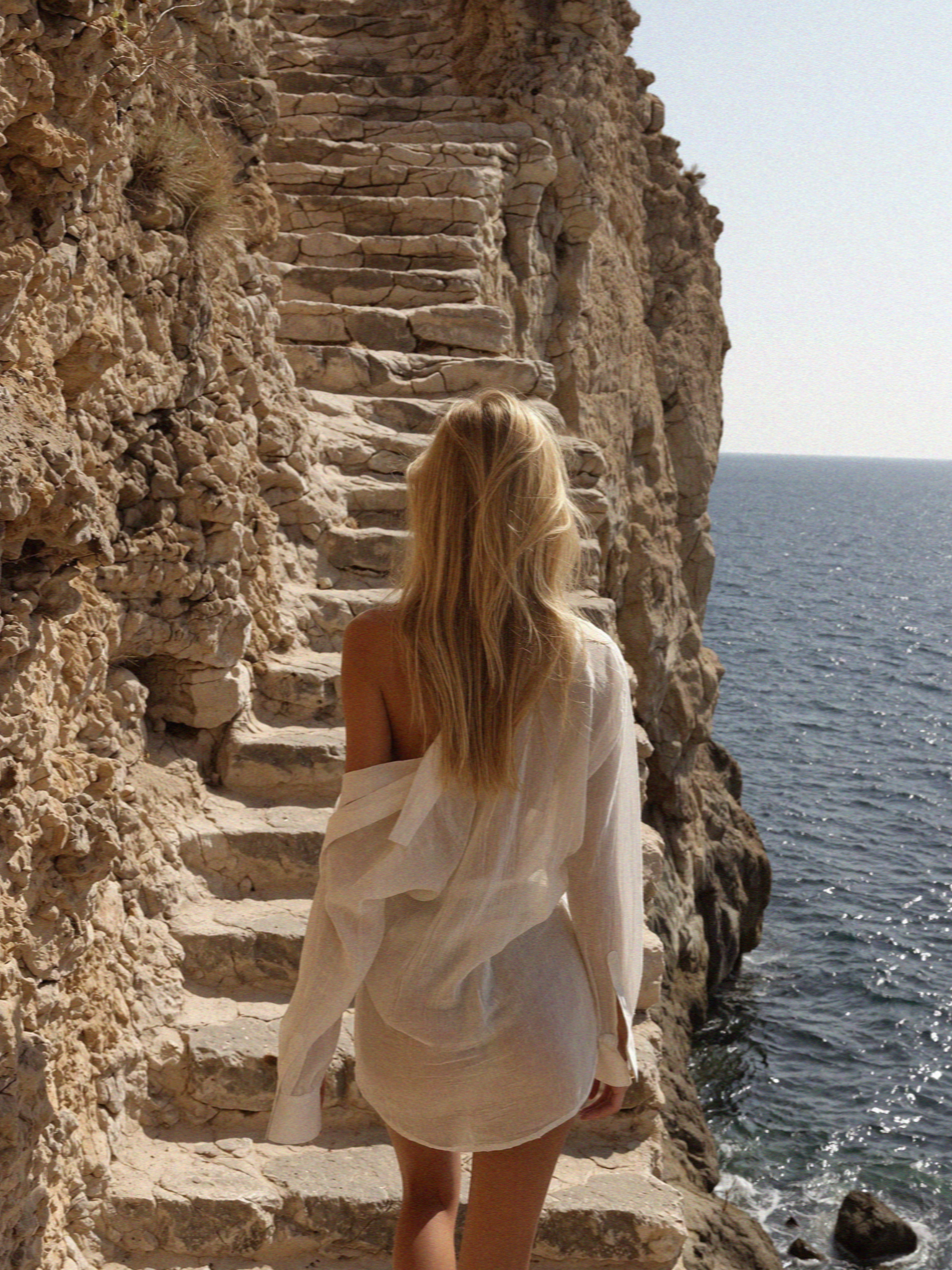
It is a narrow strip of pale silver pebbles at the bottom of a ravine, walled on both sides by near-vertical limestone, reached by stone stairs cut into the rock. The water is a deep turquoise that genuinely looks retouched in photographs and is not. Above it runs the old bridge everyone takes the picture from.
It is also small. Properly small. And in July and August it is consistently full by nine in the morning.
The rule: be on those stairs before half past eight, or come to look rather than to lie down. In shoulder season the pressure comes off and you can turn up mid-morning without a fight.
There are no facilities to speak of. Bring your own water.
The rocky coves
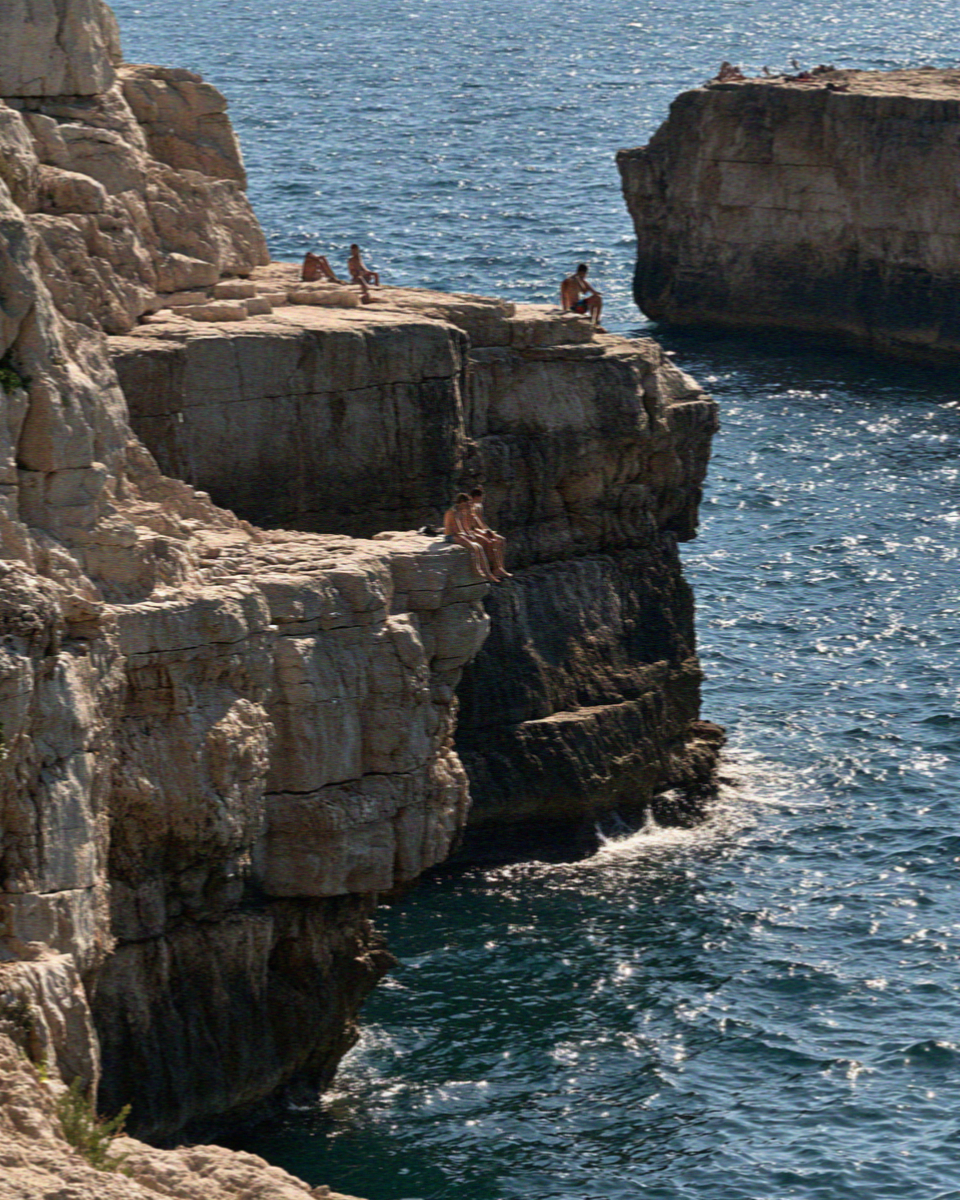
This is where the locals actually swim, and it is the better answer on a hot day.
Cala Paura sits about a kilometre and a half from the historic centre. It is not one beach but a series of rocky inlets, with stone steps cut down to the water and a bottom that drops away almost at once. That depth makes it excellent for snorkelling and for going in off the rocks rather than wading.
Access is the trade. The steps are steep and there is no gentle entry. It is also far less crowded than the cove in town, which is exactly why it is worth the walk.
Cala Incina, further along the coast, is the same idea and stronger still for snorkelling, with a rocky cove and a lot of life on the seabed.
Swimming here
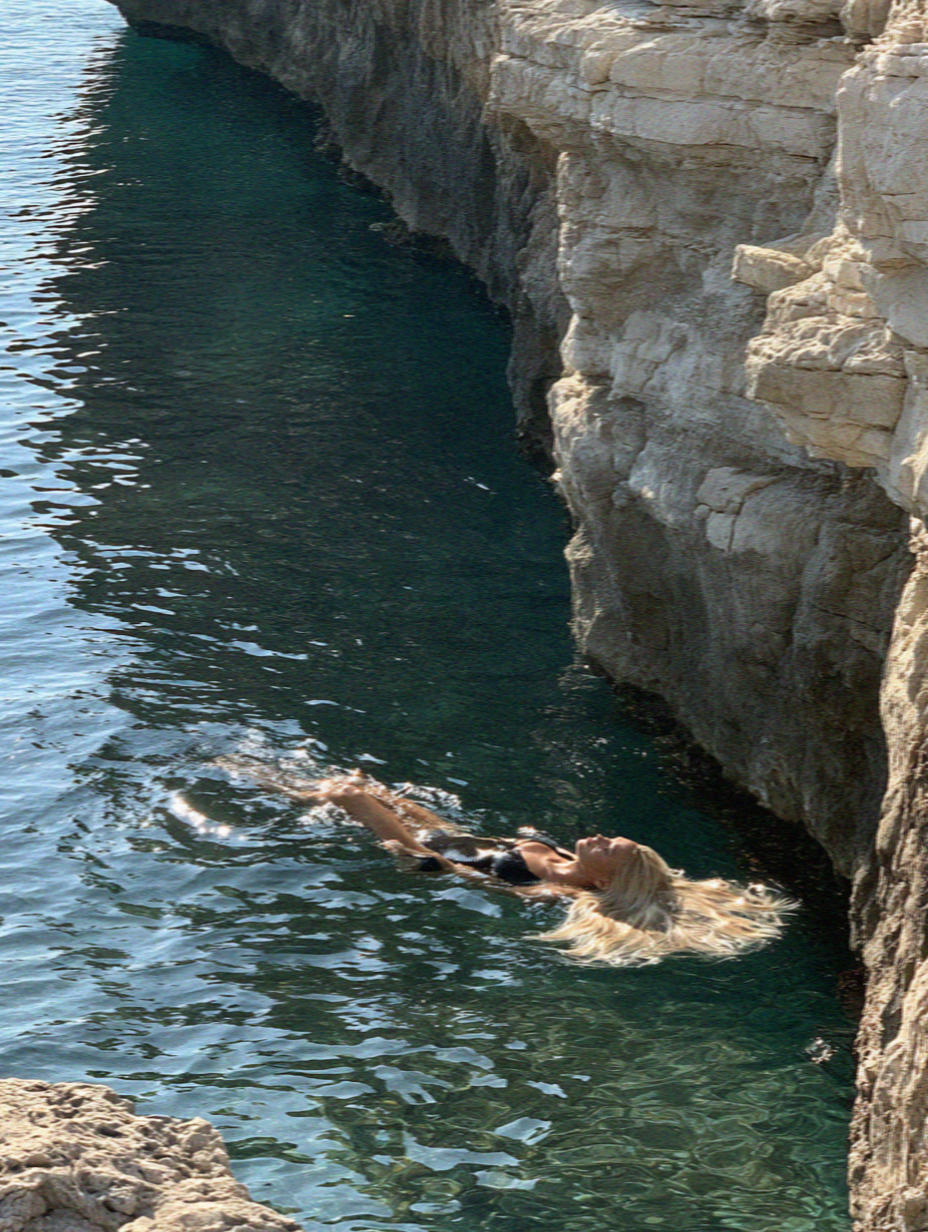
The swimming is the point, so a few honest notes on it.
The water is clear to an unusual degree, cold enough to be refreshing well into summer, and deep enough that you are properly swimming within a few strokes rather than shuffling out. It is warm enough for comfortable swimming from June through October, peaks around 26C in August, and drops to about 13C in February.
There is very little in the way of lifeguarding outside the busiest weeks, the rocks can be slippery, and on a windy day the swell comes into the ravine at Lama Monachile with real force. If the sea is up, swim somewhere sheltered or do not swim.
Cala Paura and the quieter water
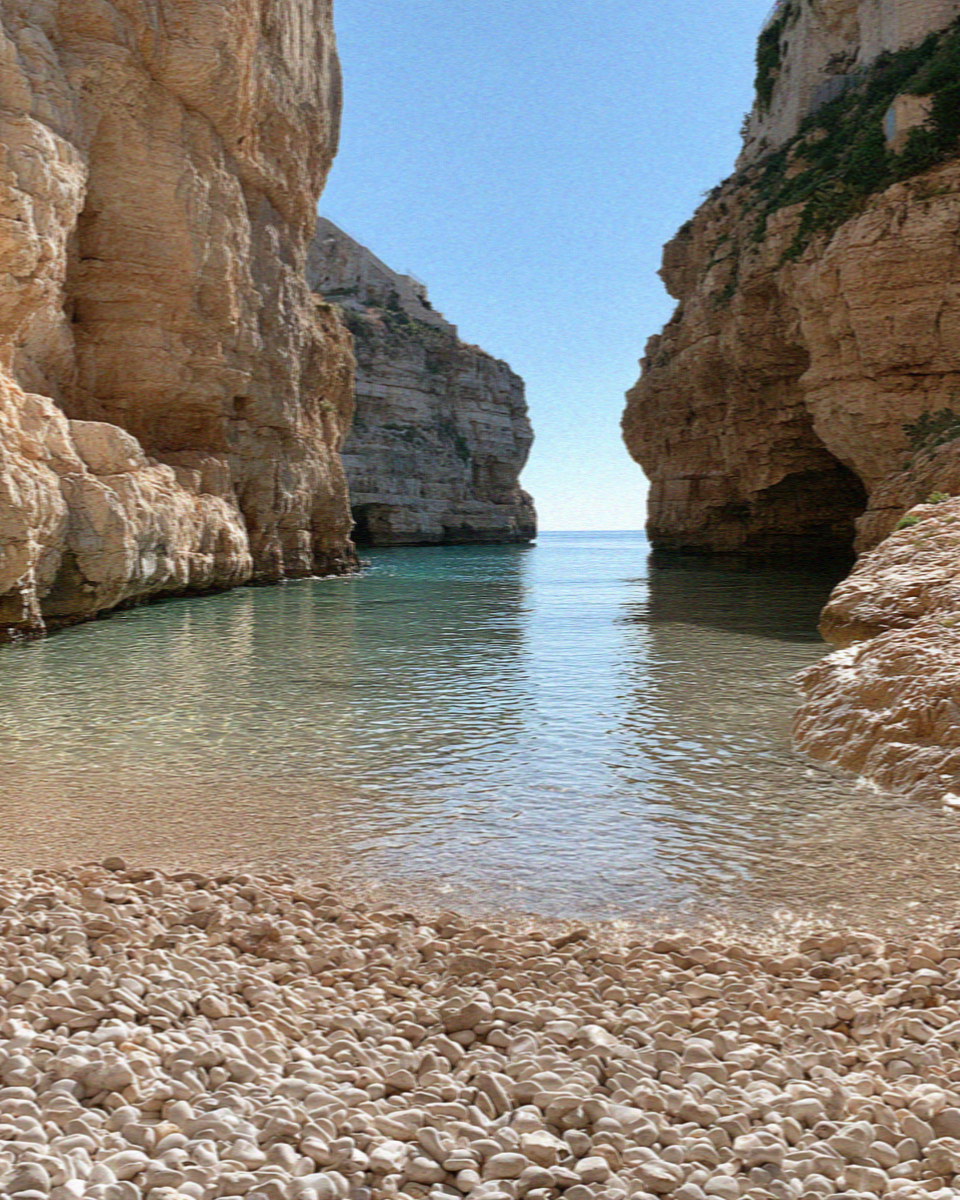
Worth saying twice because it is the single most useful thing in this guide.
The busiest beach in Polignano is the one in the middle of town, and it is busy for reasons that have nothing to do with being the best swim. Fifteen to twenty minutes of walking in either direction gets you water that is just as clear, rock you can have to yourself, and no queue for a staircase.
If you take one piece of advice from this page: walk further than you think you need to.
The one with actual sand
South of the centre, near the San Vito area, Porto Cavallo is one of very few places around Polignano with a genuine sand-and-pebble mix and a gentle, shallow entry into calm water.
That makes it the family answer. If you are here with small children, this is where to go, and the rocky inlets in town are not.
San Vito itself is a cove beneath a Benedictine abbey, and the setting is as good as anything in the area.
What to bring
Short list, all of it earned.
– Water shoes. Not optional. Every entry except San Vito is over rock or coarse pebble, and bare feet lose. This is the single most common mistake visitors make here. – A towel you do not mind on stone, because there is no sand to shake off but plenty of grit. – Water and shade. Most of these coves have no bar, no umbrella rental and no shelter. The cliffs shade the ravine early and late, and cook it in the middle. – Goggles or a mask. The water is clear enough to make it worth it, especially at Cala Paura and Cala Incina. – A dry bag if you are jumping off rocks with a phone in your pocket.
When to swim
June through October for comfortable water, with September the sweet spot: still-warm sea, better light, far fewer people than August.
Within the day, the pattern is the same at every cove. Before half past nine and after five are yours. The four hours in the middle belong to everybody else.
Frequently Asked Questions
Are there sandy beaches in Polignano a Mare?
Barely. Almost the entire coast here is limestone rock and pebble. The closest thing to a sandy beach is Porto Cavallo, south of the centre near San Vito, which has a sand and pebble mix and a gentle entry into the water. Everywhere else you are getting in off pebbles or rock, which is why water shoes matter so much.
Can you swim at Lama Monachile?
Yes, and it is one of the best swims in Puglia, in very clear deep turquoise water between two cliffs. The problem is size and timing rather than quality. The cove is small and fills by nine in the morning in July and August, so arrive before half past eight or swim off the rocks further along the coast instead.
Do you need water shoes in Polignano a Mare?
Yes, at every beach except San Vito. The entries are over rounded pebbles or flat limestone rock, both of which are hard on bare feet and slippery when wet. A cheap pair transforms the day and it is the thing most visitors wish they had packed.
Which beach in Polignano a Mare is best for families?
Porto Cavallo, south of the centre near San Vito. It has some actual sand, a sheltered position and a gentle shallow entry, none of which is true of the coves in town. Lama Monachile and Cala Paura both involve steep steps and deep water very close to shore, which does not suit small children.
When is the sea warm enough to swim in Polignano a Mare?
June through October. The water peaks around 26C in August and stays comfortable well into October, which is part of why autumn is such a good time to come. It bottoms out around 13C in February, so winter swimming is for the committed only.
Read also: Polignano a Mare Boat Tours and the Sea Caves | The Best Time to Visit Polignano a Mare | The Complete Guide to Polignano a Mare