
Somebody at dinner told me to go at six, and to go alone, and not to bring a towel I was fond of.
I did all three.
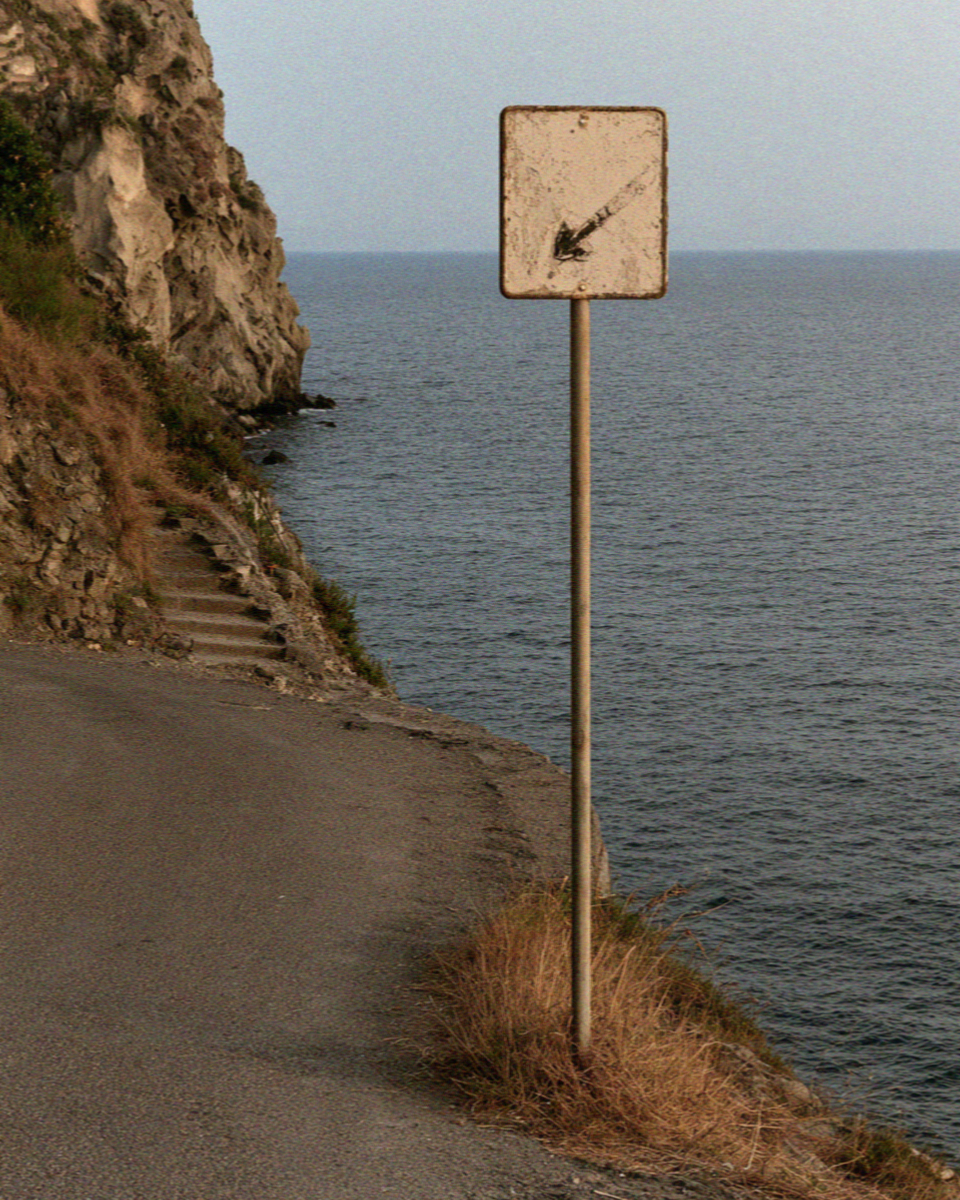
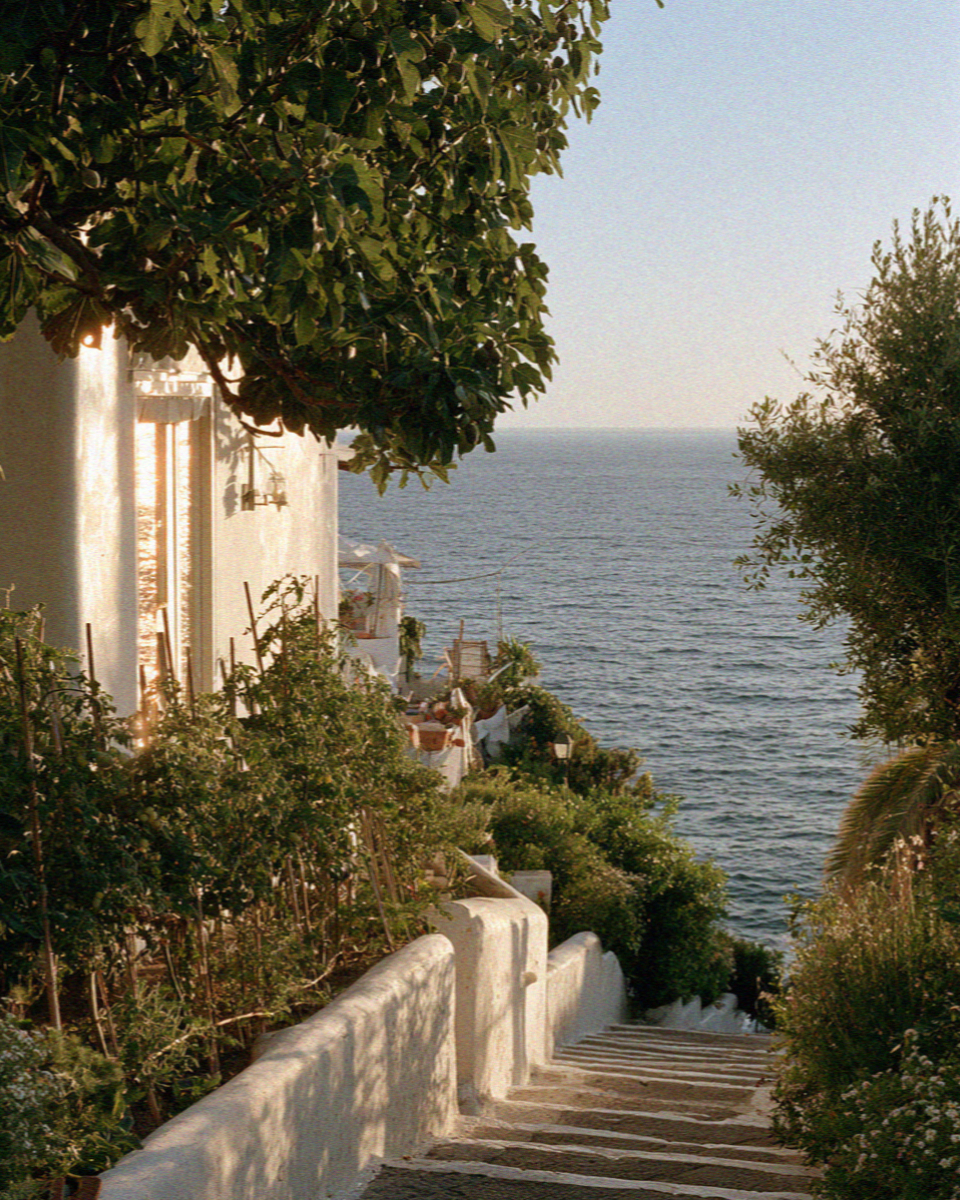
The road ends above Panza. After that there is a sign, and after the sign there are steps.
Two hundred and thirty four of them. I counted going down because there was nothing else to do with my attention, and because I suspected I would want the number later, on the way back up.
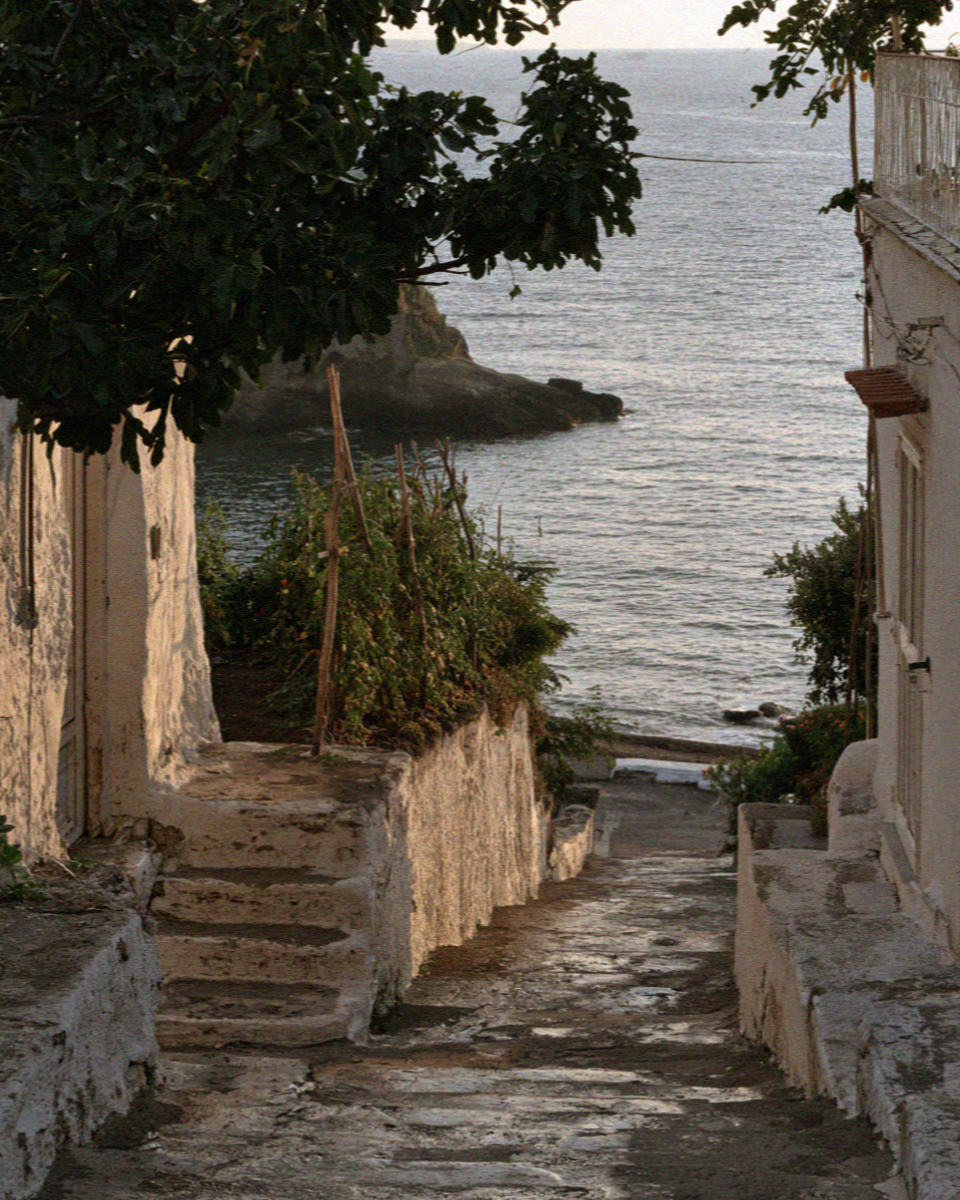
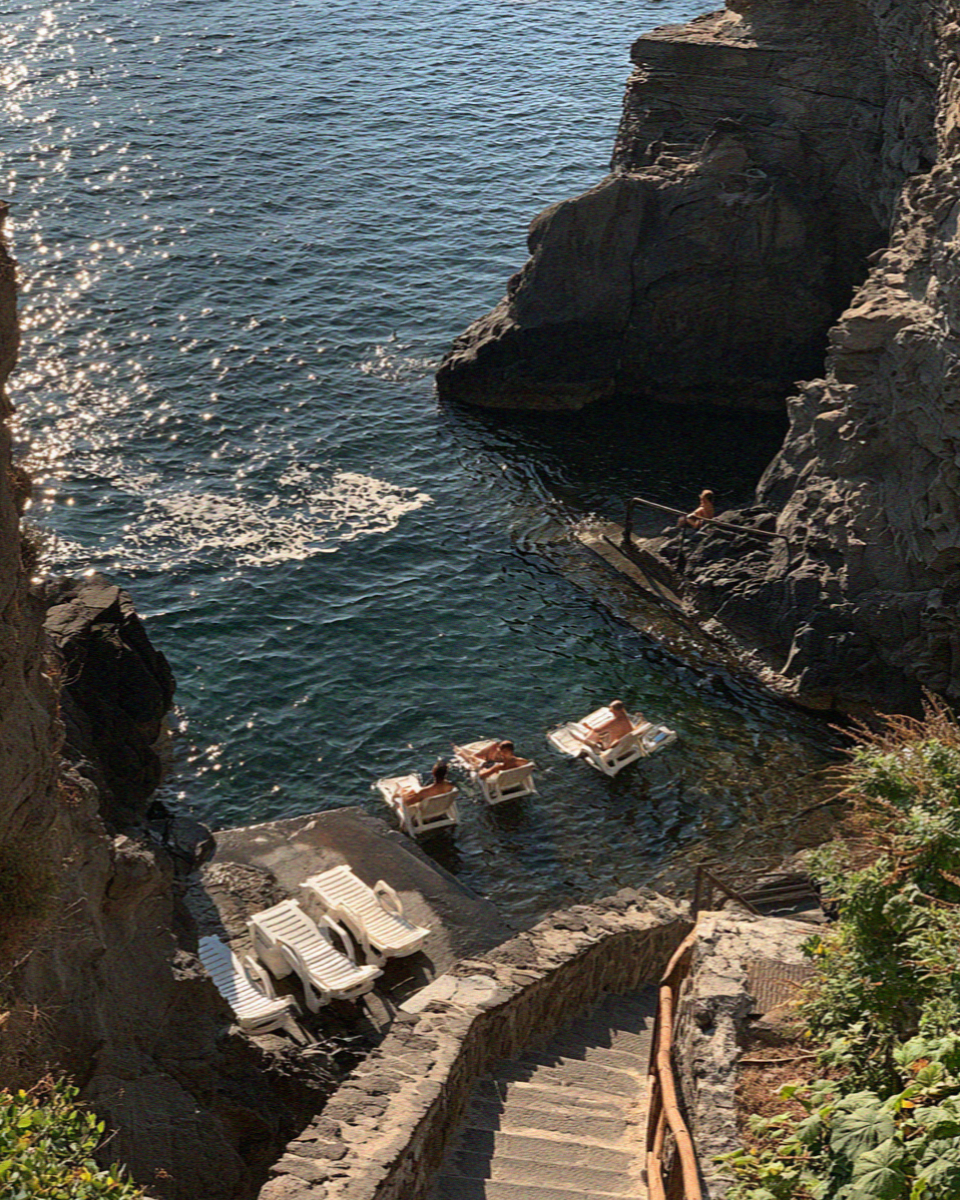
The stair drops fast between garden walls and fig trees and somebody’s tomatoes. Then it turns, and the whole bay is underneath you, still grey, the sea moving slowly against black rock.
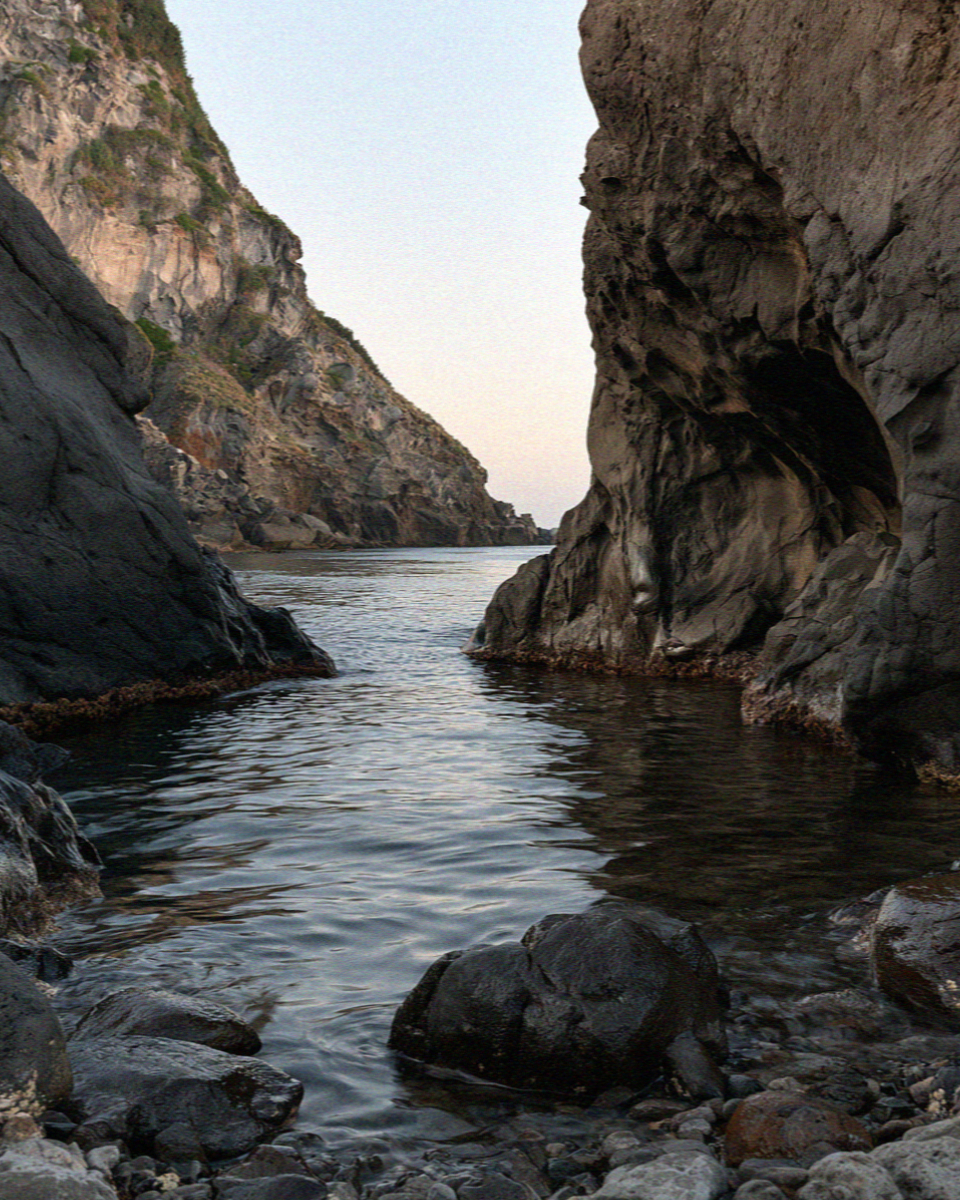
No sand. Nobody has softened this place for anyone.
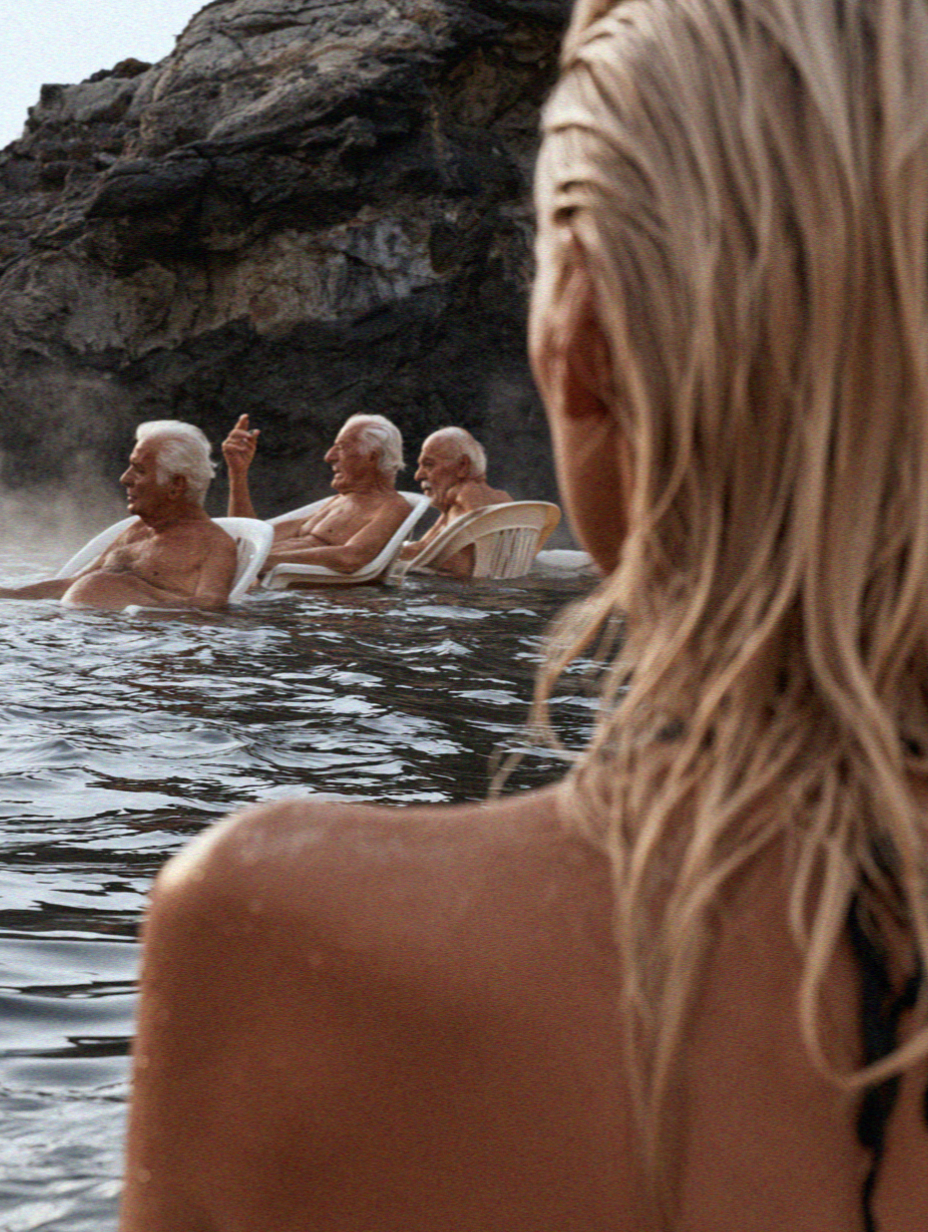
I got to the bottom at the hour when the light has arrived but the sun has not, and there were four people already in the water. All of them local. All of them at least seventy.
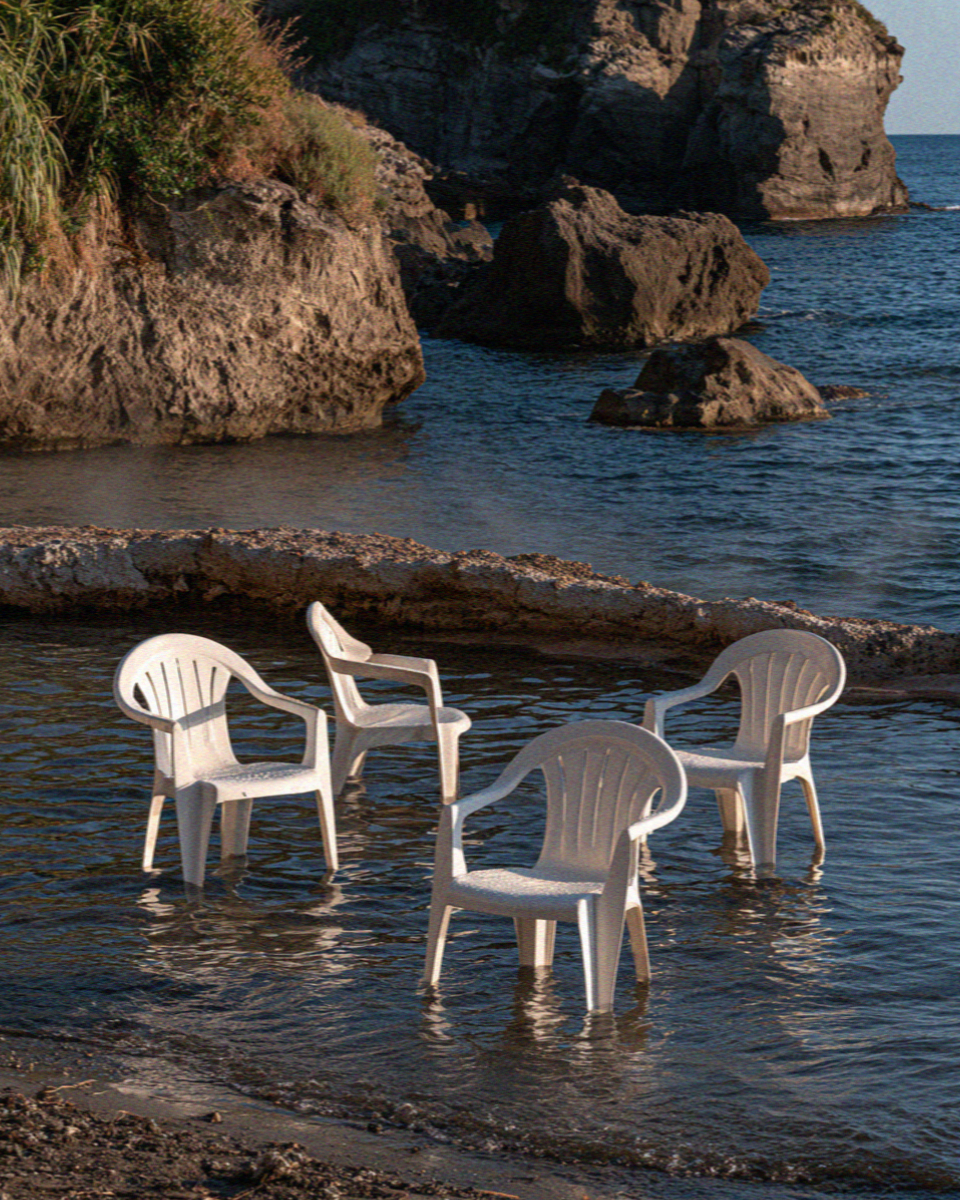
They had brought plastic chairs down those steps. They had done it before.
One of them lifted a hand at me and went back to his conversation, and that was the entire transaction, and it was correct.
The line
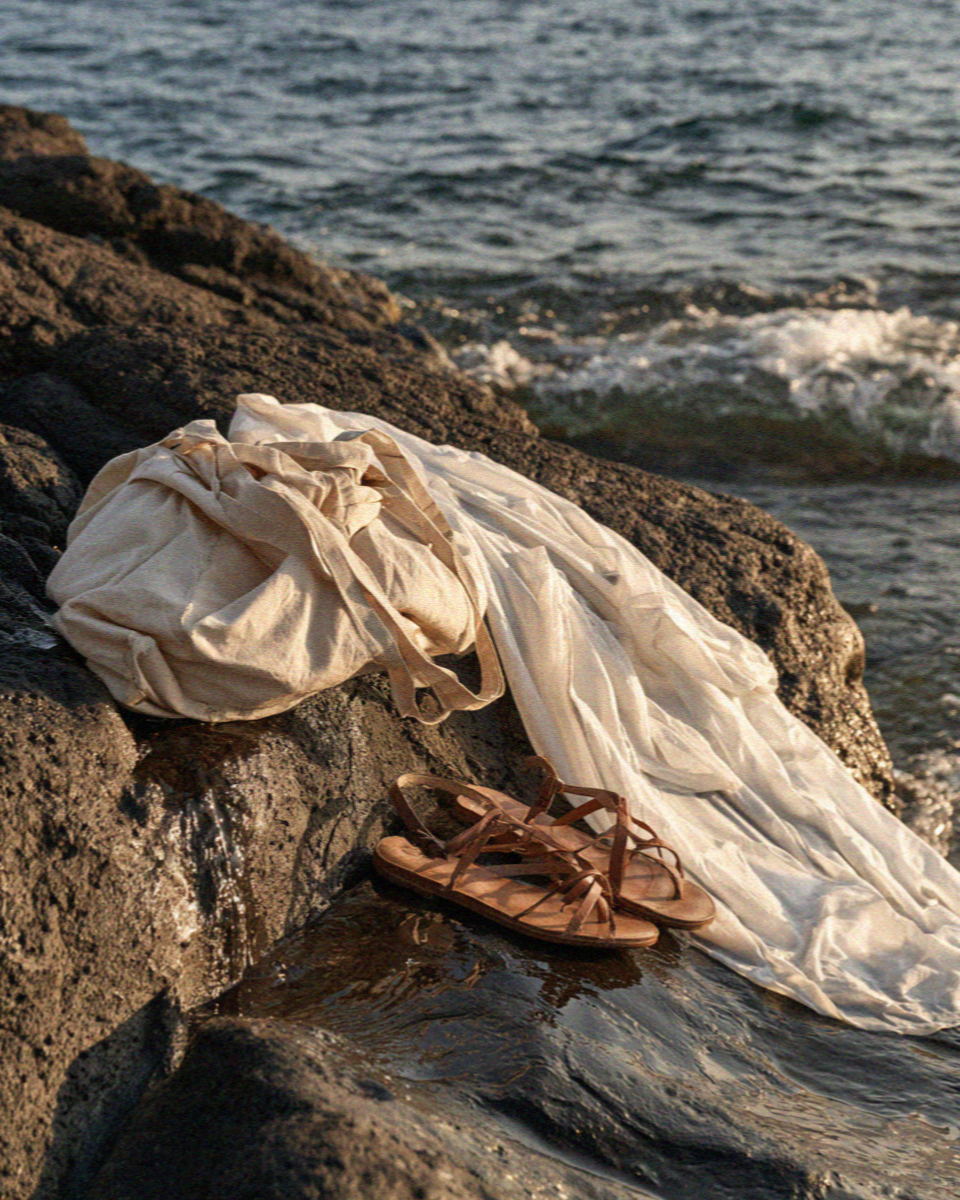
I put my things on a rock and went in.
The first thing is that you cannot simply get in. You have to find where.
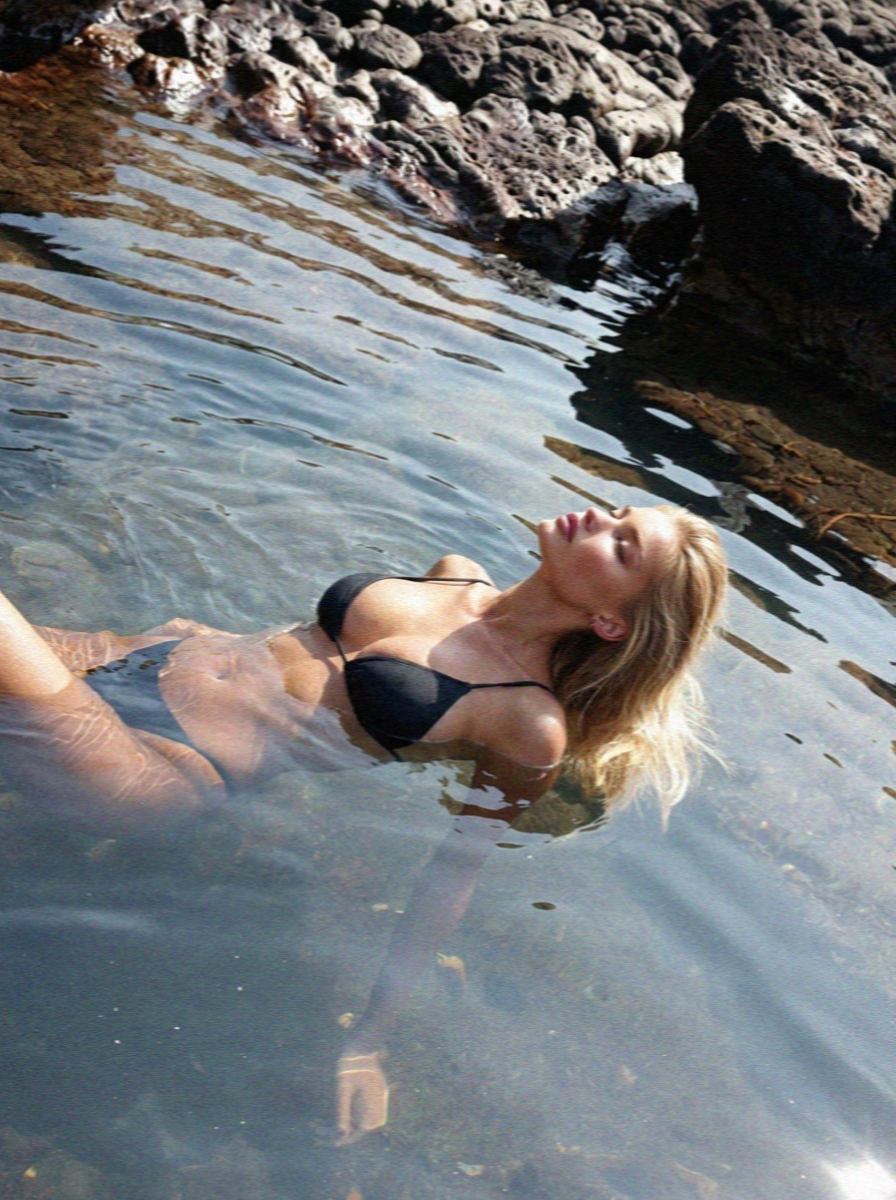
The spring comes up through the seabed and out of the rock at the back of the cove, and in places it is genuinely too hot, not pleasantly hot, not spa hot, but the temperature of a bath somebody has run wrong and walked away from. There are pockets down there you learn to avoid within about four seconds.
And then a metre away, cold sea.
Between those two things there is a line.
You find it with your body. There is no other way. You move slowly, sideways, with your hands out under the surface, and the water changes against your skin in bands, hot, then cool, then hot again, and then you arrive somewhere that is neither and you stop moving and you stay.
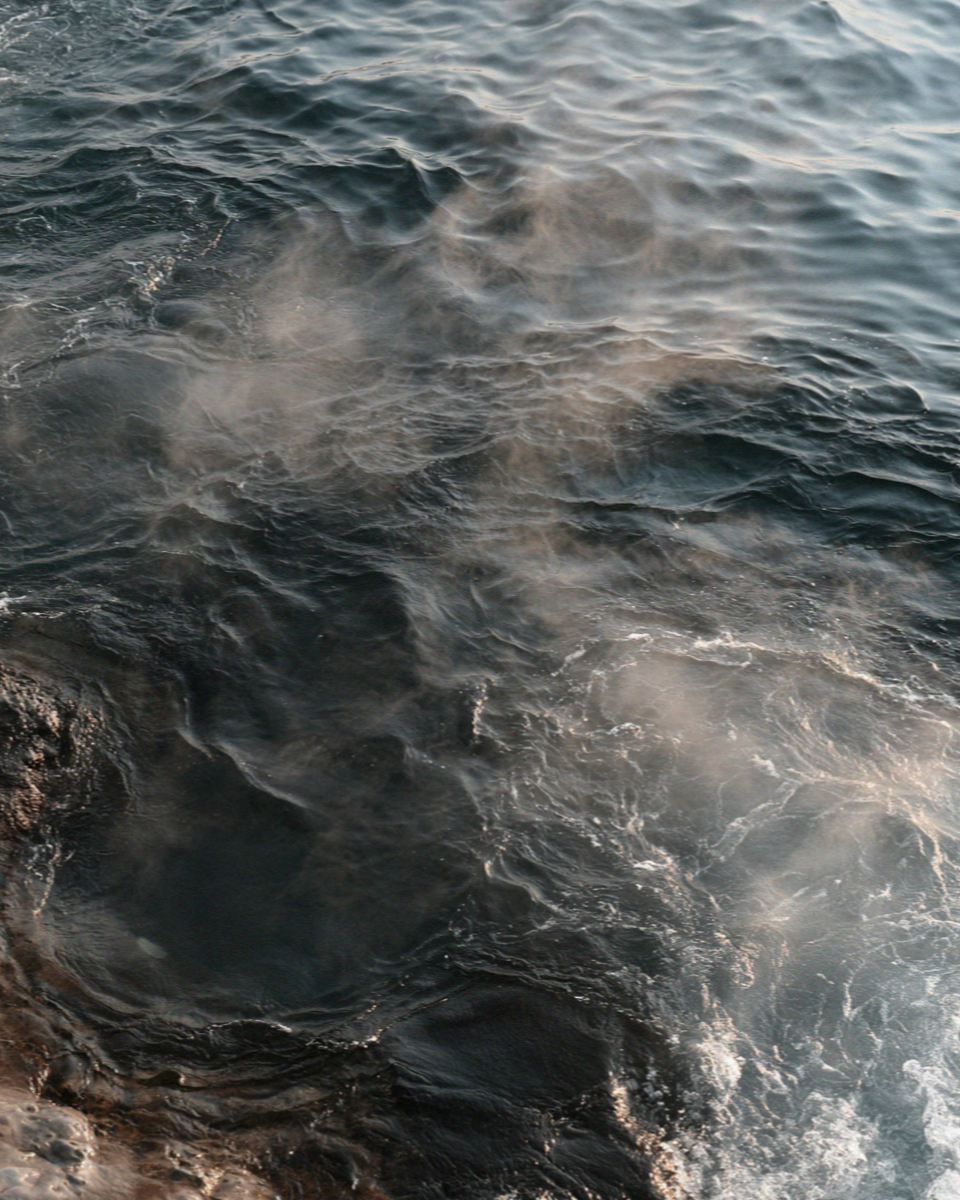
I stayed a long time in one of those seams with the cold running along one side of me and the heat coming up underneath, and the two of them meeting somewhere around my ribs, and I understood why four men in their seventies carry chairs down two hundred and thirty four steps before breakfast.
Steam came off the surface in threads where the hot water broke through. It went up about a foot and then the air took it.
Behind me the rock was warm to sit against before the sun had touched it at all. Warm from beneath. That is the part that does not stop being strange.
What I grew up swimming
I grew up swimming water that never does this.
My grandmother’s coast is cold. It is cold in June and it is cold in September and the people who swim there have simply decided not to make a point of it. You go in fast because going in slowly is worse. You come out with your hands aching and you lie on a hot rock until you are a person again.
That is the arrangement. Cold water, hot stone, and the stone doing the work afterwards.
Here the order is reversed and the earth does it for you while you are still in the sea, and I sat in it that first morning feeling faintly as though I were getting away with something.

Nobody is charging for this
There is no gate. There is no ticket. There is no man in a polo shirt with a card machine.
The bay is open all day and all night and all year, and it costs nothing, and it has cost nothing for as long as anyone has been coming, which on this island is a very long time indeed.
I keep turning that over.
Ten minutes around the coast there are thermal parks with terraced pools and loungers and a price per person that is entirely reasonable for what they are. I have been to them. They are lovely. I will go again.
But this is the same water. Actually this is more the same water, less managed, closer to the source, coming up through rock into the sea exactly where it has always come up, and the only entry requirement is that you are willing to walk down and then walk back.
The steps are the ticket. That is the whole system, and it is a better one.
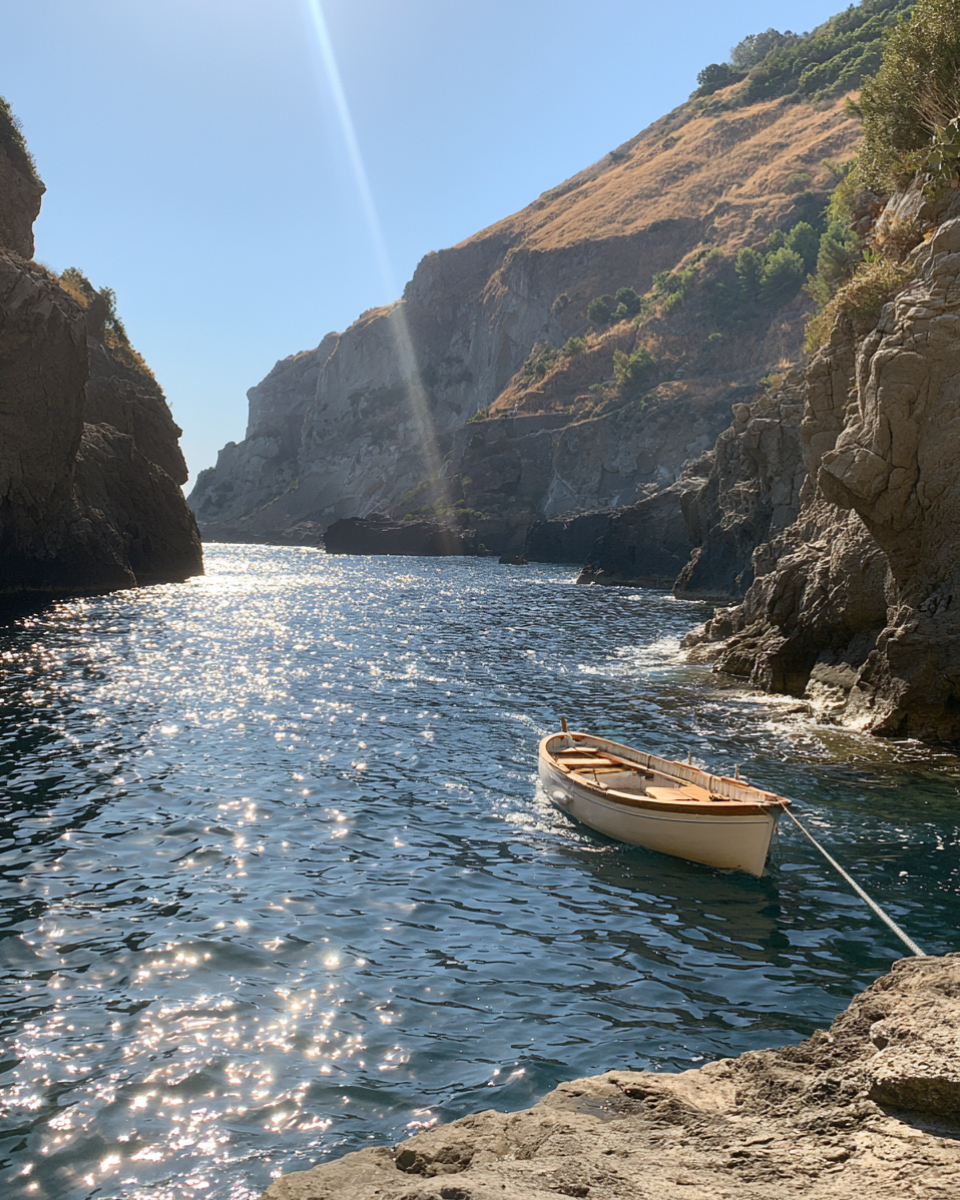
There is a boatman who will bring you round from Sant’Angelo for about five euros if the steps are not possible for you, and in the winter, I am told, the bay fills with islanders and almost no one else, because the colder the sea gets the better the trick works.
I would like to see it in February. I think I would like it more.
Later
The sun came over the ridge at some point and turned the water from grey to green to the ordinary blazing blue it would stay for the rest of the day, and with the light the bay stopped being private.
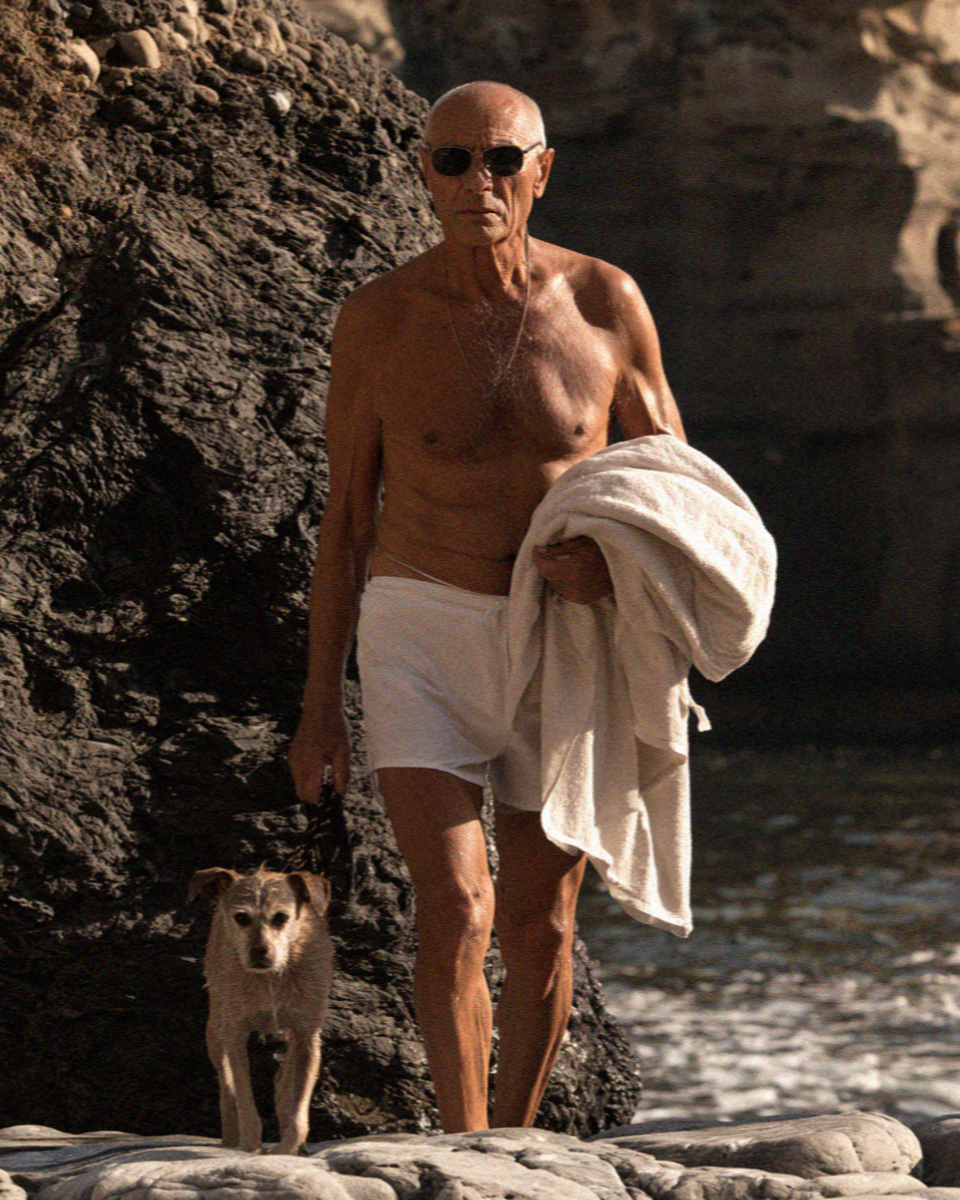
A family arrived. Then two girls with a speaker, which they had the grace to keep low. Then a man with a dog who plainly did this every morning of his life and had opinions about where exactly to sit.
I got out, and dried in about ninety seconds, which is what August does, and put my shirt on over everything still wet, and let the salt do what salt does as it goes.
I did not swim again. It seemed better to leave it at one.

Then the two hundred and thirty four steps, in the other direction, in full sun, which is a different proposition entirely and one I had been quietly dreading since roughly step forty.
I stopped twice. Both times I turned around and looked at it.
From halfway up you can see the whole cove at once, the black rock, the pale broken circles on the surface where the hot water is still arriving, the four chairs, the men in them, unmoved.
It is not a beautiful bay. I want to be honest about that. It is a rough dark inconvenient scoop out of a hillside and it has no palm trees and there is nowhere to put a towel that is not stone.
It is only that the ground is giving something away, freely, continuously, since long before anybody thought to write it down, and will be doing it tonight when the bay is empty and the water goes on breaking through in the dark with nobody in it.
I have thought about that more than I expected to.
V.
More from Ischia









This is the second of my diaries from Ischia. The first, about the green island and the vineyards on the volcano, is here, and the practical version of the island is in my complete guide to Ischia.