Taormina is one of the easiest places in Italy to photograph and one of the hardest to photograph well, for the same reason: there is a good frame every forty metres and most of them have already been taken.
What separates a picture here from a snapshot is almost entirely hour and direction. The town faces east and south along the coast, the volcano sits down the shoreline, and those two facts decide everything.
Here are the spots, with the hour each one wants. The wider planning is in my complete guide to Taormina.
1. Through the ruined stage wall
Hour: opening, around nine. Or a late evening opening if one is running.
The shot everyone comes for, and it is genuinely as good as advertised. Stand in the theatre bowl and shoot through the gap in the ruined brick stage wall, which frames the sea on one side and the volcano on the other.
Go at opening. By eleven there are several hundred people between you and the wall, and the light is flat and vertical.
The top tier gives you the wide version with the seating curving away. Lower down and off to the side gives you the tight version where the arch does the framing for you.
2. The volcano across the bay

Hour: the last thirty minutes before sunset, and the twenty after it.
From the terraces on the south side of the old town, Etna sits down the coast beyond the curve of the bay. In the middle of the day it is a grey shape in haze. At dusk it separates from the sky, the plume catches the light, and the coastal towns below start coming on.
Winter and the shoulder months give you far better odds of a clear summit than August does, when heat haze sits over everything.
3. Empty lanes at first light
Hour: sunrise to about half past seven.
The lanes off the main street are the best thing in Taormina to photograph and they only work before the town wakes up.
Honey stone, green shutters, iron balconies, bougainvillea, and staircases going up out of frame. At six thirty they are empty and the light comes in sideways and long. At ten they are full of people photographing them.
This is the hour I would give up sleep for here, and the only one.
4. The doorways and balconies

Hour: mid-afternoon, in shade.
The detail shots. Iron balconies loaded with magenta bougainvillea against warm stone, green shutters half closed, painted ceramic heads on shopfront shelves.
These want open shade rather than direct sun, so shoot the side of the street the sun has left. Hard midday light blows out the stone and kills the colour in the flowers.
5. Down at the water, looking up
Hour: late afternoon, from about five.
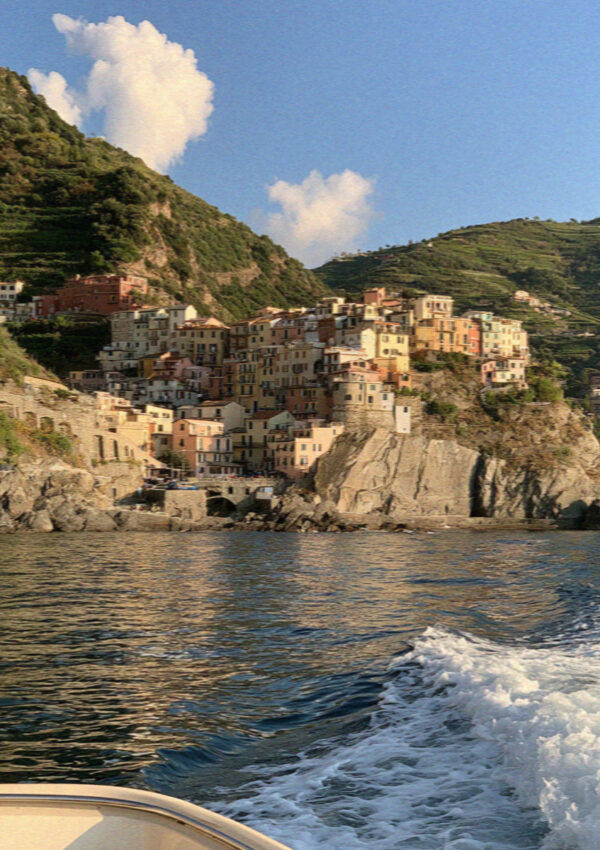
From the beach at Mazzarò or from a boat, the cliff face and the town on top of it get the last of the sun while the water goes deep blue.
The cable car cabin on its wire, with the bay underneath, is the other shot from down here and it is better than it sounds, particularly with the cabin small in a big frame rather than filling it.
6. The town lit, from above

Hour: blue hour, and it wants a tripod.
From higher up the hill, or from the village above the town, Taormina at dusk is a warm scatter of lights on a dark shelf with black sea beyond and the volcano a mass on the horizon.
Blue hour gives you sky as well as lights, which is the better photograph. Full night gives you the stranger one, and occasionally a red glow at the summit if the mountain is active.
A note on the crowds
Taormina takes about two million visitors a year through a town you can walk in fifteen minutes.
You are not going to get the main street empty in August at any hour that is not dawn. Accept that and either shoot at dawn, or shoot the crowd deliberately as the subject, which is honest and often more interesting than an artificially empty street.
The other move is to go up. The lanes above the Corso, the gardens, the village on the summit, all have the same architecture and a fraction of the people.
Practical notes
The light direction matters more than usual. The town faces east, so mornings are the town lit from the sea, and evenings are the town in its own shadow with the volcano lit instead. Plan around that rather than fighting it.
The stone is bright. Expose for the highlights or the honey limestone blows out and takes the texture with it.
Wear shoes with grip. Polished stone lanes worn smooth by two centuries of visitors, and steps everywhere, and you will be moving fast at dusk to catch light.
A long lens is worth carrying here more than in most Italian towns, because the two best subjects, the volcano and the town from across the bay, are both far away.
The shot that is harder than it looks
The picture most people want from Taormina is the town and the volcano in the same frame, and it is more difficult than the postcards suggest.
The problem is distance and haze. Etna is roughly thirty kilometres down the coast, so at any normal focal length it sits small and pale on the horizon and reads as a smudge rather than a mountain. The postcard versions are shot long, which compresses the distance and makes the volcano loom the way it does to your eye but not to a wide lens.
So: use the longest lens you have, shoot in the clearest air you can find, and accept that August will rarely give it to you. Winter and the shoulder months are far better, and the half hour after sunrise is better than any evening hour, because the day’s haze has not built yet.
Read also: the Greek theatre in Taormina, the best time to visit Taormina, and my complete guide to Taormina.
Frequently Asked Questions
Where is the classic view of Taormina taken from?
Inside the ancient theatre, shooting through the gap in the ruined brick stage wall, which frames the sea on one side and Mount Etna on the other. Go at opening, around nine in the morning, before the bowl fills and while the light is still coming in sideways.
What is the best time of day to photograph Taormina?
Two windows. Sunrise to about half past seven for the empty lanes, and the half hour either side of sunset for the volcano down the coast and the town lights coming on. The middle of the day is flat, hard and crowded.
Can you photograph Mount Etna from Taormina?
Yes, from the terraces on the south side of the old town and from higher up the hill. It sits down the coast beyond the bay. Dusk is much better than midday, and the shoulder seasons and winter give far clearer summits than August, when heat haze sits over the whole coast.
How do you avoid the crowds when photographing Taormina?
Shoot at dawn, or go up. The lanes above the main street, the clifftop gardens and the hill village above the town all have the same architecture with a fraction of the people. In August the main street will not be empty at any reasonable hour.
Do you need a tripod in Taormina?
Only for the blue hour and night shots of the town lit from above. Everything else has plenty of light. If you carry one thing beyond a standard lens, make it a long lens, because the volcano and the town across the bay are both distant subjects.