Nothing happens here between two and six.
I want to be accurate about that rather than atmospheric. At two in the afternoon in the middle of August I walked from one side of the Sassi to the other and passed four people. One of them was a delivery man who had parked in shade and was sitting in his van with the door open, doing nothing, waiting the way you wait out weather.
The practical Matera, the tickets and the trains and where to eat, is in my complete guide to Matera. This is an evening.
The heat is not like coastal heat. There is no water anywhere near this town, no breeze coming off anything, and the whole place is pale rock, so the light arrives twice. Once from the sky and once back up off the ground. You feel it under your chin.
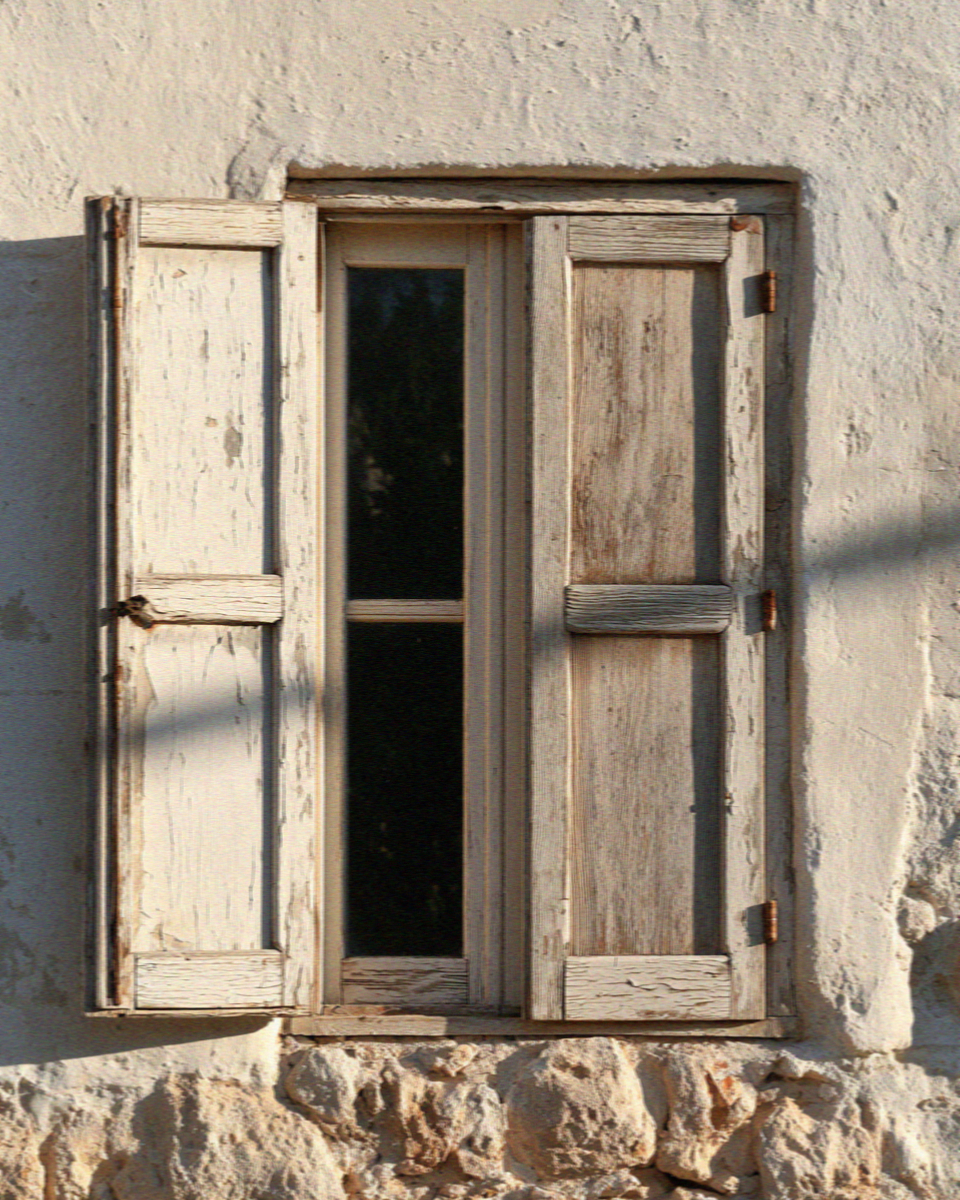
Everything is shut and everything is shuttered, and the shutters are the giveaway. They are not closed for privacy. They are closed the way you close a lid.
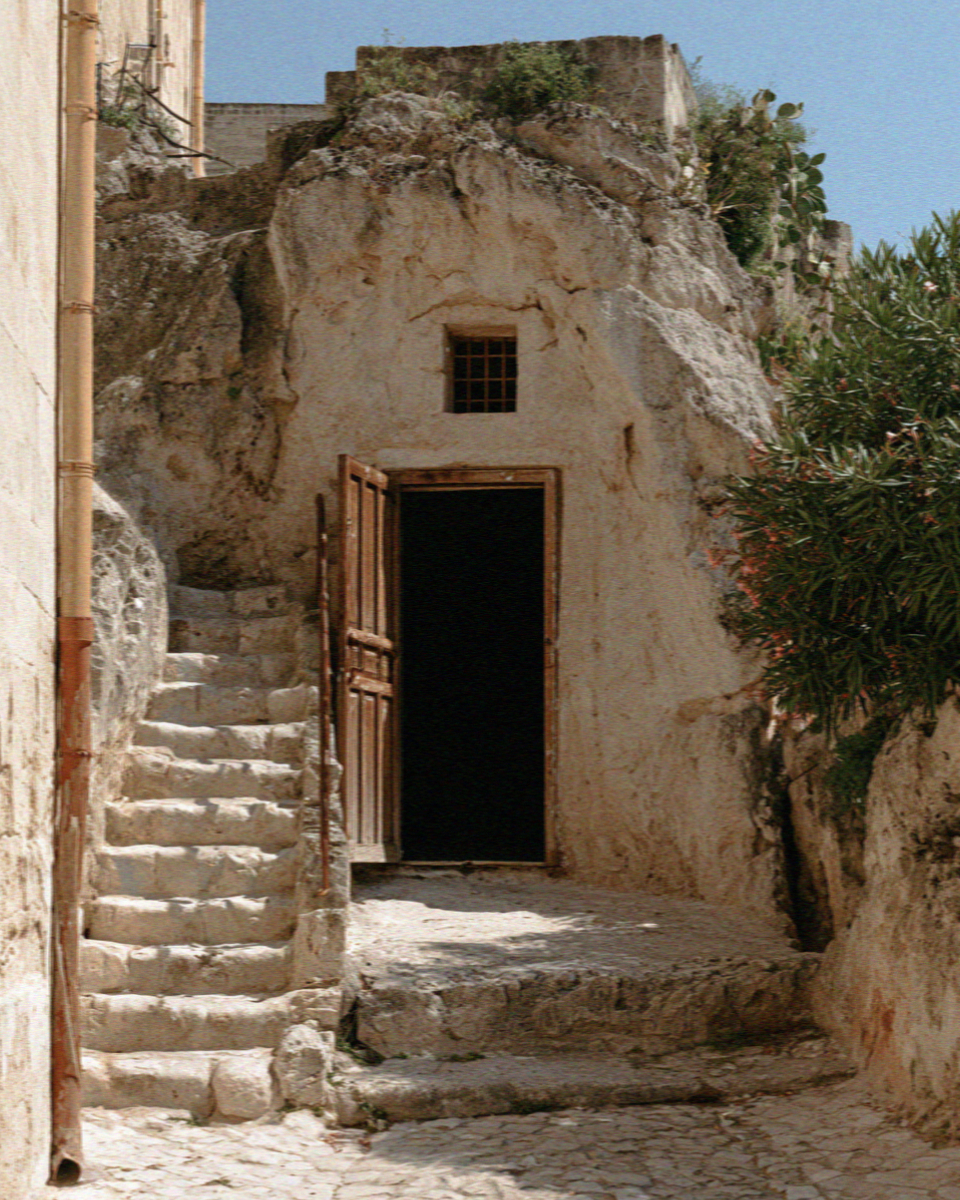
And then the doorways.
You walk past an open door in the afternoon and cold comes out of it. Not cool. Cold, like a cellar, in a lane where you can feel the stone through your shoes. Forty metres of rock over a room does that, and the people who cut those rooms out were not being picturesque, they were being sensible, and the whole town is essentially one enormous solution to this exact afternoon.
I gave up at half past two and went inside and lay on the bed under a fan and read nothing.
At about a quarter to six a woman two levels below me threw a bucket of water across her step.
That was the first sound. Then a chair being dragged, which in a place built of stone you hear four tiers up. Then another chair. Then a radio, briefly, then off again. Somebody hammering something once and not continuing. A boy going down the steps too fast in flip flops, which has a particular slapping rhythm that I now associate entirely with this town.
The whole thing takes about twenty minutes and it happens without any signal I could detect.

By half past six there were chairs on the stone outside perhaps a dozen doors, all of them facing outward rather than at each other, which I found interesting and then obvious. You do not need to face the person you are talking to when they are five feet away and you have known them for sixty years.
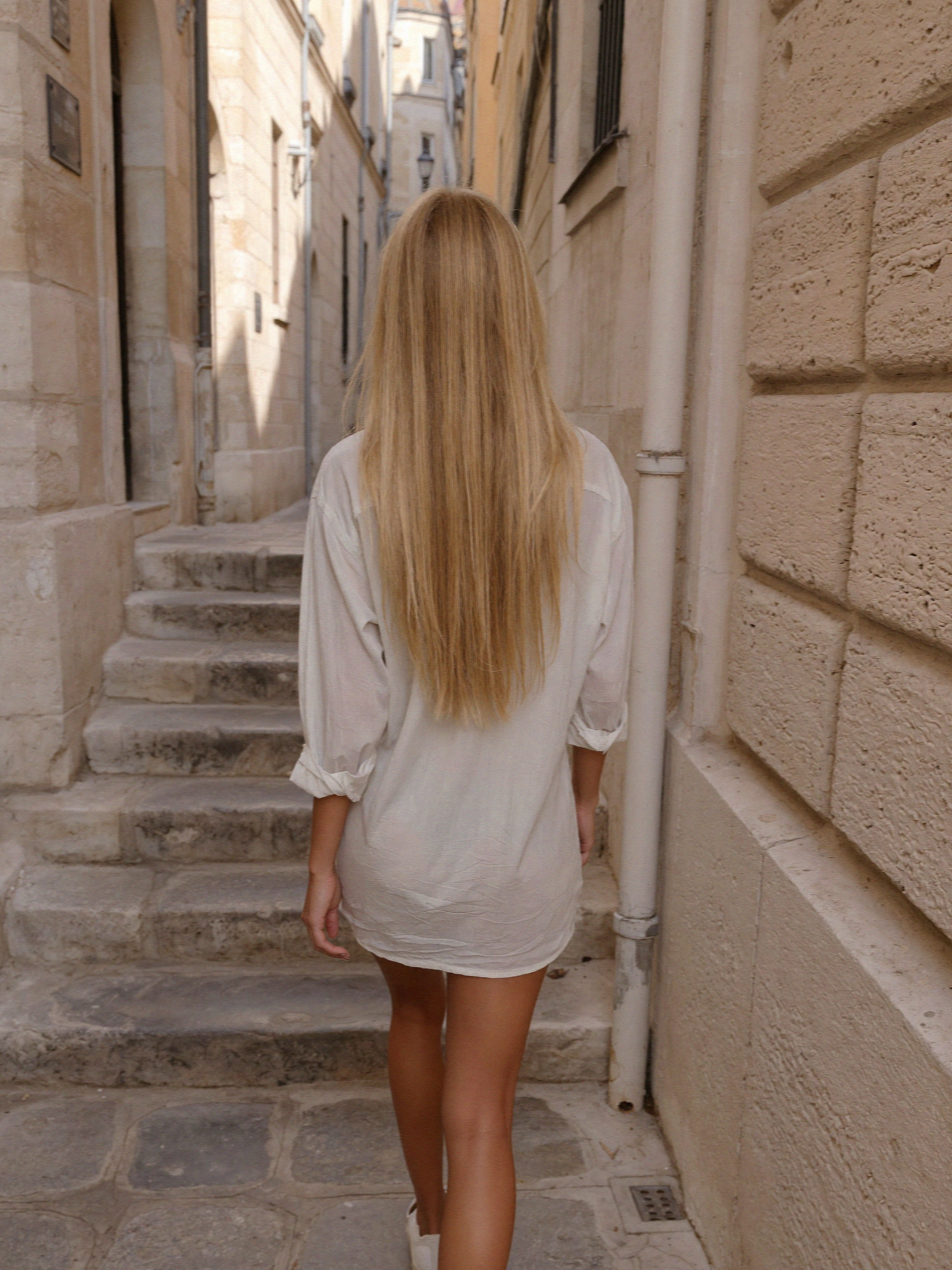
I put on a linen dress and my white tennis shoes, because the alternative on these steps is an ambulance, and went up.
The lanes fill from the bottom. I had assumed it would be the other way, that people would come down from the modern town into the old one, and some do, but the actual movement at that hour is upward, out of the Sassi and onto the flat streets above, which is where the passeggiata happens properly. Everybody walking very slowly in both directions on the same two hundred metres of pavement. Prams. Ice cream. Three men outside a bar who I am prepared to bet stand in that exact configuration every evening of their lives.
Nobody was looking at the view. The view is the thing the entire town is famous for and it was directly behind them, going gold, and not one person turned round.
I liked that more than I can properly explain.
My father never told me how to judge a place. He would arrive somewhere, put his bag down, and sit for an hour without doing anything, and when I was small I thought this was tiredness. It was not tiredness. He was waiting for the place to start behaving normally again after the interruption of us arriving. He never said a word about it. I worked out what he had been doing roughly twenty years later, sitting on a wall in Puglia at six in the evening, watching a town switch itself back on.

I ate late, at nine, which is early here.
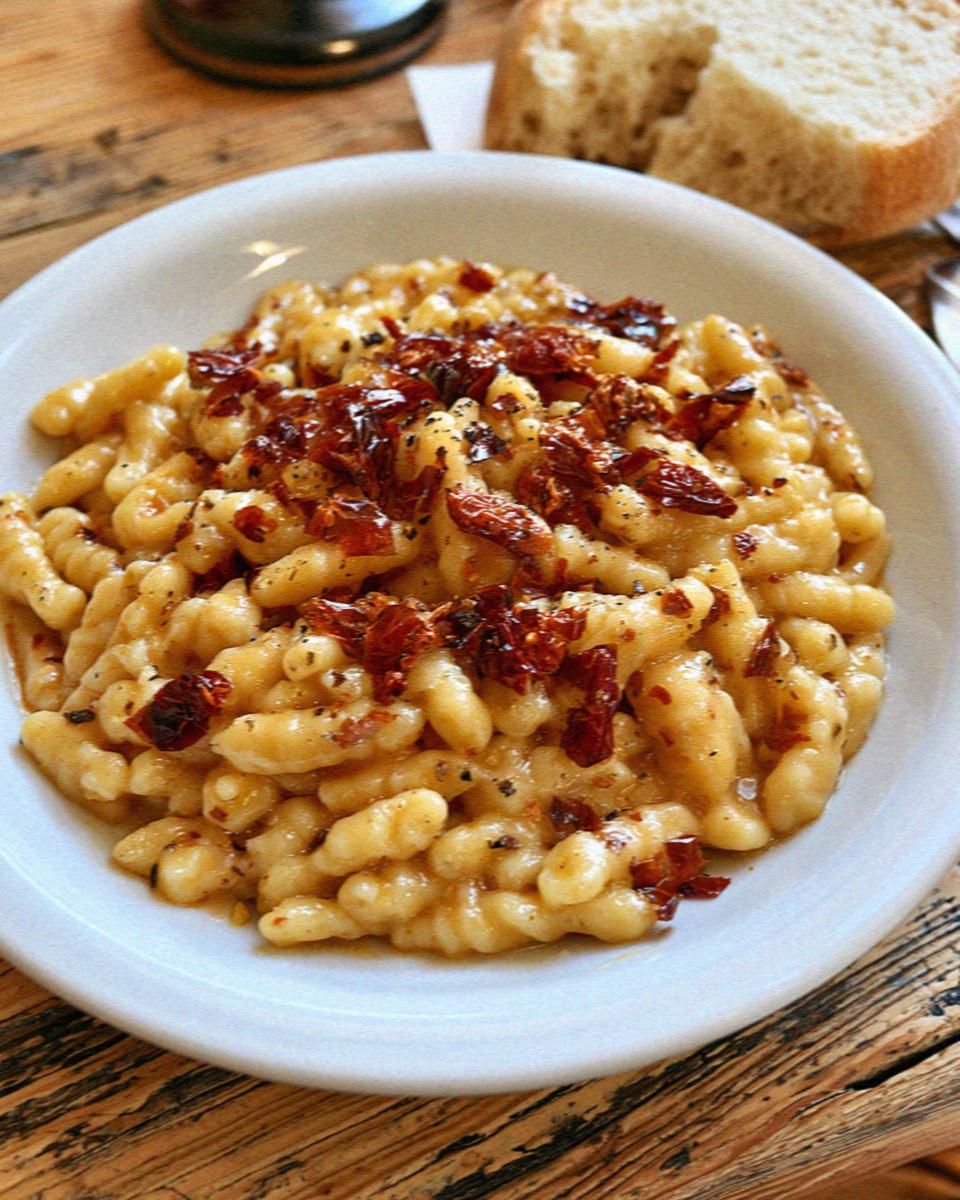
Cavatelli, which are little rolled shells of pasta, made with flour and water and no egg, because this was a poor place and eggs were for other things. Peperoni cruschi on top, which are sweet peppers dried whole and then fried for a few seconds so they shatter like a crisp. A plate of that costs almost nothing and it is one of the best things I have eaten in Italy, and it exists because people had very little, which is true of most of the food I love in the south.
Bread as well, obviously. The loaf here is enormous and pale gold and comes in a shape that looks like it has been torn rather than baked, and it keeps for a week, which was the entire point of it.
Afterwards I walked back down.
The stone gives the day back after dark. You notice it on the backs of your legs going down the steps, the walls letting go of it slowly on either side, and the air in the lane sitting somewhere around blood temperature so that you cannot feel the edge of yourself. It is a strange sensation and not unpleasant.
At half past eleven a man came out of a door below me with a small dog on a lead, walked it about twelve feet, waited, and took it back in.
The chairs were still out. Some of them will have stayed out all night.
V.
More images from Matera