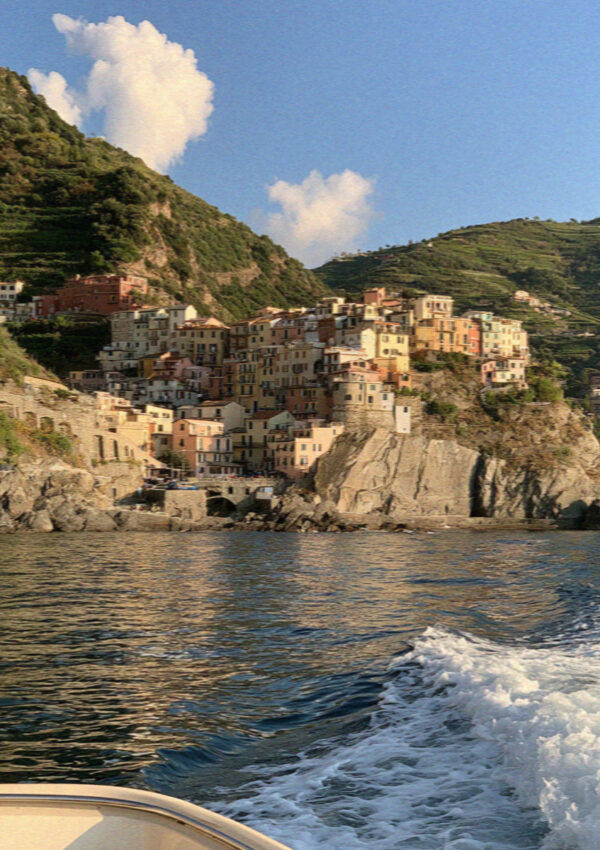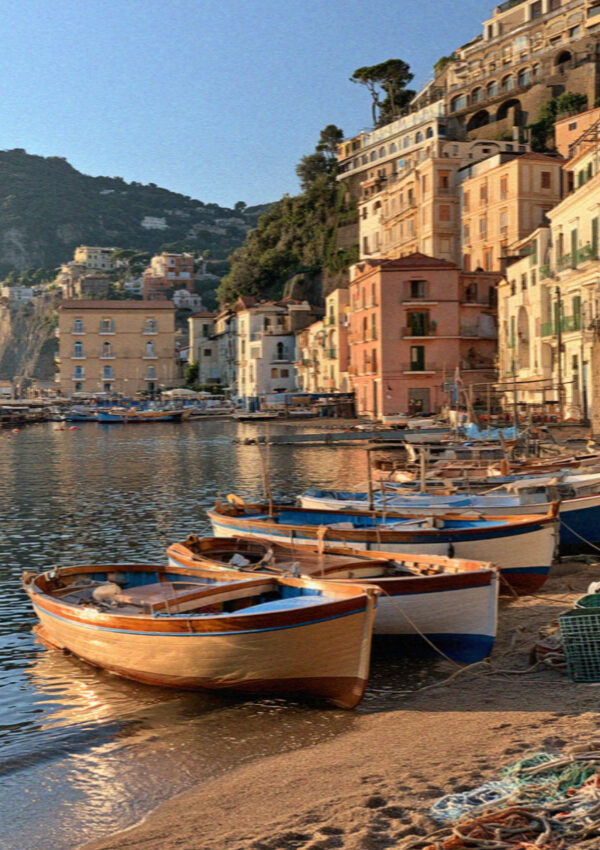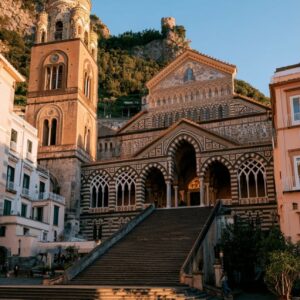
The question of where to eat in Amalfi has a short answer and a long one, and the short answer is that you should walk away from the cathedral before you sit down anywhere. The town is small, folded into a ravine that opens onto the sea, and it feeds thousands of people a day in high summer. Most of them eat within sight of the Duomo steps, and most of them eat adequately and pay too much. The good tables are a minute’s walk away, down streets that seem to lead nowhere, and they are worth the small effort of finding them.
The One Rule
Do not eat in the Piazza del Duomo. I say this with affection, because the square is beautiful and the cathedral above it is one of the great sights of the coast, and there is nothing wrong with sitting there over a coffee to watch the light move on the striped facade. But the restaurants that ring the piazza are trading on the view and the footfall, and the food is priced for people who will not come back. Walk sixty seconds in any direction and the quality rises sharply while the price comes down. The rule is almost mechanical in its reliability. The further you get from the postcard, the better you eat.
Plan Your Visit to the Amalfi Coast
A few things I booked and loved. These help support the blog, at no cost to you.
- Where I stayed: search Amalfi Coast hotels
- Boat tours and Amalfi Coast tickets
- Stay connected: get a travel eSIM
This section contains affiliate links. If you book through them I may earn a small commission, at no extra cost to you.
Scialatielli, the Pasta of This Coast
If you order one thing in Amalfi, order scialatielli. It is a local pasta, thick and short and flat, sitting somewhere between tagliatelle and fettuccine, with enough body to hold a sauce without going soft. You will see it everywhere down here and almost nowhere else. Ask for scialatielli ai frutti di mare, which arrives tossed with the morning’s catch in white wine, cherry tomato and a good olive oil, the clams and mussels still in their shells, a few prawns, sometimes a little squid. A primo like this runs roughly 14 to 20 euros at a decent trattoria, and it is the truest plate of food in the town. Nothing about it is showy. It tastes of the sea and of restraint.
The Seafood Is the Point
The cooking here is mostly a matter of leaving things alone. The fish is already good, and the kitchens that understand this do very little to it. Orata, sea bream, comes baked in a salt crust and cracked open at the table, the flesh underneath white and clean. Swordfish is grilled and given nothing but lemon. In season, if you are lucky and you ask, there are ricci di mare, sea urchins, split open and eaten raw with a squeeze of lemon and no other ceremony. A seafood main sits at roughly 20 to 35 euros, and you are paying for the fish, not the flourish. When someone tries to dress it up, be a little suspicious. The best plates on this coast are the plainest ones.
The Lemons and the Sweet Things
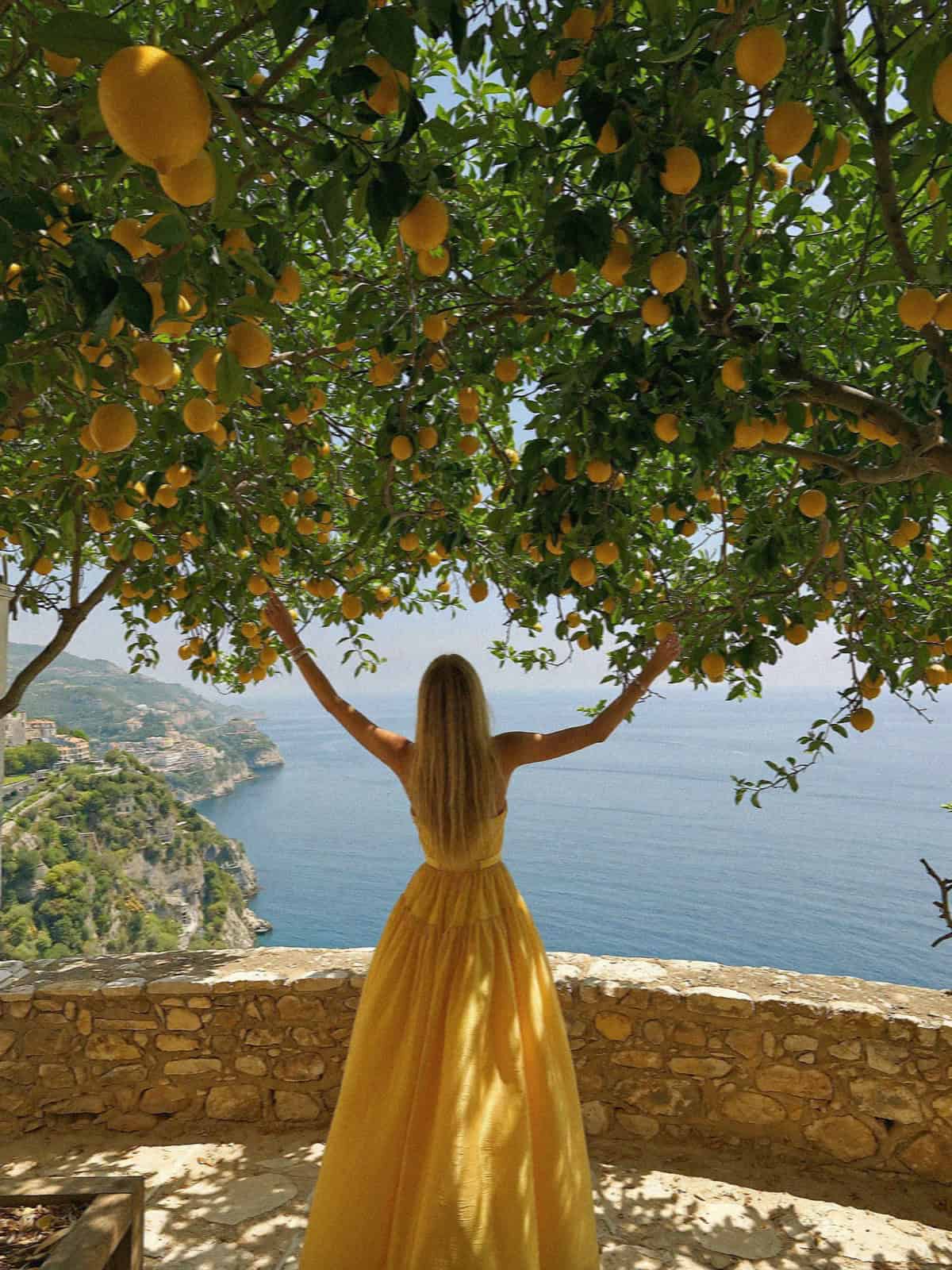
The lemon of Amalfi is a variety of its own, the sfusato amalfitano, large and thick-skinned and so fragrant that a market stall will scent the whole street. It is surprisingly sweet, more perfume than acid, and it turns up in everything. There is limoncello, of course, though the bottling that matters is not the one in the souvenir shop with the printed label. Ask at the enoteca for the family-made bottle, the one with the crooked hand-applied label, and you will taste the difference at once. And there is granita di limone, dense and almost too sour, sold from little counters and eaten standing up in the flat heat of the afternoon. Along the main promenade you can also find a lemon sorbet served inside a hollowed-out Amalfi lemon, which sounds like a gimmick and is instead one of the small perfect pleasures of the town.
The Restaurants I Return To
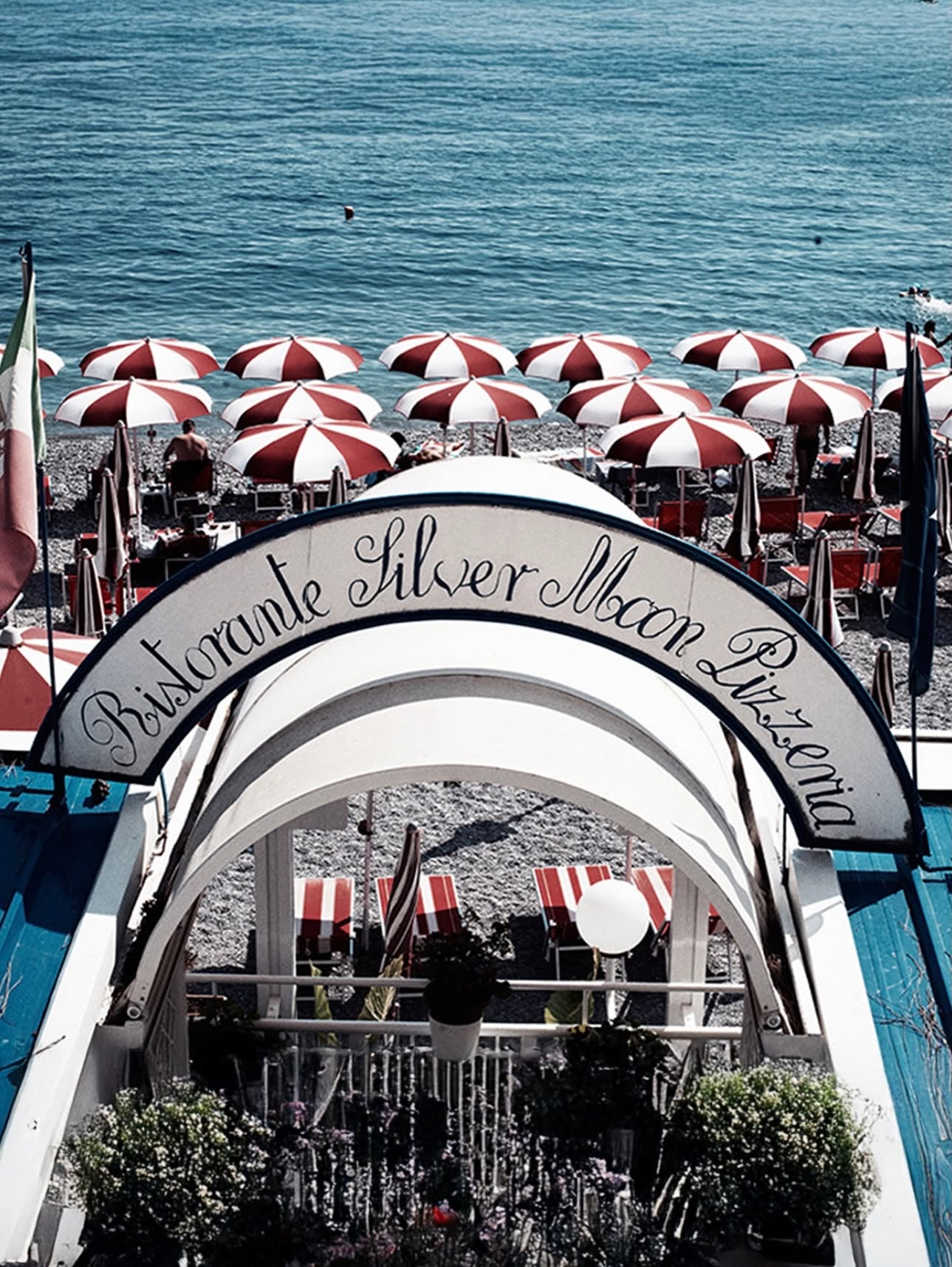
I am wary of anointing places, because a good kitchen can slip and a quiet one can find its feet, but a few institutions have earned their standing. Taverna degli Apostoli sits just beneath the Duomo steps, cosy and low-ceilinged, and does a slow-cooked octopus that falls apart under a fork, along with a lemon-pesto pasta that is exactly as local as it sounds. Da Gemma, above the piazza, is the grand old name, long-established and more refined, the sort of place you book ahead for and dress a little for. Down on the water there is Ristorante Marina Grande, on the town beach, with seafront tables and straightforward seafood, and beside that tradition sits Lido Azzurro, a terrace of the old school. A proper seafront dinner with wine will reach 60 to 100 euros a head at the higher end. It is a lot. On the right evening, with the sea going dark, it does not feel like it.
The Tables on the Water
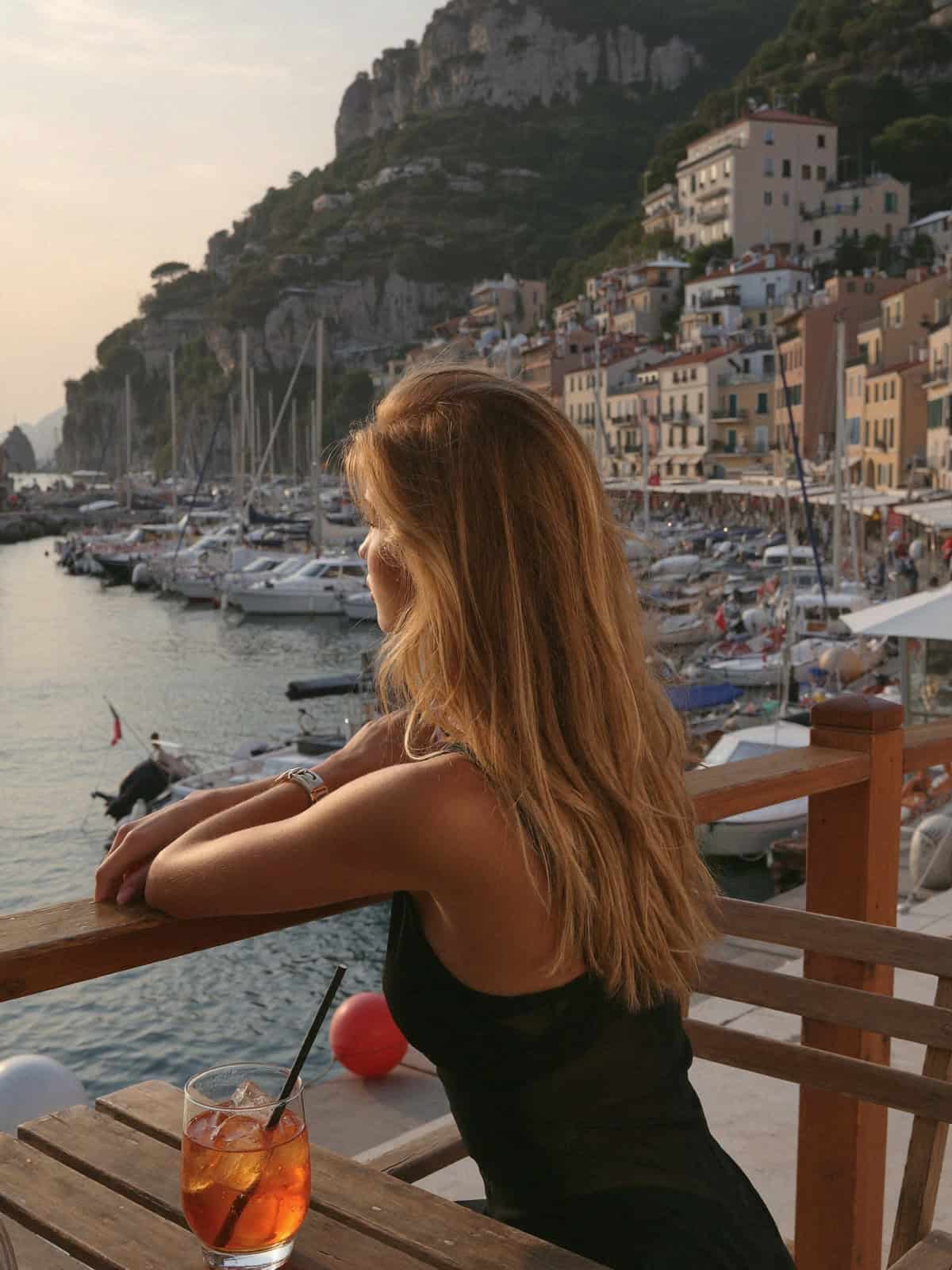
There is a particular pleasure in eating at the harbour, and Amalfi gives you the chance rarely afforded on this vertical coast, which is a flat stretch of beach with restaurants set right on it. The seafront terraces catch the last of the light and the sound of the water, and the seafood is at its most obvious sense here, carried up from the boats a few metres away. Go early for the sunset table or late for the quiet one. Either way, ask what came in that day and let the answer decide your order.
The Historic Cafe
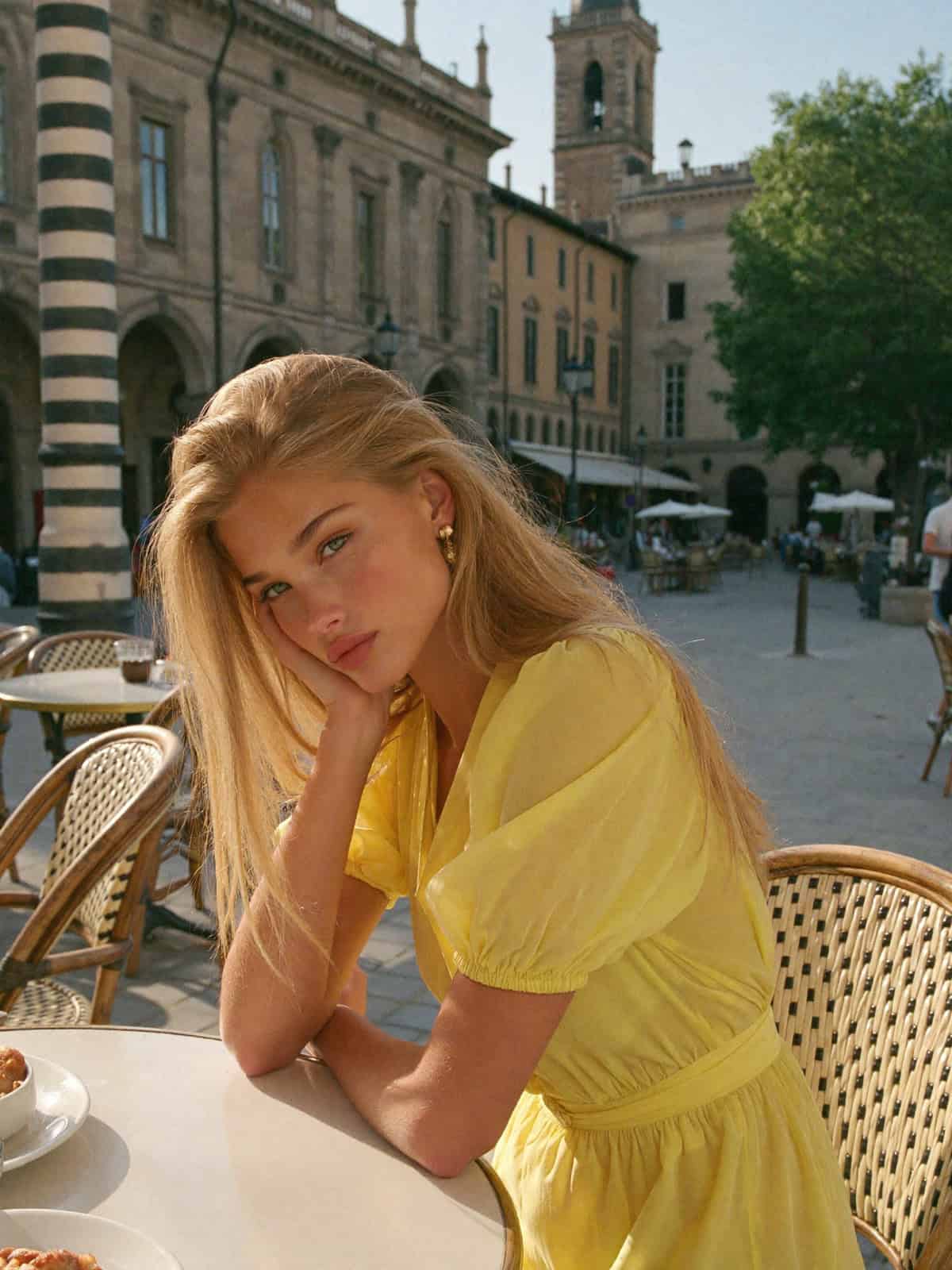
Pasticceria Andrea Pansa has traded on the Piazza del Duomo since 1830, and it is the one place on the square where I will happily sit and pay for the address. This is the historic cafe of Amalfi, all mirrors and marble and unhurried waiters. Order a sfogliatella, the crisp shell-shaped pastry, or a delizia al limone, a soft dome of sponge filled and covered with lemon cream, and a coffee to go with it. A pastry and a coffee costs only a few euros, which is the great equaliser of Italian life. You can eat modestly at the smartest table in town.
A Note on Colatura and Cetara
If you have a spare morning, the village of Cetara lies about forty minutes east, and it is the home of colatura di alici, an amber anchovy extract that is the direct descendant of the Roman garum. A few drops transform a plate of pasta or a piece of bruschetta, lending a depth that is savoury and oceanic and not remotely fishy. If you see a bottle, in Cetara or in a good Amalfi enoteca, buy it. It travels well, it keeps, and it will bring the coast back to your kitchen months later.
How to Find the Good Places
The method is simple and it rarely fails. Turn down the streets that do not lead anywhere obvious, the ones that climb or narrow and seem too domestic for a restaurant. The best places in Amalfi are where the owner still cooks and the menu changes with the catch, which means they do not need to shout, and they do not sit on the main square. A printed menu in six languages is a warning. A short list chalked on a board, and a woman visible through the kitchen door, is a promise. Trust the second one.
Frequently Asked Questions
Where should I not eat in Amalfi?
Avoid the restaurants directly on the Piazza del Duomo, which trade on the view and the passing crowds rather than the food. They are expensive and merely adequate. Walk sixty seconds off the square in any direction and both the cooking and the value improve immediately.
What is the local pasta in Amalfi?
The pasta of this coast is scialatielli, thick and short and flat, somewhere between tagliatelle and fettuccine. Order it ai frutti di mare, tossed with the day’s catch in white wine, cherry tomato and olive oil. It is the single most local plate you can eat here, and a primo costs roughly 14 to 20 euros.
Is Amalfi expensive for dinner?
It can be, though it need not be. A pastry and coffee is a few euros, and a good trattoria primo is 14 to 20 euros, while a full seafront seafood dinner with wine reaches 60 to 100 euros a head at the higher end. Eat one grand meal by the water and the rest more simply, and the town stays affordable.
There is more to say about this stretch of the coast than one meal can hold. When you have eaten well, read Victoria’s Complete Guide to Amalfi for the wider picture, then turn to the best things to do in Amalfi for the hours between meals and where to stay in Amalfi for the room you return to after the last glass of limoncello. The town gives itself up slowly, and it rewards those who linger.