The lagoon does not end at San Marco. I learned this slowly, on the mornings when the city felt too full and I wanted the horizon to open a little, and every time I came back I understood Venice better for having left it. Some of the best days I have spent here were spent going somewhere else, then returning at dusk to find the domes lit and the water gone soft. If you have more than a few days, give at least one of them to a trip out. Here is how I would choose, and what each place actually asks of you.
The lagoon islands
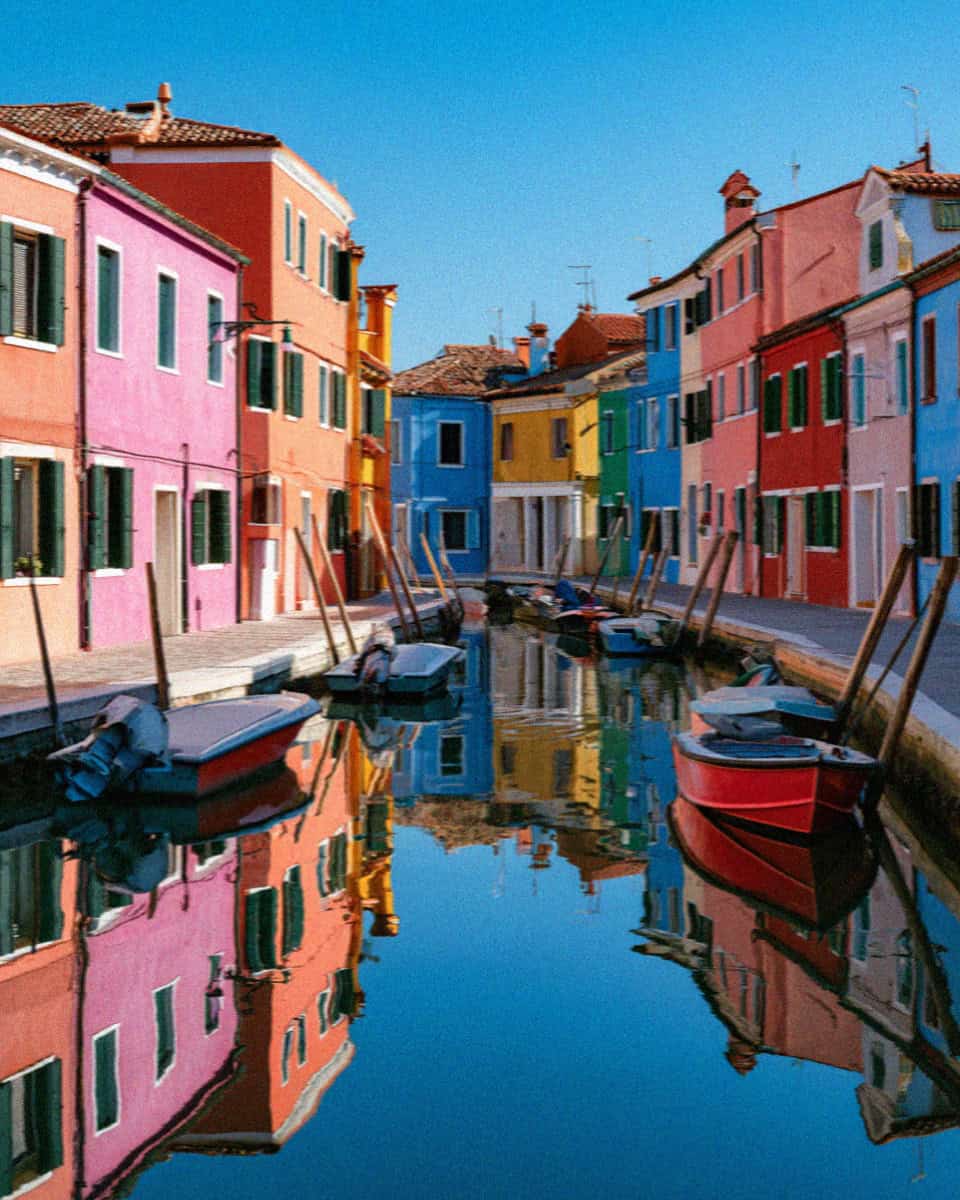
Do not leave without giving the lagoon a day. From Fondamente Nove, on the northern edge, the vaporetti fan out to the three islands that most people mean when they say “the islands”, and you can string them together in a single unhurried loop. Murano comes first, about ten minutes across the water, and it is the glass island: furnaces you can watch, showrooms you can browse without buying, a quiet canal or two once you step away from the landing stage. Give it an hour or two. Burano is further, about forty minutes on, and it is the one that photographs itself, every fisherman’s house painted a different bold colour so the men could find their way home through the fog.
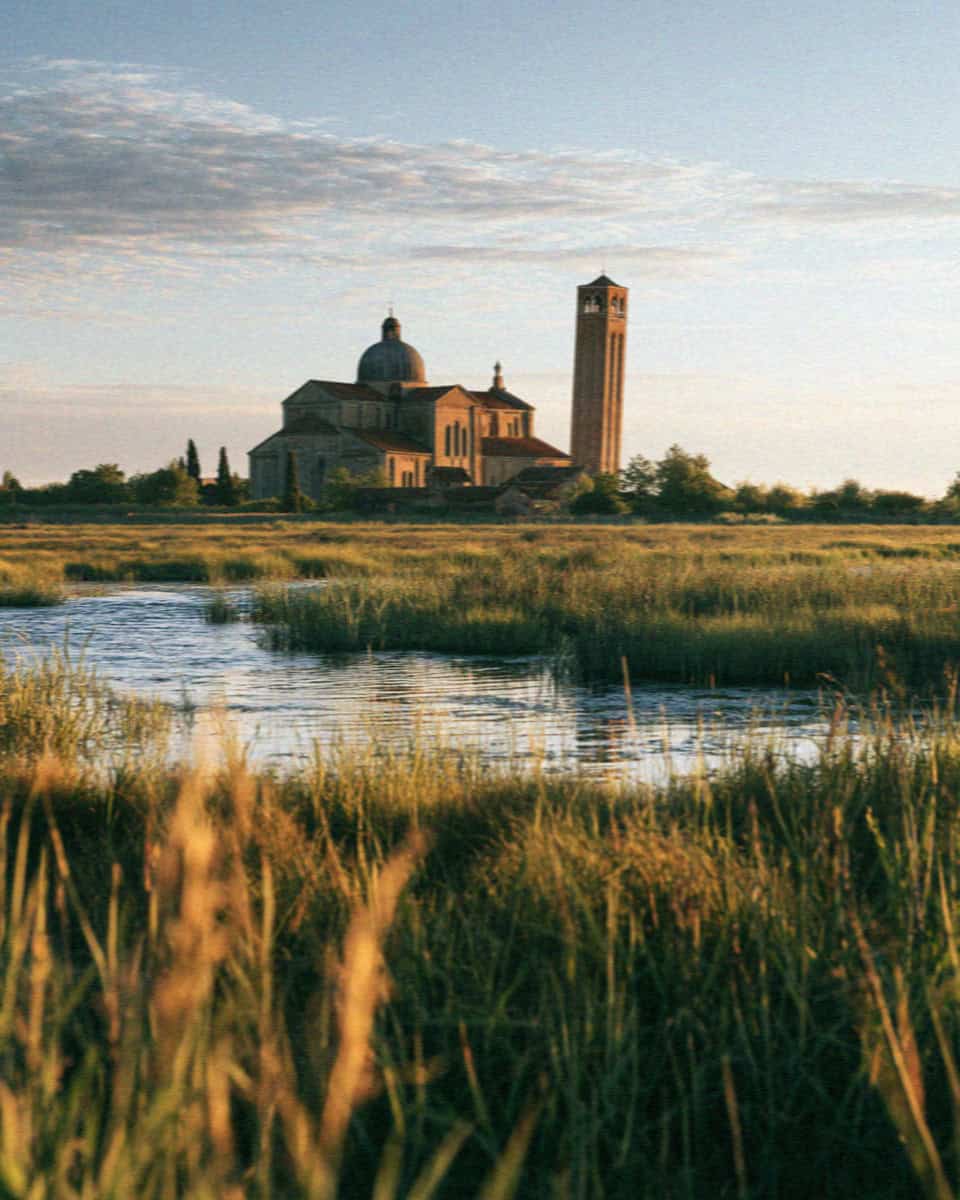
The lace is the old craft here, though much of what is sold is imported now, so buy with your eyes open. And Torcello, a short hop beyond Burano, is where Venice actually began, before the city moved to the Rialto. Almost no one lives there now. There is a golden Byzantine cathedral with a Last Judgement mosaic that stopped me cold, a bell tower to climb, and a deep, grassy quiet that feels like the far edge of the world. Buy the day ticket rather than single fares, wear something that copes with sun on open water, and go in the morning so you are not fighting the return crowds at dusk.
Plan Your Visit to Venice
A few things I booked and loved. These help support the blog, at no cost to you.
- Where I stayed: search Venice hotels
- Skip-the-line tickets for the main sights
- A Venice city pass
- Stay connected: get a travel eSIM
This section contains affiliate links. If you book through them I may earn a small commission, at no extra cost to you.
The Lido
The Lido is the long sandbar that holds the lagoon apart from the open Adriatic, and it is where Venetians go to swim. A short vaporetto from San Marco puts you on an island with actual roads, actual cars, and a proper beach, which after the density of the historic centre feels almost surreal. Some of the beach is private and pinned to the grand old hotels, but there are free public stretches too, and the flat, faded elegance of the place has its own charm. Come in late summer, and you may catch the tail of the Film Festival, when the whole island tilts towards cinema. Give it half a day if the weather is kind, or skip it entirely if it is not. It is a change of pace more than a sight, and that is exactly the point.
Padua
For the mainland, you leave from Santa Lucia and take a train, and the fast ones reach Padua in about twenty-five to forty minutes. I would go for one thing above all: Giotto’s frescoes in the Scrovegni Chapel, a small barrel-vaulted room painted top to bottom in the early fourteenth century, blue and gold and heartbreakingly human. You must book ahead, and you are given a timed slot of only fifteen minutes or so after a spell in a climate-controlled antechamber, so treat the booking as the fixed point of your day and build around it. The rest of Padua rewards the effort: the enormous Prato della Valle, one of the largest squares in Europe, ringed by a canal and statues; a serious old university; and cafes that feel lived-in rather than staged. Give it most of a day.
Vicenza
Vicenza is about forty-five minutes by train, and it is the city of Andrea Palladio, the architect whose ideas rippled out to English country houses and American plantations and, eventually, half the civic buildings you have ever seen. The centre is lined with his palazzi, and the reason to make the trip is the Teatro Olimpico, the oldest surviving indoor theatre of the modern era, with a permanent stage set of a receding street built in forced perspective so it looks far deeper than it is. It is a small marvel and worth the journey on its own. If architecture is your quiet passion, Vicenza will feel like a homecoming. If it is not, half a day covers the highlights comfortably.
Verona
Verona is a little further, about one hour ten by train, and it is the one mainland city I would happily spend a whole day on and still feel I had rushed. There is the Roman arena, a vast pink amphitheatre that still hosts opera under the summer sky, and there is Juliet, whose supposed balcony draws a good-natured crush of visitors to a courtyard she never stood in. Beyond the obvious, Verona is simply a lovely city to walk, with a river bending through it and piazzas that reward slow coffee. Because it deserves more than a paragraph, I have written it up on its own; see my complete guide to Verona before you go, and if you can, arrive early and stay for the evening light on the arena.
Treviso
Treviso is the one I send people to when they want the feeling of Venice without the weight of it. About half an hour by train, it is a small walled city threaded with canals and water wheels, wrapped in porticoes that keep you dry in the rain and shaded in the heat. This is tiramisu country, and you can eat well here for noticeably less than in the tourist heart of Venice. There is no single unmissable sight, which is precisely why it stays calm; you come to wander, to sit by the water, to watch a market. Give it half a day, or a full one if you like your travelling gentle.
The Brenta villas
Between Venice and Padua runs the Brenta Canal, and along it the Venetian nobility built their summer villas, grand Palladian houses set in gardens where the city came to escape the heat. You can see them by car, but the loveliest way is by boat, on one of the slow burchielli that drift along the canal and stop at a villa or two, passing through the old locks as you go. It is a whole day, and a leisurely one, so treat it as an experience rather than a checklist. The Villa Pisani at Stra, with its famous garden maze, is the showpiece. If you have already done the islands and want something different in tone, this is the trip I would reach for.
How to choose
If you have only one spare day, spend it in the lagoon, on the islands; nothing else out here says Venice quite so completely. If you have two, add Padua for the Giotto or Verona for the arena and the atmosphere, depending on whether you lean towards a single sublime room or a whole city to walk. Treviso is the choice for a slower day and a lighter crowd, the Lido for sun and swimming, Vicenza for anyone who loves buildings, and the Brenta for a gentle day on the water. Whatever you pick, do not try to stack two mainland cities into one day; the trains are quick but the joy is in lingering. For how these fit into a longer stay, see my Venice itinerary, and for the wider picture, my complete guide to Venice.
Frequently Asked Questions
Which day trip is best if I only have one?
The lagoon islands, without hesitation. A morning loop from Fondamente Nove through Murano, Burano and Torcello gives you glass, colour and the ancient heart of the lagoon in a single unhurried day, and it is the trip that feels most like an extension of Venice rather than a departure from it.
Do I need to book anything in advance?
For Padua’s Scrovegni Chapel, yes, and well ahead; the timed slots sell out and you cannot simply turn up. For the islands, the Lido and the mainland cities, no booking is needed, though a Brenta villa boat cruise should be reserved a day or two before. Buy a vaporetto day ticket for the islands rather than paying single fares.
How do I reach the mainland cities?
All the mainland trips leave from Santa Lucia station by train: Treviso in about half an hour, Padua in about twenty-five to forty minutes, Vicenza in about forty-five, and Verona in about one hour ten. Buy tickets at the machines or on your phone, and check whether your train is a fast or regional service, as the times vary.
Is the Lido worth it?
Only if the weather is good and you want a beach or a change of pace. It is a short vaporetto from San Marco and gives you sand, sea air and a flatter, quieter kind of elegance, but it is a mood rather than a monument. In poor weather I would spend the day elsewhere.