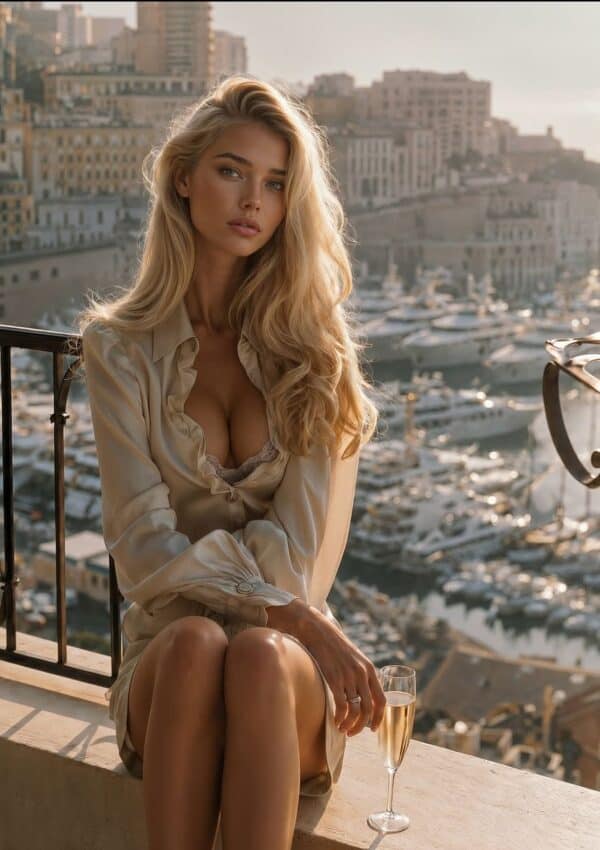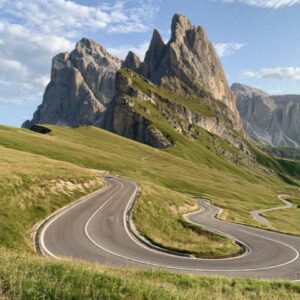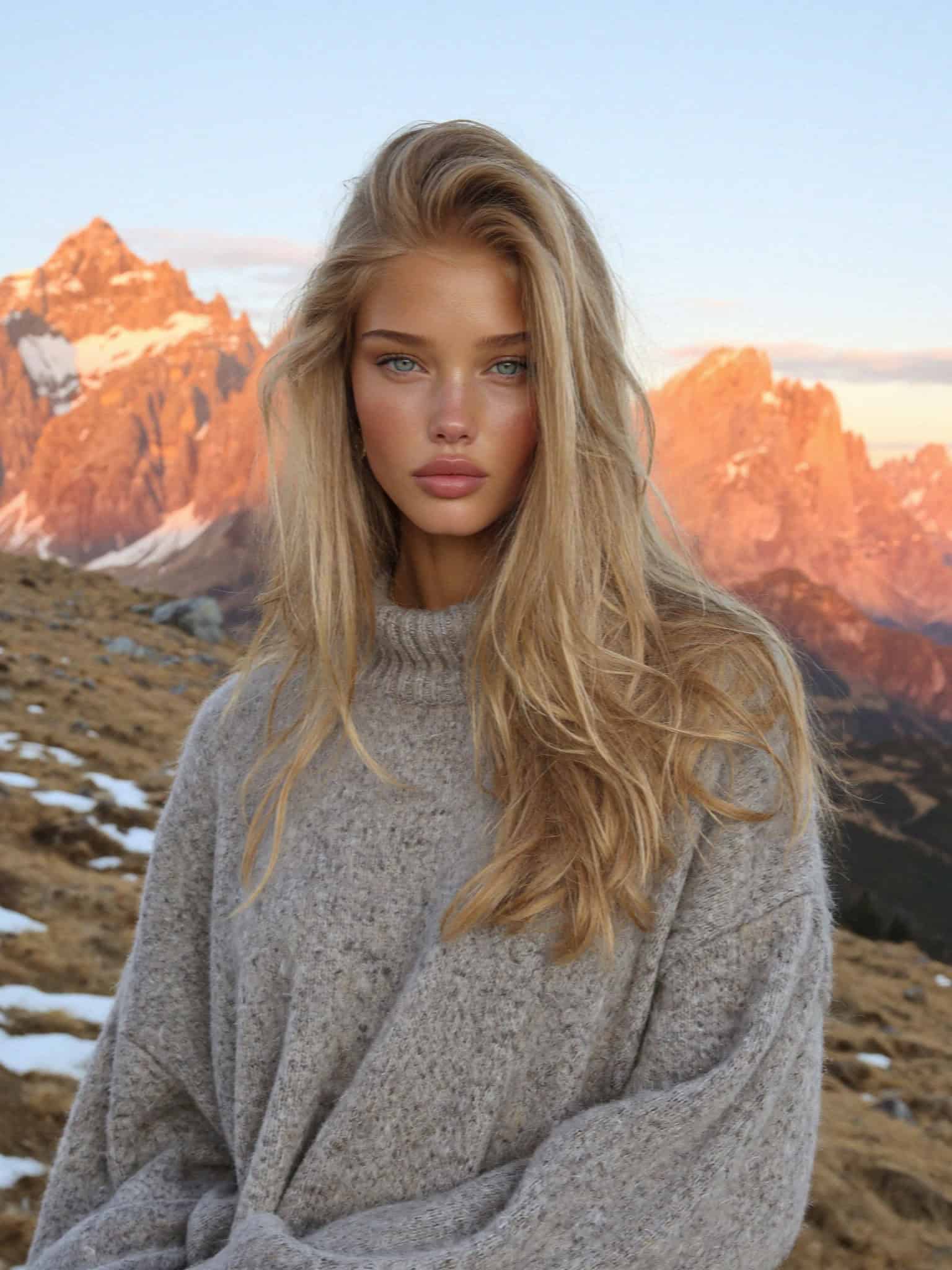
Nobody warns you that these mountains keep a secret hour. All day the Dolomites stand pale and severe, grey rock against a hard blue sky, handsome in the way a cathedral is handsome, which is to say a little forbidding. And then, in the last minutes before the light goes, the whole range turns to rose, and then to a deep burning coral, as though a fire had been lit somewhere inside the stone. The Ladin people who have lived beneath these peaks for longer than anyone can properly count have a word for it, enrosadira, the turning to rose. I watched it for the first time from a balcony in Ortisei with a coffee going cold in my hand, and I did not say anything for a long while, because there did not seem to be anything worth saying over it.
We had come up from the plains that afternoon, the four of us, trading the flat heat of the valleys for a cool that smelled of cut hay and woodsmoke and, faintly, of pine. The photographer spent the whole drive with his window down, watching the light, the way he does, saying nothing and meaning a great deal. By the time we reached the valley the meadows were already going blue in the shadow of the peaks, and the church spires had changed shape, and the road signs had grown a second language. You cross a great deal more than a few passes to get here. You cross into somewhere that is Italian and Austrian and older than either, and does not seem to feel the need to choose.
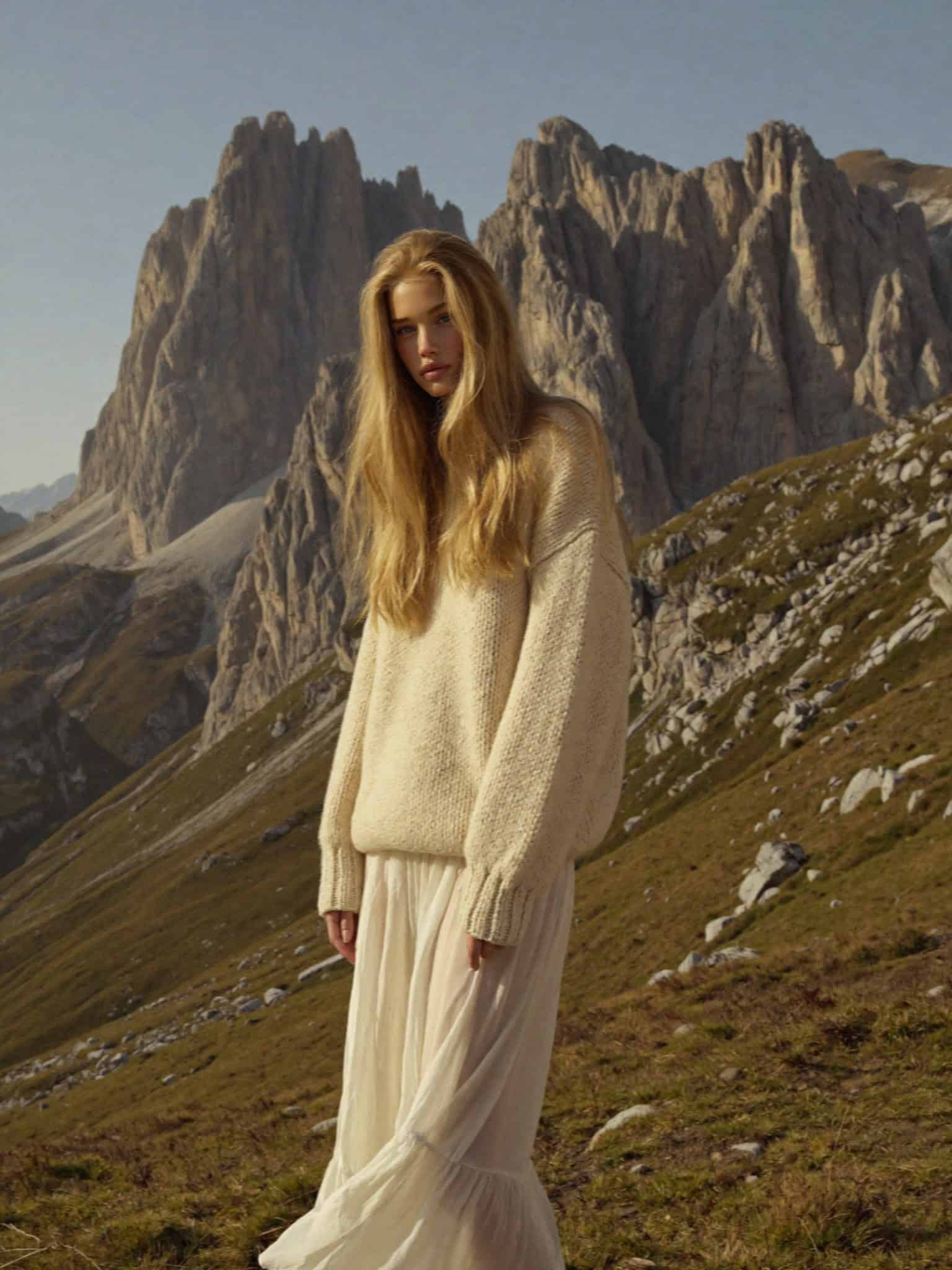
On the second morning we went up early, before the meadow filled, and I found myself alone for a few minutes on the terrace of a mountain hut while the coffee was made. I sat on a low wall of sun-warmed stone, and put my hand flat against it, and there it was, the whole of it, arriving without any warning at all, the way these things do. My father, the last summer, lifting me onto a warm stone wall above the sea. The heat of it coming up through my legs. His laugh, somewhere above my head. I was five, perhaps six. I do not remember a single word we said. I remember the warmth of the stone and the sound of him, and that is all of it, and it is everything.
He would have liked it here, I think. He loved places that had been held by the same hands across generations, kept rather than owned, and there is a great deal of that in these valleys. The hut behind me had been run by one family for the better part of a century, the girl bringing the coffee was the fourth of her name to do it, and none of them behaved as though this were remarkable. My father used to say that character was mostly a matter of refusing to perform. He would have approved of the whole silent, unshowy competence of the place, the way nobody up here is impressed by anything except the weather.
There were cows on the pasture below, their bells going in that loose, tuneless, unhurried way, and the sound carried me off again, this time to my grandmother’s kitchen near the Calanques, the windows thrown open to the cold morning even in the cold, the smell of coffee and goats and the sea. She has a saying she has said to me since I was small, that you do not inherit a house, you only borrow it from the women who come after you. I thought of it looking out over the Alpe di Siusi, that great rolling meadow scattered with old hay barns, each one silvered and leaning and somehow still standing, kept upright by someone’s grandmother, and hers before her, on and on back into a time none of us can see.
Not all of it is gentle, and I would not want to pretend otherwise. One grey afternoon we went up to the Lagazuoi and walked down through the tunnels the soldiers cut into the living rock in the last war but one, a torch in one hand and the cold coming off the stone into my palm. It is a strange thing to descend inside a mountain and know that men held this dark for whole winters, at this altitude, in that war nobody down in the pretty valleys seems to remember. Somewhere across the peaks there is a small white cross on a far summit, the kind this country puts up quietly and does not explain. I am not a person who speaks easily about what she believes, and I will not begin now. I lit no candle and said no words. I only came out of the mountain a good deal quieter than I went into it, and was glad of the plain daylight, and did not talk much on the way down.
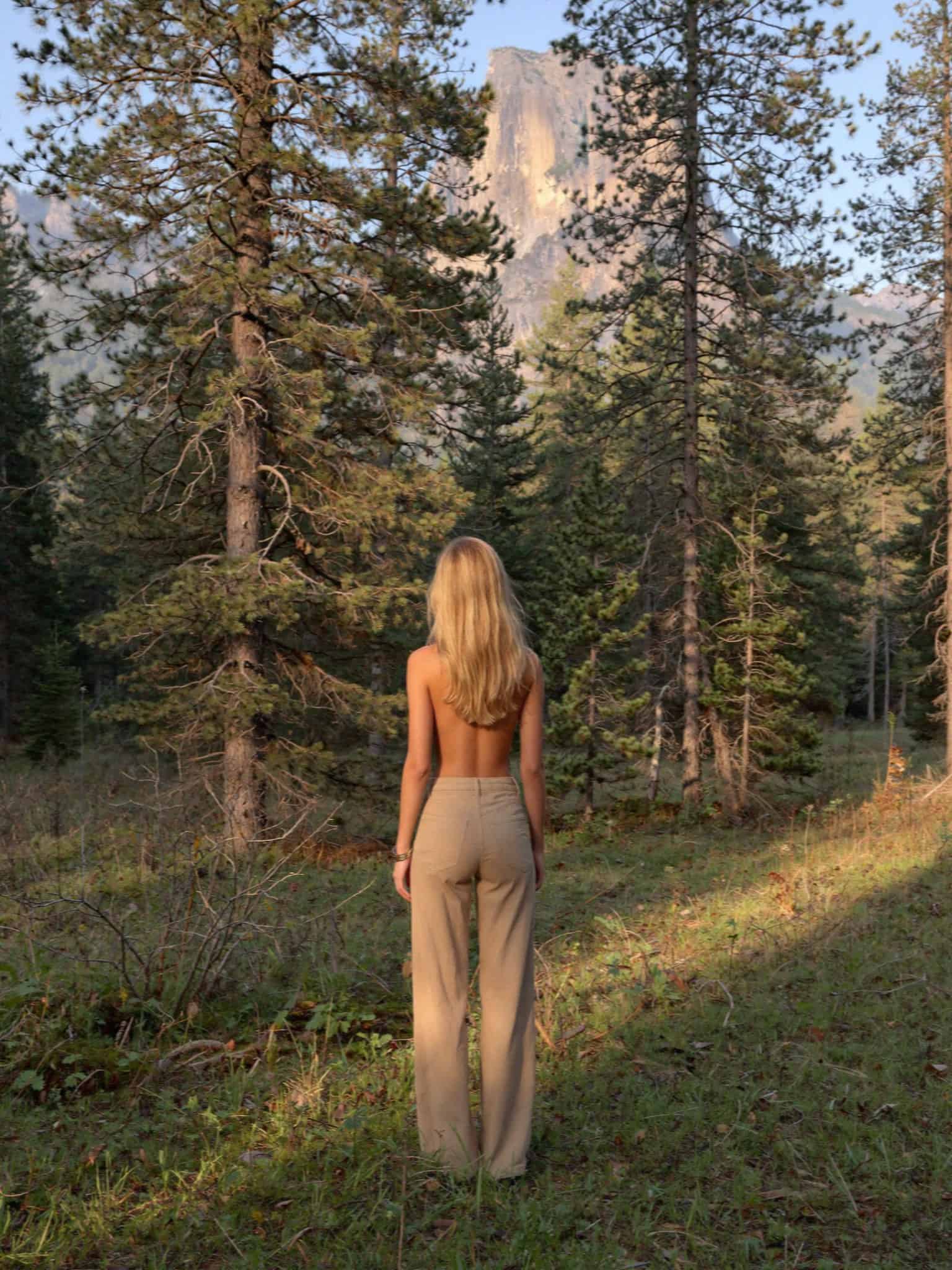
By the end of the week the first larches had begun to turn, a single tree here and there going gold among the green, the way one grey hair appears among the others and changes nothing and everything. I wrote almost nothing down, which is unlike me. I filled half a page one night, in the small hours, and left the rest of it white, and closed the notebook feeling that I had for once done the right thing. There are places you write about, carefully, afterwards, when you have got the shape of them. And there are places you simply let happen to you, and trust to keep, the way warmth keeps in a stone for a long while after the sun has gone off it.
On the last evening I went out onto the balcony again with a coffee I let go cold again, on purpose this time, and I waited. And at the appointed minute the rock caught its quiet fire, rose and then coral and then a red you would not believe if I painted it for you, and held it for the length of a held breath, and let it go. I thought of my father, and the warm wall above the sea, and how little of him I have and how much. Then the colour drained out of the peaks and left them grey and ordinary and enormous against the first stars, and I went inside, and I did not feel, for once, that I had missed anything by staying still.
Planning your own days among the pale mountains? My complete guide to the Dolomites has the where, the when and the how of it.