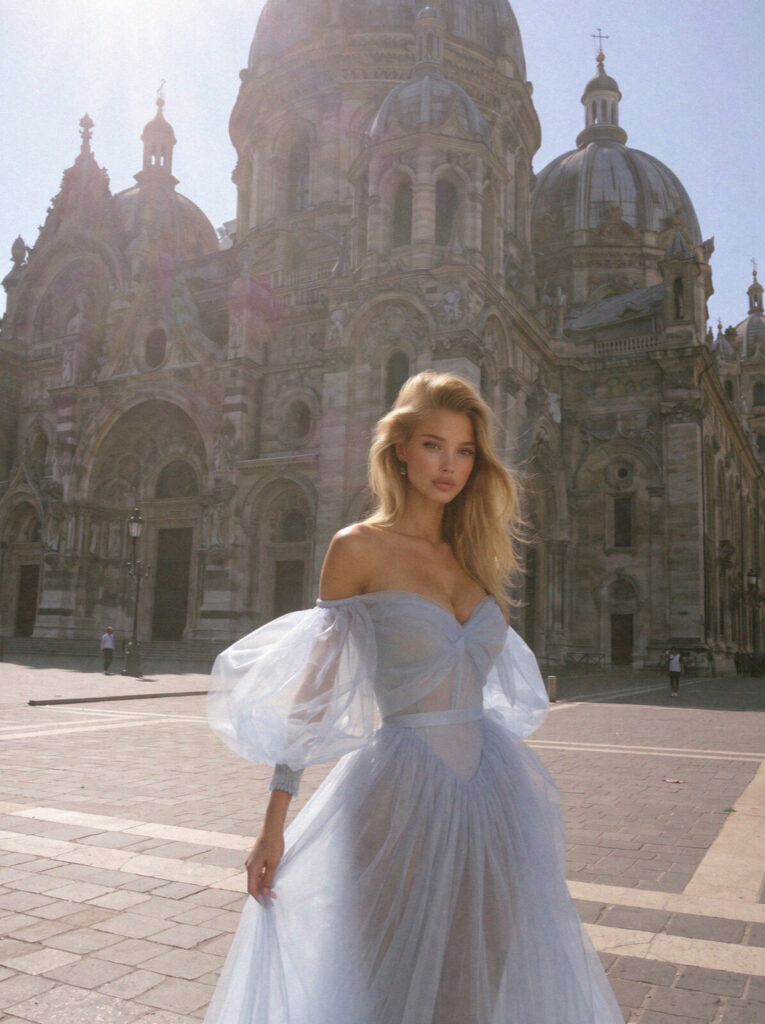
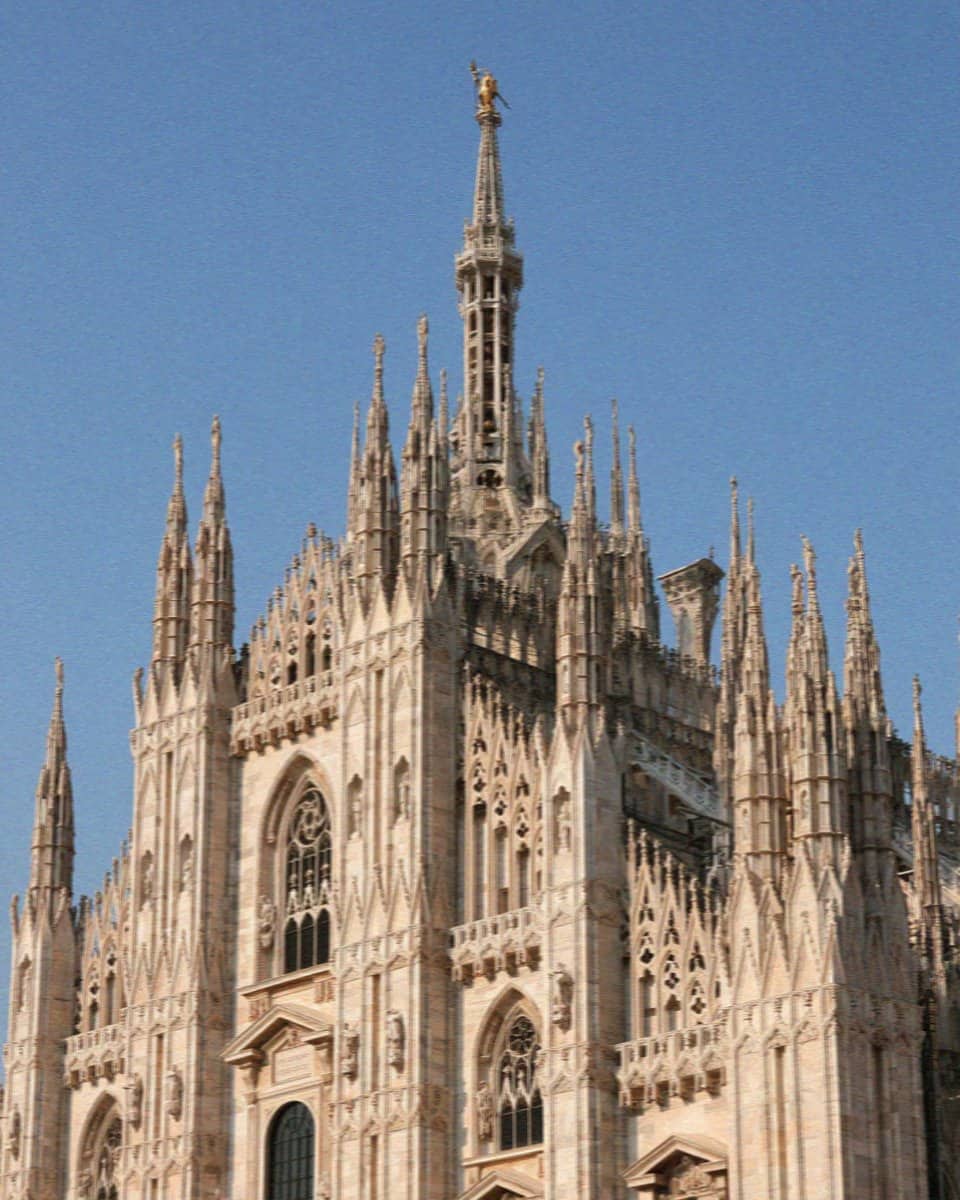
I have stood in a great many piazzas, and few undo me the way Piazza del Duomo still does. You come up out of the metro, or round the corner from the Galleria, and there it is: a mountain of pale pink-white marble bristling with more than three thousand statues and a forest of spires, glowing faintly gold in the late sun. I have seen it a dozen times and I have never once managed to walk straight past it.
What most people do not realise is that the best part is not the ground. It is the roof. You can walk among those spires, out on the marble terraces, with the Madonnina above you and the whole city below. This is the practical guide I wish someone had handed me the first time: the tickets, the stairs, the timing, the dress code, and the small decisions that separate a rushed visit from a glorious one.
A cathedral six centuries in the making
The Duomo is built almost entirely of Candoglia marble, quarried from a single valley near Lake Maggiore and floated down to Milan along the canals. Construction began in 1386, and the building was not truly finished until the twentieth century. Roughly six hundred years of stonemasons, each generation carving into the work of the last.
At the very top stands the Madonnina, the little gilded Madonna raised in 1774, watching over Milan. There was long an unwritten rule that no building in the city should rise higher than she does. When newer towers overtook her, replicas of the statue were placed on their summits so that, symbolically, she still crowns the skyline. I find that detail terribly moving, and I think of it every time I look up.
Plan Your Visit to Milan
A few things I booked and loved. These help support the blog, at no cost to you.
- Where I stayed: search Milan hotels
- Duomo, Last Supper and attraction tickets
- Stay connected: get a travel eSIM
This section contains affiliate links. If you book through them I may earn a small commission, at no extra cost to you.
The ticket types, explained plainly
The ticketing looks more complicated than it is. Everything is sold through the official site, and here is what the passes actually mean. Prices below are the adult rates at the time of writing in 2026, and I would always confirm on the official page before you pay.
- Duomo Pass, lift, around 26 euros. The full experience: cathedral interior, the rooftop terraces reached by lift, and the Duomo Museum with the San Gottardo church. This is the one most visitors want.
- Duomo Pass, stairs, around 22 euros. Exactly the same access, but you climb to the roof on foot rather than taking the lift. Four euros saved for the price of your calves.
- Terraces only, lift, around 18 euros. Rooftop access alone, by lift, with no cathedral interior. Around 16 euros if you take the stairs.
- Cathedral plus Museum, around 10 euros. The nave and the museum, no roof.
- Culture Pass, around 15 euros. Cathedral, archaeological area beneath the piazza, the museum and more, but no terraces.
Which would I buy? The Duomo Pass with lift, at around 26 euros. Here is my reasoning, and it is a small piece of insider sense: you ride the lift up to spare your legs, and then you descend on foot. The downward staircase threads you back through the flying buttresses and the carved stone at close range, so you end up seeing the ascent-by-stairs scenery anyway, without the puffing. You get both, for the price of one.
Stairs or lift: the decision that matters most
This is the choice people agonise over, so let me be clear. The staircase to the terraces runs to roughly 250 steps. There is no lift midway and no seating to speak of, and it is a proper spiral climb in a stone tower. It is entirely doable for anyone reasonably fit, and there is a certain pilgrim’s satisfaction in it, but it is a climb.
The lift does not deliver you to the very top. It takes you most of the way, and you still walk perhaps 80 steps to reach the highest terrace. Everyone, lift ticket or not, comes down the stairs at the end. So take the stairs if you are fit, unhurried, and rather like earning your view. Take the lift if you are travelling with children, with anyone who tires easily, in the heat of summer, or if you simply would rather spend your energy up top wandering the spires.
Opening hours and the best time to go
The cathedral opens daily at around 8am, with the terraces from 9am, and last admission is in the early evening, usually around 6pm, with the doors closing at 7pm. The museum keeps shorter hours and, importantly, closes on Wednesdays, so if a museum-inclusive pass matters to you, avoid Wednesday.
My honest advice on timing: go first thing, at opening, or in the last ninety minutes before close. Early, the piazza is nearly empty, the marble is cool, and the queues have not formed. Late, the light turns the whole roof amber and gold, and if you time it near sunset the photographs are unrepeatable. The middle of the day brings the crowds and the flat, unflattering overhead light.
The dress code, and it is enforced
The Duomo is a working cathedral, and the dress code is real, checked at security, and applied without much sympathy. Shoulders and knees must be covered. That rules out vest tops, strappy sundresses, shorts and short skirts, crop tops and bare-backed shirts. Hats come off inside. I have watched perfectly nice tourists turned away at the door in high summer, so if you are travelling light in the heat, tuck a scarf or a light shirt into your bag.
What you actually see, inside and up top
Inside, give the nave a slow walk. It is vast and dim and quiet, with some of the tallest Gothic vaults in Italy, jewel-coloured stained glass, and the extraordinary statue of Saint Bartholomew carrying his own flayed skin like a cloak.
But the roof is the revelation. Up on the terraces you walk on the cathedral, out among the pinnacles and the flying buttresses, close enough to touch the lacework of carved stone. On a clear day the Alps sit on the horizon beyond the rooftops of Milan, and the Madonnina glows gold above you. It is one of the few great monuments in Europe that lets you climb into its architecture rather than merely look at it. For where else to point your camera once you are up there, my best photo spots in Milan guide has the corners I return to.
How to book and skip the queue
Book online, in advance, through the official site. Your timed ticket reserves your admission slot, but it does not bypass the security screening everyone passes through, so even with a ticket you may briefly queue at the scanner. The genuine time-saver is simply buying ahead so you are not standing in the ticket-office line, which on a busy day can swallow an hour.
Accessibility notes
The cathedral interior is step-free and accessible. The rooftop is more complicated: the lift reaches a high level, but the final stretch to the very top terrace involves steps and uneven marble, so the highest point is not fully step-free. If mobility is a concern, the lift ticket gets you a genuine and rewarding portion of the roof experience, and the staff at the entrance are the right people to ask about the current accessible route on the day.
The Duomo is the anchor of any trip here. If you are still shaping your days, my Milan itinerary sets it in sequence, and it sits at the top of my best things to do in Milan.
Read also: Victoria’s complete guide to Milan, plus my best things to do in Milan and best photo spots in Milan.
Frequently Asked Questions
Is the Duomo rooftop worth it?
Wholeheartedly, yes. It is the single best thing to do at the cathedral. You walk out among the spires and flying buttresses with the whole city below and the Madonnina above, and few monuments in Europe let you climb into their architecture like this. Go at opening or near sunset for the best of it.
Stairs or lift to the top?
Stairs if you are fit and unhurried: it is roughly 250 steps and worth the climb. Lift if you have children, tire easily, or are visiting in summer heat. Either way you finish by walking down, and lift-ticket holders still climb around 80 steps to the highest terrace.
How much are Duomo tickets?
At the time of writing in 2026, the full Duomo Pass is around 26 euros with the lift and around 22 euros by stairs, both including the cathedral, rooftop and museum. Terraces-only tickets run about 16 to 18 euros. Always confirm current prices on the official site.