This Bologna itinerary is the one I actually use when friends land at Bologna Centrale and ask me how to spend a couple of days without exhausting themselves. The good news is that the centre is small, walkable, and roofed by porticoes, so you rarely need a plan more complicated than a free morning and a healthy appetite. Two full days cover the city properly. A third, if you can spare it, is best given away entirely, out to the Food Valley by regional train. Here is how I would spend each one, honestly, with room to sit down.
Day One: The Civic Heart
Start in Piazza Maggiore before the day warms up. This is the civic heart of the city, and I like it early when the light is low and the students haven’t yet spilled onto the steps. The Basilica di San Petronio dominates one side, its brick facade famously unfinished, the marble simply stopping partway up, an ambition abandoned around 1400 and never taken up again. Entry is free, roughly 10:00 to 18:00, and inside there is one thing you must not miss: the Cassini meridian line laid into the floor in 1655, a brass strip running 66.8 metres, one of the largest sundials in the world. A shaft of light falls through a hole in the vault and crosses it at noon. Stand on it and you are standing on an astronomical instrument. The Cappella dei Re Magi, with its fresco of the Last Judgement, costs €5 and is worth it.
Step back out to find Giambologna’s Neptune, the great bronze fountain from the 1560s. Everyone photographs it, but do walk around to the back left corner and look up at the base of the figure from that specific angle. The optical illusion locals call “Neptune’s finger” is a small, cheeky reward for the detour. From here it is a five minute stroll to Piazza di Porta Ravegnana and the Two Towers. The towers are the one disappointment here: both are closed in 2026. The Asinelli has been shut since late 2023 with no reopening date, and the leaning Garisenda is under a long stabilisation project, wrapped and cordoned. You cannot climb them. You can, and should, stand beneath them and crane your neck, because seen from directly below they are genuinely dizzying. If you want height, the climbable Torre dell’Orologio on Piazza Maggiore gives you a rooftop view over the terracotta for €8.
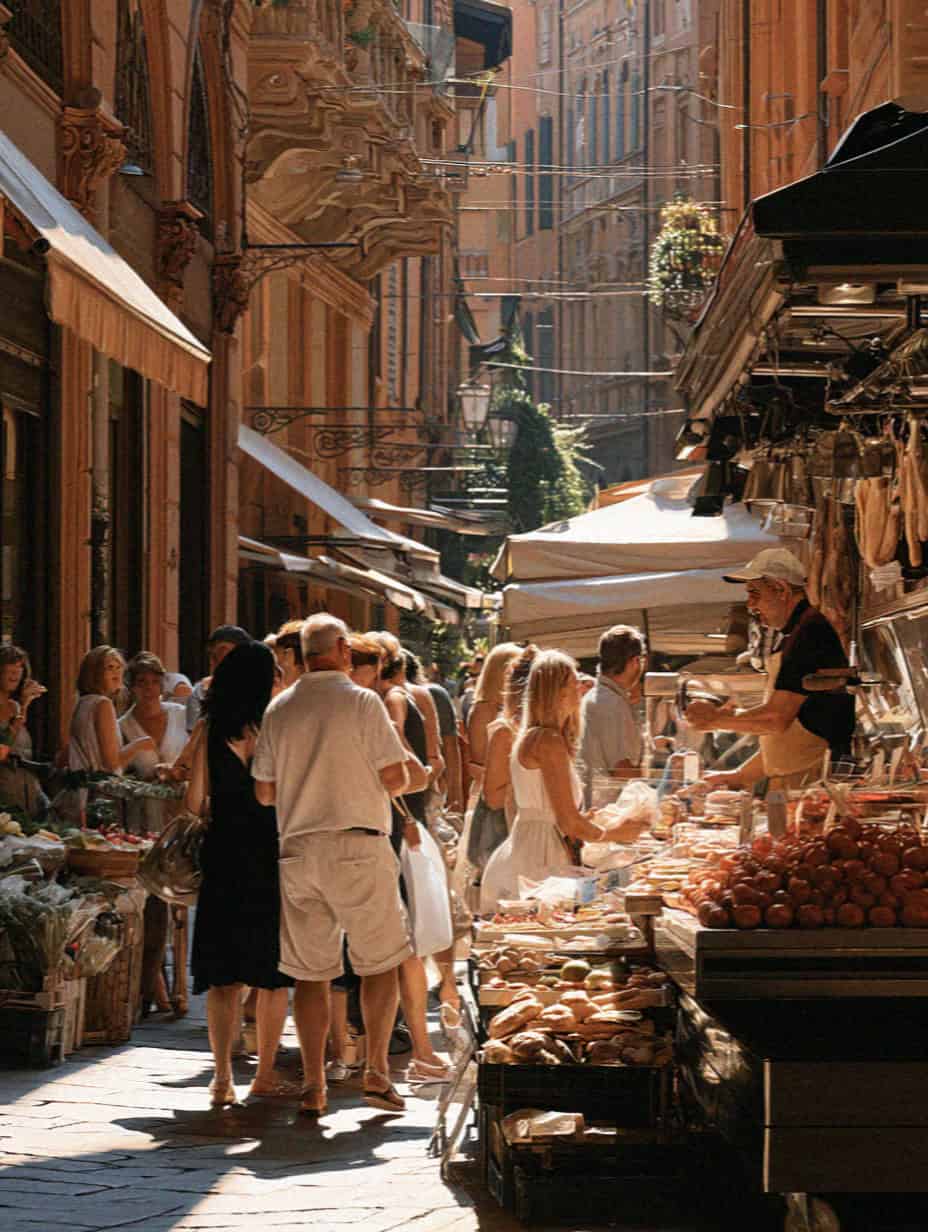
By now it is lunchtime, which means the Quadrilatero, the tangle of medieval market lanes just southeast of the square. Via Pescherie Vecchie, Via Drapperie, Via Caprarie: this is where Bologna feeds itself. Duck into Tamburini on Via Caprarie for a plate at the tavola calda, or Paolo Atti e Figli on Via Drapperie, a pasta bakery going since 1880, for something to carry. The stalls are busiest in the morning and turn into an aperitivo crush by evening. Afterwards, walk five minutes to the Archiginnasio on Piazza Galvani, the old seat of the university. The combined ticket is €10 and buys you the seventeenth century Teatro Anatomico, a carved fir lecture theatre watched over by two skinless wooden figures, plus a courtyard papered floor to ceiling with six thousand student coats of arms. The courtyard itself is free if you are short on time.
End the day with aperitivo. A spritz runs about €6 to €7, and the best scenes are back in the Quadrilatero along Via Pescherie Vecchie, or west on bohemian Via del Pratello. If you want something older than the concept of the cocktail, Osteria del Sole on Vicolo Ranocchi has poured wine since 1465. It serves wine only, so you bring your own food to the communal tables and pay cash. It is one of my favourite rooms in Italy.
Plan Your Visit to Bologna
A few things I booked and loved. These help support the blog, at no cost to you.
- Where I stayed: search Bologna hotels
- Tickets and things to do in Bologna
- Stay connected: get a travel eSIM
This section contains affiliate links. If you book through them I may earn a small commission, at no extra cost to you.
Day Two: Churches, Canals and the University
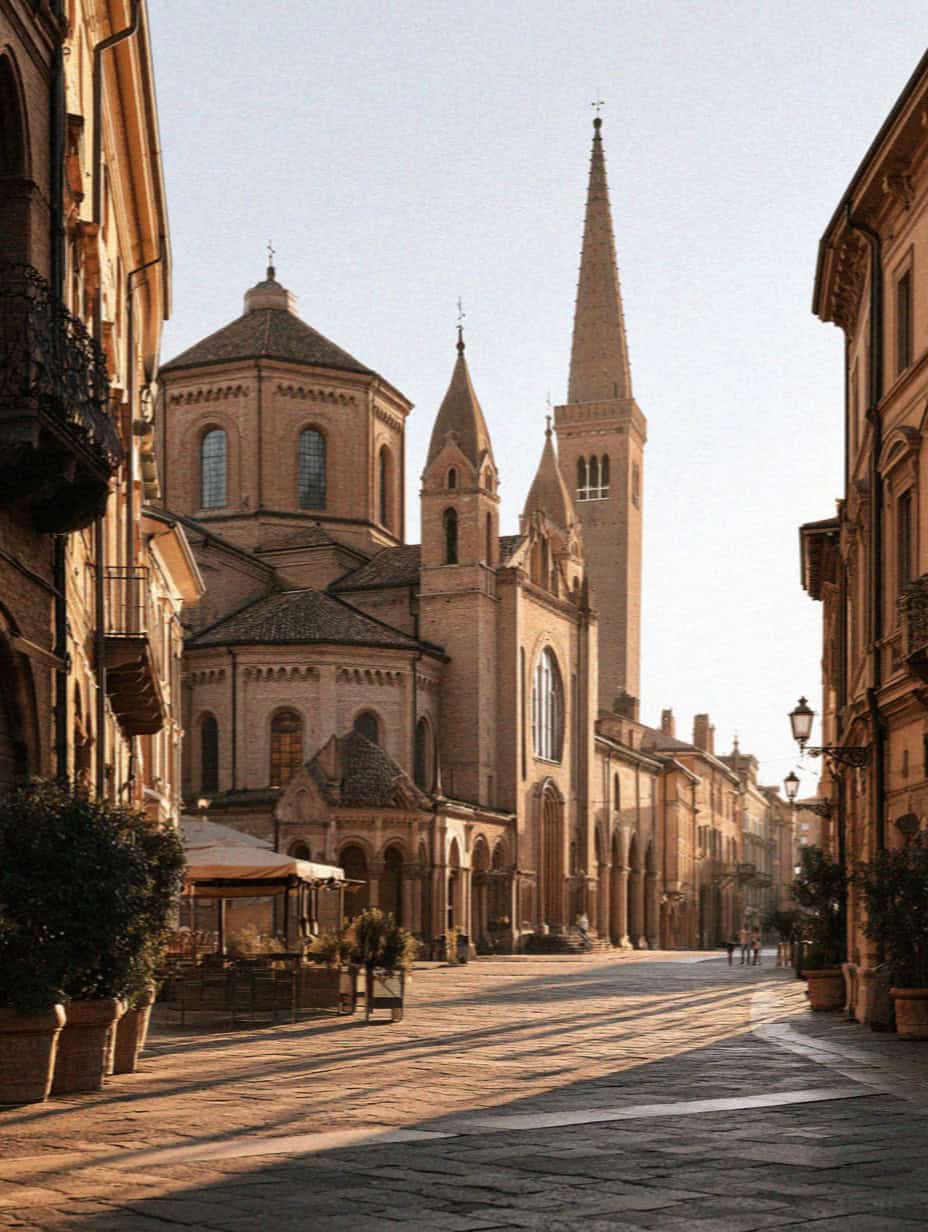
Begin the second morning on Piazza Santo Stefano, a triangular, sloping square that is arguably the prettiest in the city. The Basilica di Santo Stefano here is not one church but a knot of them, the Sette Chiese, the Seven Churches, interlinked around the ancient Cortile di Pilato. Entry is free. You wander from chapel to courtyard to crypt slightly unsure where one building ends and the next begins, which is exactly the pleasure of it. Give it a proper hour rather than a rushed fifteen minutes.
From there walk to the Basilica di San Domenico, also free. The reason to come is the Arca di San Domenico, the saint’s tomb, a marble ark carved across three centuries by Nicola Pisano, Niccolò dell’Arca, and a very young Michelangelo. He was around nineteen when he added three small figures in the 1490s: a kneeling angel holding a candlestick, San Petronio, and San Procolo. They are easy to walk past and remarkable once you know they are there. A restoration has recently been under way, so depending on when you visit, some of it may still be under wraps.
Spend the afternoon in the university quarter around Via Zamboni, which has kept students on these streets since the 1080s. It is younger, scruffier, livelier, and full of good cheap food. On the way, find the Finestrella di Via Piella, a small shuttered window at Via Piella 16 that opens onto the Canale delle Moline. Push it open and there is water, and painted houses leaning over it, Bologna’s own little Venice, hidden in plain sight. For art, choose one museum rather than two: the Pinacoteca Nazionale on Via Belle Arti for Raphael’s Ecstasy of St Cecilia and the great Bolognese painters, roughly €6 to €10, or MAMbo on Via Don Minzoni for modern work and the Museo Morandi, €6 and closed Mondays. Pick by mood.
For dinner, this is the night for tortellini in brodo, the true Bolognese Sunday dish, little parcels of pork, mortadella and parmigiano loosed into a clear capon broth. Trattoria Anna Maria on Via delle Belle Arti in the university quarter has done them since the 1980s and is my reliable pick. If you want something more refined, Ristorante Diana on Via dell’Indipendenza has served them since 1909 alongside a trolley of boiled meats. Book either one ahead.
Day Three: A Food Valley Day Trip
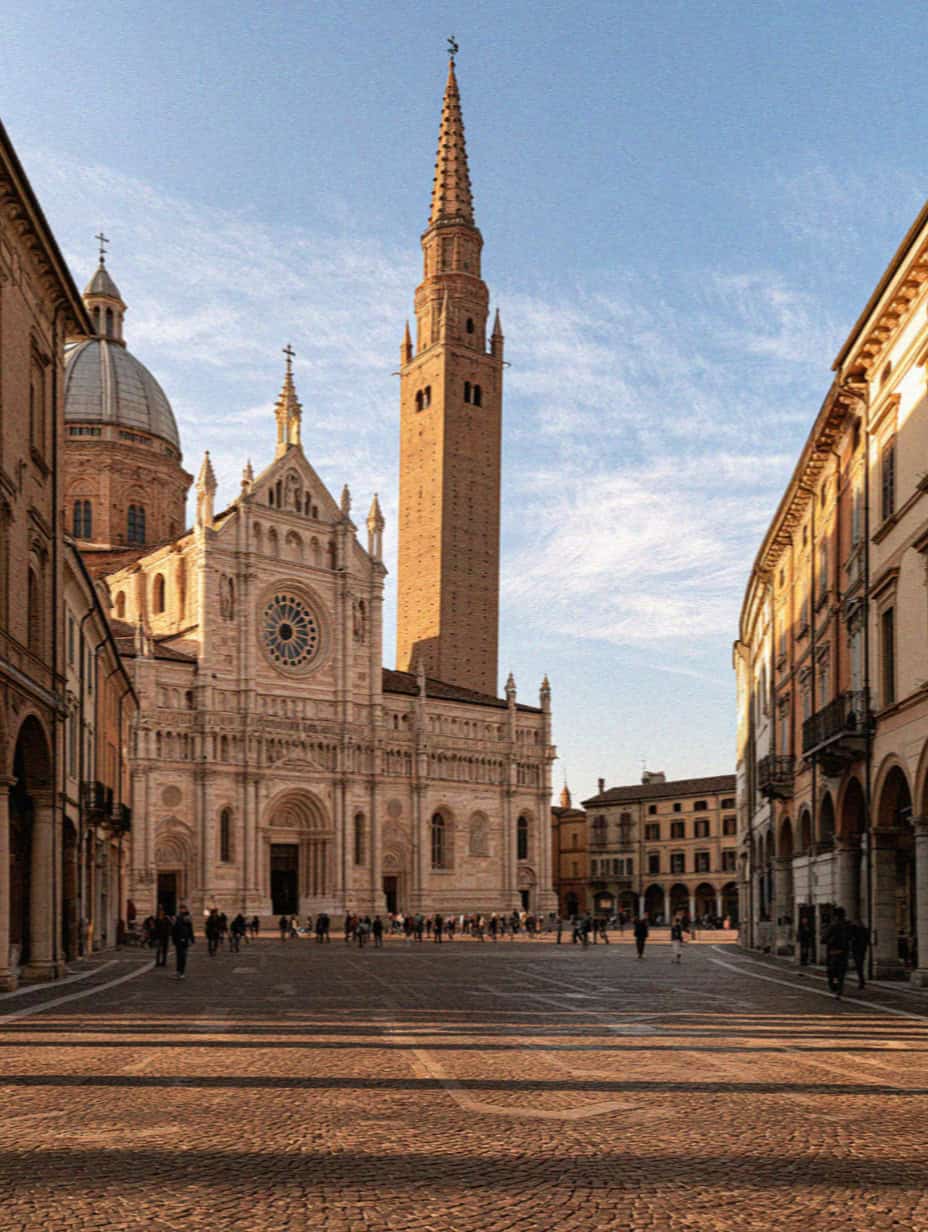
If you have a third day, do not spend it hunting for more of Bologna. Take a train out of it. The Emilia food valley is on your doorstep and regional trains from Bologna Centrale make it absurdly easy. My default is Modena, only about 20 to 25 minutes away, from around €5. Its Piazza Grande and the leaning Ghirlandina tower beside the Duomo are a UNESCO site, the Mercato Albinelli is a glorious covered food hall, and this is the home of traditional balsamic, aged for years in an acetaia. Book a tasting in advance; it is nothing like the supermarket bottle. Car lovers can add the Museo Enzo Ferrari in town, and the world’s most impossible dinner reservation, Osteria Francescana, is here too, though Franceschetta 58 or the market are far kinder to a normal traveller.
The alternative is Parma, about 50 to 60 minutes out, the land of Parmigiano Reggiano and Prosciutto di Parma. Come for a producer food tour, and stay for the Duomo with its dizzying Correggio dome, the octagonal Baptistery, and the wooden Teatro Farnese. Whichever you pick, the trick is the same: base yourself in Bologna the whole trip and travel out light, on cheap advance train fares, back in time for one more dinner under the porticoes.
Practical Tips and How I’d Pace It

A few honest things that make this itinerary work. The centre is genuinely tiny and very walkable, most sights only a few minutes from the last and almost all of it under portico, so rain barely touches you. There is no metro and you will not need one. Do not drive into the historic centre; it is a camera enforced ZTL and the fines start around €80. From the airport, the Marconi Express monorail reaches Bologna Centrale in about seven minutes for €12.80 one way.
Book the key restaurants. The best trattorias, places like Trattoria di Via Serra or All’Osteria Bottega, fill up days and sometimes weeks ahead, so reserve before you arrive rather than hoping. For lunch you can be more spontaneous: Sfoglia Rina on Via Castiglione does fresh pasta around €12 with no booking. On the evenings note, I always leave one night loose for a slow aperitivo and a wander, because Bologna after dark under the arches is the memory people carry home.
As for when to go, spring from April to June and early autumn from September to October are the sweet spots, mild and golden. Summer is hot and humid, and crucially, around mid August many restaurants and shops close for one to three weeks over Ferragosto and the city empties, so avoid it if you can. Winter is cold and foggy but it is the true season for tortellini in brodo, and term time from October to May gives the city its student buzz.
Frequently Asked Questions
Is two days enough for Bologna?
Yes, two full days comfortably cover the historic centre, from Piazza Maggiore and the Quadrilatero to Santo Stefano, San Domenico and the university quarter. The city is compact enough that you can see the essentials without rushing. A third day is best used not for more of Bologna but for a food valley day trip to Modena or Parma.
Can you still climb the Two Towers in Bologna?
No. Both towers are closed in 2026. The Asinelli has been shut since October 2023 with no reopening date, and the leaning Garisenda is under a multi year stabilisation project. You can view and photograph them from Piazza di Porta Ravegnana, but you cannot go up. For a rooftop view instead, climb the Torre dell’Orologio on Piazza Maggiore for €8.
Do I need to book restaurants in Bologna in advance?
For dinner at the well known trattorias, yes. The most loved spots book out days or even weeks ahead, so reserve before you travel. Lunch is easier and several excellent places take no bookings at all, so you can afford to be spontaneous in the middle of the day and disciplined about your evening tables.
This two day plan is one route through a much larger city, and it sits inside my complete guide to Bologna, which pulls every thread together. If you want to reshape these days around your own appetite, dip into my roundup of the best things to do in Bologna, sort out your base with my guide to where to stay in Bologna, and plan that third day properly with my guide to the best day trips from Bologna.