Working out where to stay in Bologna is easier than it looks, because the city is small, walkable, and wrapped almost end to end in porticoes that make the day’s weather somebody else’s concern. The historic centre is compact enough that most of what you have come to see is a short, flat walk from your door, so your choice of neighbourhood is really a choice of mood: civic and lively, young and noisy, elegant and quiet, or practical and close to the trains. Below I have laid out the areas I actually recommend, who each one suits and what you give up, followed by the specific hotels I would book across three budgets. One thing first, because it saves money and stress: the centre is a ZTL, a camera-enforced restricted traffic zone with fines that start around eighty euros, so do not drive in. Take the train, or park outside and walk.
Centro Storico, around Piazza Maggiore
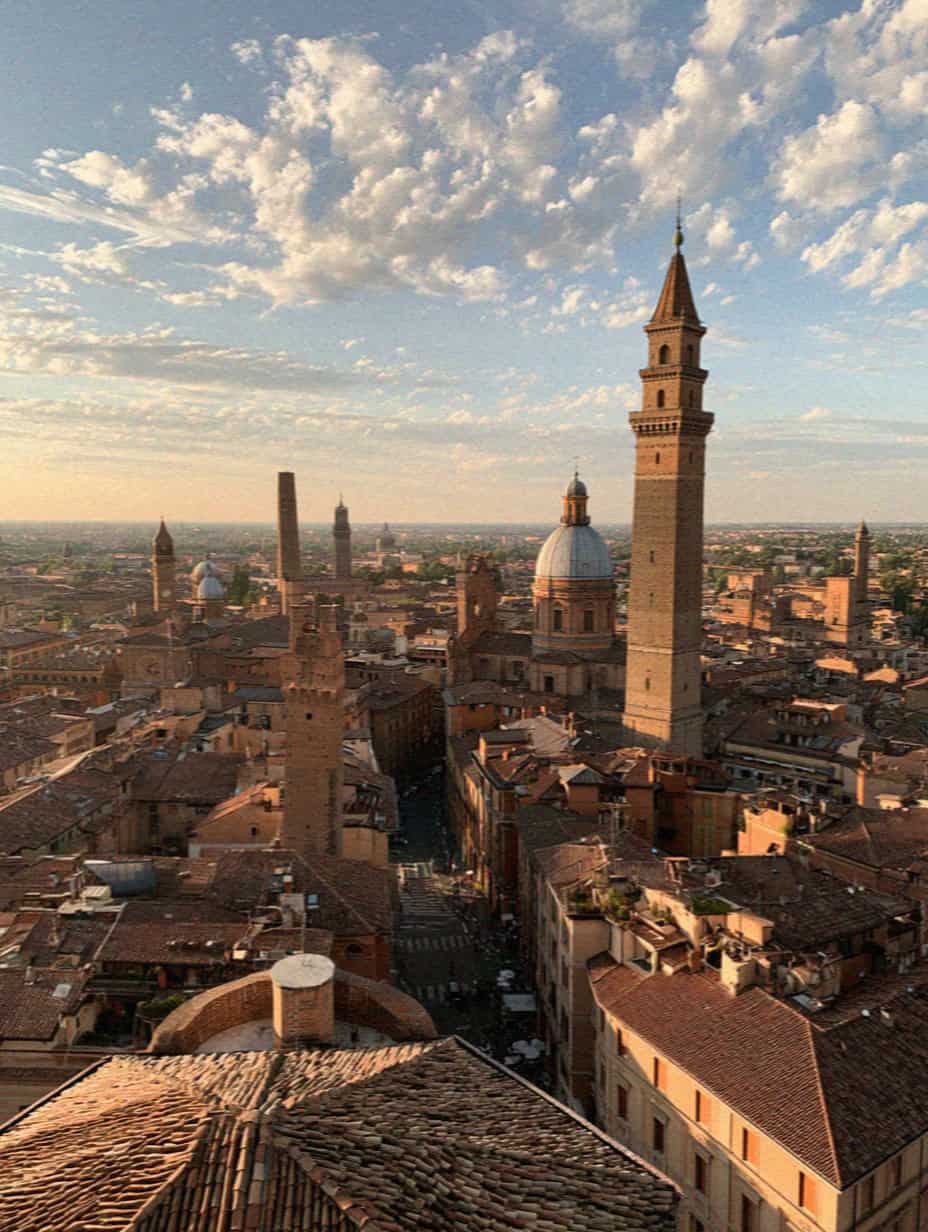
If it is your first time in Bologna, stay here. The Centro Storico around Piazza Maggiore is the civic heart, and everything radiates from it: San Petronio and its unfinished brick facade, Neptune’s fountain, the medieval market lanes of the Quadrilatero, the Archiginnasio, the Two Towers a few minutes east. You can climb the Torre dell’Orologio, the Clock Tower on the piazza, for ten euros and look out over that sea of terracotta rooftops, which is the sort of thing you only bother with when your bed is a short walk away. Staying central means you can drop your bags, wander out for an aperitivo at six, and be back without a bus or a taxi.
The trade-offs are noise and, on some streets, ongoing tram construction that comes with hoardings and the occasional early rumble. Rooms here also cost the most. It suits first-timers, short stays, and anyone who wants to walk everywhere and doesn’t mind a bit of city sound with the windows open.
Plan Your Visit to Bologna
A few things I booked and loved. These help support the blog, at no cost to you.
- Where I stayed: search Bologna hotels
- Tickets and things to do in Bologna
- Stay connected: get a travel eSIM
This section contains affiliate links. If you book through them I may earn a small commission, at no extra cost to you.
The University Quarter and Via del Pratello
Bologna has been a university town for close to a thousand years, and the quarter around Via Zamboni still runs on student energy. This is where you find the cheap, lively end of the city: Osteria dell’Orsa with its queues and its cheap plates, Trattoria Anna Maria doing tortellini in brodo the old way, and the bohemian bar strip of Via del Pratello, which is one of the best places in town for a slow, unpolished evening. If you want to be out late, eat well for little, and feel the city’s pulse, base yourself here.
The honest downside is noise. This is nightlife territory, so a room over a busy street can mean voices and glasses until the small hours, especially in term time when the buzz is at its peak. It suits younger travellers, budget stays, and night owls; light sleepers should look at Santo Stefano instead.
Santo Stefano
Santo Stefano is my quiet favourite. It is built around the triangular Piazza Santo Stefano and the Seven Churches complex, one of the loveliest corners of the city, and the streets here feel elegant and residential without ever being far from the action. You are still an easy walk from Piazza Maggiore, but you swap the crowds for calm, antique shops, and that soft golden light on the porticoes in the late afternoon.
The trade-off is price: this quiet elegance costs a little more than the busier streets, and there are fewer budget beds. It suits couples, returning visitors, and anyone who wants pretty and peaceful over central and loud, while staying within a ten-minute stroll of everything.
Near Bologna Centrale and Bolognina
Bologna Centrale is one of Italy’s great rail hubs, with fast trains reaching Florence in about thirty-seven minutes, Milan in just over an hour, and Modena or Ferrara in twenty to thirty. If your trip is built around day trips into the Food Valley, staying near the station is genuinely practical, and the neighbourhood of Bolognina just beyond it hides one of the city’s best tables, Trattoria di Via Serra. The Marconi Express monorail also links the airport to Centrale in about seven minutes, so arrivals are painless.
What you give up is atmosphere. This is a working part of town rather than a beautiful one, and you will walk fifteen minutes or hop a bus to reach the historic core. It suits day-trippers, early departures, and value hunters who would rather spend on train tickets than on a central address.
Saragozza, Near San Luca
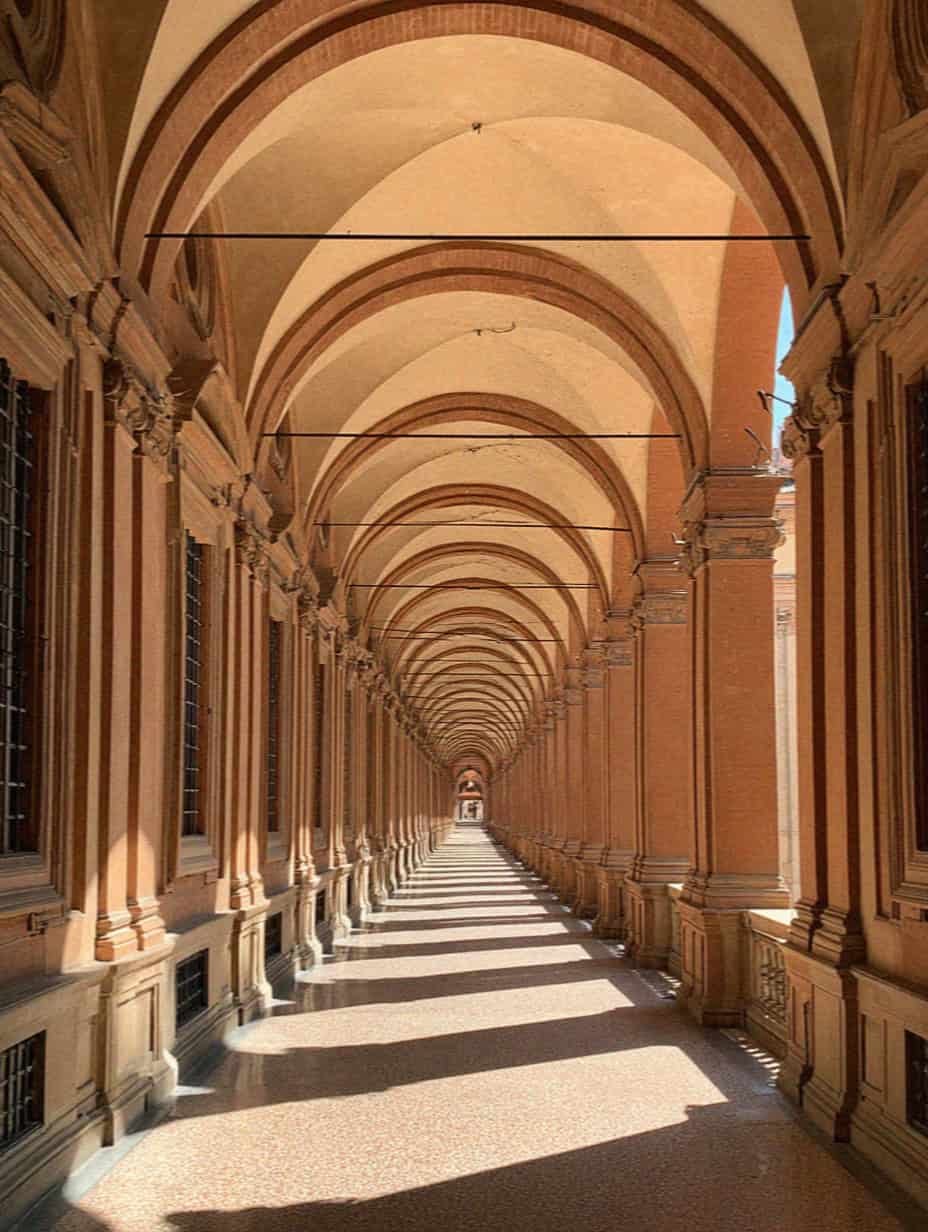
Out towards Porta Saragozza the city softens into a leafy, residential district, and this is where the world’s longest portico begins its climb: 666 arches, close to four kilometres of covered walkway, rising to the Santuario della Madonna di San Luca on its hill. Staying in Saragozza puts that walk on your doorstep, and the hilltop sanctuary, free to enter, gives you the widest panorama in Bologna, best of all at sunset. It is quiet, green, and a little removed from the tourist churn.
The trade-off is distance: you are a longer walk or a short bus ride from Piazza Maggiore, so it works best if you value calm mornings over stepping straight into the centre. It suits walkers, repeat visitors, and anyone who wants a residential base with the San Luca portico as their daily backdrop.
The Hotels I’d Book
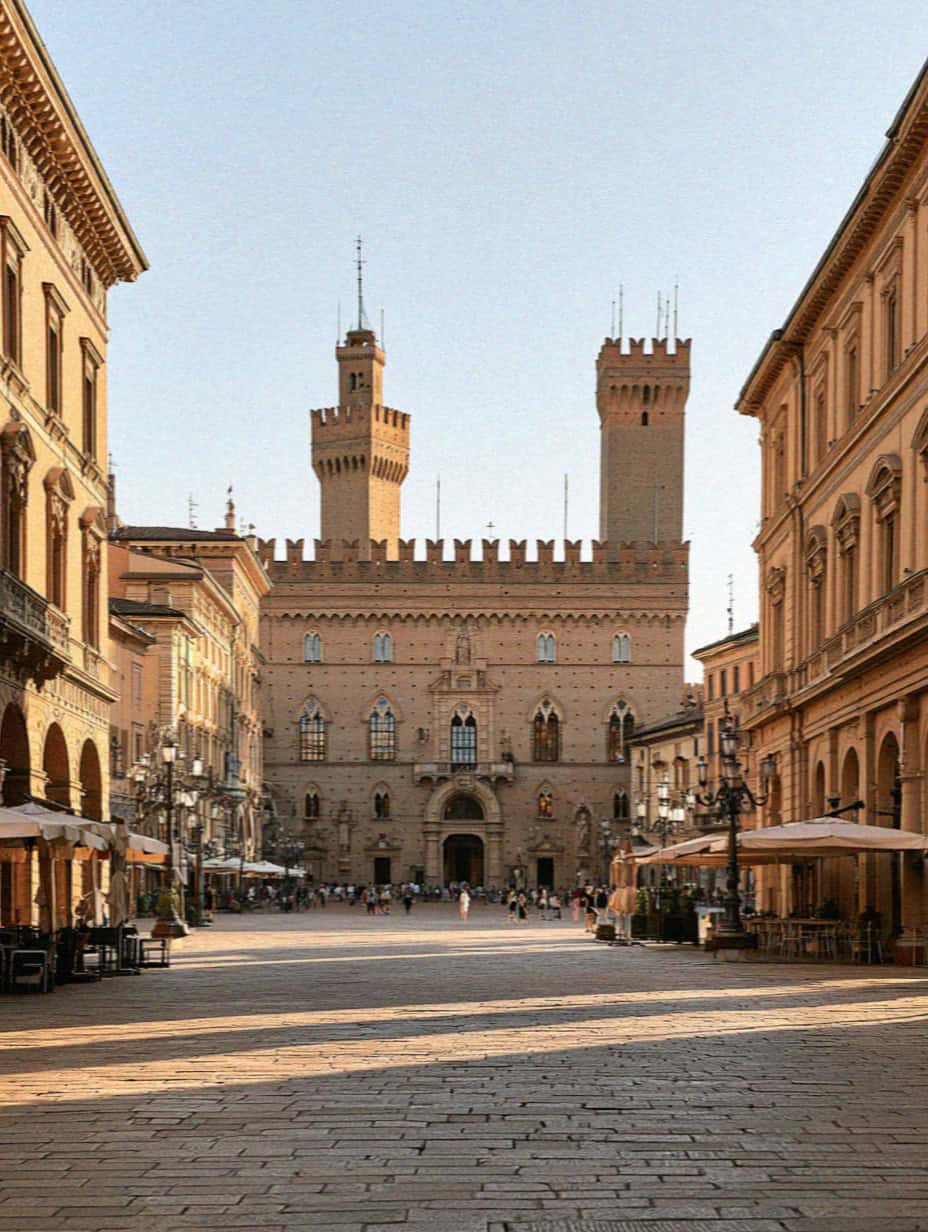
Here are the specific places I would put on my own shortlist, grouped by budget. Prices move a lot with the season, so treat these as guides rather than promises.
Luxury. The Grand Hotel Majestic “già Baglioni” is the grande dame of Bologna, a few steps from Piazza Maggiore, with its own Carracci restaurant under a frescoed ceiling; it is the classic special-occasion choice. I Portici Hotel, off Via dell’Indipendenza, is built inside a converted nineteenth-century theatre and holds a Michelin-starred restaurant, which makes it a lovely pick for food-led stays. Hotel Corona d’Oro 1890 occupies a restored thirteenth-century palazzo just off Piazza Maggiore and runs roughly one hundred and fifty to two hundred and fifty euros and up, so it is the more attainable end of luxury. And if you want a spa and don’t mind driving, Palazzo di Varignana is a countryside resort about twenty to twenty-five minutes southeast; it needs a car, but it is a serene base if the city is not your only aim.
Mid-range. Art Hotel Commercianti sits right beside San Petronio, some rooms come with little terraces looking onto the basilica, and it runs around one hundred and eighty to two hundred and eighty euros. Hotel Metropolitan is central too and has a rooftop terrace, which is a small luxury when the afternoons are warm. Both put you in the heart of things without the top-tier price.
Boutique and budget. Casa Bertagni is a small, characterful boutique for travellers who want personality over polish. Combo Bologna is a design-led hostel that works for solo travellers and anyone watching the budget without wanting an institutional feel. And The Social Hub, near the station, blends hotel and hostel and runs roughly eighty to two hundred euros, which makes it a flexible, sociable landing spot, especially if you are radiating out on day trips.
What You’ll Actually Pay
A mid-range double in shoulder season, roughly the quieter stretches of the year, tends to land around one hundred to one hundred and sixty euros a night. In peak periods, which here means May and June, September and October, and any trade-fair week, the same room can climb to around one hundred and eighty to two hundred and eighty euros or more. Bologna is a serious fair and congress city, and when a big trade fair is on, rooms sell out and rates spike hard across every budget, so it is well worth checking the fair calendar before you fix your dates. If you can travel in the shoulder shifts of early spring or later autumn, you get the mild weather and the porticoes at their prettiest without paying peak. Book early either way, because the good central rooms go first.
Frequently Asked Questions
Where is the best area to stay in Bologna for first-timers?
The Centro Storico around Piazza Maggiore, without much hesitation. It puts the sights, the market lanes, and the aperitivo scene within a short flat walk, so you can see the most in the least time. Expect the highest prices and a bit of street noise, but for a first visit the convenience is worth it.
Should I stay near Bologna Centrale station?
Only if day trips are central to your plan. The station area is practical for fast trains to Florence, Modena, and Ferrara, and it is a touch cheaper, but it lacks the beauty of the historic core and sits a fifteen-minute walk or short bus ride away. If you plan to spend most of your time in Bologna itself, stay central instead.
Do I need a car in Bologna?
No, and a car is more hindrance than help. The centre is a camera-enforced ZTL where driving in risks fines from around eighty euros, and the city is compact and very walkable under its porticoes with good buses. Arrive by train, and only consider a car if you are basing yourself somewhere like Palazzo di Varignana out of town.
Once you have picked your base, the rest of the trip falls into place easily. This guide is one piece of my complete guide to Bologna, where I gather everything in one place. To turn your stay into a plan, read my Bologna itinerary, and to choose your dates around weather, crowds, and those trade-fair spikes, see my thoughts on the best time to visit Bologna.