The best things to do in Bologna are the sort you stumble into rather than queue for: a red portico that carries you dry through a rain shower, a market lane thick with the smell of mortadella, a whispering arch that catches your secret from a diagonal corner. This is a city that rewards walking and rewards appetite, and it does both under nearly forty kilometres of arcades in the centre alone. I have spent slow mornings here doing very little and come away feeling I had seen everything. Here is how I would spend the days, honestly, with the current closures and clever workarounds all laid out.
What to book before you come
Bologna is a city you eat and a city you walk, and both are cheap. These are the four things I would put in the diary before arriving.
- A pasta class, with ragu. 4.9 from over twelve hundred people, and the thing I would book first. Tortellini are folded here in a way that takes about four seconds per piece and about four years to learn, and watching it done properly is worth an afternoon.
- The food valley day: Parmesan, balsamic and Modena. A dairy at six in the morning, a balsamic loft, and lunch. This is the day trip that explains the region rather than just feeding you in it.
- The city centre walking tour. 4.5 from nearly four thousand people. Thirty eight kilometres of portico and a university older than most countries, none of it labelled.
- The walk with the tower view and the Archiginnasio. Rated 4.8. The anatomy theatre in the Archiginnasio is the strangest room in the city and most visitors walk past the door.
The porticoes, Piazza Maggiore, the Quadrilatero market and the walk up to San Luca are all free.
Piazza Maggiore and Basilica di San Petronio
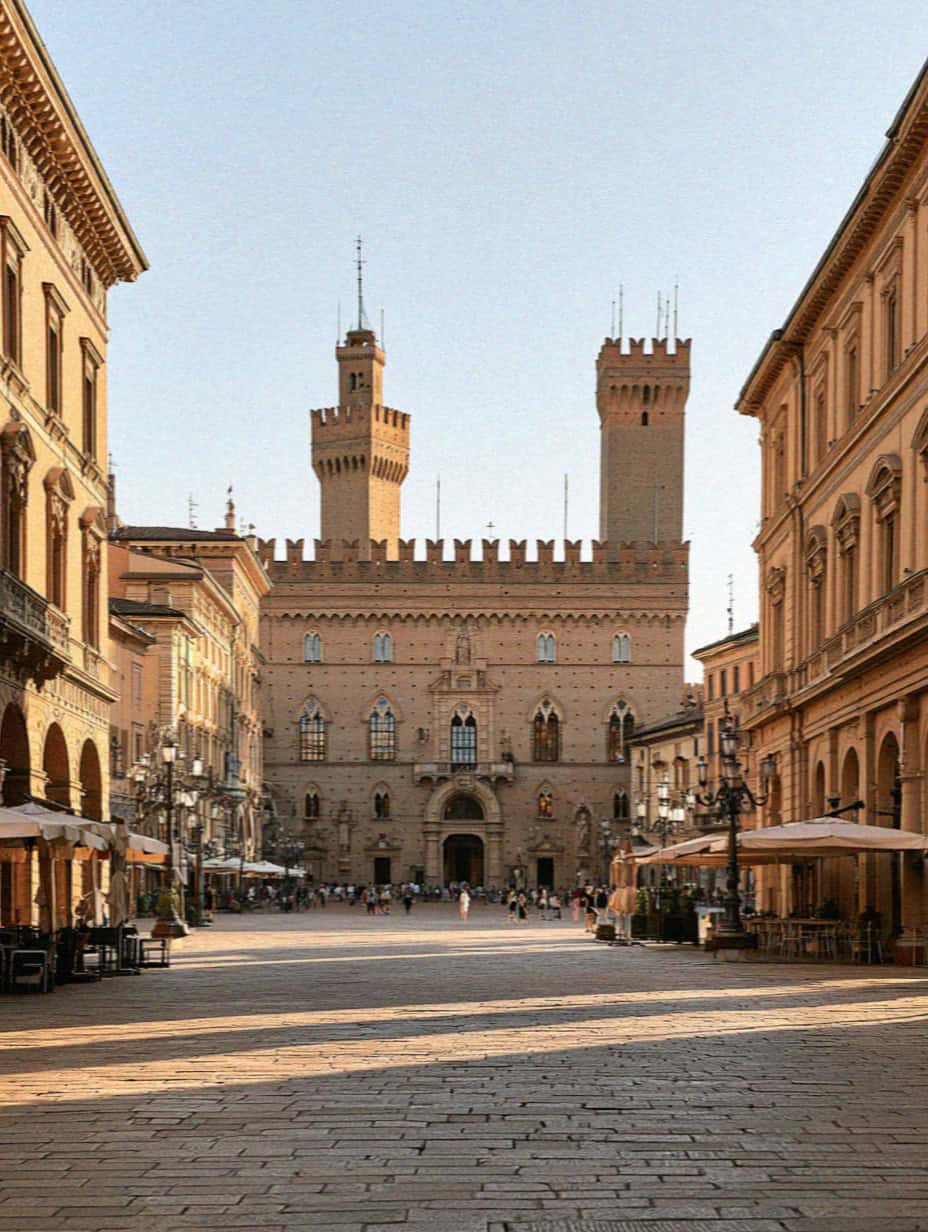
Start where the city does. Piazza Maggiore is the civic heart, wide and unhurried, and the Basilica di San Petronio anchors it with that famously unfinished brick facade, half dressed in marble and left honest about it. Entry is free and it is usually open around 10:00 to 18:00. Inside, look down: the Cassini meridian line of 1655 runs 66.8 metres across the floor, one of the largest sundials in the world, and on a bright day a pinhole of light crosses it like a slow clock hand. The Cappella Bolognini, the chapel of the Three Kings, costs €5 if you want the frescoes.
Just off the square stands Giambologna’s bronze Fontana del Nettuno, the Neptune fountain of 1563 to 1567, worth circling for the “Neptune’s finger” illusion when you find the right angle. Do not miss the free interiors nearby: the Voltone del Podestà whispering arch, where a murmur travels diagonally corner to corner, and the Biblioteca Salaborsa, where a glass floor reveals Roman ruins beneath your feet.
Plan Your Visit to Bologna
A few things I booked and loved. These help support the blog, at no cost to you.
- Where I stayed: search Bologna hotels
- Tickets and things to do in Bologna
- Stay connected: get a travel eSIM
This section contains affiliate links. If you book through them I may earn a small commission, at no extra cost to you.
The Two Towers, from below
Whatever older guides may still tell you, both of the Two Towers are closed in 2026 and you cannot climb them. The Torre degli Asinelli, all 97 metres and 498 steps of it, has been shut since October 2023 with no reopening date, and the dramatically leaning Garisenda is cordoned off inside a multi-year stabilisation project, wrapped in scaffolding. You can still stand at Piazza di Porta Ravegnana and photograph them leaning against the sky, which is the shot everyone wants anyway.
If you want height, here is the swap. Climb the Torre dell’Orologio, the Clock Tower in Palazzo d’Accursio on Piazza Maggiore, for €8. It is currently the main central panoramic tower and gives you that terracotta-roof-and-towers view. For something wider and free, save it for San Luca. And ignore any mention of San Petronio’s rooftop terrace, which is permanently closed.
The porticoes and the walk up to San Luca
Bologna’s porticoes became a UNESCO site in 2021, and they are not a museum piece but the way you actually move around, roughly 62 kilometres of them citywide. The grand one is the Portico di San Luca, the longest in the world, 666 arches climbing about 3.8 kilometres from Porta Saragozza up to the Santuario della Madonna di San Luca on its hilltop, passing the elegant Arco del Meloncello of 1732 on the way. The sanctuary is free, the panorama is wide and generous, and it is the classic sunset spot.
The walk up is a proper climb and suits anyone happy on their feet. If that is not you, the San Luca Express road-train leaves from Piazza Maggiore, loops up in about an hour, and costs €15 for adults, €8 reduced, with multilingual commentary. Either way, do the porticoes in the centre too: the red arcades of Via Farini and Via Santa Caterina glow at golden hour.
The Quadrilatero food market
Southeast of Piazza Maggiore, the medieval lanes of the Quadrilatero are where Bologna feeds itself. Wander Via Pescherie Vecchie, Via Drapperie, Via Caprarie and Via Clavature and you pass windows hung with mortadella and stacked with fresh tagliatelle and tortellini. The historic names are worth seeking out: Tamburini, the salumeria and tavola calda at Via Caprarie 1; Paolo Atti & Figli, baking and rolling pasta since 1880 on Via Drapperie; and Salumeria Simoni a few doors along for cured meats.
Come in the morning for shopping and the working bustle, then again in the late afternoon, when the same lanes turn into an aperitivo crowd spilling out of the wine bars. A plate of mortadella and a spritz for around €6 to €7 is one of the cheapest, happiest things you can do here.
The Archiginnasio and its Anatomical Theatre
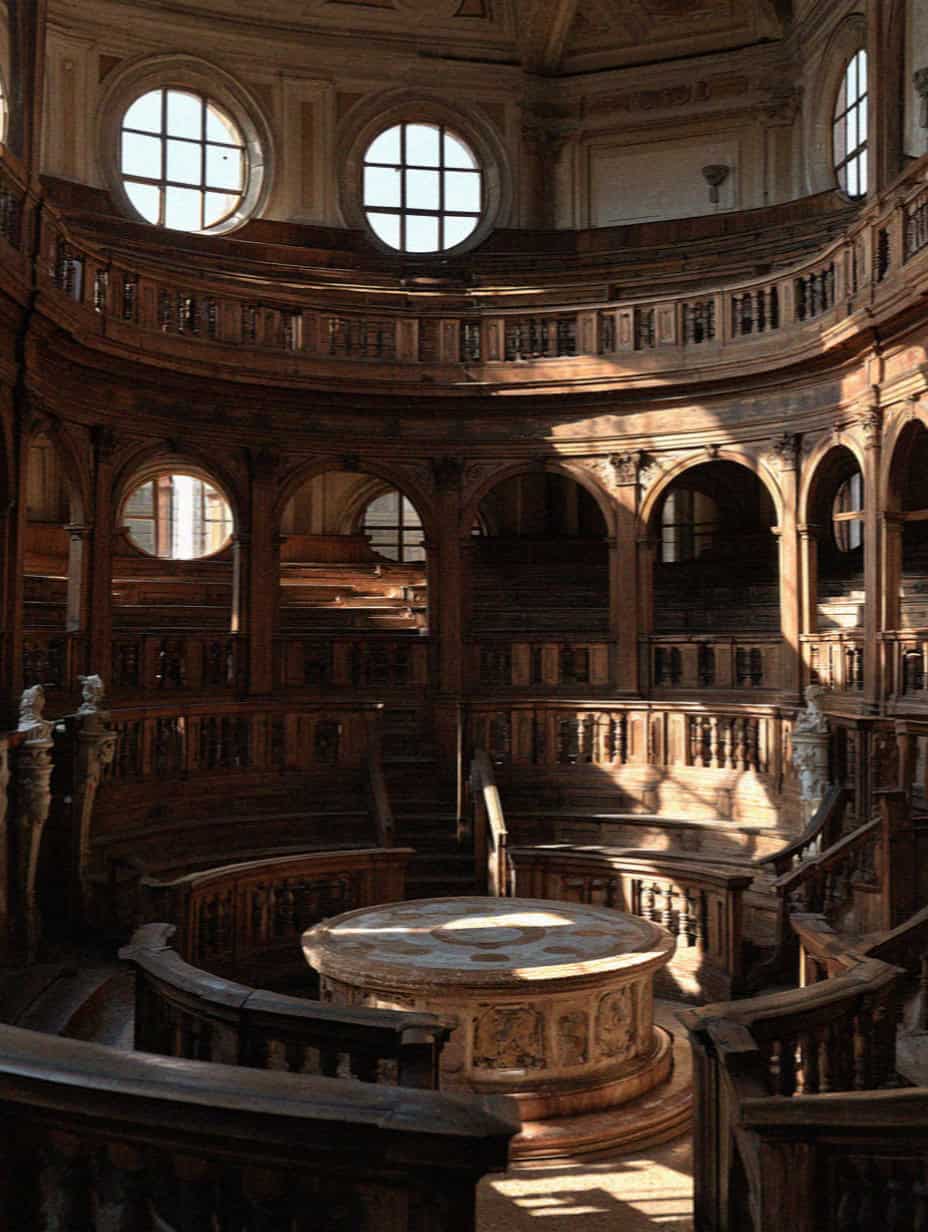
A short step from Piazza Maggiore on Piazza Galvani, the Archiginnasio was the old seat of Europe’s oldest university, and its courtyard, plastered with some six thousand carved student crests, is free to wander. The reason to buy the combined ticket at €10 is the Teatro Anatomico, a 17th-century lecture theatre carved entirely in spruce, where dissections were once performed under the gaze of two unnerving “spellati”, skinless figures holding up the canopy above the professor’s chair. It is small, strange and quietly unforgettable, and it rarely feels crowded.
Santo Stefano and the Seven Churches
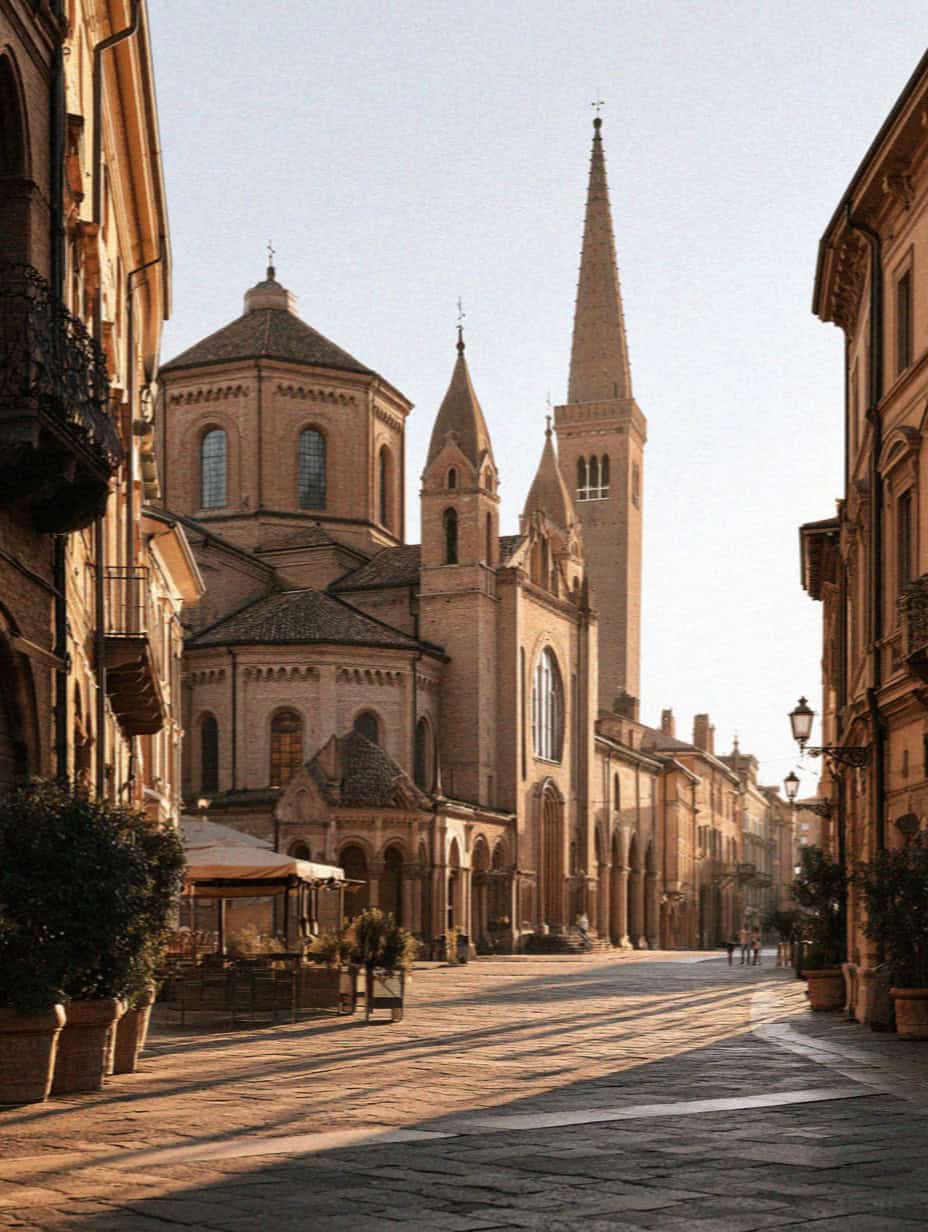
The Basilica di Santo Stefano is not one church but a knot of them, the “Sette Chiese”, the Seven Churches, laced together around the Cortile di Pilato in a maze of interconnected chapels and courtyards. Entry is free. It sits on Piazza Santo Stefano, a triangular, softly sloping square that is one of the loveliest in the city and a fine place to simply sit. This is a slow, contemplative half hour, and it suits anyone who likes their history atmospheric rather than labelled.
If you have more time nearby, the Basilica di San Domenico is free and holds the Arca di San Domenico, a tomb carved over generations by Nicola Pisano, Niccolò dell’Arca and a young Michelangelo, whose three small figures date from around 1494. Note that a restoration has recently been under way.
A museum or two: Pinacoteca and MAMbo
For old masters, the Pinacoteca Nazionale on Via Belle Arti holds Raphael’s Ecstasy of St Cecilia alongside Carracci, Reni and Guercino, with entry around €6 to €10. For modern work, MAMbo on Via Don Minzoni is €6, closed on Mondays, and includes the wonderful Museo Morandi with its hushed rooms of bottles and light. Choose by mood: one afternoon of one of them is plenty for most visitors, and both sit in the university quarter, which is a pleasure to wander regardless.
Evening: the aperitivo hour
Bologna does the early evening beautifully. From around six to eight, the spritz comes out, roughly €6 to €7, and you have your pick of scenes: the buzzing lanes of the Quadrilatero along Via Pescherie Vecchie, the student energy of Via Zamboni, or the bohemian osteria strip of Via del Pratello. For something singular, find Osteria del Sole on Vicolo Ranocchi, founded in 1465, Bologna’s oldest wine bar. It serves wine only, cash only, at communal tables, and you bring your own food, so pick up a paper parcel of cured meats in the Quadrilatero first and settle in.
Frequently Asked Questions
Can you still climb the Two Towers in Bologna?
No. Both towers are closed in 2026, with the Asinelli shut since October 2023 and the leaning Garisenda cordoned off for stabilisation. You can view and photograph them from Piazza di Porta Ravegnana. For a climbable panoramic view instead, the Clock Tower on Piazza Maggiore is open at €8.
How many days do you need in Bologna?
Two full days comfortably cover the city itself, since the historic centre is compact and most sights are within about fifteen minutes on foot. A third day is ideal for a food-valley day trip such as Modena or Parma, both quick and cheap by regional train, and a fourth or fifth day lets you add Ferrara or Ravenna.
What is the best free thing to do in Bologna?
Walking the porticoes costs nothing, and the climb up the Portico di San Luca to the free hilltop sanctuary is the standout. In the centre, San Petronio, Santo Stefano’s Seven Churches, the Archiginnasio courtyard and the Voltone del Podestà whispering arch are all free.
For the bigger picture, this guide is one chapter of my complete guide to Bologna, which ties everything together. If you are ready to plan the days, my Bologna itinerary maps out how to string these sights together, my guide to the hidden gems of Bologna takes you off the main square, and when hunger strikes my notes on where to eat in Bologna will point you to the right plate of tagliatelle.